
Luxurious Bedroom Design Lessons Worth Pulling From Rooms That Actually Feel Deliberate
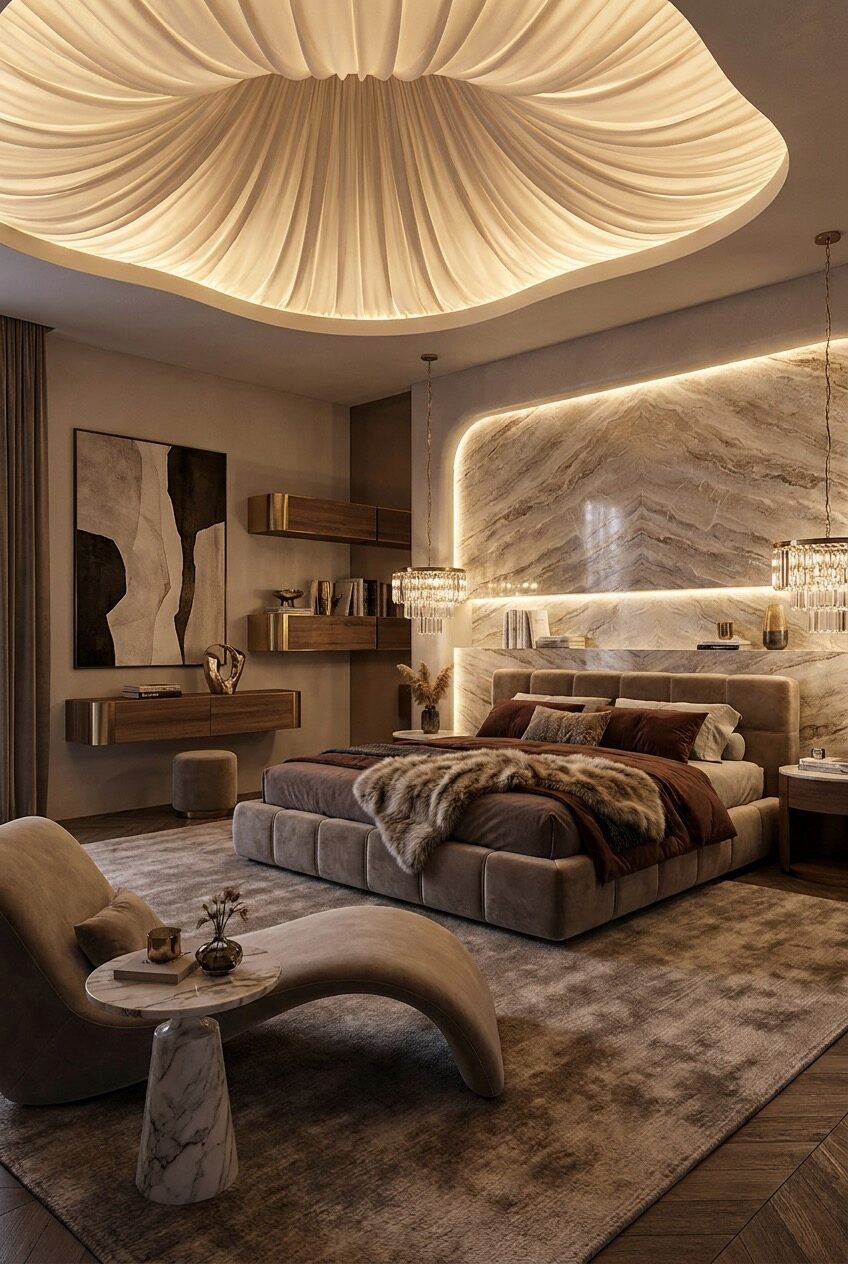
We’ve gone through a lot of high-end bedroom photos putting this list together, and one pattern kept showing up: the rooms that actually feel expensive almost never rely on one showstopping piece. It’s the relationship between materials, velvet against marble, brass against dark wood, warm light against cool stone, that does the heavy lifting.
The ten rooms below all handle that relationship differently. Some lean into old-world formality with tufted headboards and crystal. Others go quiet, letting a plaster wall and one good chair carry the whole space. A few mix eras entirely and somehow still hold together.
What ties them together isn’t a color palette or a brand name. It’s restraint applied selectively, knowing exactly where to add richness and where to let a surface just be plain. That’s the part worth stealing for your own bedroom.
An Olive Wall That Actually Breathes
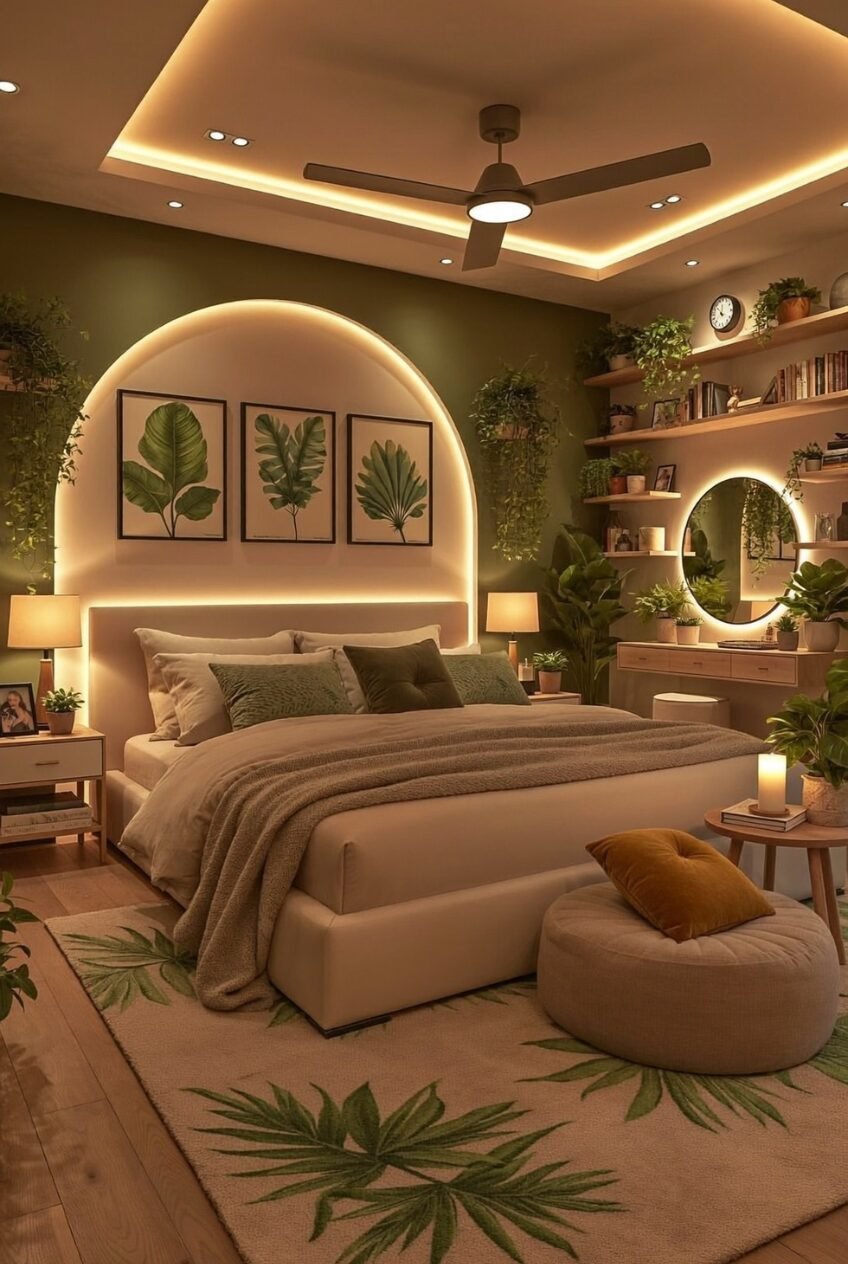
Green gets written off in bedrooms more than almost any other color, mostly because people default to mint or sage and end up with something closer to a dentist’s office waiting room. Olive is the fix. It carries enough brown in it to feel grounded next to warm brass and wood tones instead of fighting them.
The backlit arch here is doing more than decoration, it gives the botanical prints a frame within a frame, so your eye lands on them instead of skating past. Layering plants at three different heights, hanging from the ceiling, sitting on shelves, and standing on the floor, is what keeps a green room from reading flat.
If you want this without repainting a whole wall, try it in a single alcove or headboard nook first. A warm LED strip behind a cut-out arch costs less than most table lamps, and mixing a trailing pothos with a stiffer snake plant keeps the greenery from looking like one uniform blob.
Traditional Luxury Never Really Left
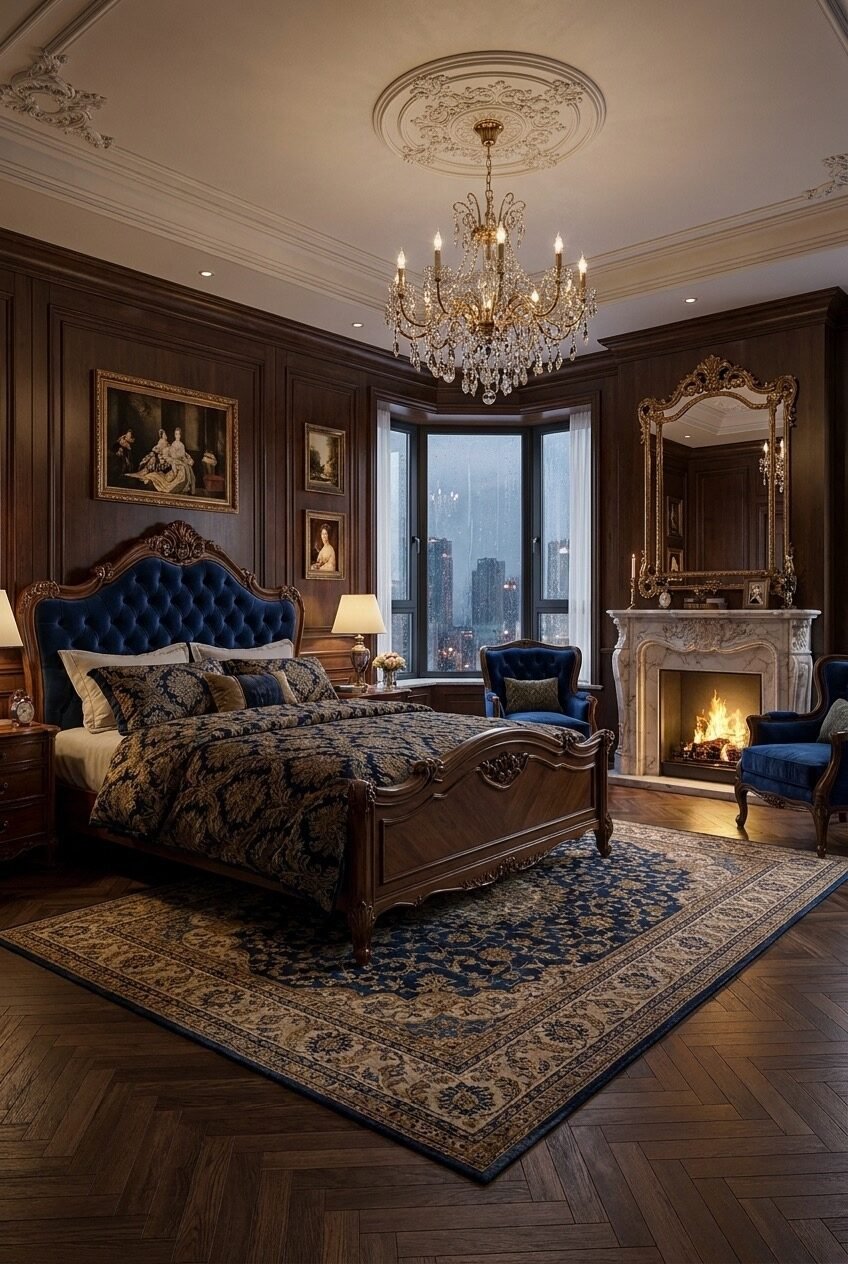
Look at the rug before anything else in this room. It’s doing the job that the chandelier usually gets credit for, anchoring a huge amount of pattern and color so the dark wood paneling and navy velvet don’t collapse into one heavy mass. Even the rain-streaked window behind the bay seating adds a bit of contrast without pulling focus away from the bed itself.
Traditional rooms like this succeed or fail based on restraint in the details. One ornate ceiling medallion, one statement mirror, one fireplace, not five competing focal points fighting for attention. That’s the part people usually miss when copying old-world interiors: pick one ornate element per wall, at most, and let the woodwork underneath stay comparatively plain.
You don’t need floor-to-ceiling paneling to borrow this. A single wall in a rich, dark stain, paired with one traditional light fixture and a patterned rug in navy and gold tones, gets you most of the effect. Skip the matching furniture set, mismatched antique-style pieces read more authentic anyway, and a worn brass frame will always beat a brand-new one.
Let The Ceiling Do The Work
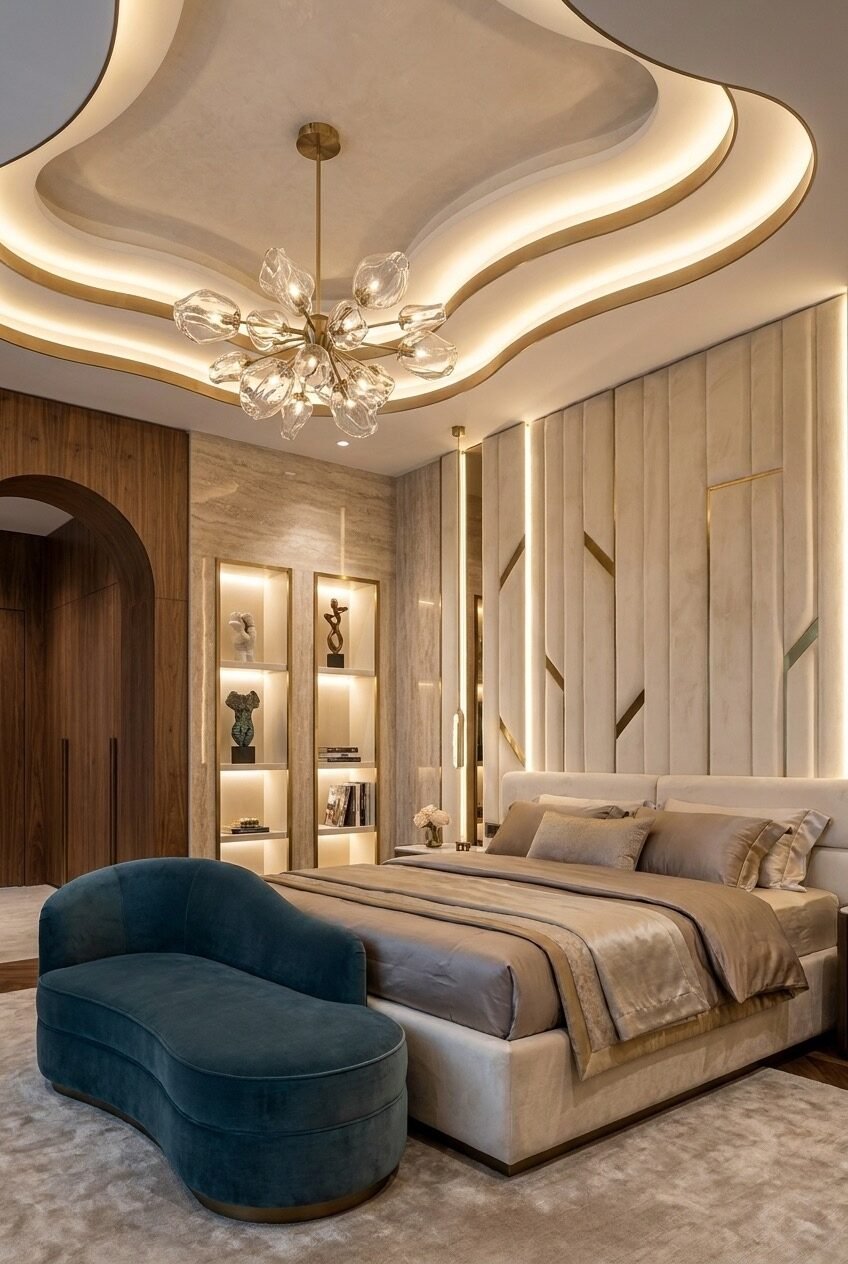
Most bedrooms treat the ceiling as an afterthought, flat, white, forgettable. This one flips that completely. The sculpted cove shape with hidden lighting turns the ceiling into the room’s actual focal point, which takes pressure off the walls to do all the visual work on their own, right down to the flooring.
Once the ceiling is doing that much, everything else can afford to be quieter. The channel-tufted wall panel reads as texture rather than pattern, and the teal chaise is really the only saturated color in the whole space, which is why it doesn’t feel cluttered despite all the brass hardware sitting around it.
Cove lighting like this is a contractor job, so it takes more commitment than most ideas on this list. A cheaper entry point: add a rope-light detail along one section of ceiling trim, then let a single colorful chair carry the personality instead of scattering it across pillows, throws, and wall art.
Plaster Walls Change The Whole Room
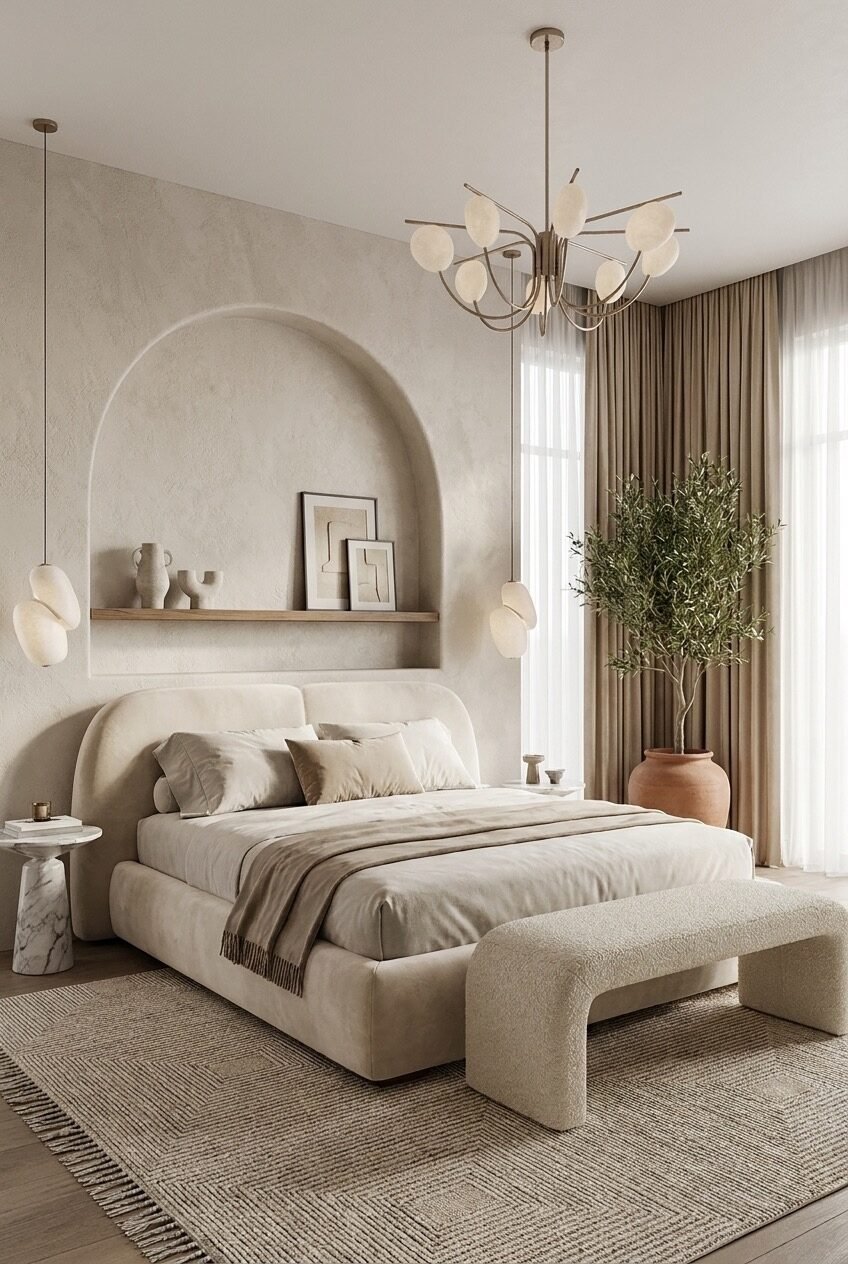
There’s no wallpaper, no marble, no bold color anywhere in this room, and it still reads as expensive. The trick is texture. Rough plaster catches light differently throughout the day, giving a plain wall more depth than a flat painted one ever could, especially inside that carved arch niche behind the headboard.
The olive tree in a raw terracotta pot is doing more work than it looks like. It’s the one organic, imperfect shape in a room full of soft curves and straight linen drapery, and that bit of irregularity keeps the whole space from feeling staged or overly precise, almost like a still life.
Skip actual plaster if your budget doesn’t allow for it, a limewash paint finish gets you closer to this texture than most people expect. Then find one oversized potted plant with a visible trunk shape rather than a bushy one, and let it sit slightly off-center near a window instead of dead center.
Mismatched Mirrors Can Work Together
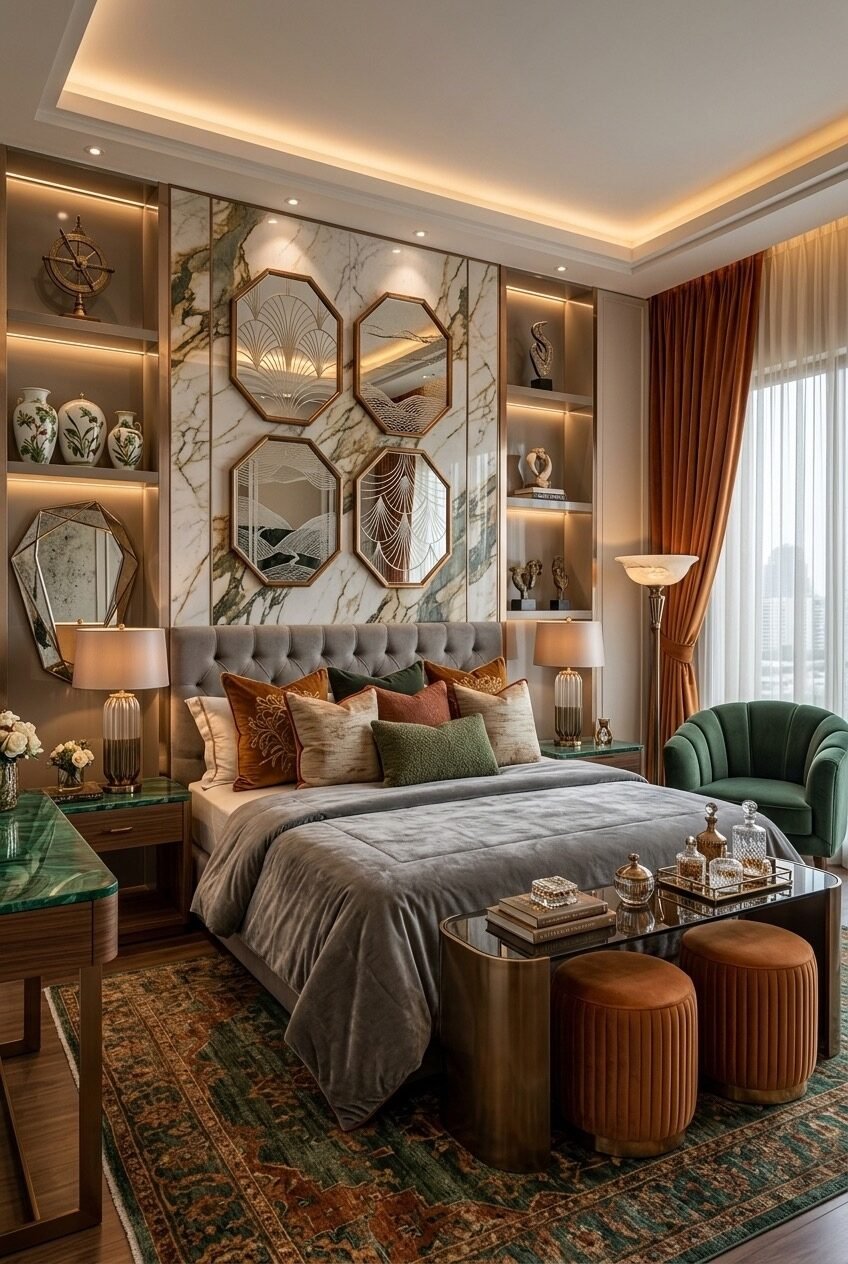
If you’ve been told your whole life to keep mirror shapes matching, this room disagrees. Four different octagonal mirrors, each with its own etched pattern, sit grouped on one marble panel and somehow read as a collection rather than a mismatch, because the frames share a metal finish even though the shapes and etchings vary.
The same logic runs through the pillows and rug. Rust, olive, and cream repeat across completely different patterns, which is what lets a maximalist room like this avoid looking chaotic. One shared color thread is doing quiet work underneath all that visual noise on the surface, tying the console and lamps in too.
To try this yourself, pick three colors at most and let them show up in at least three different objects each, a rug, a pillow, a lamp shade. The repetition is what your eye actually tracks, not the individual patterns themselves sitting on top of it, so don’t overthink the pattern matching part.
Let One Slab Anchor The Room
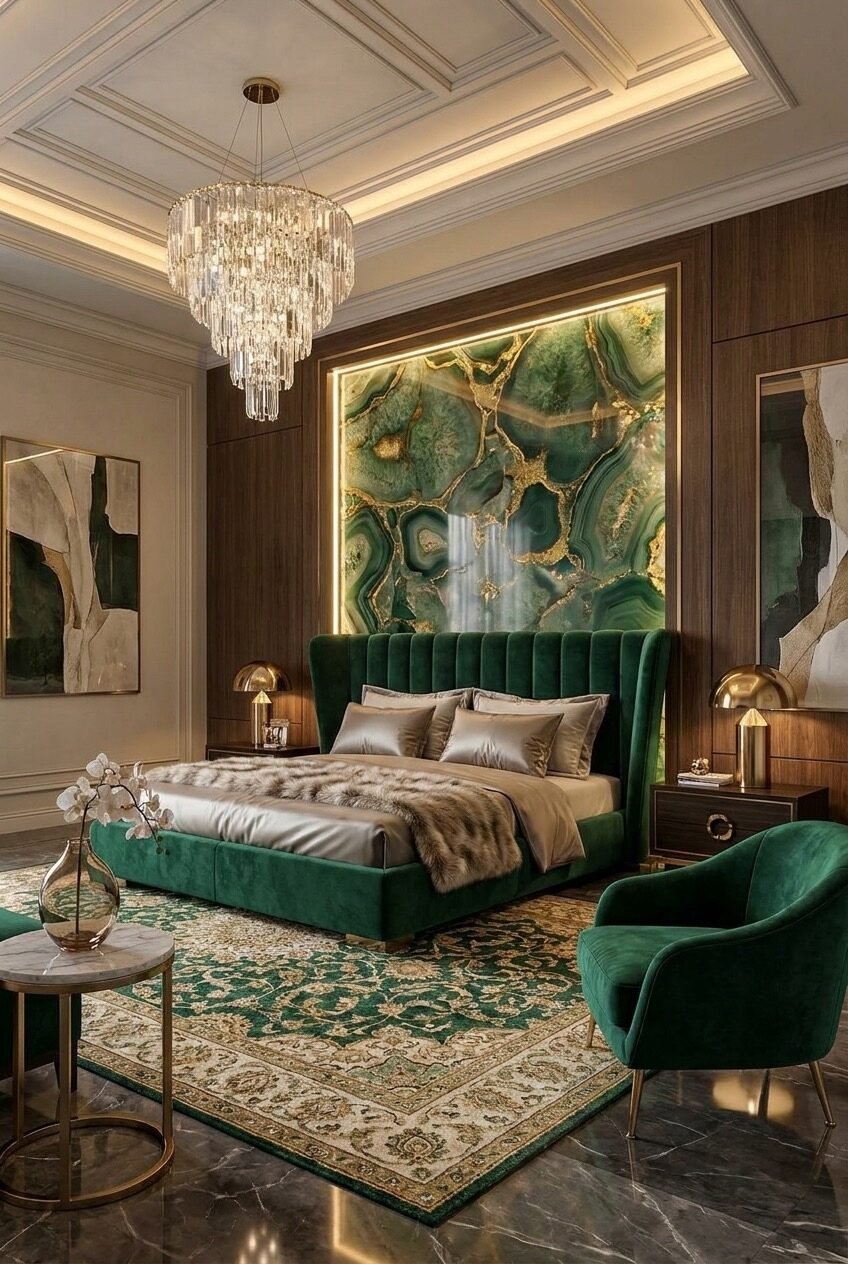
Everything in this room looks expensive, but only one thing is actually doing the anchoring: the backlit slab of green stone behind the bed. Without it, you’d just have a nice emerald headboard and a chandelier. With it, you have a room built around a single, glowing focal point that pulls your eye the second you walk in.
Notice how little competes with that wall. The floor is dark and reflective instead of patterned, the side art stays muted and abstract, and even the chandelier’s crystal is clear, not colored. Every other material choice in the room is quietly protecting the one loud moment it contains, including the plain velvet chair.
You don’t need real stone to borrow this idea, a large framed piece of abstract art with backlighting behind the frame gets surprisingly close. Just commit to keeping everything else in the room calm once you add it, or the whole effect falls apart fast, no matter how good the slab looks.
Let Wood Grain Replace The Art
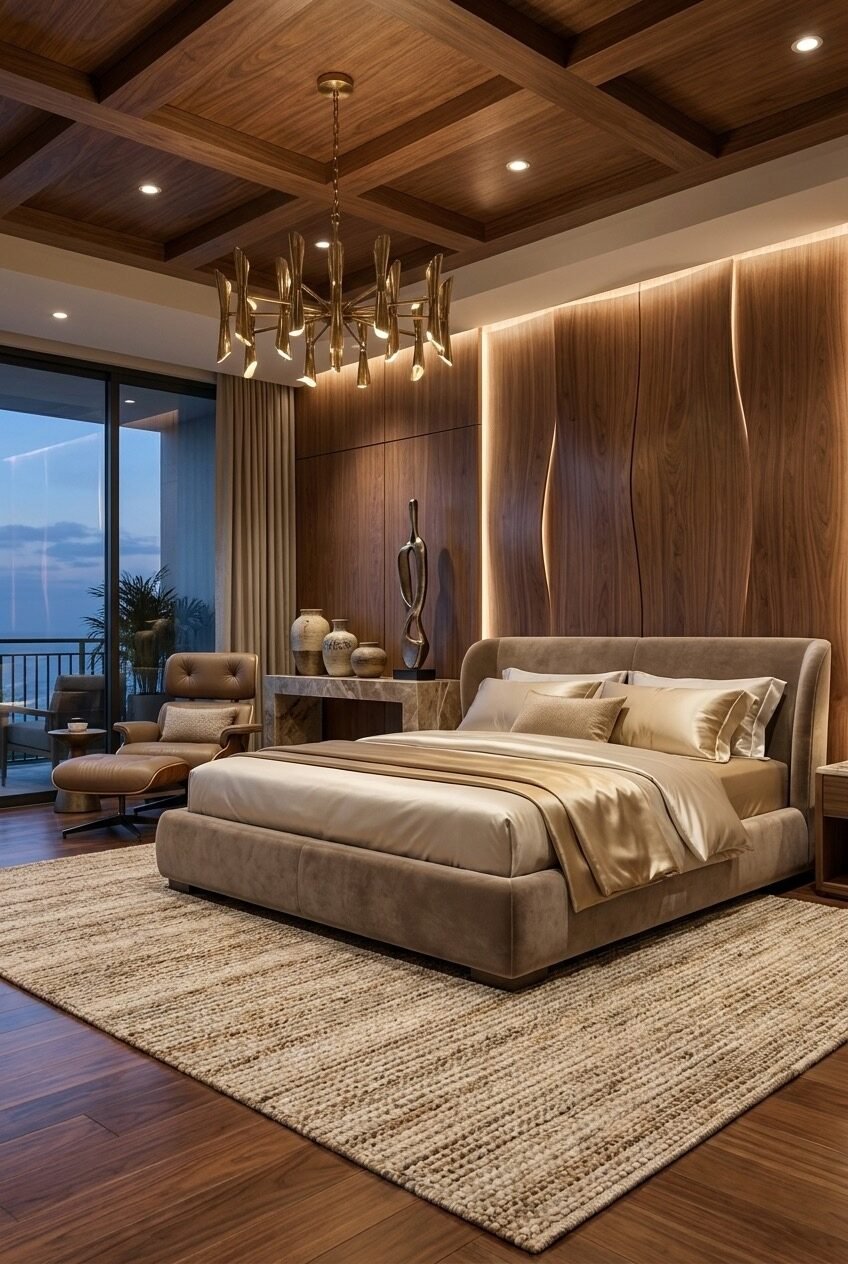
This room barely has any actual artwork, and it doesn’t need it. The carved wood panel behind the bed, with its deep vertical grooves catching the light strip behind it, functions as the art. That’s a useful swap if you’ve been stuck staring at a blank wall trying to pick the right painting for months.
The coffered wood ceiling repeats the same material logic overhead, so the whole room feels built from one continuous material rather than assembled from separate decorating decisions. That consistency, more than the ocean view outside, is what makes the space feel like a resort instead of just a nice bedroom with a good window.
If full wood paneling isn’t realistic, a single carved or fluted wood panel sized to your headboard width gets you most of the way there. Add a warm light strip along one edge of it, and skip the framed art on that wall entirely, letting the grain patterns carry the visual weight instead.
Dark Walls Still Need Warm Light
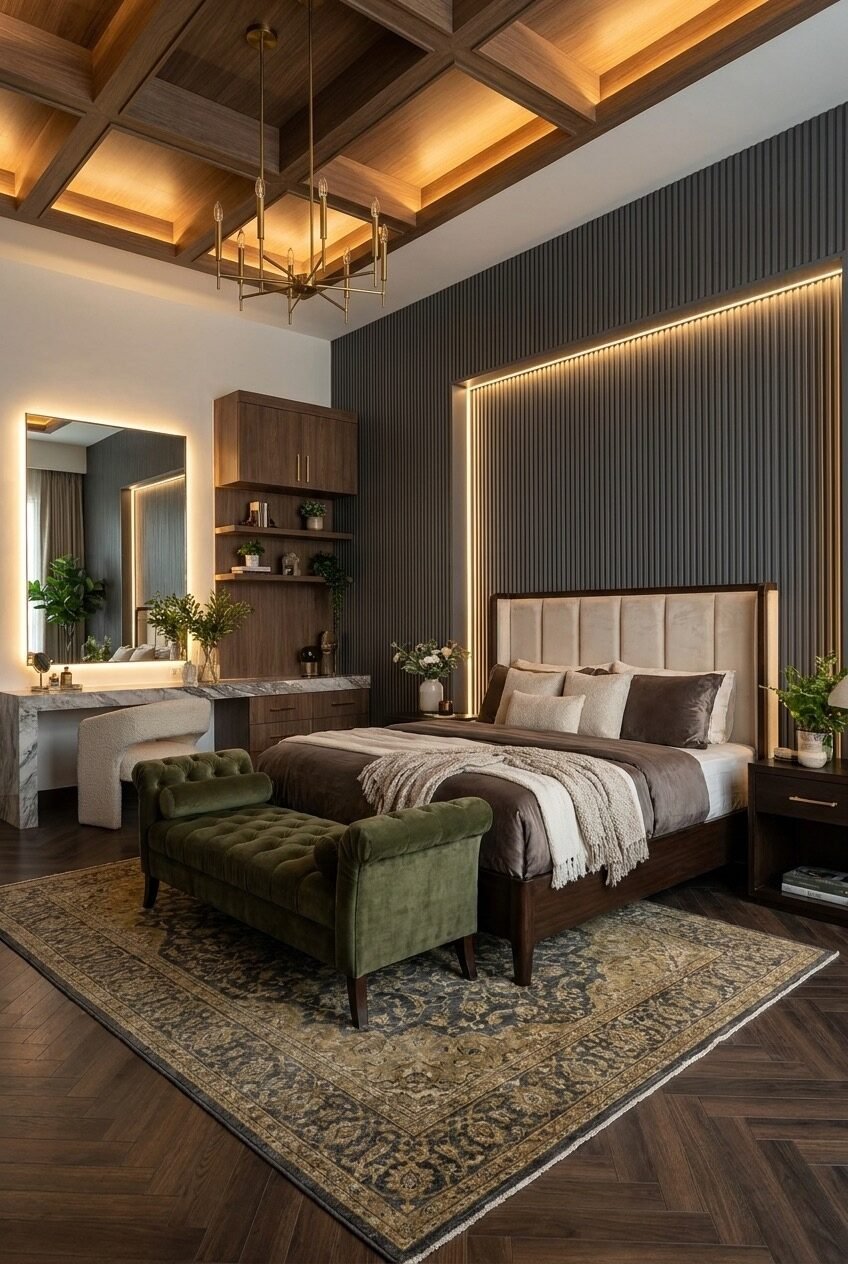
Charcoal and near-black walls get avoided in bedrooms because people worry the room will end up feeling like a cave. The fix is obvious once you see it done properly: warm light, and a good amount of it, placed at multiple heights instead of relying on one overhead fixture to do everything.
This room has light coming from the ceiling coffers, a vertical strip beside the headboard, a backlit mirror, and a bedside lamp. Four separate warm sources doing four different jobs is what keeps the dark fluted wall from swallowing the room instead of simply framing it the way it’s supposed to.
Test this before committing to a dark paint color: add a plug-in LED strip behind your headboard and see how the wall changes at night versus during the day. If it still feels heavy once warm light is added, the shade is probably too dark for your room’s natural light levels.
Symmetry Is The Most Underrated Trick
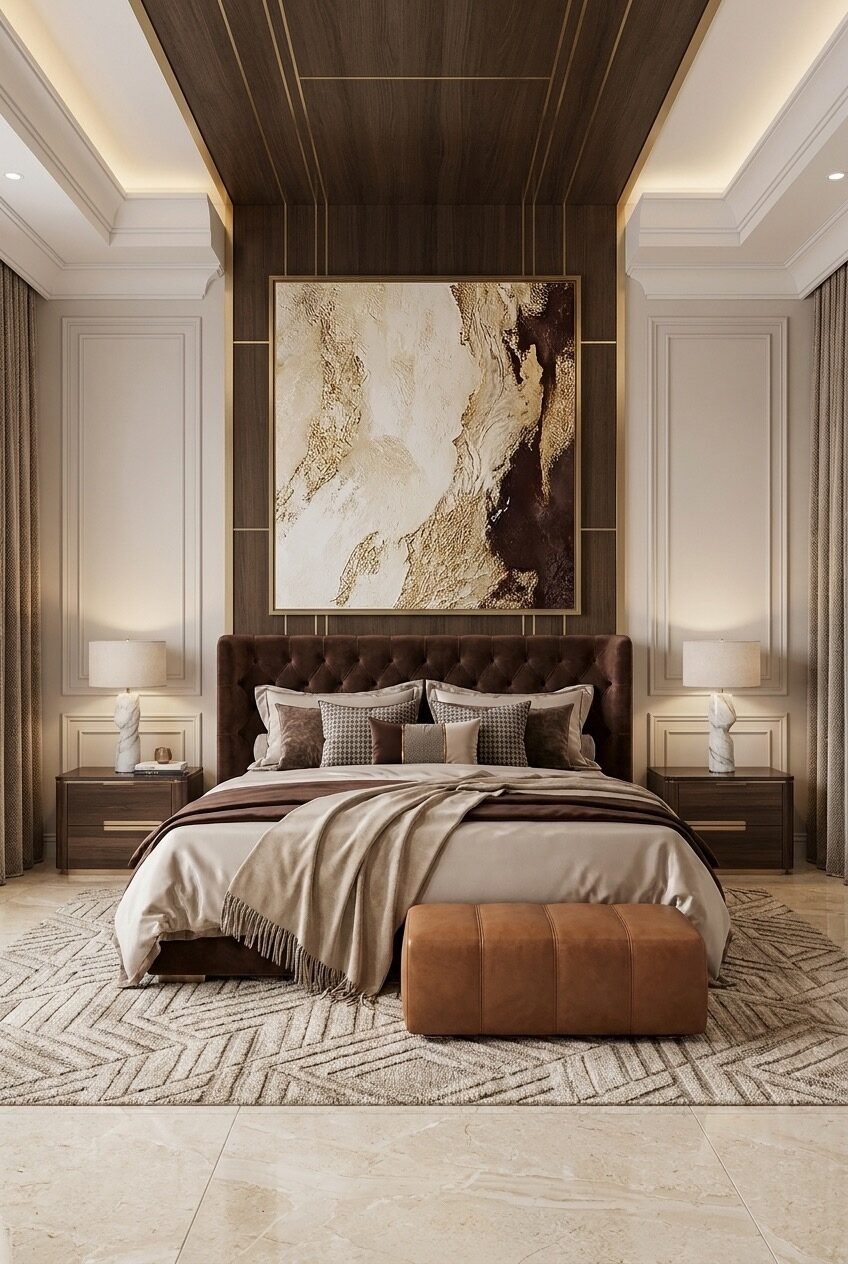
Nothing in this room is particularly unusual on its own, a tufted headboard, two matching lamps, one big piece of art. What makes it feel like a five-star hotel suite is that everything is mirrored perfectly on either side of the bed. Symmetry alone is carrying most of the effect here, honestly more than the marble floor does.
The artwork picks up the exact brown and gold tones from the headboard and rug, which ties the whole wall together without needing a matching bedding set to force it. That kind of tonal repetition reads as more expensive than an actual matching furniture collection would, and it costs a lot less too.
Recreating this is mostly a math exercise: identical nightstands, identical lamps, identical distance from the bed on both sides. Then pick one large piece of art in colors already present in your room, rather than shopping for art first and building the palette around it afterward, which rarely turns out as clean.
Black And Gold Without The Excess
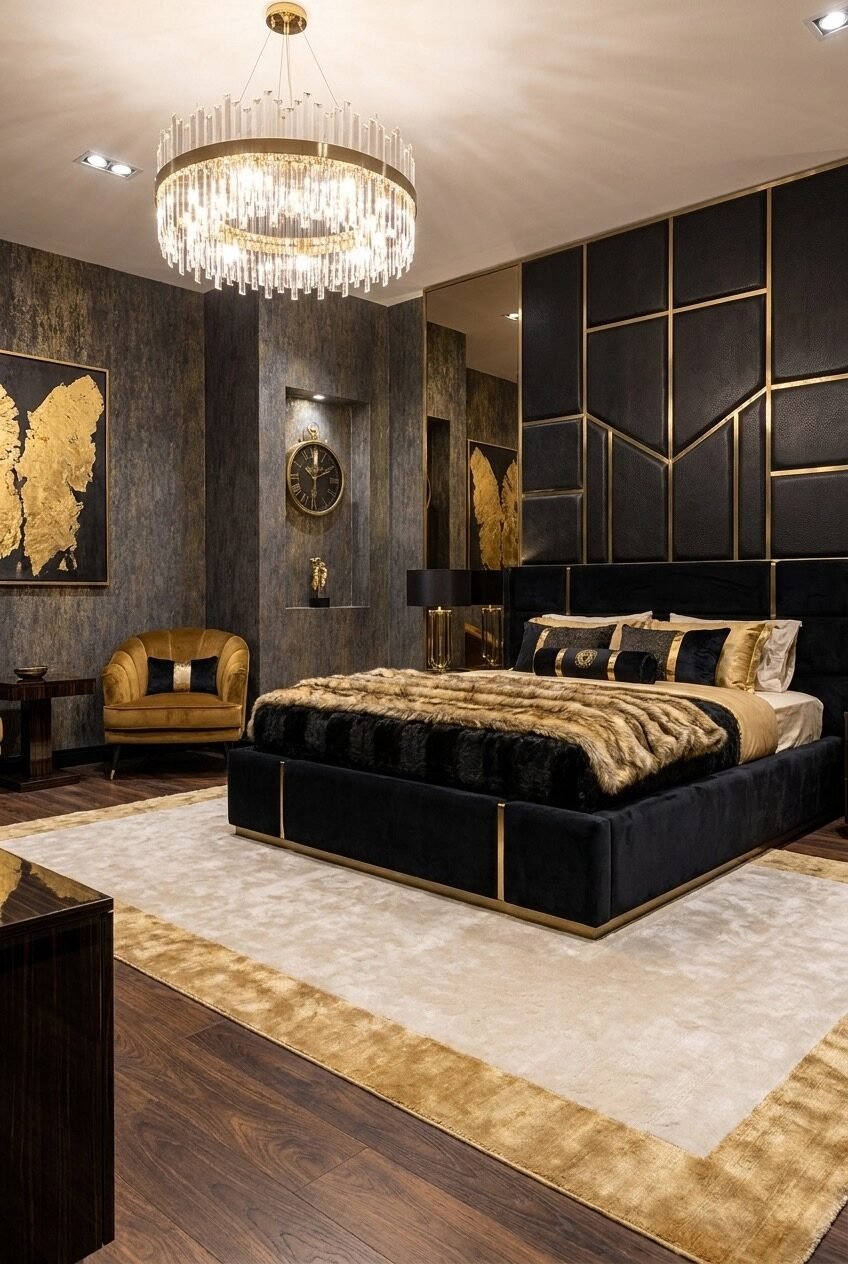
Black and gold together usually tips into costume territory fast, but the geometric leather panels behind this bed avoid that by keeping the gold thin, just lines separating dark leather shapes, not gold accessories piled everywhere across the wall. The restraint in the metal is what keeps it from reading gaudy or dated.
The mustard velvet chair is the only warm color breaking up all that black and gold, and the faux fur throw softens what could otherwise feel like a hard, cold room. Texture is doing the job that a brighter color palette would usually be handling instead, right down to the rug’s soft border.
If you want this without redoing an entire wall, try black leather or vinyl panels behind just the headboard, seamed with thin brass strips instead of wide trim. Keep gold limited to hardware and one chair, and let everything else in the room stay dark, matte, and mostly out of the spotlight.
You Don’t Need All Of This At Once
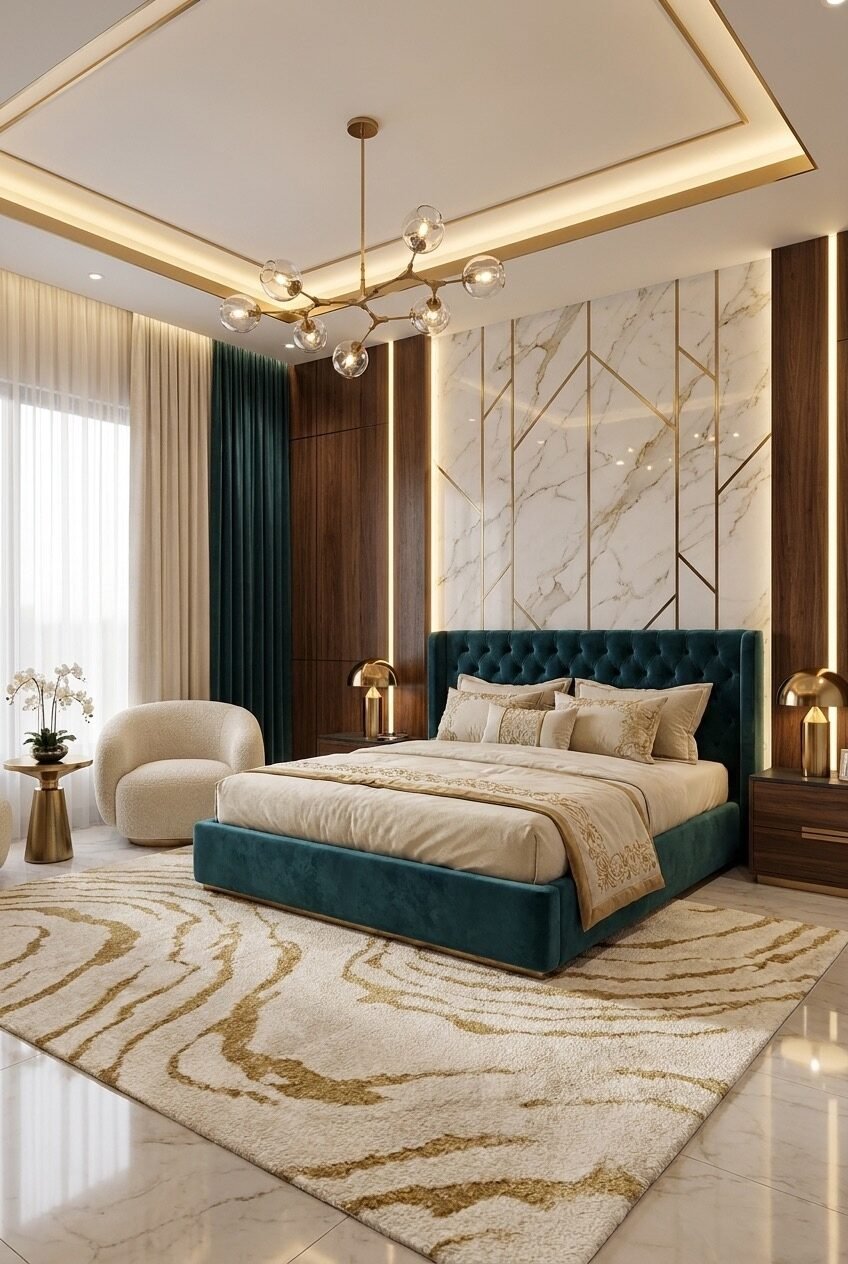
If you pulled every texture, every lighting temperature, and every furniture silhouette from this list into one bedroom, you’d end up with a showroom, not somewhere you’d actually want to sleep. That’s the trap with inspiration photos, they’re built to sell a full room, not a starting point.
Pick one thing. Maybe it’s a backlit alcove, maybe it’s swapping your ceiling light for something with actual presence, maybe it’s just adding a stone side table because your nightstand has felt disposable for two years now. Small, deliberate additions read as more expensive than a full matching set ever will.
A bedroom doesn’t need to look like a hotel suite to feel special. It needs a few choices that were actually made on purpose instead of defaulted into. Start with the wall behind your bed, almost every idea on this list begins there.
 Steal Our Home Styling Secrets!