
The Quiet Design Rules Behind Every Plant-Filled Room That Actually Works
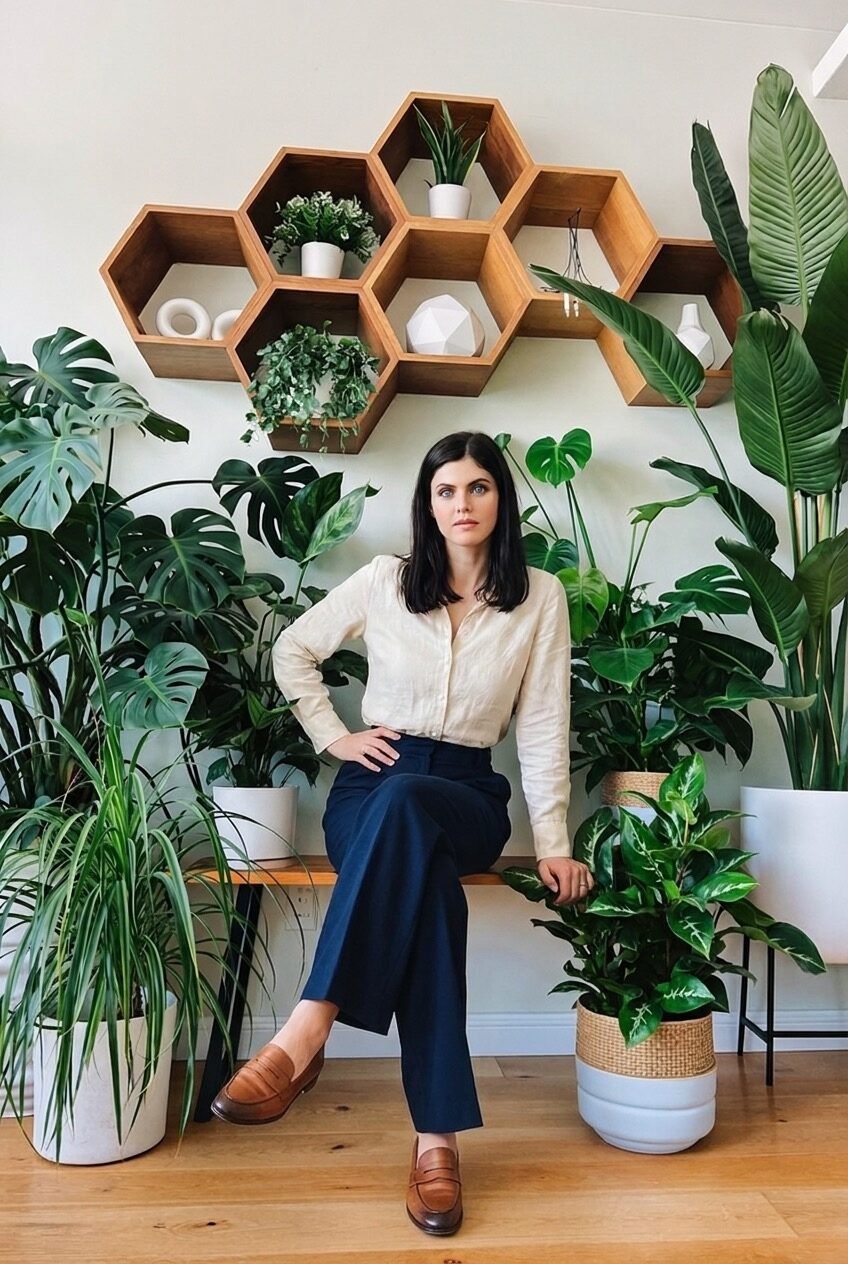
We’re going to say something slightly controversial: most people who think they have a “plant problem” actually just have a placement problem. The plants aren’t the issue. The flat, predictable arrangement is.
A few stems in matching pots on a windowsill is fine, but it doesn’t stop anyone mid-scroll. The spaces that actually feel alive tend to treat plants less like accessories and more like architecture, playing with height, color, and even rooms you’d never think to use.
Below are ten real setups, each leaning on a different principle you can borrow directly. Some are about scale, some are about color contrast, a couple use space in a way that might surprise you. None of them require a green thumb you don’t already have.
Layer Height Using a Wall Shelf
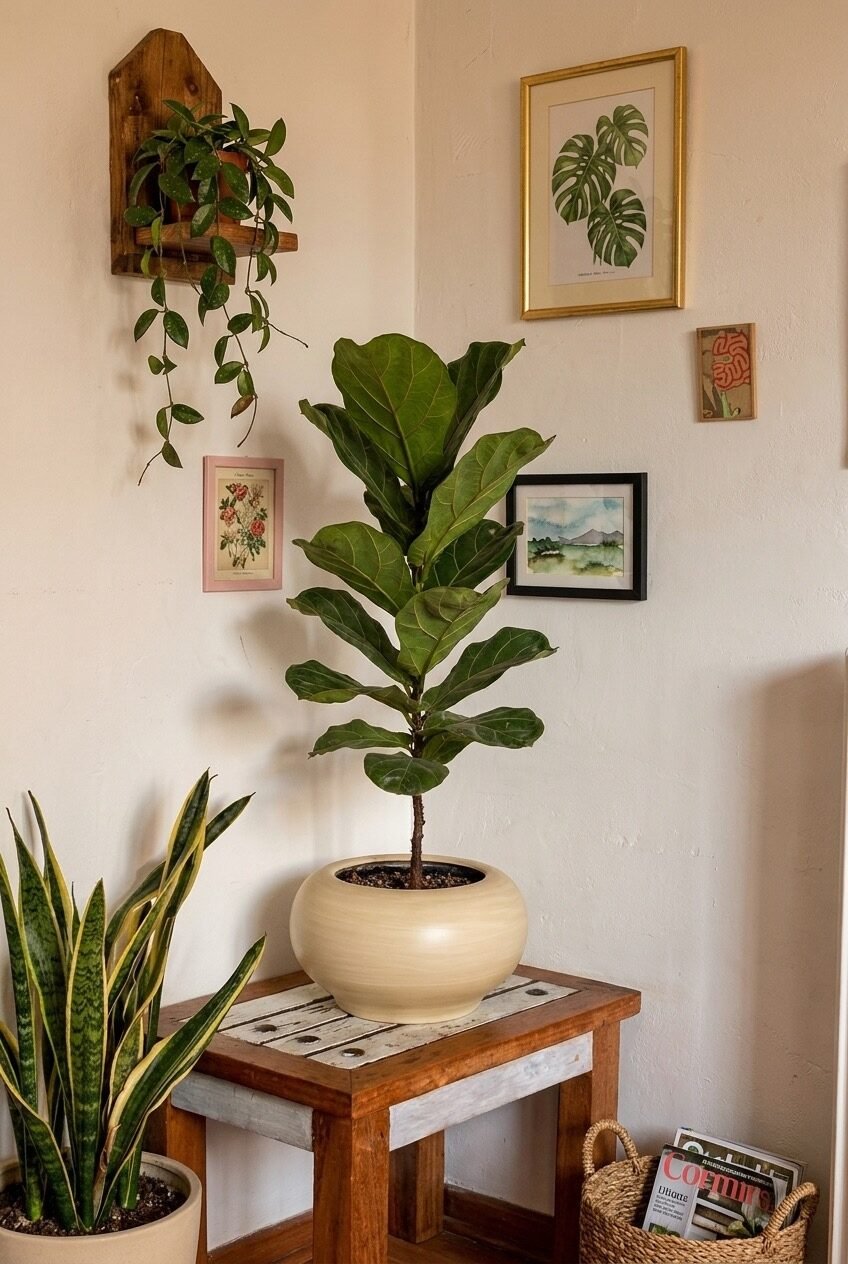
A fiddle leaf fig in a rounded, neutral pot does a lot of quiet work in a corner. Its upright structure gives the eye a clear vertical line, which is exactly what an empty corner usually needs. Pair it with a trailing plant on a small wall shelf above, like a hoya or philodendron, and you’ve introduced two different growth directions into one sightline.
The framed botanical prints nearby aren’t just filler hung at random. They echo the plant shapes already in the room, which makes the whole corner read as one composed idea instead of a plant and some art that happened to share a wall. We think this kind of visual repetition gets overlooked far too often.
To pull this off yourself, start with one larger plant at floor height, then build a second, smaller moment above or beside it using a shelf. The goal is a corner that reads as one connected idea rather than two separate purchases.
Let the Window Become the Garden
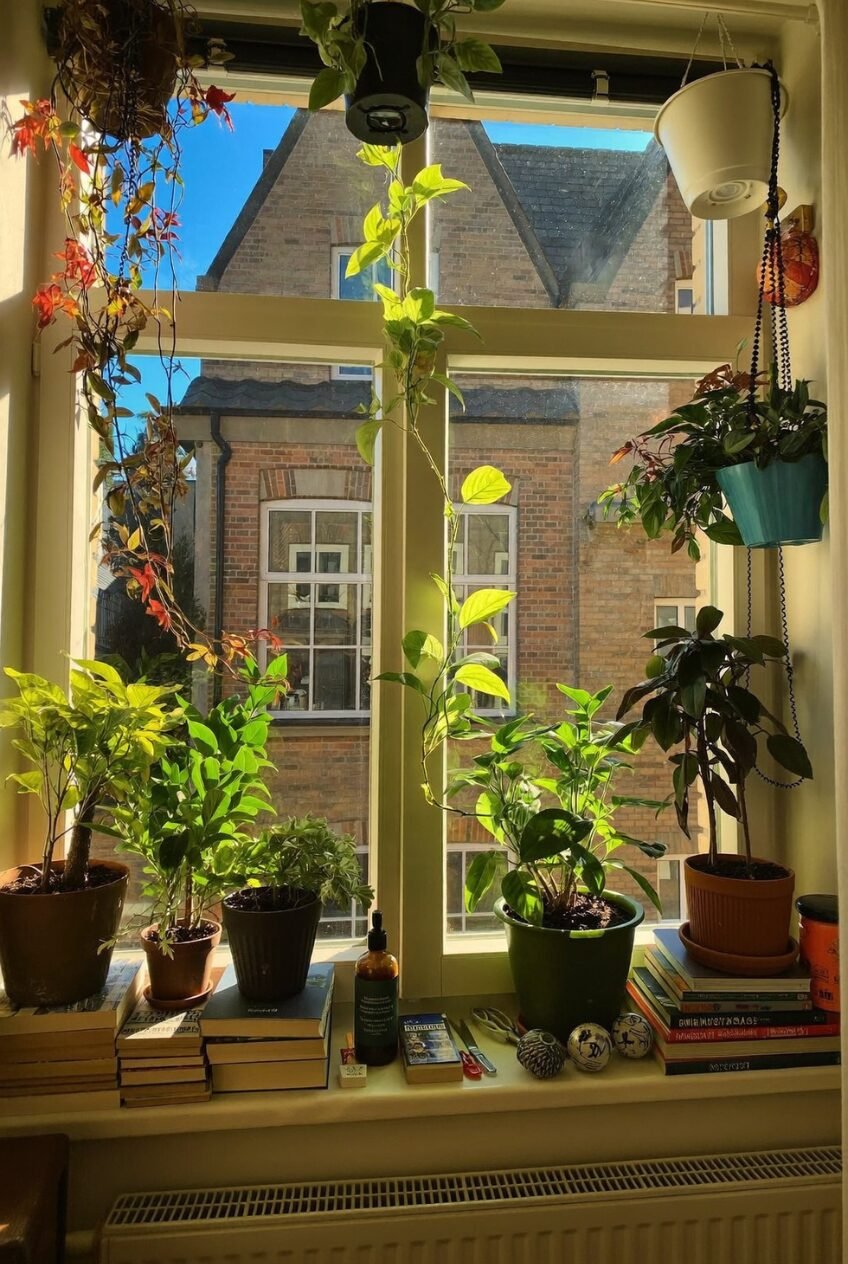
There’s a specific kind of satisfaction in a windowsill so full of plants you can barely see the glass behind it. This setup treats the window as a built-in display case rather than a simple light source, stacking pots at varying heights using books, hanging planters, and the sill itself as a stage.
Vining plants get trained to climb the window frame as they grow, which sounds technical but really just means tucking a stem behind the trim every so often. The result is a living curtain effect that no actual fabric could replicate, and direct sunlight through the glass tends to speed up growth considerably, so this kind of display fills in faster than you’d expect.
Start with three or four pots at different heights, use a small stack of books as an instant riser, and let one vining variety lead the climb up the frame. The rest of the plants will follow that lead once the look starts coming together.
Hang Plants to Save Floor Space
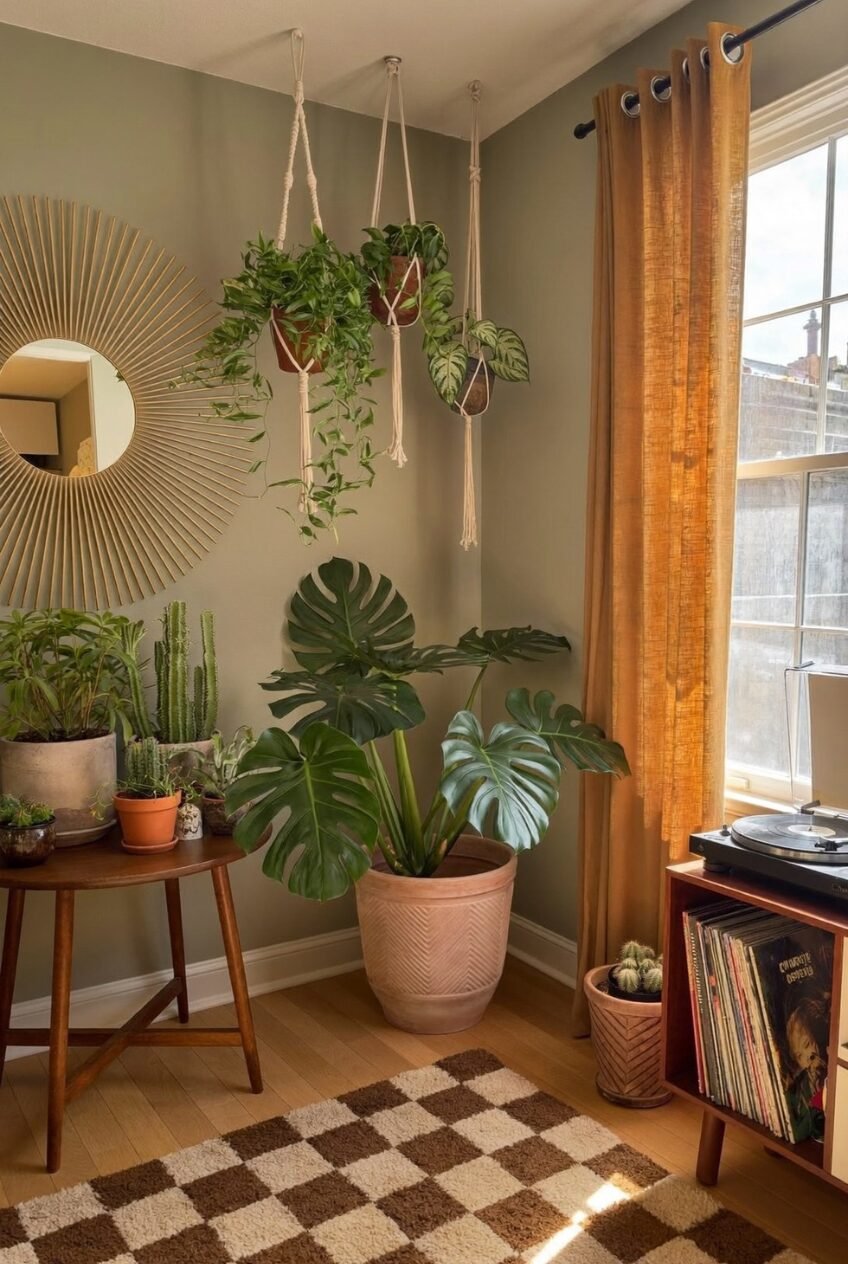
Floor space disappears fast once you own more than a handful of plants, which is the entire argument for ceiling-hung macrame planters. Three trailing varieties suspended at slightly different lengths add real depth to a corner without claiming a single inch of floor, letting the leaves spill downward instead of sprawling outward across furniture.
Below them, a large monstera anchors the grouping at ground level, giving the eye somewhere to land before it travels up toward the hanging plants. A sunburst mirror nearby adds another circular shape that quietly ties the whole arrangement together, echoing the rounded baskets the macrame ropes cradle. Even the curtain color picks up the warm tones running through the wood and rope.
If you’re trying this at home, vary your hanger lengths by at least a few inches each so the planters don’t sit in a flat, boring row. Macrame is inexpensive and forgiving, so it’s a low-stakes way to test vertical space before committing to anything more permanent like a shelf or rod system.
A Tiered Stand for Color
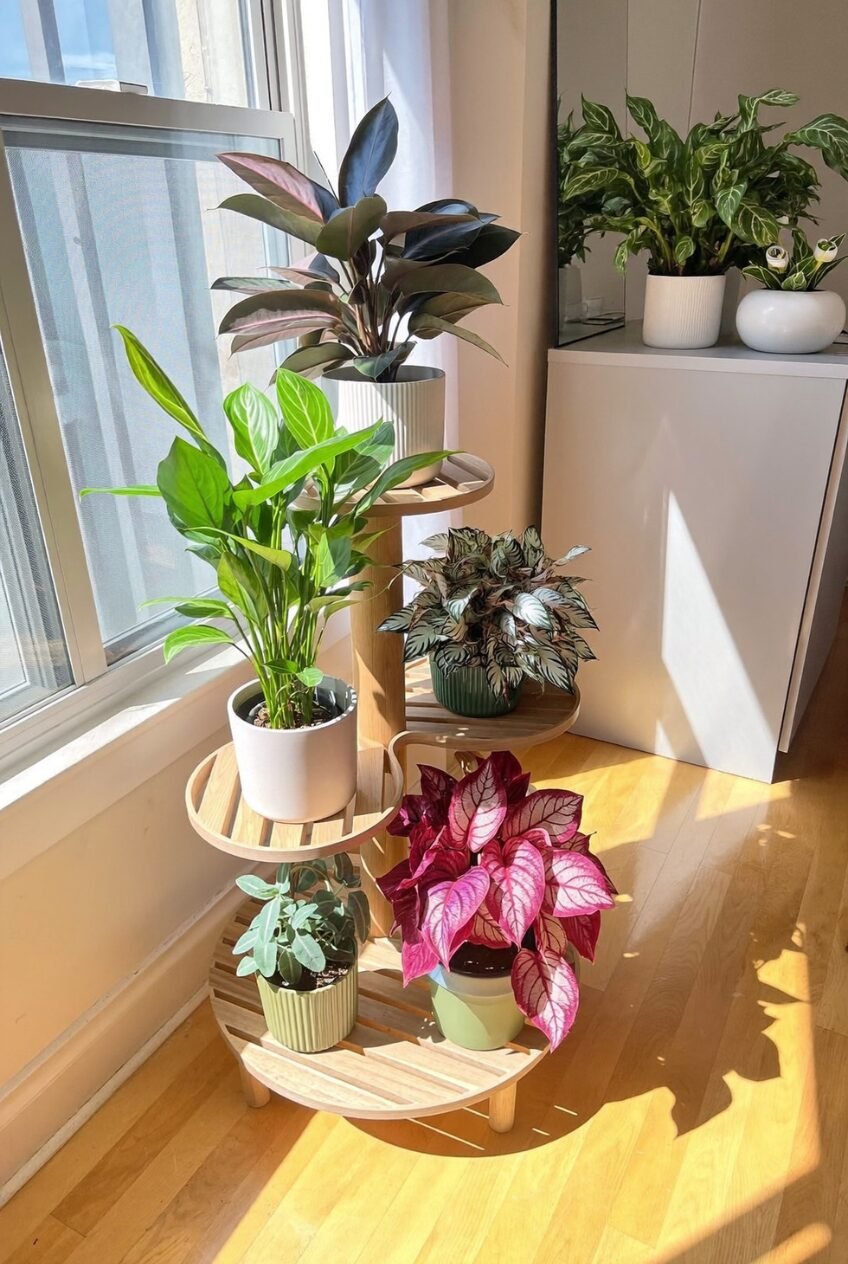
Most plant displays lean heavily on green, so a setup like this one stands out by leaning into color instead. A burgundy rubber plant, a silver-veined fittonia, and a deep pink coleus all sit on the same tiered wooden stand, turning a single piece of furniture into a small color study.
What makes the arrangement work is the round, repeating shape of the stand itself. Each circular tier holds one or two pots, so the color shifts as your eye moves down the structure instead of all the contrast hitting you at once. Sunlight pouring in from a nearby window also makes the deeper burgundy and pink tones look almost lit from within during certain hours of the day.
If your plant collection feels a little too uniformly green, a tiered stand is a low-commitment way to introduce variety. Look for varieties with naturally colorful foliage, like calathea, fittonia, or coleus, and group them by how strongly their colors contrast rather than by species.
Plant Walls Look Different at Night
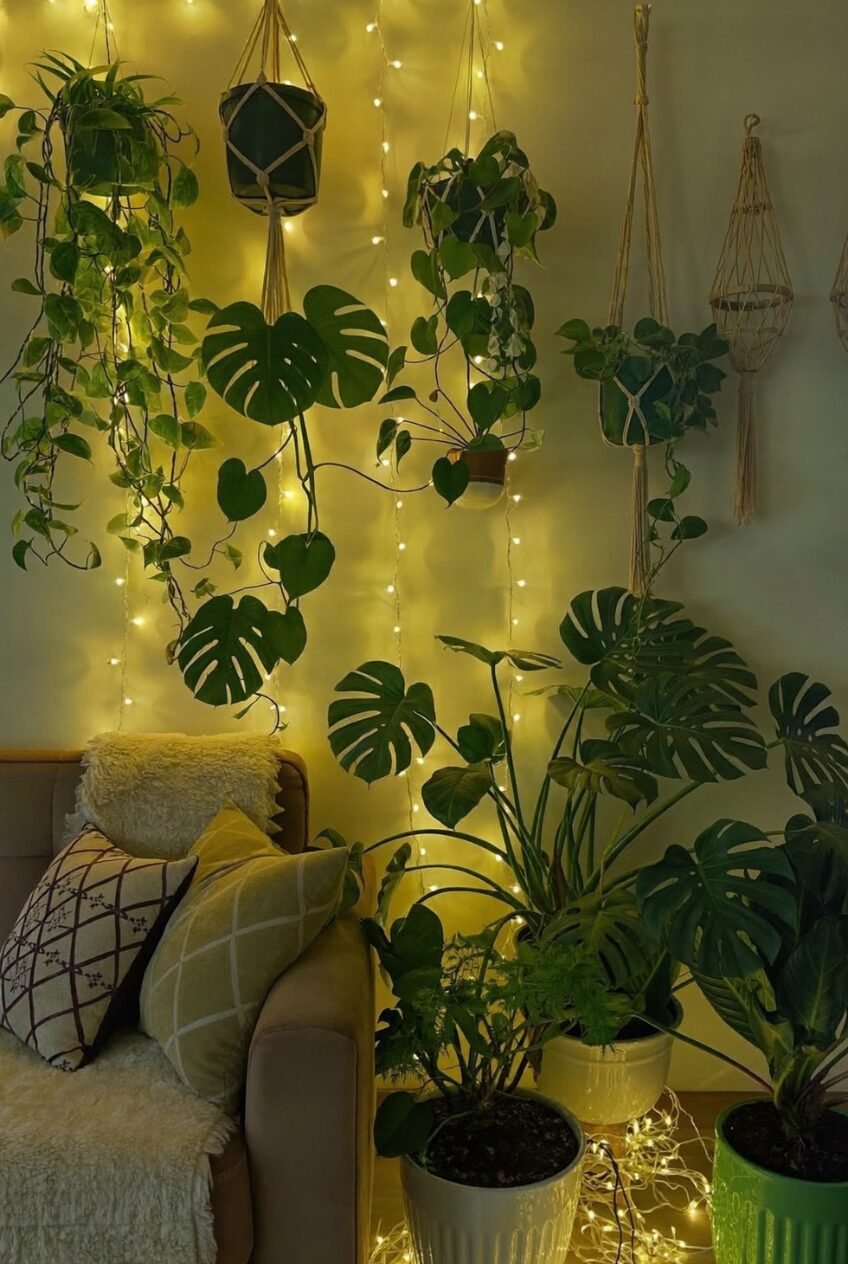
Daylight gets all the attention in plant photography, but a wall like this one proves nighttime ambiance matters just as much. Strands of warm fairy lights run vertically behind a dense cluster of pothos and monstera, turning ordinary foliage into something that glows once the sun goes down.
The trick here isn’t complicated. Thin string lights get tucked behind the leaves rather than draped over the front, so the light source stays hidden and only the warm glow filtering through the foliage is visible. A sofa pulled close to the display means this becomes the actual backdrop for evenings spent on the couch, not just a daytime decoration nobody sees after dark. Plush pillows in warm, neutral tones reinforce that same glow instead of fighting against it.
For a similar effect, run a few strands of warm-toned lights behind your fullest plants and let the leaves do the diffusing. The denser the foliage, the softer and more flattering the light ends up looking, and the easier it becomes to hide the actual wiring from view.
Don’t Skip the Bathroom Entirely
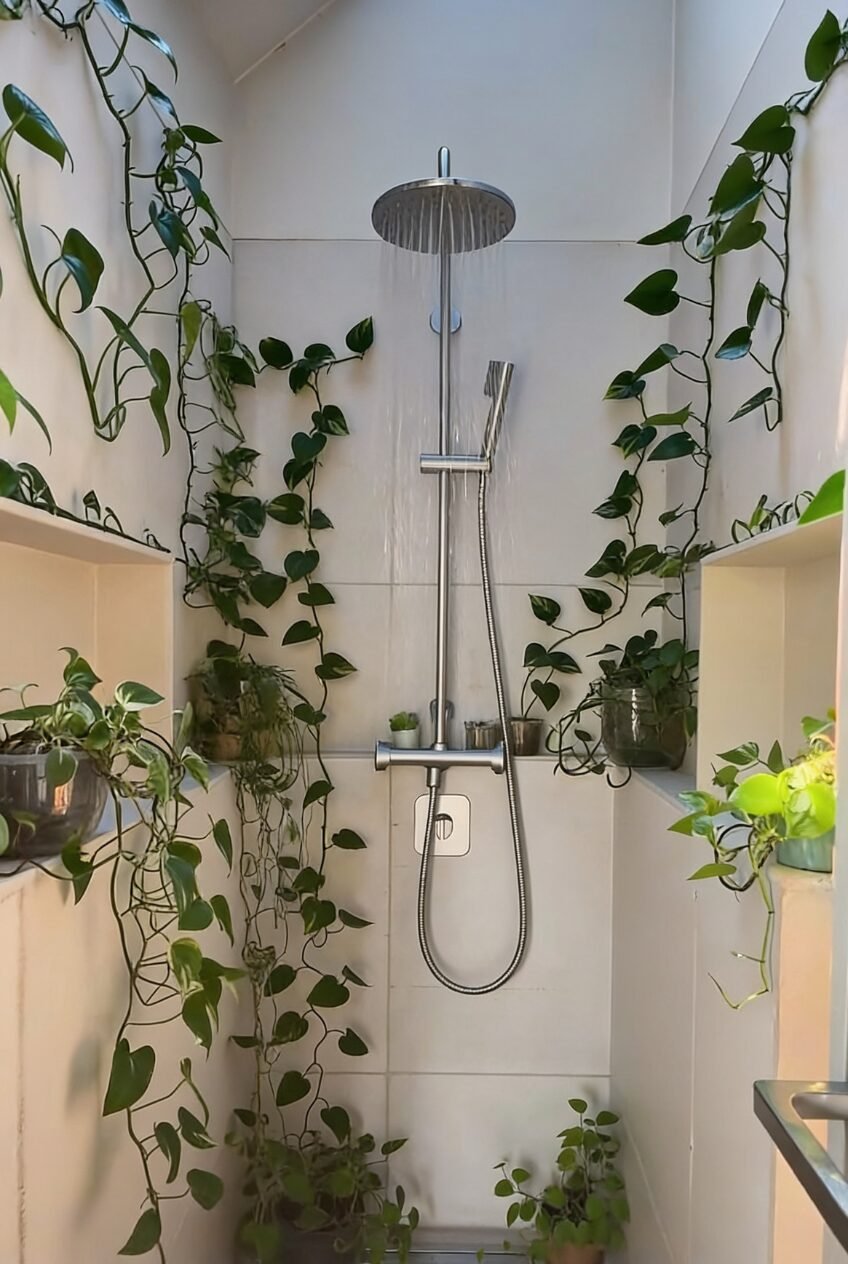
A shower stall covered in trailing pothos sounds like a maintenance nightmare until you remember what bathrooms actually offer: heat and humidity, conditions most houseplants treat as a permanent tropical vacation. Vines climb the tile in loose, natural lines instead of being pruned into anything rigid, which is exactly the point.
Built-in niches on either side hold smaller pots at eye level, so even the parts of the shower not covered in vines still feel deliberate rather than empty. Steam from regular showers does double duty as a humidifier, which is why this setup looks lush without anyone running a misting routine on top of it.
If your bathroom gets any natural light at all, a few trailing pothos or philodendron cuttings in simple jars on a niche shelf will go further than you’d guess. Letting vines climb loosely rather than training them into a strict shape keeps the whole thing feeling unforced.
One Plant as the Statement
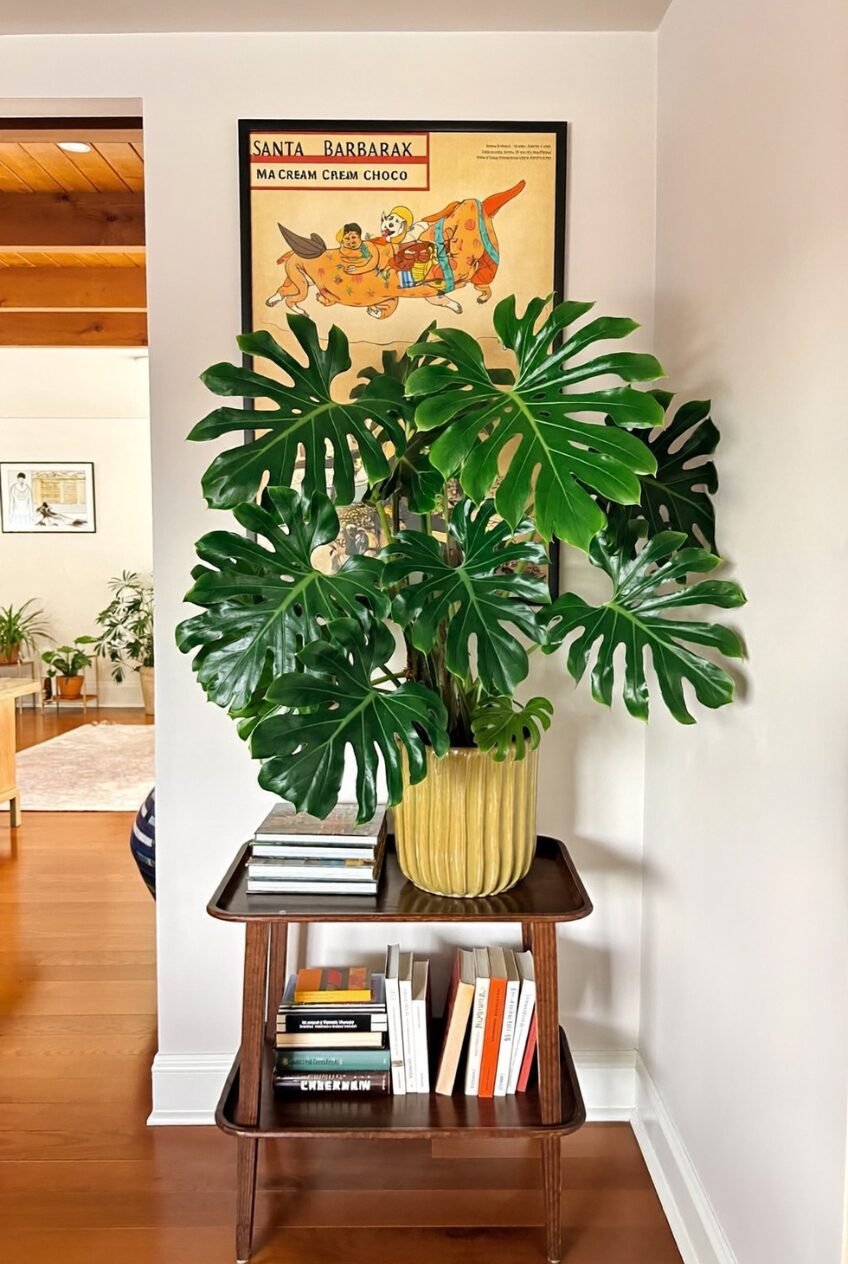
Sometimes restraint is the actual design move. A single split-leaf philodendron, oversized and confidently placed on a console table, does more for a hallway than five smaller plants scattered around ever could. Its leaves spread wide enough to partially frame the vintage poster behind it, which means the plant and the art end up reading as one vignette rather than two competing focal points.
A stack of books beneath the pot adds height and a bit of texture, while the fluted ceramic planter keeps things from looking too plain. We’d argue this kind of single-plant moment works especially well in smaller entryways or hallways where a forest of pots would just feel cramped.
Go for one plant with genuinely large leaves, give it room to spread without crowding it against the wall, and resist the urge to surround it with smaller pots. A single confident plant tends to draw more attention than a dozen smaller ones competing for it.
Build a Jungle Around a Hobby
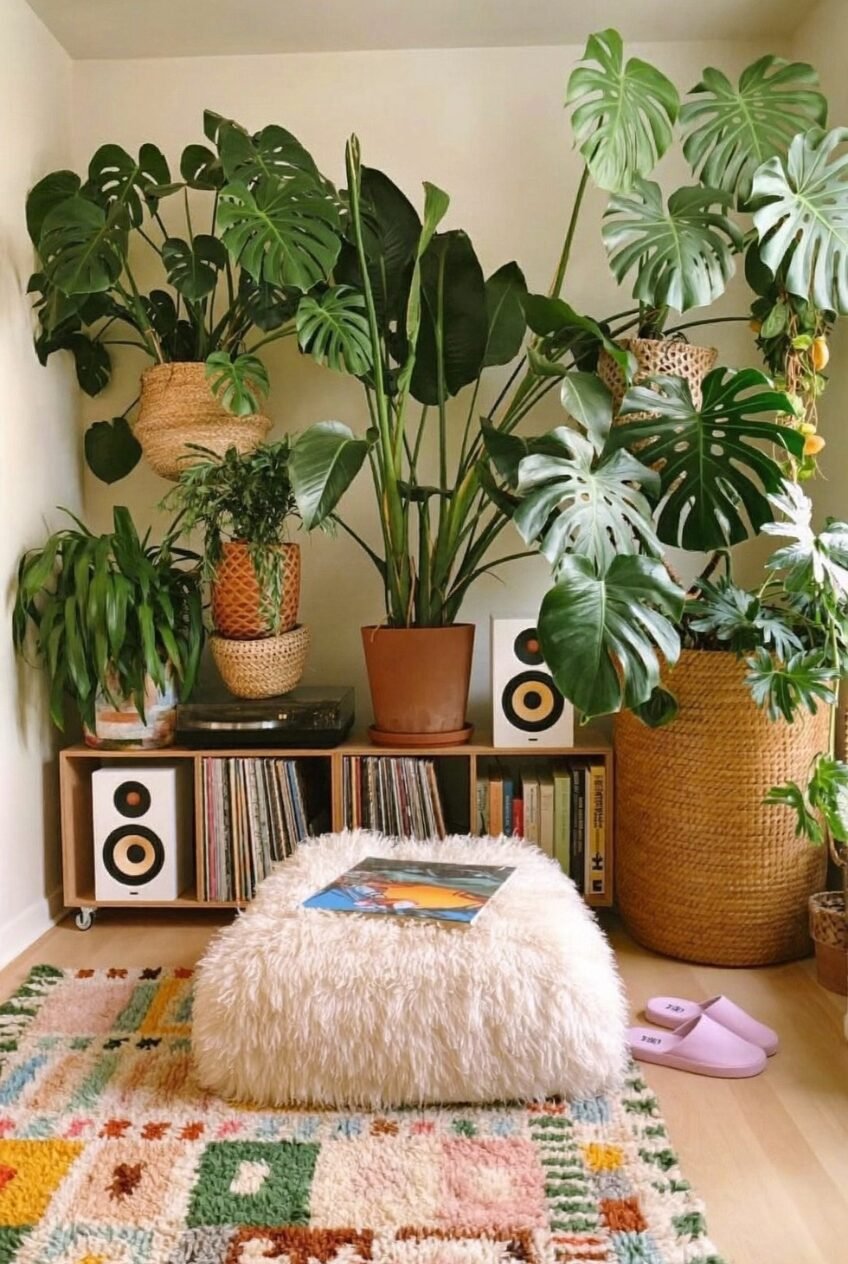
Plants don’t have to live in isolation from the rest of a room’s personality, and this corner makes that case well. A cluster of monsteras in varying sizes surrounds a record player and speaker setup, with a shaggy floor pouf doubling as both seating and a spot to flip through vinyl.
Woven basket planters in different shapes add texture without competing with the patterned rug underneath, proving that busy doesn’t have to mean chaotic as long as the materials feel related. Raising a few pots on basket risers also creates the kind of height variation that keeps a dense plant cluster from reading as flat. Even the slippers tucked beside the pouf feel like part of the scene rather than clutter left behind.
To build something similar, group plants of different heights around whatever corner already reflects your actual hobbies, then use textured baskets instead of matching pots to add visual movement. A record collection, a stack of books, or even a coffee setup works just as well as the anchor.
Treat Small Plants as Gallery Pieces
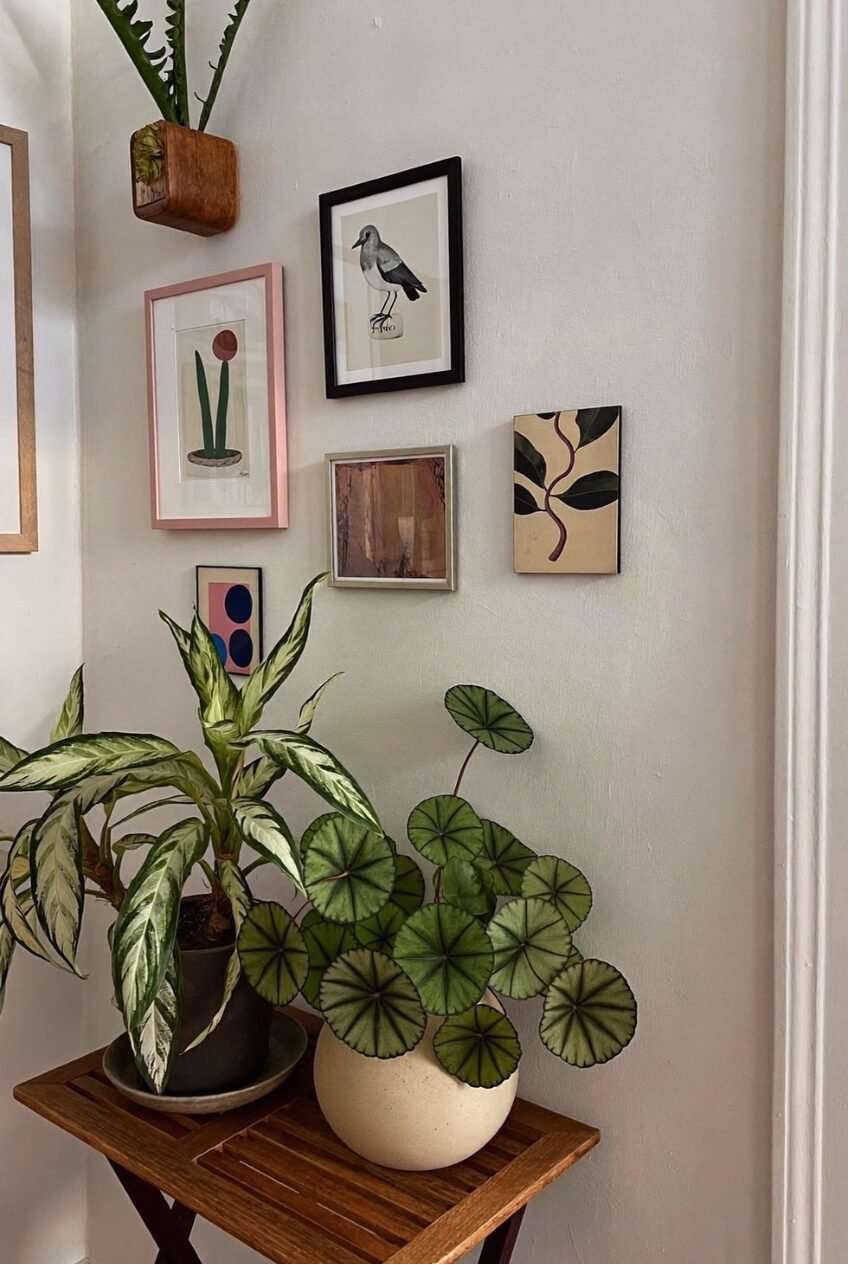
Not every plant needs to dominate a room, and this little vignette proves a small one can hold its own next to actual art. A trailing begonia with coin-shaped leaves and a silver-striped aglaonema sit on a low wooden stool directly beneath a gallery wall, their leaf shapes echoing the botanical illustrations hung just above them.
The frames around the artwork aren’t matched perfectly, and that’s exactly why it works. Mismatched frame colors paired with plants that have equally varied leaf textures keep the whole corner from feeling overly staged or showroom-stiff. A small hanging planter tucked into the upper corner adds one more layer without crowding the composition below it.
A stool or small side table is really all this idea requires. Place one or two smaller plants beneath any existing wall art, and let the leaf shapes do some of the visual lifting that you might normally assign to a vase or a candle. Pick varieties with distinct foliage patterns so they read as deliberate rather than incidental.
Turn a Shelf Into a Garden
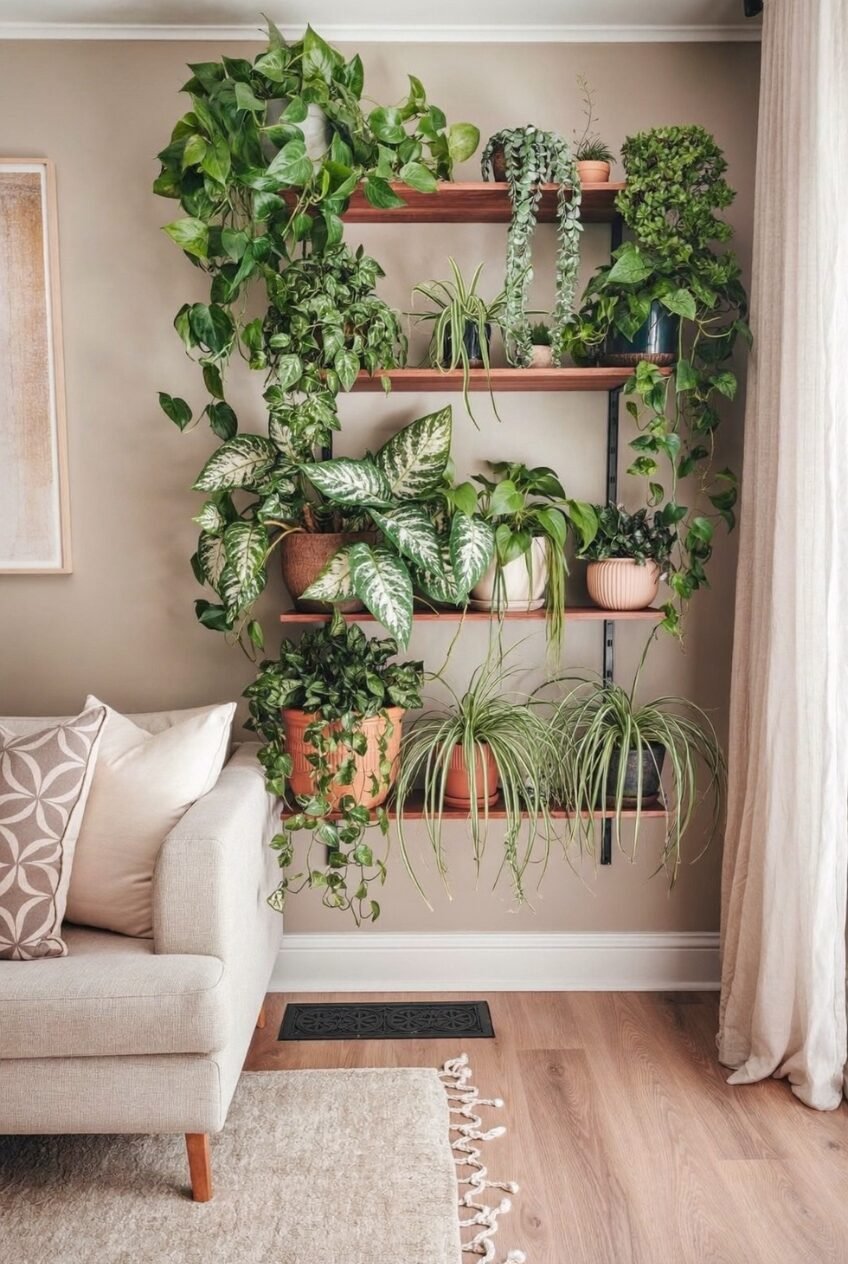
A tiered shelving unit packed floor to ceiling with trailing pothos, snake plants, and ferns essentially functions as a vertical garden bolted to the wall. Each shelf holds a different texture, from broad striped leaves on one tier to thin, grassy blades on another, so even though everything is green, nothing looks repetitive.
The real genius of this setup is restraint in one specific area: the wall color stays neutral and the sofa stays equally muted, which means the shelf gets to be the only loud thing in the room. Trailing vines are allowed to spill well past the edges of each shelf, softening what would otherwise be a fairly rigid, boxy structure.
If you’ve got an open shelving unit gathering dust, this is the move. Mix at least three or four different leaf textures per shelf, let vining plants overflow the edges freely, and keep everything else in the room quiet enough that the plants stay the obvious focal point.
The Best Plant Rooms Are Never Actually Finished
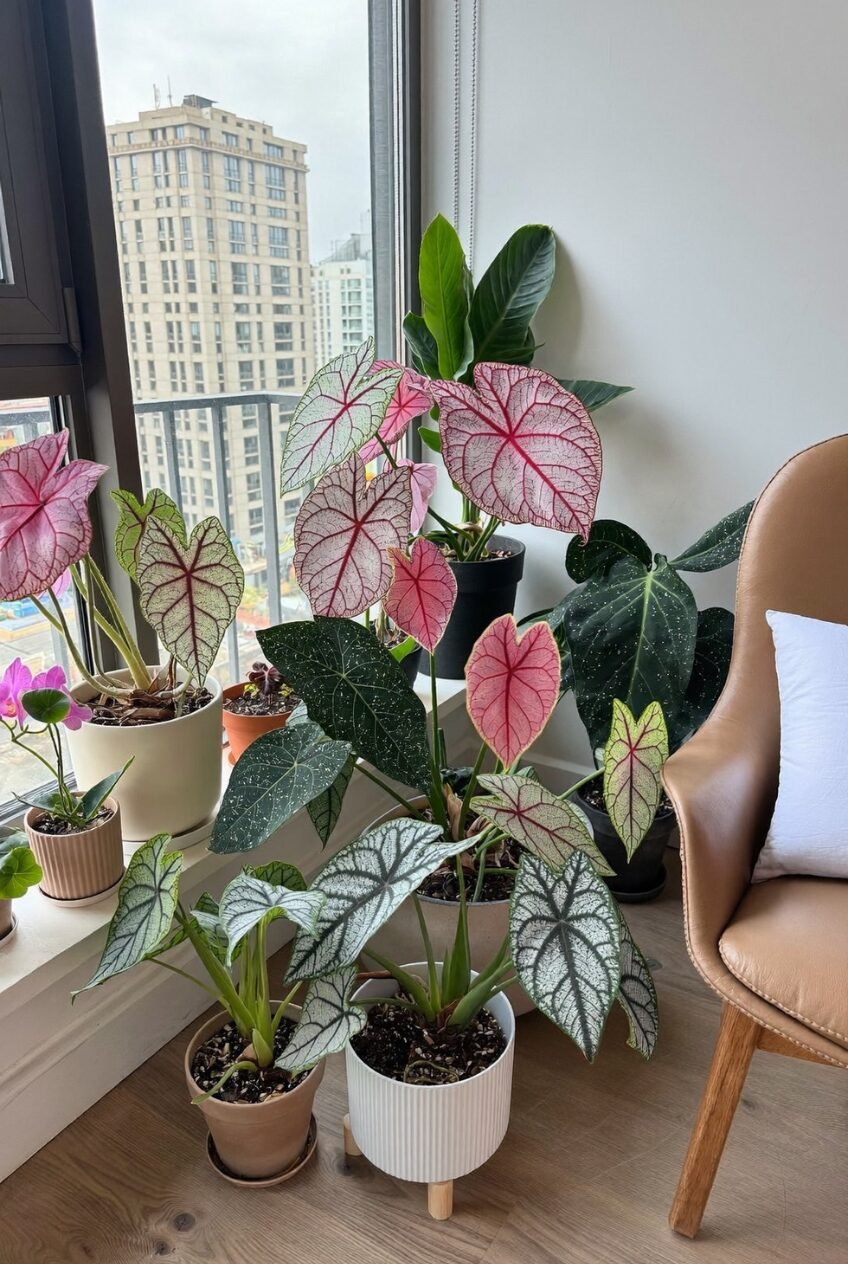
If there’s one thread running through every setup above, it’s that none of them happened all at once. Plant collections grow the way actual plants do, slowly, with a few missteps, and usually one impulsive purchase that ends up becoming everyone’s favorite.
What separates a cluttered room from a genuinely good one usually comes down to a handful of small, repeatable decisions: varying height, mixing textures instead of buying five of the same plant, and giving vining varieties somewhere to actually climb or trail instead of sitting stiffly upright.
We’d encourage picking one idea from this list that felt the most doable and starting there instead of trying to overhaul an entire room in a weekend. The fullest plant corners were never built in a single afternoon, and yours doesn’t need to be either.
 Steal Our Home Styling Secrets!