
The Simple Trick Behind a Christmas Table That Photographs Well
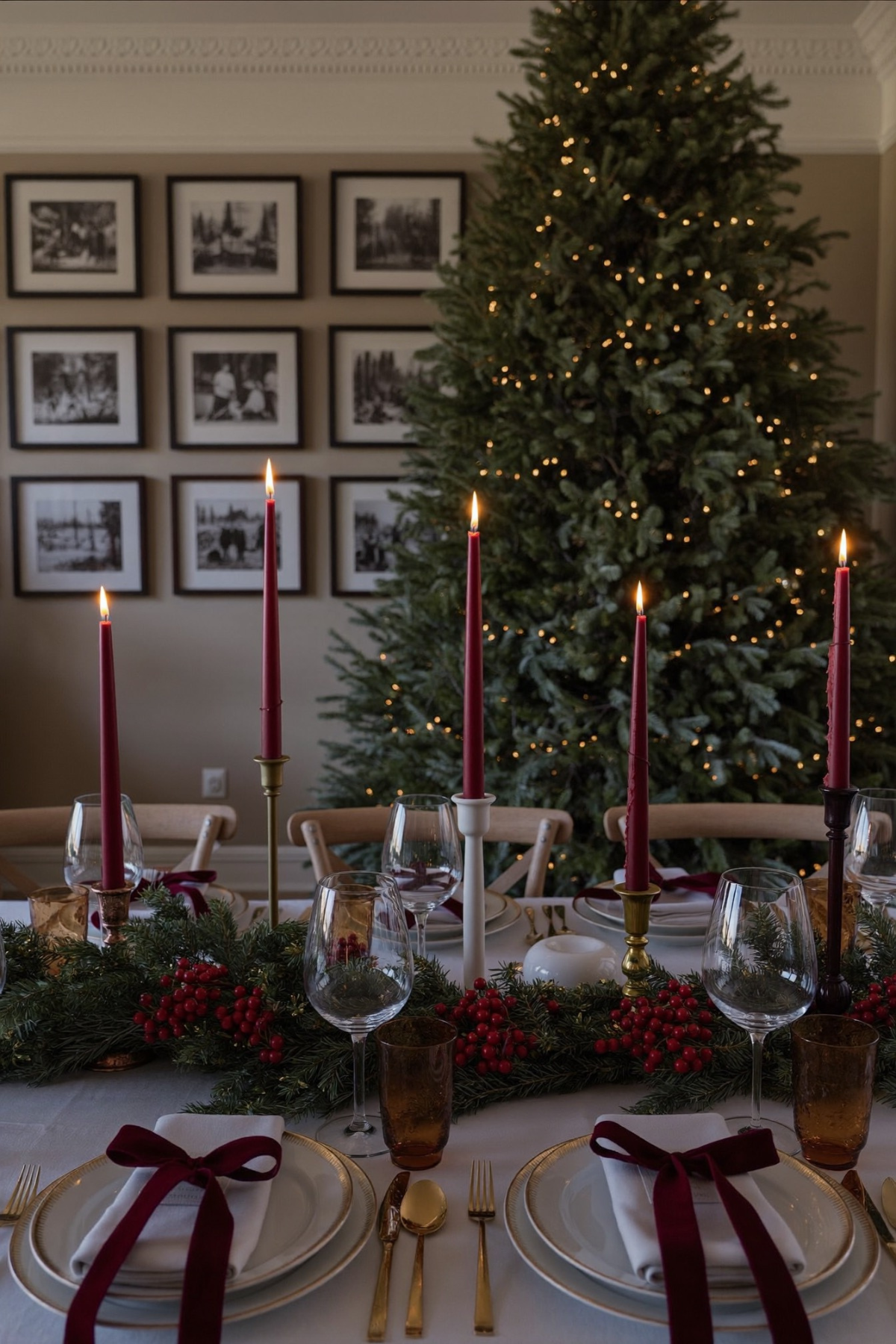
Most Christmas tables end up looking like a decoration aisle exploded across a tablecloth. Ornaments here, a wreath there, three metallics fighting for attention. It works, technically. It just doesn’t feel like anyone chose anything, and guests can tell the difference even if they couldn’t explain why.
The tables that stick with us do something quieter. They pick one or two ideas and commit: a single color story, one vessel repeated across the spread, candlelight instead of overhead light doing the heavy lifting. Restraint reads as confidence, and confidence is what makes a table photograph well after the candles burn halfway down.
We pulled together table setups that each lean on a different principle, from vessel choice to garland substitution to knowing when to skip pine altogether. Some are formal, some are the kind you’d eat dinner on. None require a new box of ornaments to pull off.
Fill the Vase Before the Flowers

Most people treat a vase as a container for stems and stop there, which wastes half the vessel. The bottom third of a clear glass vase is prime real estate, and filling it with ornament balls before adding any greenery turns one piece into a two-part centerpiece. Color and shine live down low, texture and height happen above it.
Mixing finishes matters more than mixing colors here. A handful of matte, glossy, and glitter ornaments in red and gold reads far more considered than an all-matching set out of one box, because it mimics how light catches things in a real room rather than looking pre-packaged. Uneven sizes help too, since perfectly matched spheres tend to look store-bought.
Once the base is filled, keep the top simple: a few pine sprigs, one or two metallic branches for height, a scattering of berries pushed in at different angles. The vase is doing most of the visual work already, so the greenery just needs to finish the silhouette, not compete with it.
Turn Jars Into Actual Candlelight
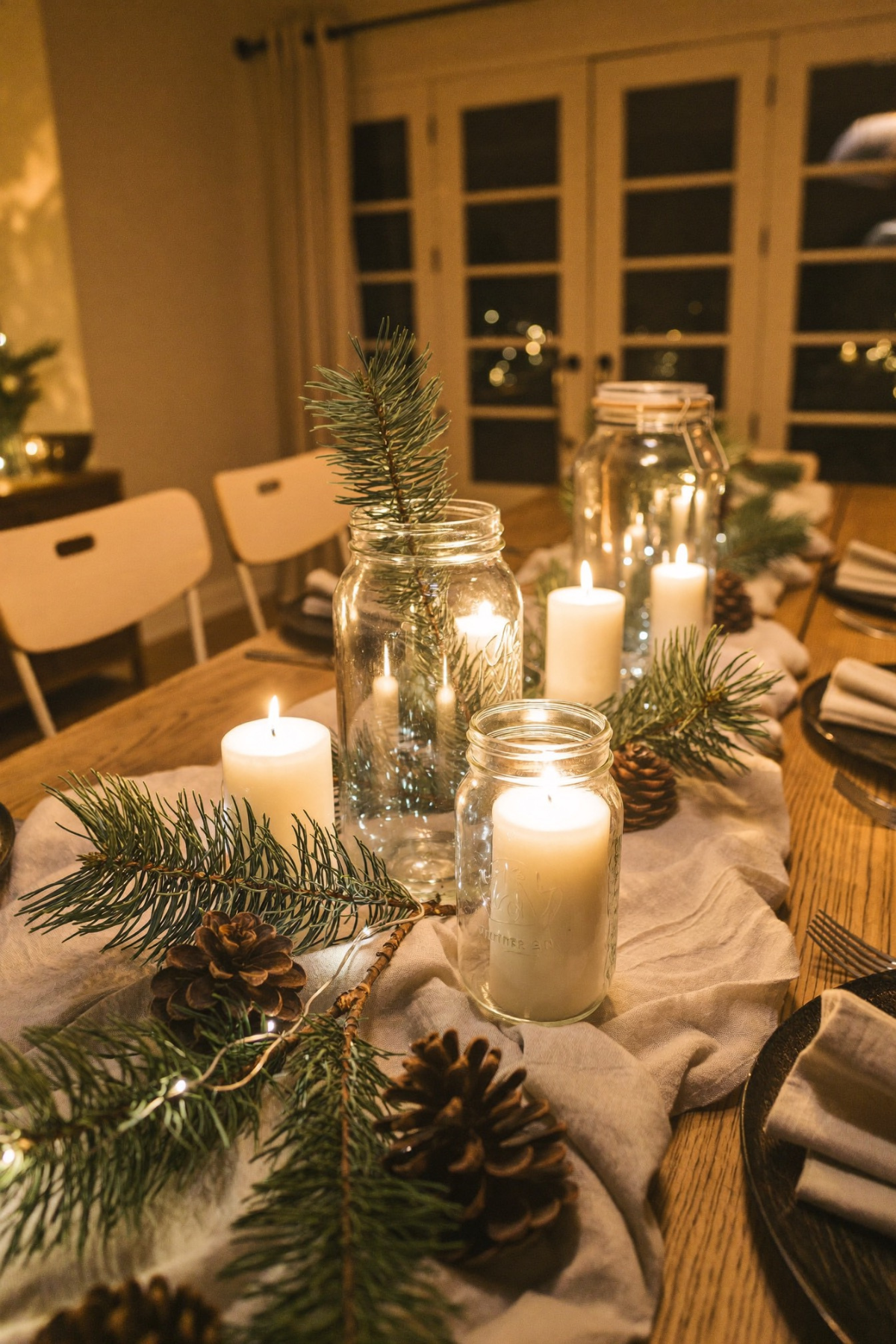
There’s a specific kind of warmth that only comes from candlelight bouncing around inside glass, and it’s the reason this setup works at night in a way flat pillar candles on a plate never quite manage. Set a mason jar over a lit candle and the flame gets doubled, softened, scattered across the table.
We’d skip buying anything new for this one. Pull whatever jars are already sitting in the cupboard, mix the sizes without worrying about matching them, and let some hold pillar candles while others just get a single pine sprig pushed in near the rim. Uneven heights are the whole point, not a mistake that needs fixing before anyone notices.
Pinecones scattered loosely between the jars fill the gaps without needing another vessel, and a thin strand of fairy lights tucked underneath the greenery keeps the glow going once the candles eventually burn low. Nothing here needs to match perfectly for the table to still feel put together.
Let a Container Carry the Theme

A generic runner of loose candles and greenery says holiday. A weathered wooden sleigh doing the same job says something more specific, and that specificity is what makes a centerpiece memorable instead of just seasonal. The vessel itself becomes the decoration before a single candle even gets added to the arrangement.
Once you’ve got a container with a strong silhouette, resist the urge to fill it edge to edge with one uniform height of candle. Vary the tapers and pillars so the eye travels up and down across the arrangement instead of scanning one flat row of matching flames, and let a few sprigs peek out between them.
Keep the palette restrained, white candles, cream flocked accents, a few small woodland figures tucked near the base, so the red berries scattered throughout get to act as the only real pop of color. A visually busy container almost always needs a quiet color story working underneath it to hold the whole thing together.
Give a Small Object Actual Height

Small sentimental pieces almost always lose the fight for attention on a busy table, buried under candles and greenery until nobody really notices them at all. Put that same object on a raised pedestal, a candlestick, a cake stand, anything with a base, and suddenly it reads as the focal point instead of a stray decoration nobody quite planned for.
Height does something almost psychological here: anything raised above the table line gets treated as important by default, even if it’s a figurine that cost very little or came from a box in the attic. It’s less about what the object is and far more about where you chose to put it relative to the rest of the setting.
Flank the pedestal with a matched pair of candlesticks for symmetry, then pack greenery loosely around its base so the stand itself doesn’t look like it’s floating above the tablecloth. A little imbalance at the bottom can undo the entire effect of adding height up top.
Repeat the Vessel, Vary the Plant
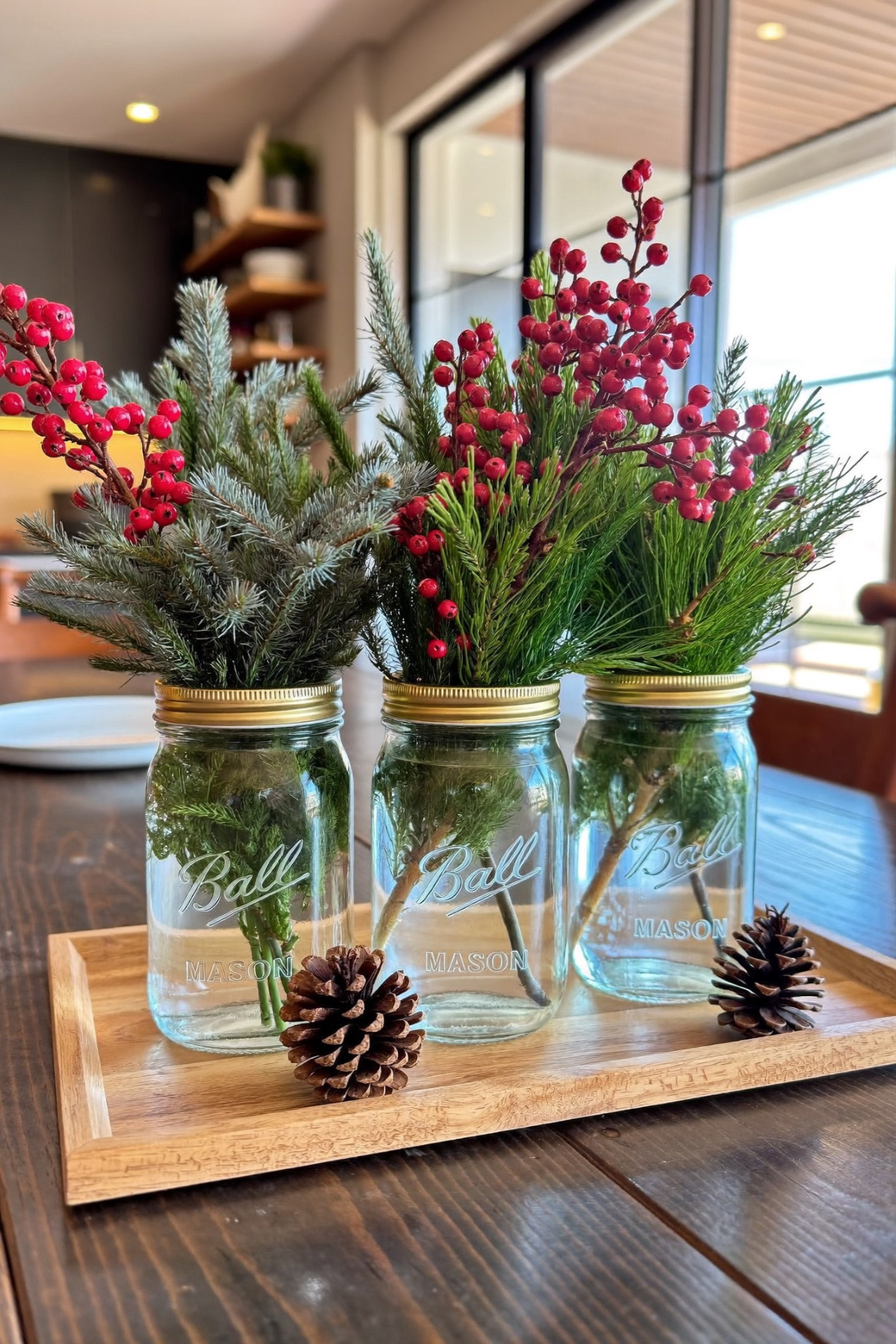
Contained variety beats matched perfection almost every time on a holiday table. Three identical jars set in a row already read as considered simply because they share the same shape and size, which frees you up to put something different in each one without the whole arrangement tipping into visual chaos or feeling like it was assembled in a rush.
Blue spruce in one jar, red berry stems in another, long-needle pine in the third, the differences in texture and shade do more visual work than any single “perfect” arrangement could ever manage on its own, because the eye gets to compare and linger rather than absorb one uniform note.
A wooden tray underneath ties the three jars into a single cohesive unit instead of three separate objects scattered across the table, and a couple of loose pinecones set beside the tray act as connective tissue between them. Small grouping decisions like a shared base matter more here than the specific flowers ever will.
Style the Kitchen Like It Counts

The dining table gets all the holiday attention while the kitchen island, arguably the room people actually gather around before and after the meal, gets a single candle and calls it finished. That’s backwards, especially in an open-concept layout where the island is visible from nearly every other part of the room, including the dining table itself.
A matched pair of figures does more than one scattered around at random ever could. Two snowmen flanking a central vase of greenery reads as an actual display, while five different characters spread loosely across the counter starts to read like clutter that accumulated gradually over several holiday seasons without anyone noticing it happen.
Keep the palette tight, red, white, warm wood tones, nothing else competing for space, and add one small charm piece like a tiny gingerbread house between the two larger figures to give the eye somewhere to land. Restraint in a high-traffic zone like the kitchen matters even more than it does at the dining table.
Commit to One Color and Metallic
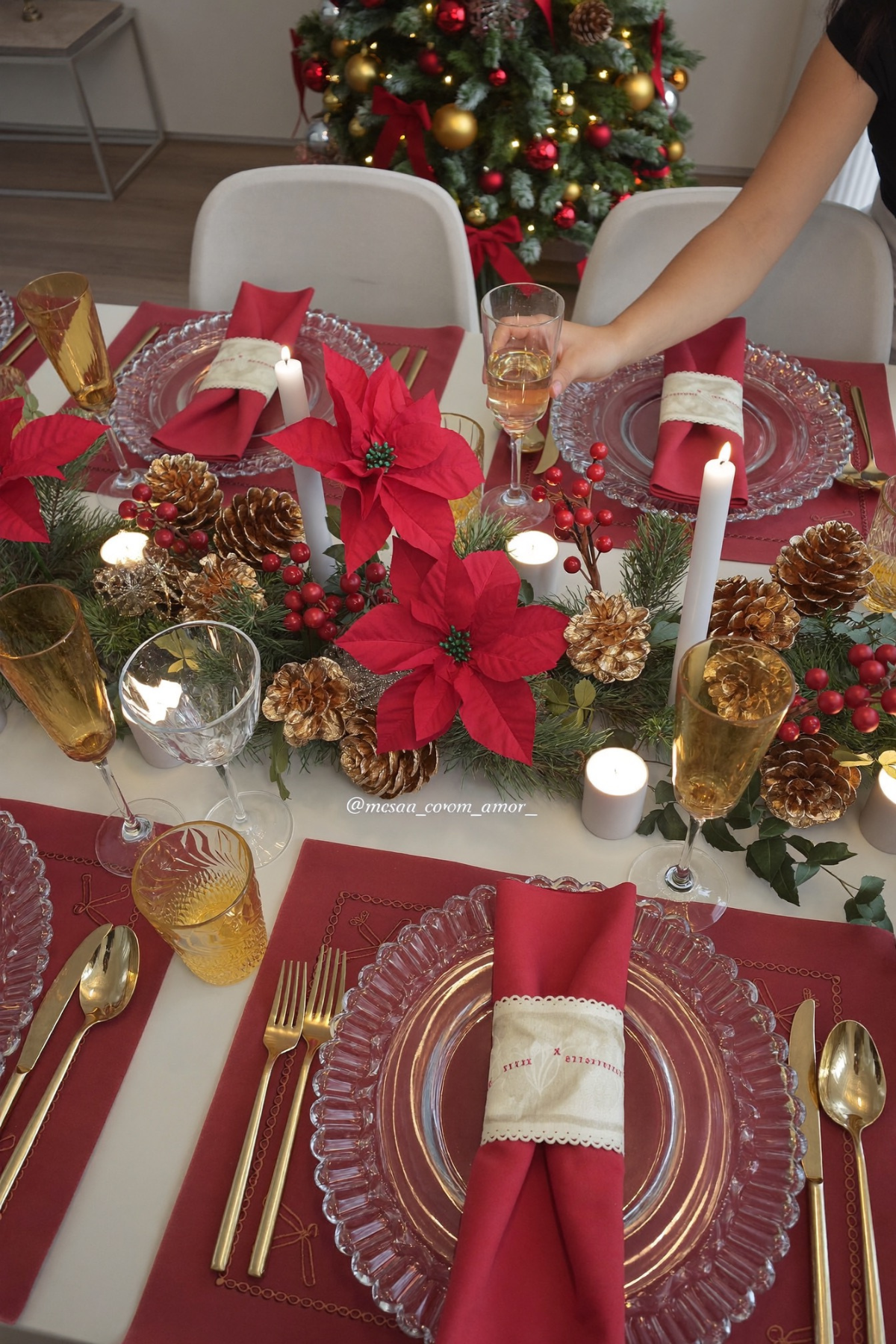
Rainbow ornaments feel festive in the moment and busy in every photo taken after the fact. Picking one dominant color and a single metallic instead, here it’s red and gold with nothing else competing, is the fastest way to make a table read expensive without actually spending more money on new decor pieces.
Poinsettias do something plastic ornaments simply can’t manage: they add real floral shape and softness against all the pinecones and glassware on the table, which otherwise risks feeling stiff and overly formal by the time everyone actually sits down. Even a couple of stems tucked directly into the garland changes the texture of the whole spread noticeably.
Clear glass chargers keep the base of each place setting light instead of adding a third material into an already busy mix, and a contrasting cream band wrapped around every red napkin gives each seat its own small detail without introducing a brand new color. Small repeated gestures like that are what hold a long table together visually.
Skip Pine and Still Feel Warm
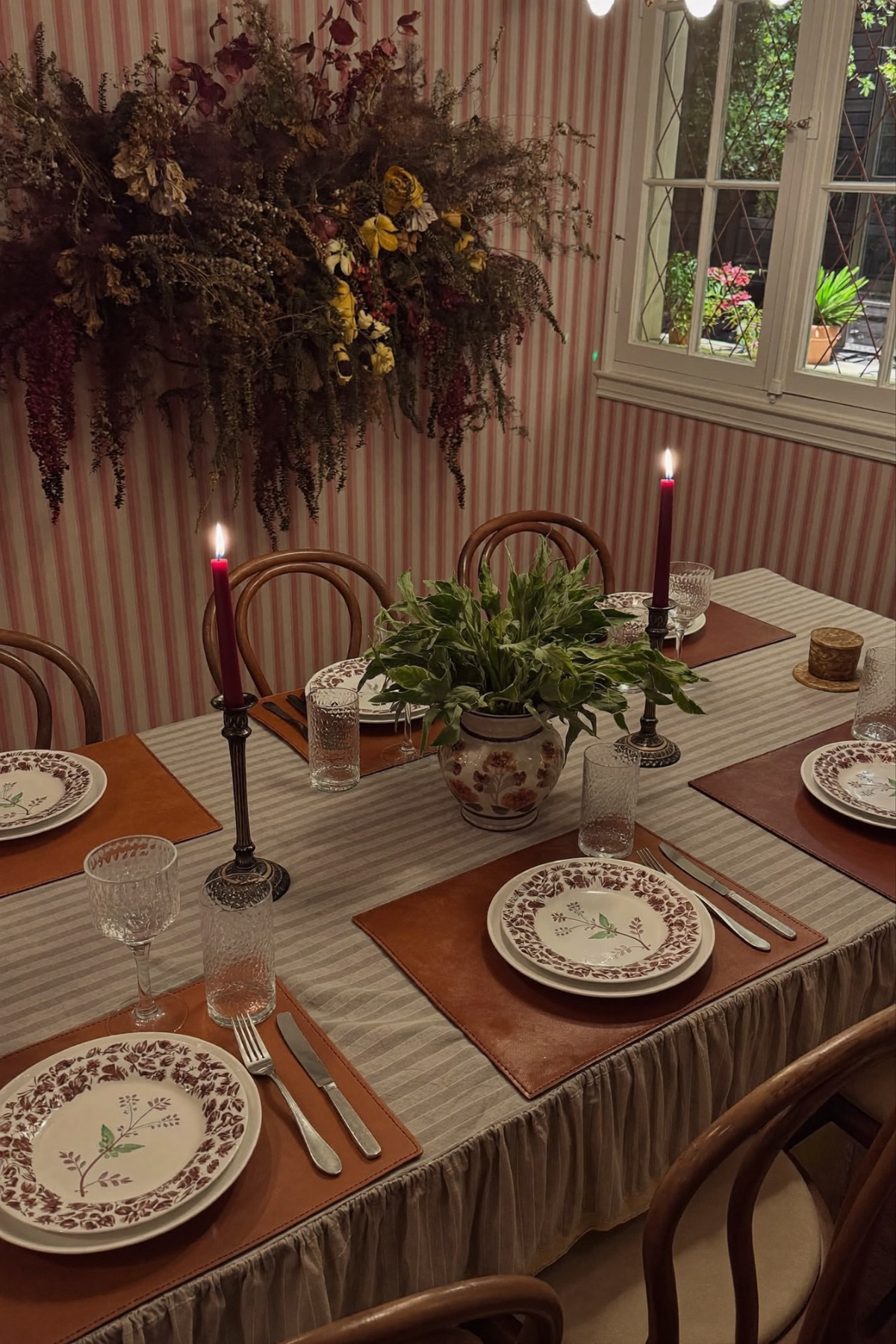
Not every holiday table needs pine, poinsettias, or a single string of fairy lights to feel like the season has actually arrived. Here, a lush potted plant sits at the center of a striped, candlelit room, and the warmth comes almost entirely from the dark taper candles and the color saturating the walls instead of anything obviously seasonal on the table.
Moving the floral moment off the table entirely, up onto the wall as a hanging dried arrangement instead, frees the entire surface for place settings and food without sacrificing any of the drama a big centerpiece usually provides. The room itself does the seasonal storytelling instead of leaving that job to the table alone.
Leather placemats and botanical-print plates add pattern and richness without a single ornament anywhere in sight, proving a holiday table can lean fully into color and candlelight rather than obvious iconography. It’s a solid option for anyone who finds the usual red-and-green formula starting to feel a little predictable by mid-December.
Tuck Ornaments Directly Into the Garland
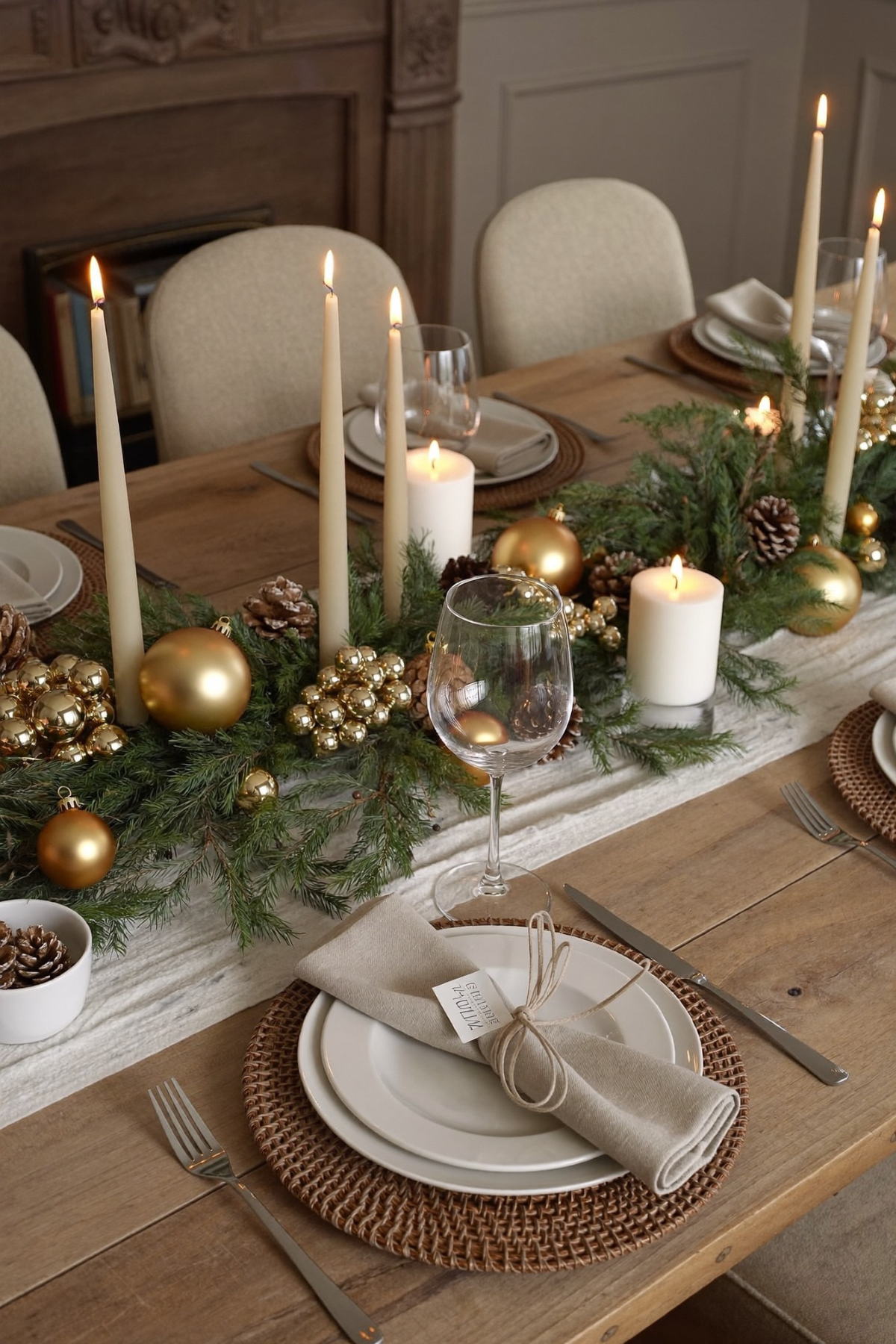
Swapping a fabric table runner for an actual pine garland changes the entire feel of a table before a single candle even gets lit. It grounds everything in real texture instead of flat cotton or linen, and it gives you a base that already looks considered before you’ve added anything else to the surface at all.
Pushing ornament balls straight into the greenery, instead of scattering them separately across the table in their own little piles, saves an entire layer of styling decisions later. The garland holds them in place on its own, varies their height naturally as it curves, and keeps the shine from competing directly with the candles for table space.
Rattan or woven chargers underneath the whole arrangement keep the polish from tipping over into stiffness, and a simple twine-tied napkin with a small paper tag does more for the place setting than another ornament ever would. Natural materials are ultimately what keep a metallic-heavy table from starting to feel like a retail display.
Choose Greenery Based on the Mood
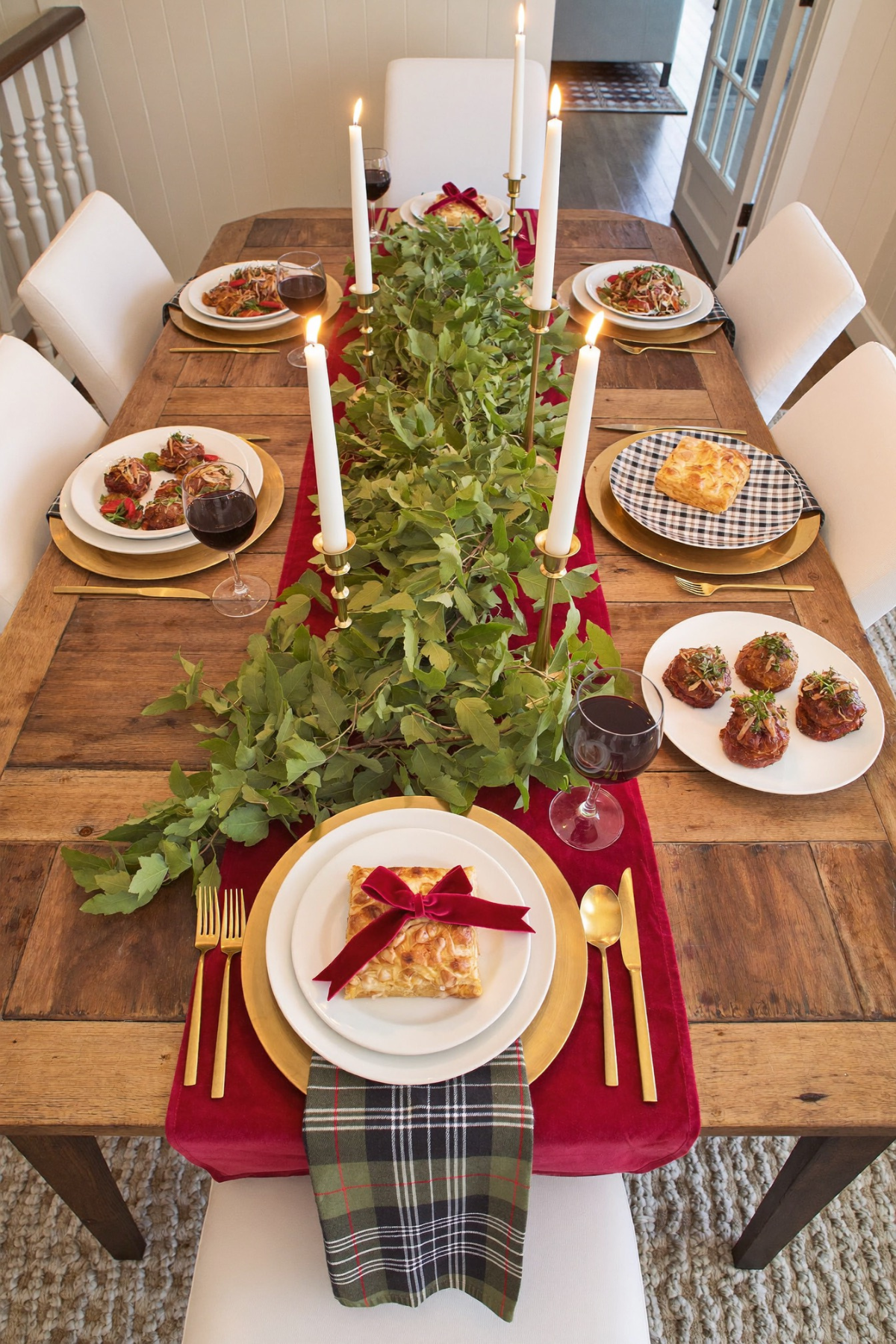
Pine says Christmas immediately, which is exactly why it isn’t always the right choice for every kind of gathering. A bay leaf or laurel garland reads more like a harvest dinner party than a holiday photo shoot, and that shift matters if the table is actually being used for a real meal rather than staged for one quick moment.
A deep velvet runner underneath the garland pulls the whole palette into jewel tones instead of the usual red-and-green pairing everyone defaults to, which makes the table feel considerably more grown-up without losing any of its warmth. Brass candlesticks, evenly spaced down the center, keep the eye moving the full length of the table.
Letting the food sit right there among the greenery, plated and fully visible instead of tucked away in the kitchen until the last minute, is its own kind of styling decision. A table that still looks good mid-meal, not just before anyone has sat down, is doing something most centerpiece tutorials never bother to account for.
The Christmas Table Details We Will Keep Reusing
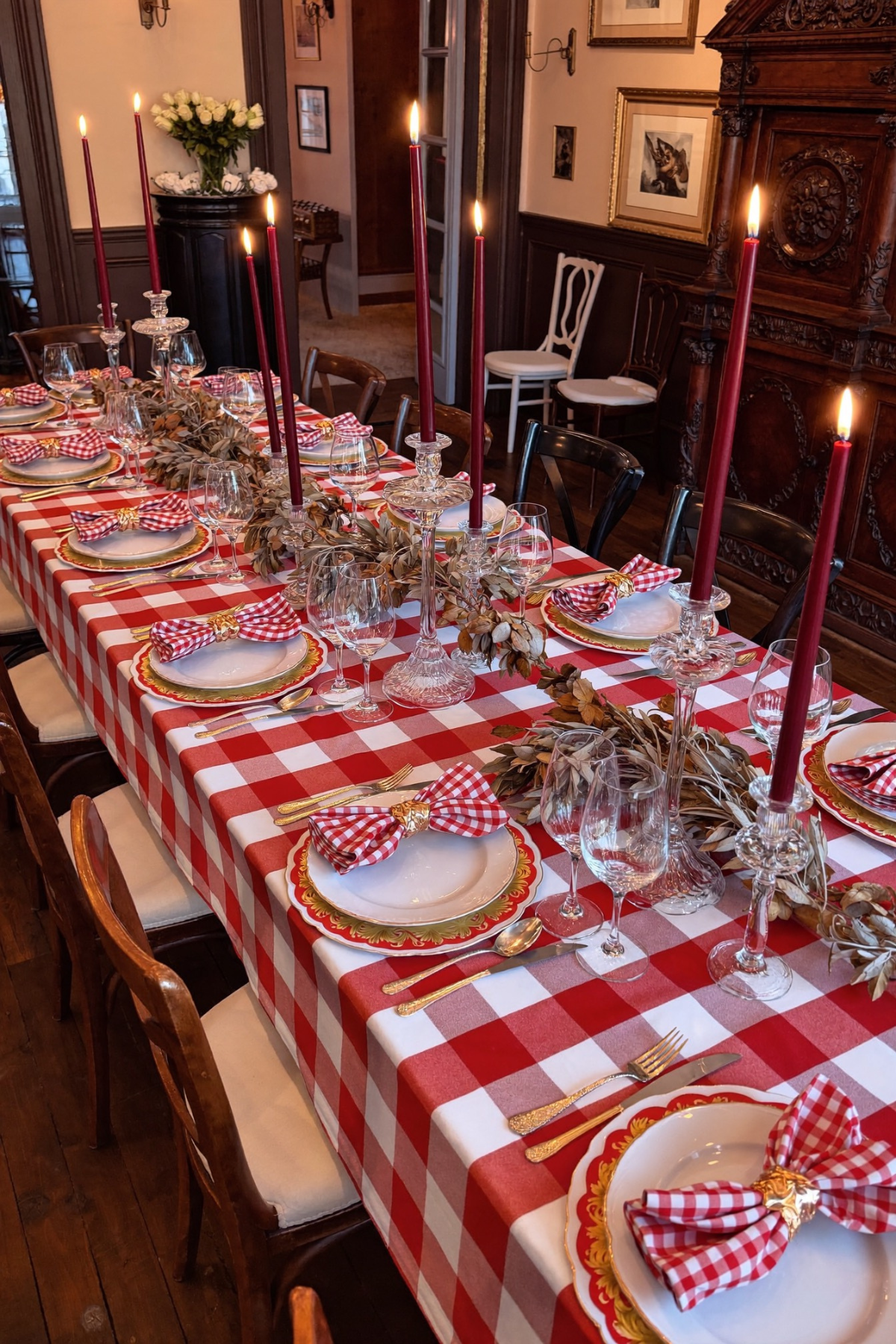
None of these tables required a full holiday decor haul. A wooden tray, jars already in the cabinet, one good garland, candles in varying heights. The best details were almost always about arrangement, not acquisition, which is good news for anyone decorating on a deadline.
If there’s a throughline, it’s that constraint helps. Pick one vessel, one palette, one greenery type, and let it repeat across the table instead of introducing a new element every few inches. The eye reads repetition as considered, even when the actual planning took twenty minutes.
Take whichever detail matched your space, not the one that photographed loudest. A pedestal, a tray, a swap from pine to bay leaf. Small decisions like that separate a table someone remembers from one they simply walked past on the way to dinner.
 Steal Our Home Styling Secrets!