
Unexpected Christmas Tree Ideas Worth Stealing For Your Own Living Room

A Christmas tree is basically a mood board you can plug into the wall. Long before anyone walks past the mantel or notices the stockings, the tree has already told them whether this house does whimsical, formal, or somewhere delightfully in between.
We pulled together a full range of completely different trees this year, and none of them repeat the same trick twice. Some lean into a single bold color, some borrow shapes you wouldn’t expect from a conifer, and a couple skip the traditional tree shape altogether.
Pick and choose rather than copying one whole vignette. Maybe you take the ribbon technique from one and the ornament scale from another. Trees like these tend to feel less like a showroom display and more like someone actually lives with a strong opinion about color.
Commit Fully To One Character
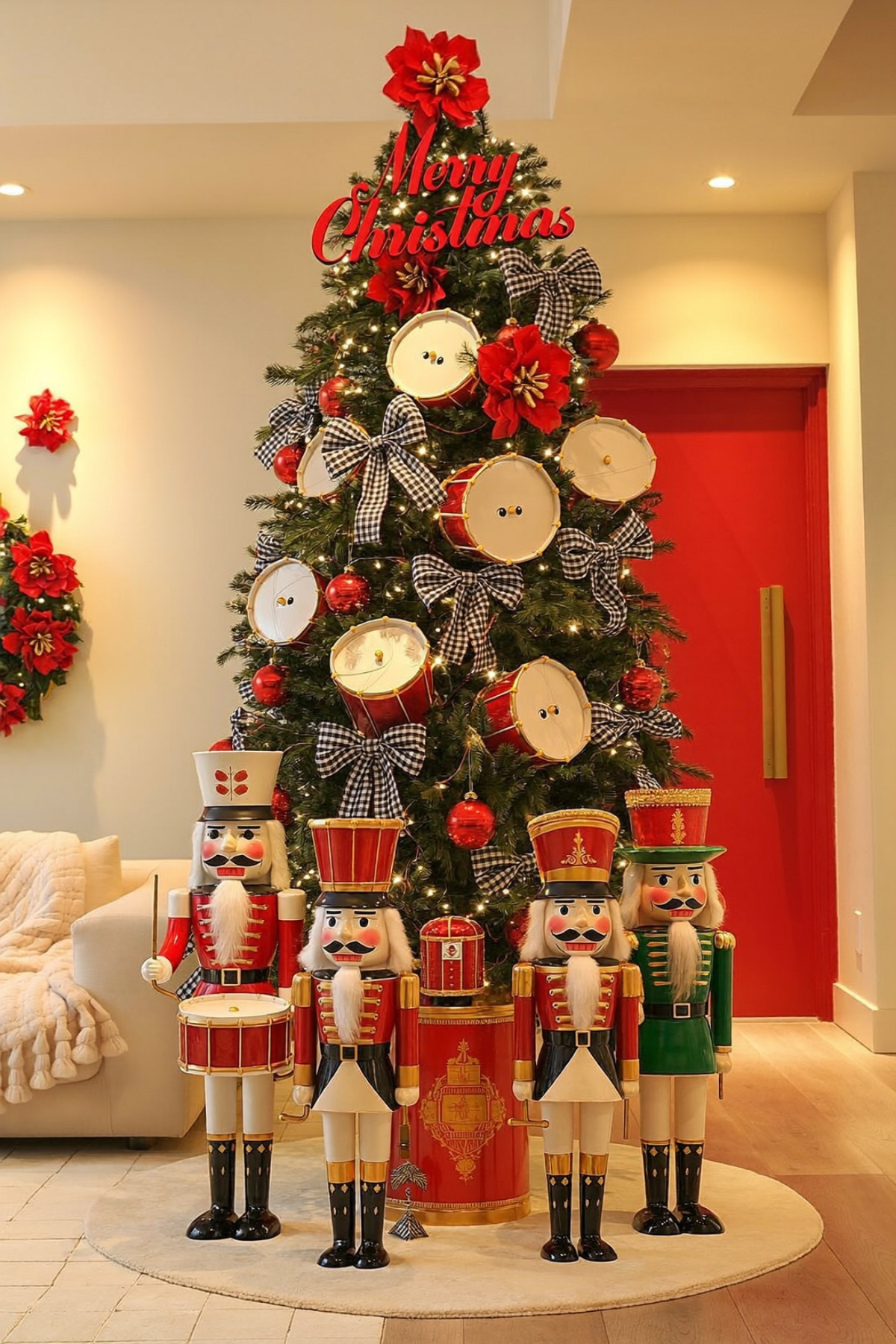
Half-hearted theming is the fastest way to make a tree look like an afterthought rather than a planned choice. This tree picks a single idea, drums and toy soldiers, and refuses to let anything else compete for attention. Even the ribbon pattern, a simple black and white check, was chosen because it reads as a uniform trim rather than a separate decoration fighting for space.
A marching band of nutcracker figures on the floor around the base does more work than another string of lights ever could. Ground-level figures pull your eye down and out, which makes a single tree feel like it commands an entire corner of the room rather than one narrow strip of it.
If you want to try a themed tree like this, pick one motif and only shop within it. A drum, a toy soldier, a single bow color. Everything else should just repeat that idea in a slightly different shape, not introduce a new one, or the theme starts to blur.
Let Tinsel Do The Heavy Lifting
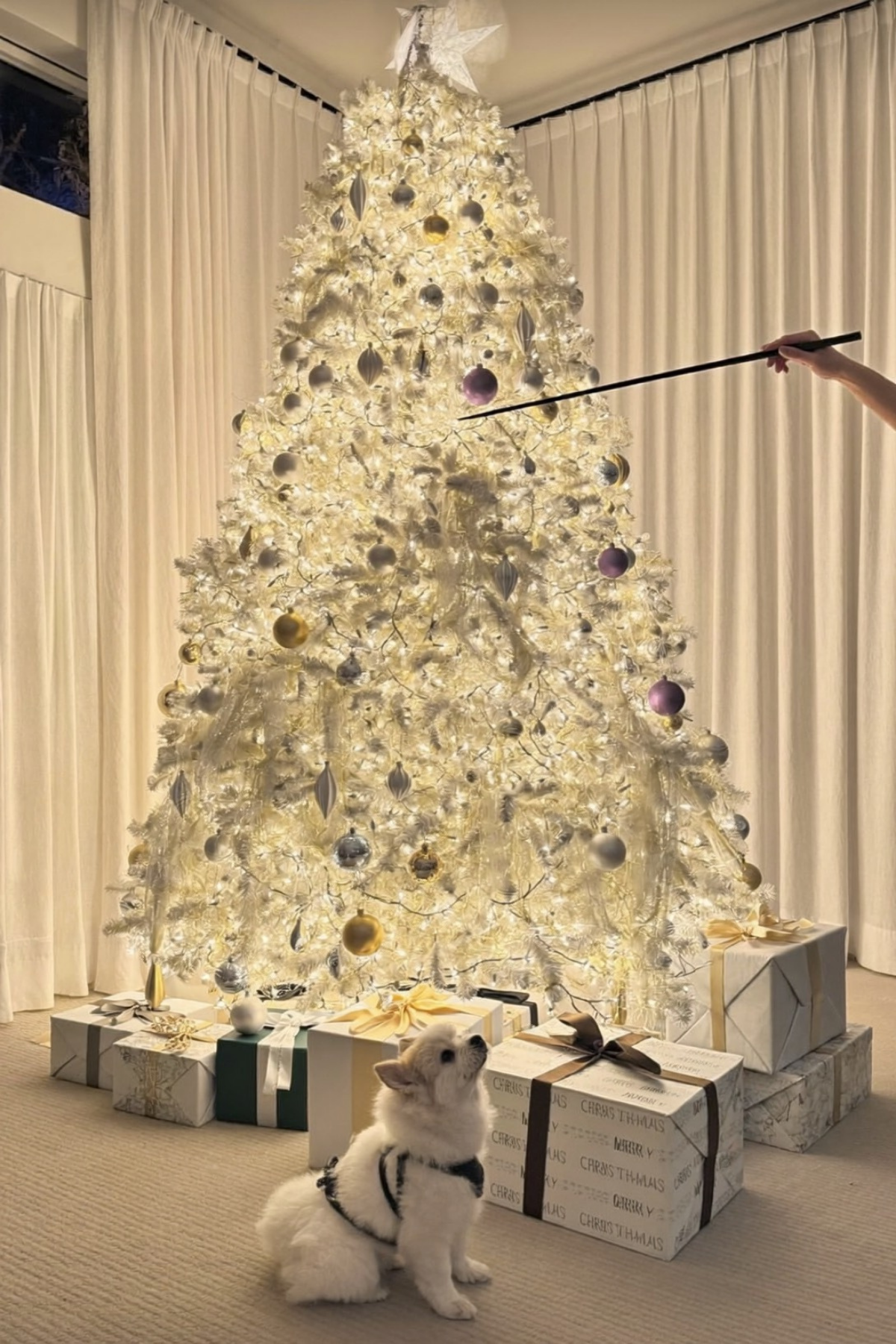
There’s a real contrast at play here between a fluffy, almost blurred tinsel silhouette and the crisp little ornaments hung against it. The tinsel branches catch light in every direction, so the tree glows rather than sparkles, and the smooth glass balls in gold, silver, and soft purple sit on top of that glow instead of competing with it. A simple star topper keeps the peak from feeling unfinished without pulling focus away from the glow underneath.
A small pointer aimed toward the branches adds a playful, almost theatrical moment in this particular shot, though a detail like that is worth swapping for something plainer, a wooden dowel or a light-up wand from a toy aisle, rather than leaning on any specific character or story.
Want the same soft-focus effect at home? Skip the classic pine needle tree entirely and shop for a tinsel or flocked variety instead. Keep your ornament count lower than usual, since a busy tinsel tree starts to look cluttered fast, and let a handful of colors carry the whole thing on their own.
Velvet Ribbon Beats Every Other Bow
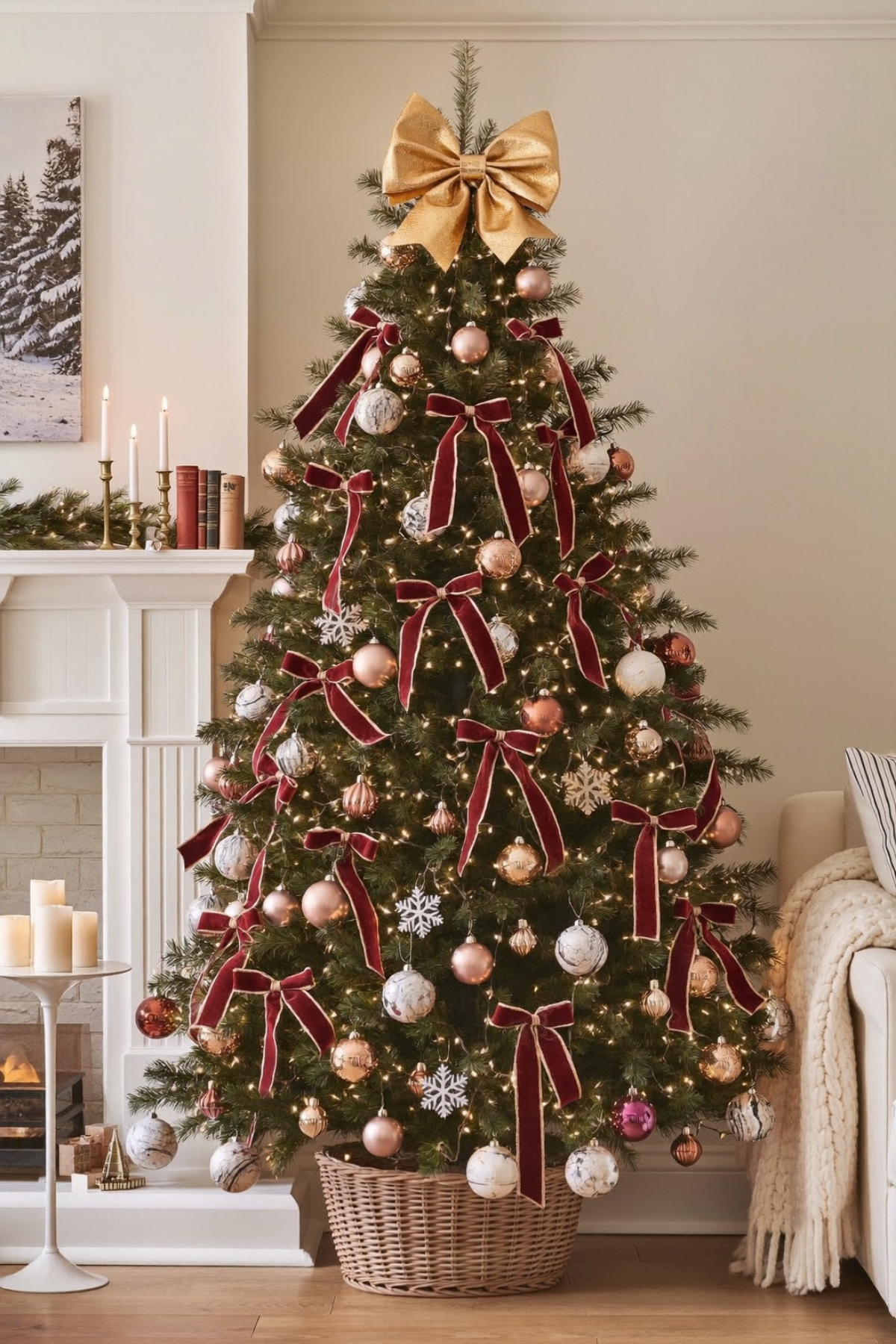
Ribbon has a texture problem most people never think about. Satin catches light and looks a little cheap under warm bulbs, while velvet absorbs it and reads rich no matter what angle you’re standing at. That’s the whole secret behind this tree’s deep burgundy bows against a rose gold and cream ornament mix, sitting inside a simple woven basket instead of a plain metal stand.
The ornament shapes vary just enough to keep things interesting: smooth spheres, marbled finishes, a scattering of wooden snowflakes tucked in low near the base. Nothing here is loud on its own, but grouped together the tree reads as considered rather than random, which is a distinction worth paying attention to when you’re shopping.
Buy velvet ribbon by the roll rather than pre-tied bows, since you’ll get far more mileage and can vary bow size as you move down the tree. Bigger bows up top, smaller ones lower, roughly following how the branches themselves taper toward the base.
Shape Can Be The Whole Statement
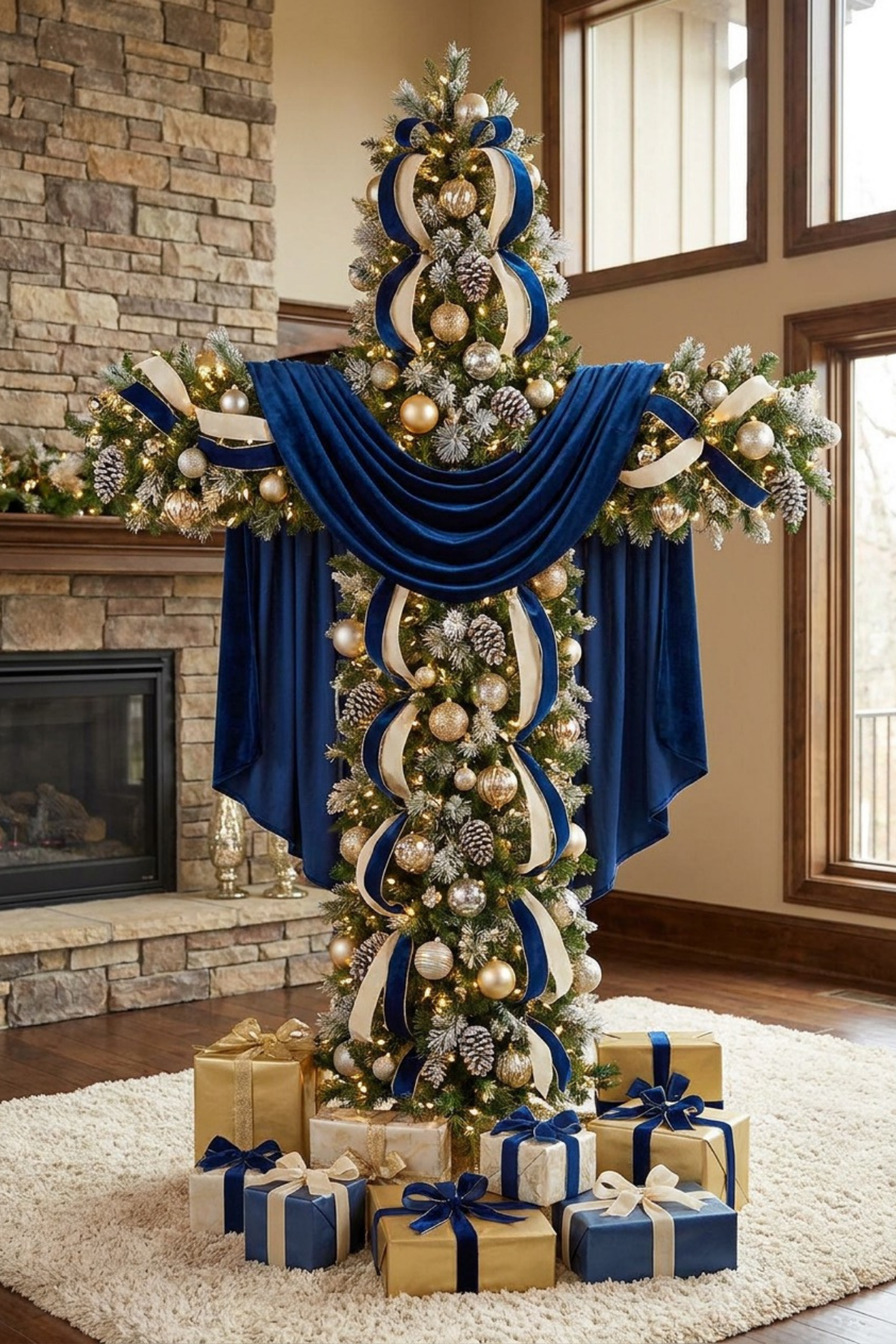
Most tree ideas focus on what you hang. This one focuses on what the frame itself is built into, a cross silhouette formed from flocked branches, with a heavy velvet drape slung across the arms like fabric on a mannequin. It’s a striking reminder that the traditional cone shape isn’t mandatory, especially if your home already leans traditional or has the ceiling height to support something sculptural.
Gold and silver ball ornaments plus real pinecones keep the palette restrained so the shape itself stays the star of the show. Adding too many colors here would have buried the one thing that makes this tree memorable in the first place.
This kind of build usually means a custom or specialty frame rather than a standard tree stand, so budget for that if you want to attempt it. A simpler version of the same idea: drape a length of velvet fabric diagonally across any ordinary tree and see how differently it reads.
Prove Restraint Can Still Feel Rich
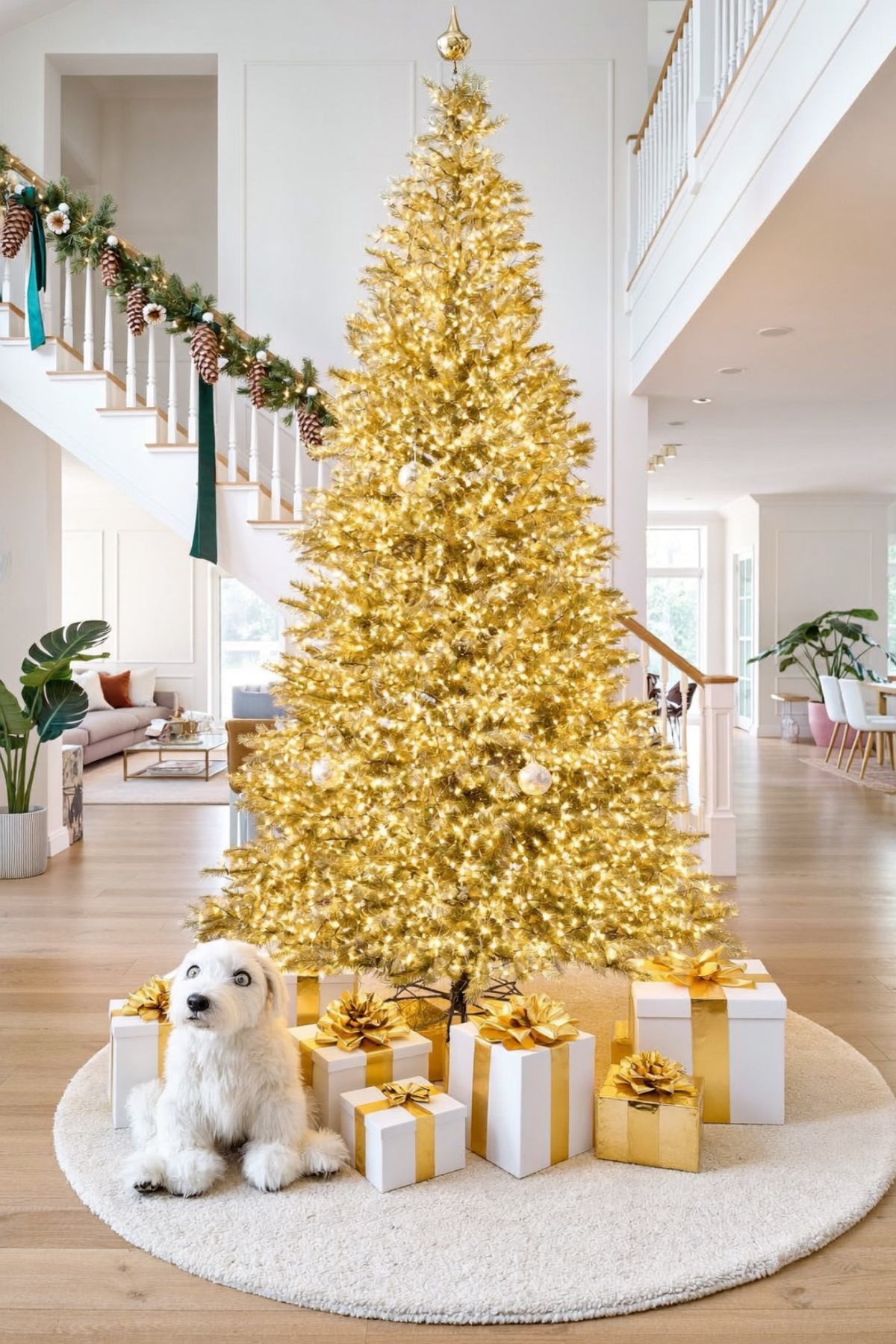
Gold, saturated gold, on every single branch, with almost nothing else added. Lights alone, warm and dense enough that they read as color rather than sparkle, wash the entire tree in a single tone from base to peak. It’s proof that a monochrome tree doesn’t need to feel plain; density and warmth of light can carry the whole effect on their own, without a single ribbon or bow anywhere in sight.
A handful of white glass balls, spaced far apart, are the only ornaments here, and honestly they’re doing very little work. The wattage and warmth of the lights are what people will actually remember walking past this tree, standing tall at the base of a wide staircase.
Before you buy a hundred matching ornaments for a look like this, try lighting a plain tree more heavily than usual first. A denser string count in a single warm tone often gets you most of the effect for a fraction of the shopping list, and simple white bows tied at the base finish the base of the tree without adding clutter.
Build Your Tree From Reclaimed Wood
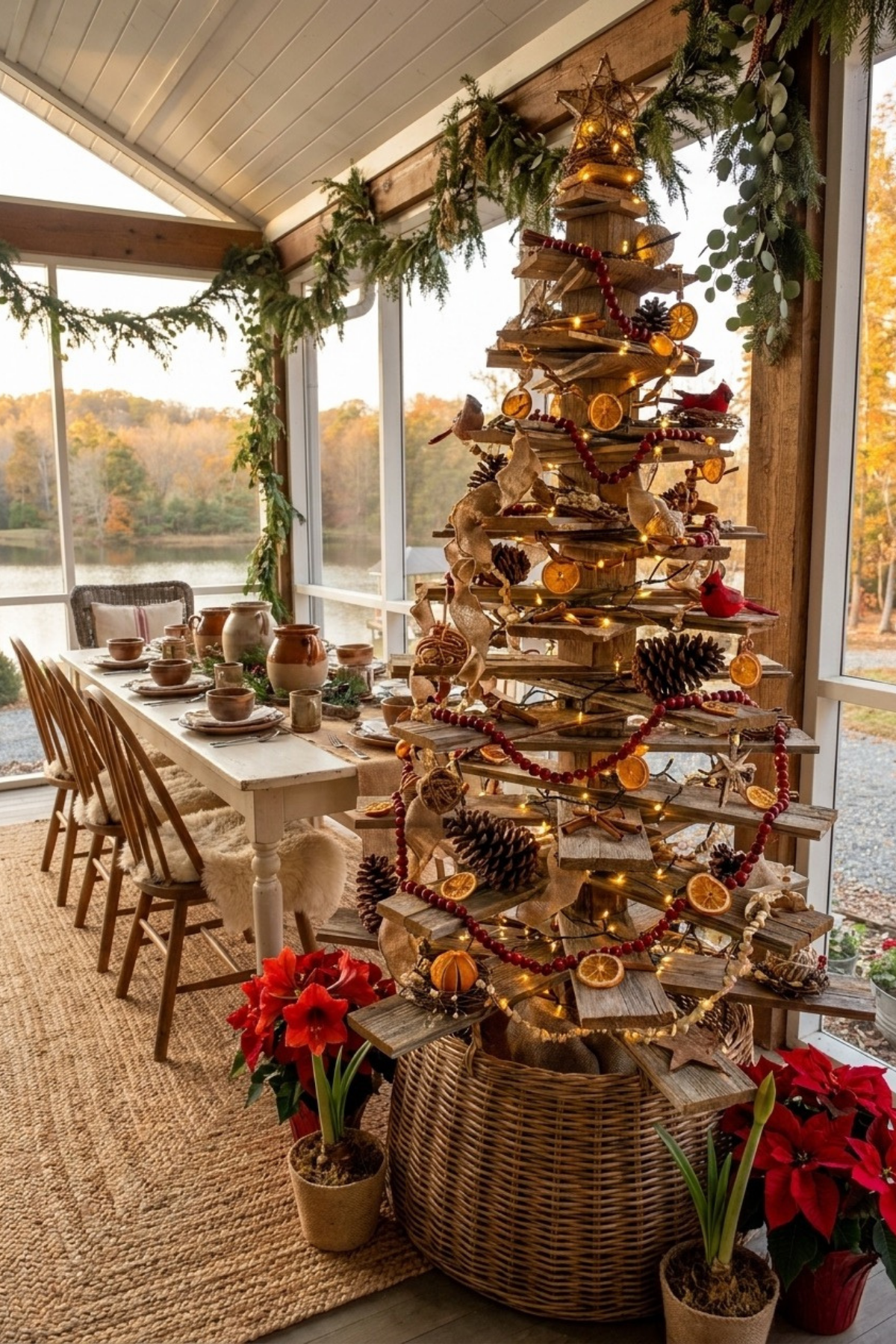
Want a look that skips the pine altogether? Start with weathered wood planks stacked into a rough tree silhouette, each board offset slightly to form little ledges instead of branches. Those ledges then become tiny display shelves for dried orange slices, cinnamon bundles, pinecones, and small bird figures, so the whole structure functions like a vertical still life rather than a conventional tree.
Warm string lights woven through the gaps keep it from reading as purely decorative furniture once the sun goes down, and a garland of dried cranberries strung diagonally ties the separate shelves together into one continuous shape instead of a stack of unrelated boards.
If you’re handy with a saw, this is a genuinely approachable weekend build using scrap lumber, and it suits a porch, sunroom, or entryway far better than a full-sized fir would. Citrus slices dry out fully in a low oven left on overnight, and cinnamon sticks can simply be tied on with twine, no glue involved.
Pink Flocking Softens A Whole Room
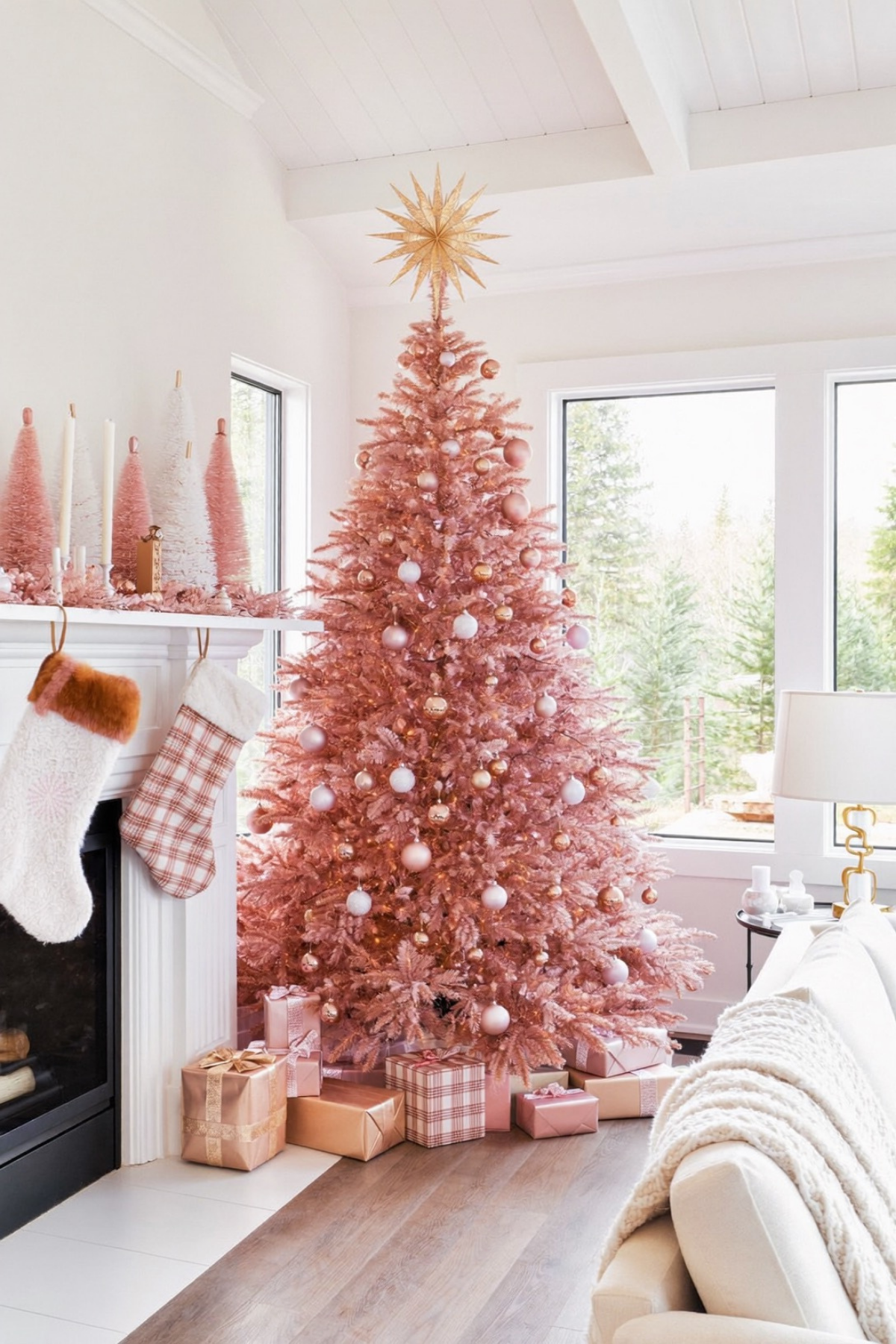
A flocked tree in dusty pink changes the temperature of an entire room, even a mostly white one like this. Flocking adds texture as much as color, so the branches read as soft and slightly matte rather than glossy, which keeps blush and rose gold ornaments from tipping into anything too sweet, and a gold starburst topper adds just enough shine to balance the softness out.
Bottle brush trees in matching pink and white tones on the mantel repeat the palette at a smaller scale, a trick worth stealing even if your actual tree stays green. Small repeated color moments around a room do more for cohesion than a single big statement piece ever manages alone, including the stockings hung nearby in the exact same tones.
Pre-flocked trees exist if you’d rather not spray your own, though a can of flocking spray works fine on an artificial tree if you want more control over the exact shade. Go lighter than you think, since flocking always reads darker once it settles into the branches overnight.
Go Bigger On Ornament Scale
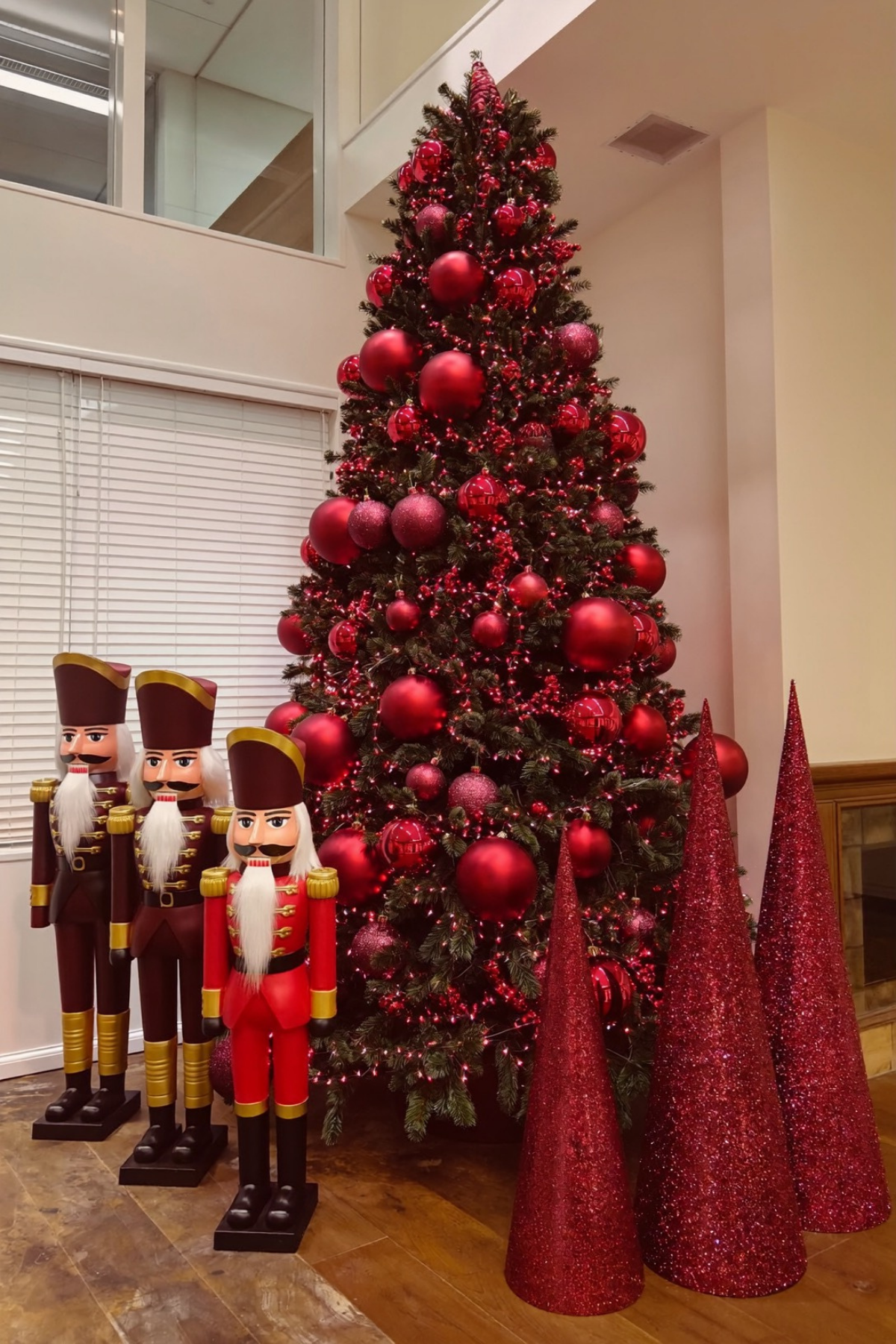
Standard ornaments top out around three inches, and most trees use that size almost exclusively. This one breaks that pattern with ornaments closer to the size of a grapefruit or larger, mixed with the usual smaller balls layered in behind them and a scattering of tiny red berry picks tucked between the branches for texture. The scale jump alone is what makes an otherwise familiar red-on-green tree feel unexpected rather than standard issue.
Red glitter cone trees placed on the floor beside it, ranging from knee-height to nearly waist-height, extend the color story outward without adding a second competing hue to think about, and a matching trio of toy soldiers on the opposite side balances the composition.
Oversized ornaments are heavier than they look, so check your branch strength before loading up a thinner artificial tree with them. Concentrate the biggest pieces toward the bottom two-thirds where branches are sturdier, and save the smaller ornaments for the top, where the structure can’t support much weight anyway.
Mix Metallic Finishes, Not Just Colors
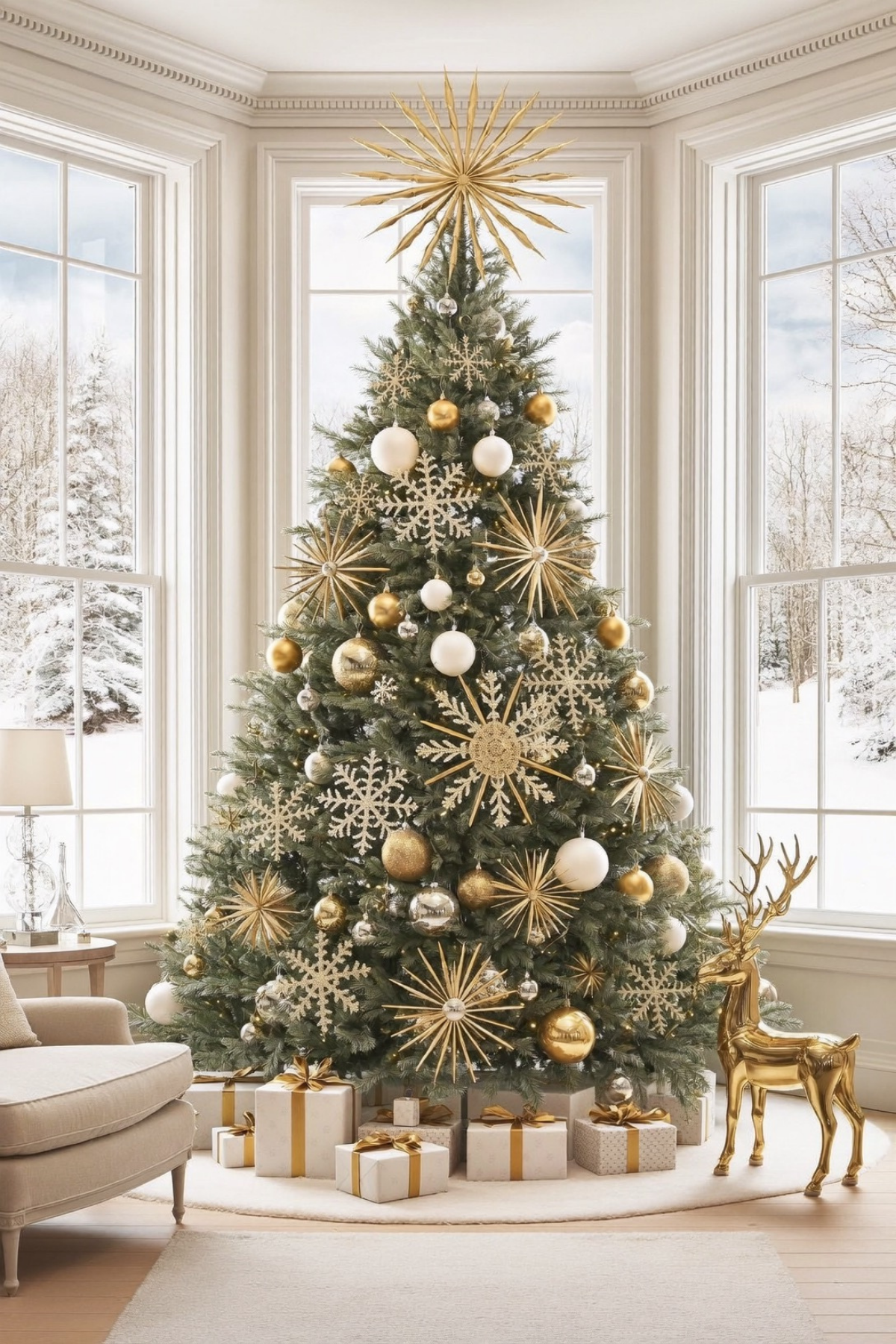
Gold shows up here in at least four different textures: glossy ball ornaments, matte glitter snowflakes, brushed starburst picks, and a faceted gold sunburst topper up top, plus a few silver balls mixed in to keep the whole thing from tipping into pure amber. That variation is what keeps an all-metallic tree from looking flat under regular room lighting, since each finish catches light a little differently depending on where you’re standing in the room.
A polished gold reindeer figure on the floor beside the tree extends the metallic story without adding another ornament to the branches themselves, which is a useful trick once a tree already feels sufficiently full and any more hanging pieces would start to look crowded.
When shopping a single-color tree like this, prioritize finish variety over ornament variety. Three or four different textures in one color will read as far more layered than a dozen ornaments that all share the exact same glossy sheen, no matter how many you add.
Illuminated Motifs Change The Mood Entirely
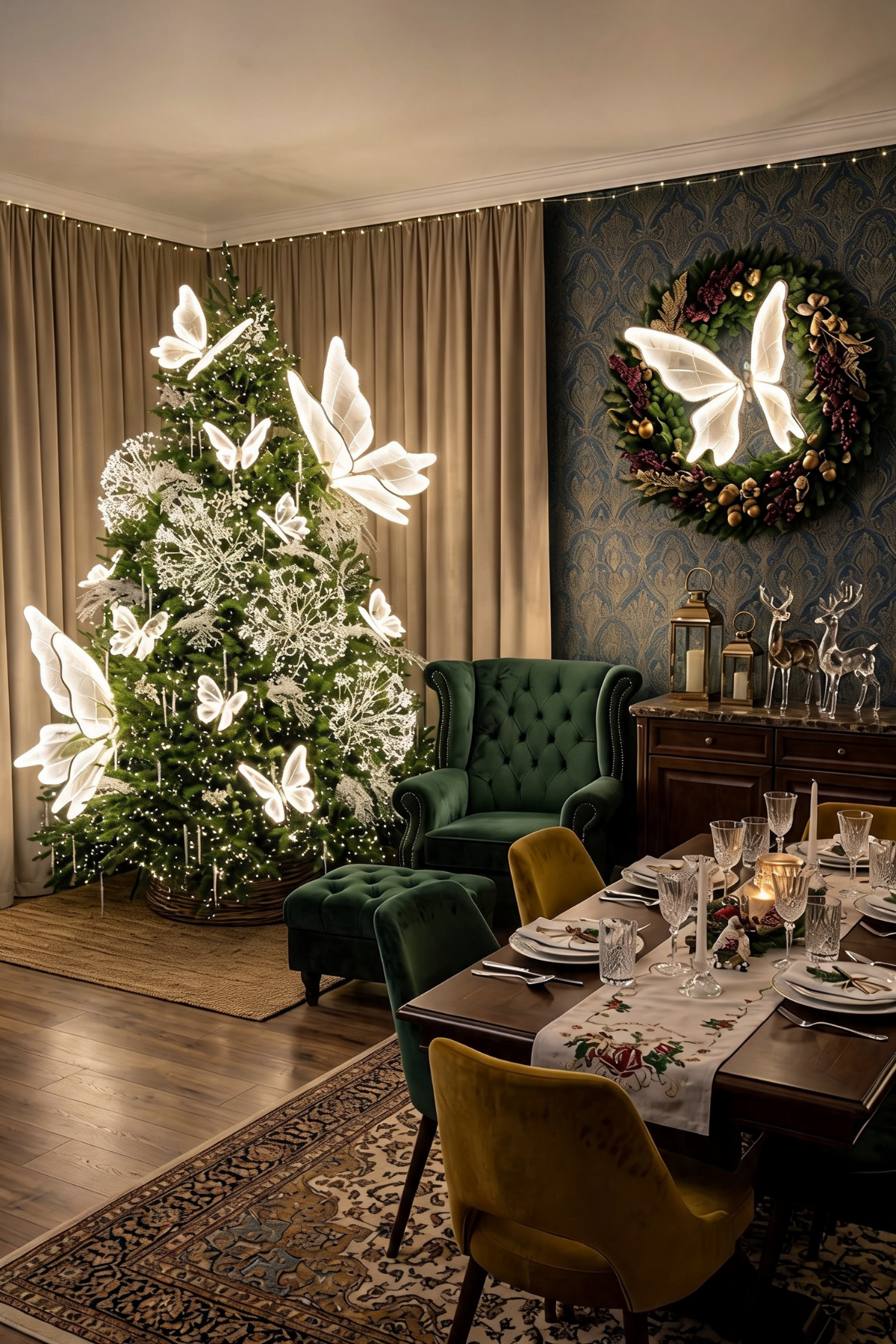
What if the ornaments themselves were the light source? Oversized butterfly shapes built from what looks like translucent fabric over a wire frame, lit from within, sit scattered across this tree instead of hanging from it like typical decorations. Baby’s breath filling the gaps between them softens the transition so the branches underneath still read as greenery rather than disappearing entirely under all that white light.
A single matching butterfly worked into a wreath on the opposite wall repeats the motif just enough to tie the whole room together without needing a second full tree’s worth of the same decoration hanging somewhere else.
Lit sculptural ornaments like these tend to cost more than a standard string of lights, so treat them as a splurge piece rather than something you buy a dozen of. Two or three placed at different heights, facing outward toward the room, will read as a deliberate choice rather than a sparse or unfinished one.
Borrow The Details, Skip The Whole Package
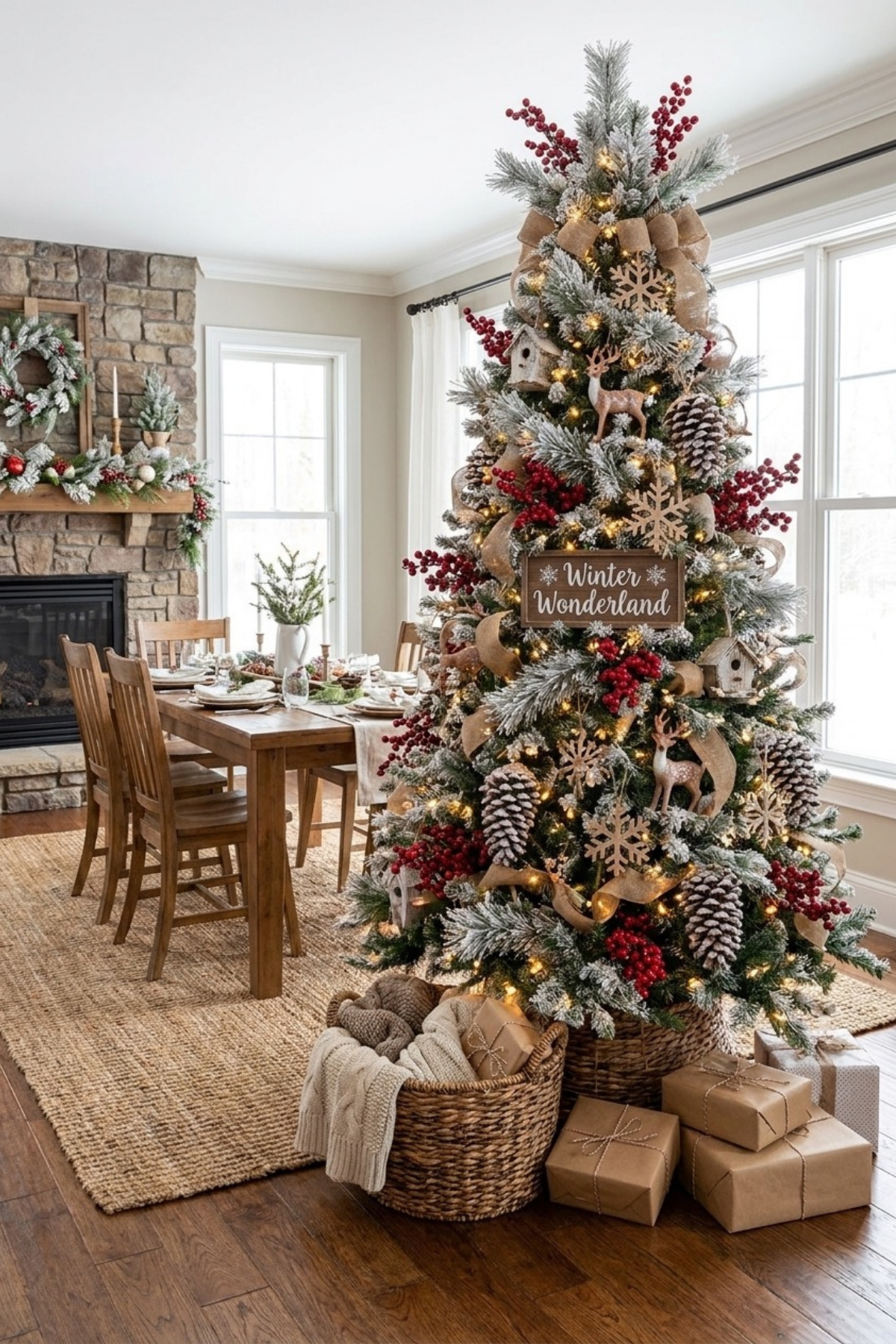
None of these trees need to be copied wholesale to be useful. A ribbon texture from one, a color restraint lesson from another, a scale trick from a third. That’s really how most good rooms come together anyway, through small borrowed decisions rather than one single Pinterest board executed exactly as photographed.
We’d argue the most interesting trees in this list aren’t the most expensive ones. The reclaimed wood build and the oversized ornament trick both cost far less than a fully custom draped frame, yet they photograph just as memorably because the idea behind them is strong enough to carry it.
Whatever you land on, give yourself permission to change your mind next year. A tree is one of the few large decor investments in a house that gets fully rebuilt from scratch every single season, so there’s very little risk in trying something different.

 Steal Our Home Styling Secrets!