
The Christmas Decorating Choices That Actually Make A House Feel Warm
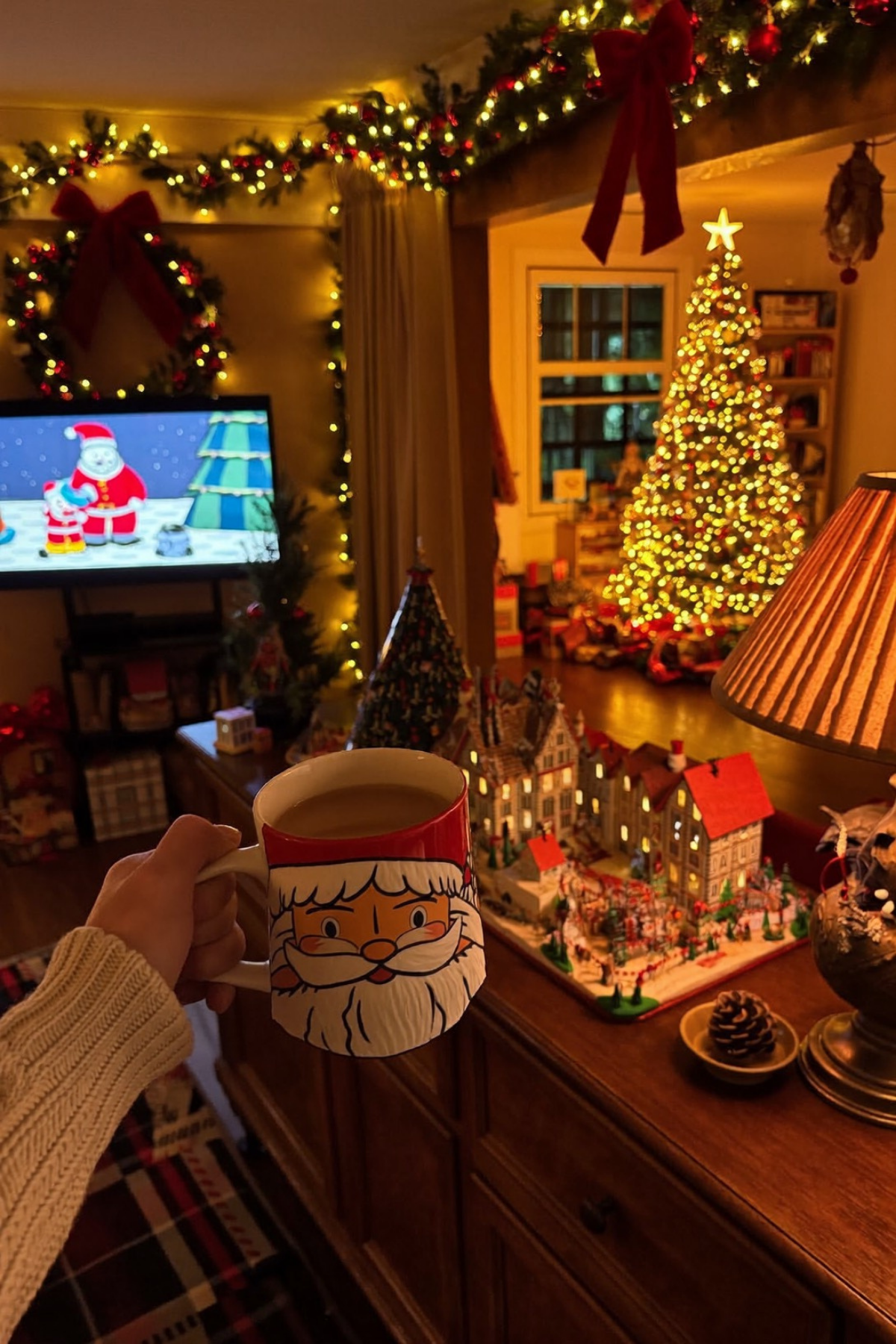
Every house does Christmas a little differently, and that’s what makes decor inspiration so fun to scroll through. Some spaces lean moody with plaid and antlers, others go full arctic fantasy with polar bears and icicles. Neither approach is wrong, and neither one is trying too hard.
What ties the best examples together isn’t a big budget or one perfect ornament. It’s the small, almost accidental details: a dog in a matching coat, a ceiling nobody thought to decorate, a candle picked because it made someone laugh. Those details do more work than people expect.
We pulled ten different spaces from this batch of photos and pulled one specific decorating principle out of each. Some are about scale, some about restraint, and a couple are just proof that Christmas decor doesn’t have to take itself too seriously.
Let The Fireplace Do The Talking

That dog isn’t wearing plaid by accident. Matching a pet’s outfit to the room’s palette is a trick photographers have used for years, and it works because it ties a moving, living element into a static scene without looking staged. The tartan coat picks up the reds and greens already living in the garland and wreath behind it.
Behind the dog, the mantel does the heavier lifting: a garland with tucked-in ornaments, a full wreath, and two sconces left warm and low instead of bright white. Layering height like that, wreath high, garland mid, firelight low, gives a fireplace wall three visual planes instead of one flat strip of greenery.
Warm light matters here more than extra decor. Swap bright white bulbs for warm amber ones, add texture at eye level with velvet or leather furniture, and hang a wreath slightly higher than feels natural so it reads from across the room. Let a pet or person be the one unpredictable element in the frame.
Decorate The Ceiling For Once
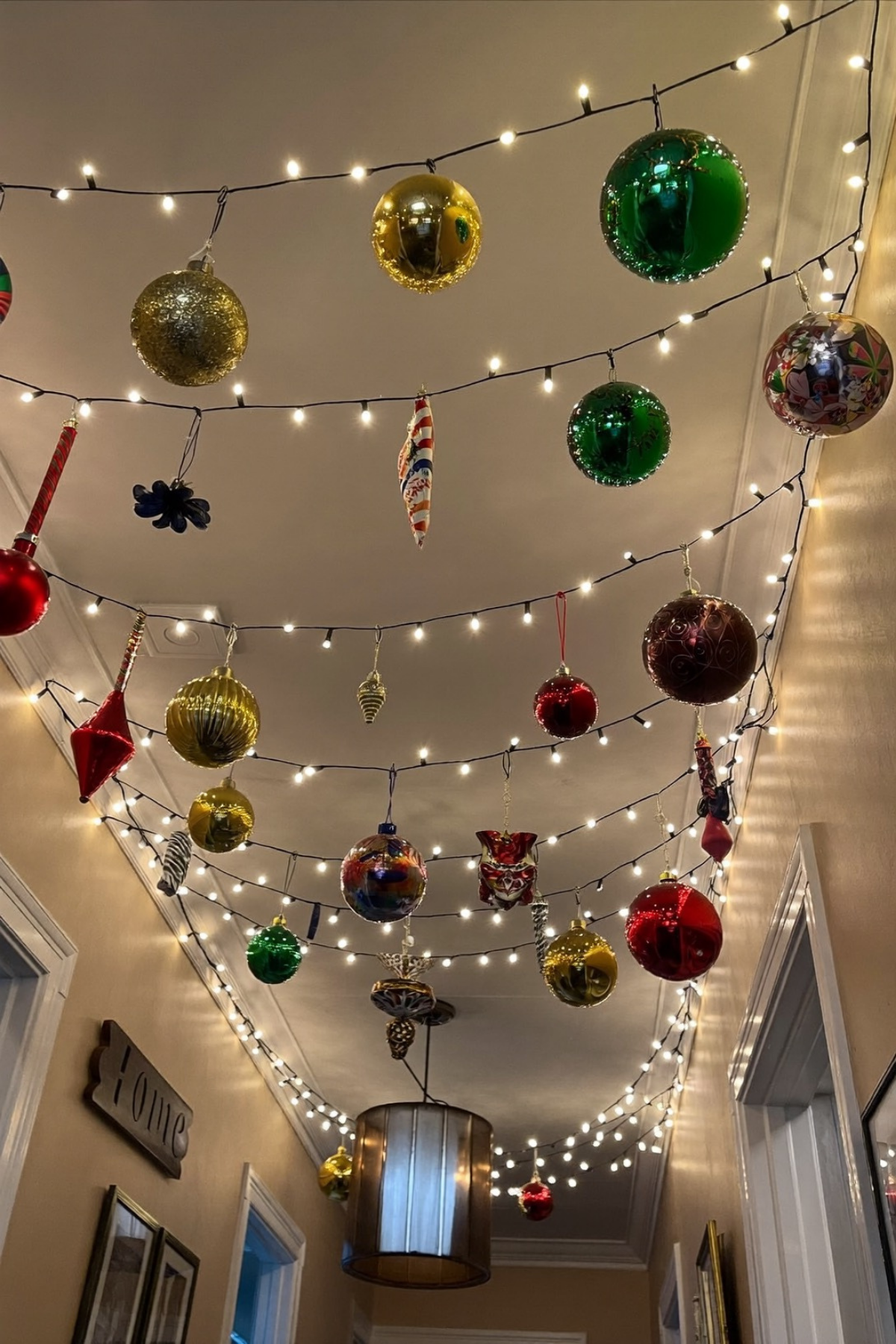
Most people stop decorating at eye level and never look up. This hallway proves that’s a missed opportunity: strings of lights crisscross the ceiling in loose, uneven lines, and vintage-style ball ornaments hang down at different heights like they’re floating above anyone walking through, catching light from every angle below.
The uneven spacing is the whole trick here. Perfectly even rows of lights read like store displays, while slightly irregular lines and ornaments hung at random lengths look collected over time, even in a plain hallway with white walls, no furniture, and nothing else competing for attention overhead.
Try this in a narrow hallway, stairwell, or above a dining table using removable adhesive hooks instead of anything permanent. Mix ornament sizes and finishes rather than buying one matching set, vary the string lengths so nothing hangs at the exact same level, and let a few pieces hang low enough to almost brush the top of a doorway.
Let The Chandelier Set The Mood
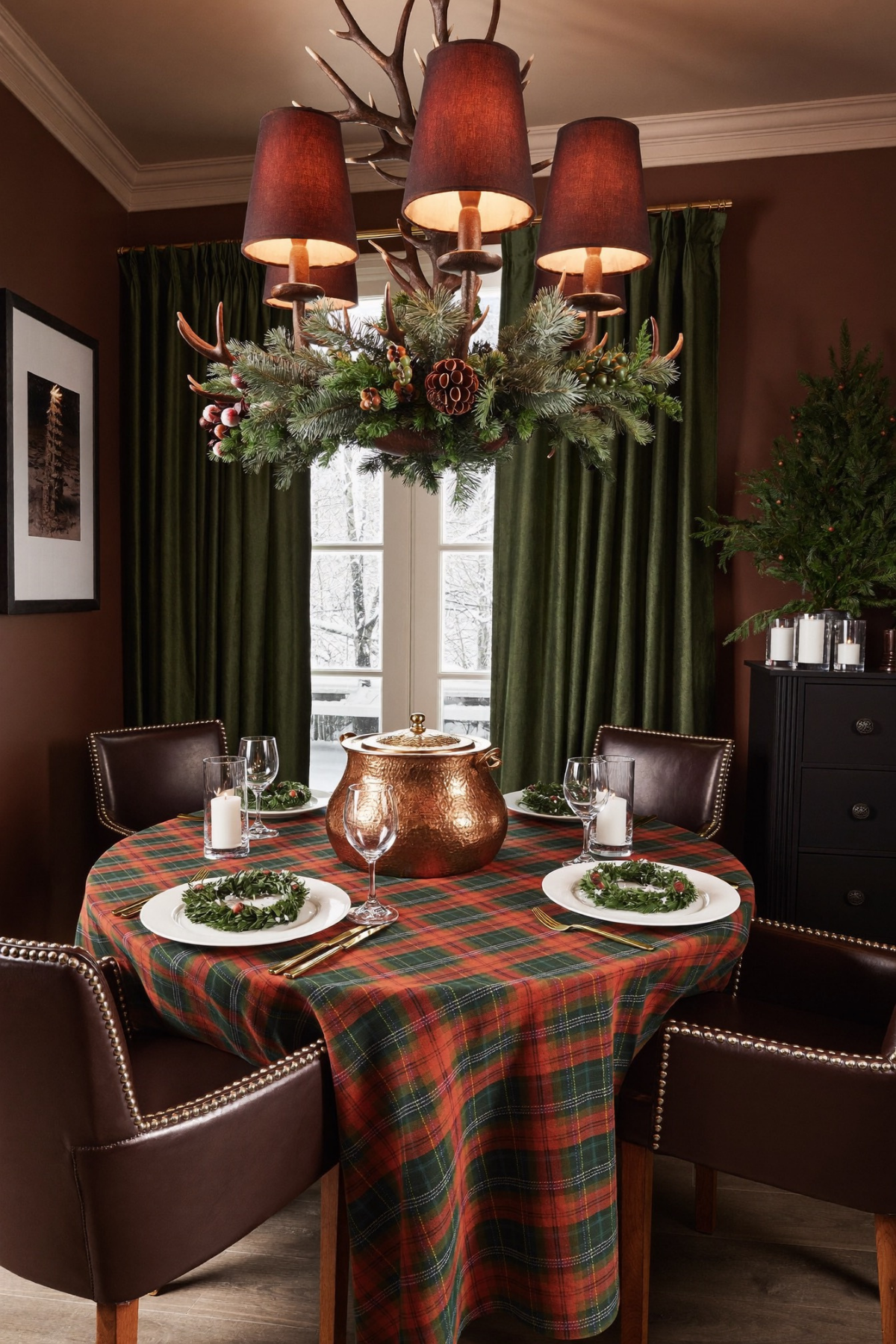
This dining room only needs one look to feel complete, and it comes entirely from that antler chandelier. Dressed with pine, dried pods, and a few berries tucked between the branches, it turns a light fixture into the actual centerpiece before the table is even set, which frees up the table itself for place settings instead of florals.
Everything below it plays a supporting role: a plaid tablecloth in deep red and forest green, brown leather chairs with nailhead trim, and a hammered copper vessel standing in for a traditional floral arrangement. Dark, saturated wall color and heavy velvet curtains make a small dining space feel like a proper lodge instead of a leftover corner nobody planned around.
Wrap a simple garland around an existing chandelier or pendant instead of adding a separate table runner or florals competing for attention. Add a few picks of greenery and a handful of dried pods, and let the fixture pull double duty as both lighting and the room’s main decorative statement.
Outdoor Decor Can Be Funny Too

Four identical Santas lined up on a lawn, each pouring a stream of colorful lights out of a watering can, is objectively a little ridiculous, and that’s exactly why it works. Outdoor Christmas decor gets to be playful in a way indoor decor rarely allows, since nobody’s judging your front yard the way they might judge your living room.
Repetition is doing the design work here. One watering Santa would look like a stray lawn ornament; four in a row, spaced evenly and pouring toward the same direction, reads as an installation instead. The lights pooling on the grass below add movement to what’s otherwise a static front yard scene already lit up by a full tree.
Bring this energy home by picking one whimsical figure instead of a dozen different ones, then repeating it in a straight line or gentle curve along a walkway or fence line. A joke told three or four times in a row lands harder than four different jokes told once, and the same logic holds up outdoors.
Height Is The Real Secret Weapon
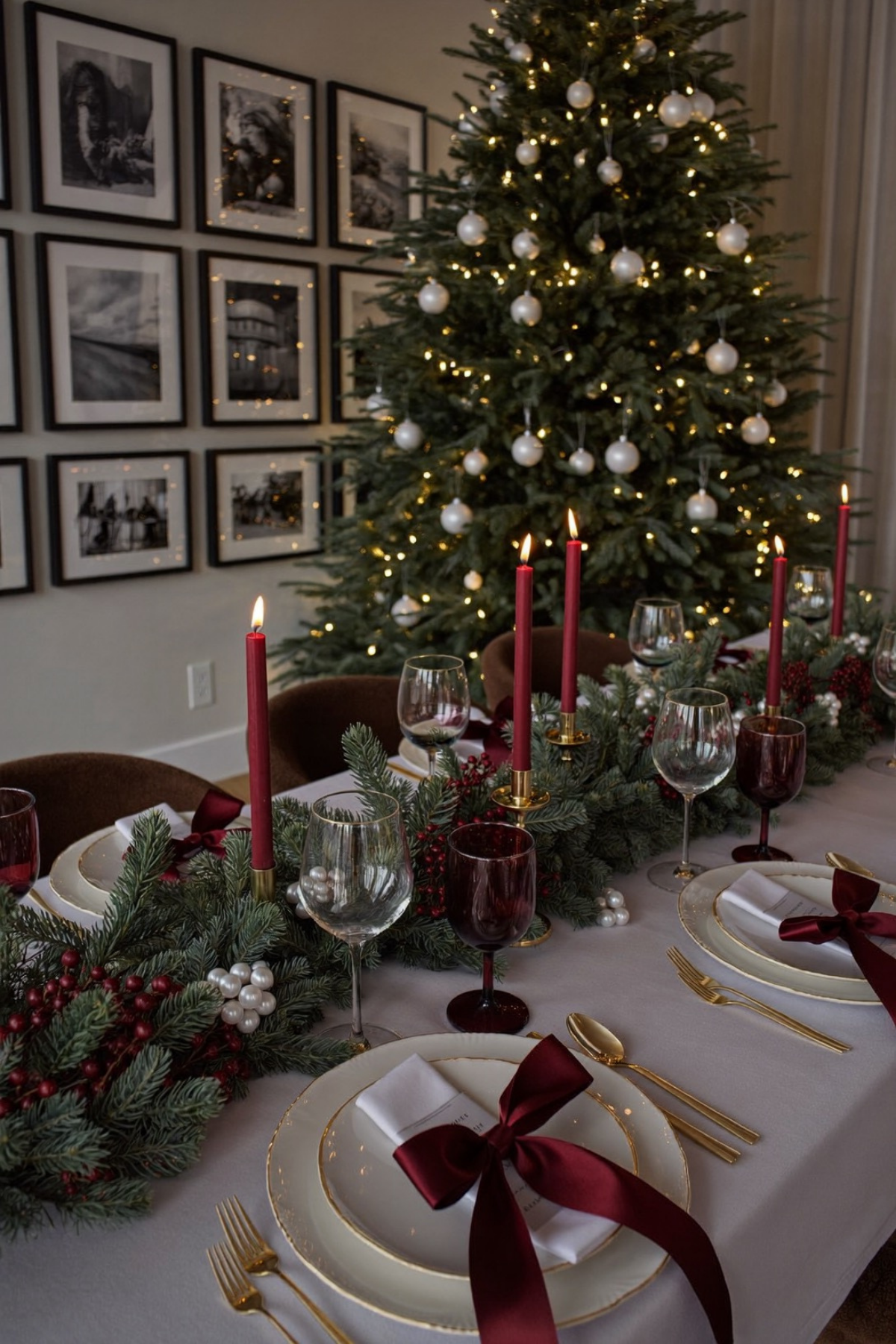
Height variation is what separates a dinner table that looks styled from one that just has food on it. Here, tall red taper candles in brass holders sit above a low, dense garland of fir, berries, and pearls, so your eye travels up and down the table instead of skimming across one flat plane.
The color story stays disciplined too: deep burgundy candles and wine glasses, gold flatware, and white gallery-wall frames repeat the same three or four tones instead of introducing a new color at every place setting. A gallery wall of black-and-white photos behind it keeps the room from feeling overly seasonal even with a full tree glowing nearby and dozens of white ornaments catching the light.
Recreating this at home starts with candle height before anything else. Buy tapers a few inches taller than you think you need, keep the garland low and dense, and repeat one accent color at every seat so the table reads as one composed scene.
Small Counters Deserve Styling Too
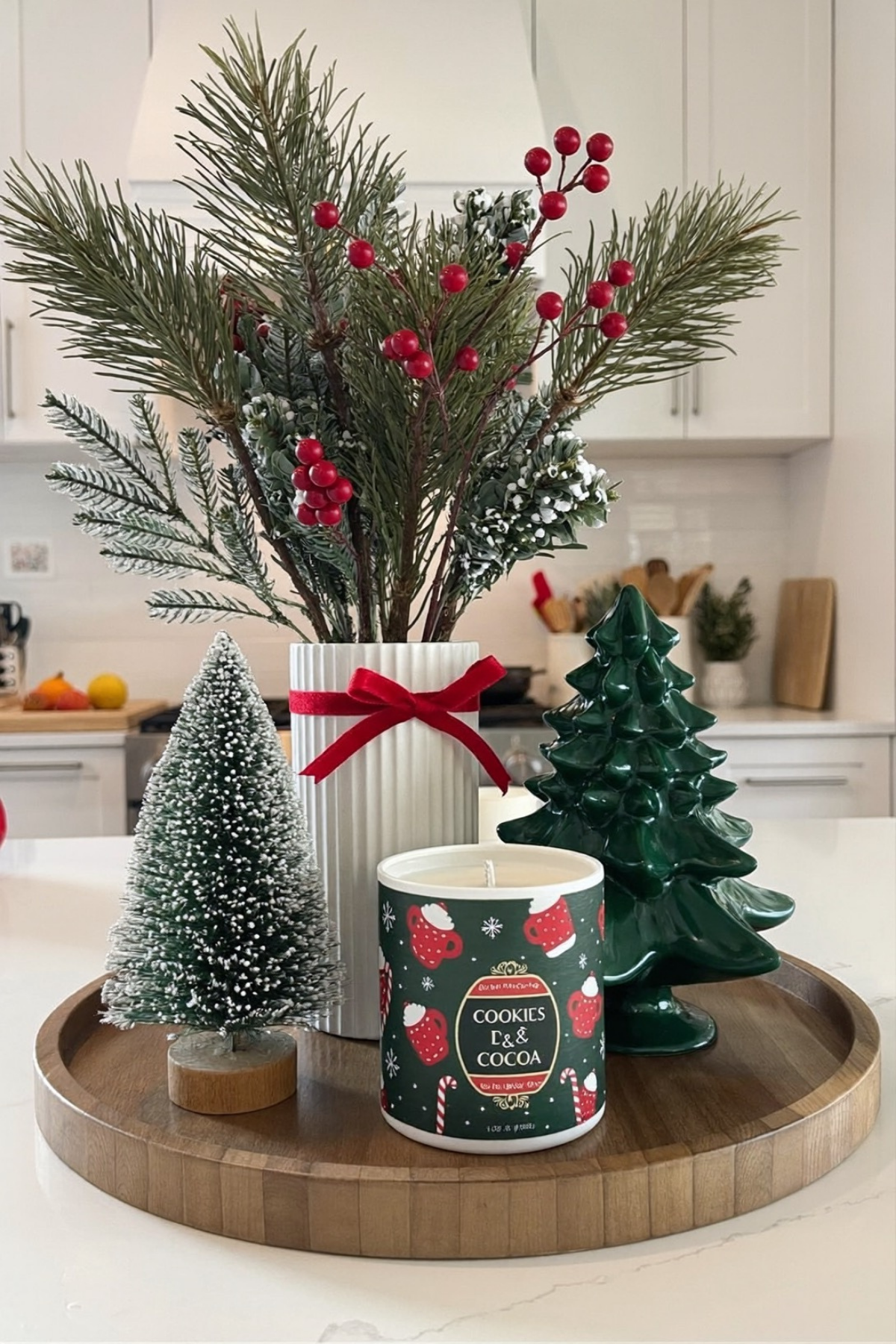
You don’t need a mantel or a full table to make a decor moment. This entire vignette lives on a single wood tray sitting on a kitchen counter: a fluted vase with pine and berry stems, a small flocked tree, a ceramic tree in solid green, and a candle in the middle tying every color together.
Scale is the important lesson from a setup this small. Three or four objects of different heights, all under a foot tall, create the same layered look as a much bigger display, just shrunk down to fit a kitchen island instead of a mantel or entryway table nobody has room for.
Copy this on any counter, shelf, or side table you have sitting empty right now. Group odd numbers of objects, vary their heights, and anchor everything on a tray so it reads as one deliberate grouping rather than a few random items someone forgot to put away.
Bows Are Doing Heavy Lifting Here

Start with your ribbon before you touch a single ornament, because ribbon is what’s carrying this entire tree. Plaid bows and cream velvet bows sit at different heights across the branches, breaking up the red and gold ball ornaments so the tree doesn’t read as one repetitive pattern from top to bottom, no matter how many ornaments go on after.
The palette stays traditional on purpose: red, gold, and cream ornaments, wrapped gifts in the same three tones underneath, and stockings in matching red and green hung along the mantel behind. A wide sisal rug and warm wood floors keep the whole scene from tipping into anything too formal.
Bows should go on last, not first, especially if a tree feels flat after ornaments alone. Vary their size and placement rather than spacing them evenly, tuck a few gifts in paper that matches your ornament colors, and let the stockings on the mantel connect the tree to the rest of the room.
Bring The Bow Trend Outside
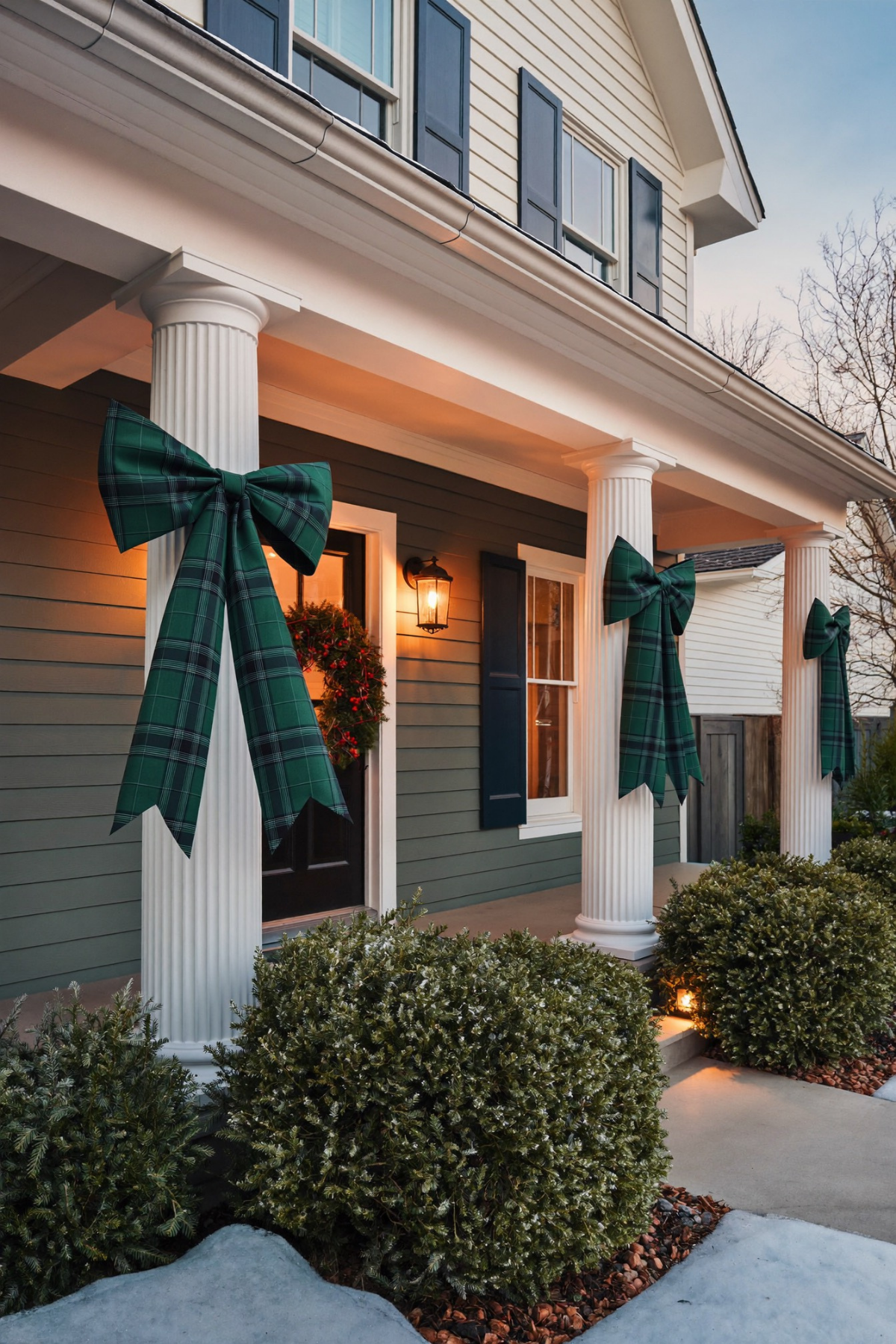
The size of these bows matters more than their color. Oversized plaid bows tied around each column are large enough to read from the street at dusk, which is the whole point of exterior decor that a smaller mantel bow or wreath ribbon never has to worry about.
Repeating the same bow on every column, rather than decorating just the front door, turns individual architectural details into one cohesive design statement instead of a single focal point surrounded by bare white columns. The green-and-black plaid also connects the porch back to the wreath on the door, so the whole facade feels considered instead of decorated in pieces.
Porch posts, columns, and garage doors all call for bows sized for outdoor visibility, not the smaller ones made for indoor trees. Repeat the same fabric and color across every post you decorate, and let the wreath on your door pick up that same pattern so the whole front of the house reads as one idea.
Commit Fully To A Theme
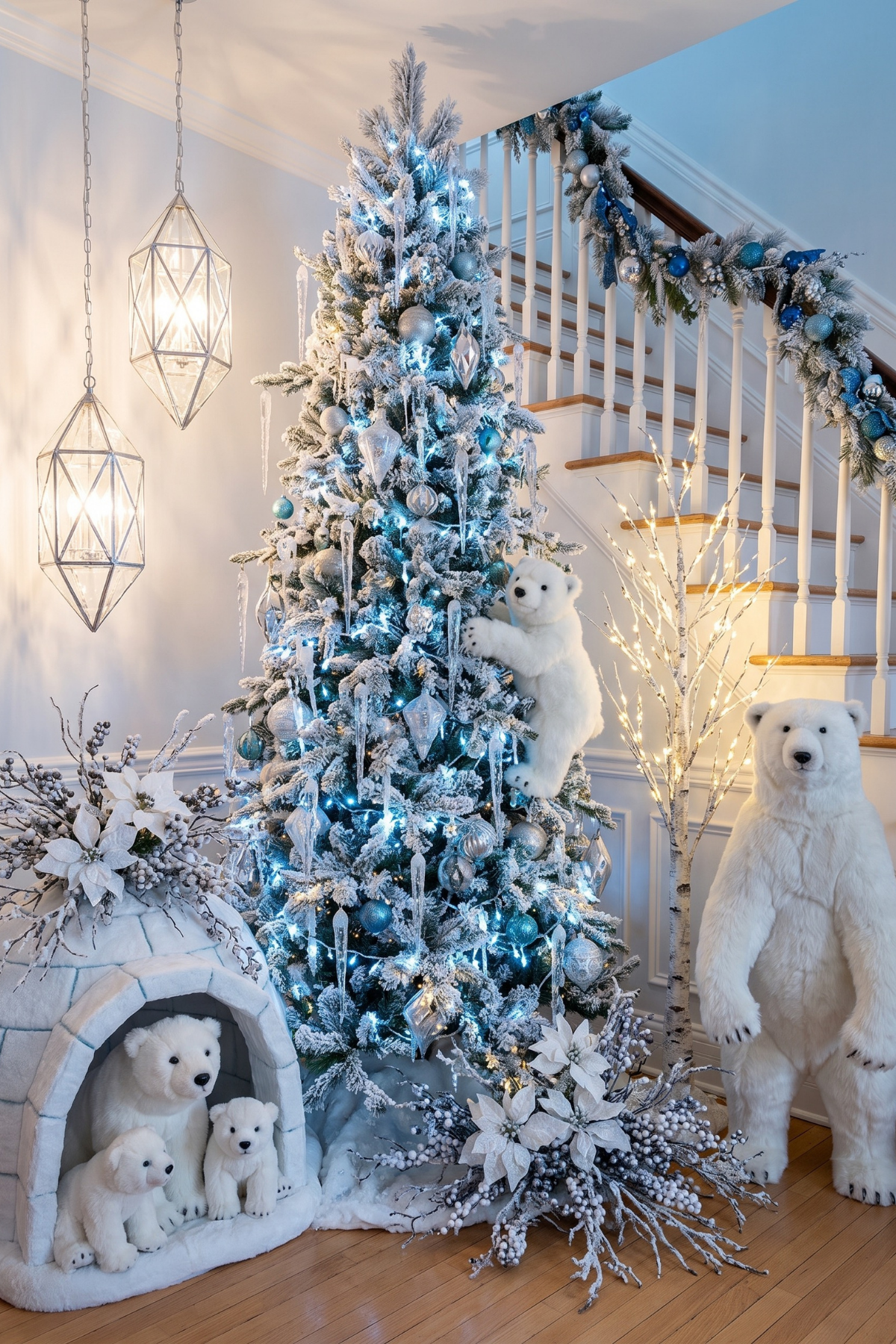
Some people will find a plush polar bear climbing a Christmas tree too much, and that’s fine, because this room clearly isn’t trying to please that person. Committing fully to a single theme, arctic and icy blue instead of the usual red and gold, is what makes a room like this memorable instead of forgettable.
Every element supports the same idea: a flocked tree in white and silver, icicle ornaments mixed with faceted glass balls, a fabric igloo with bear cubs tucked inside, and a life-size standing bear beside a lit birch branch. Nothing red or gold sneaks in to break the palette, which is exactly what keeps a themed room from looking like a compromise.
Committing to a theme like this means saying no to ornaments you love if they don’t fit the palette, sticking to two or three colors maximum, and choosing one or two statement props instead of scattering small ones everywhere. Half-committing is what makes themed decor look messy instead of deliberate.
Turn A Shelf Into A Scene
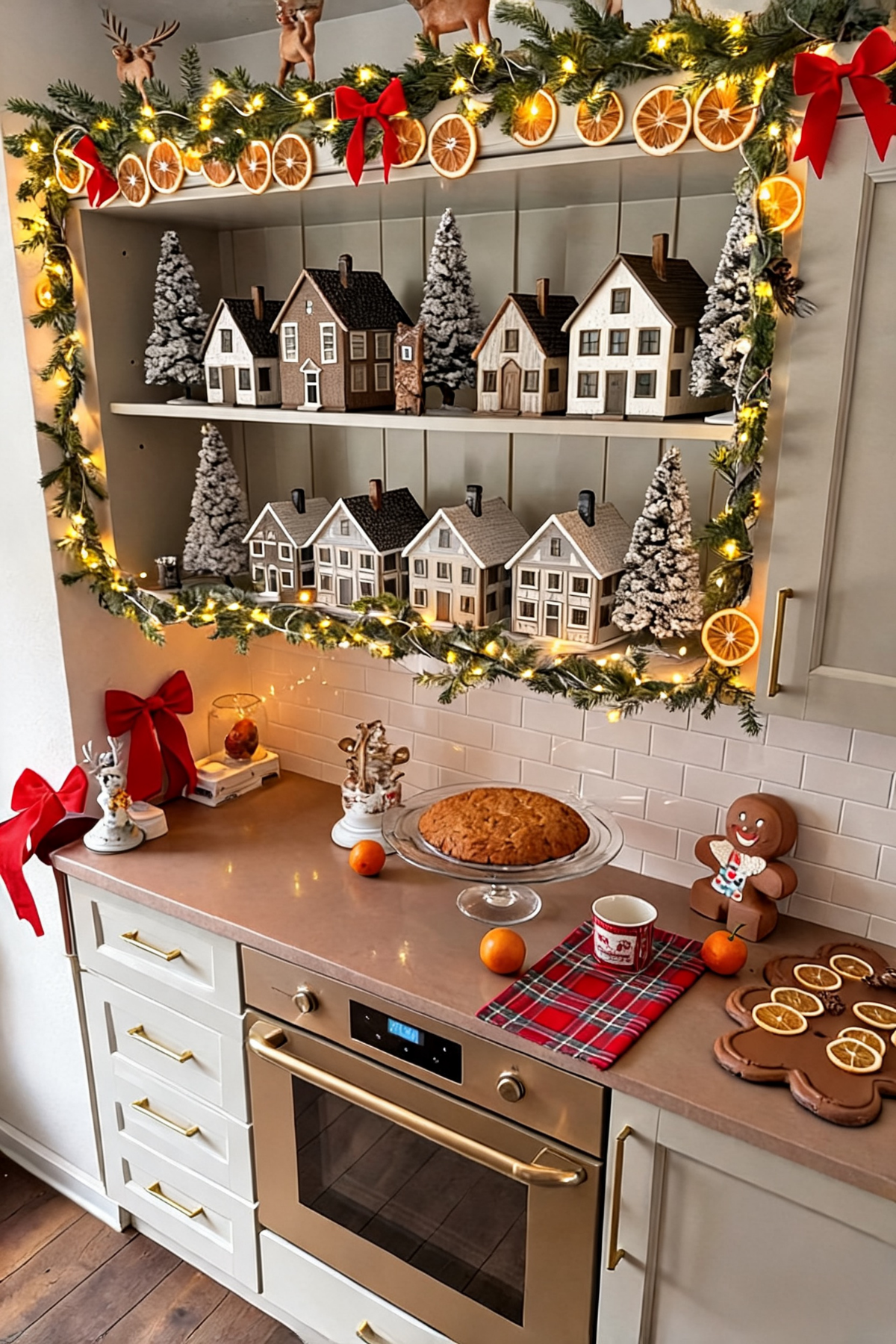
Pick one collection and give it an actual stage instead of scattering pieces around the house. A whole shelf here is dedicated to miniature Christmas village houses across two rows, all wrapped in a single garland with dried orange slices and red bows framing the edges like a picture frame around the whole display.
Repetition and containment make the difference between a display and clutter. Small houses spread across a mantel, a windowsill, and a bookshelf would look scattered and disconnected; the same houses on one shelf, inside one garland frame, look like a deliberate collection instead of leftover decorations nobody got around to putting away.
Collectors of anything seasonal, small ornaments, nutcrackers, bottle brush trees, benefit from giving the whole group one boundary: a shelf, a tray, a mantel edge, instead of letting pieces drift across multiple rooms. Frame the edges with garland, dried citrus, or lights so the eye knows exactly where the display starts and stops.
None Of This Requires A Complete Holiday Overhaul
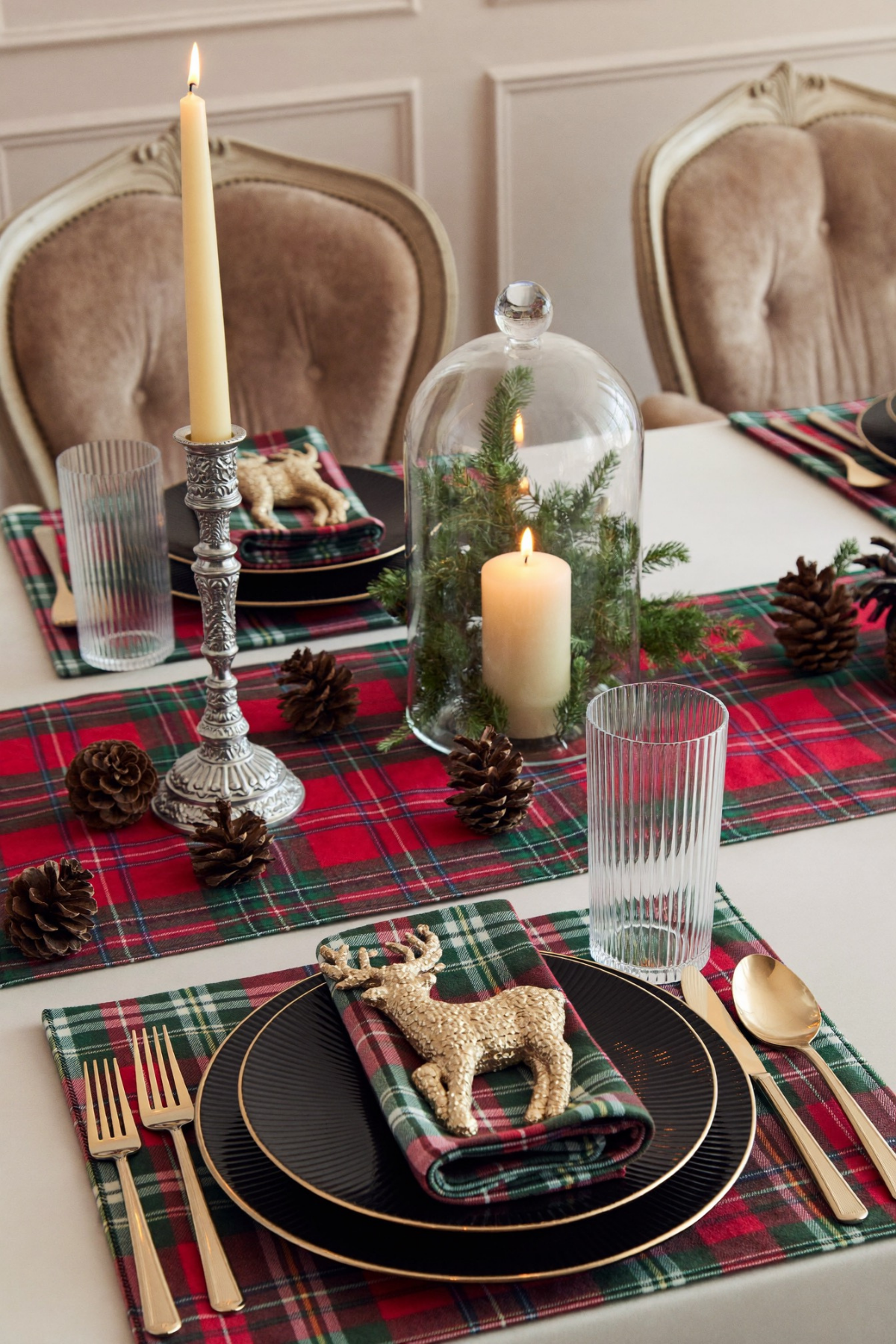
Looking back at all ten spaces, the common thread isn’t a specific color palette or a single retailer everyone shopped from. It’s restraint paired with one or two moments that genuinely surprise you: a funny outdoor prop, an unexpected ceiling, a chandelier doing double duty as a centerpiece.
If you’re decorating this year, pick one idea from this list that actually excites you instead of copying an entire room at once. A single plaid runner or one well-placed candle can shift a whole space without asking for a full weekend of extra work.
Christmas decorating works best when it looks like it belongs to the people living there, not like a showroom. Take the piece that made you pause, adapt it to what you already own, and let the rest of the room stay exactly as it is.
 Steal Our Home Styling Secrets!