
Rethinking What Actually Counts As Vintage Christmas Decor Beyond The Tree Itself
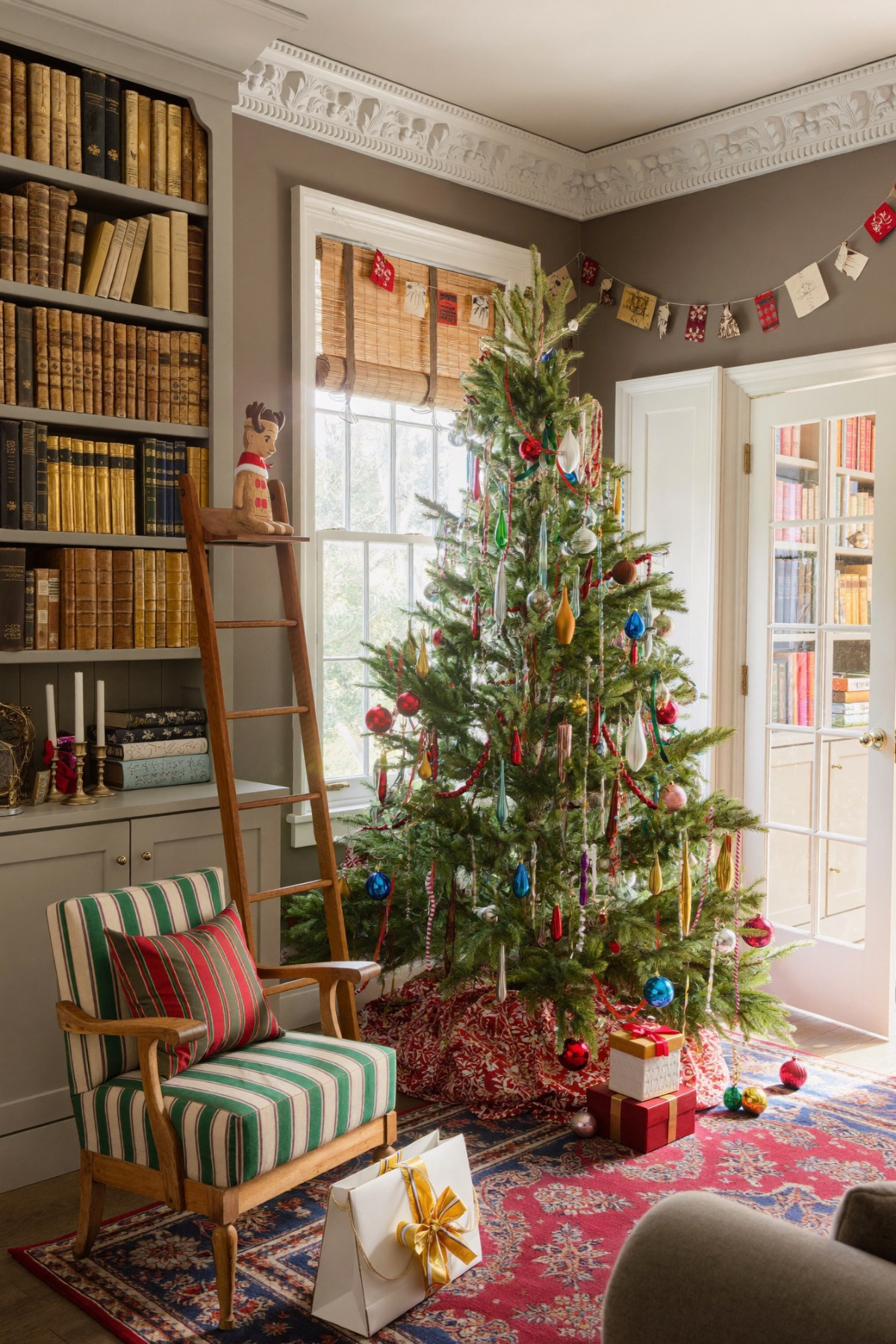
“Vintage” gets used loosely this time of year, slapped onto anything with a plaid ribbon or a string of bubble lights. The real version is narrower than that. It means objects made to be handled and reused: tarnished mercury glass, hand-painted figurines, metal cookie cutters worn smooth at the edges.
The appeal is not nostalgia alone. Older decor tends toward smaller ornaments, matte finishes, and warmer color mixes, which reads as more deliberate than a single-tone haul from one aisle. Mixing eras and materials, brass next to glass next to painted wood, gives a room texture a matched set can not fake.
We pulled together a set of rooms, porches, and tabletop moments that lean into that approach, from full trees to small vignettes you can build in an afternoon. Each one breaks down what is actually doing the design work, so you can borrow whichever parts fit your space.
Brass Ties This Whole Vignette Together
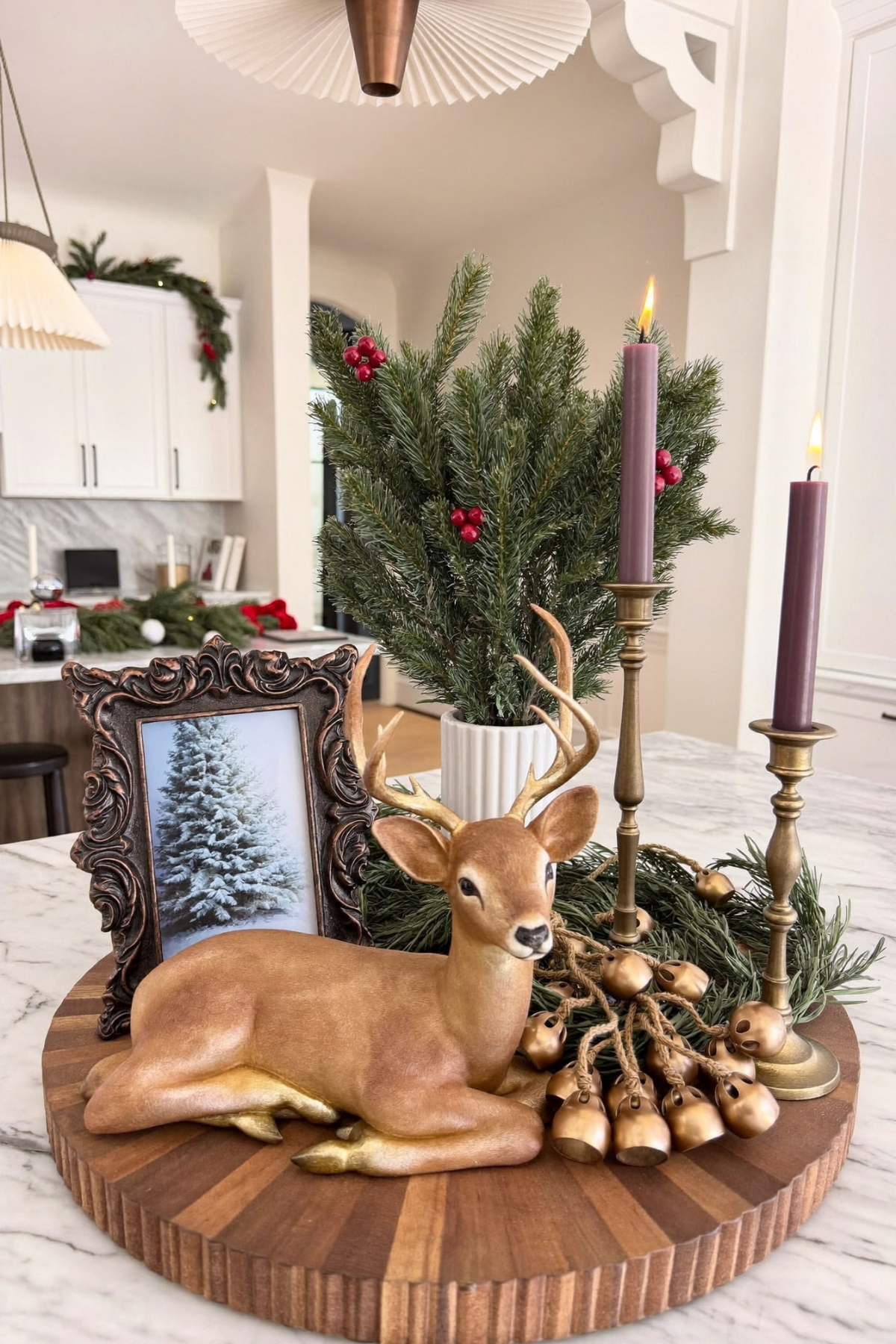
A wood cutting board, a deer figurine, two candlesticks, and a fistful of brass bells sounds like a strange grocery list, but it is basically the whole formula for this kind of centerpiece. The trick is not the objects themselves, it is the material discipline holding them together.
Brass shows up three separate times here, on the candlesticks, the bells, and the gilded hooves of the deer, and that repetition is what keeps four unrelated objects from reading as clutter. Height does just as much work. The candlesticks go tall, the framed print sits mid-level, and the figurine stays low, so your eye actually travels instead of landing on one flat plane.
For your own counter or console, grab a round tray or board first, since it defines the footprint before anything else goes on it. Pick one metal finish and repeat it across at least three pieces, then let a small framed print add a quiet backdrop behind everything.
Old Photos Deserve A Spot Too
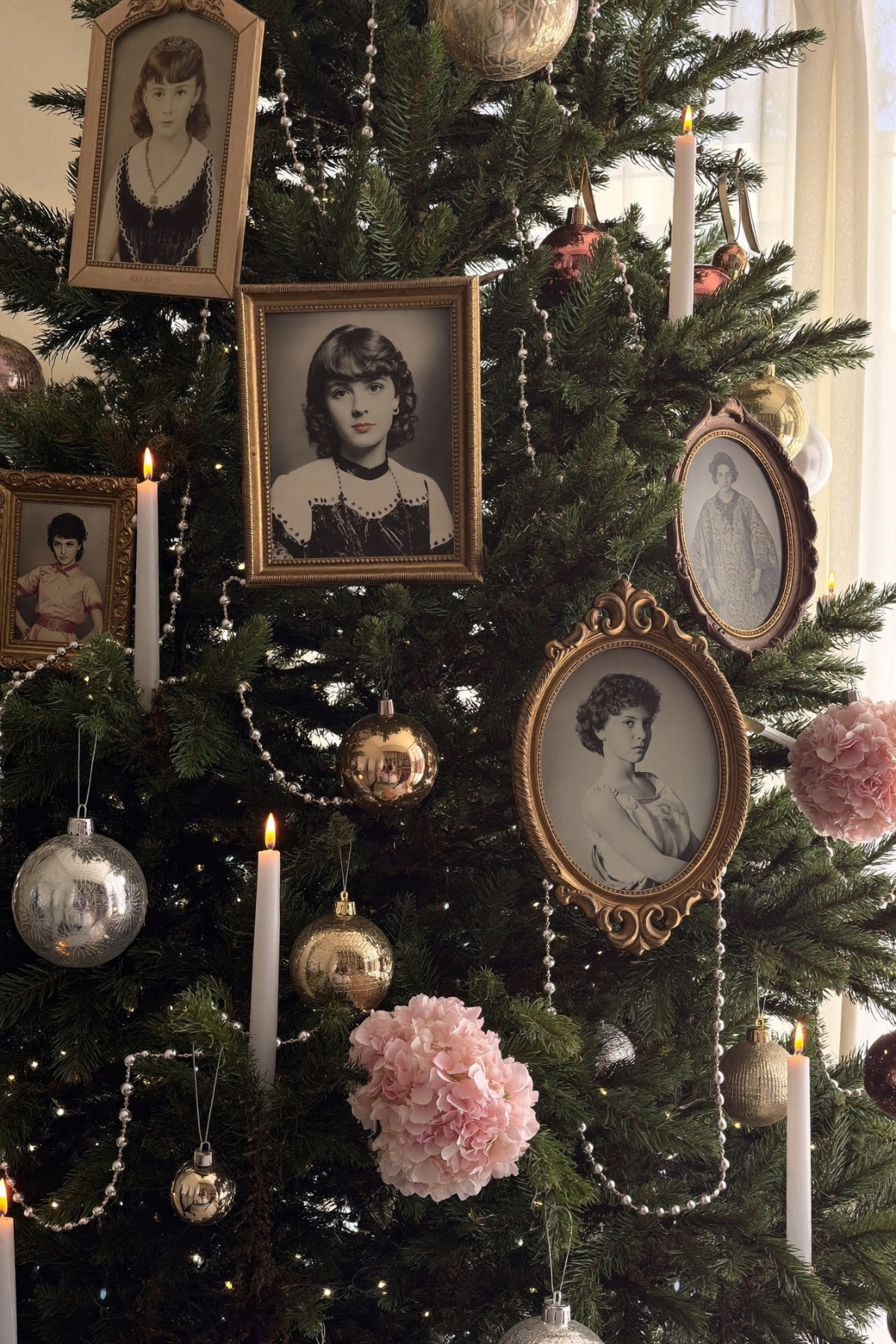
Most trees rely entirely on glass and metal for shine, which is exactly why this one stands out. Small gilt frames holding sepia portraits are worked in between the ordinary ball ornaments, turning the tree into something closer to a gallery wall that happens to be shaped like a pine tree.
Scale is doing a lot of the heavy lifting. The frames range from tiny to noticeably larger, hung close together rather than spaced out evenly, so they read as a cluster instead of scattered accents. Pink hydrangea poms soften the metallic frames and candlelight, keeping the whole mix from feeling too formal.
We would thrift a handful of small ornate frames in mismatched sizes, then print photos, art prints, or even old postcards in a single warm tone so they feel unified even if the frames do not match. Cluster them on one or two branches rather than spreading them across the whole tree, and let faux florals fill in the gaps around them.
Skip The Tree, Try Tiers

Pull every stray glitter ornament out of storage, the extras that never quite found a spot on the tree, and you basically already have the raw materials for this one sitting in a box somewhere. A tiered stand or an empty cake plate does the rest of the work.
What makes it read as a centerpiece instead of leftover storage is loose color grouping. Reds and golds cluster on one tier, pinks and greens on another, with enough variation in pattern, stripes, glitter, solid, that it never looks flat or overly matchy. Organza ribbon tied around the stand’s stem adds movement without adding another color to the mix.
This works especially well on a dining table, where a real tree centerpiece would just get in everyone’s way during dinner. Use whatever leftover ornaments are sitting around and do not worry about matching the color story to the rest of the room.
Cookie Cutters Make A Statement Wreath
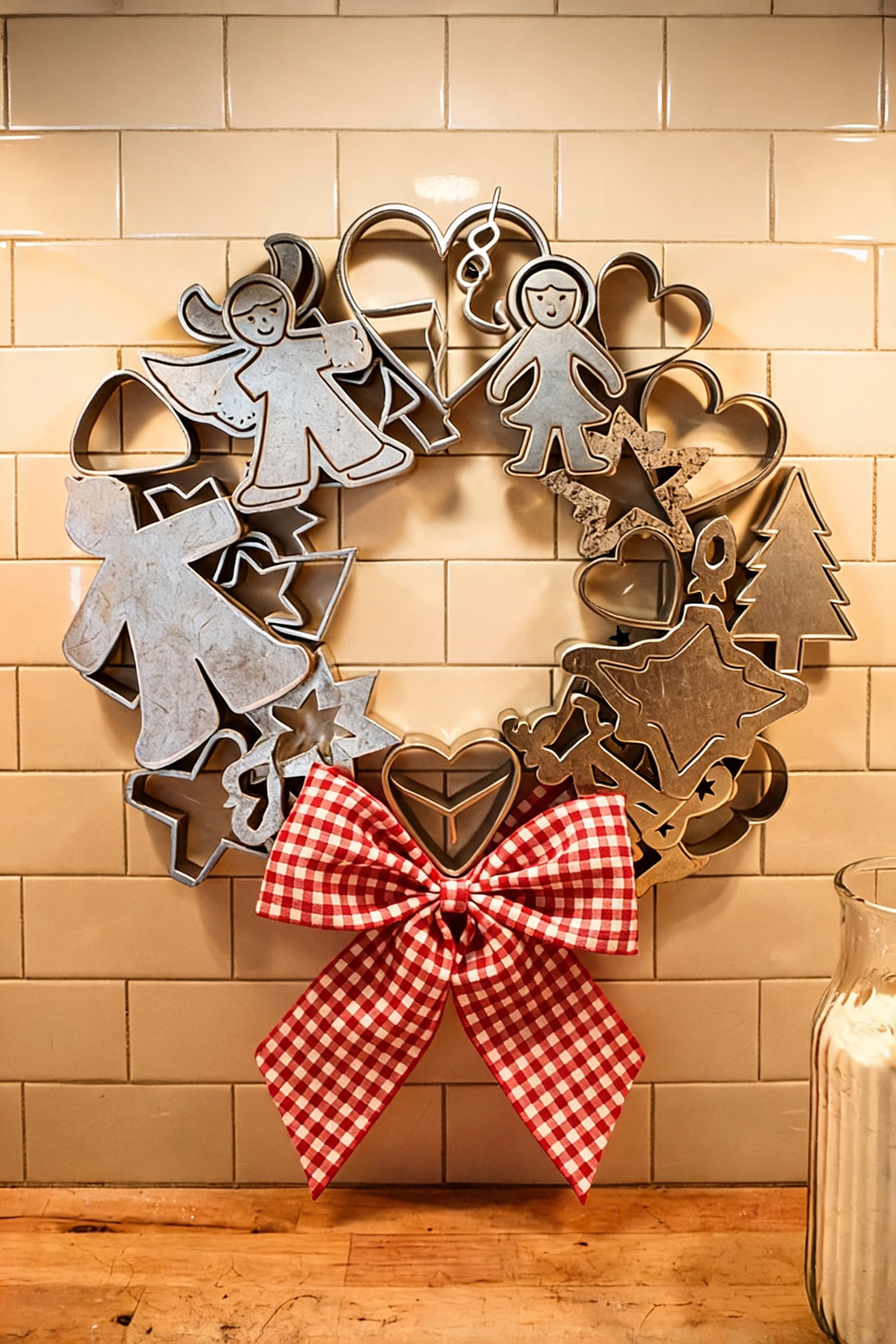
Cookie cutters are meant to disappear once baking season ends, shoved into a drawer until next year rolls around. Wiring a whole collection of them onto a wreath form flips that completely, turning a kitchen tool into wall art that earns a permanent spot instead of a junk drawer.
Layering is what keeps this from looking like a pile of tin shapes glued to a ring. Larger cutters, angels, trees, hearts, go down first, then smaller stars and hearts get tucked into the gaps between them, giving the wreath real depth instead of sitting flat against the wall. A gingham bow at the bottom grounds all that metal with a bit of softness.
If you have got a drawer of old cookie cutters, or can find a mixed lot secondhand, a wire wreath form and some floral wire is really all you need. Hang it somewhere with a plain backdrop, subway tile, a painted door, so the shapes stay the focus instead of competing with a busy wall.
Maximalism Works When Nothing Quite Matches
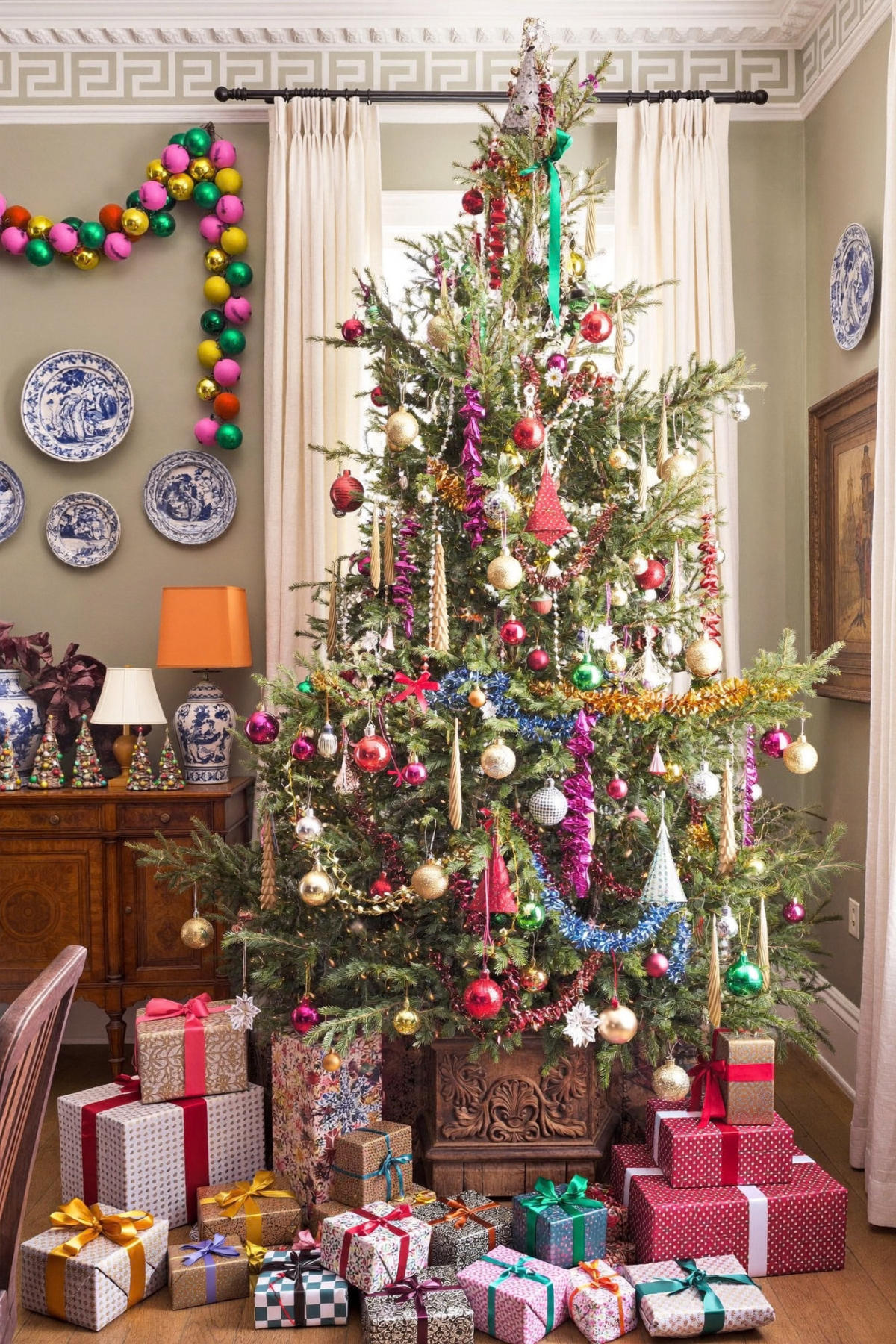
A tree like this breaks most of the unspoken rules people give themselves about holiday color, and it is better for it. Magenta tinsel, gold garland, red glass balls, and blue ribbon all sit within inches of each other, and instead of clashing, the sheer volume of color makes the whole tree feel considered rather than chaotic.
The real trick to pulling off this many colors and textures at once is having at least one deliberately wrong color in the mix, here it is that hot magenta ribbon against olive walls, which keeps the tree from reading as a predictable red-and-gold arrangement. Layering matters more than usual too: glass, tinsel, paper cones, and fabric ribbon all show up within a few branches of each other.
If your instinct is always to match everything, try picking one color that has no business being there and adding it anyway. Do not stop at the tree either. A garland of loose ornaments strung across the wall like a piece of jewelry extends the same energy into the rest of the room.
Swap Toppers Instead Of Buying New

Tiny snowman finials, no bigger than a thumb, are the only thing separating these blue and white ginger jars from how they look the other eleven months of the year. That is basically the whole idea here: a seasonal swap on top of a collection you already own, rather than buying new decor from scratch.
The lineup works because the jars themselves stay consistent in color and shape, so adding a whimsical, slightly silly topper does not compete with anything else. Pleated red lampshades on either side supply the only real color contrast, while a garland of pine and pinecones draped over the mirror frame doubles the effect through reflection.
Anyone with a shelf of plain vases, jars, or canisters can borrow this without spending much at all. Small character toppers sized to fit standard lids show up cheaply every holiday season, and leaning a mirror nearby means one garland ends up decorating two surfaces at once.
Texture Does The Work Here
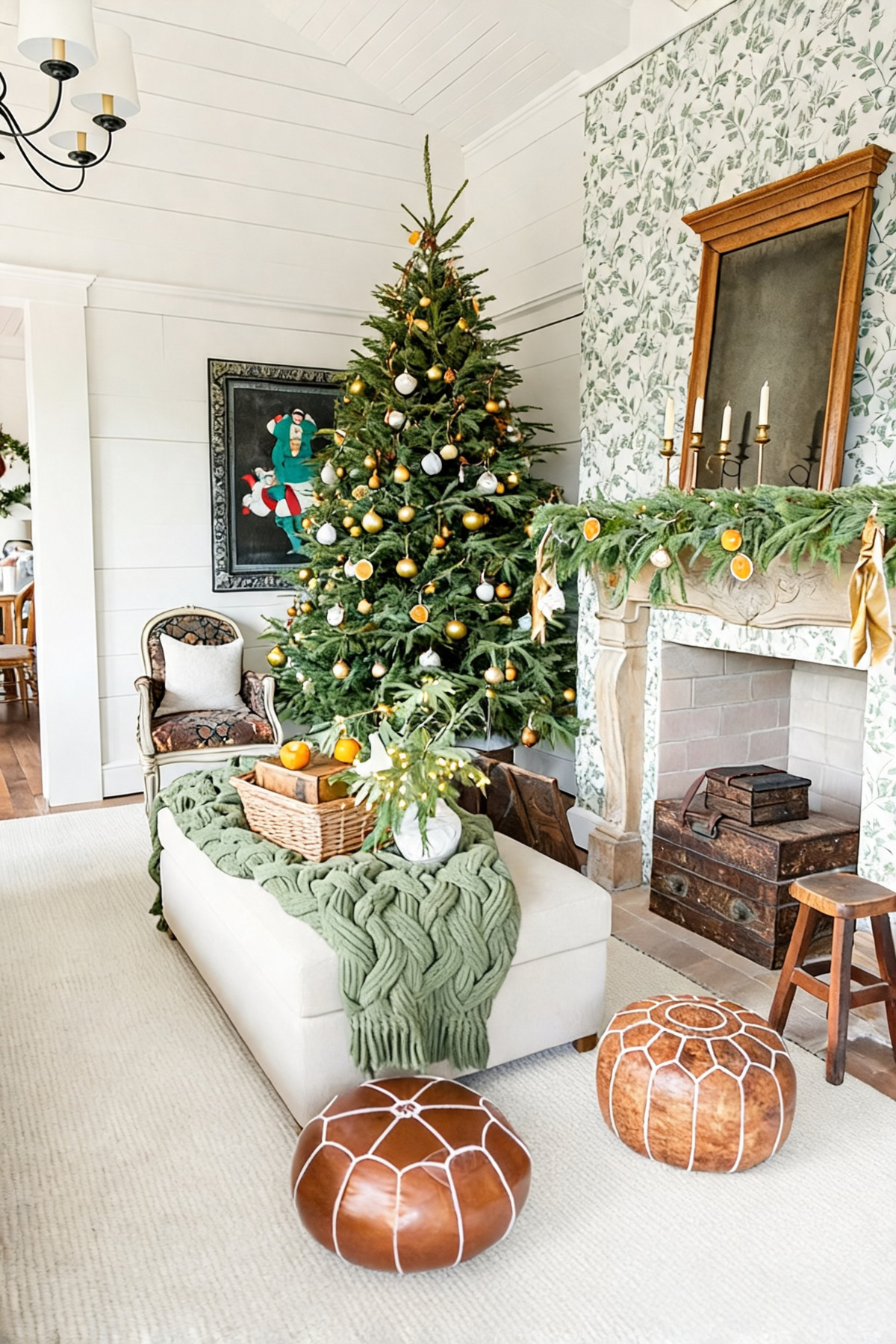
There is no red or green competing for attention here, which is unusual for a Christmas tree and exactly why it holds up so well. Wood bead strands, cream ornaments, and dried orange slices replace the usual glass and glitter, so the color comes from material rather than pigment.
Texture is doing double duty in this room. The knit throw, woven baskets, and leather poufs near the tree pick up the same matte, organic quality as the ornaments, so the whole corner feels connected even though almost nothing actually matches in the traditional sense. Garland strung with citrus slices along the mantle repeats that same idea at a different scale.
To pull this off at home, slice oranges thin and let them dry out over a day or two, low oven heat works fine, then string them with twine alongside wood beads or plain cream ball ornaments. Keep nearby textiles in that same neutral family so the room does not fight the tree for attention.
The Porch Deserves Decorating Too
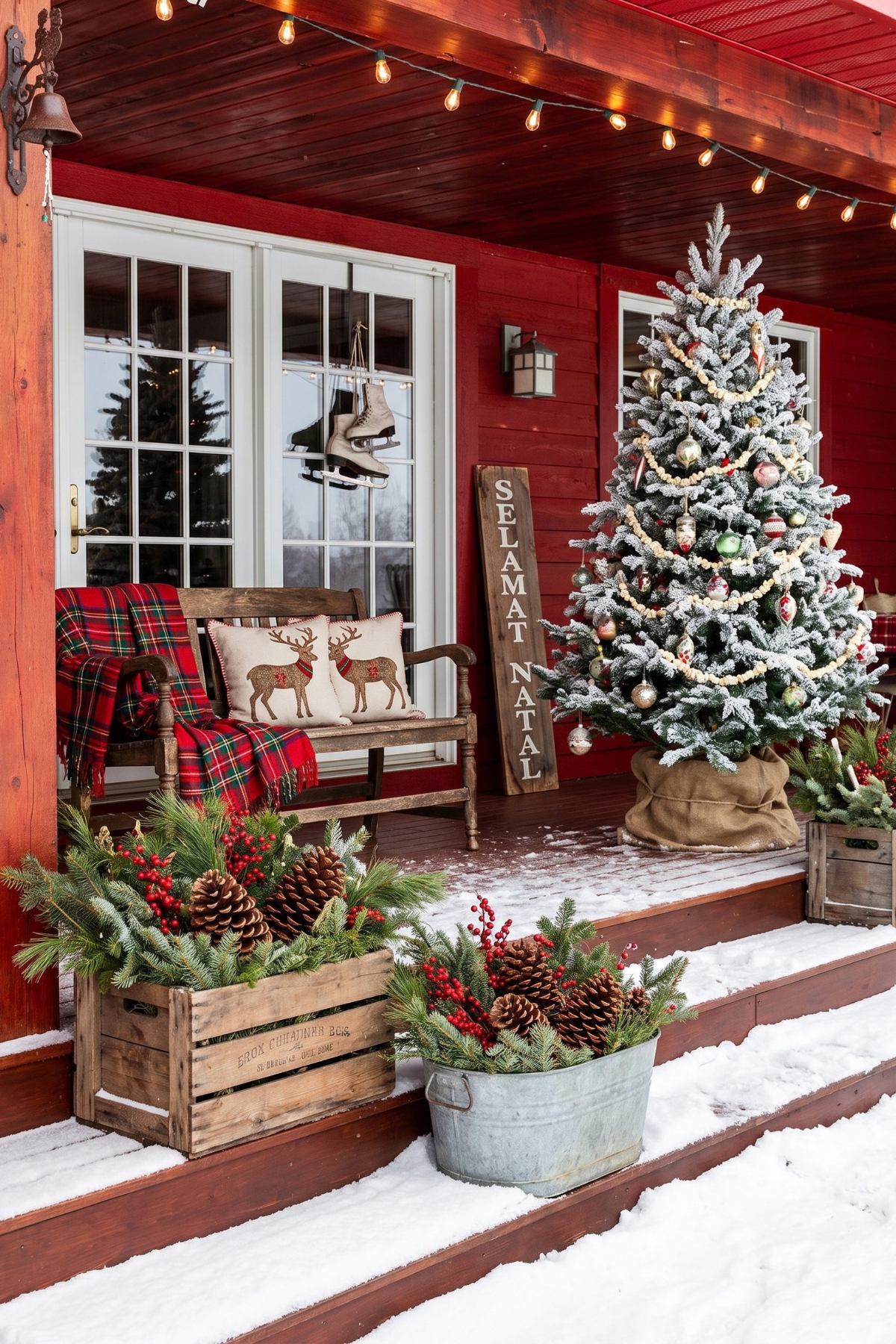
Most decorating effort goes toward the inside of a house and stops cold at the front door, which is exactly the gap this porch fills. A flocked tree, string lights, and a bench dressed with a plaid throw turn a walkway into its own finished space instead of just the route to the front door.
Practicality is doing more here than it looks like at first glance. The tree sits in a burlap sack rather than a treeskirt, which holds up fine outdoors, and the pine, pinecones, and berries filling a wood crate and a galvanized bucket cost far less than a matching set of planters would. Hung ice skates and a pair of reindeer pillows round it out without adding anything fussy.
A porch version of this only needs a few sturdy, weatherproof pieces: something to hold greenery at the steps, a warm throw somewhere visible, and one tree with enough snow-dusted texture to read from the street. String lights along the roofline finish the job for almost no extra effort.
Small Trees Need Big Personality
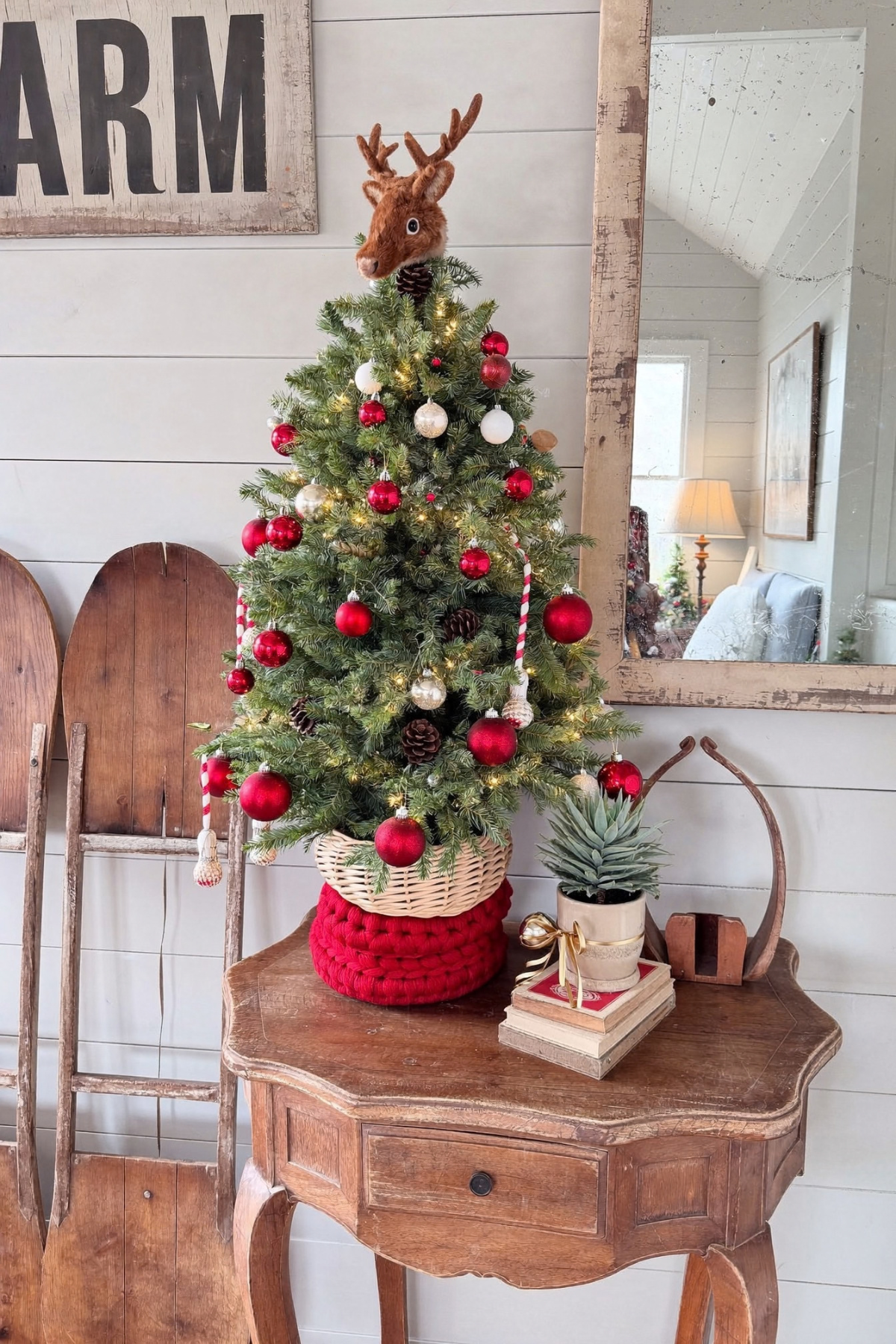
A plush reindeer head standing in for a star or angel is a small choice, but it is the one that makes this tiny tree memorable instead of just another mini tree on a side table. Everything below it, red and cream balls, a few scattered pinecones, stays fairly restrained on purpose.
Scale discipline is the real principle at work. A full-size ornament on a table-height tree would look oversized and clumsy, so the balls here stay small and the palette narrows to just two shades instead of the usual five or six. The base gets tucked into a wicker basket wrapped in a red knit cozy, hiding the plastic pot entirely.
For a side table or entryway, look for a pre-lit tree sized under three feet, pick a topper with a bit of personality instead of the standard star, and keep ornaments proportional to the branches. A basket or knit wrap over the base finishes it off without needing a full treeskirt.
Nesting Containers Solves A Problem
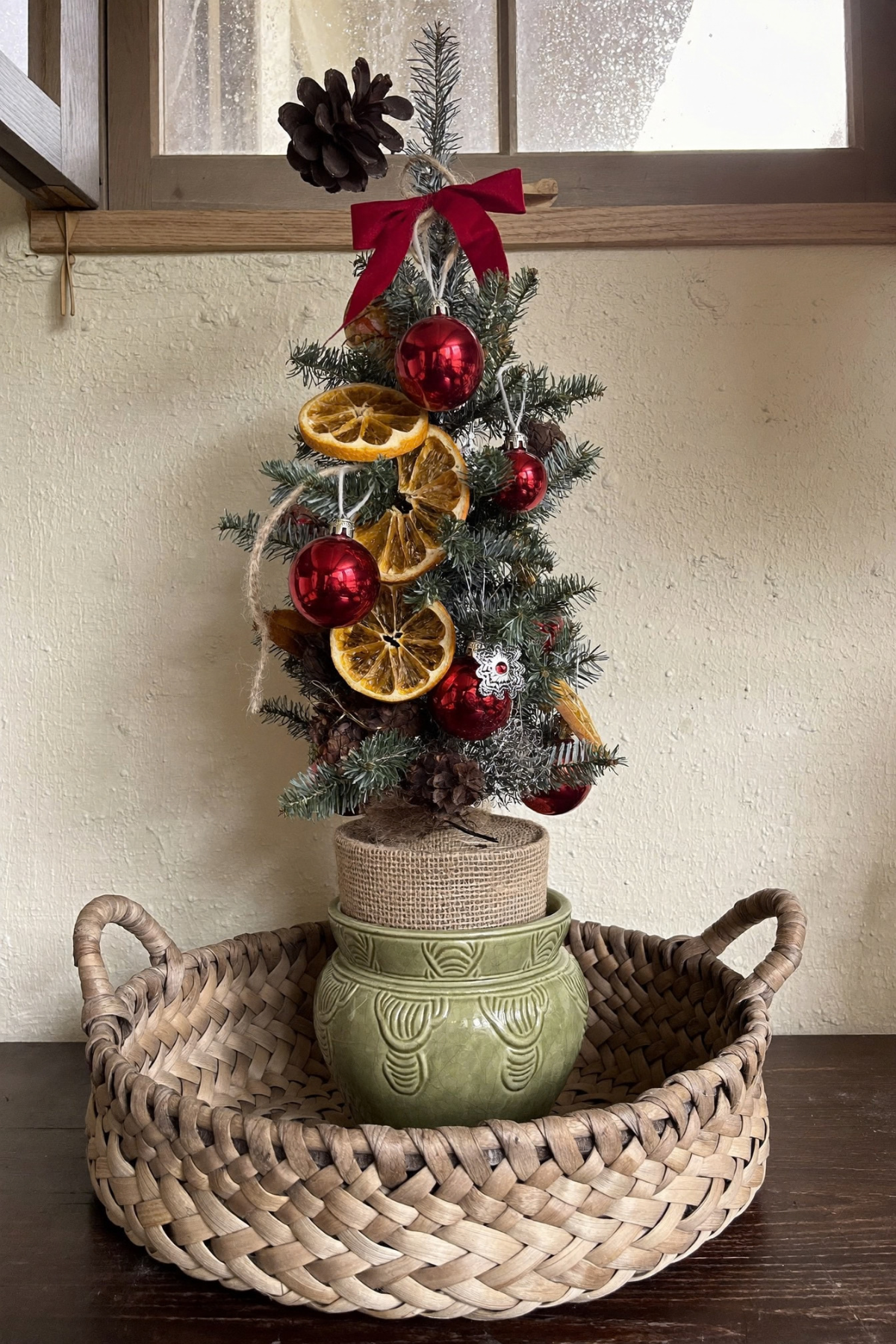
Three containers deep, a burlap-wrapped pot sits inside a green ceramic vase, which sits inside a woven tray, and each layer is quietly doing a job. The burlap hides the plastic nursery pot, the vase adds color and height, and the tray keeps the whole arrangement portable and contained.
Dried orange slices strung through the branches alongside a handful of red balls keep the tree itself simple, so the container work does not have to compete with a busy tree on top of it. A single pinecone and a length of ribbon stand in for a topper, which suits the small scale far better than anything bigger would.
This is an easy one to copy exactly: wrap any plain plastic pot in burlap or fabric, slide it into a decorative vase or jar you already own, and set the whole thing on a tray. Add dried citrus, homemade or store-bought, for scent and color that costs almost nothing.
The Best Trees Look Like They Grew That Way
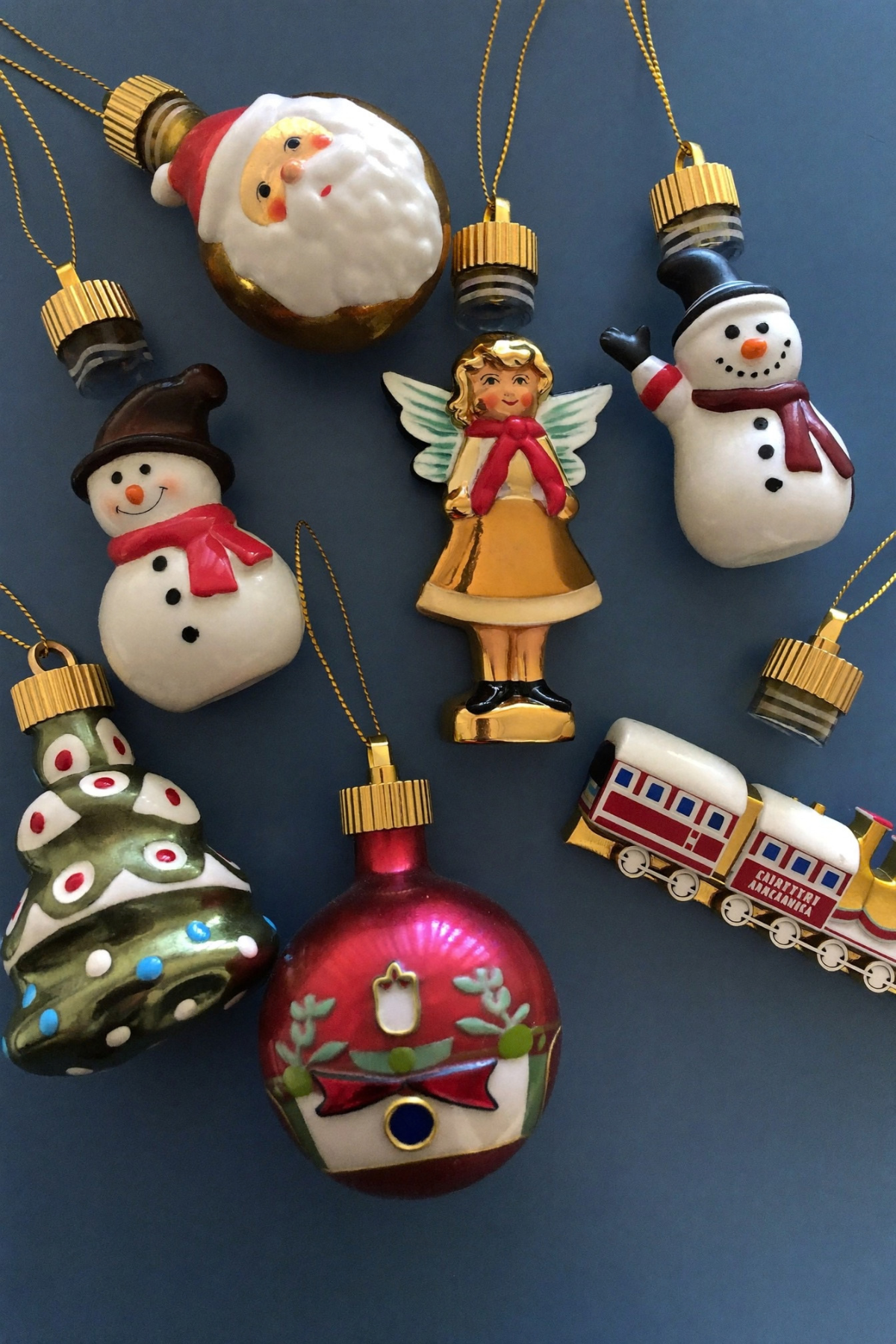
What ties every one of these spaces together is not a color palette or a single style era. It is restraint about newness. Almost nothing here came straight off a shelf looking brand new, and that is precisely the point. A slightly worn ornament or a secondhand frame does more work in a room than ten identical glass balls ever will.
None of it demands a full overhaul either. A wreath built from cookie cutters, a tray of nested containers on a windowsill, a handful of framed photos clipped into the branches, these are one-afternoon projects, not full redecorating jobs. Small, specific choices add up faster than most people expect them to.
If you are staring at a bin of ornaments and unsure where to begin, start with whatever piece has the most history behind it, then build outward from there. The room tends to follow on its own.

 Steal Our Home Styling Secrets!