
The Design Tricks Small Apartment Living Rooms Actually Need To Feel Full
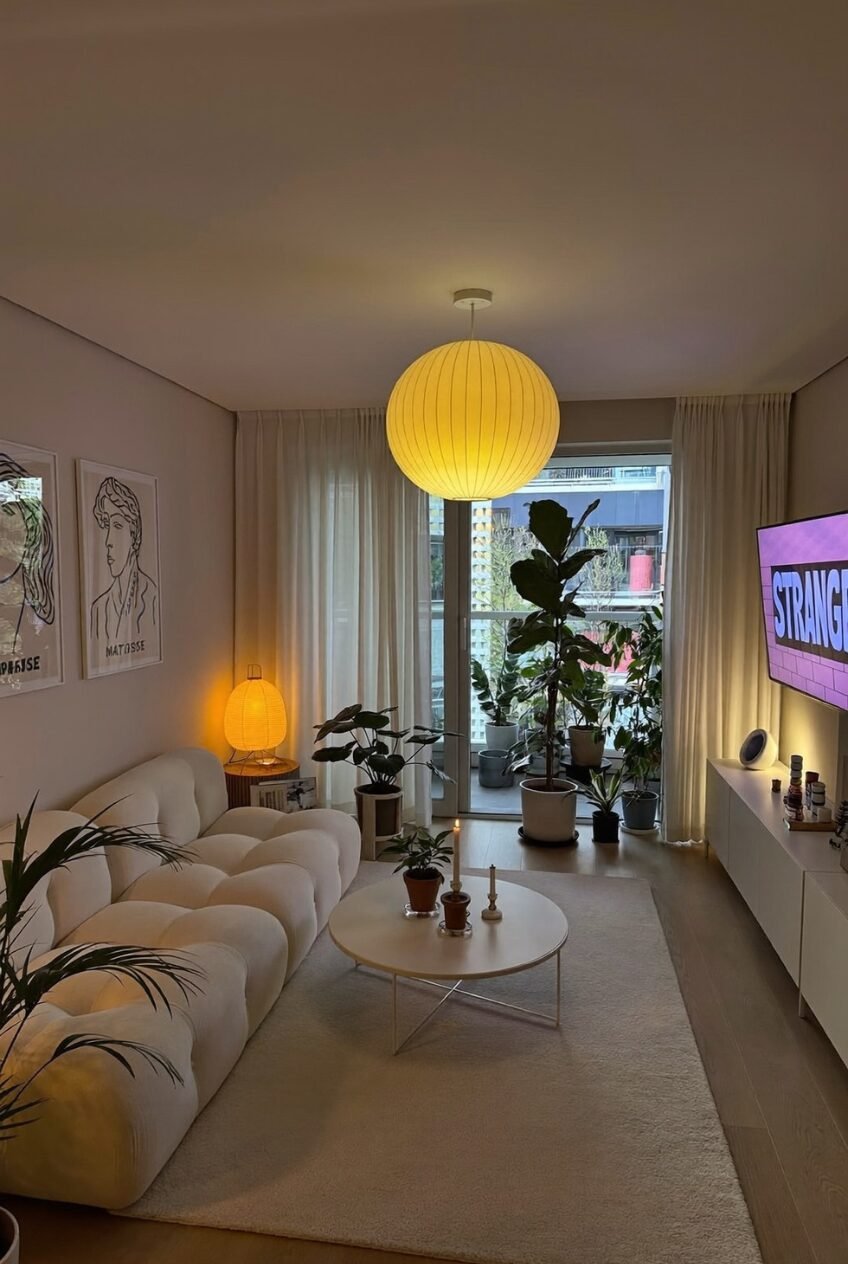
Small living rooms get a bad reputation they don’t really deserve. Square footage is limited, sure, but that’s not the same as design potential being limited. Some of the most interesting rooms we’ve come across barely fit a coffee table and a rug, yet still manage to feel layered and genuinely liveable.
What separates a small living room that works from one that feels cramped usually comes down to a handful of decisions: how light gets layered, what goes on the walls, and how furniture gets chosen to do more than one job. None of it requires a bigger apartment or a bigger budget.
We pulled together ten real rooms that each solve the small-space puzzle a different way, from lighting tricks to furniture that punches above its size. Think of this less as a mood board and more as a working manual for the room you actually have.
Layer Light Instead Of Furniture
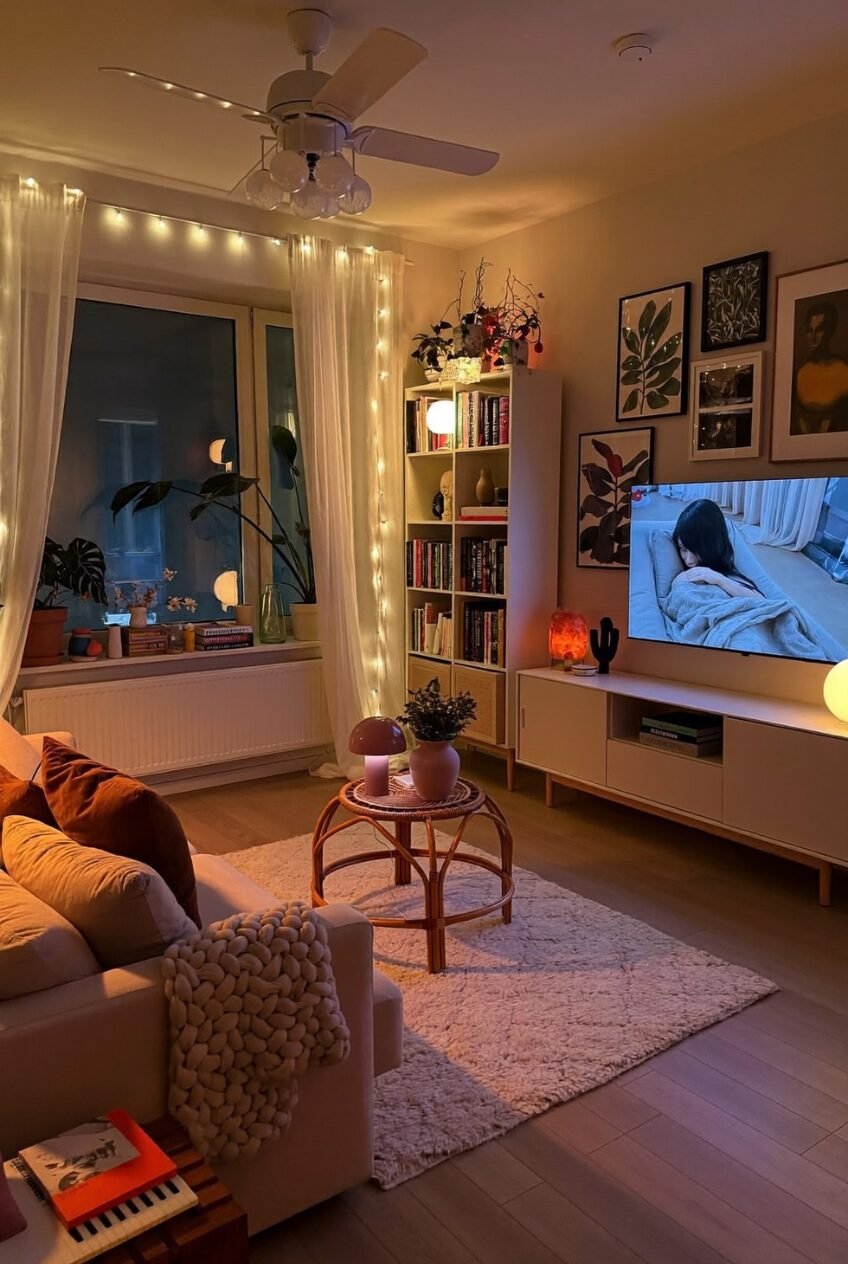
Notice how many separate light sources are working in this room at once, string lights tracing the curtain rod, a mushroom lamp on the side table, a salt lamp glowing on the console, even the ceiling fan doubling as a light fixture. None of them are bright enough to light the room on their own, and that’s the point.
In a small footprint, one overhead fixture blasting everything at full brightness tends to flatten the space and make it feel smaller, not bigger. A handful of dim, warm sources instead gives the eye multiple points to land on, so the room reads as deeper than it actually measures out to be.
If you’re working with a similarly tight layout, start collecting small lamps before you think about a statement piece. A cheap clip light behind a plant or a string of warm bulbs along a window frame will do more for the mood than a single expensive lamp ever could, and costs a fraction as much.
Let A Big Mirror Work Harder
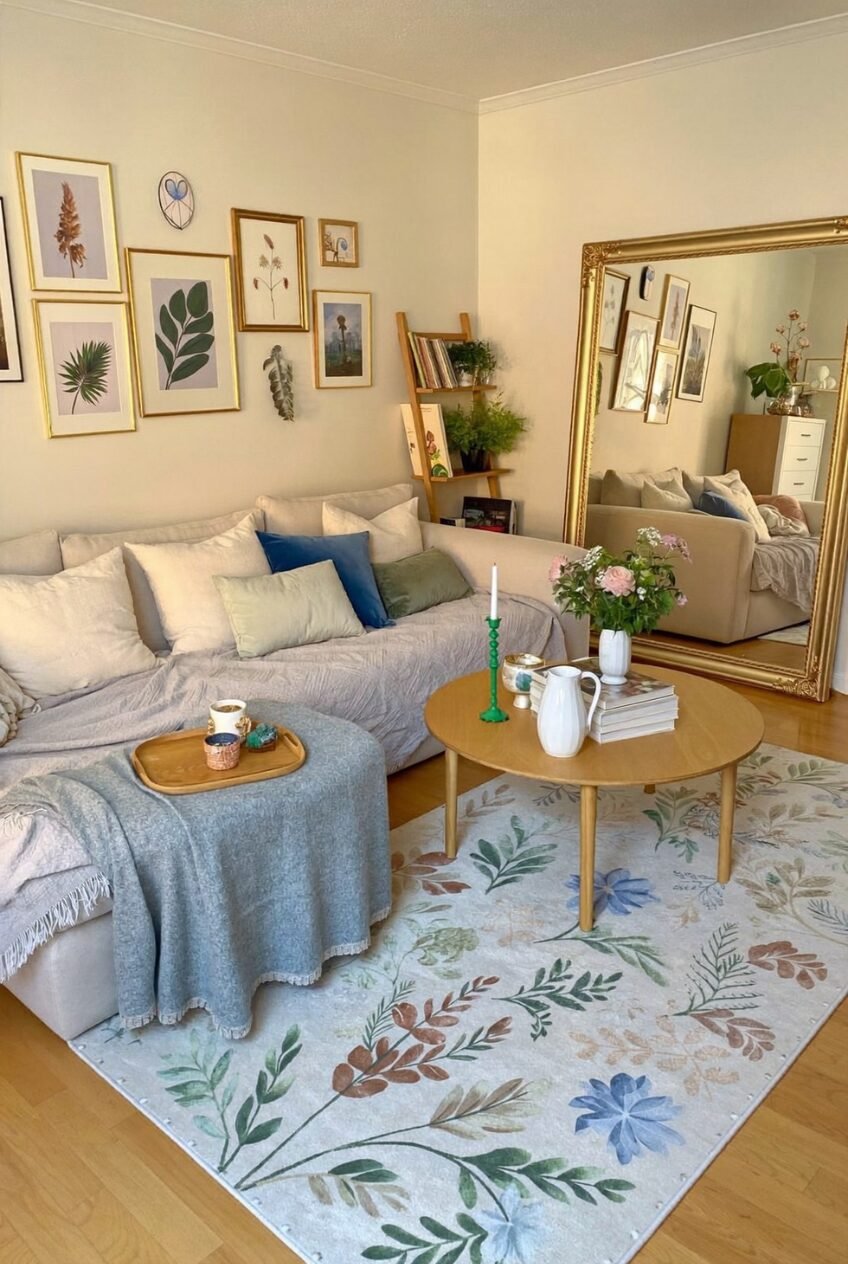
That leaning mirror isn’t just there to check your outfit. Propped floor-to-ceiling against the wall, it’s doing the actual work of doubling the room, at least visually. Every gallery frame, every houseplant, every beam of daylight gets reflected back into the space a second time.
Pair it with a gallery wall clustered tightly rather than spaced out, and you get a corner that feels collected over years instead of decorated in a single weekend. The floral rug and mismatched cushions do their own version of the same trick, adding pattern without adding real visual weight to the room.
For your own space, buy the biggest mirror you can carry up the stairs and lean it rather than mount it. A slight lean against the wall reads more relaxed than a perfectly hung piece, and it saves you from patching drywall the next time you decide to move it somewhere else.
Give The TV A Shelf
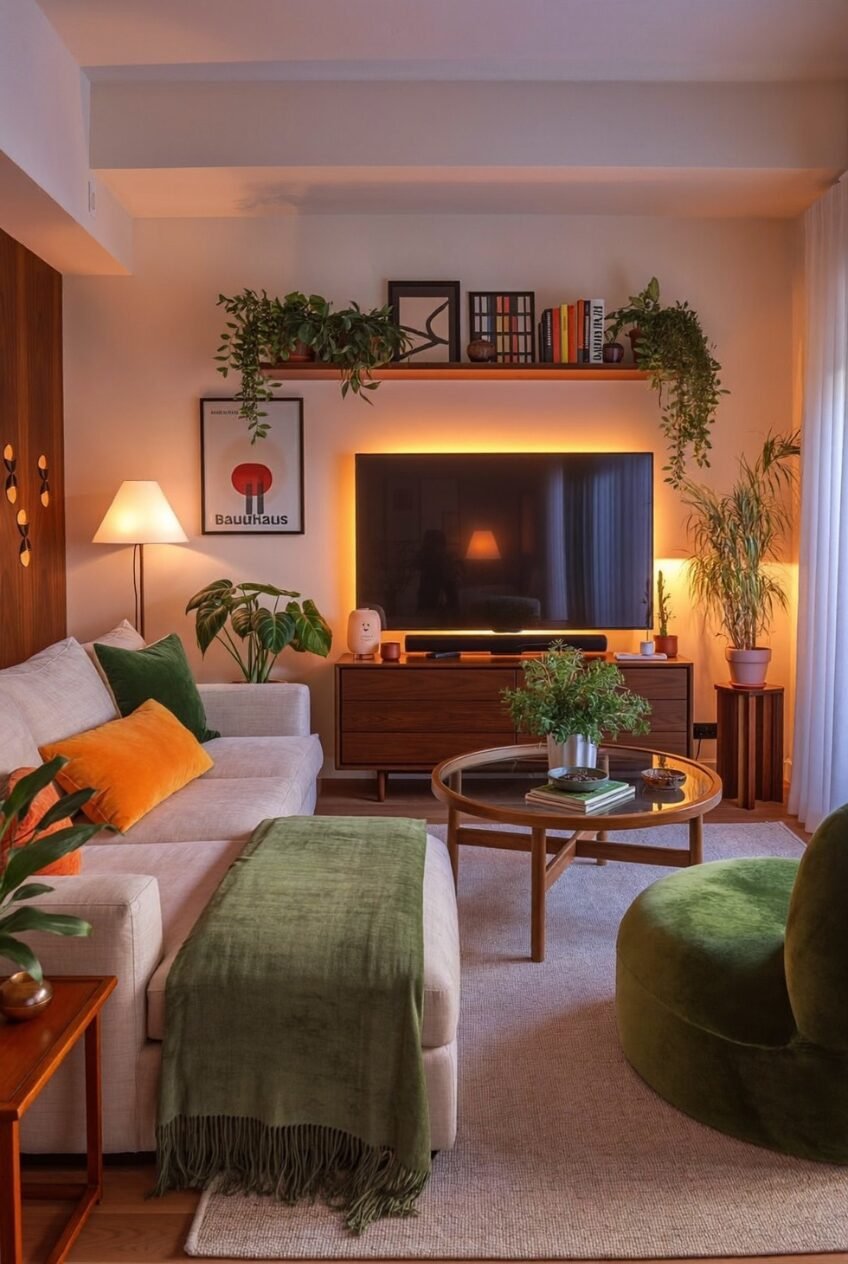
A television usually eats a huge chunk of visual real estate on its own, especially in a smaller room where it sits at eye level no matter where you’re sitting. The floating shelf above it changes that math completely, suddenly the TV becomes just one layer in a taller, more interesting display instead of the main event in the room.
Warm strip lighting tucked under the shelf helps too, softening the black rectangle and giving the whole wall a glow that reads more like a gallery than a media setup. Books, a small frame, and trailing plants on either side keep it from looking like storage for storage’s sake, which is easy to overdo.
If your TV wall feels flat, look up before you look sideways. A single shelf spanning the width of your console can hold what used to live on a bigger bookcase, freeing up floor space for the green velvet chair or ottoman you’ve had your eye on for months.
Backlight Your Frames For Depth
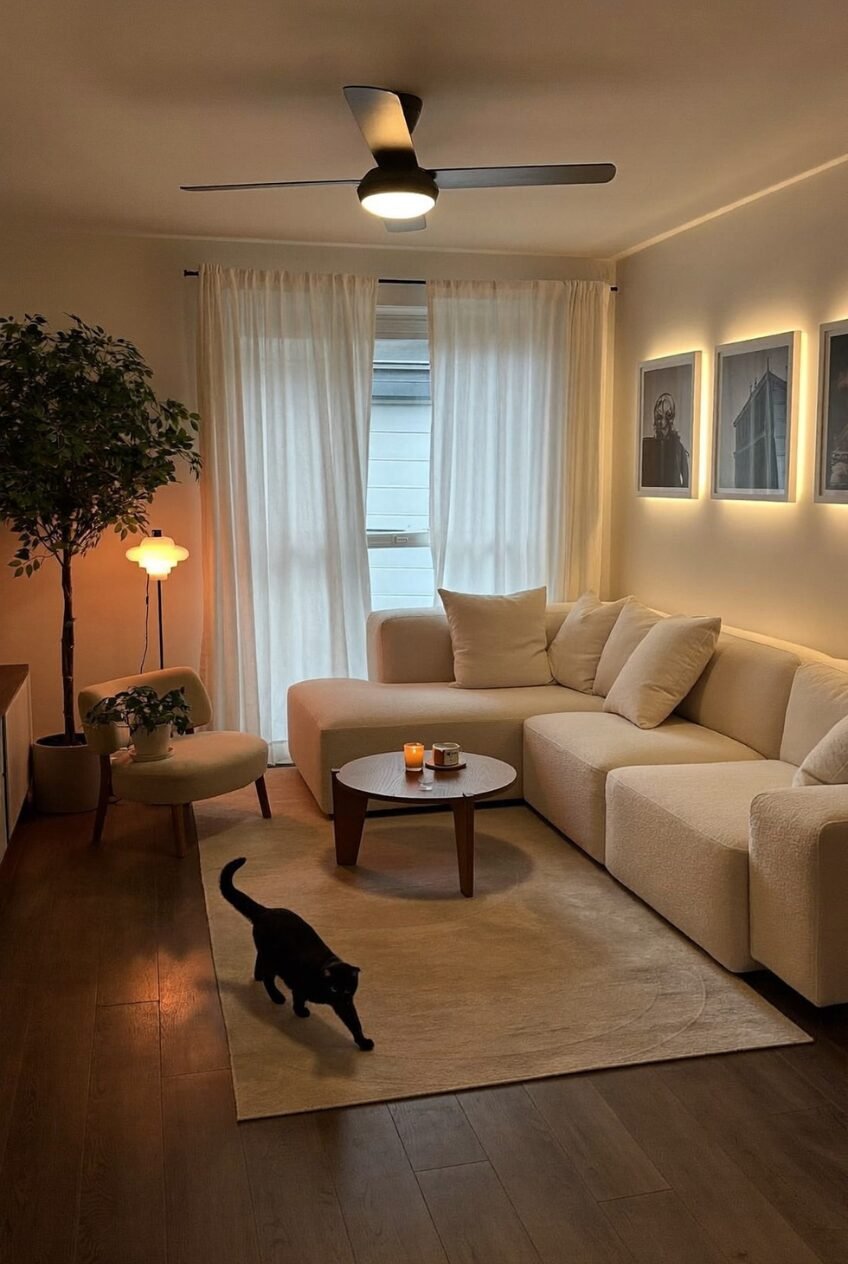
Three black-and-white prints, evenly spaced, would look fine on their own. Add a thin ring of light behind each frame and they turn into something closer to museum lighting, pulling focus toward the wall and away from whatever the room’s actual dimensions happen to be.
This is a cheap trick worth stealing: battery-powered LED strips behind a frame cost very little and install in minutes, with no electrician required. The glow also works as ambient lighting once the sun goes down, meaning you can skip turning on a brighter overhead light most evenings of the week.
Keep the rest of the palette quiet if you go this route. The neutral sofa and dark floors here let the backlit wall be the one loud moment in the room, while a single tall plant in the corner adds height without competing with the light show happening a few feet away, which matters more than it sounds like it would.
Pick Furniture That Hugs Corners
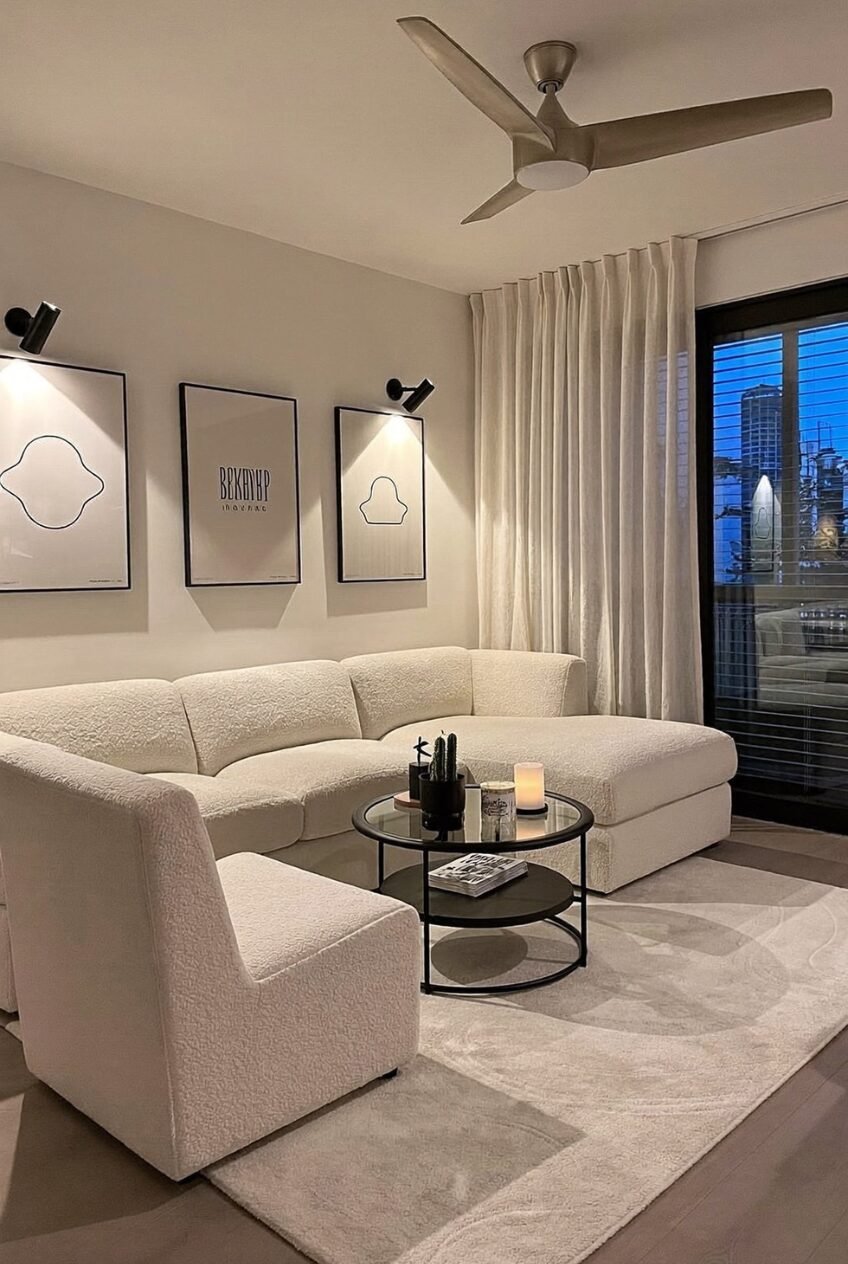
A sectional that wraps into the corner instead of floating in the middle of the room is doing quiet, unglamorous work: it frees up the floor space a small living room can’t spare while still giving you enough seating for a full movie night. The glass coffee table continues the theme, taking up visual space without actually blocking any sightlines across the room.
Above the sofa, individual picture lights aimed at each print add a gallery feel without the cost of recessed lighting, and they’re the kind of detail most people notice without being able to say why the room feels finished rather than just furnished.
If you’re shopping for a small living room, measure your corner before you measure anything else. A corner-hugging piece almost always fits more people than a straight sofa plus a chair, and sheer curtains left un-tied let in enough light to keep the whole setup from feeling boxed in.
Make Room For A Reading Corner
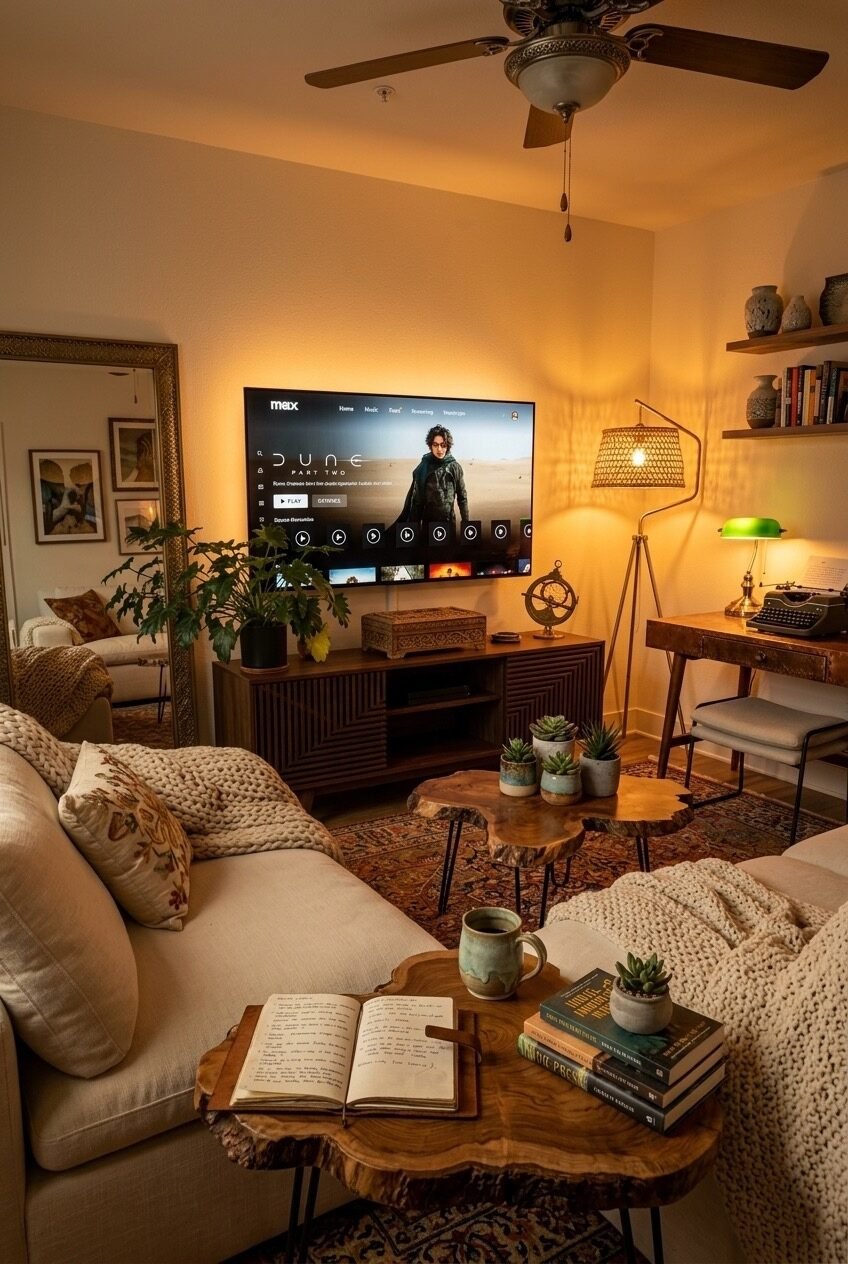
Squeeze a small desk into the corner of your living room before you assume you don’t have space for one. Here it sits just past the sofa, doing double duty as a spot to read, write, or ignore your phone for twenty minutes, all without needing its own separate room.
The layered vintage rug and mismatched wood side tables are doing the harder work of tying a busy corner together. When your furniture styles vary, a rug with warm, muted tones underneath everything keeps the mix from looking accidental rather than gathered on purpose over time.
Knit throws draped loosely, a stack of real books instead of decorative ones, and a warm brass desk lamp finish the look without much cost. The overall feeling is less living room and more the corner where you’d actually want to spend a Sunday morning, which is really the whole point of adding a desk here in the first place.
Let Ladder Shelves Climb The Wall
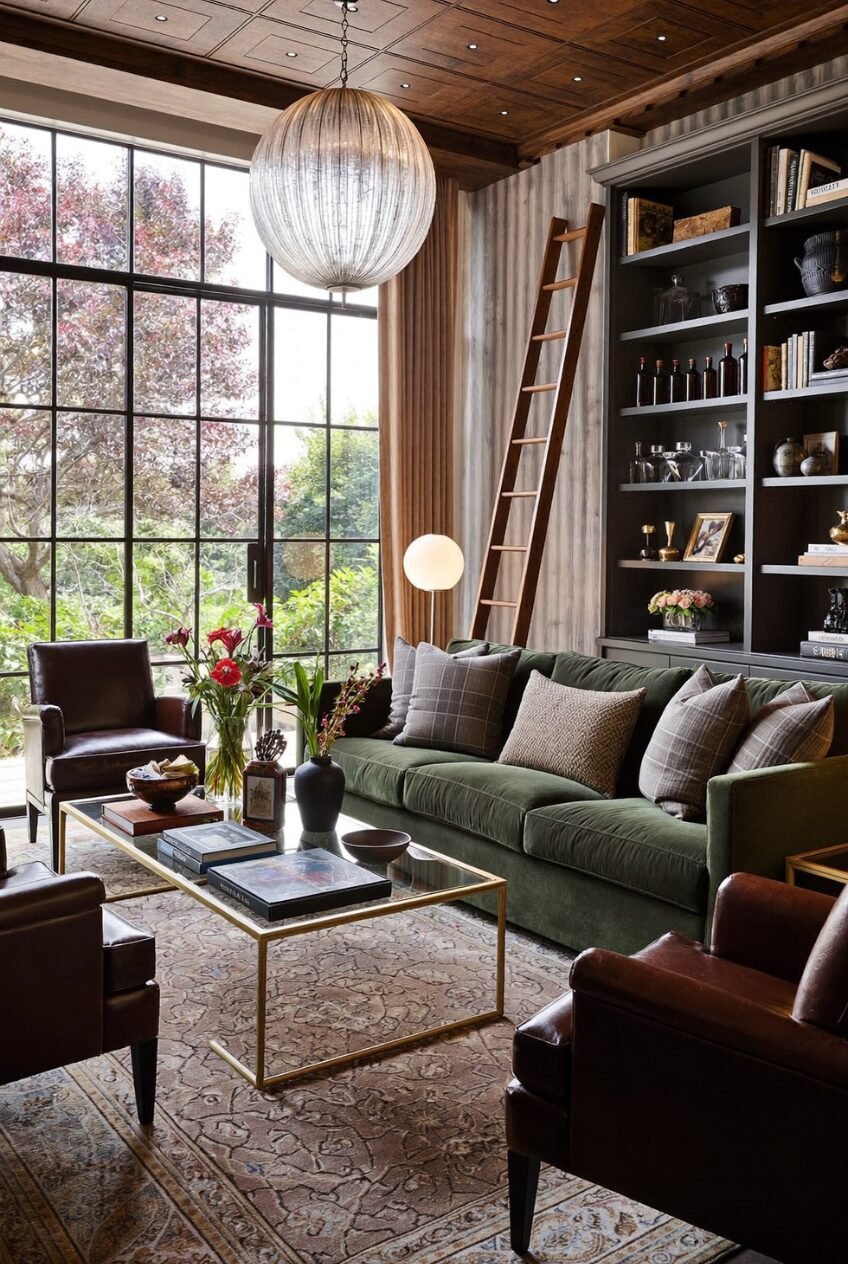
Floor space might be the one thing a small living room genuinely can’t manufacture more of, but wall space usually has more to give than people assume. Built-in shelving that runs from waist height almost to the ceiling, reached with a small rolling ladder, turns an entire wall into storage without stealing a single square foot of floor space.
The deep green sofa and warm leather chairs matter here too. Darker, richer colors in a room with tall windows and good natural light don’t shrink a space the way people worry they will, they just make it feel warmer and more grounded once the sun goes down.
You don’t need built-ins or a ladder to borrow this idea. A tall, narrow bookshelf pushed against one wall does a smaller version of the same job, and a single richly colored sofa can anchor a neutral room the same way this one does.
Blend Living And Kitchen Zones
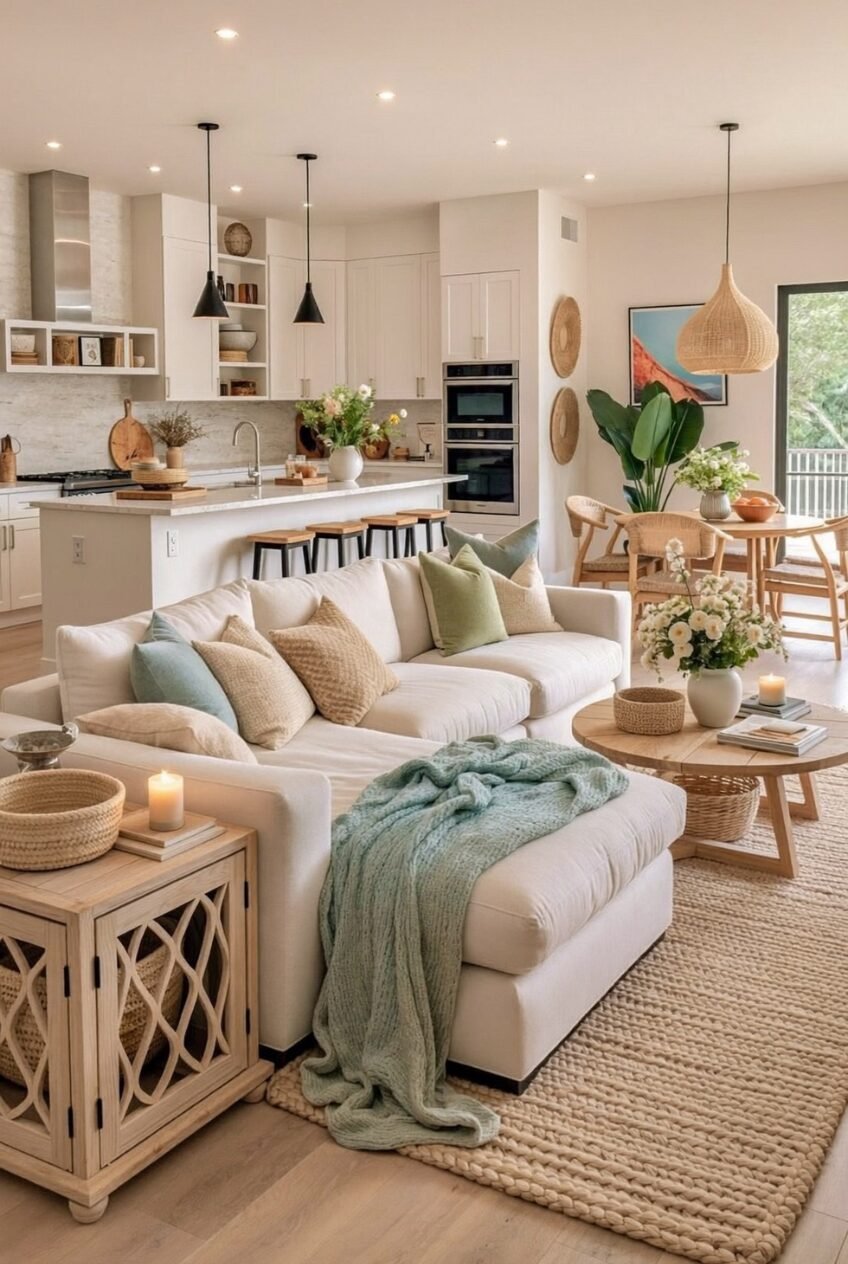
When your living room and kitchen share one open footprint, the sectional needs to work harder as a divider than a decorator ever will. Here, a chunky jute rug marks where the living area starts, doing the job a wall would do in a bigger house.
The color story stays quiet and consistent across both zones, sandy neutrals with small hits of sage and blue on the pillows, so your eye reads it as one continuous room instead of two competing spaces bumping into each other, even without a wall between them.
Rattan pendant lights over the kitchen island and a matching one over the dining table repeat the same material and shape, which is a cheap way to visually stitch an open floor plan together. Matching just one material across two zones can do a surprising amount of heavy lifting for very little cost, and it’s an easy thing to copy in almost any layout.
Show Off Your Actual Hobbies
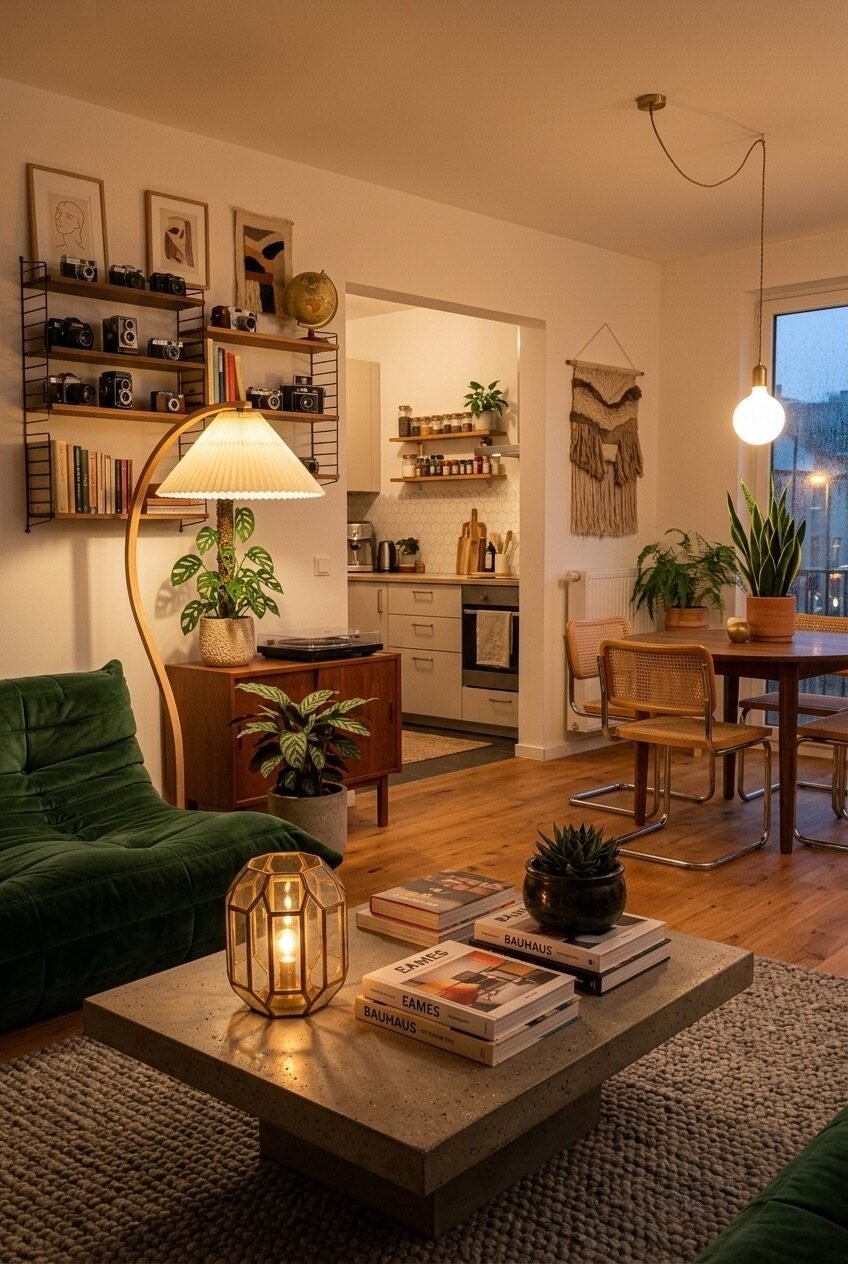
A shelf of vintage cameras probably isn’t on any generic decorating checklist, and that’s exactly why this wall works. Displaying things you actually collect, instead of buying objects specifically to look decorative, tends to make a small room feel like a real home and less like a showroom off a catalog page.
The concrete coffee table is an unexpected material choice for a room this warm, and it works precisely because it’s unexpected. A little visual friction between a soft green velvet sofa and a cold, industrial slab keeps the whole room from reading as one-note or overly matched.
Take stock of what you already own before buying new decor. Old cameras, records, travel souvenirs, even a small stack of paperback books can fill open shelving for free and end up looking more interesting than anything from a catalog ever could, mostly because nobody else’s shelf will look quite the same.
Let One Lamp Set The Tone
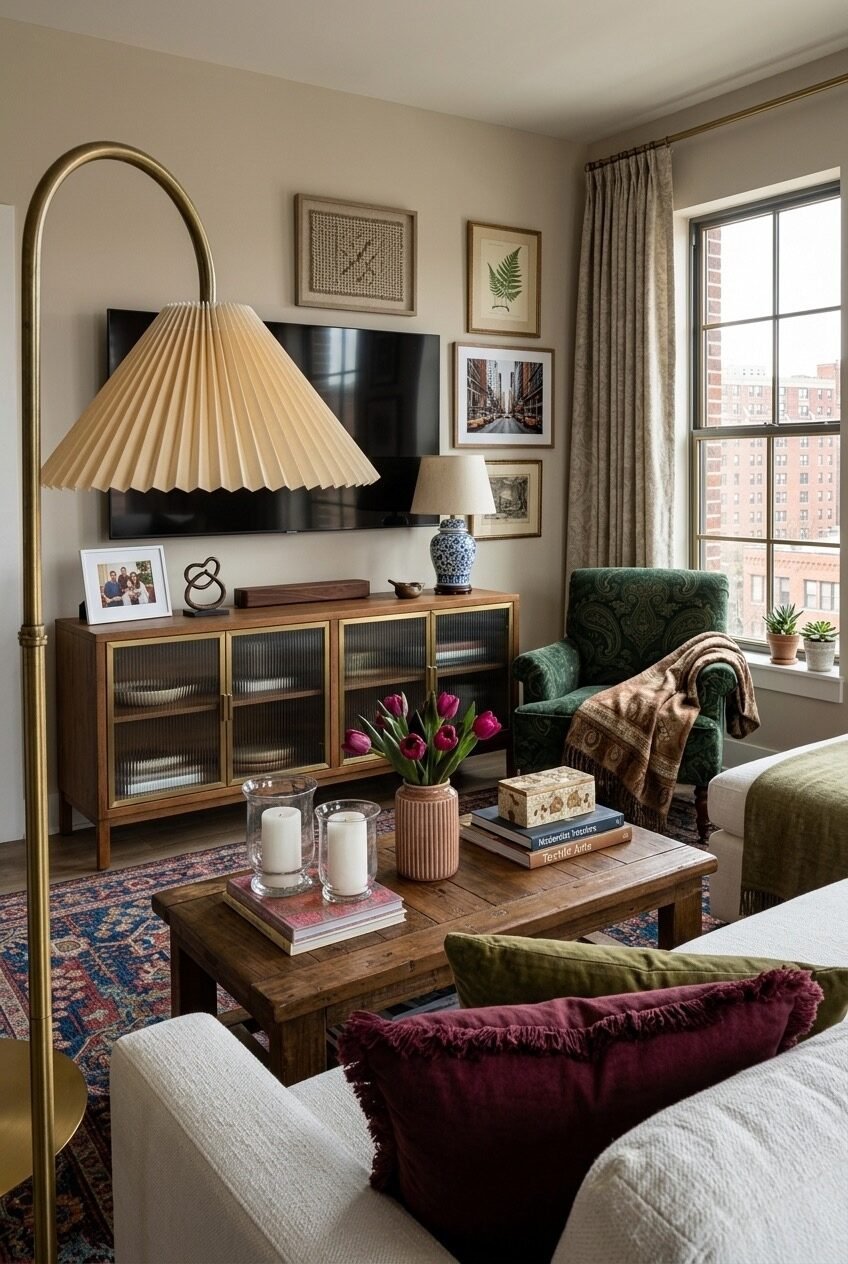
Every eclectic room needs one piece that quietly tells you what the whole space is going for, and here it’s the brass arc lamp with its pleated shade. Its warm metal and soft, folded fabric set the tone for the wood, brass hardware, and jewel-toned pillows scattered around the rest of the room.
The glass-front cabinet underneath the TV is worth copying too. It displays books and objects while keeping dust and clutter behind a closed door, which matters more in a small room where nearly every surface stays visible from the sofa at almost all times of day.
Maroon, olive, and mixed patterns could easily clash, but they don’t here because the wood tones and brass accents repeat often enough to hold everything together. Pick one statement lighting piece first, then build the rest of your palette around whatever metal or wood tone it already carries throughout the room.
Small Rooms Reward Good Decisions, Not Big Budgets
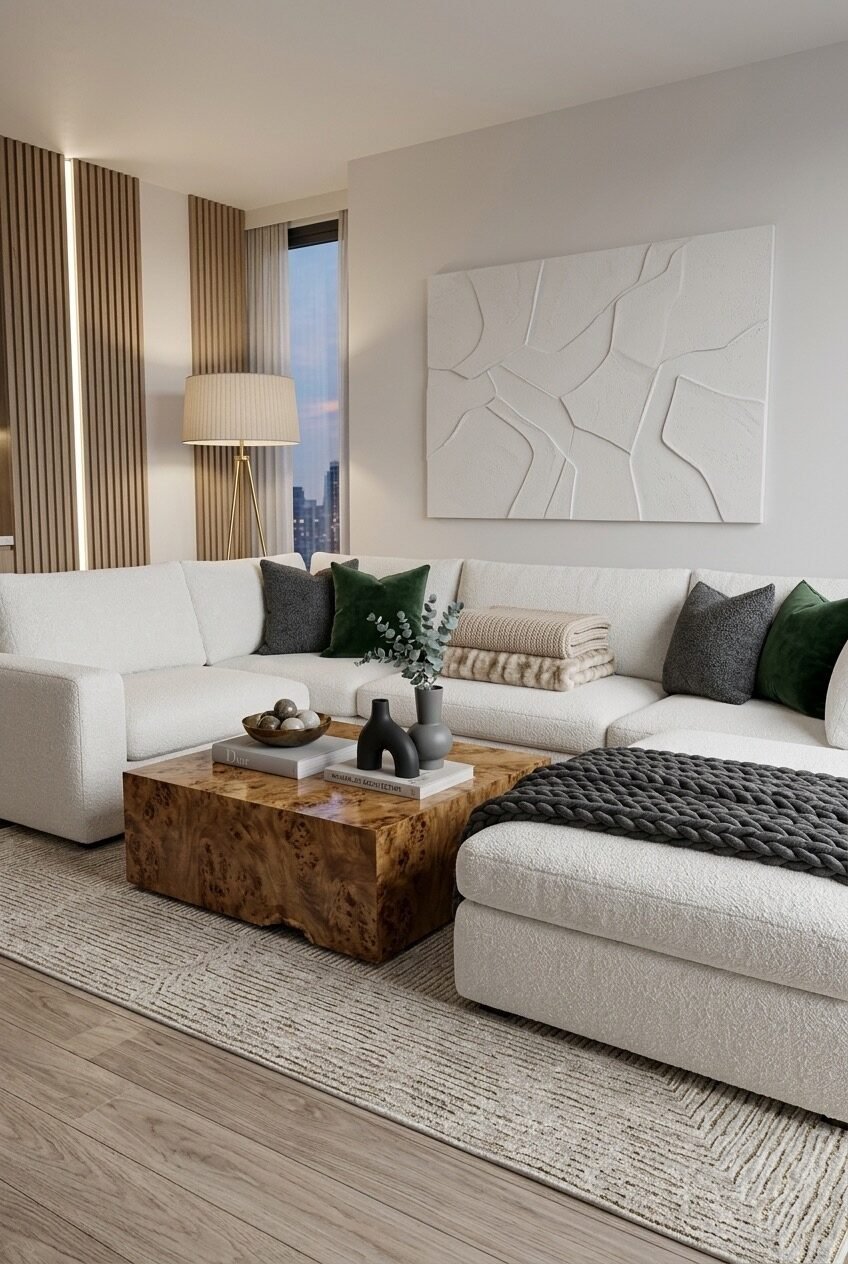
None of these ten rooms solve the small-space problem the same way, and that’s kind of the point. Some lean on lighting, some lean on a single oversized object, and some just get smarter about what furniture actually needs to do double duty around the room.
What they all skip is the idea that a small living room needs to apologize for itself with generic, safe choices. A leaning mirror, a backlit gallery wall, a shelf of real cameras someone actually collected, these are decisions, not defaults, and they read that way the moment you walk in the door.
Take the one or two ideas that fit your actual room and actual budget, and let the rest go. A small living room doesn’t need every trick on this list to work, it usually just needs one or two done well and done on purpose.
 Steal Our Home Styling Secrets!