
Why Your Christmas Wall Deserves As Much Thought As The Tree Does
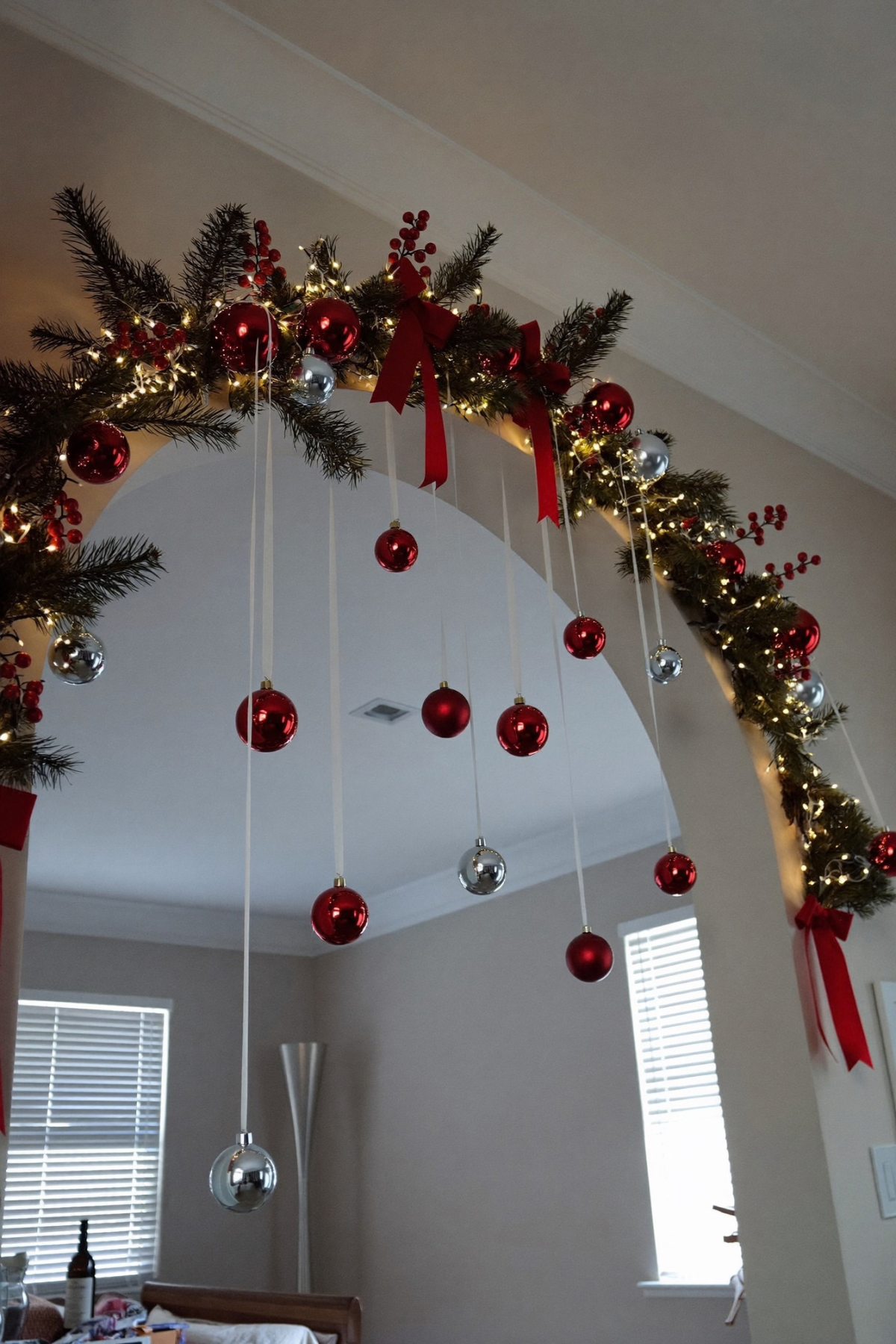
Every December the tree gets all the attention, ornament by ornament, while the wall behind it stays mostly bare. That is a lot of visual space left untouched, especially in rooms with tall ceilings or blank stretches that never quite know what to do with themselves once the lights go up.
Wall decor is where you get to bring in height, texture, and a bit of personality a tree alone cannot pull off. Think lighted branches, hanging ornaments suspended mid-air, painted folk art, wreaths lined up like a gallery instead of tucked on a single door.
We rounded up a range of approaches below, spanning from a few dollars in kraft paper to full garland archways, so whatever your square footage looks like, there is a direction worth trying this year.
The Wall Tree Nobody Talks About
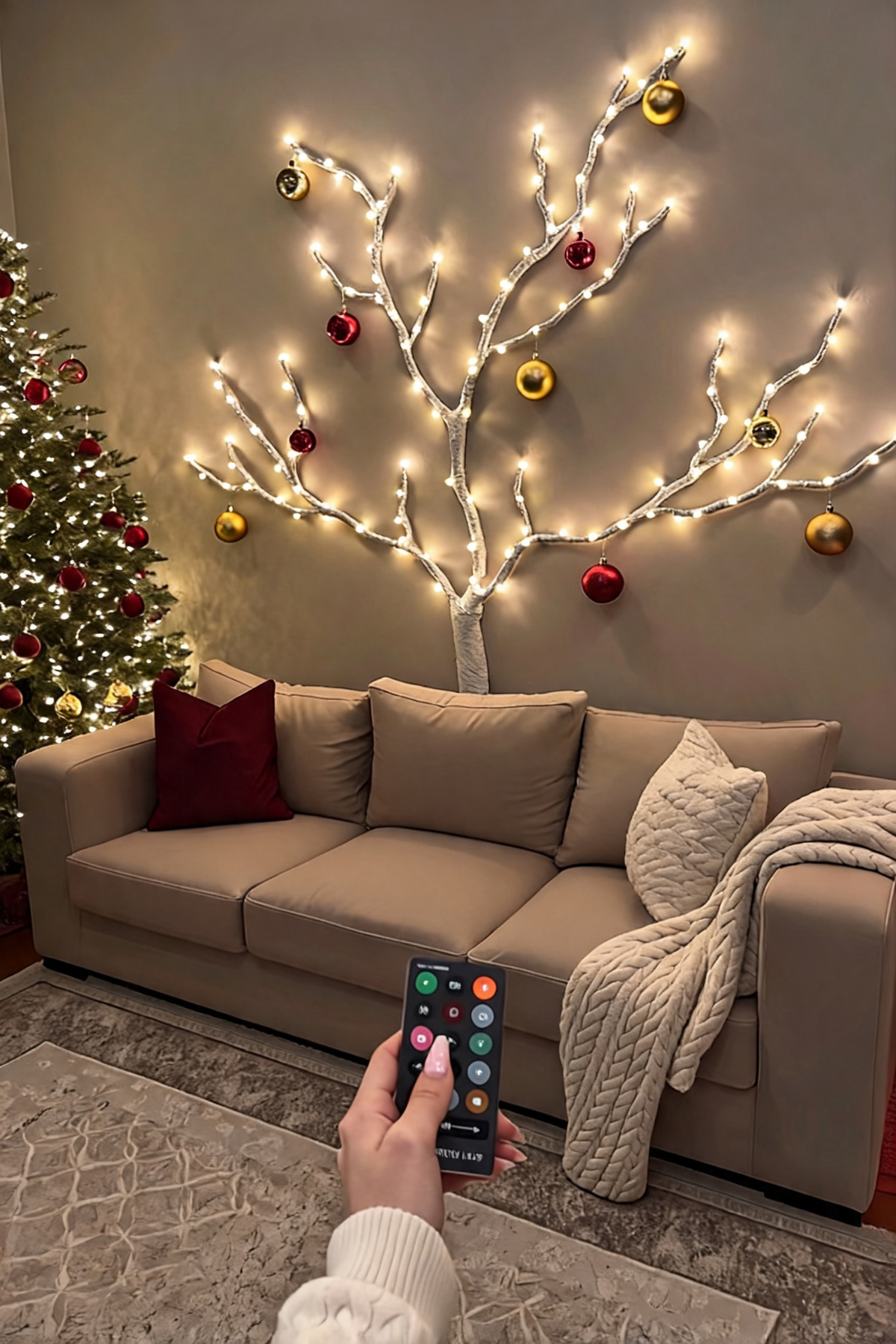
A full Christmas tree eats floor space that a lot of living rooms simply do not have, which is exactly the gap this idea fills. A lighted branch mounted flat against the wall reads as a tree silhouette without asking for a single square foot of carpet, and paired with a remote-controlled color setting, it turns into something closer to a piece of functioning art than a plain decoration hung up once a year and forgotten.
The trick is restraint with the ornaments. Too many hanging pieces and the branch loses its shape; a handful of red and gold baubles clustered near the tips lets the light do most of the visual work instead.
Mount it at a height where the top clears your sofa back by a foot or so, run the cord discreetly behind furniture, and keep a real tree nearby if you want layered depth rather than a flat replacement standing in for the whole holiday setup on its own.
Build A Doorway Out Of Nothing
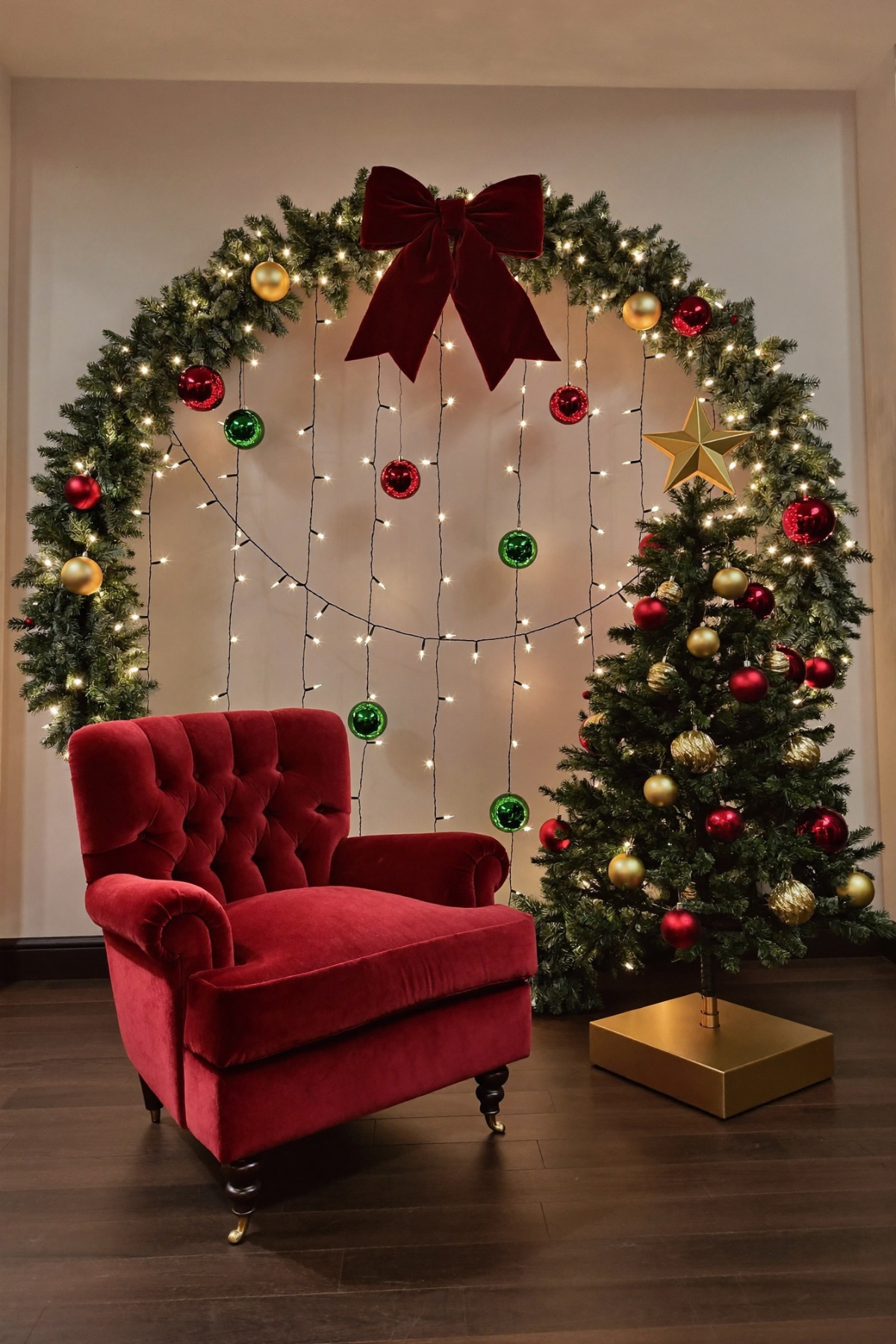
There is a specific kind of magic in a garland arch that does not lead anywhere, and this is it. Built as a freestanding half-circle against a plain wall, it turns an empty corner into a backdrop worthy of a photo, with a fairy light curtain strung inside the frame and ornaments hanging at staggered lengths like they are caught falling mid-air.
We especially love the oversized velvet bow anchoring the top, since a single dramatic gesture like that does more than a dozen small accents scattered around. A real tree tucked beside the arch, raised on a simple riser, keeps the whole vignette from feeling flat against the wall.
For your own version, use flexible faux garland wrapped around a bendable frame, add string lights before the ornaments, and let a few strands hang lower than the rest so the curtain has real movement instead of a stiff, uniform line across the top.
The Cheapest Idea On This List
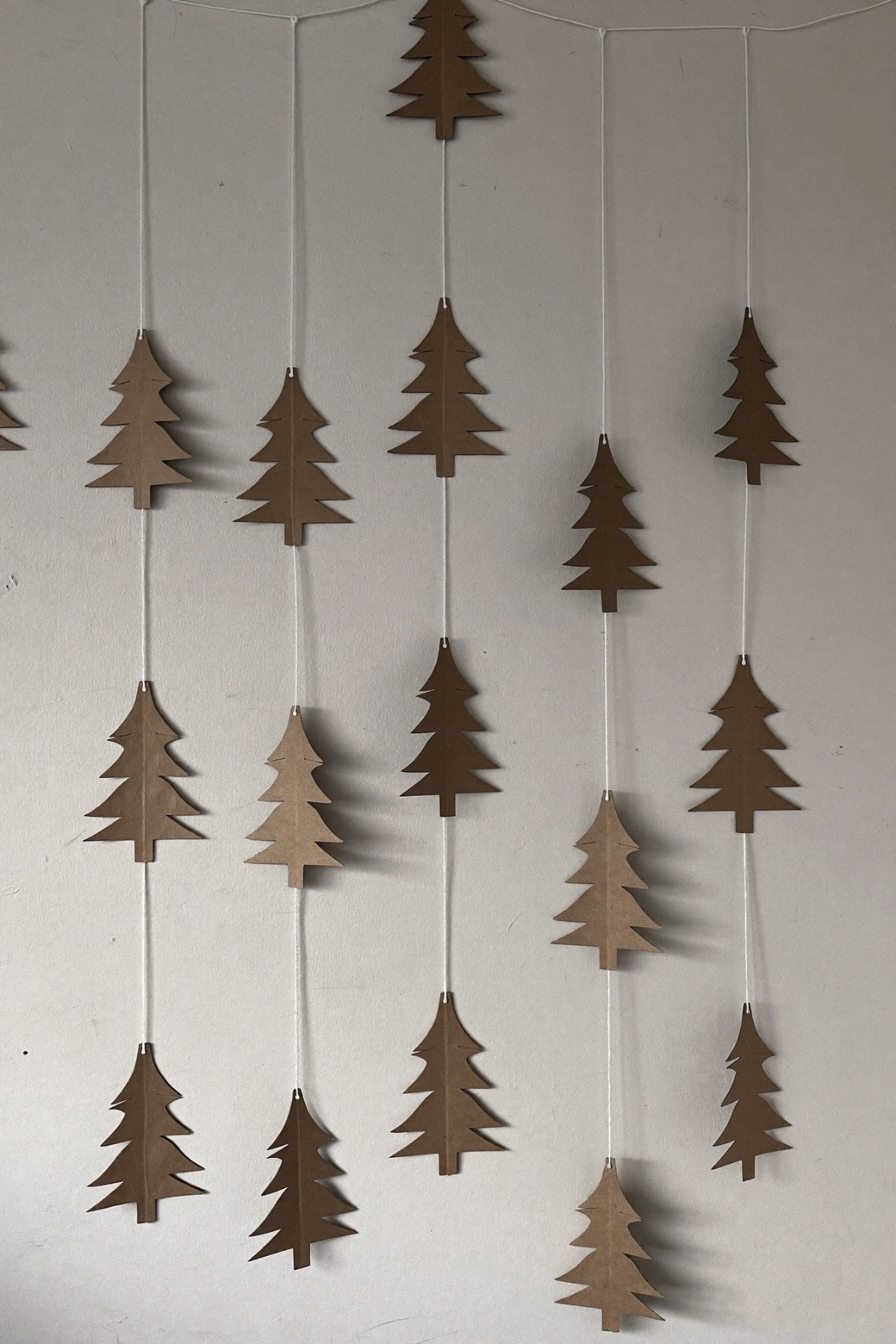
Kraft paper, a die-cut tree shape, and some string. That is genuinely the whole material list here, and the result still manages to look like it came from a design magazine rather than a classroom craft table pulled together in an afternoon.
What makes it work is repetition and restraint on color. Dozens of identical tree silhouettes in the same plain brown paper, strung at slightly staggered heights, create rhythm across the wall the way a single ornament never quite manages on its own. There is no glitter, no metallic accent, nothing competing for attention here.
Cut your shapes from a template so every tree matches exactly, vary the string lengths by a few inches per row rather than randomly, and resist adding any color at all. The monochrome palette is the entire point here, and it costs about as little as a holiday decoration possibly can while still looking deliberate.
Let Your Regular Gallery Wall Stay
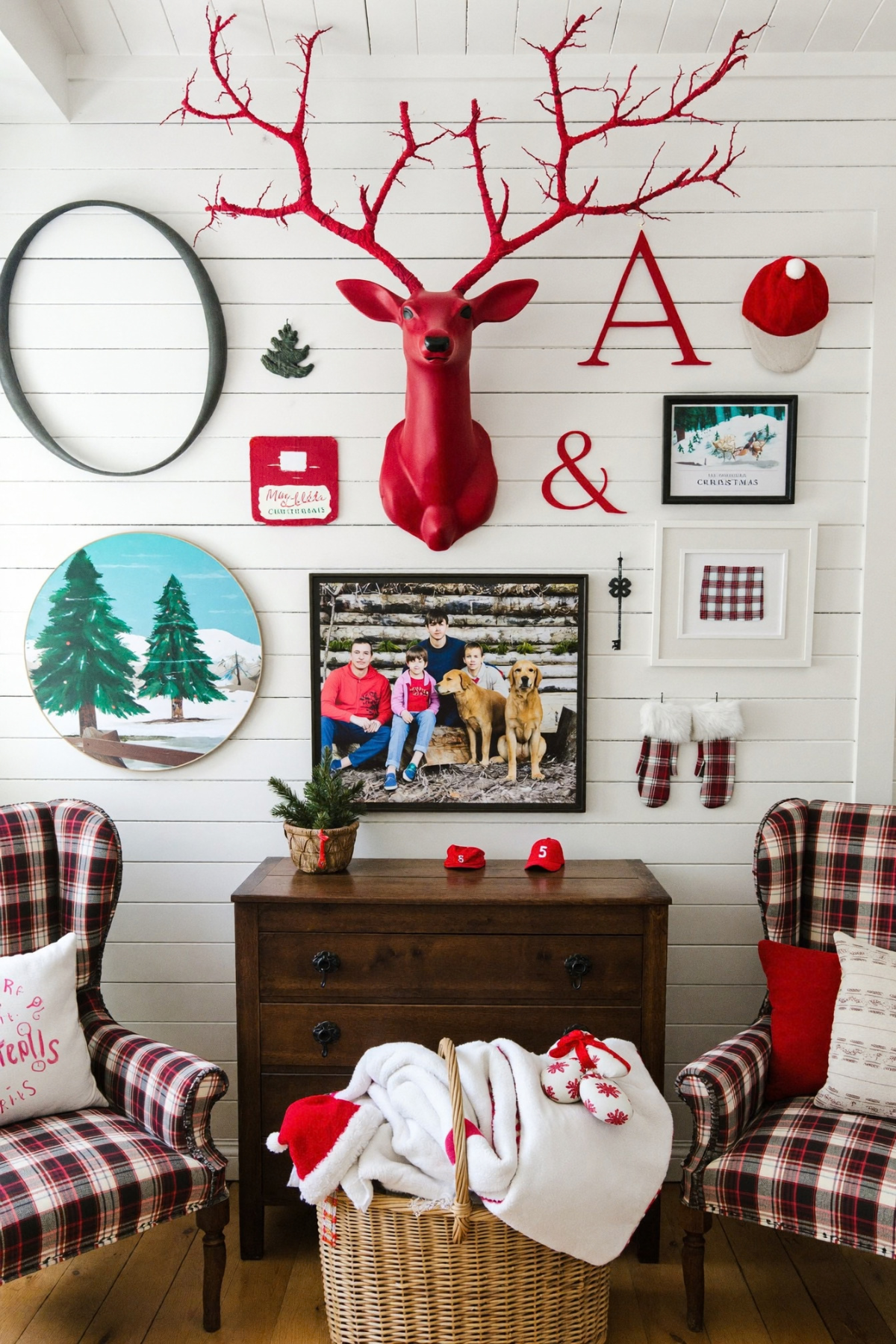
Swapping out an entire gallery wall for the holidays is a lot of work for six weeks of payoff, so do not bother. Keep the family photo, the frames, the everyday pieces exactly where they already live, and slot in a handful of seasonal accents around them instead, the way a red flocked deer head and a monogram letter do here.
A round painted sign, a santa hat, a pair of plaid mittens clipped to the wall, none of these are permanent commitments, and that is exactly what makes them easy to add and just as easy to pack away in January without disturbing the layout you already like.
Choose two or three seasonal pieces at most, keep them in a single color family so they read as planned additions rather than clutter, and lean on furniture below, like plaid chairs or a stocking basket, to reinforce the theme without touching the wall at all this year.
Hang The Stockings On The Tree
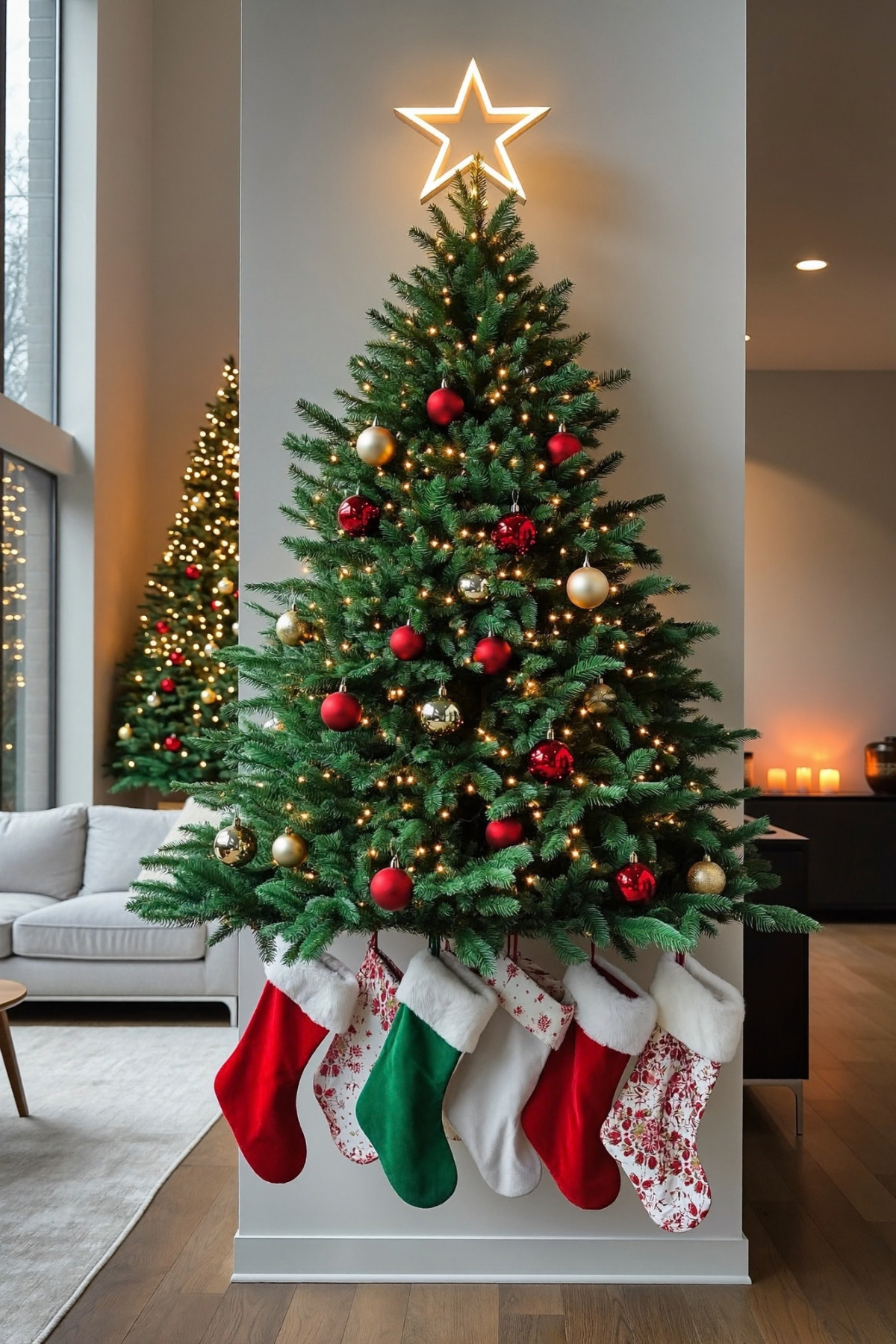
Mantels get all the stocking glory, but plenty of homes do not have one, and this idea solves that problem by treating the base of a slim wall-mounted tree as the display spot instead. The branches flare out wide enough near the bottom to hold a full row of stockings on their own hooks, no fireplace or mantel shelf required at all.
A lighted star topper at the very top gives the whole arrangement a clean focal point from clear across the room, and because the tree profile stays narrow, it fits neatly against a wall column or pillar where a full round tree simply never would fit at all.
If you are working with a similar flat silhouette, reinforce the lower branches before hanging anything heavy, alternate stocking colors and patterns rather than matching sets, and let the star stay the single brightest point so your eye has somewhere obvious to land first when you walk in.
Fill The Space Under Your Stairs
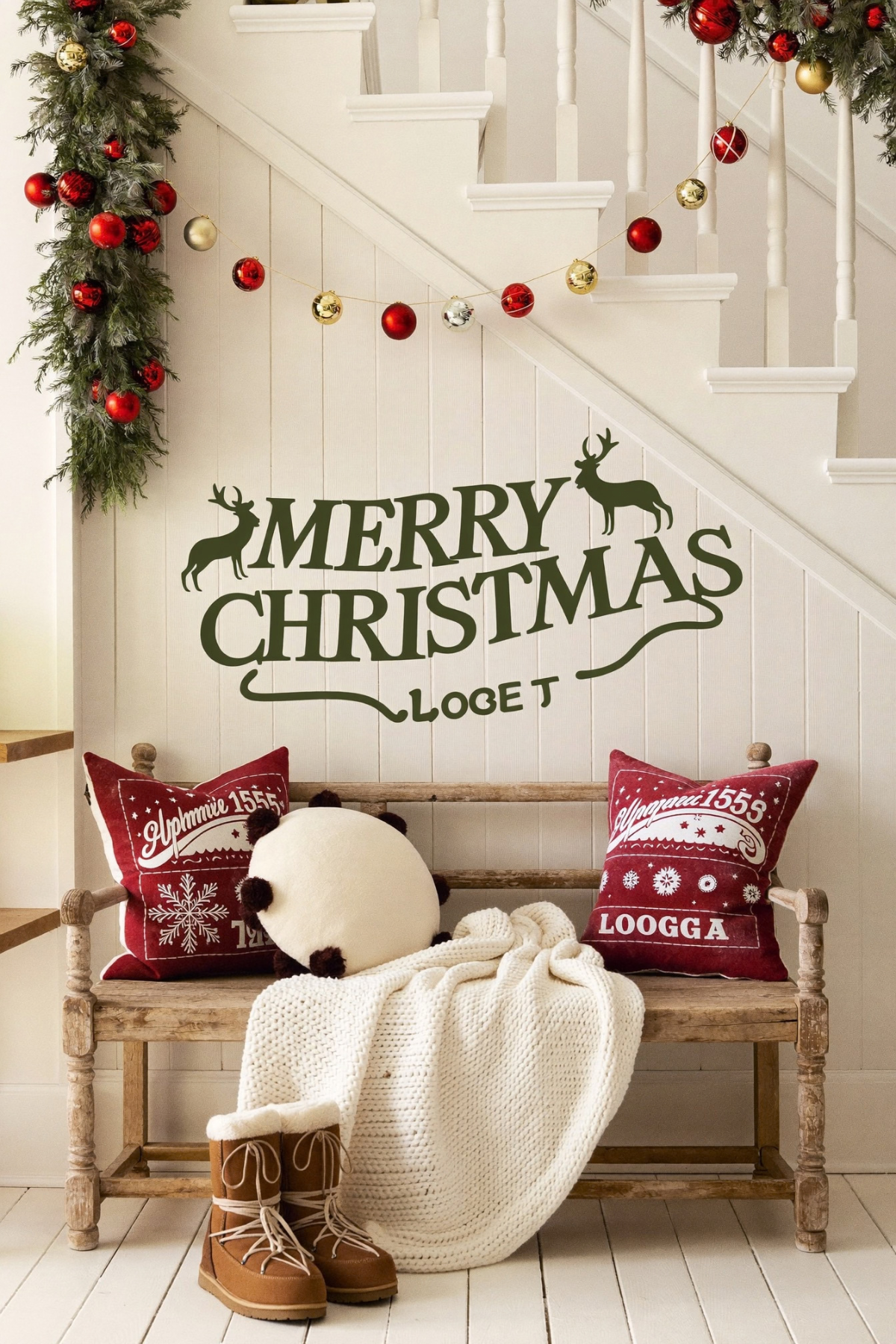
Under-stair walls are some of the most awkward, underused spots in a house, which makes them a surprisingly good candidate for a big, confident piece of typography like this reindeer-flanked script. A decal or hand-painted lettering commits fully to the space in a way that small accent pieces scattered around it never quite manage.
Garland and hanging ornaments swagged along the stair rail above tie the lettering back into the rest of the holiday scheme without duplicating it, and a wooden bench styled with a chunky knit throw and a couple of graphic pillows below gives the eye somewhere to rest instead of just staring at text.
Measure your wall carefully before ordering a decal, since script lettering this size needs a clean, unbroken surface to read properly, and add the bench styling last so the whole corner feels like a finished seating nook rather than an afterthought propped underneath a sign.
Turn Wrapping Paper Into Wall Art
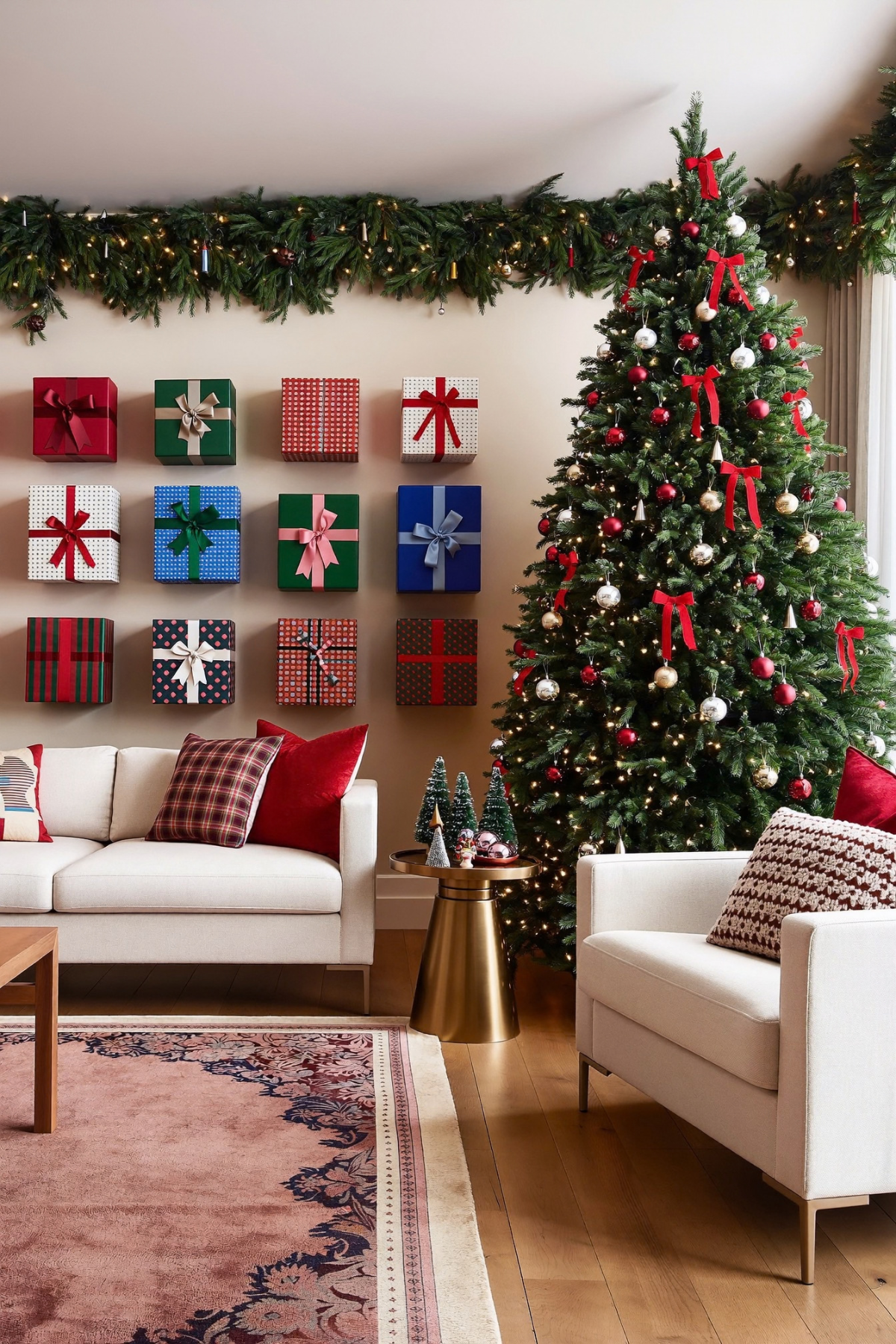
Wrapped boxes mounted flat against the wall in a tidy grid is one of the more unexpected ideas here, and also one of the most photogenic. Twelve boxes in a four-by-three arrangement, each in a different paper and ribbon combination, function as a color-blocked art installation that happens to be made of gift wrap.
Coordinate the palette loosely rather than matching it exactly. A mix of red, green, blue, and blush wrapping with varied ribbon widths keeps the grid visually interesting instead of looking like a factory display, while a garland line along the ceiling and a fully trimmed tree nearby ground the wall piece within the rest of the room.
Use lightweight empty boxes so wall anchors can hold them safely, keep the spacing between boxes even for that grid effect, and pick papers with a shared undertone, whether warm or cool, so the whole arrangement reads as one cohesive piece rather than twelve separate gifts.
Mix Textures On A Single Dowel
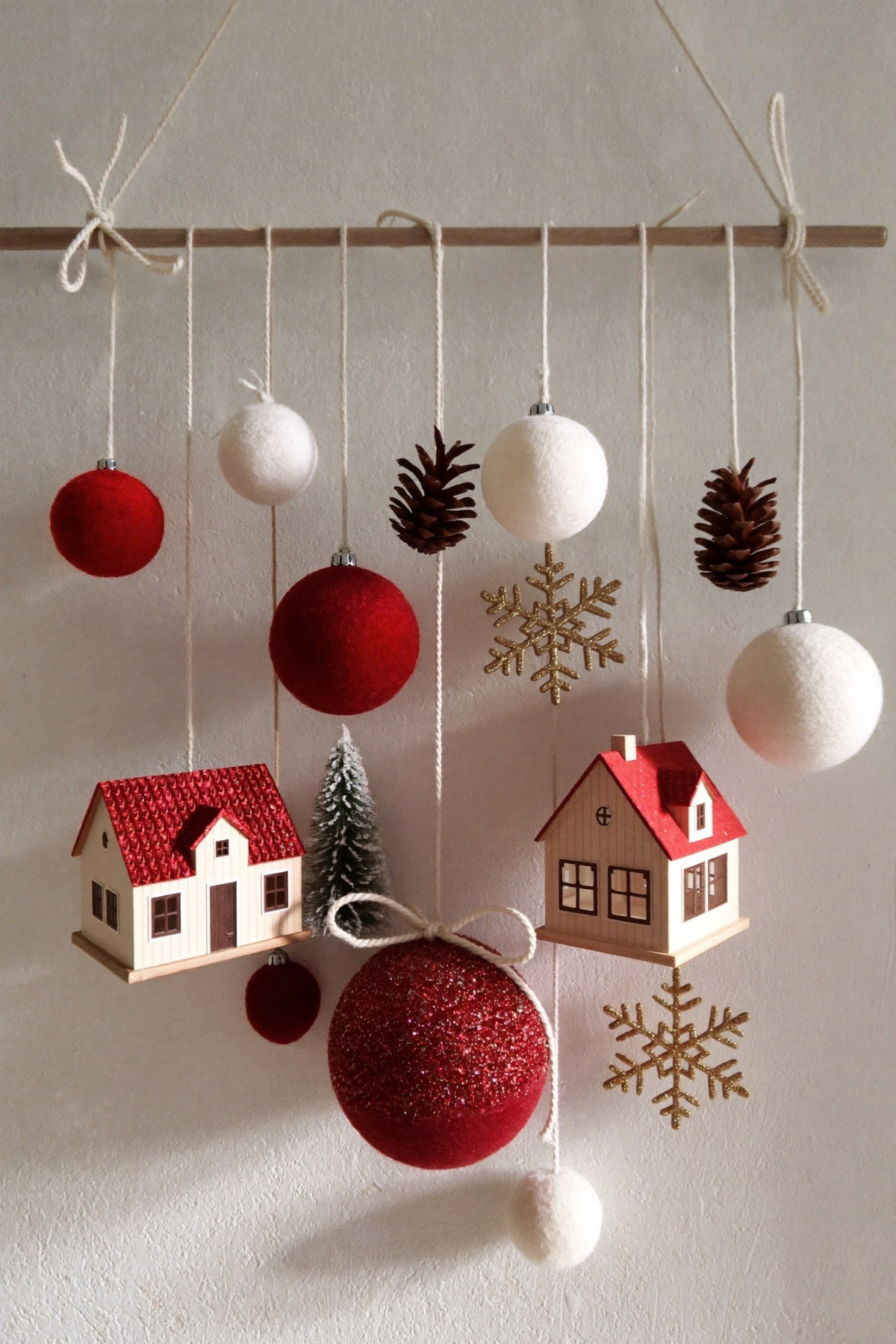
A plain wooden dowel strung with cotton cord becomes the frame for a mixed-media hanging that pulls in felt ball ornaments, real pinecones, glittered snowflakes, and even a pair of miniature wooden houses at different string lengths. The uneven heights are exactly what give it movement, instead of the static feel of a single row of matching baubles lined up flat.
Scandinavian-style decor leans heavily on exactly this kind of material mixing, pairing something soft like felt with something raw like a pinecone and something structured like a tiny house. No single element dominates, which keeps the whole piece feeling collected over time rather than bought as a matched set.
Space your strings unevenly on purpose, mix at least three different textures across the hanging, and let one larger statement piece, like the oversized red ball with a bow near the bottom, anchor the whole composition so it never reads as scattered or random.
Wreaths Are Not Just For Doors
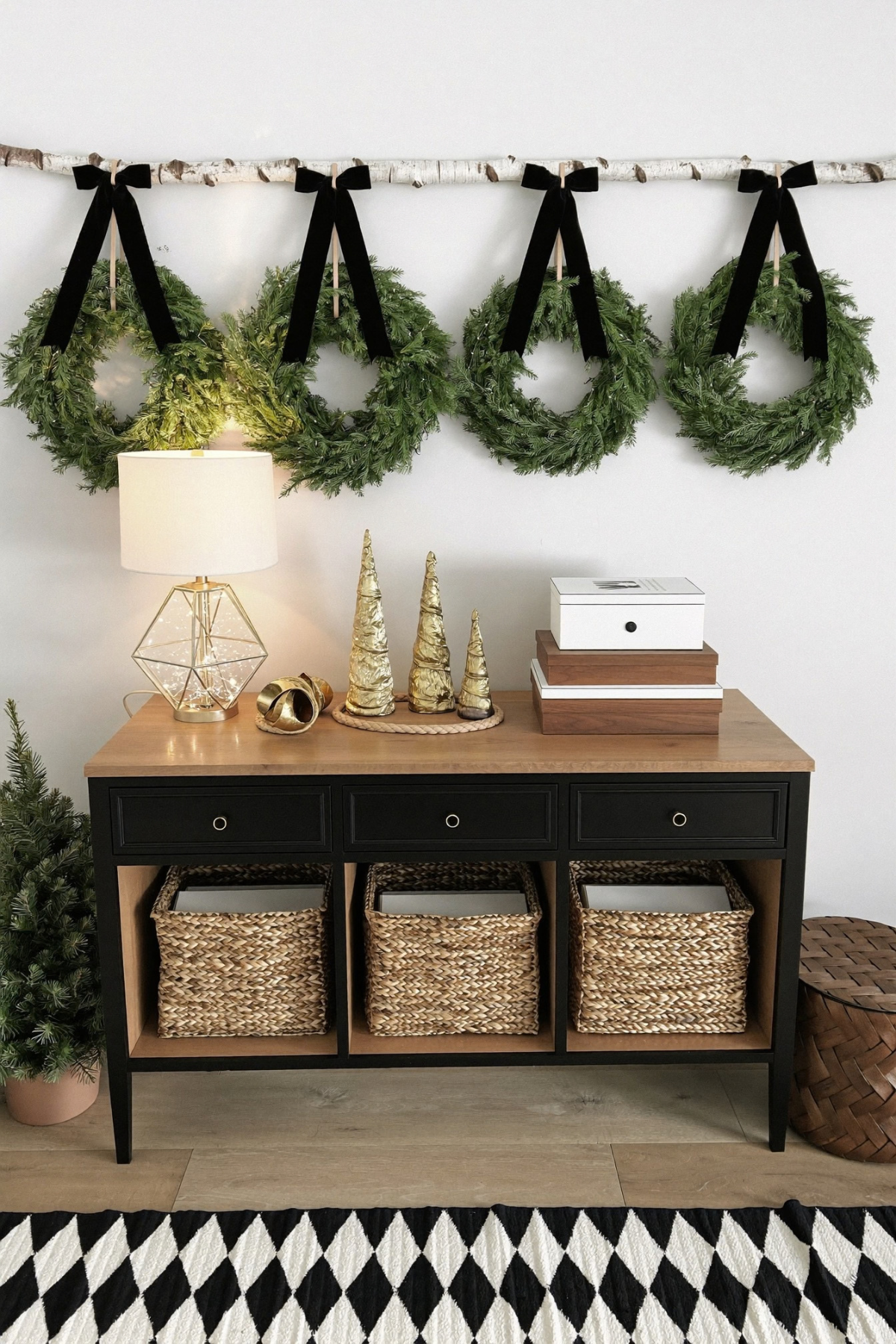
Lining four wreaths up along a birch branch turns them into a horizontal garland rather than a single circular accent, and it is a genuinely underused move. Hung above a console table with black velvet ribbon bows tying each one to the branch, the wreaths read as an art piece rather than the usual front-door signal that guests have arrived.
Black ribbon against fresh greenery is doing a lot of the heavy lifting here, since it keeps the arrangement from tipping into overly rustic or overly sweet territory. Styling the console underneath with a warm lamp, small gold trees, and woven baskets echoes the natural materials above without competing with them.
Use real or high-quality faux wreaths of a consistent size, tie the ribbon in matching bows before hanging so the spacing looks deliberate, and keep the surface below simple enough that the wreath line stays the clear focal point of the entire wall.
Collect Vintage Pieces Over The Years
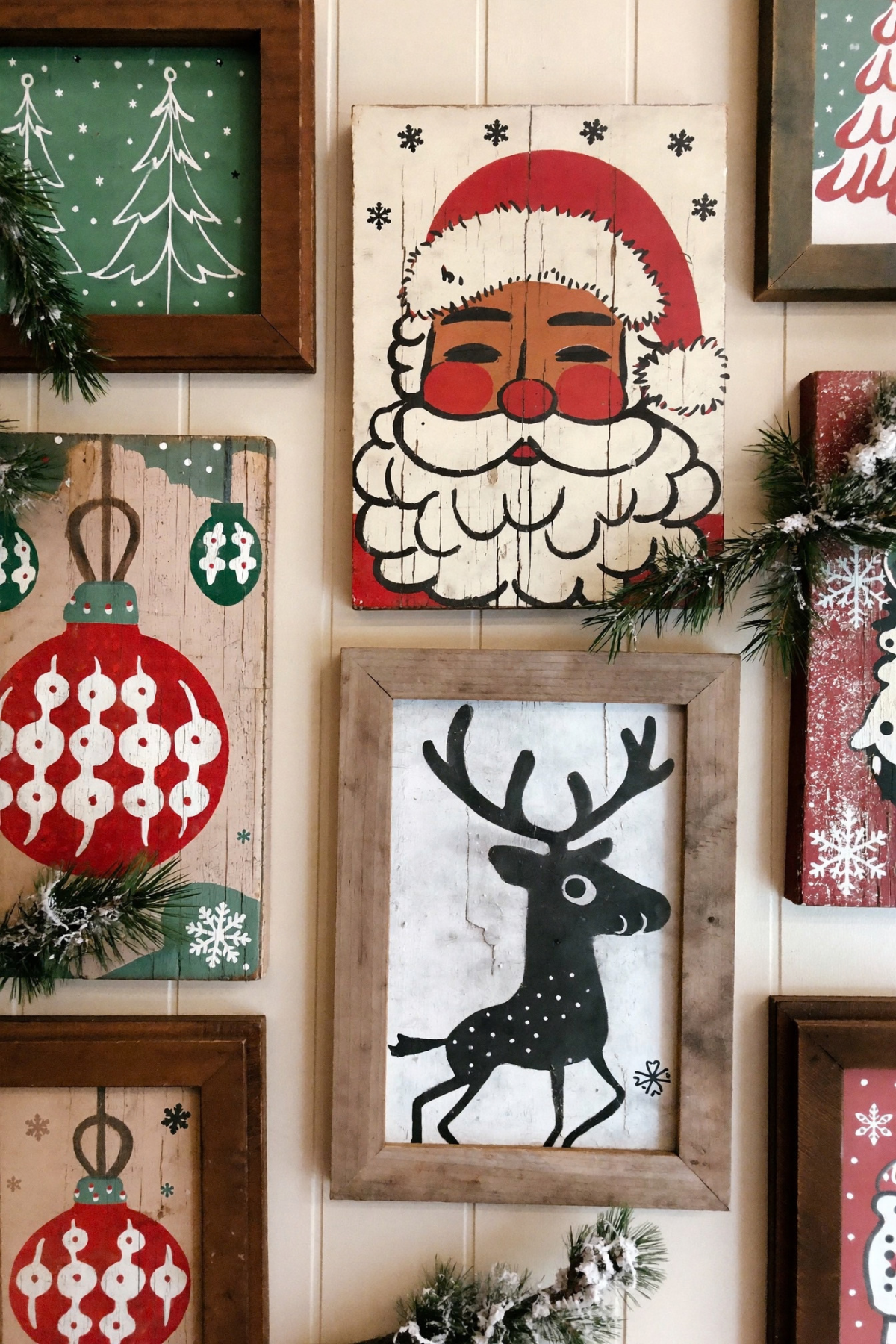
Hand-painted wood pieces in a folk-art style, a smiling santa face, a running reindeer, a few ornament illustrations, work best displayed together in mismatched frames rather than a matching set. The slight imperfection in each brushstroke is what gives this gallery its warmth, something a set of identical printed signs could never quite fake.
Frames in different wood tones and finishes actually help the collection here instead of hurting it, since a gallery meant to look gathered over years should not look like it arrived in one box from one store. Sprigs of flocked pine tucked between the pieces soften the hard edges of the frames without covering the art itself.
Start with two or three pieces and add more each season rather than buying a full wall at once, vary your frame styles on purpose, and tuck greenery sparingly so it reads as a finishing touch instead of another decoration competing for space on a crowded wall.
Pick The Wall That Has Been Waiting Patiently
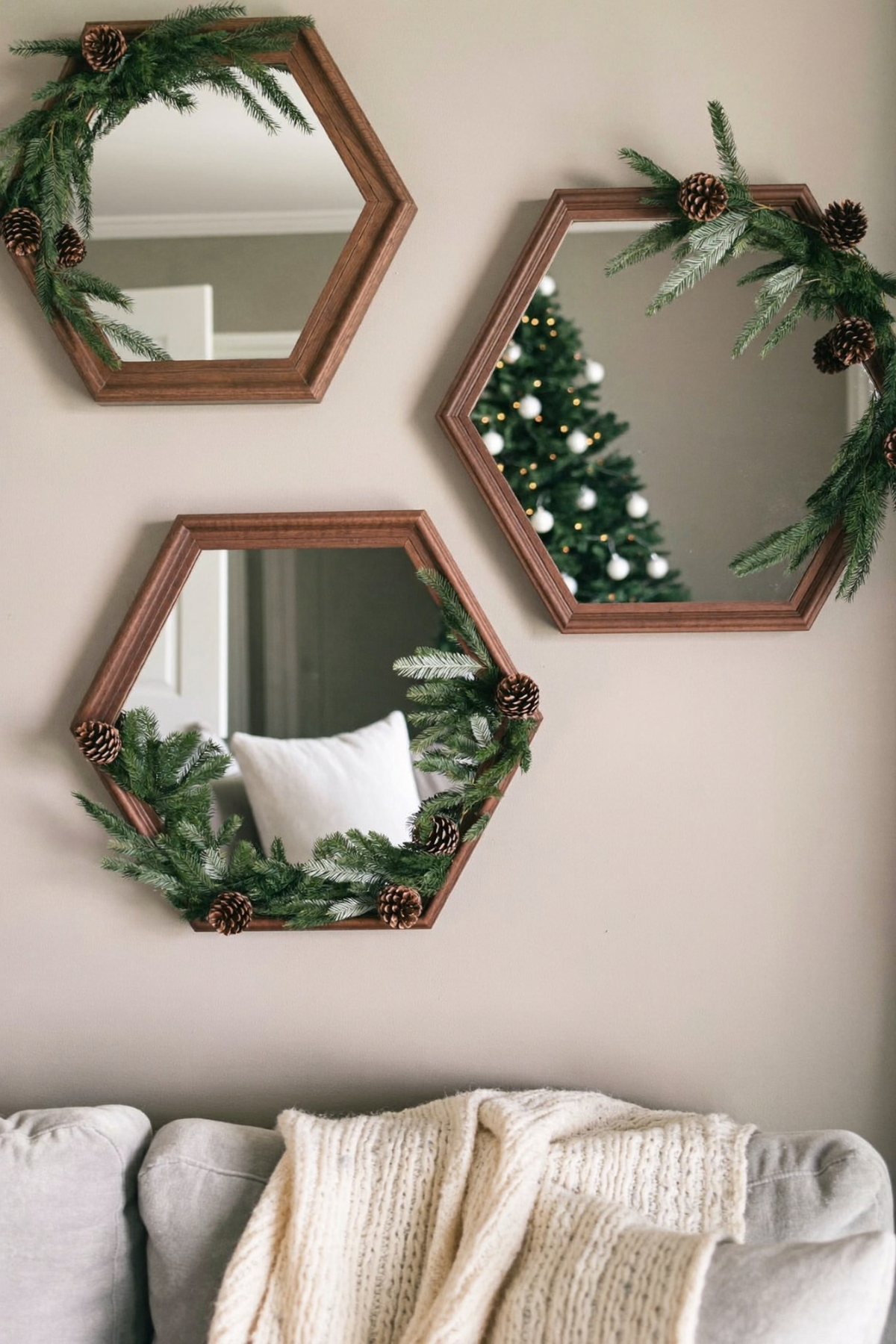
None of these need to happen all at once, and honestly they should not. Pick the wall that bothers you most every time you walk past it this time of year, whether that is a blank stretch above the couch or the dead space under a staircase, and start there.
What ties every one of these together is restraint on quantity and generosity on placement. A single branch, a row of wreaths, a grid of wrapped boxes, none of it needs to be elaborate to read as planned rather than an afterthought hung up in a hurry.
So walk your own house with fresh eyes before you commit to anything. The wall that has been staring back at you blankly for the past three Decembers is probably the one that wants this the most.

 Steal Our Home Styling Secrets!