
How Other Guys Are Actually Decorating Their Dorm Rooms and What You Can Learn From Them
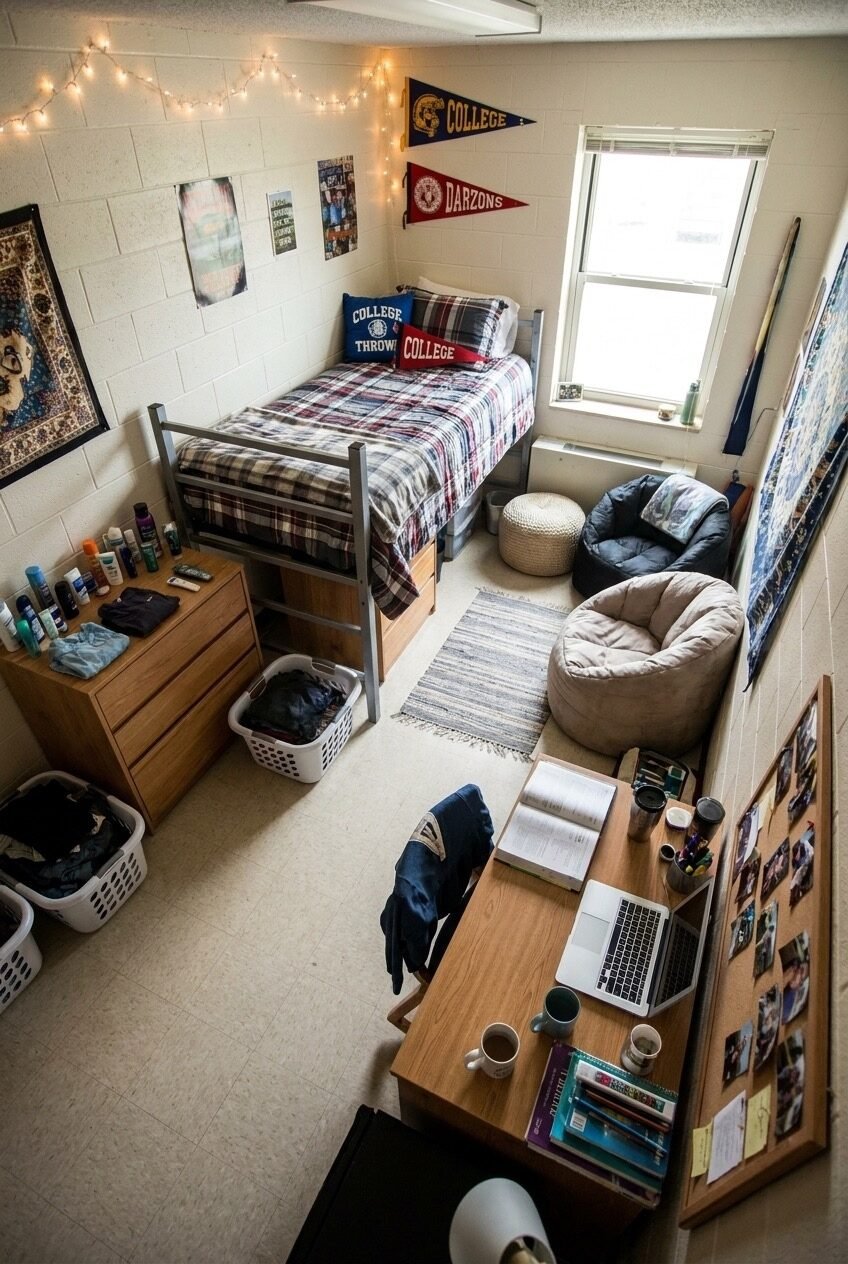
Most guys show up to their dorm with a twin XL sheet set, a mini fridge, and zero plan for the walls. The room ends up looking like a holding space — functional enough, but with no personality whatsoever. And that’s fine for about two weeks, until you realize you’re spending most of your day in there and the blank cinder block is starting to feel like a waiting room.
The good news is that dorm decorating has a pretty low bar to clear. You’re not dealing with a permanent space, so there’s freedom in that — you can commit to a theme, go weird with a rug, cover every square inch of wall with stuff you actually care about. No landlord, no resale value to protect, no one to answer to.
What follows covers a real range of setups — from clean and moody to full sports shrine to music-obsessed to coastal surf vibes — with actual design thinking behind each one. Not just “buy some string lights and call it a day,” but why certain choices work and how to pull them off on a college budget.
The Organized Chaos That Actually Works
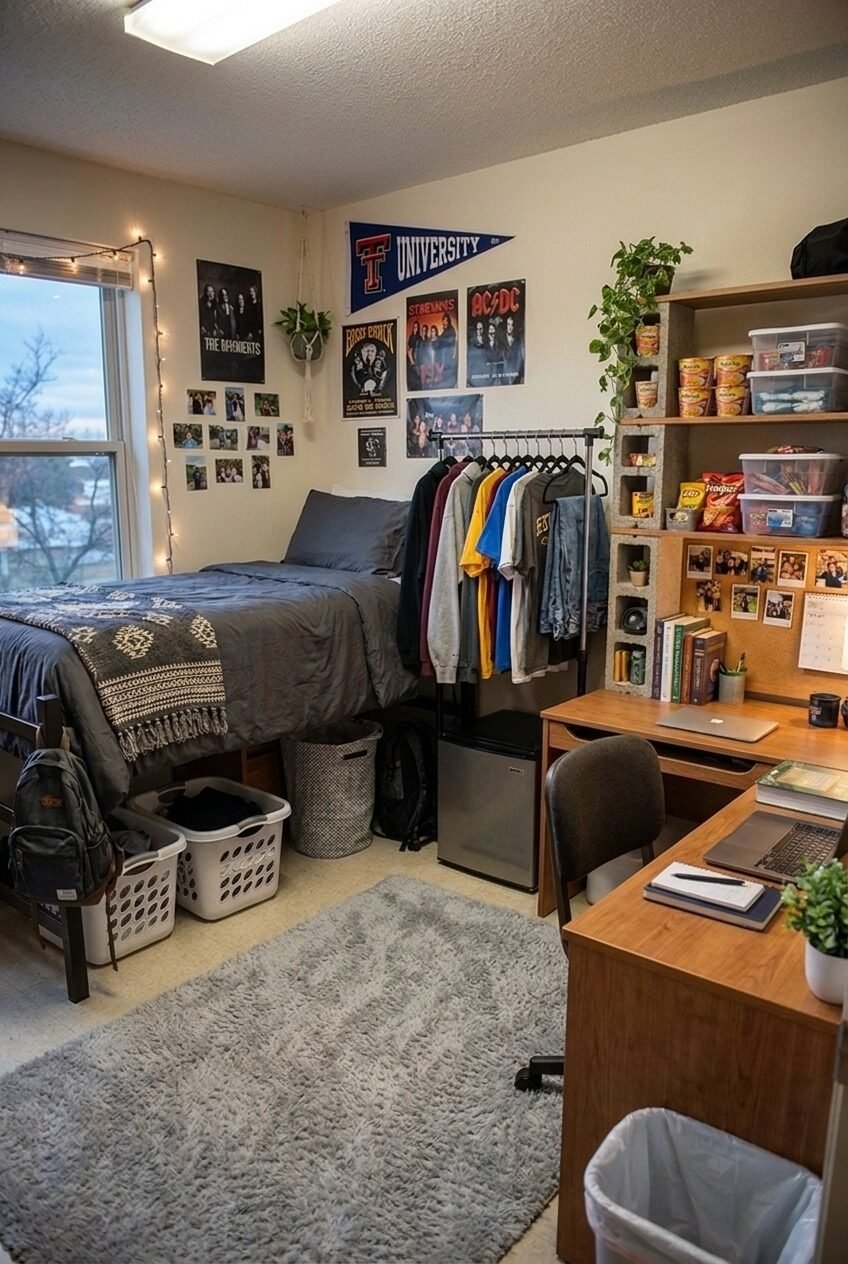
A freestanding clothing rack is one of the most underrated solutions for a dorm without a real closet. This room uses one positioned between the bed and desk, with clothes hung by color — not precisely, but roughly — which makes the rack feel like a display rather than a pile. When your clothing becomes part of the room’s visual texture, you stop needing to hide it and start treating it like décor. The cinder block shelving unit beside it, loaded with snacks, clear storage bins, and a trailing pothos plant, follows the same logic: organize things in a way that looks considered rather than crammed.
The wall above the bed is doing classic dorm work — band posters, a university pennant, a few photos — but the string lights framing the window add the warm light layer that standard dorm overhead fluorescents completely fail to provide. Layering light sources is genuinely one of the cheapest ways to make a room feel less institutional.
For a similar setup, prioritize the bed height first. Raising it on risers creates under-bed storage that replaces the need for a dresser, freeing floor space for the clothing rack and keeping the room navigable. A grey shag rug in the center ties the layout together and covers the standard dorm vinyl flooring, which makes a bigger visual difference than most people expect.
Full Minecraft Theme Done Right
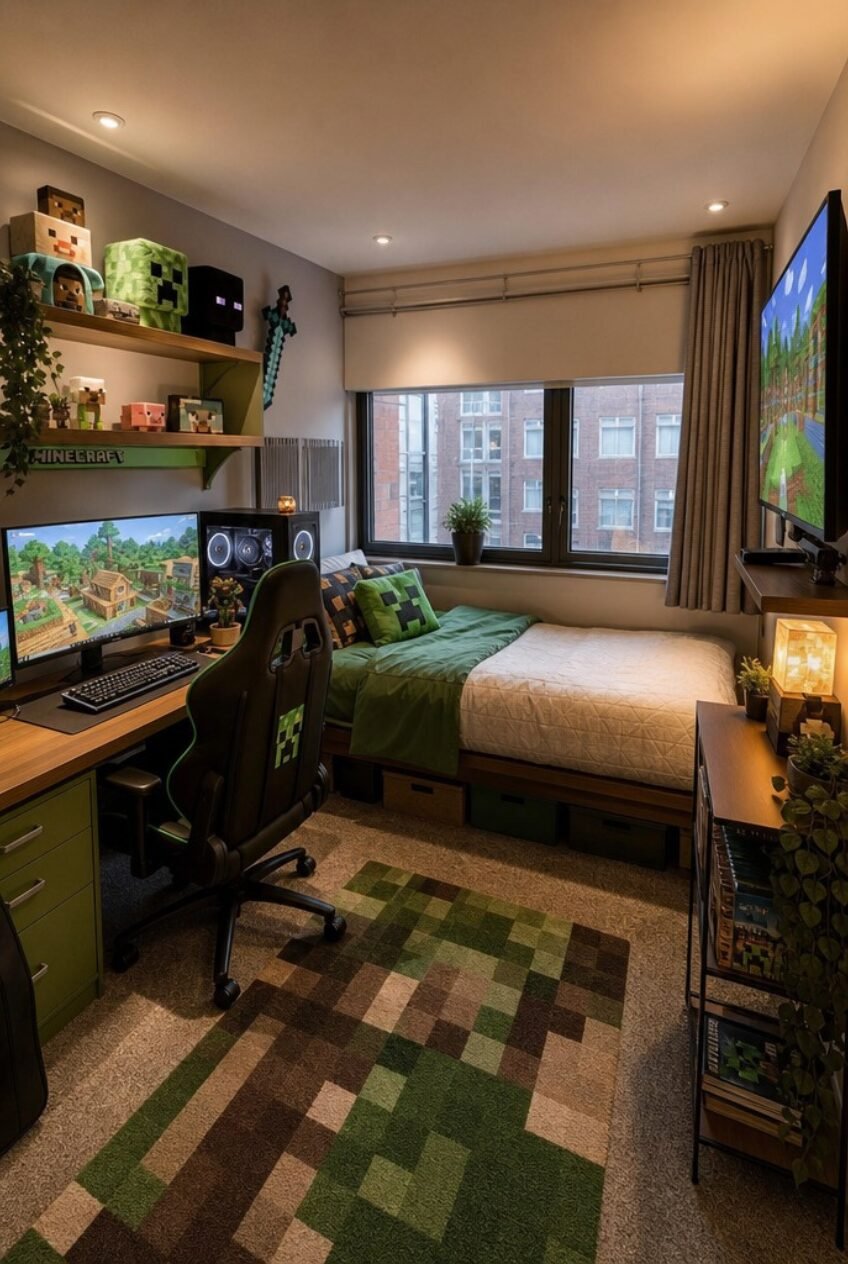
Committing to a theme in a dorm is a risk, but this Minecraft setup pulls it off because the color palette — deep green, brown, black, cream — is actually a coherent room palette independent of the theme. Strip away the branded shelving sign and the pixel-art rug and you’d still have a warm, functional room. That’s the mark of a theme done well: it enhances the aesthetic without being the only thing holding the room together.
The pixel-art rug is doing the heavy design work here. It covers the entire floor zone in front of the desk and bed, and its earth-tone color blocking reads as sophisticated at a distance even if you know exactly what it references. The Creeper-branded gaming chair, the amber block lamp on the nightstand, and the floating shelf loaded with plush characters are all on-theme without being overwhelming because the furniture and bedding stay relatively subdued.
For a themed dorm that doesn’t feel juvenile, the rule is: keep your palette grounded in natural or muted tones, and let the theme live in specific objects rather than every surface. One statement rug, one shelf of collectibles, a few accent pieces — that’s enough. The wall-mounted TV with a game running on screen is the final detail that makes the whole room feel lived-in rather than constructed.
Moody Album Art Wall With Picture Lights
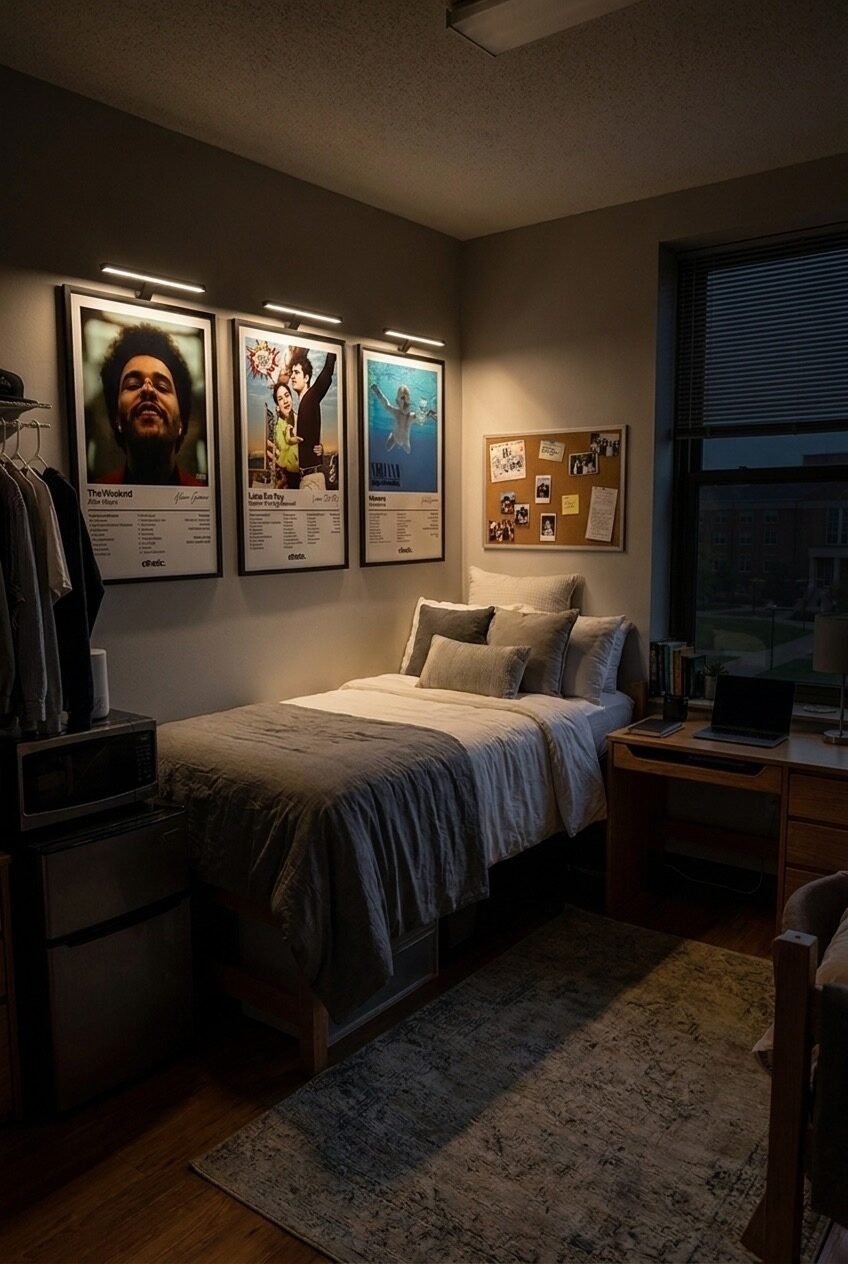
Three large album-artwork posters hung in identical black frames with individual picture rail lights mounted above each one — that single decision takes this room from standard dorm to something that looks like it was actually designed. The picture lights (small LED bar lights that clip or mount above frames) are available for under $15 each on Amazon, and they make printed posters look like gallery pieces. At night, with the overhead fluorescent off, this room is genuinely atmospheric.
The rest of the room earns that atmosphere by staying quiet. White-grey bedding, a vintage-style area rug in muted tones, minimal desk clutter. The discipline to keep everything except the art wall restrained is what makes the art wall land. A corkboard with photos fills the remaining wall space without adding another competing visual element — photos on a corkboard read as personal rather than decorative, which is the right register for a dorm.
For anyone going this route, source the album art prints from Etsy or dedicated music poster shops rather than just printing your own — the quality difference is significant, especially when you’re putting them in actual frames. Size matters too; go at least 18×24 for each print so the wall arrangement reads from across the room. A mini fridge and microwave stacked in the corner complete the functional side without needing their own design moment.
Platform Storage Bed With Tapestry Wall
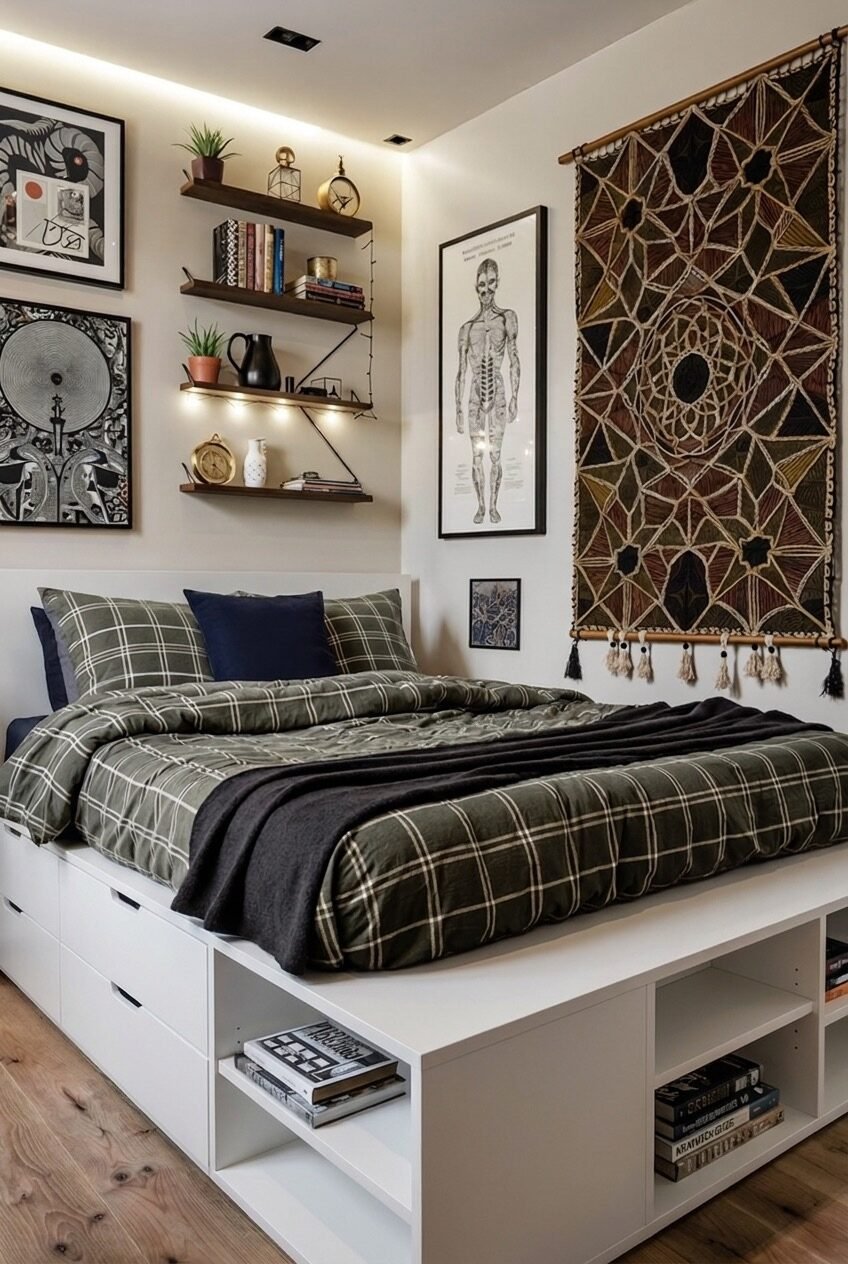
Platform beds with built-in storage are a legitimate upgrade from the standard dorm bed — the open shelving at the base in this room holds books, graphic novels, and a few personal items without adding another piece of furniture. Combined with the dark plaid bedding and navy accent pillow, the whole bed setup reads as intentional rather than assembled from whatever was cheapest.
The wall above and beside the bed is where the personality lives. Floating shelves mounted at a slight diagonal angle (rather than perfectly level or in a standard grid) hold books, a terrarium, small plants, and a brass desk clock. String lights are woven through the shelf hardware, creating warm ambient light at bed height that standard dorm lamps can’t achieve. The large woven tapestry on the adjacent wall — dark brown geometric pattern, hanging from a wooden dowel — is the room’s biggest design statement and one of the easiest things to source for under $40.
What makes this room feel cohesive is a consistent material story: dark wood, deep greens and navies, warm brass accents, organic textures. Every element references the same palette. The anatomical figure print framed beside the bed adds a slightly surreal note without derailing the overall direction — the kind of specific personal choice that makes a room feel like a person lives there.
Full Sports Shrine, Maximum Commitment
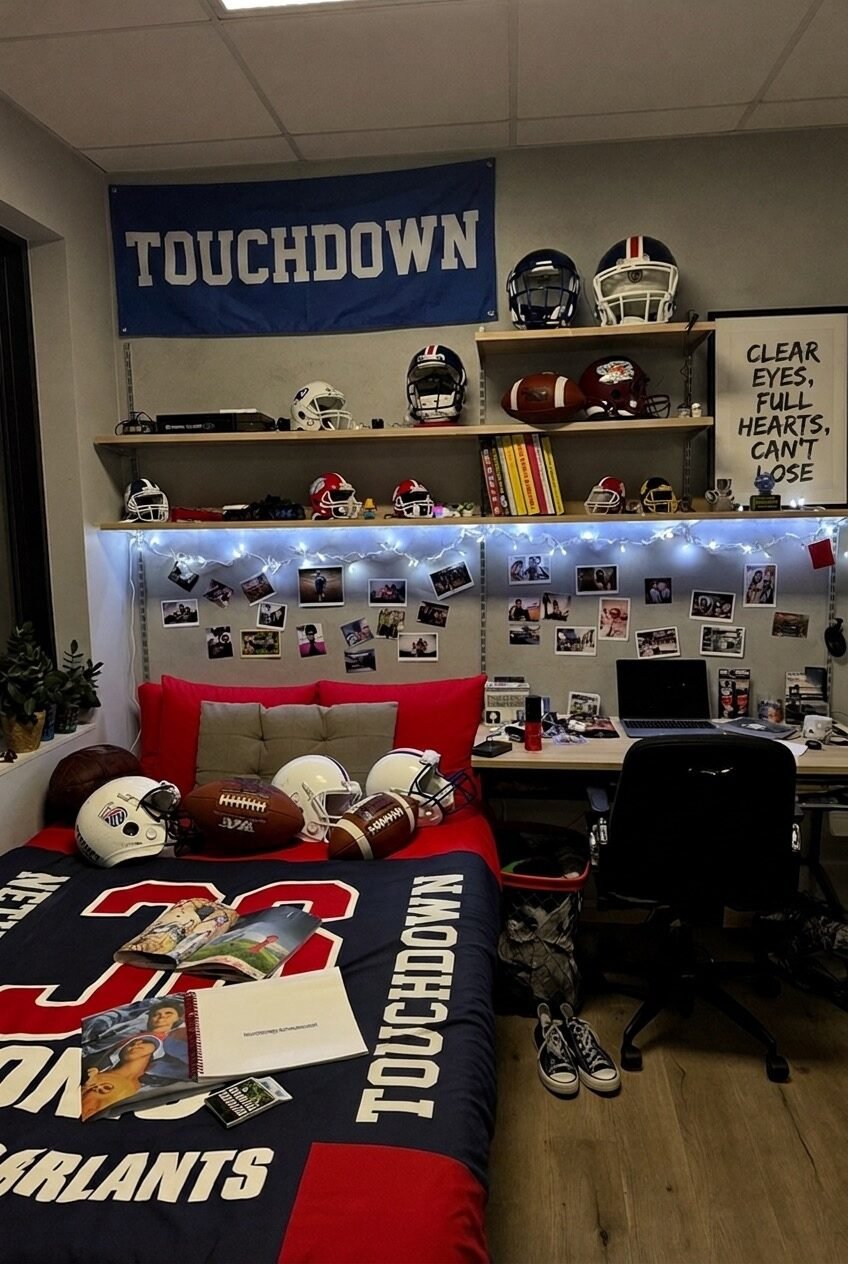
The word “shrine” isn’t an exaggeration here. Football helmets on open shelving, a jersey-print duvet, actual footballs on the bed, a large team banner across the top of the wall, and a photo gallery of game memories and friends covering the headboard zone — this room is for someone who wanted their space to feel like an extension of who they are, and didn’t hedge.
What holds it together structurally is the shelf arrangement behind the bed. Two adjustable metal shelving uprights with wooden plank shelves span the wall horizontally, creating enough display space for the helmet collection without requiring permanent wall damage. String lights draped across the front edge of the upper shelf warm up what would otherwise be a pretty utilitarian storage solution. Using shelving systems instead of individual wall hooks means you can reconfigure the display as your collection changes without leaving a wall full of holes.
The desk area shares the same wall, which is smart space planning — keeping your study zone and your personality zone on the same wall means you’re not competing with the bed for visual territory. For anyone building a similar sports-themed setup, the key is selecting one team color as your dominant tone and letting the red-and-navy palette run through the bedding, banner, and accessories consistently rather than mixing multiple teams.
Tapestry Plus Novelty Rug Equals Personality
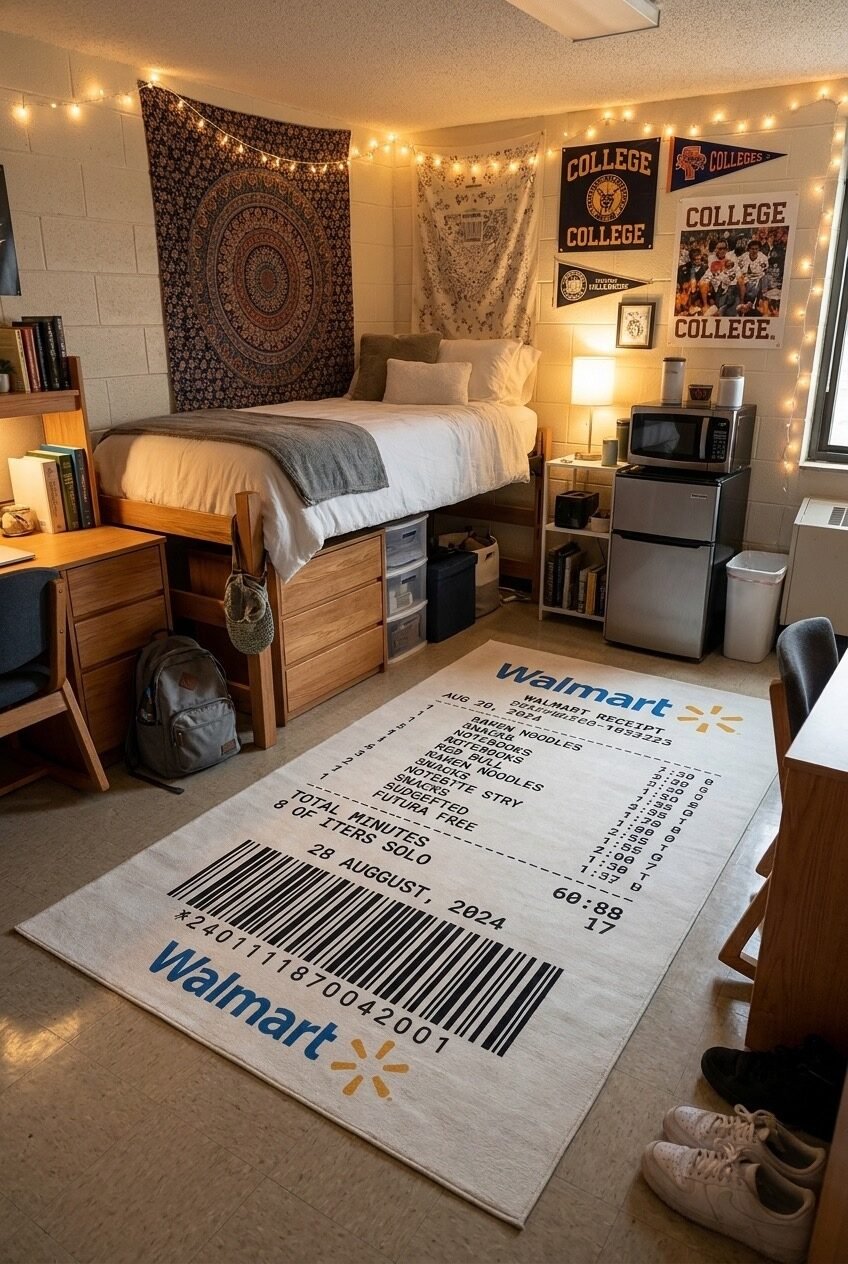
The Walmart receipt rug is genuinely funny and, more importantly, it’s a great rug decision in context. Large, mostly cream/white, with blue text — in a cinder block room with warm string lights and a lofted bed, it reads as a statement piece that happens to be witty rather than a gag gift left on the floor. The joke works as interior design because the rug is well-scaled for the room and its neutral base color doesn’t fight with anything else going on.
Two tapestries hang on the wall behind the lofted bed: a large dark mandala pattern on the left and a lighter botanical print on the right. Mixing tapestry styles is normally risky, but separating them with the college flags and pennants in the middle zone creates a natural break. The warm string light line running across the top of the wall ties all the wall elements together into one unified backdrop.
For a similar setup on a tight budget, the lofted bed is where to start. Raising the bed frees up the floor zone for a desk, dresser, mini-fridge-and-microwave stack, and still leaves room for a real rug. The small table lamp tucked in the corner near the appliances is the warm light detail that stops the practical side of the room from looking like a break room. White bedding keeps the lofted area calm against a busy wall.
Coastal Surf Room With Real Objects
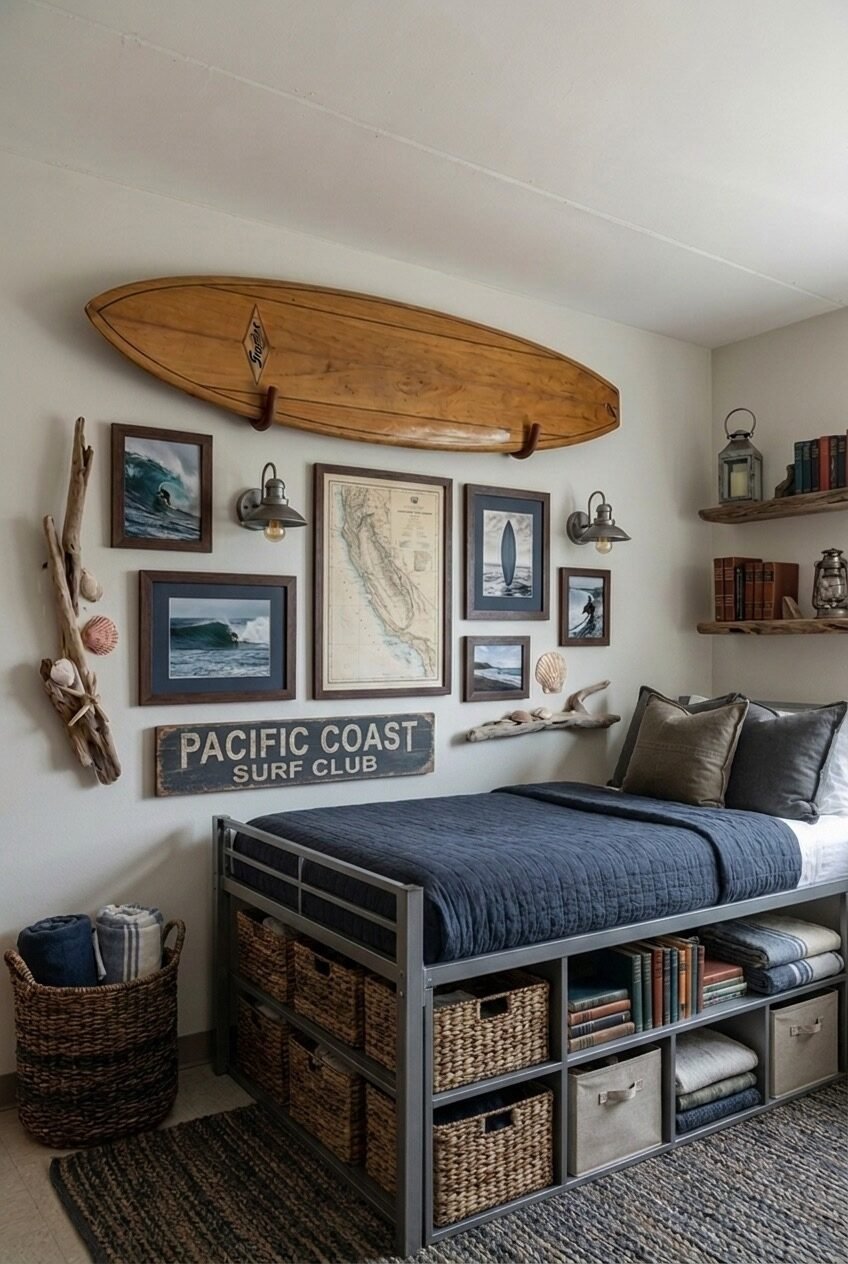
A wooden surfboard mounted horizontally above the bed on two simple wall brackets is the kind of move that either looks like a real room or a set dressing, and this one looks real. The difference is everything around it: framed wave photography, a vintage California coastline map print, a driftwood sculpture with seashells, industrial-style wall sconces on either side of the gallery arrangement. None of these are surf-brand merchandise — they’re objects with history, or at least objects that look like they have history, which amounts to the same thing visually.
The metal bed frame with integrated storage cubbies at the base handles the functional side of a small room cleanly. Wicker and fabric storage baskets fill the cubbies and maintain the natural-material warmth of the whole room. A painted wood Pacific Coast Surf Club sign at the base of the gallery wall grounds the composition and keeps the arrangement from floating.
For anyone building a themed room around an actual interest rather than a brand, the principle at work here is: collect objects that reference the thing, not merchandise that advertises the thing. A real map, real photography of real places, a piece of found driftwood — these carry more weight than a logo-heavy banner. The dark navy quilt and grey linen pillows pull the color temperature toward the deep end, which suits the coastal-but-not-tropical tone the room is aiming for.
Explorer Aesthetic With Branch Shelving
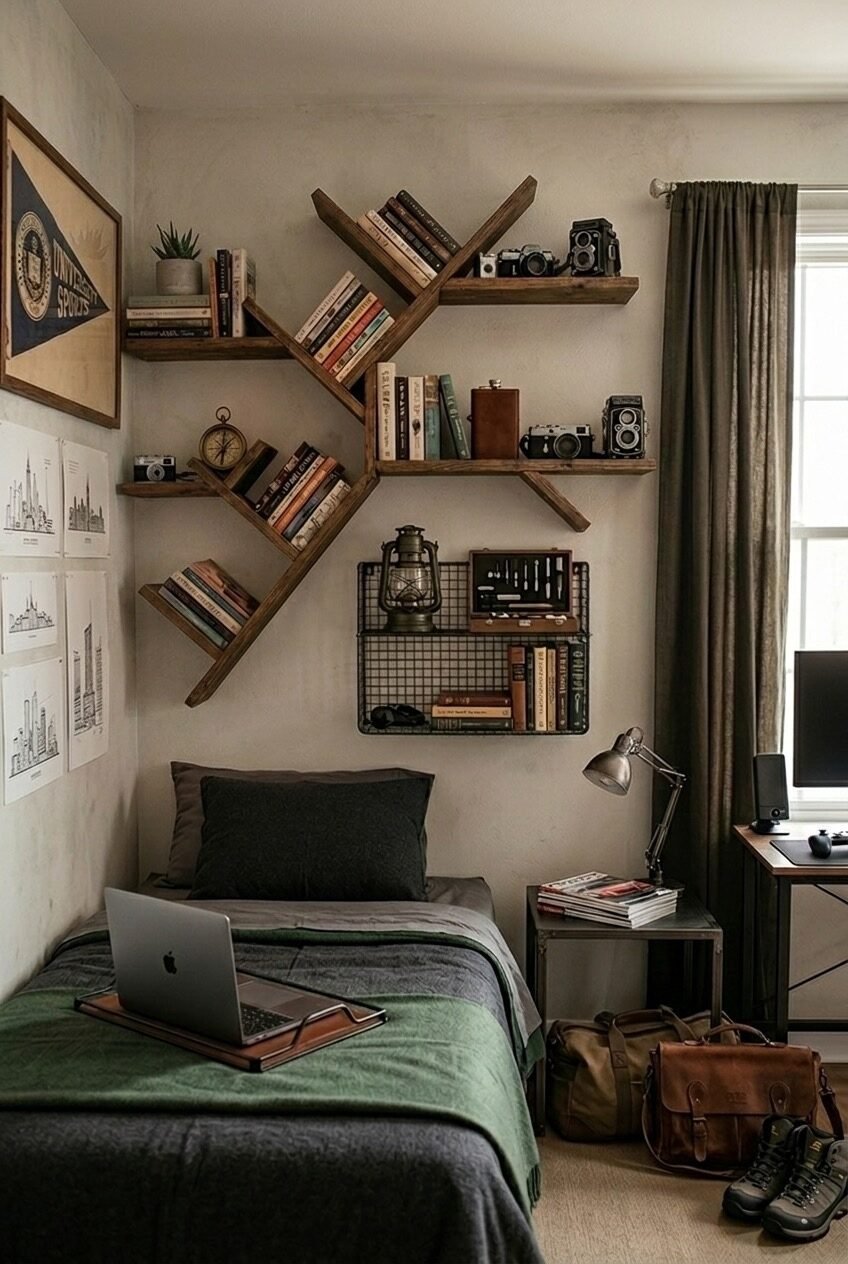
Branch-shaped floating shelves — wood planks supported by diagonal cross-brace wood arms — cover the wall above the bed in an arrangement that functions as a bookshelf, display case, and wall art simultaneously. Vintage cameras, a brass compass, a lantern, stacked books, and a small succulent fill the shelves in a way that reads as accumulated rather than arranged. Below them, a wire mesh wall basket holds overflow books and a second lantern.
The rest of the room takes its cues from the same explorer-adjacent palette: charcoal and forest green bedding, a canvas leather satchel on the floor, hiking boots under the desk, city architectural sketches mounted on the left wall. The material consistency — aged wood, dark metal, worn leather, matte ceramics — is what makes this feel like a designed space rather than a random collection of things a person owns.
Building this shelf arrangement requires more wall commitment than most dorm setups, so confirm your housing policy on wall anchors before investing. Most dorms allow small nail holes; branch-style shelves are available on Etsy and Amazon in configurations that mount with a minimal number of anchor points. The black desk setup visible at the edge of the frame — monitor, no clutter, dark finish — matches the room’s dark-material direction and keeps the study zone from breaking the aesthetic.
Music Room Dorm With Vinyl Collection
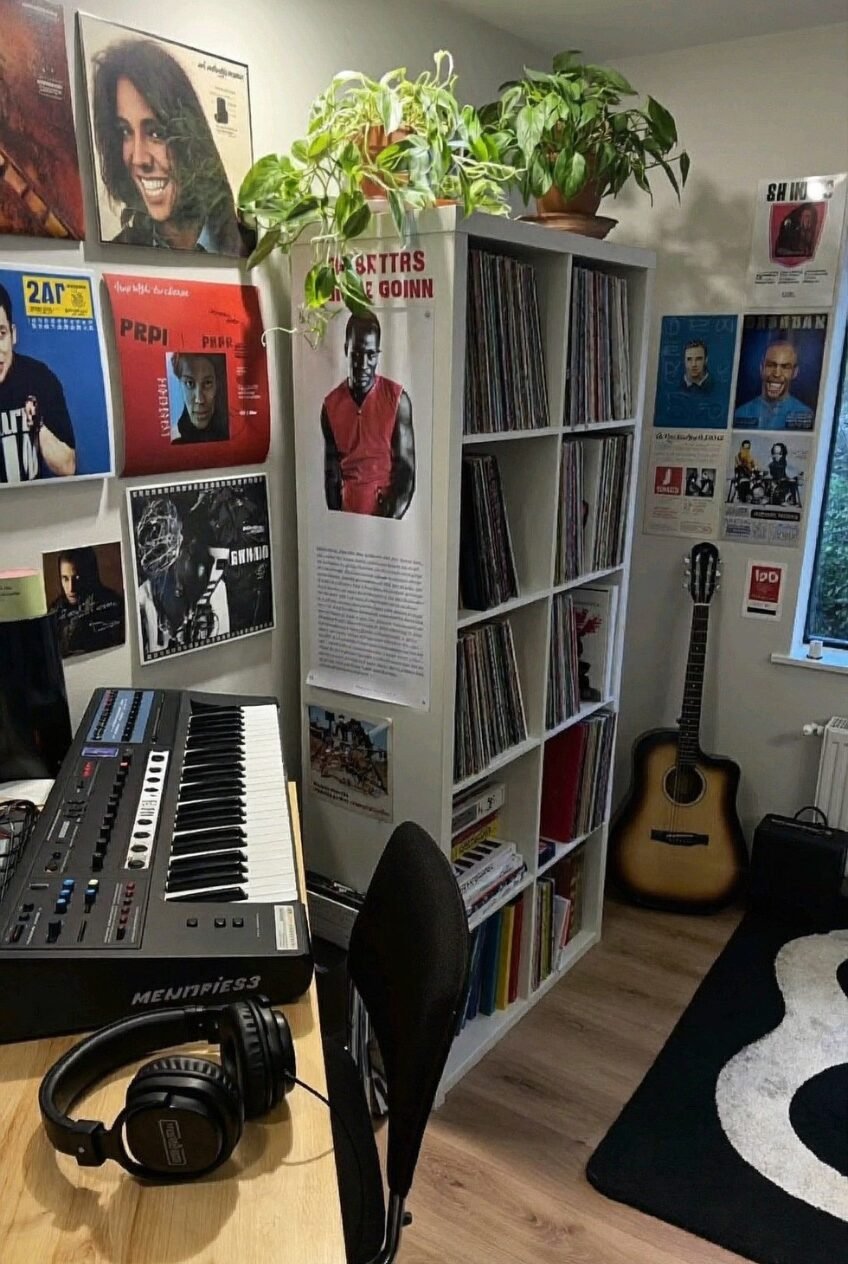
When the primary function of a room extends beyond sleeping and studying — when it’s also a practice space, a listening room, a creative studio — the design has to accommodate that. This room makes zero attempt to hide the keyboard, the guitar, the headphones, the vinyl shelf. Those things are the room.
The tall white Kallax-style shelving unit stacked with vinyl records is both storage and visual statement. A full shelf of records has a specific texture and color rhythm that functions like wall art — spines of different colors, heights, and thicknesses create a composition that changes every time you pull something out. The plant balanced on top softens the hard rectangular profile of the unit. Music posters and artist photographs cover both walls completely, with no formal arrangement — just the way they would accumulate over time.
For a music-focused dorm room, the acoustic reality matters as much as the visual one. Heavy tapestries and full bookshelves actually help dampen sound in a cinder block room, so the decorating choices here serve a functional purpose beyond aesthetics. A keyboard stand that positions the instrument at desk height keeps the playing posture ergonomic during long sessions. The guitar propped against the wall near the window is fine for occasional use but warrants a proper wall mount if it’s getting played daily.
Wall-to-Wall Poster Coverage, No Framing
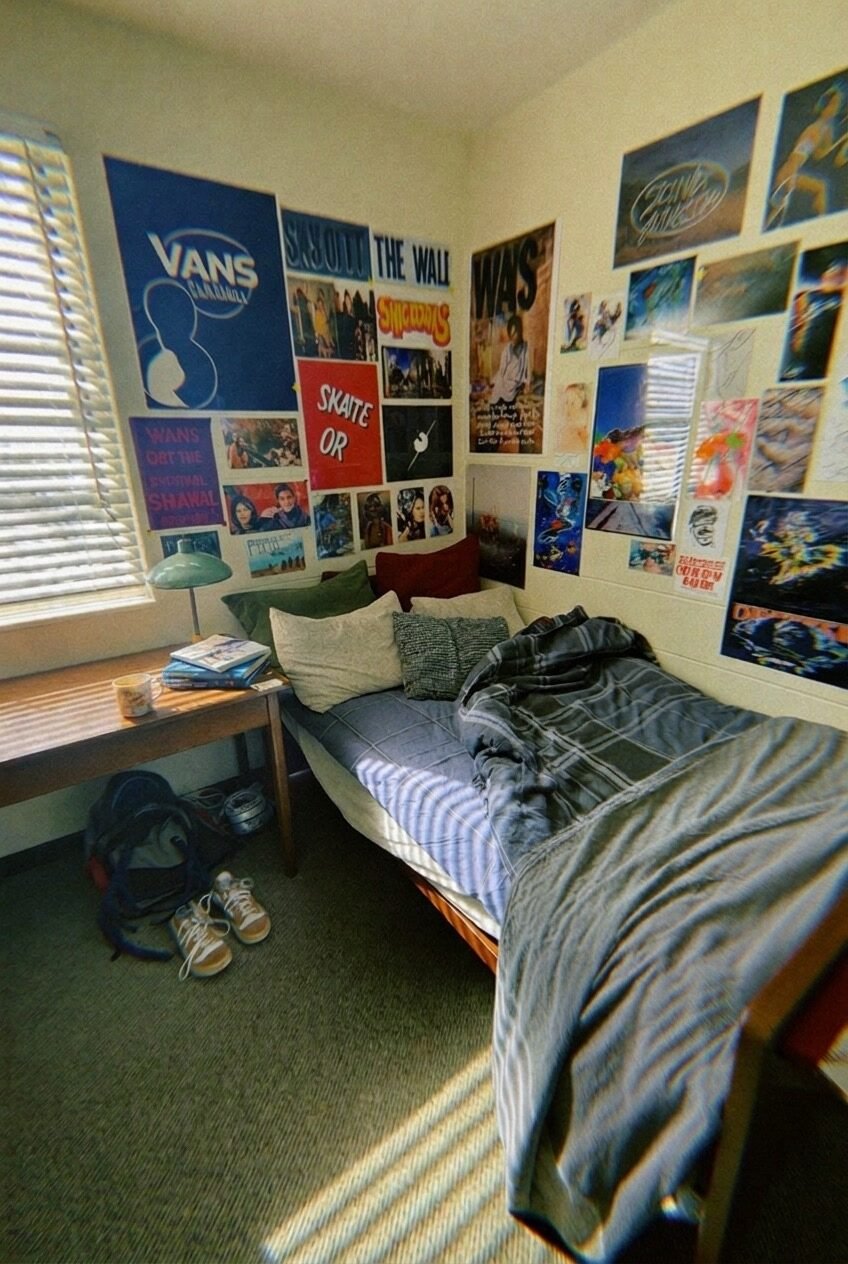
Every wall, floor to near-ceiling, covered in unframed posters — skate brands, movie stills, sports photography, abstract graphics — pinned or taped directly to the cinder block. No frames, no gallery arrangement, no symmetry. The bed sits in the corner with mismatched throw pillows and a rumpled plaid blanket. This is the most genuinely student room in the entire post, and it has a specific energy that no amount of careful decorating can manufacture.
What makes unframed poster coverage work at this scale is density. Sparse unframed posters look like they were put up halfheartedly and forgotten. Dense coverage, where the posters overlap slightly and fill the wall completely from multiple angles, reads as a committed aesthetic choice. The key is starting from a corner or a center point and expanding outward rather than placing posters randomly — even without frames, there’s a logic to how posters that touch or overlap should relate in scale.
A green mushroom-shaped desk lamp on the windowsill provides the only non-poster visual detail, and its retro form reads as a small design moment in an otherwise maximally busy room. For the bed setup, layering multiple throws and pillows in complementary colors — deep green, navy, grey, burgundy — achieves the casual-but-not-accidental look without requiring any coordinated bedding set. This is arguably the most honest dorm room aesthetic in this post: it looks exactly like someone lives there.
Your Dorm Room Should Feel Like Yours From Day One

The rooms in this post span from meticulous to maximalist, from sports shrine to music studio to coastal retreat. What they share is that someone made decisions — real ones, based on what they actually care about — rather than defaulting to the same beige everything setup. A dorm room is one of the few spaces in life where you have zero obligations to anyone else’s taste, and that’s worth using.
The practical reality of dorm decorating is that almost everything is reversible. Tapestries and posters come down, rugs roll up, string lights unplug, floating shelves leave small holes that patching compound fixes in ten minutes. The risk of going too far with a dorm room is essentially zero. The regret of not doing anything is more common than most people admit.
Start with the wall above the bed — that’s the zone with the most visual impact and the least functional conflict. Get that right and the rest of the room has somewhere to answer to. Whether that’s a gallery of framed album art lit with picture lights, a full tapestry and woven wall hanging, or every poster you’ve ever owned layered floor to ceiling is completely up to you.
 Steal Our Home Styling Secrets!