
Cottage Dining Rooms Worth Studying Before You Redecorate Yours
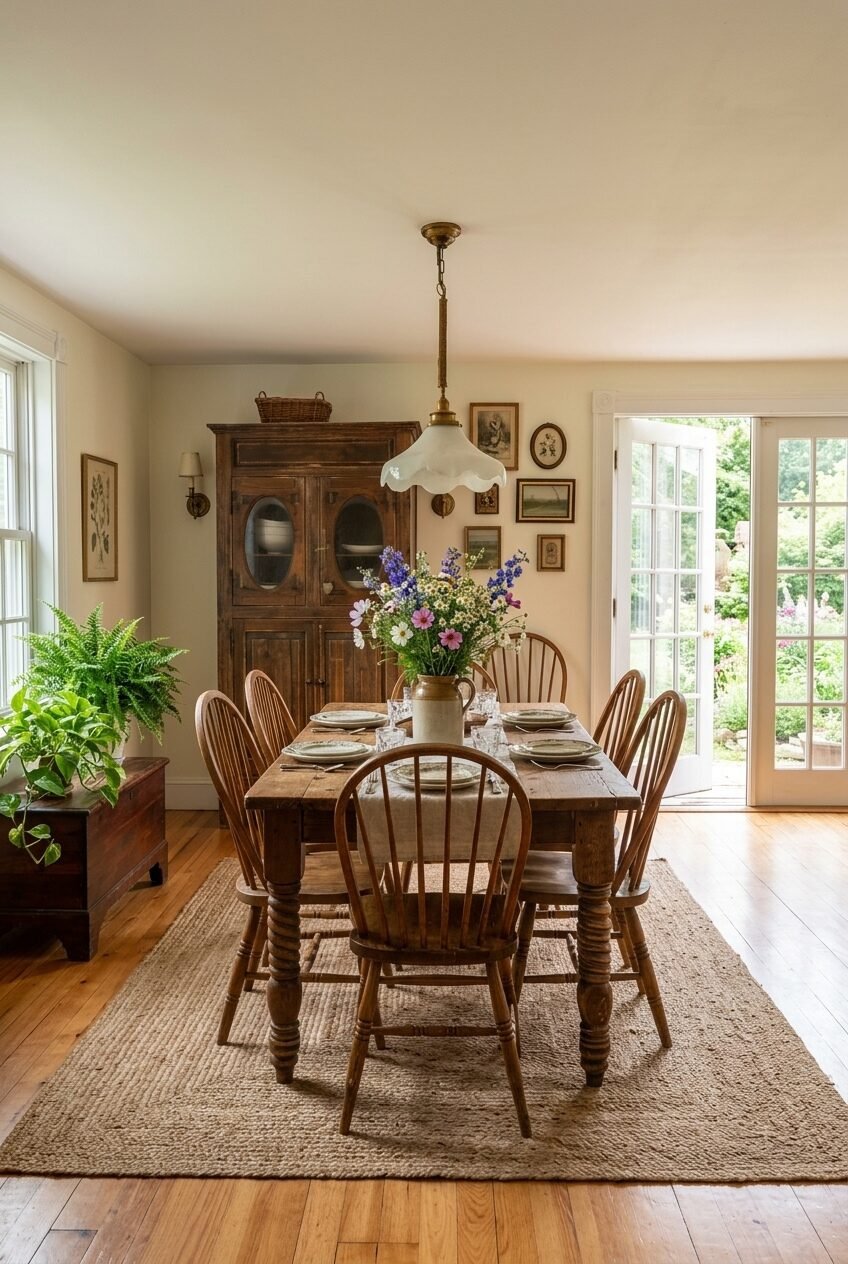
There’s a version of cottage style that ends up looking like a prop room — too many matching pieces, too much intentional distressing, not enough soul. The rooms we keep coming back to look nothing like that. They have mismatched chairs that somehow work, a window letting in too much light, and a table that’s clearly been used for actual meals. That’s the version worth talking about.
Cottage dining rooms sit in this interesting middle ground between informal and beautiful. They’re not trying to be grand. The charm comes from restraint in some places and total abandon in others — a rough-hewn table paired with delicate china, raw wood beams above soft linen curtains. The contrasts are what make them interesting.
What follows is a collection of spaces that get this balance right, each in a different way. We’ve broken down what makes each one work and how you’d actually go about pulling it off — practically, not just aesthetically.
Vertical Paneling as a Mood Setter
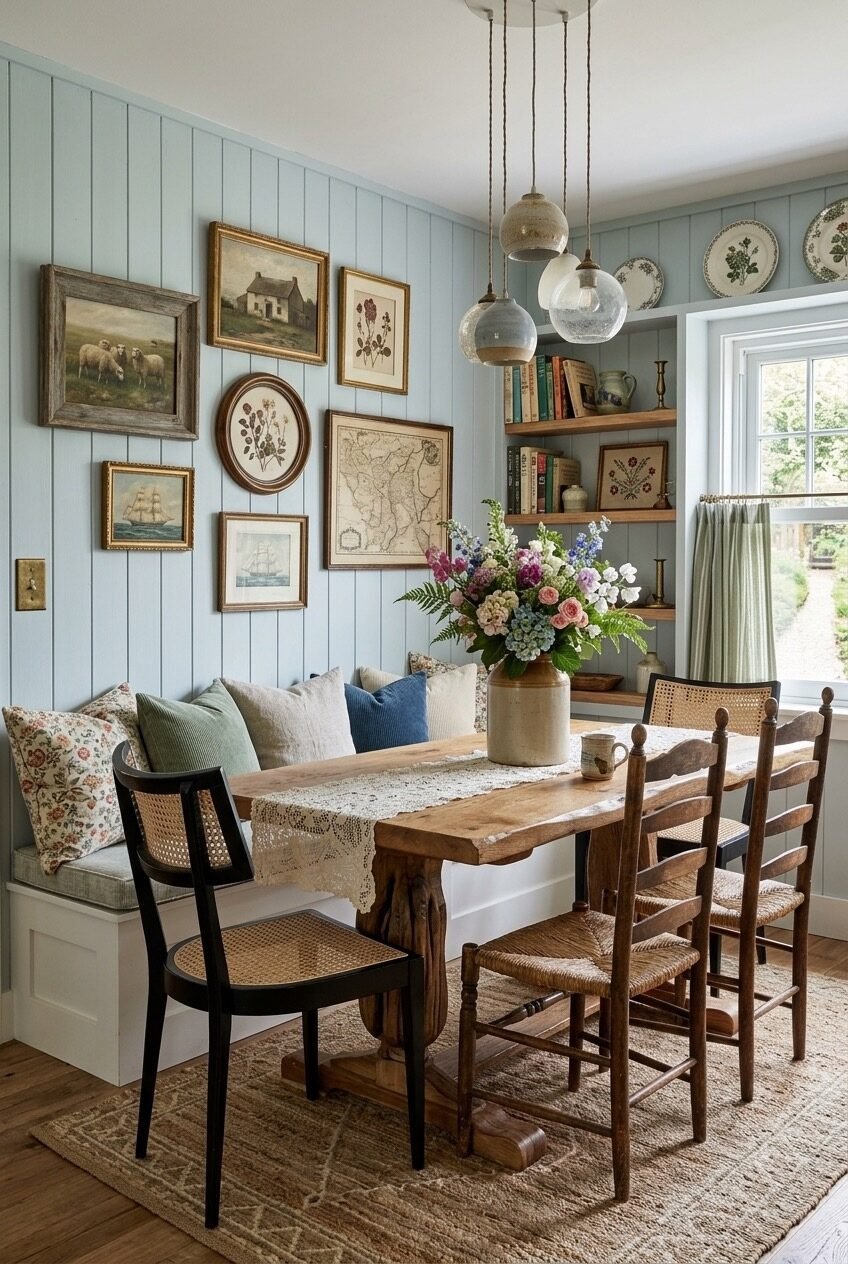
Start with the walls before you buy a single piece of furniture — that’s the lesson this room teaches quietly. The soft blue vertical tongue-and-groove paneling does more heavy lifting here than any individual piece in the space. It creates a backdrop that reads as both vintage and fresh, the kind of wall treatment that makes even mismatched furniture look considered. Vertical lines also draw the eye upward, which adds perceived height without any structural changes.
The mix of seating here is worth studying closely. A built-in bench with loose cushions along the back wall, a black cane bistro chair, and weathered ladder-back chairs with rush seats — nothing matches, but they share the same visual weight and material language. When mixing seating, anchor the variety with a common thread: here it’s natural fibers and aged finishes. That’s the rule keeping the chaos organized.
The pendant cluster — mismatched globe lights in amber, clear, and frosted glass — reinforces the layered aesthetic without feeling overdone. For the shelving, open wood brackets styled with actual books, ceramics, and a brass candlestick feel genuinely lived-in. The plates displayed above the window trim are a quiet cottage signature. Keep the styling on open shelves asymmetrical and avoid color-coding — sorted-by-color shelves read as staged, not styled.
Wallpaper and Copper Make Unexpected Partners
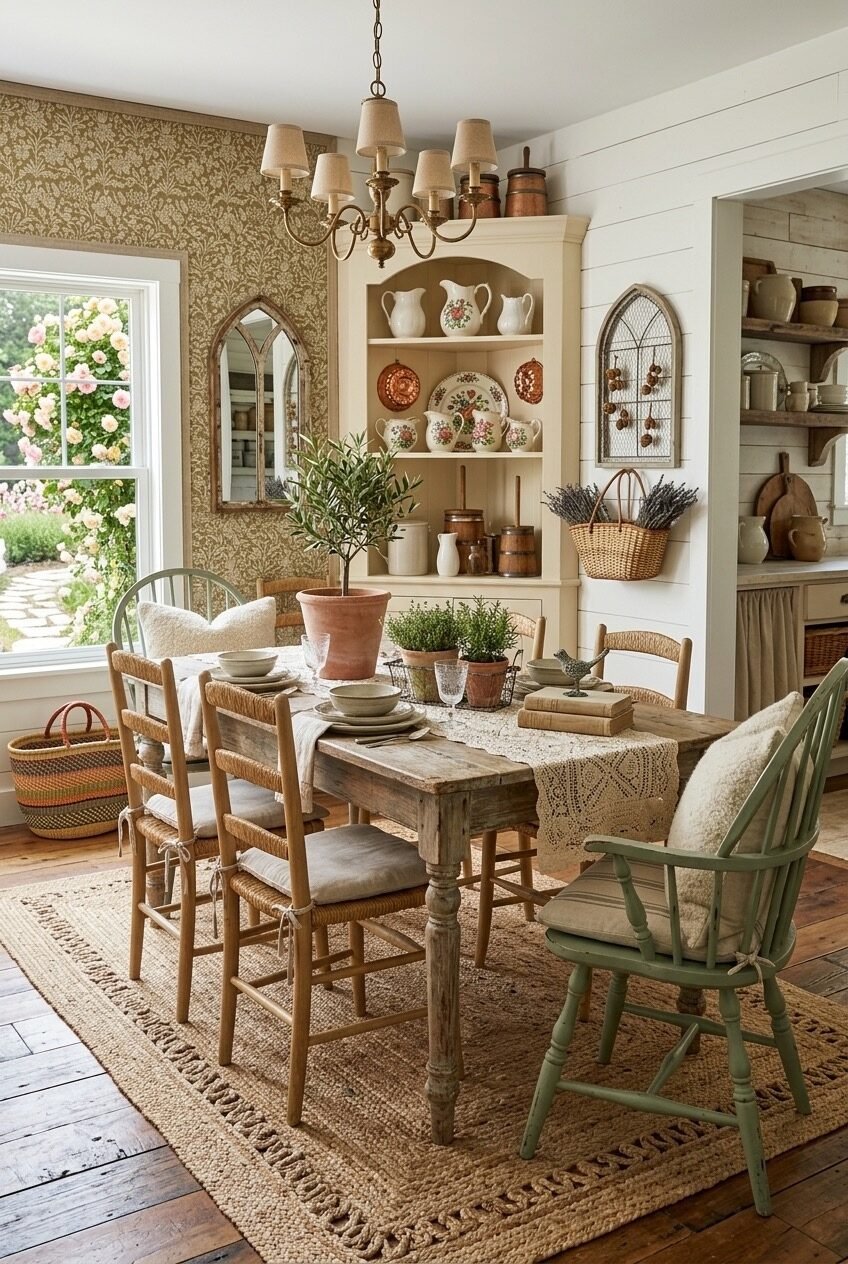
The corner hutch in this room is doing something interesting: it’s painted in the same soft cream as the walls, which means it disappears into the architecture rather than announcing itself. That’s a trick worth borrowing. When a piece of furniture shares its color with the surrounding wall, it reads as built-in and considered even when it’s not.
Recreating a room like this starts with committing to the wallpaper. The warm gold damask pattern is bold enough to be the room’s personality, and everything else — the rustic plank table, the mismatched rush-seat and Windsor chairs, the cream-painted surfaces — is deliberately subdued so the pattern can breathe. Don’t try to balance a statement wallpaper with more statements; let everything else play supporting roles. The arch-top mirror leaned against the wall rather than hung is the kind of small decision that keeps a room from feeling too finished.
Copper is the material thread tying this together: copper pots on top of the hutch, copper-glazed plates on the shelves, a subtle warmth that repeats without becoming a theme. A potted olive tree and terracotta herb pots on the table bring the garden indoors without being precious about it. That’s very much the spirit of cottage decorating — nothing too fussy, but nothing careless either.
Exposed Beams Carry More Than Ceiling Weight
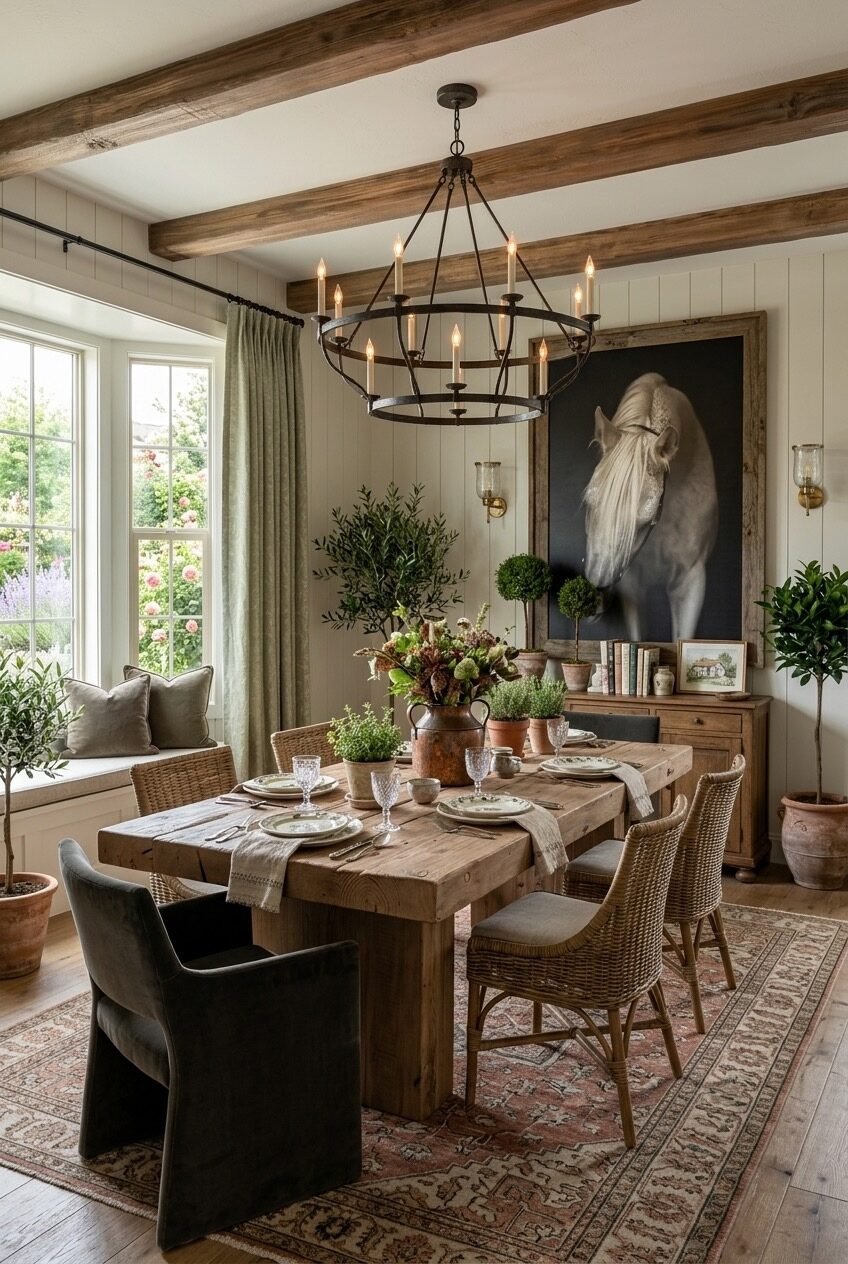
Before anything else, notice the ceiling. Dark-stained wooden beams run the length of the room and do more to establish the mood than the furniture below them. Beams like these compress the atmosphere in a way that feels grounding rather than heavy — rooms like this pull you in at eye level rather than pushing you to look up. If you have existing beams, staining them dark is one of the most dramatic low-cost transformations available in a cottage space.
The furniture mix here is notably more refined than typical cottage styling. A hefty reclaimed wood table with thick, squared-off legs grounds the room, while wicker chairs with cushioned seats soften it. The head chair — an oversized velvet upholstered piece in charcoal — is the kind of unexpected element that keeps a room from sliding into predictability. Mixing one upholstered chair with wicker and wood creates a focal point at the table without requiring a full reupholstery project.
The large horse portrait in a rough-hewn frame is bold, but it works because the scale matches the room’s architecture. Art in cottage spaces often skews too small; this is a good reminder that one large piece reads better than a cluster of smaller ones in a room with strong structural bones. The window bench styled with linen cushions and the collection of topiaries and terracotta pots reinforce the garden adjacency that cottage dining rooms do best.
Two-Tone Walls Change Everything Here
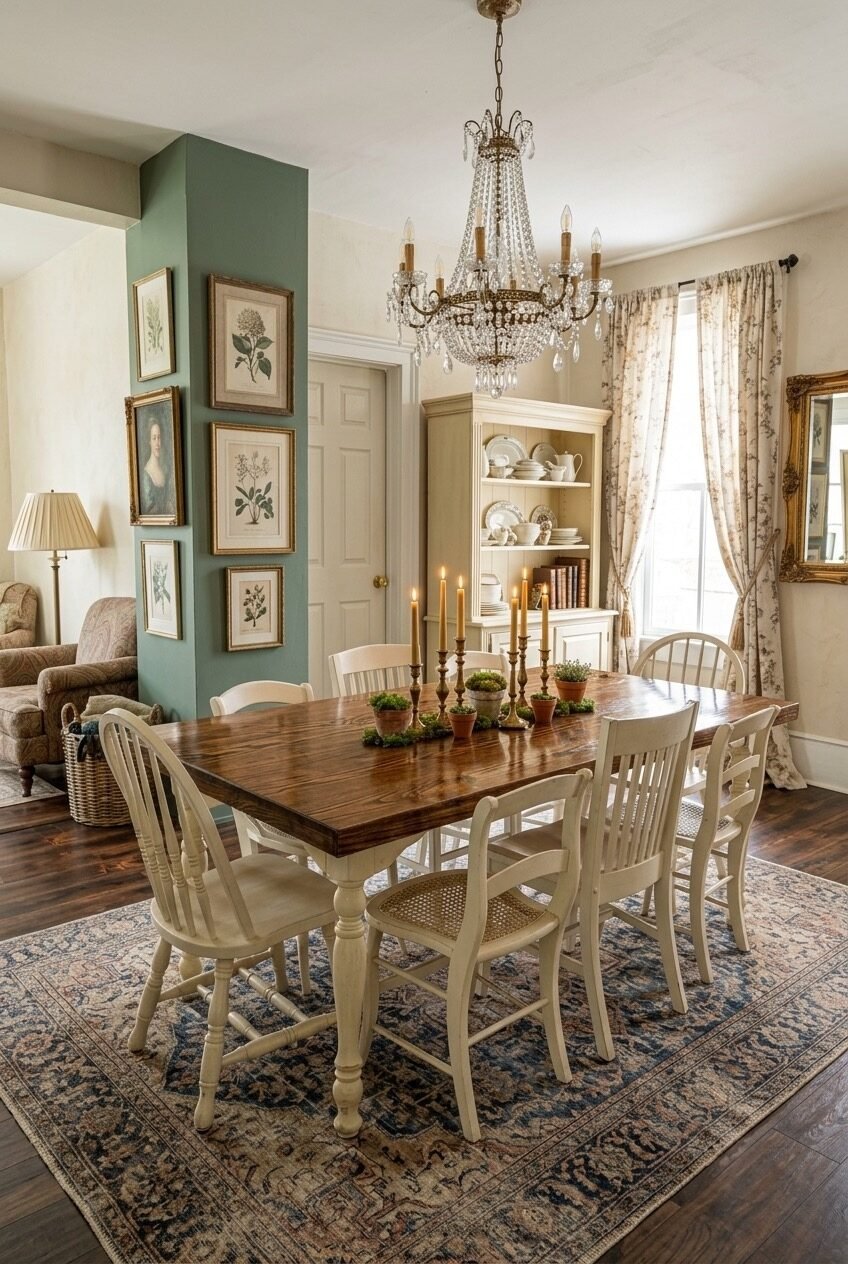
Most people default to painting all their walls the same color, and most rooms would genuinely benefit from breaking that rule once in a while. The sage green accent on the column and partial wall here creates a visual anchor that separates the dining area from the adjacent living space without a physical barrier. It’s a smart solution for open-plan homes where you want each zone to feel distinct but connected.
The table itself is the real design move: a rich walnut top on painted cream legs is a combination that looks expensive but is achievable by simply repainting an existing farmhouse table base. The cream-painted chairs, some with cane seats and some without, continue that two-tone idea — dark stained seats on painted frames, or all-cream, creating a relaxed but coherent set. The key is that all the chairs share the same base color even when their forms vary.
The crystal chandelier with brass fittings is a choice that might read as formal in another context but lands perfectly here because everything else is so understated. Floral curtains in faded tones, a white bookcase styled with actual dishware and books, and a row of taper candles with small moss pots on the table keep the decorating approachable. For the gallery wall, framing botanical prints in mismatched gold frames on that accent wall is a low-cost way to reinforce the color choice and add character.
Dried Botanicals Overhead Change the Whole Atmosphere
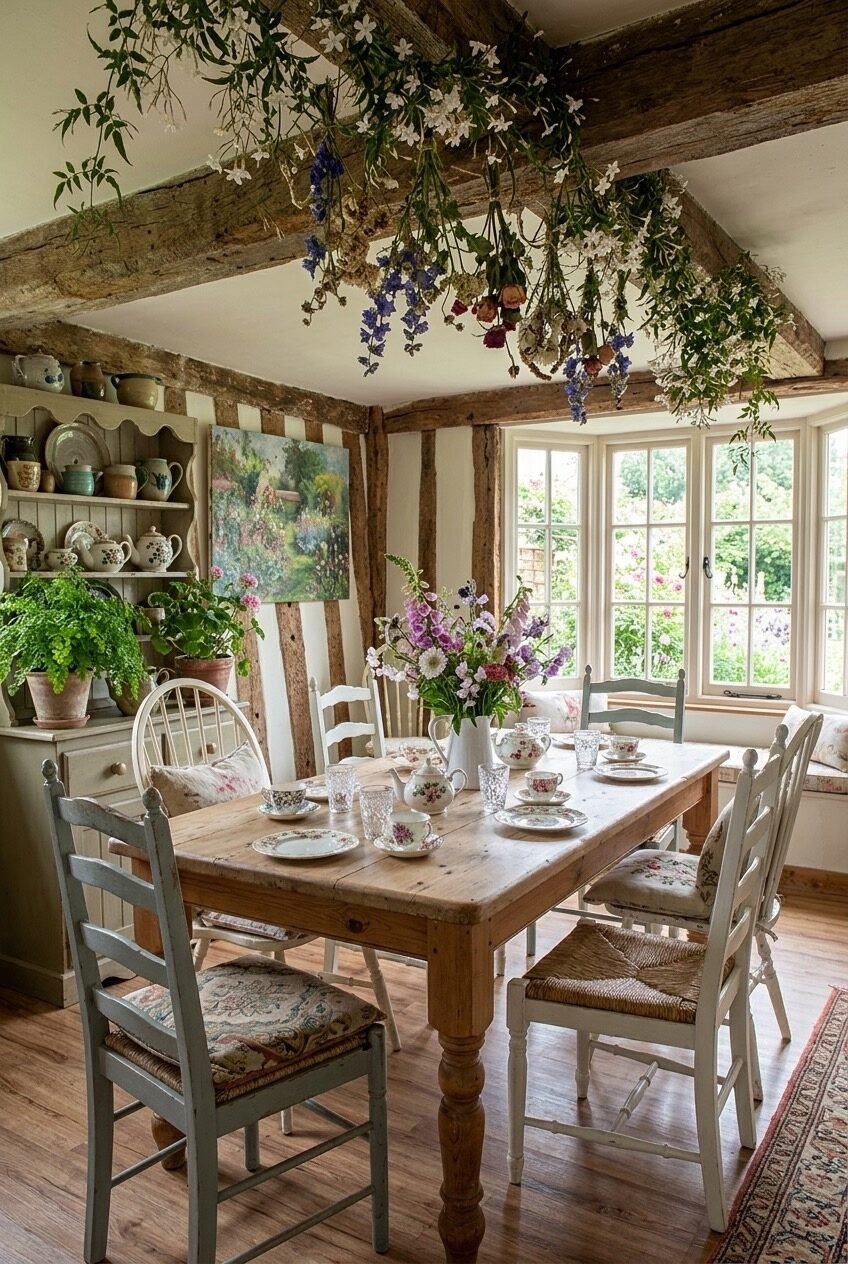
Forget the chandelier for a moment — the beams in this room are doing something genuinely unusual. Bundles of dried flowers, fresh greenery, and hanging botanicals are suspended from the exposed timber overhead, turning the ceiling into a living installation. It sounds like a lot, but the execution is lighter than it looks. The trick is variety in the botanicals themselves — mixing dried and fresh, flowering and foliage, creates depth rather than a costume-party level of decoration.
This is an English cottage interior, and it leans hard into that identity. The pine table is scrubbed pale and left bare except for a tea service set in actual china — not farmhouse stoneware, but proper floral-patterned cups and saucers. The mixed chairs in sage, cream, and white are deliberately mismatched, the kind of accumulation that happens naturally over time rather than being purchased as a set.
The Welsh dresser in the background, painted in muted sage with open shelving styled with handmade pottery and teapots, is the backbone of this room’s character. Recreating this specific atmosphere is less about sourcing identical pieces and more about layering things with different origins — vintage textile cushions, a painting hung slightly askew, pottery that doesn’t match. The window seat visible in the corner, softened with faded cushions and overlooking a garden, is the detail that makes the whole room feel inhabited rather than arranged.
Wicker Chairs and Wood Find Balance
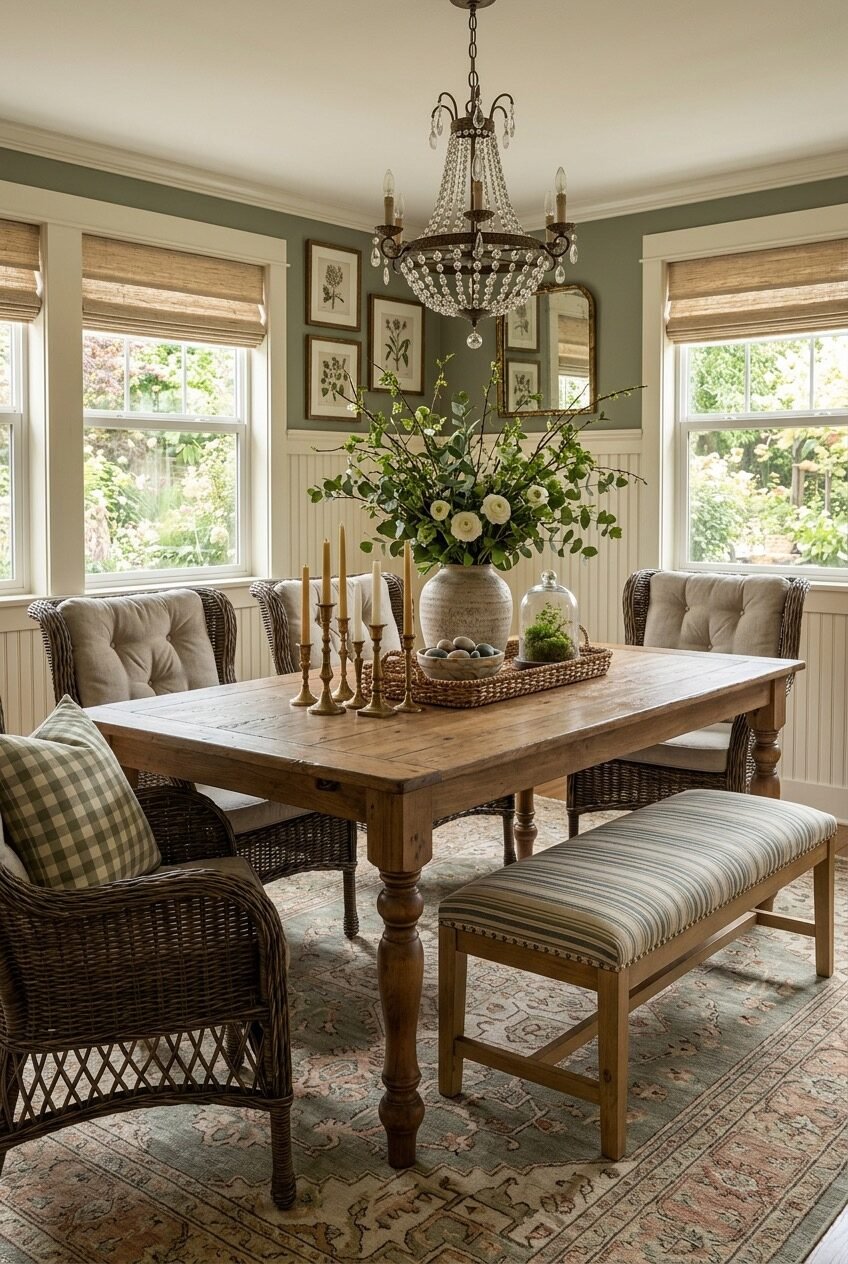
Wicker dining chairs get dismissed as too casual, too porch-like, too much of a commitment. This room is a direct counterargument. The four high-backed wicker armchairs with tufted linen cushions pull up to a simple farmhouse table and read as genuinely comfortable and composed — the kind of seating you’d actually want to sit in for a long dinner, not just photograph.
The room works because of how well the natural materials echo each other: the wicker weave, the jute rug beneath, the woven tray on the table holding brass candlesticks and a cloche. Rooms built on a single material family — in this case, natural fibers and raw wood — require very little styling effort to feel coherent. The sage-painted walls with white wainscoting below provide the calm backdrop that lets the textures do the talking.
The striped upholstered bench at the foot of the table adds a different textile register without breaking the natural-tones palette. Windows on three sides with woven bamboo blinds keep the light warm and filtered — a better choice here than curtains, which would compete with the wall art. The botanical prints in gilded frames, the arched mirror above a small console, and the crystal chandelier overhead are the room’s concessions to refinement. They don’t fight the rusticity; they give it something to lean against.
Stone Walls Earn Their Place in the Room
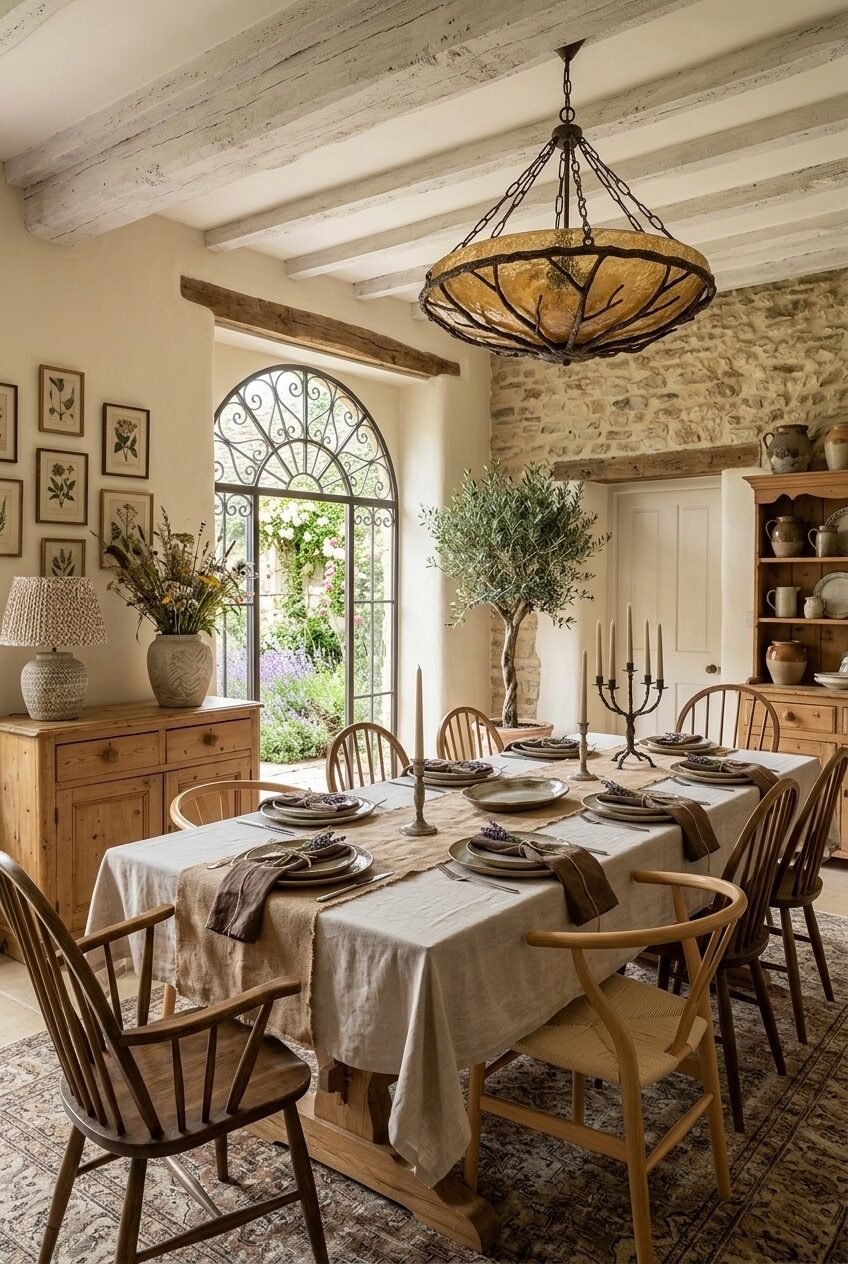
Exposed stone is the kind of architectural detail that people either have and ignore or desperately wish they had. This room treats it as the centerpiece — the rough limestone wall running behind the hutch and framing the arched window is left completely unfinished, and that rawness is what gives the entire space its sense of place. If you’re fortunate enough to have exposed stone, resist the urge to whitewash or plaster it. The texture and color variation are the whole point.
The arched wrought-iron window with its ornate scrollwork is the room’s visual crown. Arched windows are rarely something you add — they’re structural — but if you’re decorating around one, let it breathe. Don’t hang curtains on a window like this; it’s architecture, not a light-control problem. The rest of the room responds to the grandeur of that arch with appropriately scaled pieces: a long table dressed in rough linen, an amber amber resin chandelier with iron armature, a candelabra as the table’s centerpiece.
The pine hutch styled with stoneware, the collection of botanical prints on the side wall, and the small woven lamp on the sideboard all keep the room grounded despite its dramatic bones. Windsor chairs in natural wood and a wishbone chair at the end vary the seating without creating visual noise. The overall palette — warm cream, sand, aged wood, stone — is essentially monochromatic, which is exactly how you handle a room where the architecture already has something to say.
Dark Green Walls Feel Surprisingly Intimate
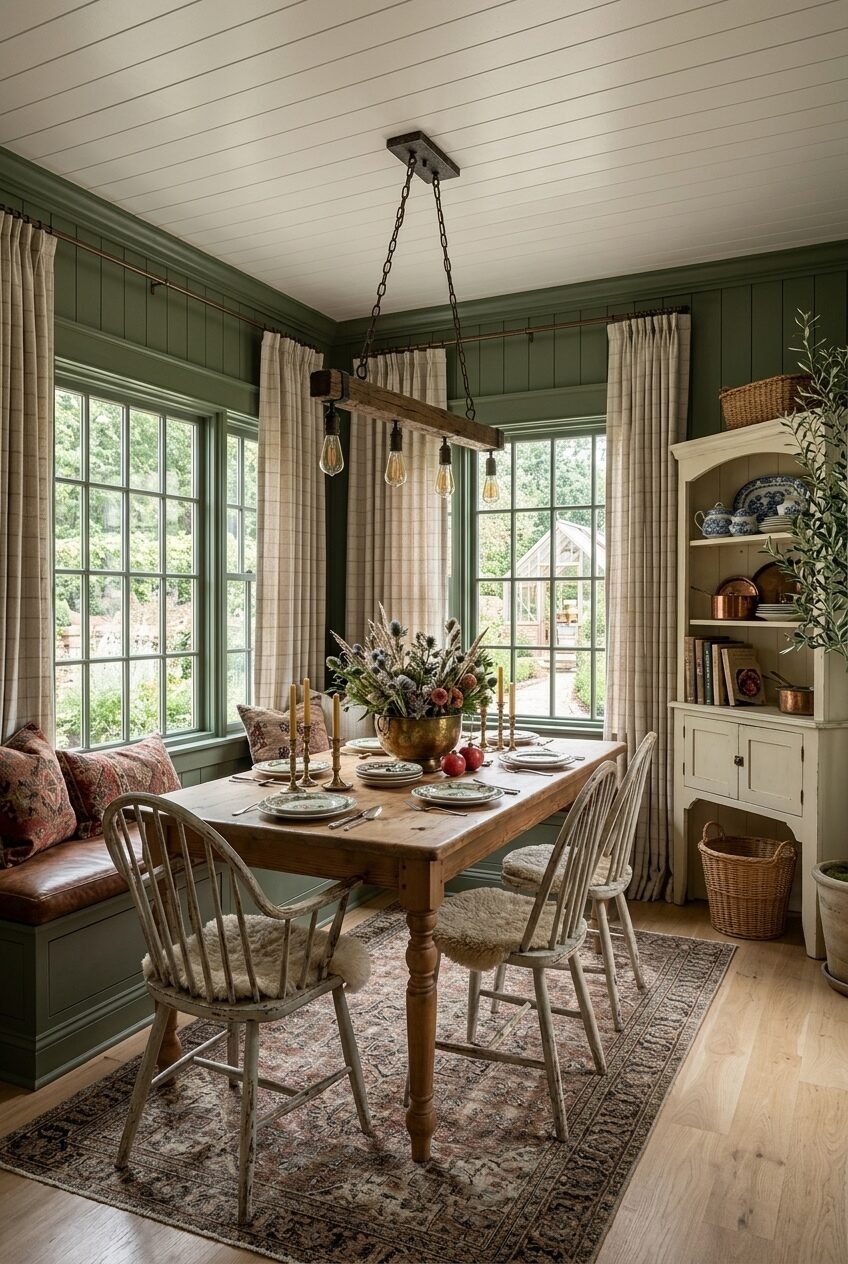
Deep forest green walls sound like a risk in a dining room, and they are — but this photo makes a compelling case for taking it. The color wraps the room in a way that feels more enclosing than a neutral, which in a dining space actually works in your favor. Meals feel more private, candlelit, atmospheric. The white shiplap ceiling breaks the intensity at the top and stops the room from reading as a cave.
The lighting here is unusual and very much worth stealing: a raw beam suspended from chains with Edison bulb pendants dropping from it. It’s completely DIY-friendly — a salvaged wood beam, some chain hardware, and exposed-filament bulbs. This kind of fixture works precisely because it doesn’t try to be refined; it gives an industrial-craft quality that cuts against the softness of the curtains and florals. The plaid linen curtains in cream and tan thread through the window frames without competing with the wall color.
The cream hutch styled with blue-and-white transferware and copper cookware is the room’s focal point beyond the windows. Keeping cabinetry light against dark walls is a foundational principle in rooms this bold — it prevents the furniture from disappearing. The built-in bench with a leather seat and patterned cushions adds a casual dining option that softens the table’s formality. White-painted Windsor chairs with sheepskin seat pads are the kind of layering that takes a room from well-designed to genuinely inviting.
Arched Window Frames Hung as Wall Decor
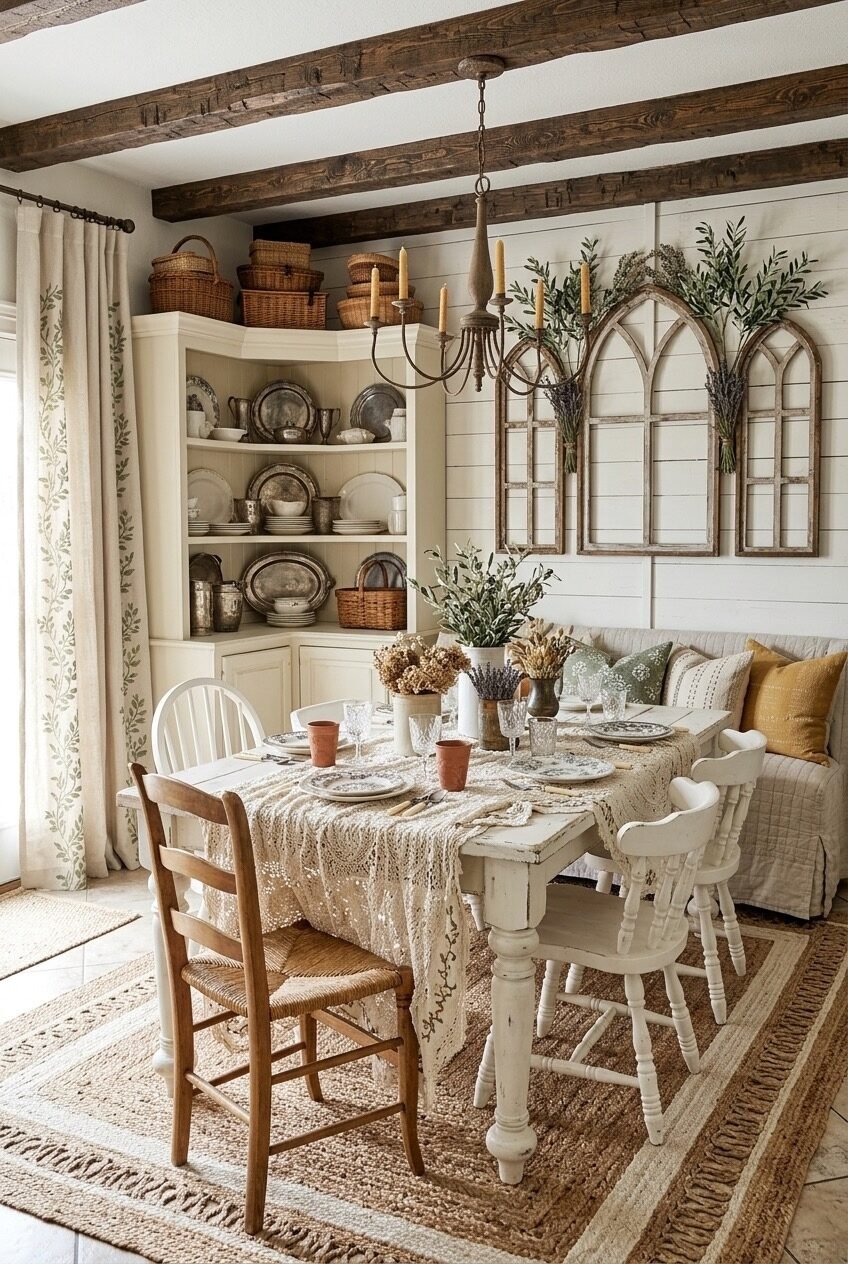
The shiplap wall in this room is doing double duty: it’s providing a clean white backdrop and acting as a display surface for a trio of architectural arch frames hung like art. These are salvaged window frames — the kind found at architectural salvage yards for very little money — dressed with dried herbs and olive branches tucked into the arches. It’s genuinely clever cottage decorating: the frames have age and patina, they’re oversized enough to register as real wall art, and the added botanicals connect them to the organic spirit of the room.
The corner hutch is styled with collected silver pieces — serving bowls, trays, and tureens — which gives it a different personality than the typical stacked-china approach. Silver has a warmth at certain angles that china doesn’t; it catches light differently and adds visual weight without color. Mixing one dominant material in an open hutch — all silver, or all copper, or all transferware — reads as a collection rather than clutter.
The table itself, painted white with turned legs and a crochet lace runner, is the kind of piece you’d find at a flea market and repaint the same afternoon. The mismatched chairs — some white spindle-back, one natural rush-seat ladder-back — follow the cottage rule of variety within a limited palette. Dark wooden ceiling beams overhead repeat the warmth of the corner hutch, and the floral-print curtains keep natural light soft without fully filtering it out.
Botanical Wallpaper and a Gallery of Mirrors
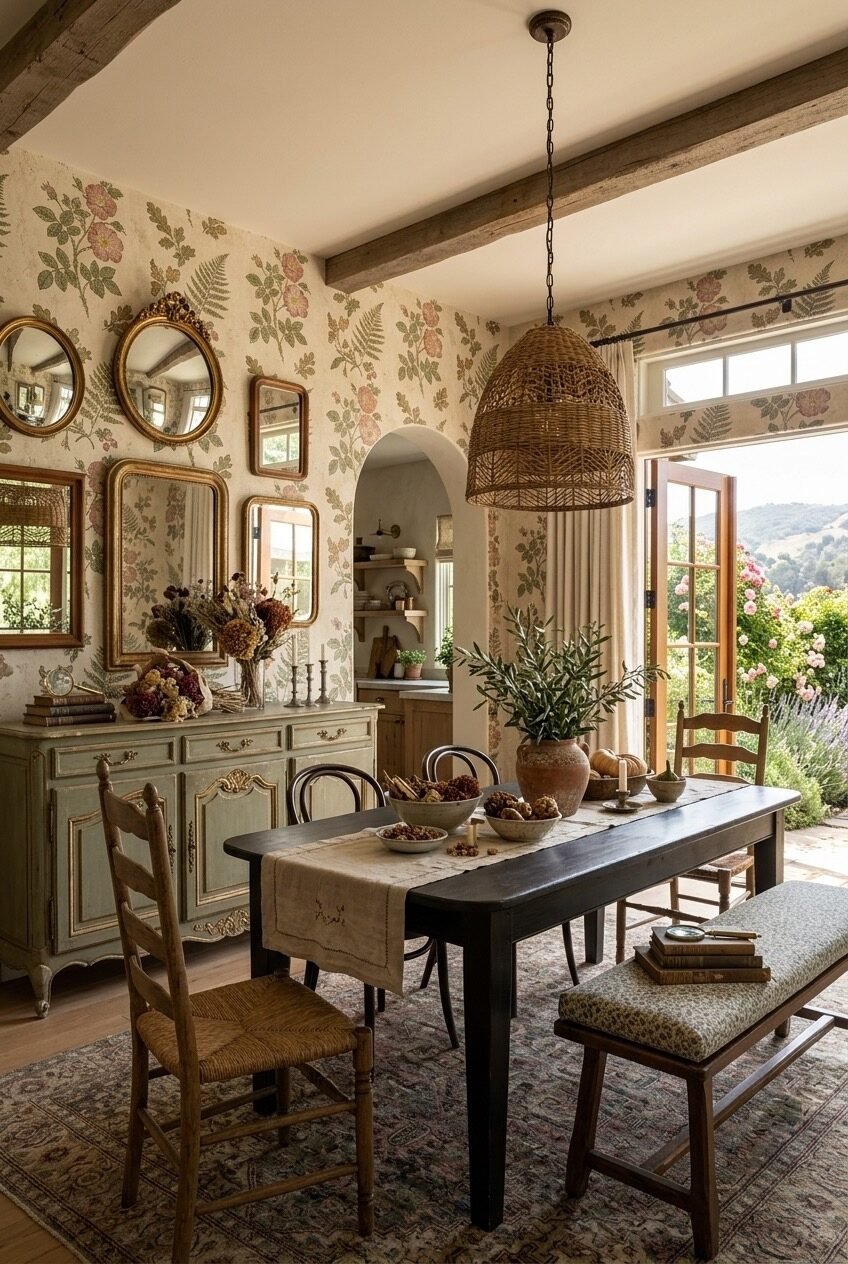
Wallpaper with large botanical prints has a long history in French country interiors, and this room uses it with genuine confidence. The rose-and-fern pattern in blush, green, and cream covers every wall and climbs to the ceiling — there’s no accent wall logic here, just full commitment. When you go this bold with pattern, the furniture has to step back. The dark-stained narrow farmhouse table, the rush-seat chairs, and the painted French console are all quieter pieces that let the walls be the event.
The console in sage green with gold hardware detailing is a French provincial piece, and it carries the room’s most interesting decorating vignette: dried flower arrangements in varying heights, taper candles in mismatched holders, stacked vintage books. Vignette styling on a sideboard or console works best when you treat it like a still life — vary the height dramatically, and include one element that’s clearly organic, like dried or fresh botanicals.
The gallery of gold-framed mirrors on the side wall is a choice that multiplies light and adds the illusion of depth in what appears to be a relatively compact space. The frames are mismatched in shape — oval, rectangular, beveled — but unified by their gilded finish. The large wicker pendant overhead is the textural counterweight to all the ornate gold, keeping the room from tipping into excess. Through the open French doors, the garden landscape becomes part of the room’s view, which is perhaps the most classic cottage detail of all.
The Best Cottage Rooms Are Never Fully Finished
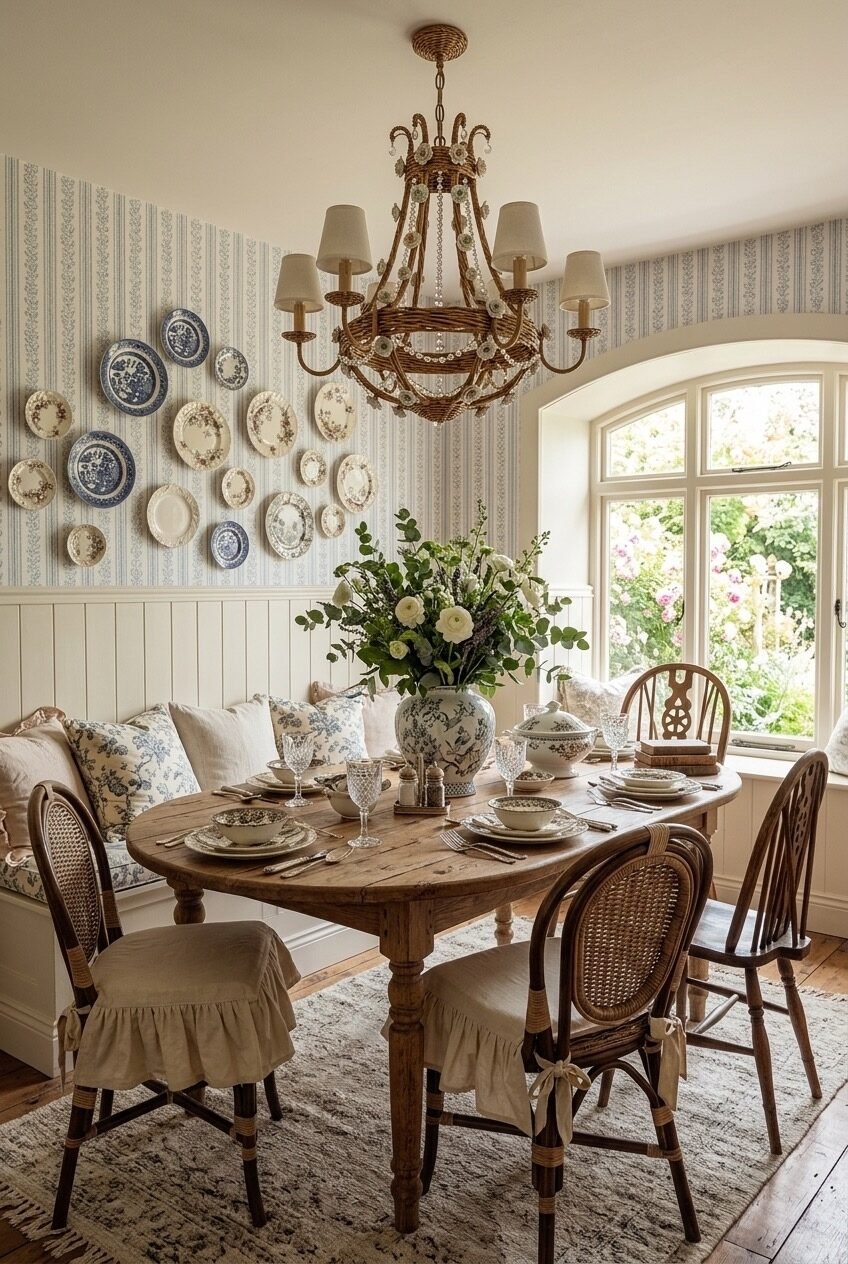
Something we noticed across every room in this collection: none of them look like they were completed in a single afternoon of shopping. The most convincing cottage dining rooms accumulate over time — a chair bought at an estate sale, a print found at a market, a piece of pottery brought back from somewhere. That lived-in quality isn’t something you can shortcut, but you can design toward it by leaving room for things to arrive gradually rather than filling every shelf and corner on day one.
The other through-line is texture. Wood grain, wicker weave, linen drape, ceramic glaze, jute fiber — cottage spaces layer materials in a way that other styles don’t, and that layering is what creates visual warmth even in photographs. When a room feels cold despite good furniture choices, it’s usually a texture problem.
Wherever you’re starting from — a room that already has good bones, or one that needs a complete reimagining — the principles here apply at almost any budget. The rooms that resonate aren’t the most expensive ones. They’re the ones where someone clearly knew what they liked and had the patience to build toward it.
 Steal Our Home Styling Secrets!