
The Cottage Bathroom Design Choices That Never Seem To Go Out Of Style
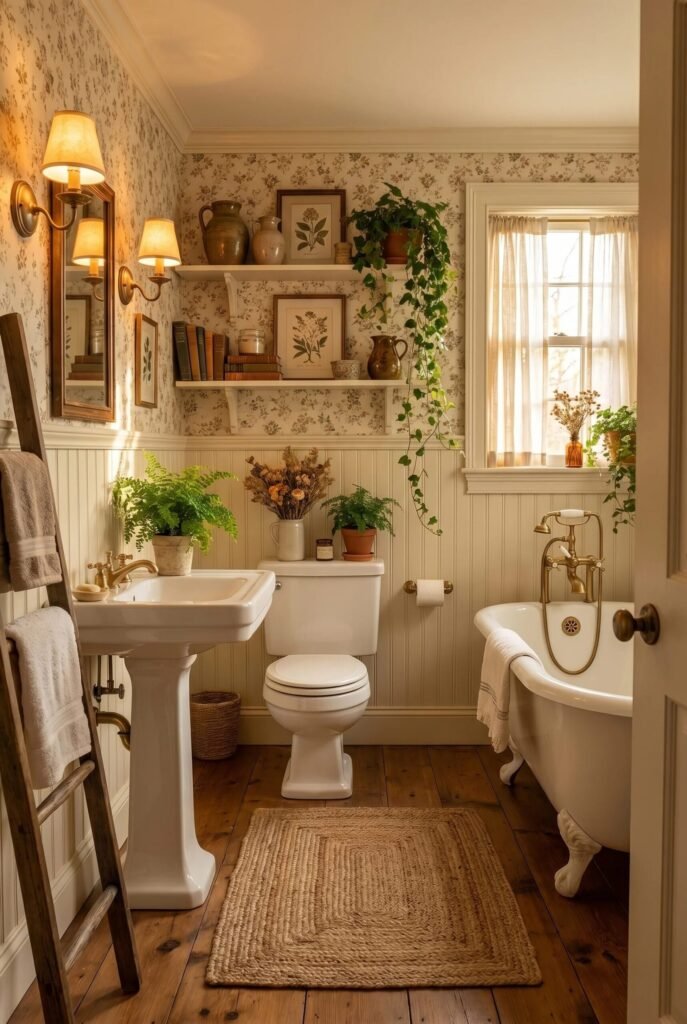
Cottage bathrooms have a way of slowing everything down, and honestly, that might be their greatest design feature. While modern bathrooms often chase sleek perfection, cottage-inspired spaces embrace warmth, character, and the kind of charm that feels collected over time. From weathered wood vanities and vintage brass fixtures to botanical accents and softly layered textiles, these rooms prove that beauty often lives in the details rather than the square footage.
Throughout these ideas, we saw how different interpretations of cottage style can create entirely different moods. Some spaces leaned into romantic elegance with chandeliers, floral fabrics, and candlelit corners, while others embraced rustic textures, exposed beams, handcrafted tilework, and earthy materials. The common thread is balance. Every room combines practicality with personality, creating spaces that feel lived-in rather than staged.
Whether your style leans bright and airy, moody and dramatic, or somewhere comfortably in between, cottage design reminds us that bathrooms can be more than functional rooms. They can feel like little everyday retreats, and honestly, we are very here for that energy.
Vintage Charm With Botanical Layers
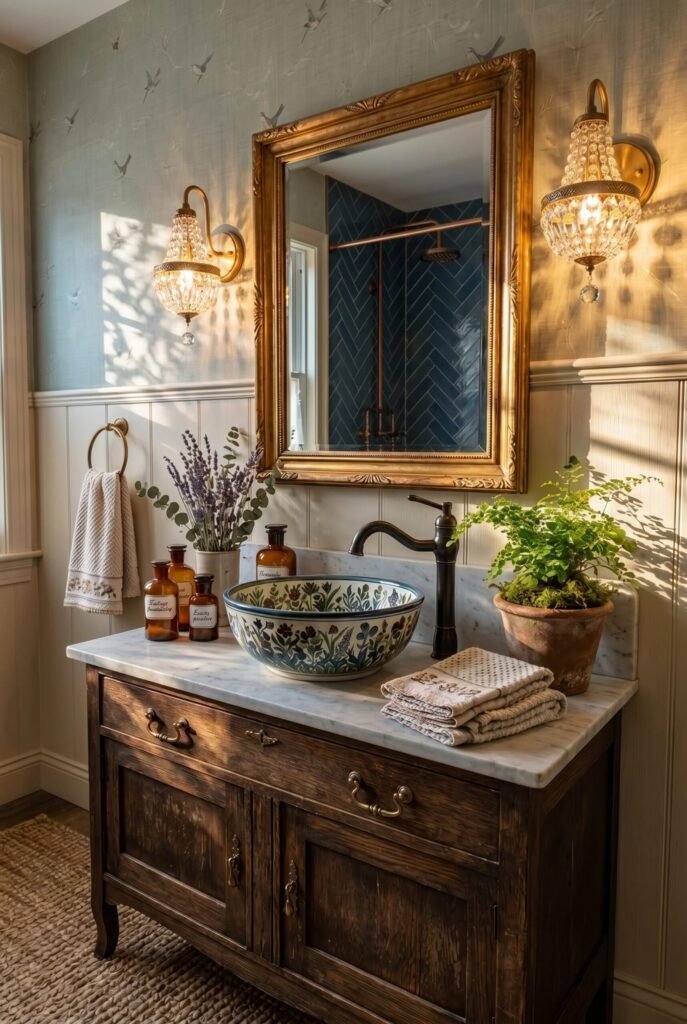
There is something wildly charming about a bathroom that looks like it has collected stories over time rather than arriving in a single delivery truck. This space leans into that feeling beautifully with its weathered wood vanity, ornate gold mirror, and hand-painted vessel sink. The design principle at work here is contrast. The rustic wood grounds the room, while the crystal sconces introduce elegance and sparkle. That balance keeps the space from feeling either too fancy or too farmhouse-themed.
The wallpaper deserves a little applause too. Its soft bird motif adds visual texture without overwhelming the room. Notice how the white wainscoting creates a horizontal break, preventing the walls from feeling busy. We are quietly convinced that every cottage bathroom benefits from at least one element that feels slightly unexpected, and crystal lighting in a rustic setting absolutely qualifies.
To recreate this look, start with a vintage-style vanity and layer in mixed materials rather than matching everything perfectly. A decorative mirror, aged brass accents, botanical stems, and collected-looking accessories will do most of the heavy lifting. The goal is not perfection. The goal is “this bathroom has better taste than some living rooms,” which, honestly, is a vibe.
Moody Cottage Drama Done Right
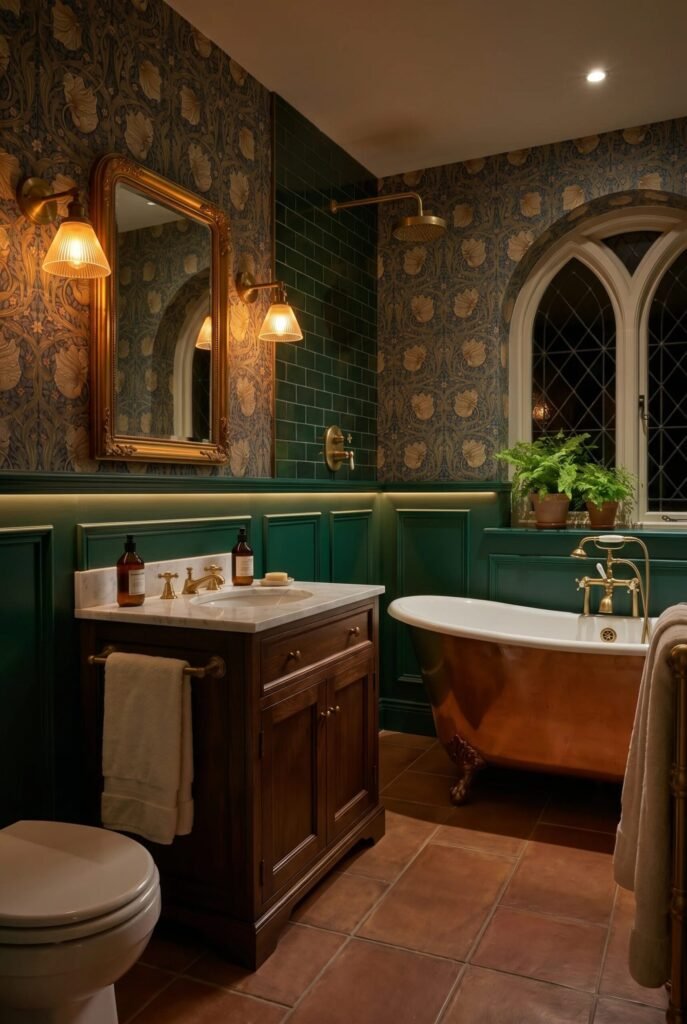
Not every cottage bathroom needs to be pale, airy, and covered in tiny florals. Sometimes the moodier route feels far more memorable. This room embraces deep green paneling, richly patterned wallpaper, and a copper bathtub, creating a layered palette that feels cozy rather than dark. The secret is color repetition. The green appears in multiple surfaces, allowing the eye to travel comfortably around the room.
The architectural details also deserve attention. The arched window becomes a natural focal point while the brass fixtures warm up the cooler wall colors. When working with darker palettes, warm metals are often the difference between cozy and cave-like. This bathroom understands that assignment perfectly.
If you want to recreate this aesthetic, commit to your color choice instead of treating it like an accent. Many people stop after painting one wall and wonder why the room feels unfinished. Cottage interiors often work best when they feel immersive. Add patterned wallpaper, warm lighting, and natural materials, then let the room embrace its slightly dramatic side. Think less “spa brochure” and more “secret countryside retreat where we suddenly write poetry.”
Skylit Shower With Garden Views
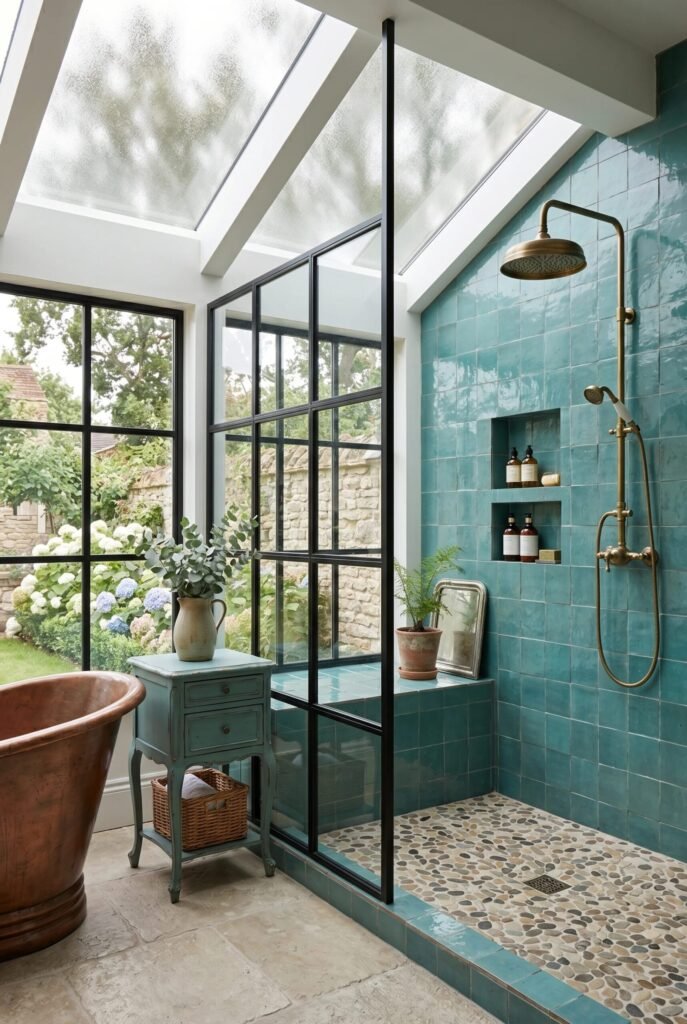
This bathroom proves that natural light can sometimes be the most important decorating element in the room. The oversized skylight and black-framed glass enclosure create a beautiful connection between indoors and outdoors. The design principle here is visual expansion. Because the eye can see through the shower and out toward the garden, the space feels significantly larger than it actually is.
The turquoise tiles introduce color without becoming overwhelming because they occupy one dedicated zone. That creates a focal wall while allowing the remaining surfaces to stay relatively quiet. We also love the pebble flooring because it introduces texture and softness against the sleek glass panels. A good cottage bathroom rarely relies on one texture alone. Layering is where the magic happens.
For anyone recreating this look, prioritize natural light whenever possible. If skylights are not realistic, larger windows or brighter finishes can create a similar effect. Pair handmade-looking tiles with natural stone, woven baskets, and a few plants. The result feels relaxed, fresh, and just a little bit expensive without trying too hard. Low-key main character energy for a bathroom.
Soft Sage And Brass Pairing
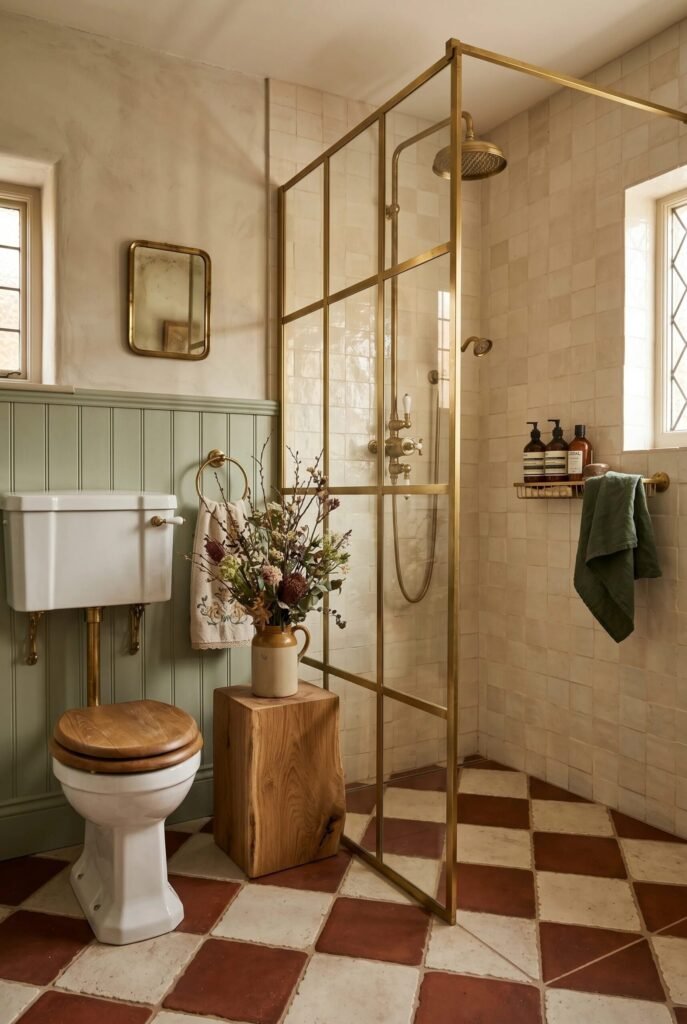
Some rooms whisper instead of shout, and honestly, that is often what makes them memorable. This bathroom uses a muted sage wainscot, creamy wall finishes, and warm brass-framed shower panels to create a palette that feels incredibly calm. Nothing is fighting for attention, which is exactly why everything works together so well.
One of the strongest design principles here is balance. The brass enclosure adds structure and definition, while the softer colors keep the room approachable. Even the checkerboard-style floor contributes visual rhythm without becoming too bold. The natural wood stool introduces warmth and reinforces the cottage character in a way that feels effortless rather than staged.
If you are recreating this style, focus on restrained color choices and quality materials. Cottage bathrooms do not need endless decor clutter to feel charming. A simple arrangement of dried flowers, natural wood accents, and classic hardware can carry the entire room. Sometimes the prettiest spaces are the ones that know when to stop decorating.Revolutionary concept, we know.
Arched Shower Nook With Character
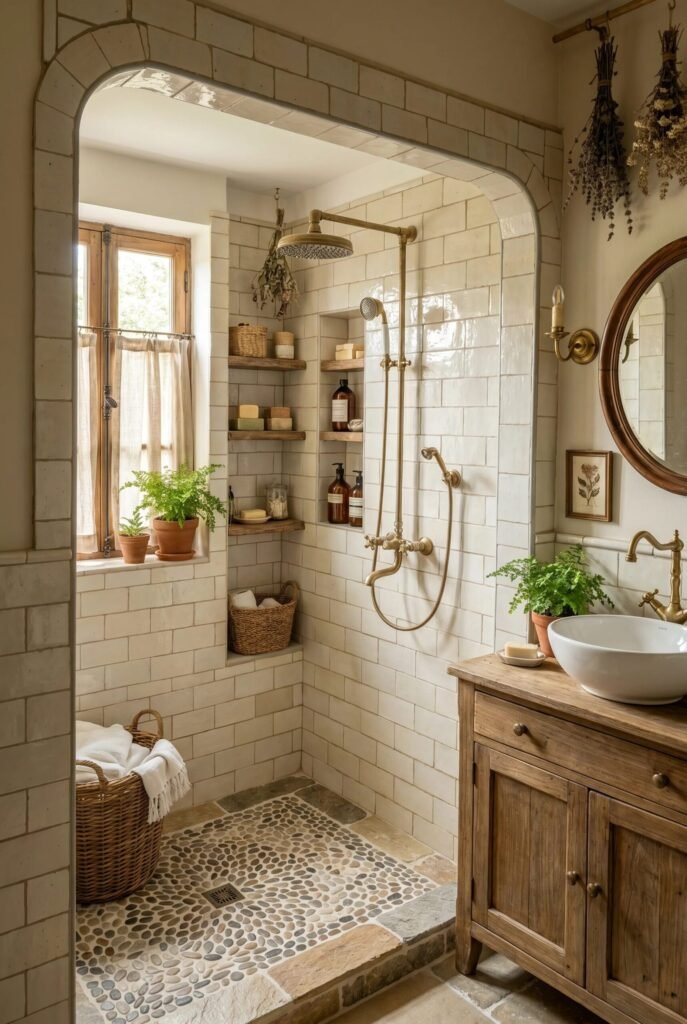
If cottage bathrooms had a signature move, architectural arches would probably be it. This shower nook demonstrates exactly why. The large tiled arch immediately creates a focal point while giving the room a sense of permanence and craftsmanship. It feels custom, thoughtful, and wonderfully timeless.
The layered textures play a huge role in the room’s success. Glossy subway tiles reflect light, pebble flooring adds organic variation, and weathered wood introduces warmth. Instead of relying on bold colors, the design uses material contrast to keep things interesting. We would argue that this approach ages much better than chasing whatever bathroom trend is currently having its fifteen minutes of fame.
For a similar look, prioritize built-in details whenever possible. Recessed shelves, framed openings, and natural materials instantly elevate a basic bathroom. Open shelving with woven baskets and simple pottery reinforces the cottage aesthetic without creating visual clutter. The charm comes from thoughtful layering, not from filling every empty corner. And if dried lavender accidentally makes its way into the design? We support that decision completely.
Romantic Cottage Bath By Candlelight
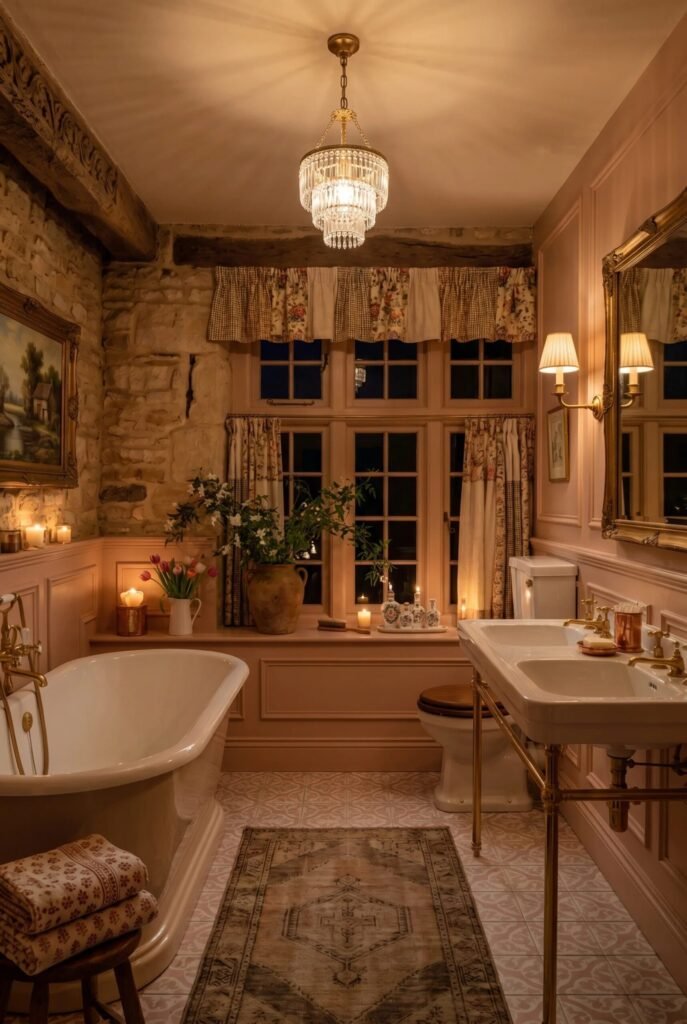
Some bathrooms are functional, and then some bathrooms make us want to cancel plans, pour a bath, and pretend we live in a countryside manor from a period drama. This space belongs firmly in the second category. The combination of blush-toned paneling, exposed stone walls, vintage brass fixtures, and soft candlelight creates a layered atmosphere that feels incredibly inviting. The design principle driving the room is contrast between refined and rustic elements. The crystal chandelier and elegant sink introduce polish, while the stone walls add authenticity and age.
The window treatment deserves a moment too. The floral café curtains soften the architecture and reinforce the cottage character without feeling overly themed. Good cottage design often feels collected rather than coordinated, and this room nails that balance beautifully.
To recreate this look, focus on warm lighting first. Lighting shapes mood faster than almost any decorative accessory. Pair vintage-inspired brass fixtures with soft paint colors, natural textures, and layered textiles. And yes, candles are doing some heavy lifting here, but honestly, we are not mad about it.
Coastal Cottage With Collected Charm
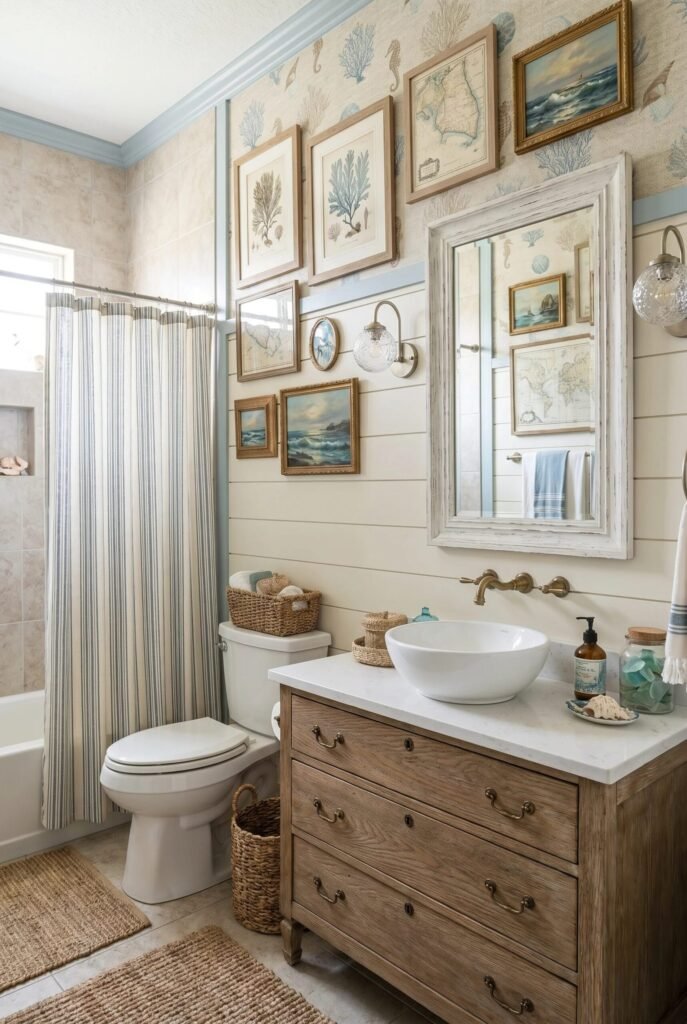
This bathroom feels like it belongs to someone who casually spends weekends hunting for antique maps and seashells at local markets. The coastal influence is clear, but thankfully it avoids the overly nautical clichés that can make a room feel like a themed restaurant. Instead, framed coral prints, vintage landscapes, and weathered wood finishes create a softer interpretation of seaside cottage style.
The strongest design principle here is visual storytelling. Every frame contributes to a larger narrative without overwhelming the space. Notice how the pale blue trim repeats throughout the room, connecting the wallpaper, artwork, and textiles. Repeating a color in multiple locations is one of the easiest ways to make a space feel intentional.
If you want a similar aesthetic, start building a gallery wall gradually rather than purchasing matching pieces all at once. Mixing frame sizes and artwork styles creates more personality. Add woven baskets, natural wood furniture, and soft blue accents to reinforce the coastal feeling. The result feels relaxed, curated, and very “we found this over years,” even if it all arrived last Tuesday.
Terracotta Tones With Vintage Personality
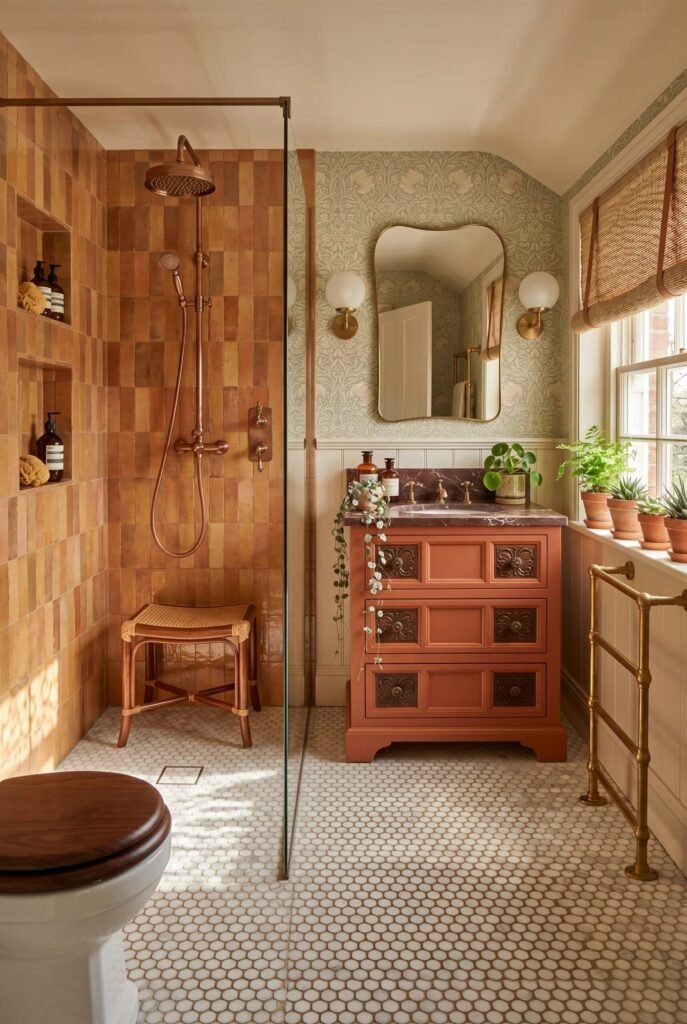
This bathroom proves that neutral is not the only route to timeless design. The warm terracotta shower tiles instantly create a focal point while bringing energy and depth to the room. Rather than relying on bright colors everywhere, the design concentrates warmth into one architectural feature. That approach keeps the room balanced while allowing the shower area to shine.
The vanity color choice is equally smart. The muted clay cabinetry mirrors the warmth of the tiles without becoming an exact match. Meanwhile, the patterned wallpaper introduces softness and prevents all those warm tones from feeling heavy. We love how the brass fixtures quietly tie everything together. The room works because every warm tone feels related rather than random.
For readers wanting to recreate this style, choose one dominant color family and explore several shades within it. Layering similar hues often feels richer than introducing five unrelated colors. Add plants, textured wallpaper, and vintage-inspired lighting for extra character. The final look feels cozy, elevated, and honestly kind of addictive.
Rustic Green Bathroom With Texture
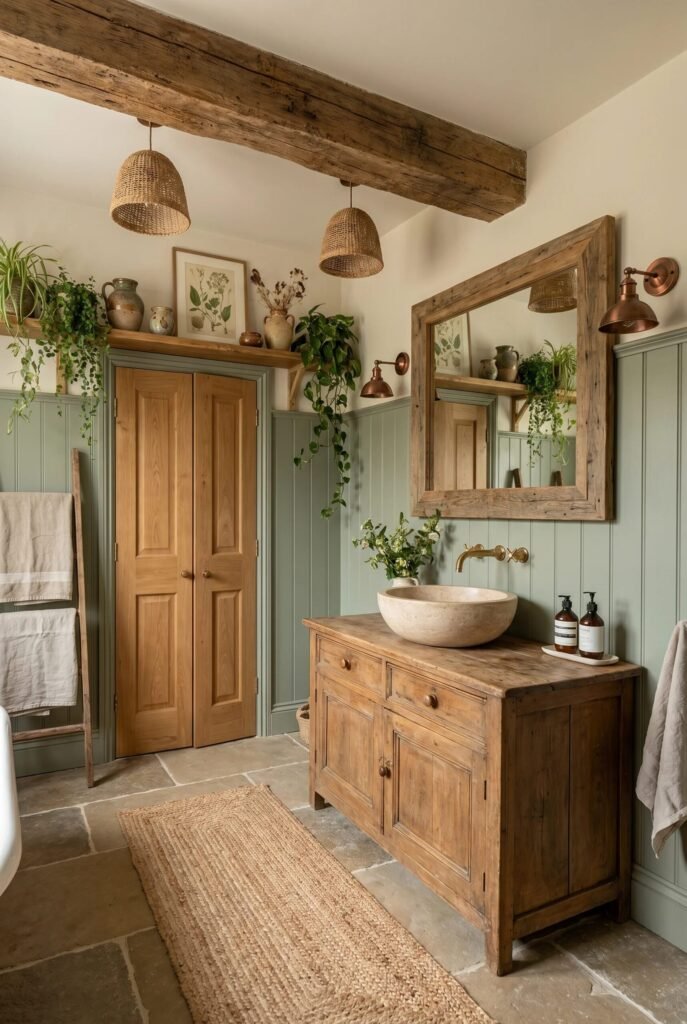
Sometimes the most successful cottage bathrooms are the ones that let natural materials do the talking. This space relies heavily on wood, stone, woven textures, and greenery, creating a room that feels grounded and effortlessly welcoming. The sage-green paneling acts as a calming backdrop while the reclaimed wood vanity and exposed beam add visual weight and authenticity.
One reason this room feels so balanced is the careful distribution of texture. Smooth stone flooring, woven pendants, trailing plants, and rustic wood surfaces all contribute something different. None of them dominate the room. When every surface offers the same texture, a space can feel surprisingly flat, even when the styling is beautiful.
If you plan to recreate this look, prioritize natural materials before decorative accessories. Invest in wood furniture, woven lighting, and quality textiles first. Plants can help soften harder architectural lines while adding movement. The overall goal is not perfection. It is creating a bathroom that feels like it has been quietly existing in the countryside for generations. Very demure. Very cottage-core.
Simple Cottage Style That Endures
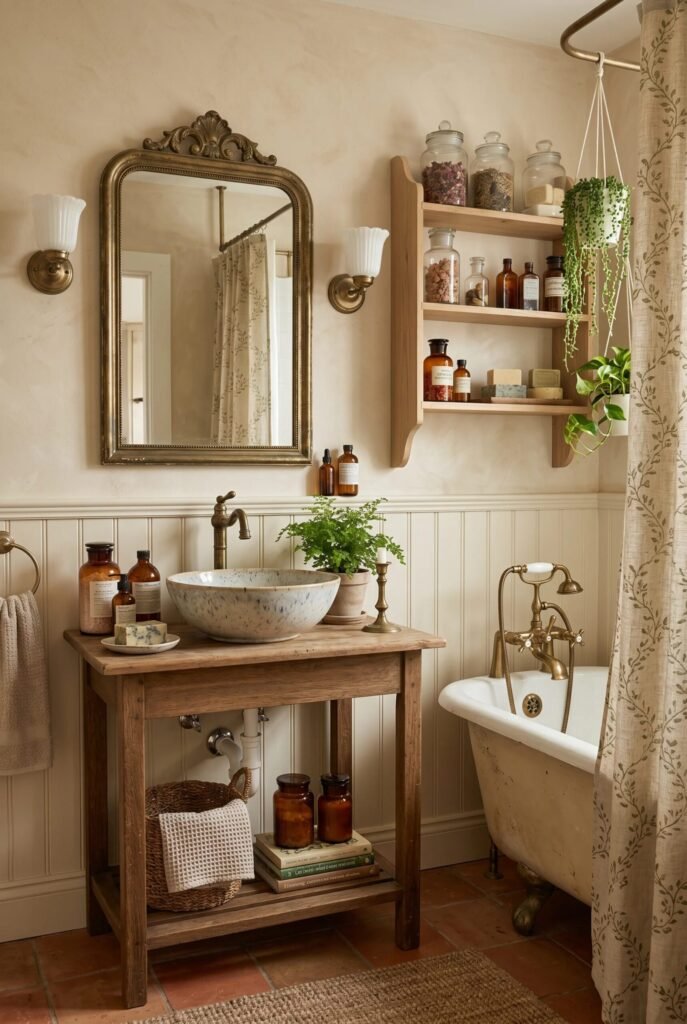
There is something refreshing about a bathroom that does not feel the need to perform for social media. This space embraces simplicity through warm wood furniture, creamy walls, vintage brass fixtures, and practical open shelving. Yet despite its restraint, it still feels rich with character. That is the beauty of timeless cottage design.
The design principle here revolves around functionality layered with charm. Open shelves provide storage while simultaneously becoming display space. Amber glass bottles, woven baskets, and small plants transform everyday necessities into decorative moments. The warm terracotta floor introduces subtle contrast and prevents the neutral palette from feeling washed out. Sometimes the smallest details are what make a room memorable.
For anyone recreating this look, resist the temptation to overcrowd every surface. A few carefully chosen accessories will often have more impact than dozens of decorative objects. Incorporate natural materials, vintage-inspired fixtures, and soft textiles wherever possible. The finished result feels calm, collected, and wonderfully unfussy. In a world obsessed with trends, that kind of quiet confidence is honestly pretty iconic.
Timeless Details Always Outlast Passing Trends
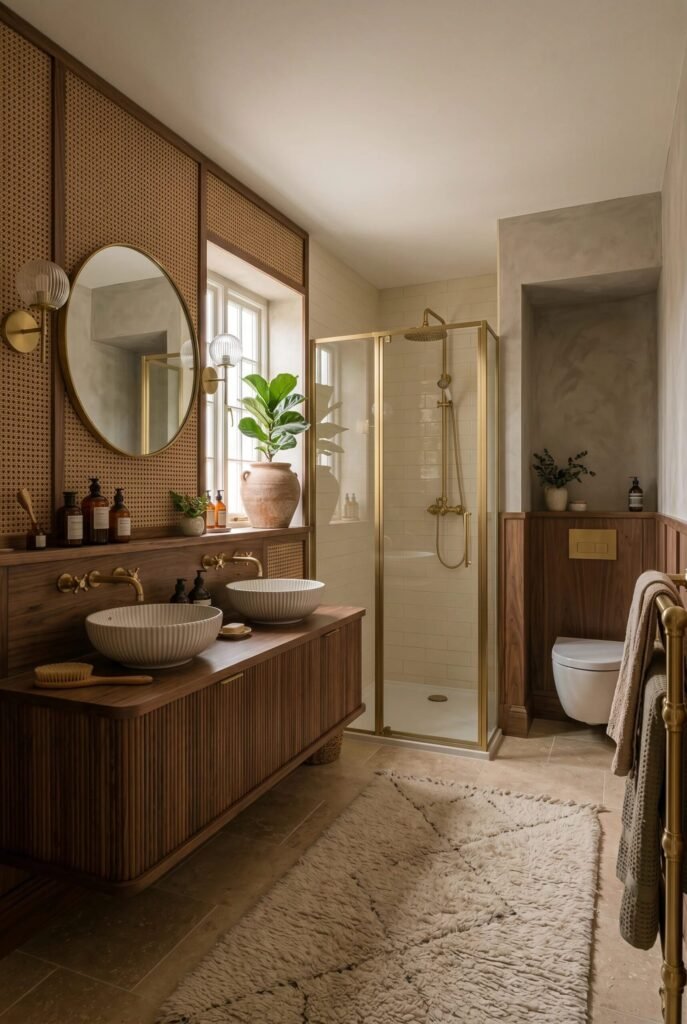
If there is one lesson these cottage bathroom ideas quietly teach us, it is that timeless design rarely comes from chasing the latest trend. Instead, it comes from layering meaningful materials, thoughtful textures, and pieces that feel authentic to the home. Natural stone, aged brass, vintage-inspired lighting, painted paneling, botanical elements, and handcrafted finishes continue showing up because they simply work.
What makes cottage bathrooms so appealing is their flexibility. A coastal gallery wall, a terracotta-tiled shower, a rustic wooden vanity, or an elegant clawfoot tub can all belong within the same design category while telling completely different stories. The goal is not to create a perfect showroom but a room that feels welcoming every single day.
As you plan your own cottage bathroom, focus on atmosphere before accessories. Build around warmth, texture, and character, then let the decorative details follow naturally. The most beautiful cottage spaces rarely feel overdesigned. They feel personal, collected, and effortlessly charming—the design equivalent of finding the perfect vintage treasure when you were not even looking for one.
 Steal Our Home Styling Secrets!