
Hydrangea Landscaping That Feels Lived-In, Layered, and Slightly Romantic
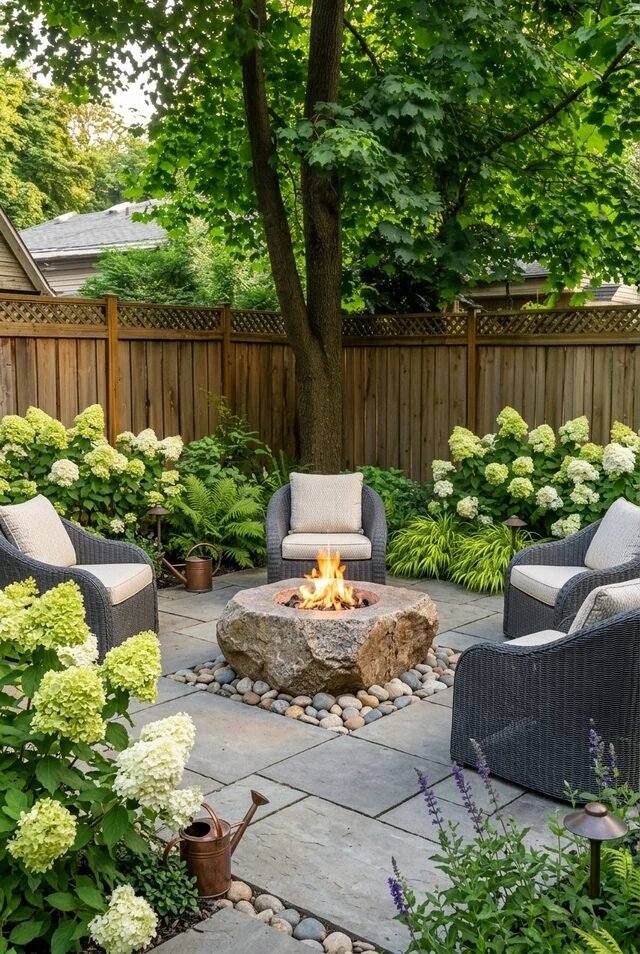
We don’t usually expect one plant to carry an entire landscape, but hydrangeas? Yeah… they understood the assignment and then casually overdelivered. From soft, cloud-like borders to bold, color-saturated garden moments, they bring that effortless charm that somehow feels both elevated and a little bit romantic. It’s giving “we didn’t try too hard,” but also… we absolutely did.
What makes hydrangeas so iconic in landscaping is their versatility. They can anchor structured, symmetrical layouts or soften more natural, free-flowing designs. That dual personality is what makes them such a go-to for creating spaces that feel both curated and livable.
As we’ve seen, it’s never just about the flowers. It’s about how they interact with stone, pathways, water features, and surrounding greenery. When everything works together, the result isn’t just a garden—it’s a whole mood. And honestly, we’re here for it.
Playful Hydrangea Beds With Unexpected Charm
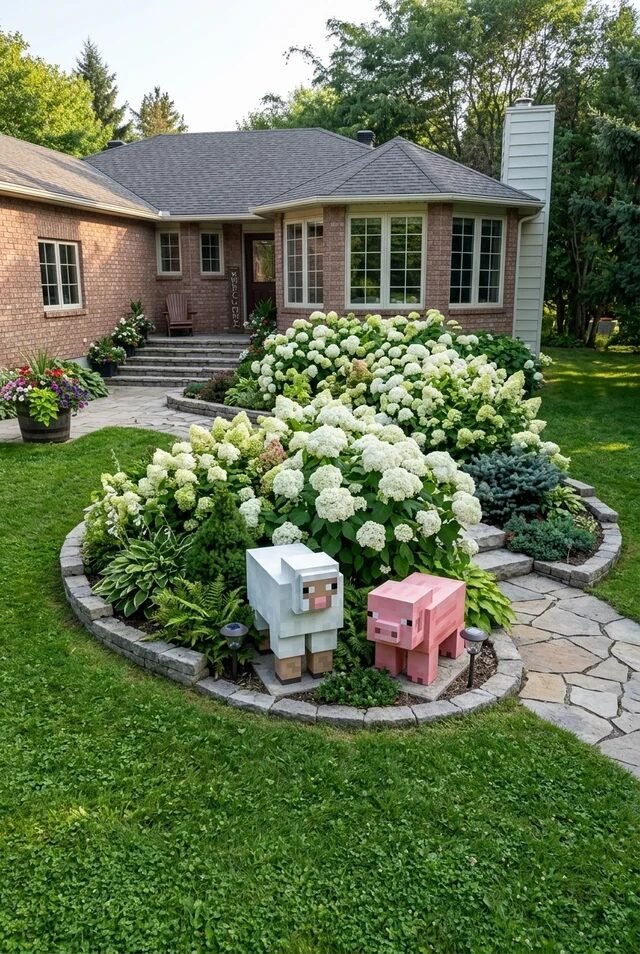
We’re starting strong with a front yard that clearly understood the assignment… and then added a little personality twist. The hydrangeas are lush, cloud-like, and intentionally overflowing the curved stone bed, creating that soft, romantic abundance. Then boom—those pixel-style animal sculptures show up and suddenly the whole space feels less “formal garden” and more “main character energy.” It’s unexpected, but it works because the greenery grounds everything.
From a design standpoint, this is a balance play between structure and whimsy. The stone edging creates a clean boundary, while the hydrangeas soften it with volume and movement. That contrast is what keeps the space from feeling chaotic instead of curated.
If we’re recreating this, keep your base timeless—neutral blooms, layered greenery, clean edging—then add one playful focal piece. Not ten. Just one. Otherwise, it goes from chic to “what is happening here” real quick.
Classic Hydrangea Pathway With Symmetry
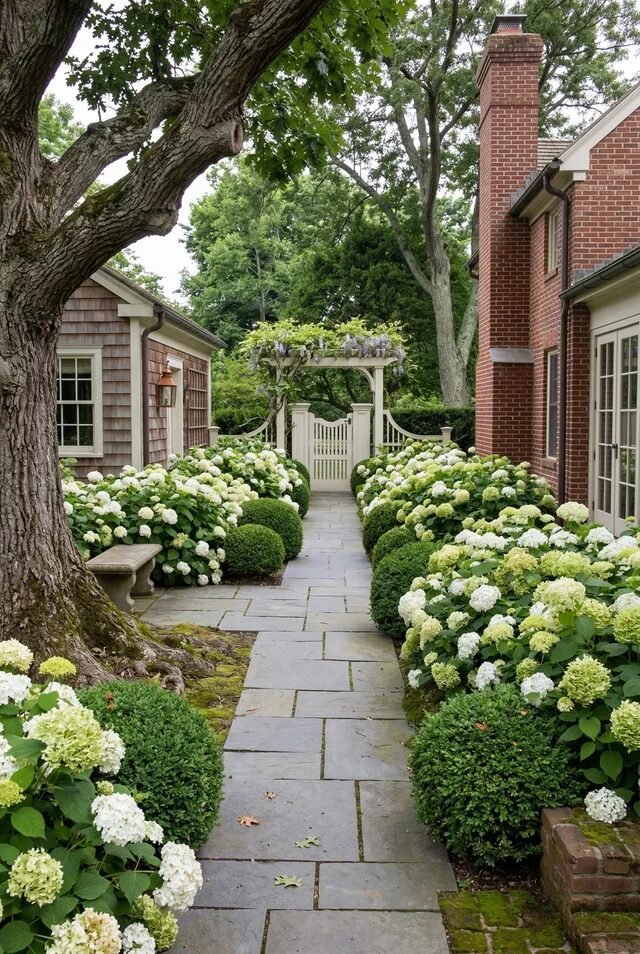
This one? She’s quiet luxury. No drama, no chaos—just pure, calm, slightly intimidating elegance. The hydrangeas are planted in mirrored rows along a stone pathway, guiding your eye straight toward that dreamy arbor moment. It’s giving “I drink tea outside and my life is together,” even if… we all know the truth.
The real magic here is symmetry. Repetition of rounded shrubs and hydrangea clusters creates rhythm, while the straight path anchors everything visually. When elements repeat consistently, the brain reads it as intentional and expensive—even if your budget says otherwise.
If you want this vibe, don’t overcomplicate it. Stick to one hydrangea color palette, keep spacing consistent, and trim regularly. The key is discipline (ugh, we know). Add a focal point like a gate or pergola at the end so the pathway actually leads somewhere—otherwise it just feels like a very pretty sidewalk to nowhere.
Colorful Hydrangea Borders With Cottage Energy
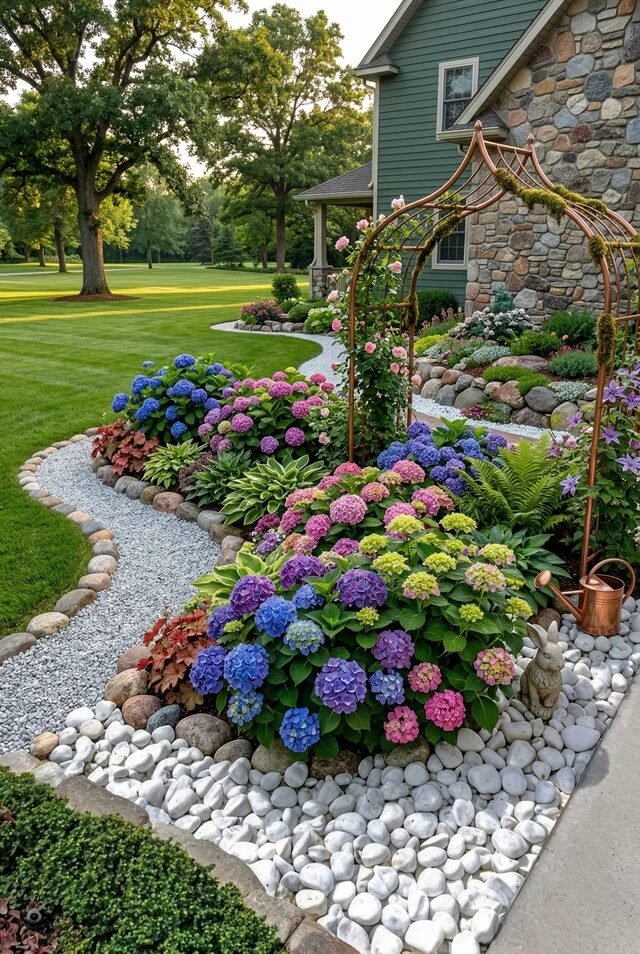
Okay but this one is for the girls who said “neutral is cute, but color is a personality.” The mix of blue, pink, and purple hydrangeas instantly brings that soft cottagecore energy, while the curved gravel border keeps everything feeling intentional instead of wild. It’s giving Pinterest board that you swore you’d recreate… and maybe actually will this time.
What makes this work is layered color control. Even though there are multiple hues, they’re all within the same tonal family, so nothing clashes. The white stones act like a visual breather, separating the vibrancy from the rest of the yard. Without that contrast, this could easily tip into visual overload.
If we’re trying this at home, start with two or three hydrangea colors max. Then anchor the bed with neutral elements like white pebbles or natural stone. And please—space things properly. Hydrangeas grow. Like, they really grow. Future you will be grateful.
Layered Hydrangea Landscaping With Height Balance
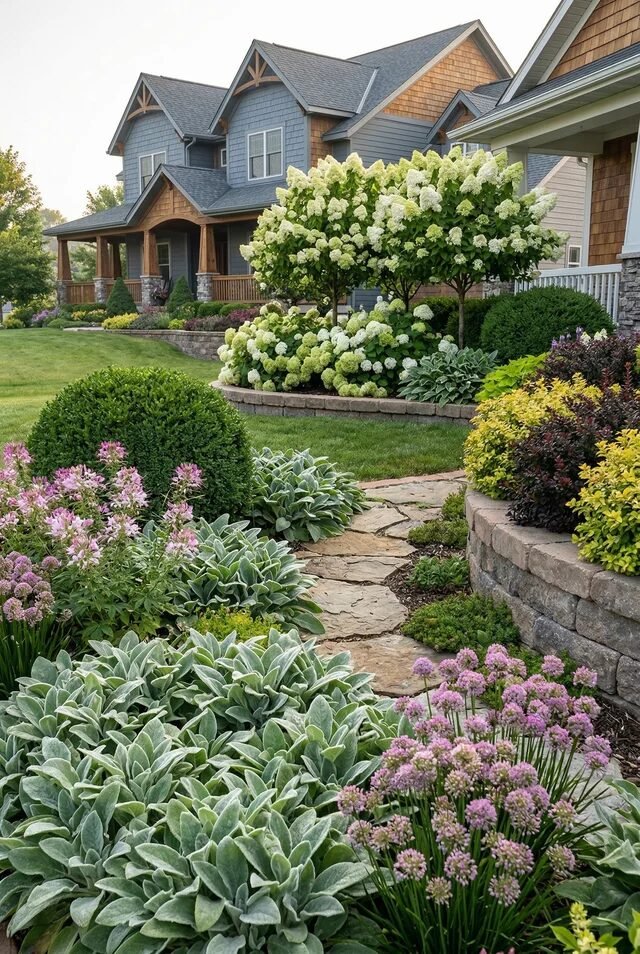
This landscape is basically the definition of “effortless,” even though we know it absolutely was not. The hydrangeas are layered with low shrubs, mid-height blooms, and taller statement plants, creating depth that feels natural and slightly editorial. It’s that “I didn’t try, but actually I did” aesthetic we all respect.
The key principle here is vertical layering. Different plant heights guide the eye gradually upward, while the stone pathway cuts through to keep everything grounded. Good landscaping isn’t flat—it moves, and this setup understands that perfectly.
If we’re recreating this, think in tiers. Start with ground cover, then build up with medium plants like hydrangeas, and finish with taller shrubs or small trees. Also, mix textures—soft leaves, structured bushes, maybe something silvery. That contrast is what gives it that polished, designer feel instead of looking like a very enthusiastic garden center haul.
Curved Hydrangea Beds With Modern Contrast
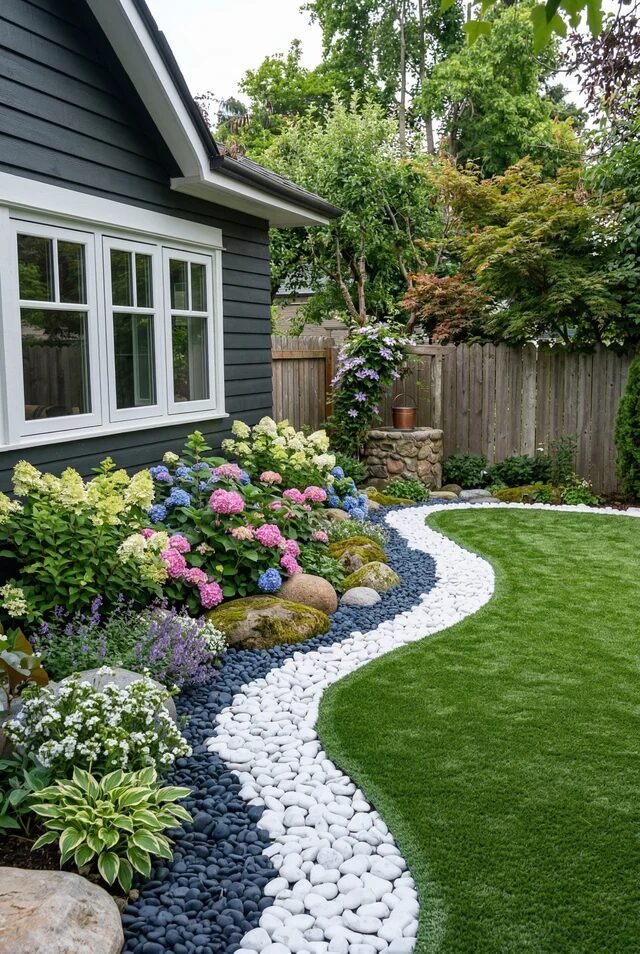
This one feels a little more modern, a little more intentional, and honestly… a little cooler. The curved bed lined with black and white stones creates this sleek visual wave, while the hydrangeas soften the edges so it doesn’t feel too harsh. It’s minimal, but not boring—which is a fine line, and this design walks it beautifully.
Contrast is doing all the heavy lifting here. Dark stones against white pebbles, structured lawn edges against loose blooms. When you pair opposites like this, everything feels sharper and more elevated without adding more stuff.
If you’re into this look, commit to the palette. Don’t randomly throw in five different stone colors halfway through. Keep it tight—black, white, green, done. And make your curves intentional, not wobbly. Clean lines (even curved ones) are what make this feel modern instead of messy.
Structured Hydrangea Foundation With Clean Layers
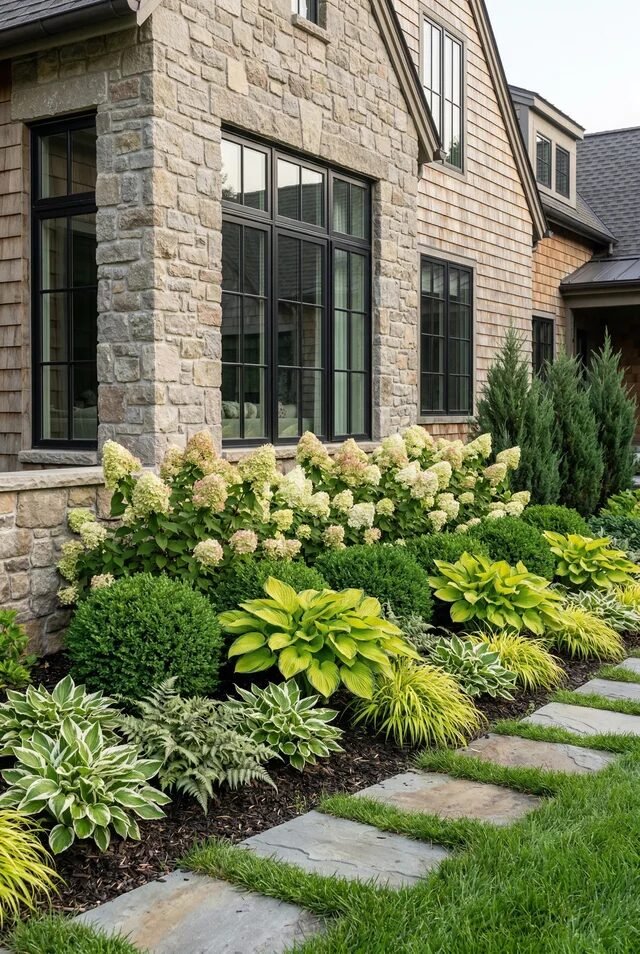
This one is giving “we have our life together”… even if our group chat says otherwise. The hydrangeas are planted right along the house foundation, backed by structured stone walls and clean black window frames. Everything feels crisp, intentional, and just slightly intimidating in a good way.
What’s really happening here is disciplined layering. Rounded boxwoods sit low and tight, hostas add that soft leafy volume, and hydrangeas rise just enough to frame the windows without blocking them. This kind of height control is what keeps foundation planting looking polished instead of overgrown chaos.
If we’re recreating this, think in rows: low, medium, then tall. Keep your spacing consistent and resist the urge to “just add one more plant.” Also, match your plant tones with your exterior materials—warm stone pairs beautifully with creamy hydrangeas. It’s subtle, but it elevates everything without trying too hard.
Hydrangea Fountain Corner With Romantic Layers
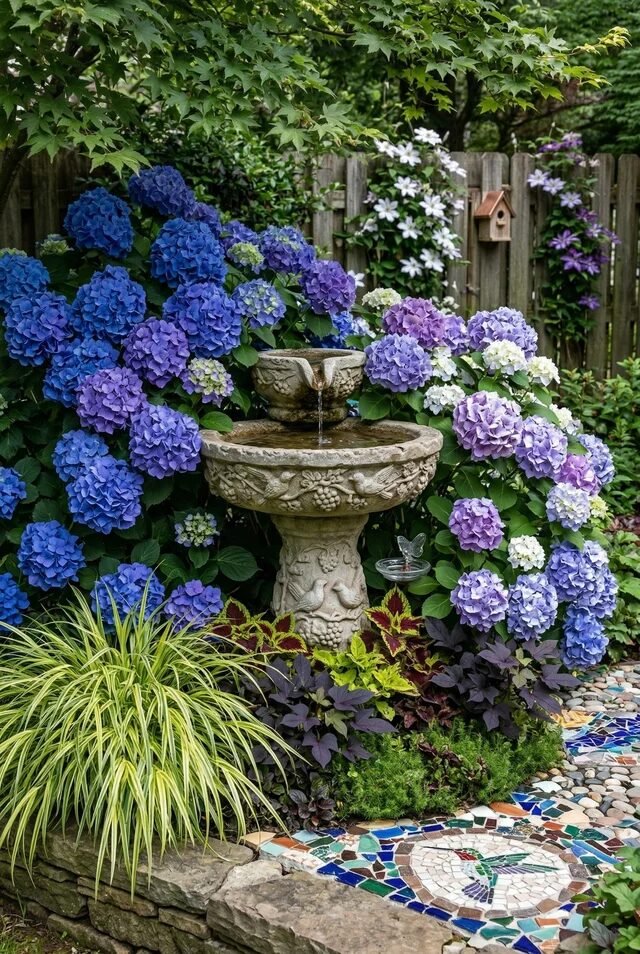
We’re not saying this is a fairytale… but it’s dangerously close. The hydrangeas wrap around a classic stone fountain like they’ve been there forever, creating this lush, almost secret-garden moment. Add in the mosaic detail underfoot and suddenly we’re fully in our “soft life era.”
The design win here is focal layering. The fountain anchors the space, while hydrangeas create a soft, rounded backdrop that frames it without competing. Meanwhile, darker foliage plants at the base add depth. When you layer light, medium, and dark tones together, everything feels richer and more dimensional.
If you want this vibe, start with your focal piece first—fountain, birdbath, whatever feels like you. Then build outward with hydrangeas in complementary tones. Don’t skip the base layer plants though, because that’s what makes it feel finished instead of floating awkwardly in space.
Natural Hydrangea Pond With Organic Flow
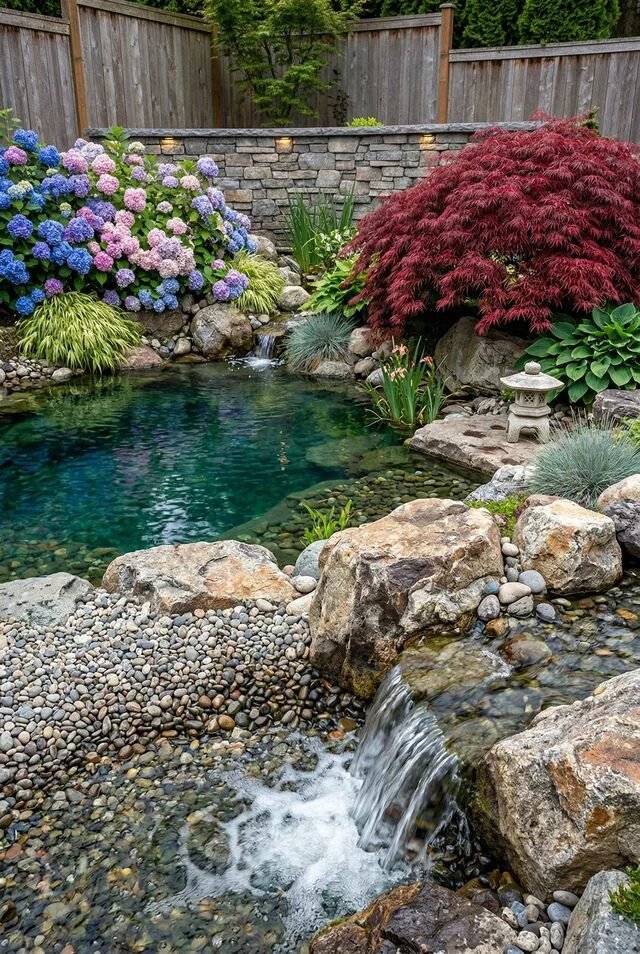
Okay this one? Instant nervous system reset. The hydrangeas sit casually near the water’s edge, blending into rocks, grasses, and that dreamy little waterfall moment. It doesn’t feel designed—it feels discovered, which is honestly the goal here.
The key principle is controlled randomness. Rocks are placed irregularly, plants spill slightly over edges, and nothing feels too perfect. That imperfection is what creates a natural, calming landscape instead of something that looks like a showroom display.
If we’re recreating this, avoid symmetry. Seriously. Mix stone sizes, vary plant spacing, and let hydrangeas lean a little. Also, choose colors that harmonize with water—soft blues, purples, and greens work best. And please, don’t over-style it. The magic is in letting things feel a tiny bit undone (on purpose, of course).
Curved Hydrangea Borders With Classic Charm
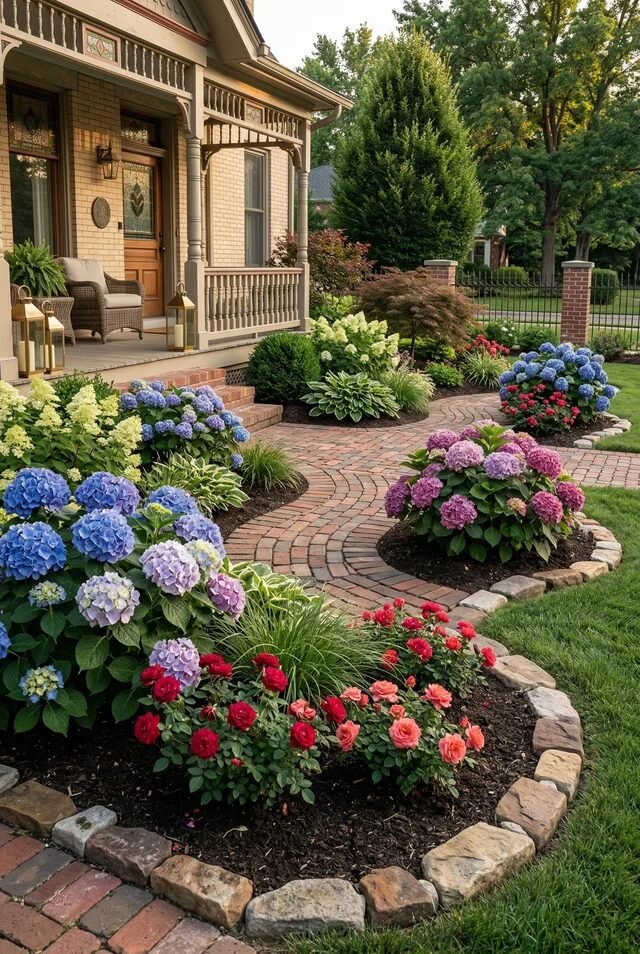
This is the kind of front yard that makes people slow down while driving past. The curved brick pathway, the layered flower beds, the hydrangeas casually showing off—it’s all very “we host brunch now,” and honestly, we respect it.
What makes this layout work is flow. The curved lines guide your eye naturally through the space, while repeated clusters of hydrangeas create visual consistency. When your eye can move smoothly without getting stuck, the whole yard feels more cohesive and expensive.
If you want to recreate this, commit to curves early. Don’t freehand it halfway through and hope for the best—plan your lines first. Then repeat your plant groupings in small clusters instead of scattering everything randomly. It’s the difference between “garden” and “intentional landscape moment.”
Classic Front Porch Hydrangea Garden Layers
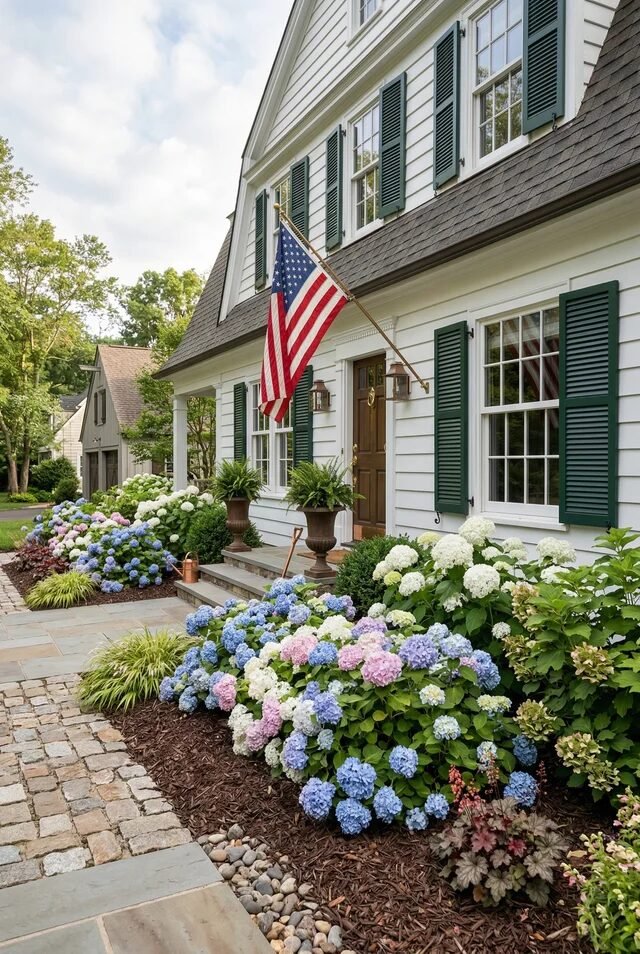
This one is pure East Coast energy—in the best way. Hydrangeas line the walkway in soft blues, pinks, and whites, gently framing the path without stealing attention from the house. It’s timeless, slightly preppy, and honestly never goes out of style.
The design strength here is repetition with variation. Same plant type, different shades. It keeps things cohesive but not boring. When you repeat a plant but vary the color slightly, it creates rhythm without feeling too matchy-matchy.
If we’re going for this look, stick to a tight color palette—cool tones work beautifully here. Layer in mulch for contrast and define your edges cleanly. And one small note: keep your hydrangeas trimmed just enough to maintain shape. We’re aiming for “effortless elegance,” not “the plants have taken over and we’ve accepted our fate.”
Designing Hydrangea Landscapes That Actually Feel Lived-In
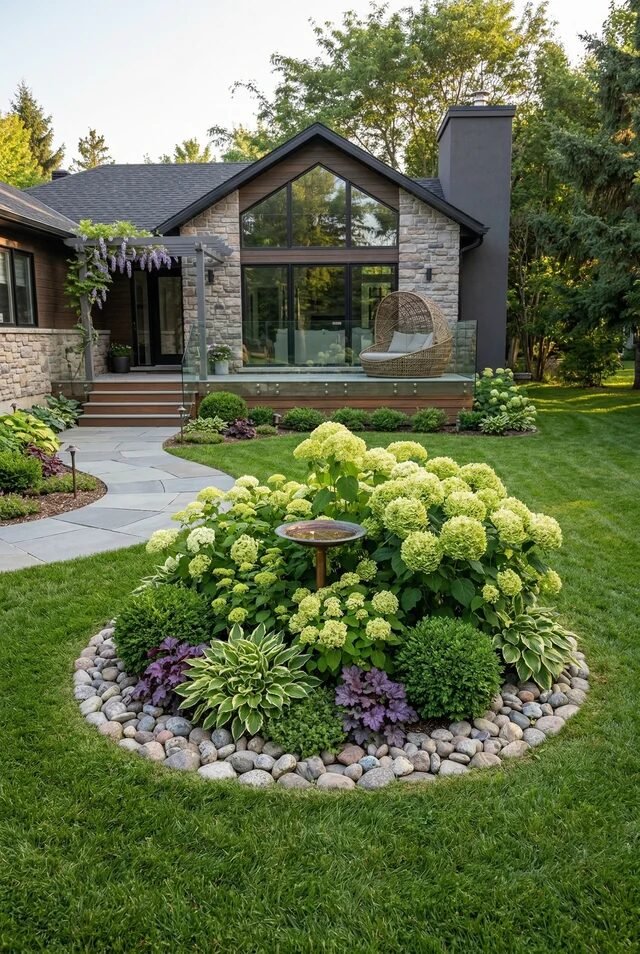
Here’s the thing no one really says out loud: the best gardens aren’t the ones that look perfect—they’re the ones that feel intentional and lived-in. Hydrangeas help us hit that sweet spot, whether we’re layering them along a clean foundation bed or letting them spill slightly into a more natural, organic setting. It’s polished, but not trying too hard. We love that.
Across all these ideas, a few patterns quietly show up. Balance between structure and softness. Repetition without boredom. Contrast that doesn’t feel aggressive. These are the small design decisions that make a space feel thoughtfully put together instead of randomly planted.
If we’re taking anything from this, it’s that hydrangea landscaping isn’t about copying a look—it’s about understanding the vibe and making it yours. Start simple, trust your eye, and don’t overdo it. The goal isn’t perfection… it’s that effortless, “wait, why does this look so good?” energy.
 Steal Our Home Styling Secrets!