
Farmhouse Front Yards, But Make Them Feel Lived-In and Slightly Addictive
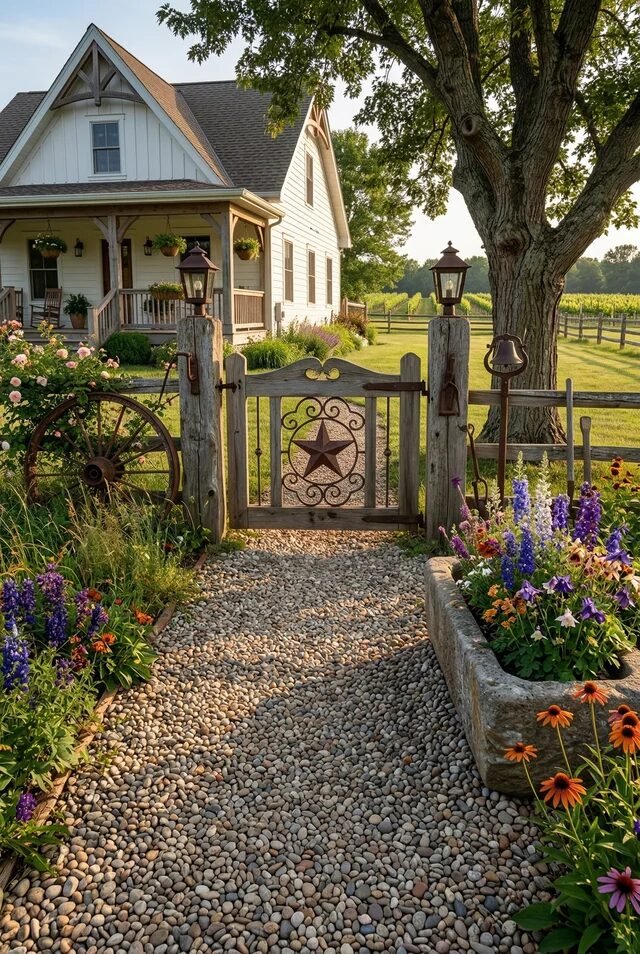
We all love a front yard that doesn’t just sit there looking pretty—but actually feels like something. Farmhouse landscaping hits different because it blends structure with softness in a way that feels welcoming, not staged. It’s less “don’t touch anything” and more “come sit on the porch for a minute.” And honestly, that’s the vibe we’re chasing.
Across these ideas, there’s a clear pattern: curved pathways, layered planting, and focal points that quietly steal attention. Nothing is overly perfect, but everything feels considered. That balance between intentional design and relaxed execution is what makes farmhouse landscaping so addictive. It’s giving effort… without looking like effort.
We’re also seeing how small details—like a mailbox garden or a vintage wheelbarrow—can shift the entire mood. It’s not about doing the most, it’s about doing the right things. And yes, your front yard deserves that main character energy too.
Cozy Mailbox Garden That Steals Attention
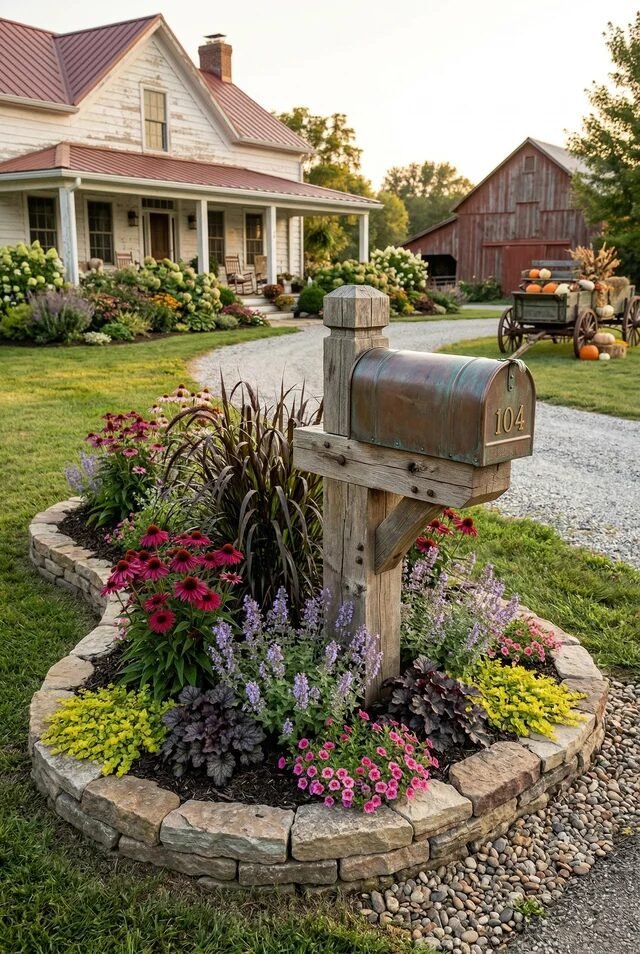
There’s something low-key iconic about a farmhouse mailbox moment, and this one? She understood the assignment. The circular stone border instantly creates a focal point, while the layered planting (tall grasses, mid-height blooms, and ground cover) gives that “effortlessly lush” vibe we all pretend just happens naturally. It’s actually very intentional—classic tiered composition doing its thing.
What makes this design hit is the contrast between structure and softness. The hardscape (stone edging + wood post) anchors everything, while the flowers bring movement and color. It’s giving balance, not chaos. The key principle here is controlled layering—nothing feels random, even though it looks relaxed.
If we’re recreating this, don’t just throw flowers around and hope for the best (we’ve all been there). Stick to a color palette and vary heights deliberately. Bonus tip: repeat at least two plant types to keep it cohesive. And yes, your mailbox deserves a glow-up too.
Natural Stone Pathway With Organic Flow
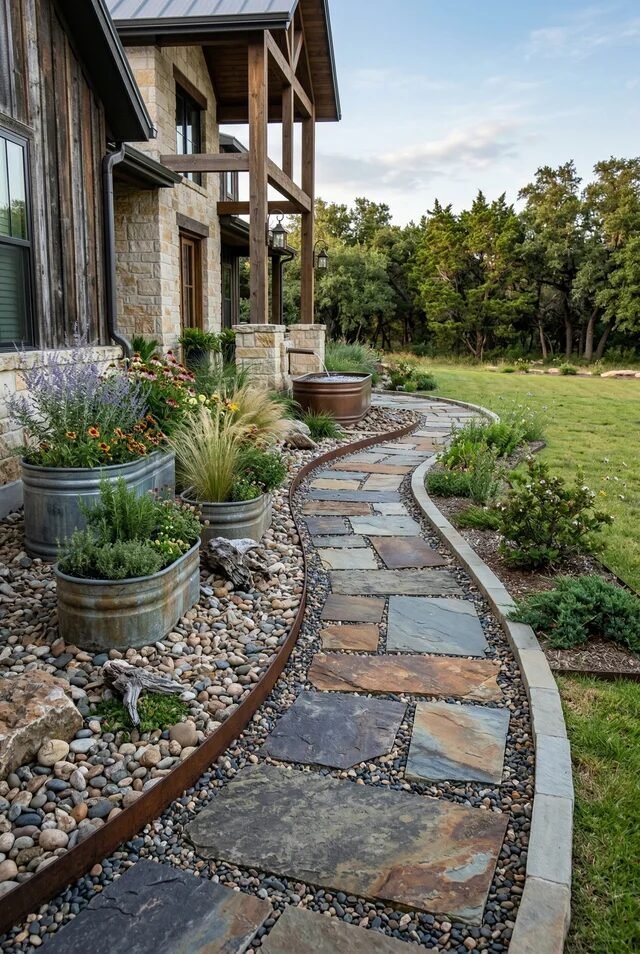
This pathway is basically saying, “We don’t do straight lines here,” and honestly… we respect it. The gentle curve pulls you through the space in a way that feels calm and intentional, not stiff. It’s a subtle trick, but curved pathways instantly make a yard feel more expansive and a little more… Pinterest-core.
Design-wise, this is all about flow and texture contrast. You’ve got rough stone slabs, smooth pebbles, and soft greenery all vibing together without fighting for attention. The magic is in mixing materials while keeping the palette earthy and grounded.
If you want this look, don’t overthink perfection. Slightly irregular stone placement actually works better—it feels organic. Just keep spacing consistent enough so it’s walkable (we’re designing, not creating an obstacle course). Add low-maintenance plants along the edges, and suddenly your front yard feels like a slow Sunday morning.
Rustic Address Sign With Garden Layers
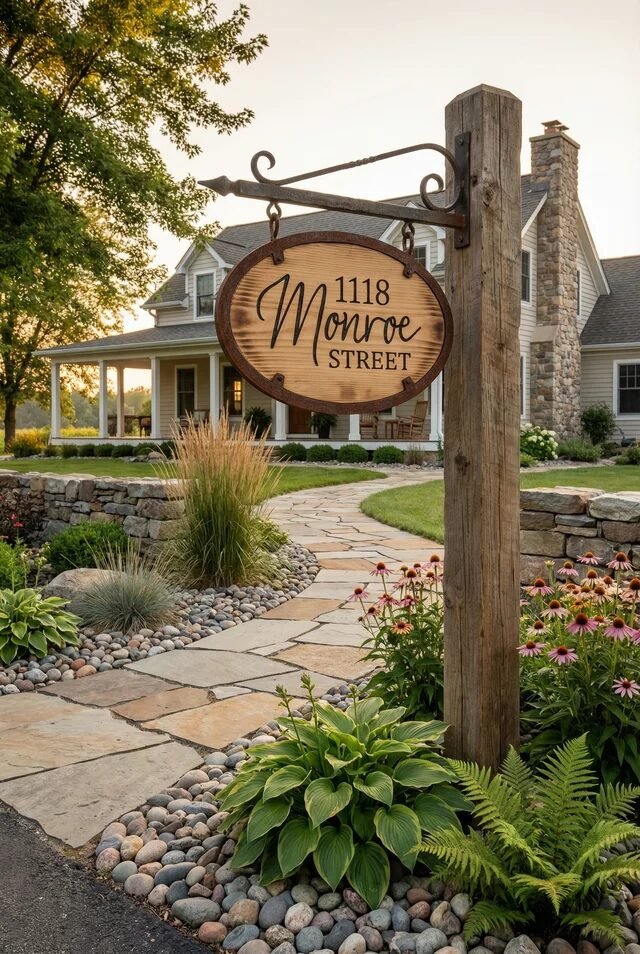
Custom address signs are having a moment, and this one is doing it right. The wooden post paired with that soft, curved garden bed feels welcoming without trying too hard. It’s not screaming for attention—but it still gets it. Quiet luxury, but make it farmhouse.
What really works here is repetition and rhythm. The curve of the path mirrors the curve of the planting bed, which creates visual harmony (yes, your yard can be that coordinated). The mix of hostas, grasses, and florals adds texture without overwhelming the sign. The sign stays the star because everything else knows its role.
If we’re copying this vibe, keep the sign readable and the planting slightly lower around it—don’t let your hydrangeas block your house number, please. Stick to a soft green base with a few pops of color. It’s giving curated, not chaotic… and we love that for us.
Romantic Birdbath Surrounded By Blooms
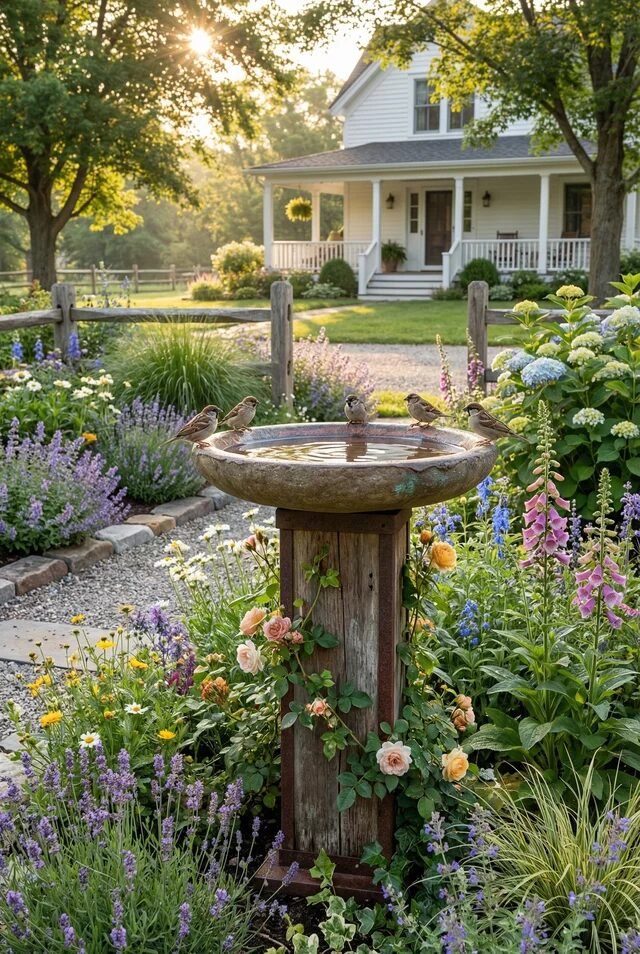
Okay but tell us this doesn’t look like a scene from a period drama. The birdbath as a centerpiece is such a soft flex—it adds height, charm, and a little life (literally, hi birds). It’s giving storybook energy without being overly styled.
The design principle here is all about focal layering. The birdbath anchors the center, while the surrounding plants create a soft halo effect. Different bloom heights and textures keep your eye moving, but always back to the center. That circular visual pull is what makes this feel cohesive instead of cluttered.
If you want to recreate this, think in rings. Start with your focal point, then build outward with medium and low plants. Mix airy florals (like lavender) with fuller blooms for depth. And yes, keep it a little imperfect—it’s a garden, not a showroom. Let it breathe.
Layered Porch Landscaping With Warm Lighting
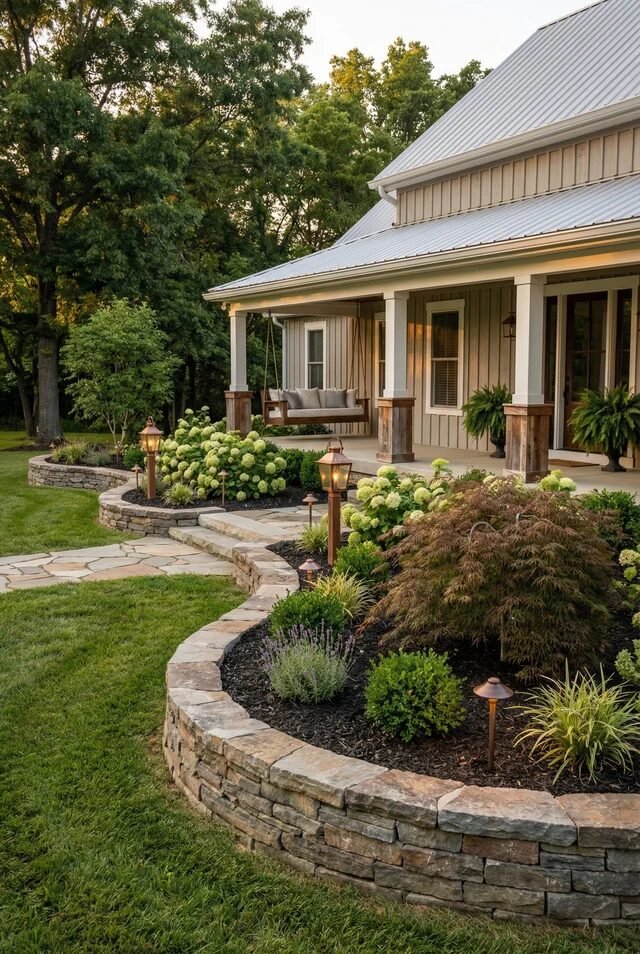
This is where landscaping meets main character energy. The layered stone border creates depth, while the warm lighting makes everything feel like golden hour… even when it’s not. It’s cozy, it’s inviting, and it low-key makes your house look expensive.
The secret sauce here is tiered elevation. Raised beds naturally draw the eye upward toward the porch, creating a smooth visual transition. Then you add lighting, and suddenly the whole space feels intentional and lived-in. Lighting isn’t an afterthought here—it’s part of the design language.
If we’re recreating this, focus on structure first. Build your layers with stone or edging, then add shrubs as your base. Keep the palette mostly green with a few soft blooms for contrast. And please—invest in warm lights, not those harsh white ones. We’re going for cozy farmhouse, not parking lot chic.
Playful Farmhouse Lawn Styling With Personality
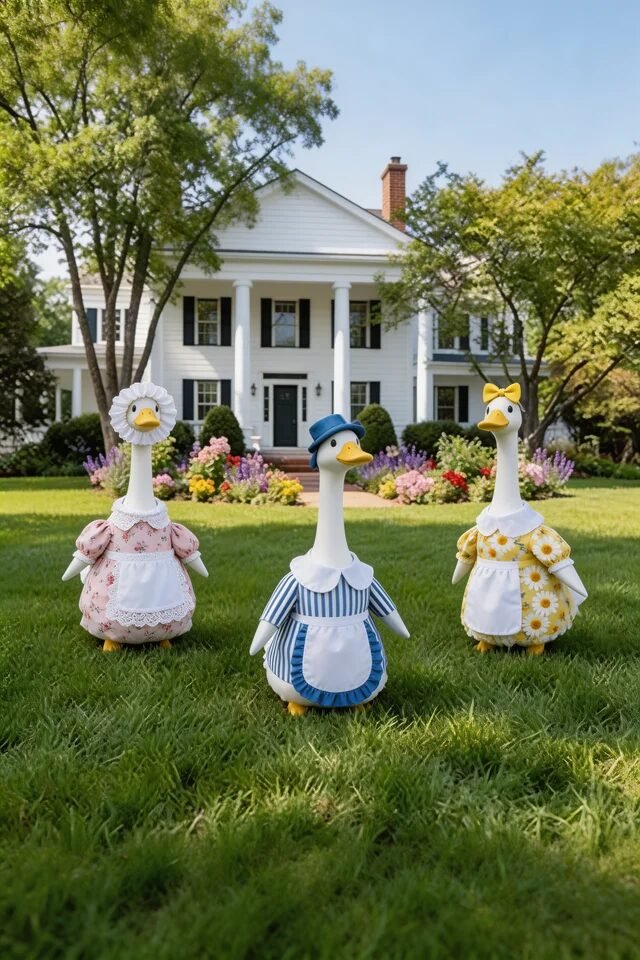
Okay, let’s just say it—this is not your minimalist era, and honestly? We’re kind of into it. The styled geese instantly turn a simple lawn into something memorable. It’s playful, slightly unexpected, and somehow still fits the farmhouse aesthetic without feeling kitschy (which is a very fine line, by the way).
What makes this work is contrast in tone. The house and landscaping stay classic and structured, while the decor adds personality and softness. That balance keeps the look intentional instead of chaotic or overly themed. It’s giving “we have taste… but we also have a sense of humor.”
If we’re recreating this, the key is restraint. Pick one quirky focal element and let it shine—don’t crowd it with too many competing pieces. Keep your surrounding landscaping clean and slightly symmetrical so the decor feels styled, not random. A little personality goes a long way… we’re not building a theme park.
Productive Front Yard Kitchen Garden Layout
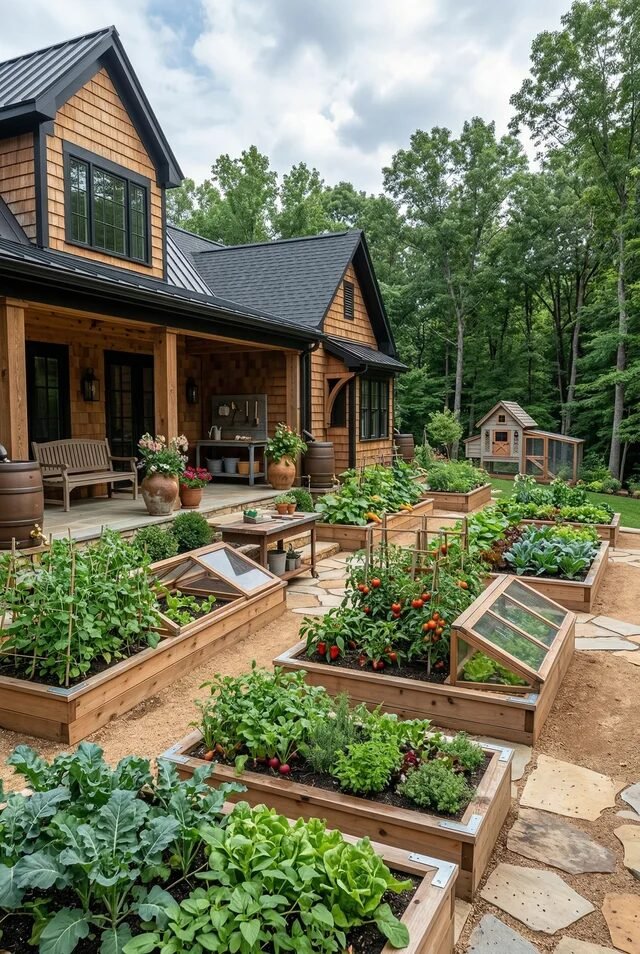
Okay, this is where aesthetic meets “we actually grow things.” A front yard kitchen garden is low-key a power move—it says we care about design and we can harvest our own salad. The raised beds keep everything looking structured instead of chaotic jungle-core.
What’s working here is grid organization paired with natural textures. The clean lines of the beds contrast beautifully with the softness of leafy greens and herbs. It’s the balance between productivity and visual order that makes this feel intentional, not messy.
If you’re trying this, start small unless you’re ready to become emotionally attached to your tomatoes. Keep pathways wide enough to move comfortably, and group plants by height so nothing gets overshadowed. And yes, watering becomes your new personality trait—just embrace it.
Rustic Fence Line With Wildflower Layers
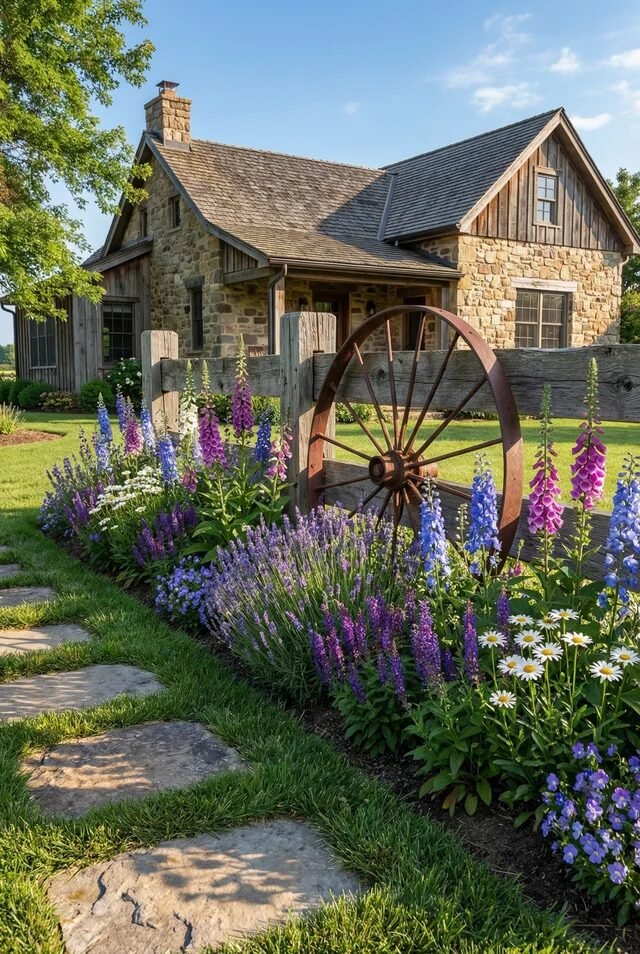
This is giving “effortless countryside,” but we all know there’s a little strategy behind the magic. The fence acts as a natural backdrop, while the layered wildflowers soften the structure and make everything feel lived-in—in a good way, not neglected.
The key design move here is vertical layering against a boundary. Taller blooms like foxgloves and delphiniums sit near the fence, while shorter plants fill the front. That height graduation keeps everything visible and creates that lush, full look without overcrowding.
If we’re recreating this, mix structured repetition with a slightly wild planting style. Don’t make it too perfect—that ruins the charm. Add one rustic element like a wagon wheel or old wood detail for that farmhouse touch. Suddenly your fence isn’t just a fence… it’s a whole moment.
Vintage Wheelbarrow Garden With Character
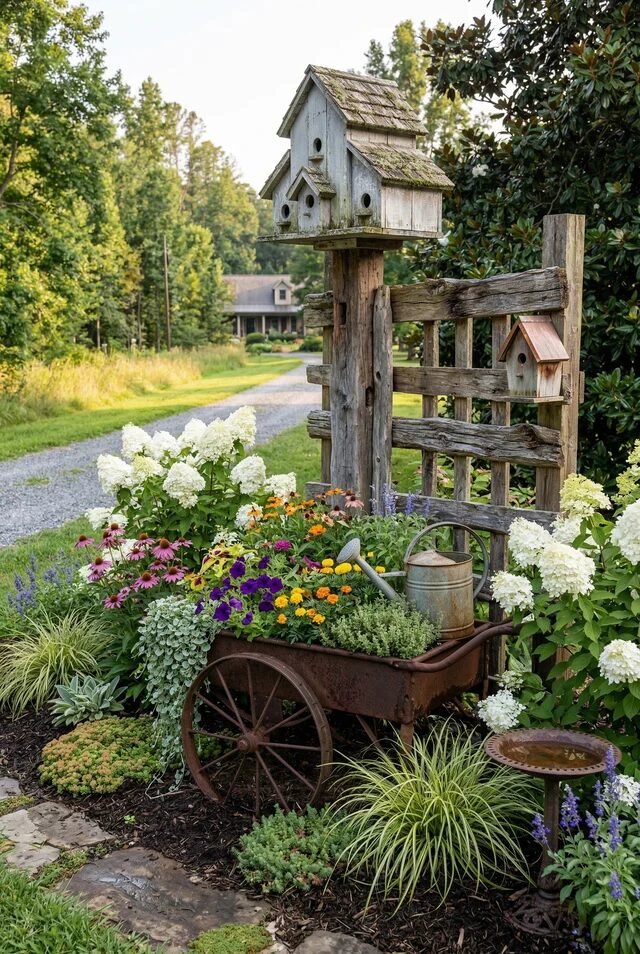
Let’s talk about this wheelbarrow situation because… it’s doing a lot, in the best way. Repurposing it as a planter instantly adds character and that slightly nostalgic, “collected over time” feel. It’s not brand new, and that’s exactly why it works.
The design principle here leans into storytelling. You’re not just planting flowers—you’re creating a vignette. The mix of textures (aged metal, soft blooms, wood accents) keeps the eye engaged. This works because it feels layered and personal, not staged or overly polished.
If you want this vibe, hunt for something with a little wear. New items can feel forced unless you distress them. Fill it with a mix of trailing and upright plants for dimension. And don’t overfill—leave a little breathing room so the piece itself still shines.
Clean Foundation Planting With Soft Layers
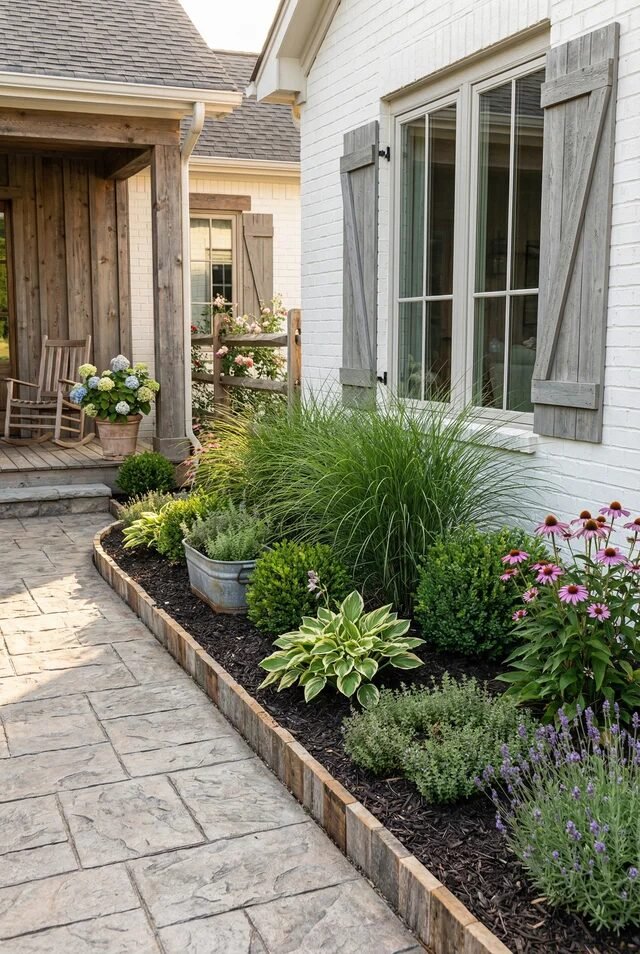
This is for the girls who want their yard to look put-together without screaming for attention. It’s clean, it’s balanced, and it quietly does its job. No drama, just good decisions. Honestly, we love a low-maintenance queen.
The structure here is all about layering from the house outward. Taller grasses and shrubs sit near the wall, medium plants fill the middle, and low edging softens the border. This creates depth while keeping everything visually calm and organized.
If we’re recreating this, stick to a tight color palette—mostly greens with a few soft blooms. Repetition is your best friend here. Use the same shrubs throughout to create rhythm. And keep spacing intentional. Overcrowding ruins the clean look faster than anything.
Your Farmhouse Front Yard Glow-Up Starts With Thoughtful Layers
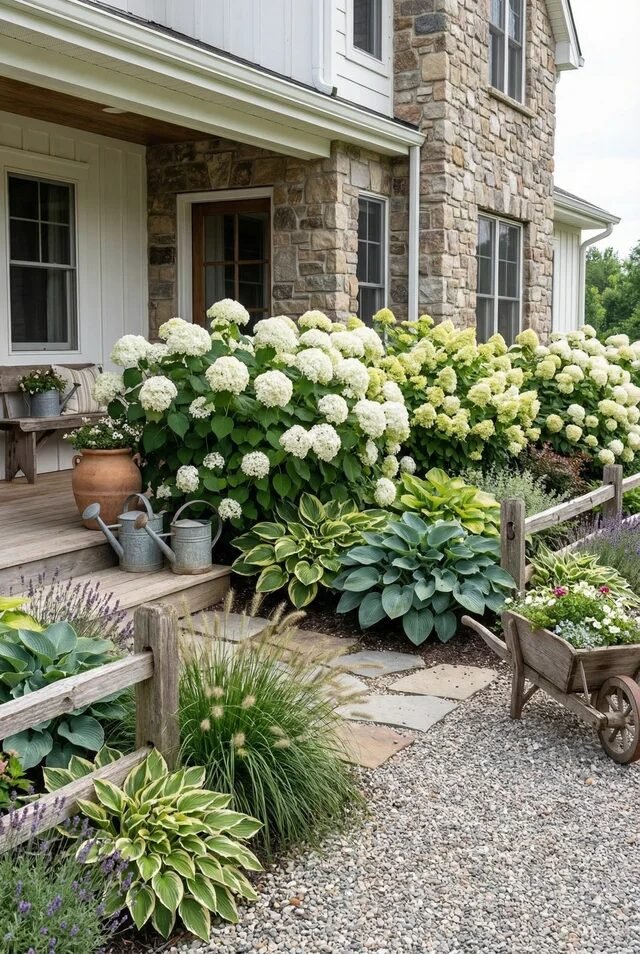
If there’s one takeaway here, it’s that good landscaping is less about budget and more about strategy. You don’t need a massive yard or a full garden overhaul to make things feel elevated. What you do need is a clear plan—where the eye goes, how elements connect, and how everything flows together.
From symmetrical layouts to organic pathways, each idea plays with structure in a slightly different way. Some lean polished, others feel more relaxed, but they all follow the same core rules. Layering, repetition, and focal points are doing most of the heavy lifting here—and they always will. Once you see it, you can’t unsee it.
So if we’re starting somewhere, start small. One corner, one feature, one intentional upgrade. Then build from there. Because let’s be real—once your front yard starts looking this good, stopping isn’t really an option.
 Steal Our Home Styling Secrets!