
Cat Walls Are Proof That Pet Furniture Doesn’t Have to Look Ugly
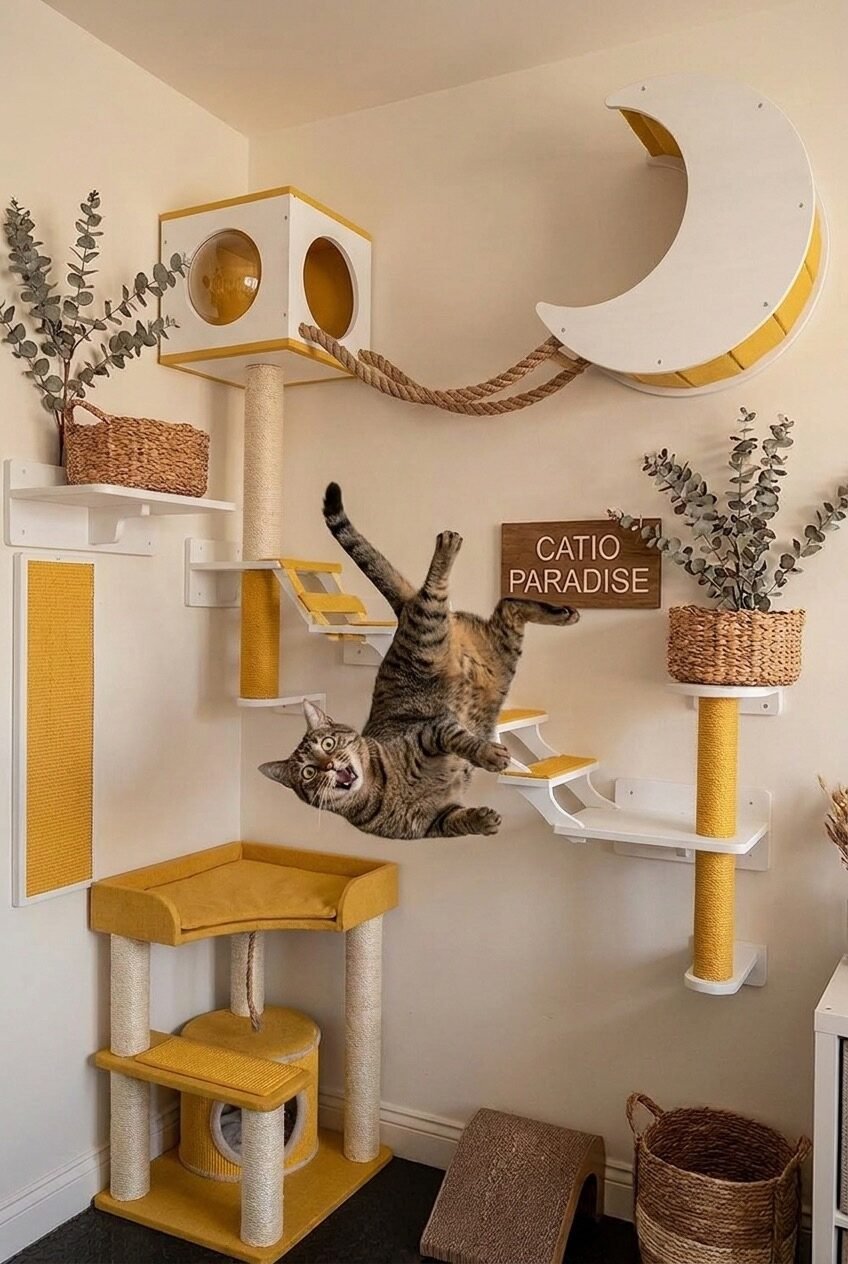
Cats climb because height means safety to them, plain and simple. A cat perched above eye level can see the whole room at once, which is exactly why ours ignore the floor pillow we bought and make a beeline for the bookshelf every single time.
The rooms below take that instinct seriously. Instead of one scratching post shoved into a corner, entire walls become bridges, ledges, and little hideaways, turning an ordinary house into something closer to a private climbing gym for one very small, very opinionated animal.
What follows isn’t just eye candy, though it is genuinely fun to look at. Each wall teaches something about spacing, material, or flow that you can borrow for your own space, whether you’ve got a spare room or one bare wall in a studio apartment.
Dark Wood Shelves Meet Jungle Vines
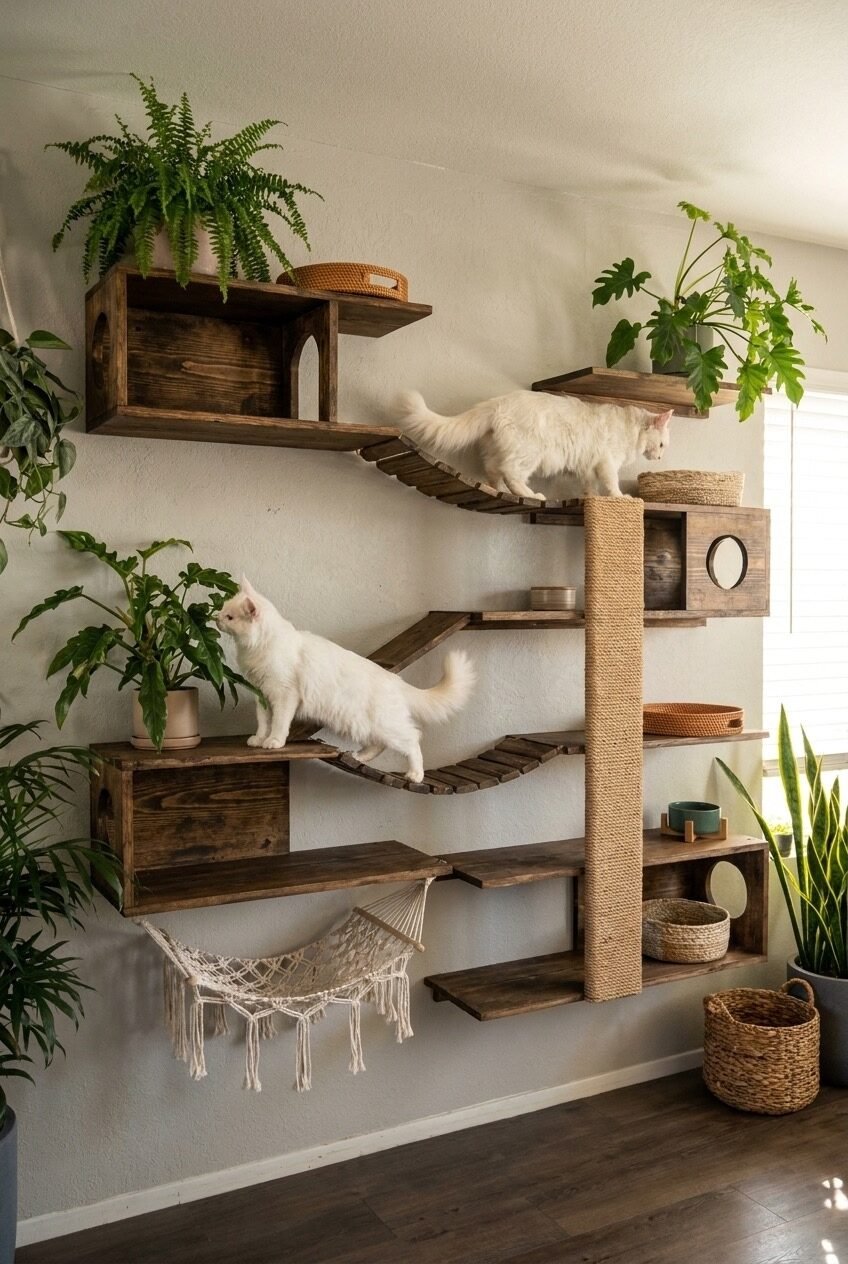
Contrast is doing most of the work here. Dark stained wood against a plain wall gives every shelf a clean outline, so even a layout this busy, with bridges, ledges, and a hanging hammock, still reads as organized instead of chaotic. Without that contrast, the whole thing would blur into the wall behind it.
The plants aren’t an afterthought either. Ferns and pothos spilling over the edges soften all those straight lines and give the cats something to weave through, which mimics the kind of environment a cat would actually choose outdoors given the option. A macrame hammock tucked low adds one more soft surface into the mix.
If you want to try this, grab a few unfinished wood crates from a hardware store and stain them the same dark shade before mounting. Add one thick sisal-wrapped post for scratching, then let your plants do the rest of the styling. Two cats will need at least three landing spots so nobody has to share.
A Floating Perch Built for Cats
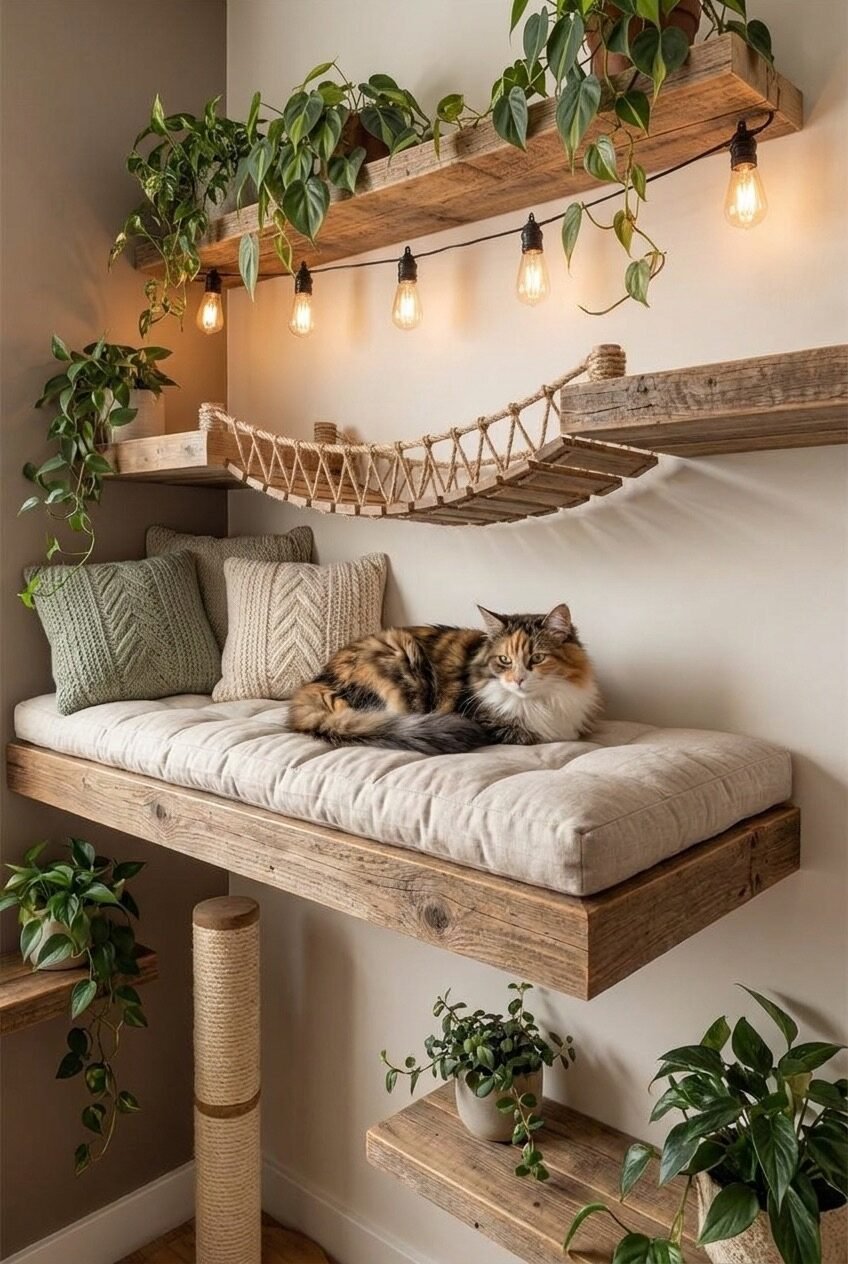
This little perch might look like a spot you could squeeze onto with a book, but it’s built at cat scale only. The cushion sits high in the corner and it’s really only wide enough for a calico to curl into, not for a person to join her, however tempting that photo makes it look.
String lights threaded through the trailing vines add warmth without a single extra fixture on the wall, and that lighting trick works in almost any small nook, cat furniture or not. Reclaimed wood keeps the floating shelf, the rope bridge, and the plant ledge above visually tied together, so the whole corner reads as one piece.
For your own version, mount one floating shelf as a cushioned platform sized for a cat, not a human, add a slim rope bridge above it, and run cafe-style bulbs along the top ledge. Warm white bulbs beat cool white here, and a couple of knit pillows keep the corner soft without inviting anyone to actually sit down.
Color Over the Closet Door
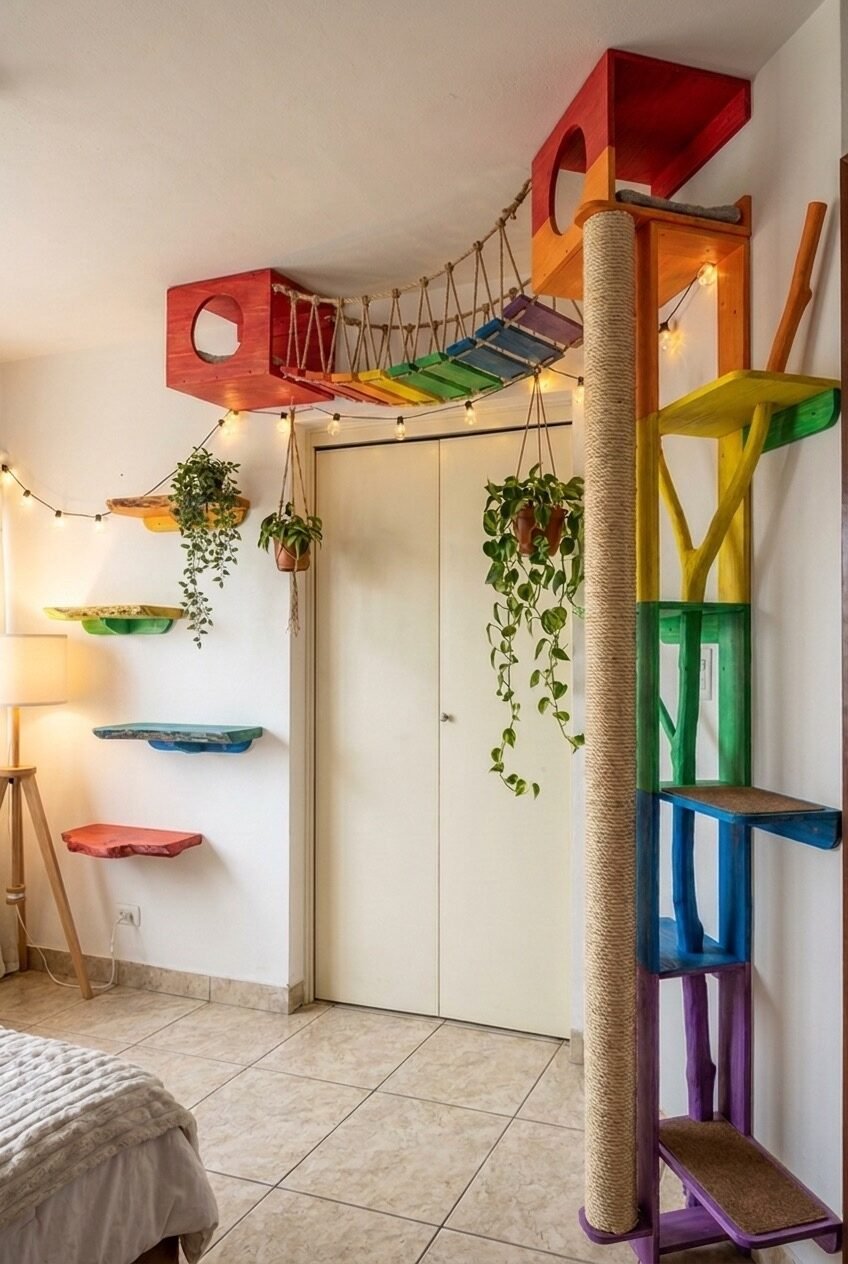
Most cat walls default to natural wood tones, so a full rainbow gradient stands out immediately. Painting each shelf a different color along the spectrum turns a functional climbing route into something that also works as standalone art on a bedroom wall, kids’ room or not.
Placing the whole structure above a closet door is the clever part. That space usually goes to waste in most bedrooms, and running the bridge horizontally across it means the cats get a highway without losing a single inch of usable wall or floor space below.
Copy this by picking any paint that’s rated for indoor furniture, sanding raw wood shelves first, then working through hues in order rather than at random. A strand of warm lights woven through hanging plants keeps the whole rainbow from feeling too loud, even in a small bedroom with limited natural light and a low ceiling.
When One Wall Becomes a Treehouse
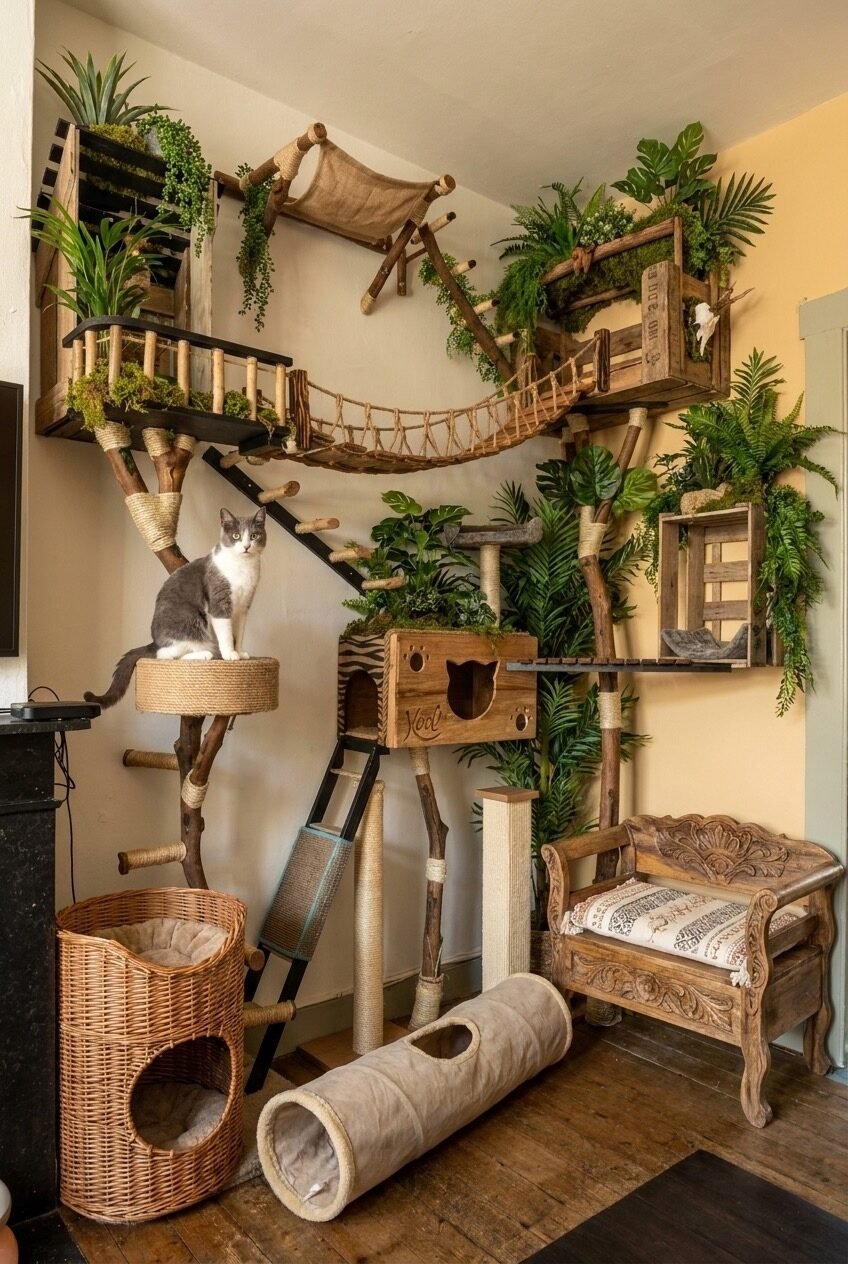
There’s a point where a cat wall stops being furniture and starts being architecture, and this corner is well past that point. Moss-covered platforms, branch-shaped posts, and a full rope suspension bridge turn one wall into a miniature forest canopy stretching almost to the ceiling, complete with its own carved wooden bench underneath.
What keeps this from tipping into chaos is the ground floor. A wicker basket, a soft tunnel, and a carved wooden bench give cats a reason to stay low too, so the vertical drama up top doesn’t leave the floor level feeling empty or ignored.
This scale isn’t realistic for most of us in a weekend, but the principle scales down fine. Pick two or three levels instead of six, mix one textured surface like rope or moss with plain wood, and always give cats a soft landing spot near the floor before you build anything higher up the wall.
Glass Pods Above a Ball Pit
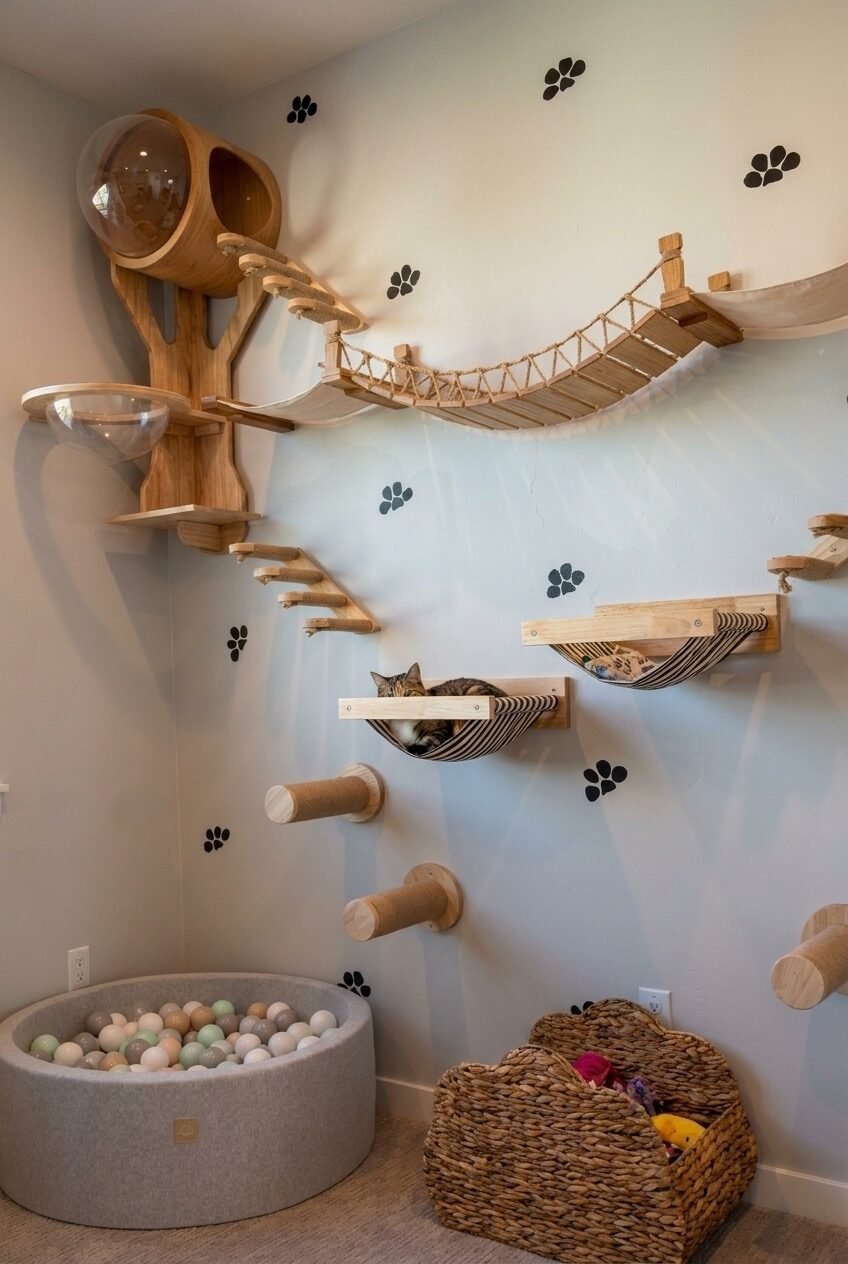
Glass viewing pods are the detail everyone notices first, and fairly enough. Built into the top of a carved wood tower, they let a cat sit inside something that feels enclosed while still watching the entire room through a rounded window, almost like a porthole on a ship.
Underneath, the mood shifts entirely. A round ball pit and a woven toy basket sit right on the floor, which means this wall serves two completely different kinds of play: quiet perching up high and messy chaos down low, often within the same ten minutes.
You don’t need custom carved wood to borrow this idea. A simple wall-mounted bubble window designed for cats gets you most of the visual payoff, and any small kiddie ball pit filled with lightweight plastic balls covers the floor-level fun without any woodworking skills required at all on your end.
Furniture That Skips the Cat-Tree Look
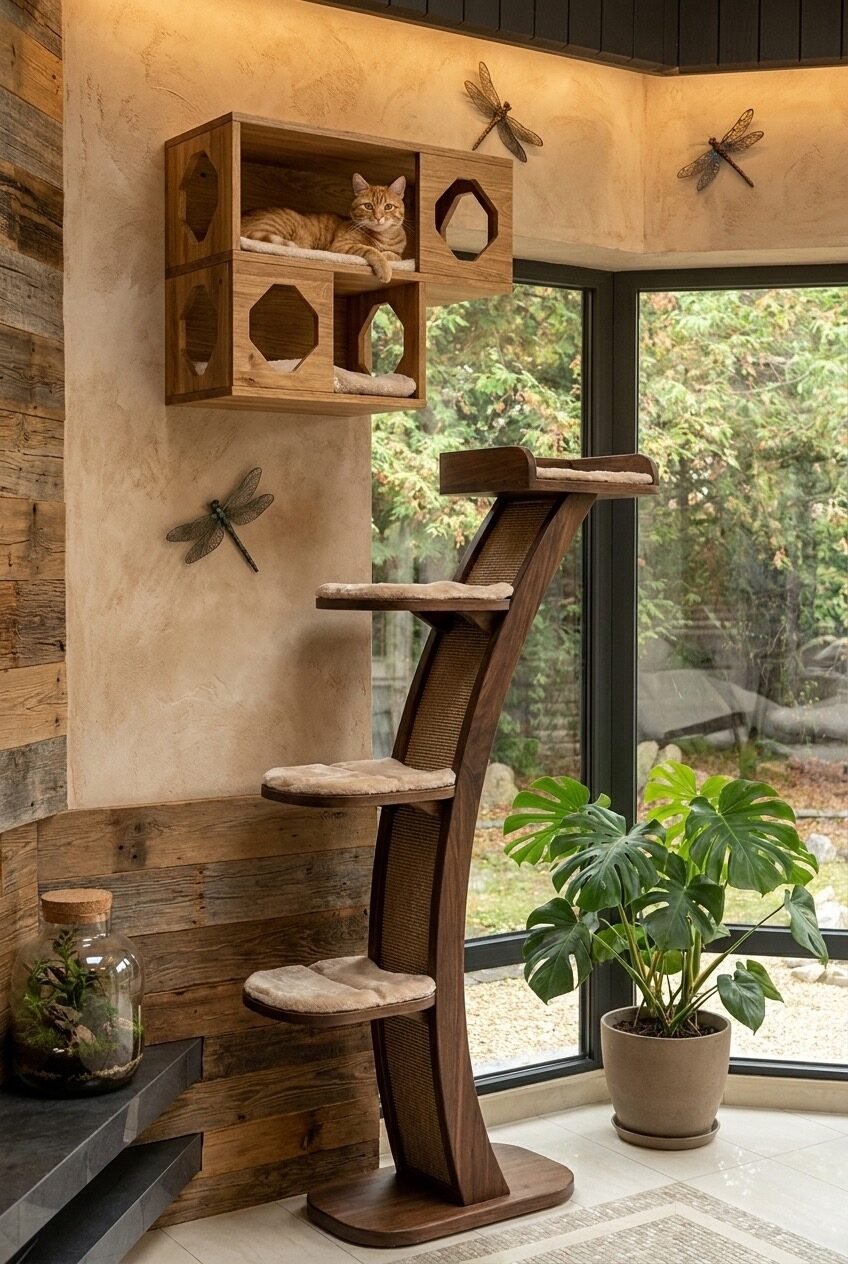
Walk past this corner without knowing better and you might not clock it as cat furniture at all. The curved walnut frame and round cushioned perches look more like a sculptural side table than anything sold in a pet aisle, and that’s clearly the point of the whole design.
That’s really the whole appeal. Pairing it with a wall-mounted wood cubby, a reclaimed plank accent wall, and metal dragonfly art means the cat tree stops being the one weird object in an otherwise polished room and just becomes part of the furniture plan instead.
To pull this off, look for cat furniture brands that work in solid wood and simple curves rather than carpet and beige tubing. Match the wood tone to your existing furniture, and treat the cubby the same way you would a piece of wall art, at the same eye level and everything.
Cloud Beds Hanging From the Ceiling
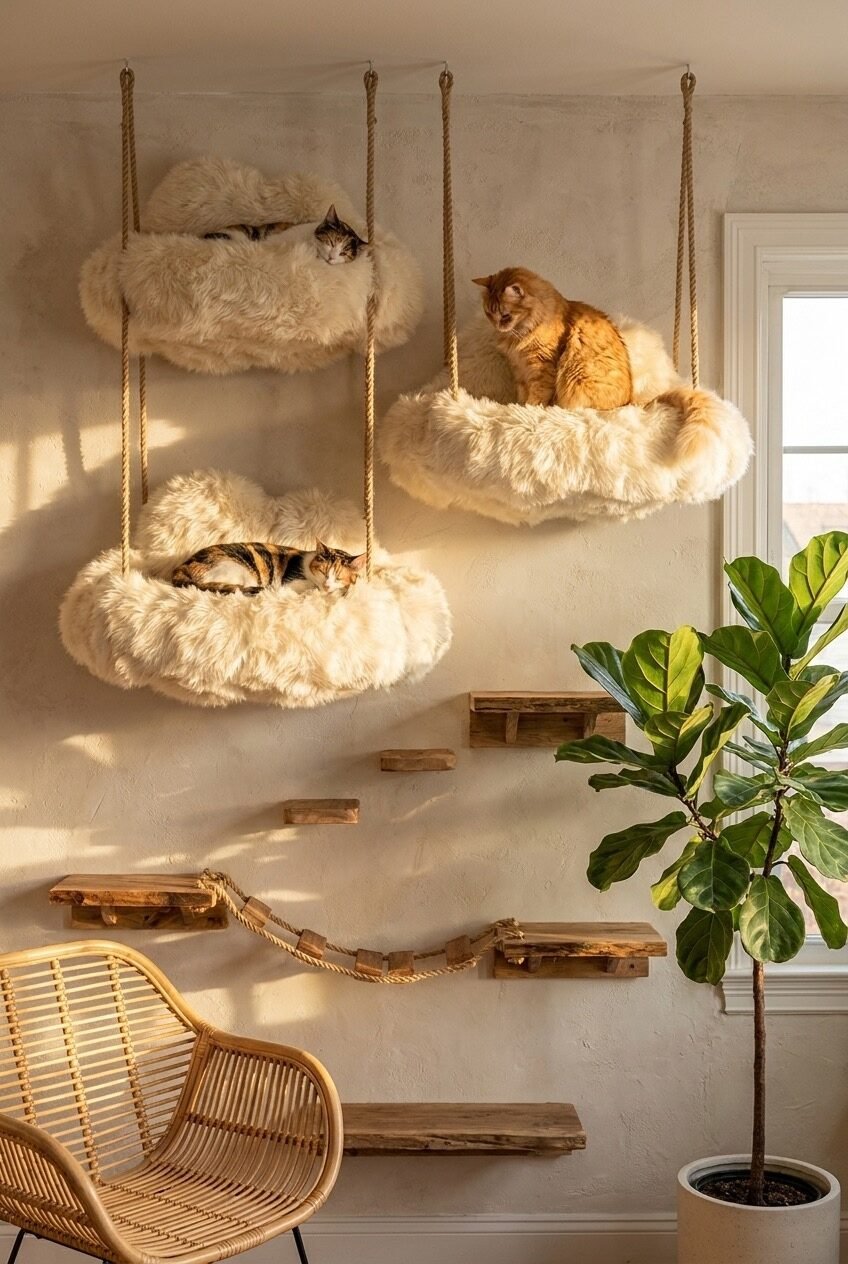
Fluffy, cream-colored beds suspended by rope from the ceiling do exactly what they’re named for: they look like clouds, and cats treat them like the softest spot in the house, usually within about five minutes of installation and not one second longer, claws and all.
Underneath, the wall drops down through a run of simple floating steps and a small rope bridge, giving cats a full staircase to reach their cloud without a single jump longer than they’d attempt on their own, even the older or heavier ones in the house.
Ceiling hooks rated for real weight, sturdy rope, and a faux fur bed cushion are really all this takes. Hang two at slightly different heights so cats have a choice, and build the step sequence underneath before you ever hang the beds themselves, since access matters more than the beds do.
Sculptural Loops Instead of Boxes
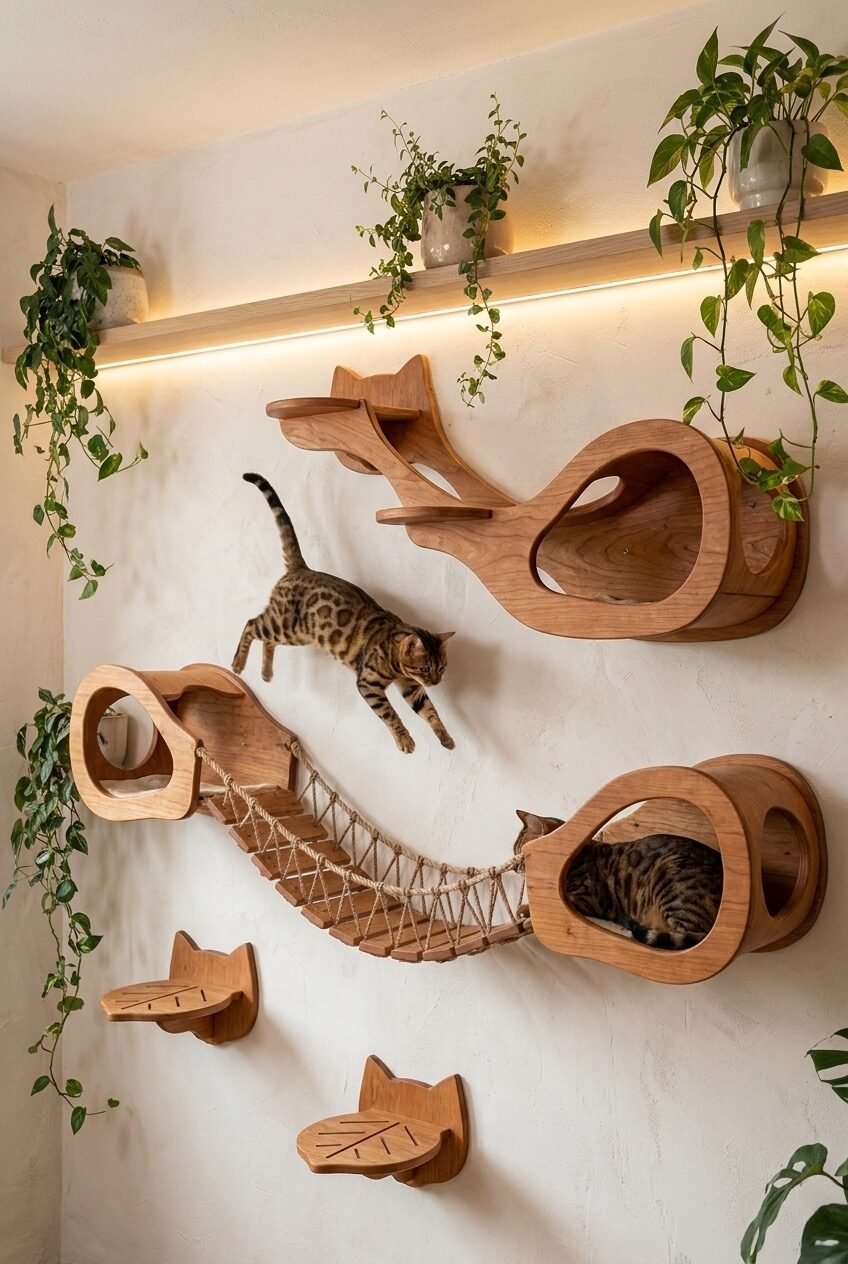
A loop reads completely differently than a box. Where most cat shelving relies on rectangles and cubbies, these cherry wood pieces curve into open rings and teardrop shapes, so light and cats can both pass through the same space without either one feeling boxed in.
Under-shelf LED strips do a lot of quiet work here, washing the wood grain in warm light after dark and making the whole wall feel like a lit art installation rather than a pet accessory bolted to plaster, especially once the sun goes down outside.
Sourcing pieces this sculptural usually means going custom or hunting small woodworking studios online, since big box stores rarely stock anything but straight lines. Add battery-powered LED strips underneath any shelf edge for the same glow without an electrician, and cherry or walnut will age into an even richer tone over time.
Live-Edge Wood Tucked Into a Corner
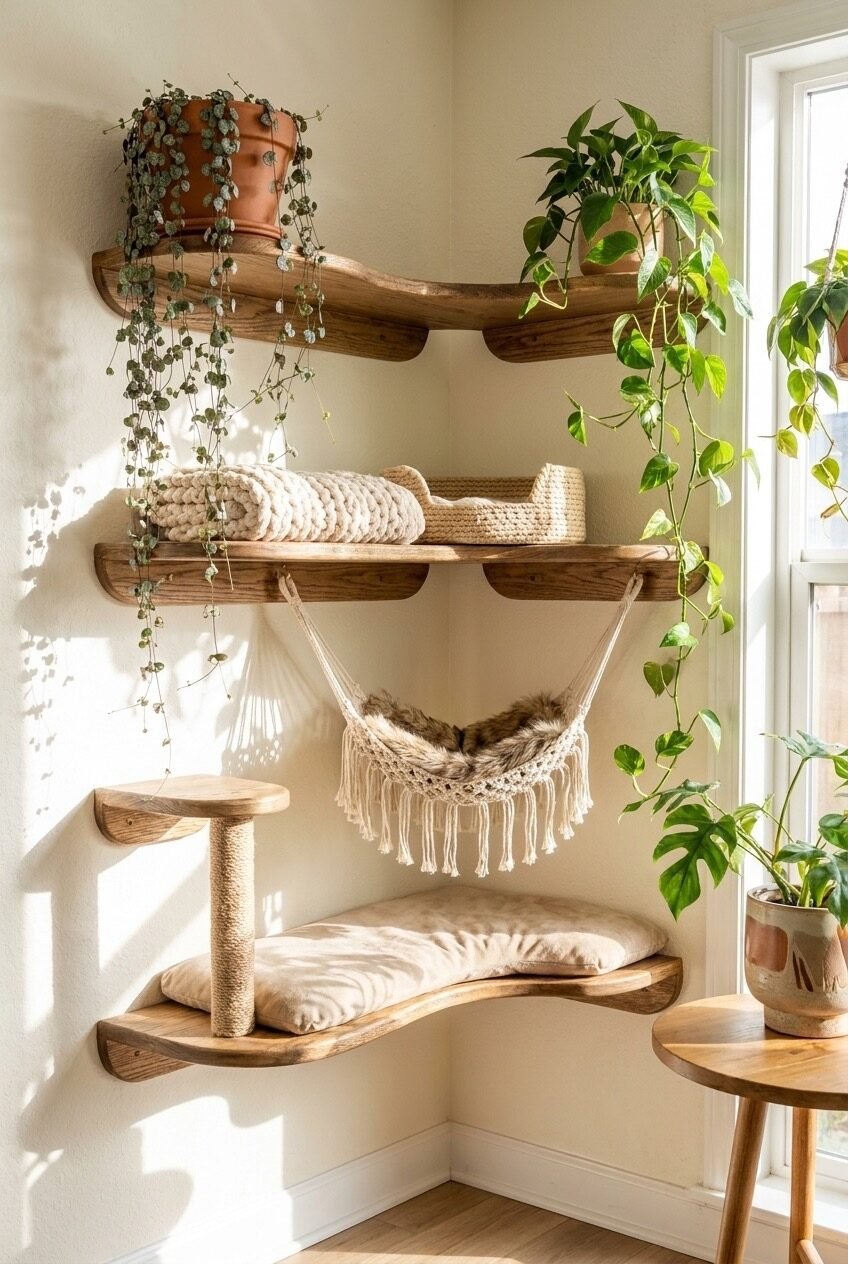
Corners get skipped constantly in home design, cat furniture included, which makes this one worth stealing on principle alone. Stacking live-edge shelves into a single tight corner uses a spot most of us leave completely bare, right where two walls meet near a sunny window.
Texture is doing the styling here more than color. A chunky knit blanket, a woven basket, and a macrame hammock sit against plain oak, so the corner feels layered without a single loud pattern anywhere in the mix, which keeps the whole thing quiet and calm.
Measure your corner before buying anything, since live-edge slabs vary in width and rarely come pre-cut for a tight fit. Mount the lowest shelf as a cushioned bench, then let trailing plants like string of pearls do the rest near the window, where morning light hits the leaves best.
One Statement Box Instead of Many
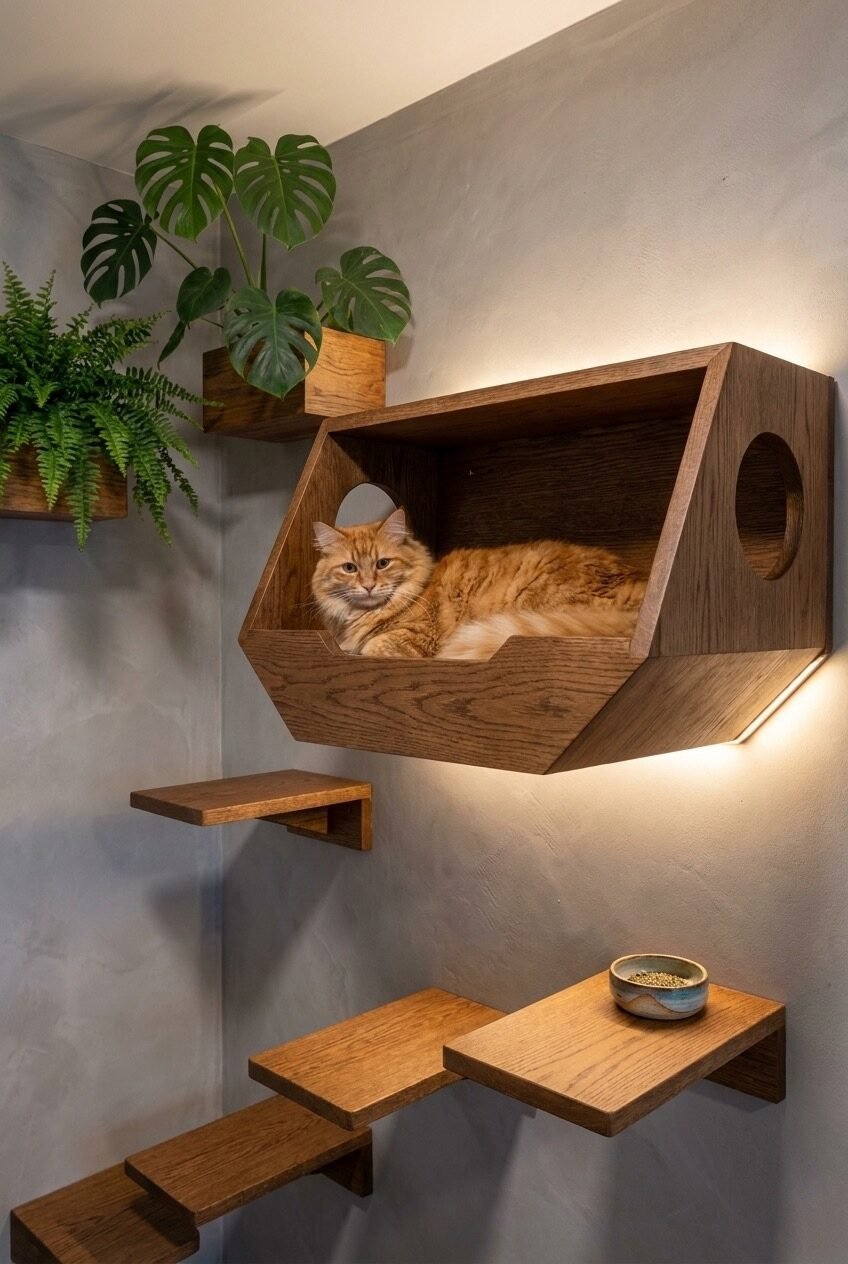
Every idea so far has leaned into more shelves, more bridges, more everything. This one goes the opposite direction with a single oversized wood den, and it proves restraint can carry just as much visual weight as excess, maybe even more.
A round cutout on the side lets in light and lets a cat peek out without leaving the den, while a warm LED strip underneath makes the whole box glow like a piece of lighting rather than a bed bolted to the wall.
Solid oak or walnut plywood, one large circular hole saw cut for the window, and a battery LED strip along the underside will get you most of the way there. Keep everything else on the wall minimal so the box stays the obvious focal point of the whole room.
Give Them a Reason to Look Up
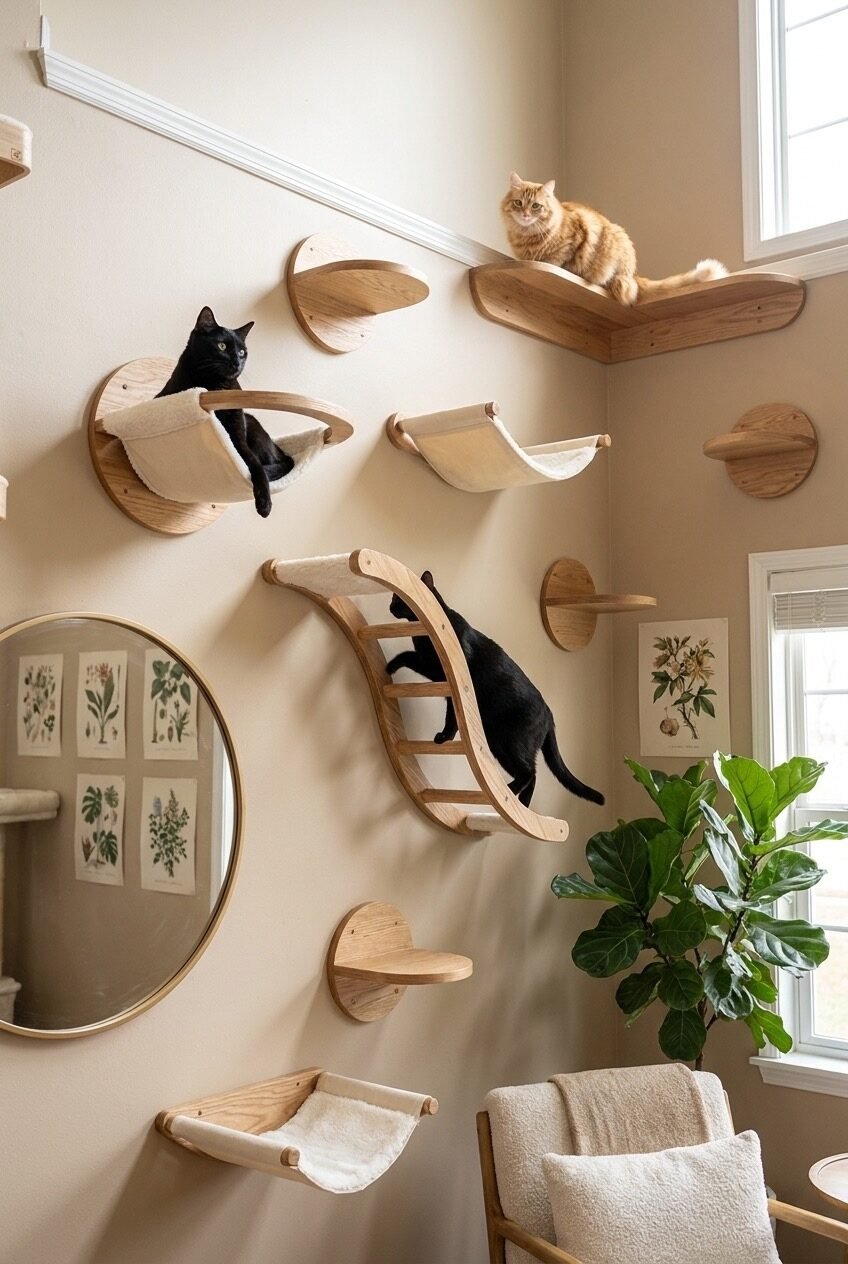
Every wall here starts from the same place: a cat’s need to climb doesn’t have to fight against your taste in interiors. Wood tone, color, texture, and scale can all flex to match whatever room they’re going into, from a rented studio to a house you’ve owned for decades.
None of this requires copying a project exactly. Pull the parts that fit your space instead: a bridge here, a hanging bed there, one bold color if that’s your speed, and skip anything that doesn’t match how your cat actually moves through a room.
Start small if you need to. One shelf and one scratching post will teach you more about how your specific cat uses vertical space than any full wall ever could, and you’ll probably find yourself adding another within the month.
 Steal Our Home Styling Secrets!