
Rethinking the Deck as an Actual Living Space, Not an Afterthought
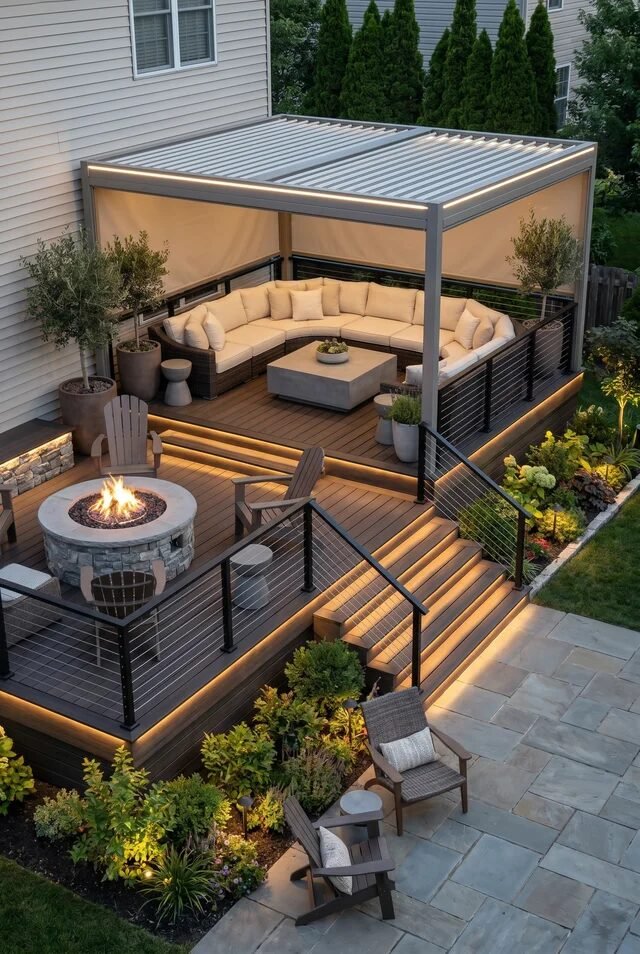
Let’s be honest—most back decks start with good intentions and end up as a couple of chairs and a grill we barely clean. But as we’ve seen, a deck off the back of the house can be so much more than a “default outdoor space.” It can actually extend how we live, not just where we sit.
What makes these ideas hit differently is how intentional they feel. From layered lighting to defined zones and cozy focal points, every detail works together to create a space that feels styled, not accidental. It’s less about copying a look and more about understanding why it works.
And no, we don’t need a massive backyard or luxury budget to get there. We just need better decisions—layout first, vibe second, and impulse buys last (we’ve all been there). Think of this as your sign to stop settling for “good enough” and start designing something that actually feels like you.
Elevated Deck With Cozy Sunken Lounge
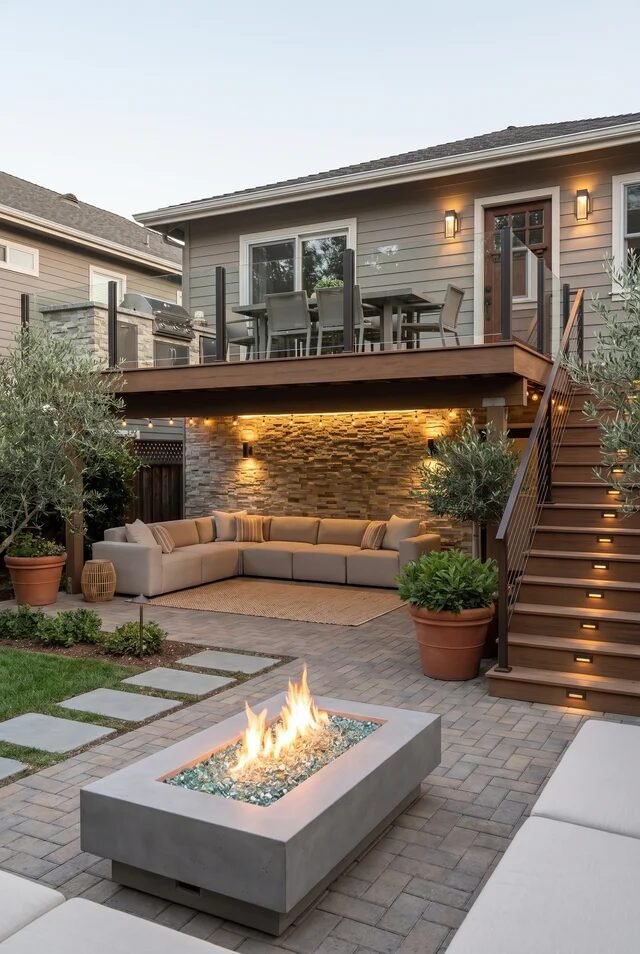
There’s something quietly luxurious about using the space under your deck instead of pretending it doesn’t exist. This setup leans into vertical zoning—dining above, lounging below—and honestly, it’s giving “we planned this, not just built it.” The stone wall adds weight and texture, grounding the whole look so it doesn’t feel like a floating platform situation.
Design-wise, this works because of contrast and layering. You’ve got structured lines from the deck, softened by plush seating and warm lighting. The key move here is treating the lower level like a real room, not leftover space. That means proper lighting, defined furniture layout, and a focal point (hello, that wall).
If we’re recreating this, prioritize ceiling height clearance and built-in lighting early. Add outdoor-rated sectionals in neutral tones, then layer texture through rugs and planters. Skip anything too flimsy—this space deserves commitment, not temporary energy.
Resort Style Deck With Pool Flow
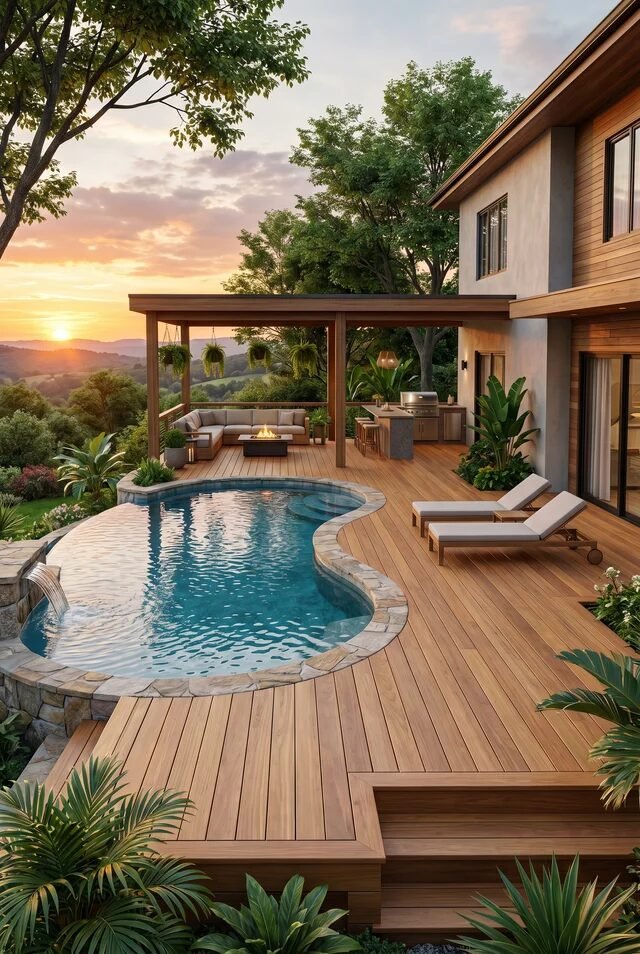
This is where your backyard stops being “just a backyard” and starts acting like a boutique hotel. The magic here is flow—deck to pool to lounge area—nothing feels disconnected. It’s smooth, intentional, and a little bit smug (in a good way).
What makes this work is continuity. The wood decking wraps around the pool, visually linking everything together. Add in consistent materials and soft landscaping, and suddenly it feels expansive. The design principle doing heavy lifting here is cohesion—no random materials, no chaos, just one clear story.
If we’re building this vibe, commit to one dominant material palette and repeat it. Keep furniture low-profile to avoid blocking views, especially if you have scenery. And please, don’t overcrowd it. This look thrives on breathing room—let the space flex a little.
Narrow Deck With Casual Bar Seating
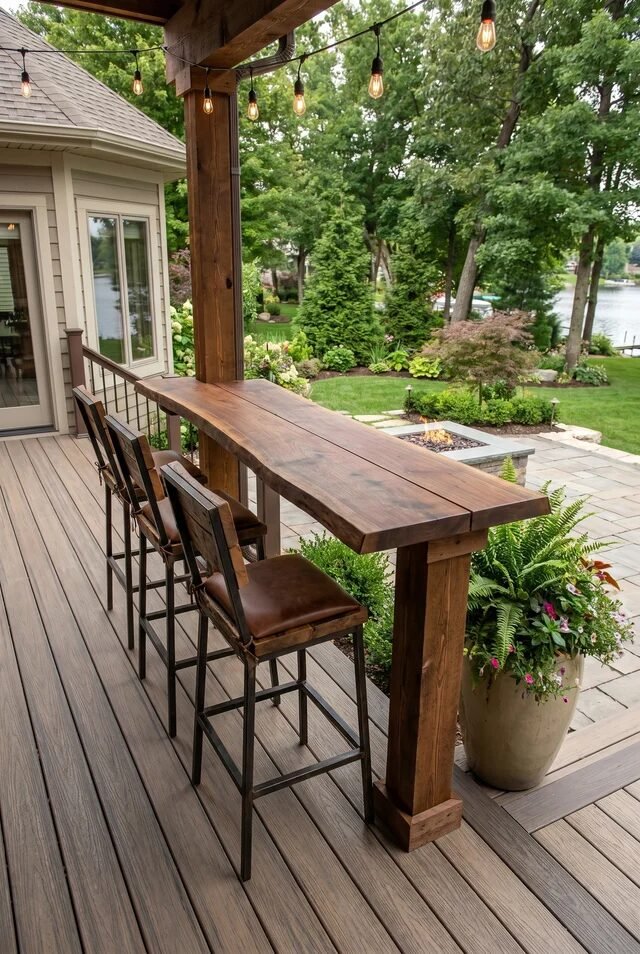
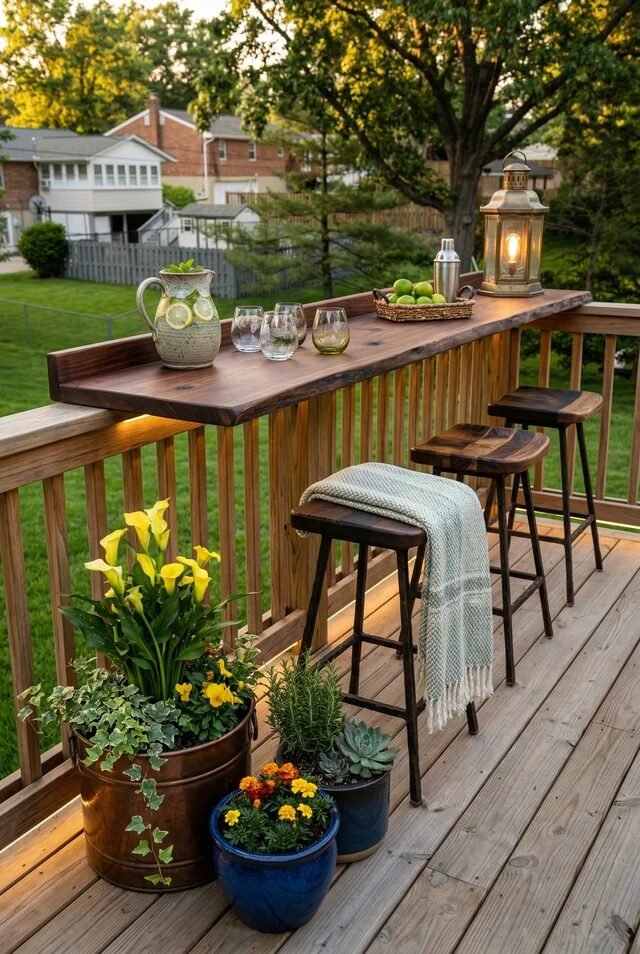
Not every deck needs to be massive to be iconic. This one is proof that a slim layout can still serve personality. A built-in bar ledge along the railing instantly turns “just a walkway” into a social moment. Low effort, high payoff—we love to see it.
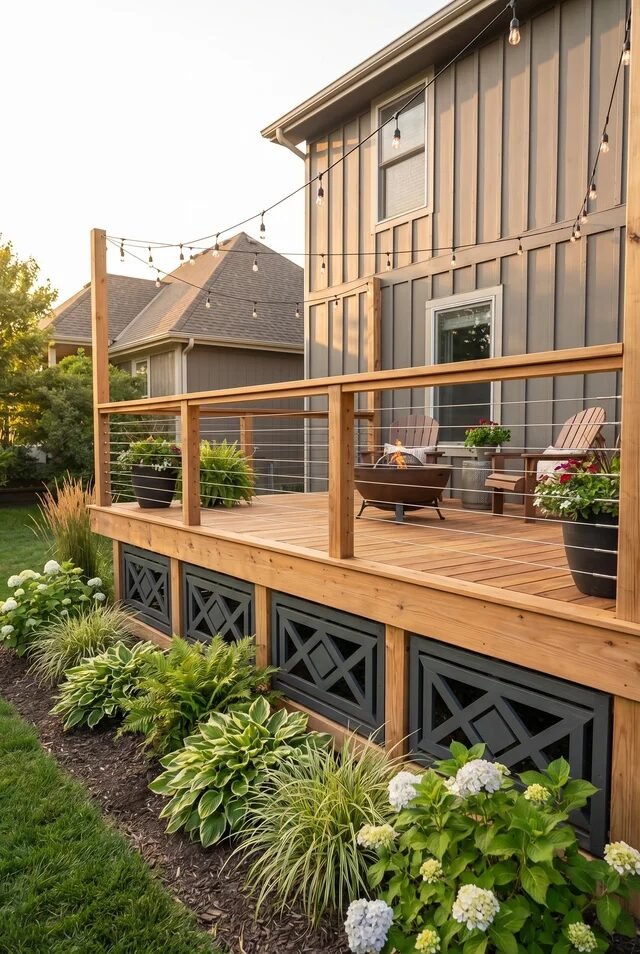
The design win here is smart space optimization. Instead of fighting the narrow footprint, it leans into it. Vertical elements like posts and string lights draw the eye upward, making everything feel taller and less cramped. This is all about maximizing function without adding clutter.
If you’re recreating this, keep your color palette tight—wood tones plus black accents work every time. Choose stools that tuck neatly underneath to maintain flow. And lighting? Non-negotiable. String lights or warm bulbs will carry the entire vibe after sunset.
Pergola Covered Deck Outdoor Kitchen Setup
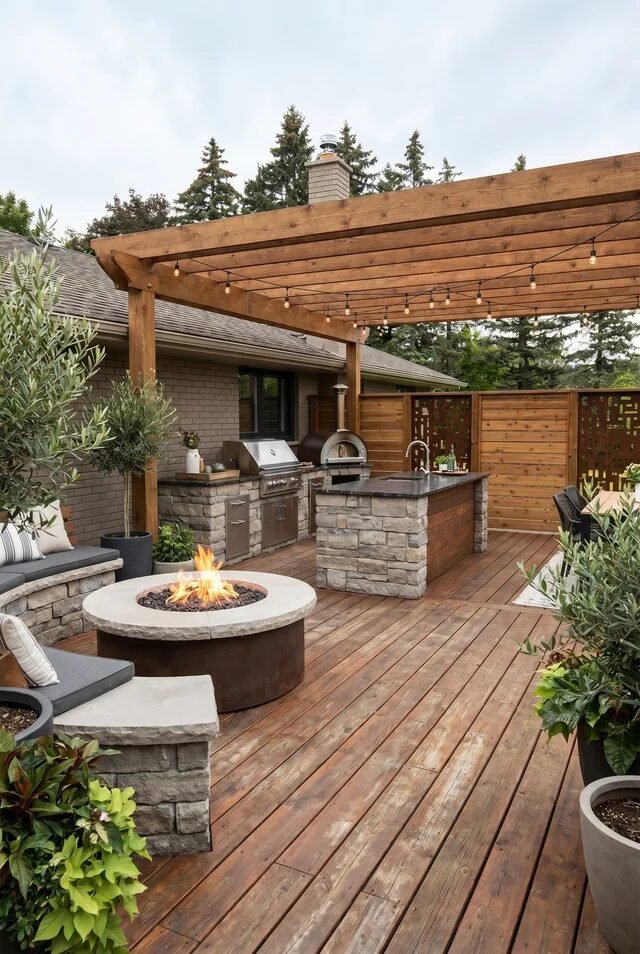
This is the “we host now” deck. A pergola overhead, full outdoor kitchen, and enough seating to casually say, “yeah, just come over.” It’s structured but still relaxed, which is honestly a hard balance to nail.
The pergola is doing more than looking pretty—it defines the zone. Without walls, it still creates a “room,” which makes the kitchen area feel intentional. Pair that with mixed materials—wood, stone, metal—and you get depth without trying too hard. Zoning is the hero here, giving each function its own moment without breaking flow.
For your own version, start with layout before aesthetics. Map out cooking, prep, and seating zones clearly. Then layer in textures—stone for durability, wood for warmth. And don’t forget subtle lighting overhead. It’s giving ambiance, not interrogation room.
Multi Zone Deck With Spa Corner
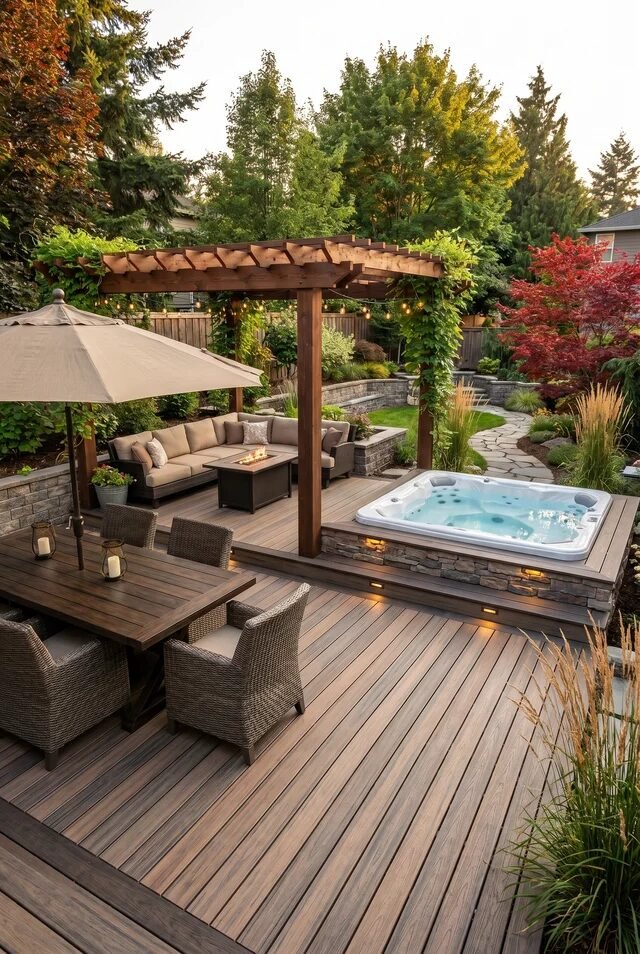
This deck said, “why choose one vibe when we can have all of them?” Dining area, lounge corner, and a hot tub tucked neatly under a pergola—it’s layered but still feels cohesive, which is kind of the dream.
The trick here is controlled variety. Each zone has a purpose, but they’re tied together through consistent materials and color palette. The pergola over the spa creates intimacy, while open areas keep things airy. Balance between separation and cohesion is what keeps this from looking chaotic.
If we’re recreating this, think in zones first. Use subtle level changes, rugs, or furniture orientation to define spaces instead of walls. Keep your palette consistent—don’t let each area go rogue. And yes, add greenery. It softens transitions and makes everything feel intentionally lush, not overly staged.
Pergola Lounge With Fireplace Focus
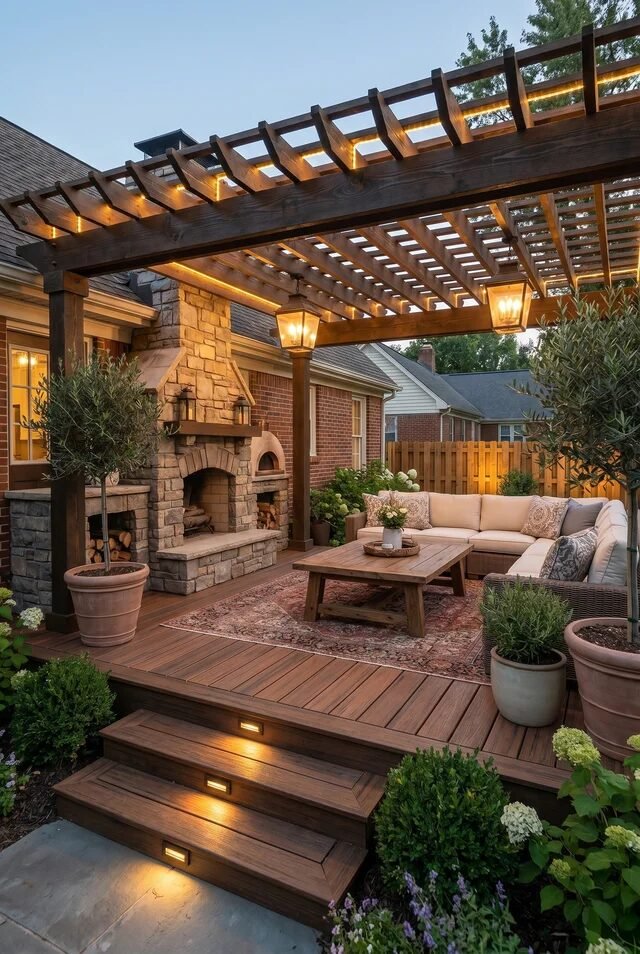
This is the kind of deck that quietly says, “we don’t rush evenings here.” The pergola frames the space, but the real star is that fireplace moment—warm, grounded, and just a little bit main character energy. It feels intentional without trying too hard, which is honestly the sweet spot.
From a design perspective, this works because of anchoring. The fireplace acts as a visual and functional focal point, while the pergola defines the “room” overhead. Texture layering is doing its thing too—wood beams, stone, soft textiles. When your materials contrast but stay in the same tone family, everything feels elevated instead of chaotic.
If we’re recreating this, invest in one strong focal element first (fireplace or even a fire feature wall). Keep seating low and cozy, then layer with a rug to ground it. Lighting should feel warm, not surgical—think ambiance, not dentist office.
Elevated Deck With Defined Gathering Zones
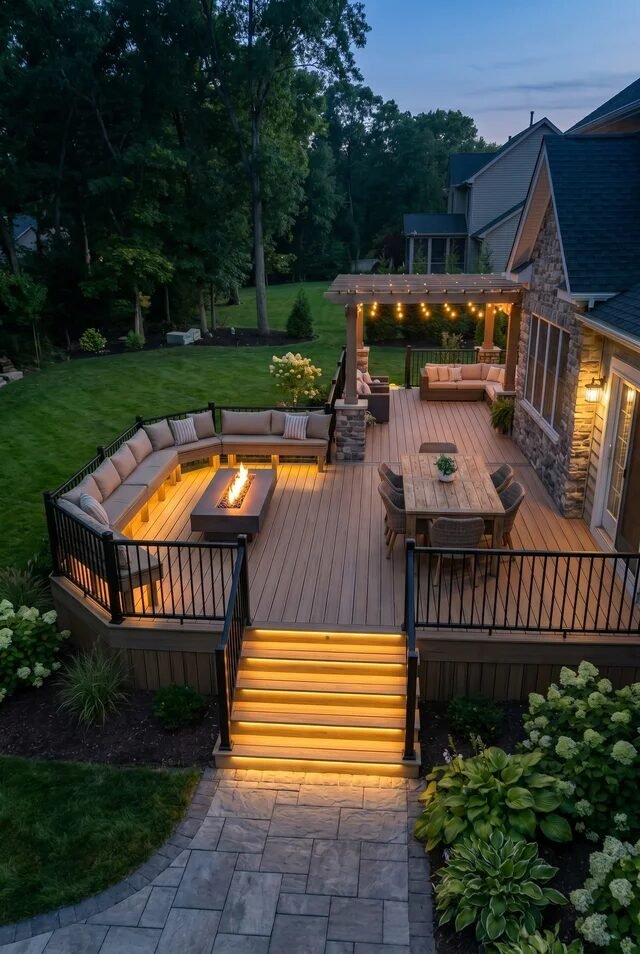
Some decks try to do everything and end up doing… nothing well. This one? It actually commits. Dining zone, lounge zone, fire feature—it’s all clearly defined, and somehow still feels cohesive. We love a deck that knows who she is.
The success here comes from zoning and symmetry. Each area has its own purpose, but the layout keeps everything visually balanced. Railings, stairs, and lighting guide the eye naturally through the space. Clear zones prevent visual clutter and make the deck feel bigger than it actually is.
If you want this vibe, start by mapping how you’ll use the space before buying anything. Place your largest furniture pieces first to anchor each zone. Then repeat materials and colors across areas so nothing feels random. A little structure goes a long way—chaos is not invited.
Garden Pergola With Soft Romantic Layers
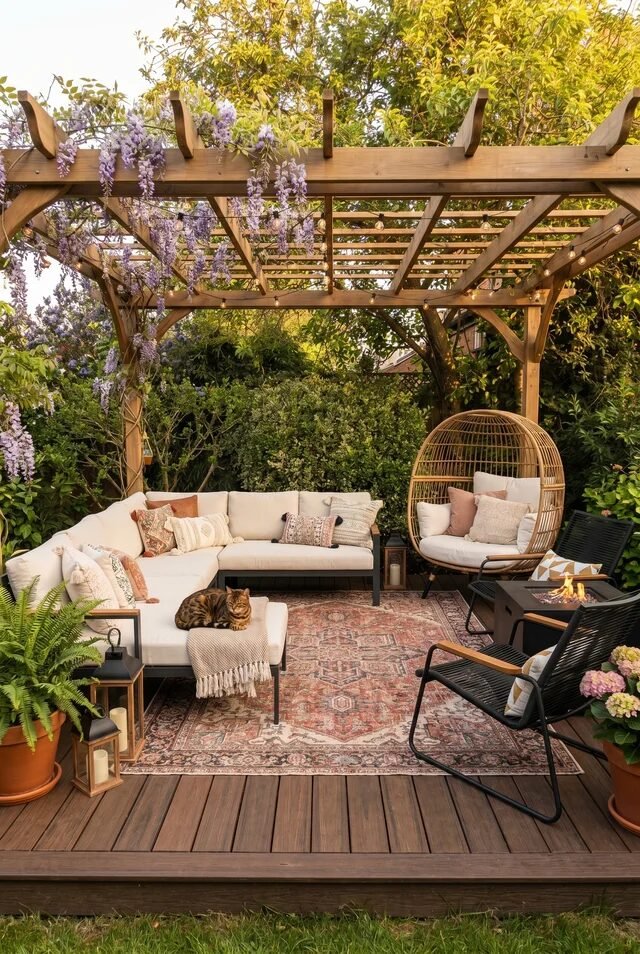
Okay but this one? She’s soft. She’s romantic. She definitely owns at least three linen throws. The pergola draped with greenery instantly creates that dreamy, tucked-away feeling—like your own little escape without booking a flight.
Design-wise, this is all about softness and layering. Curves from plants, plush cushions, and textiles balance out the structured wood frame. Nothing feels harsh or overly styled. The magic here is in mixing structured architecture with relaxed, slightly undone decor.
To recreate this, focus less on perfection and more on vibe. Add climbing plants or faux vines if patience isn’t your thing (no judgment). Stick to a warm, muted palette and layer textures—rugs, pillows, throws. And yes, slightly mismatched pieces? Encouraged. It keeps things feeling real, not staged.
Intimate Deck With Built In Warmth
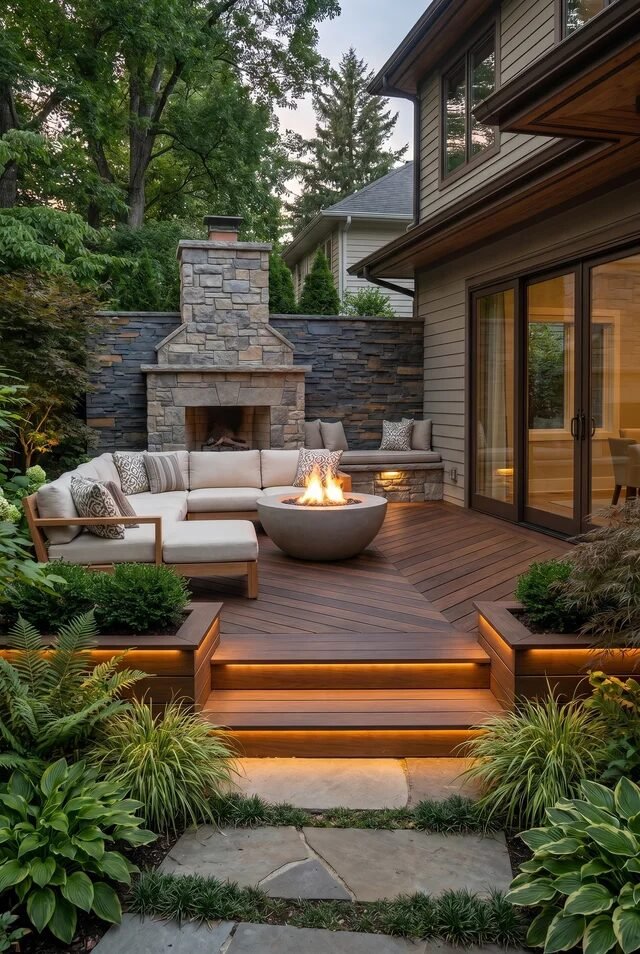
Not every deck needs to be expansive to feel luxurious. This one leans into intimacy, and honestly, it works. Between the built-in seating, soft lighting, and that centered fire feature, it feels like a quiet little retreat rather than an afterthought.
The design strength here is scale and proportion. Everything fits just right—nothing oversized, nothing awkwardly floating. Built-ins keep the layout clean while maximizing seating. When space is limited, precision matters more than quantity.
If we’re recreating this, measure everything twice (and then once more for peace of mind). Go for built-in benches if possible—they save space and look custom. Keep your palette tight and let lighting do the heavy lifting for ambiance. Small space, but make it intentional.
Curved Deck Layout With Organic Flow
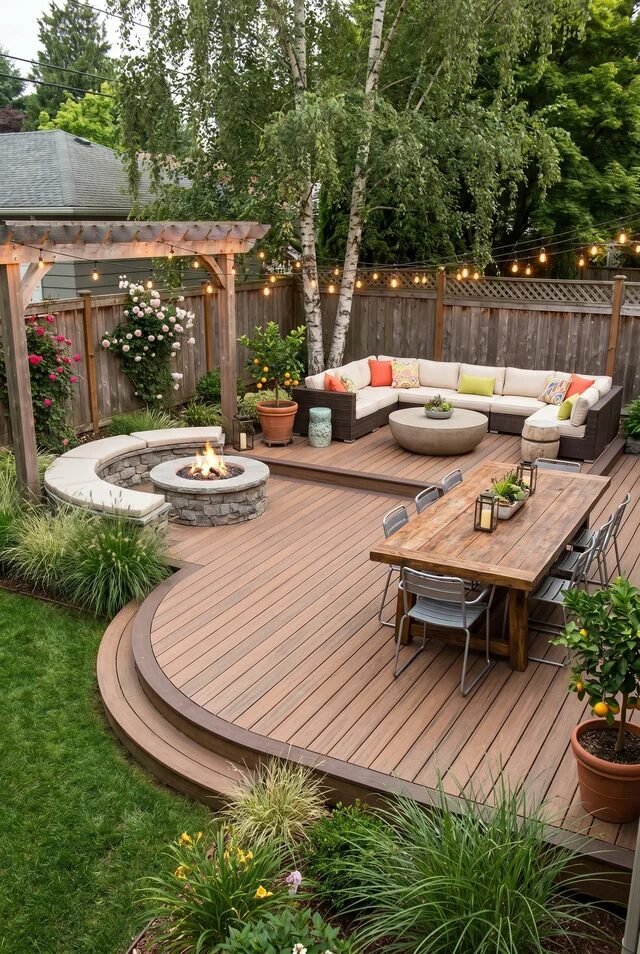
Straight lines are safe… but curves? Curves have personality. This deck breaks away from rigid layouts and leans into something more organic, which makes the whole space feel softer and way more inviting.
What’s working here is flow. The curved edges guide movement naturally, connecting dining, lounging, and fire pit areas without harsh transitions. It also blends better with the surrounding landscape. Organic shapes reduce visual tension and make outdoor spaces feel more relaxed.
If you’re tempted to try this, start small—maybe a curved step or rounded seating edge. Pair it with natural landscaping so it doesn’t feel forced. Keep furniture slightly softer in shape to match the lines. It’s subtle, but the vibe shift? Noticeable in the best way.
Designing Deck Spaces We Actually Want To Use
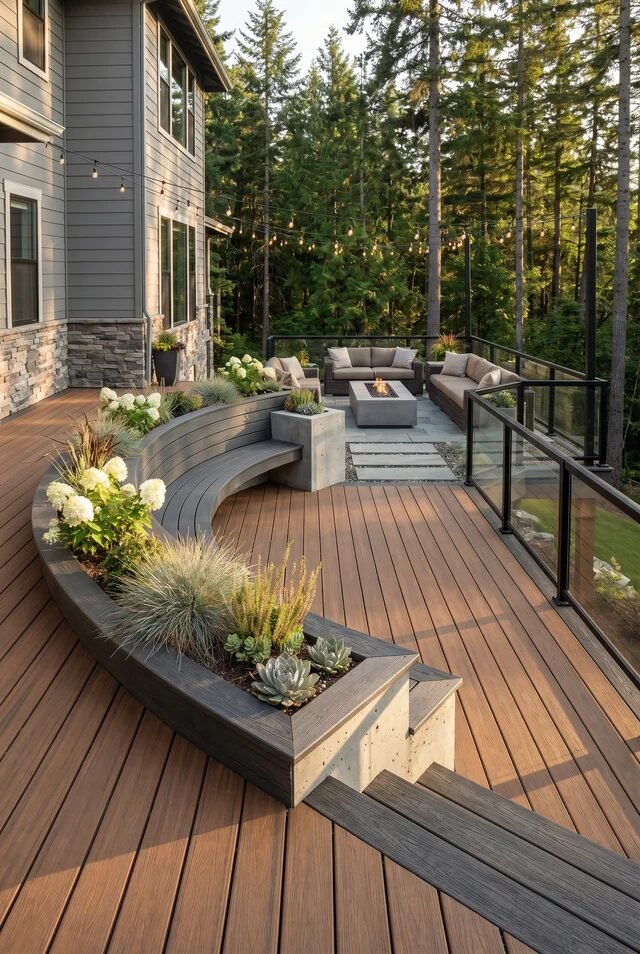
At the end of the day, the best deck isn’t the biggest or the most expensive—it’s the one we actually use. And that usually comes down to comfort, flow, and a little bit of personality. If it feels inviting at 7PM with the lights on? We did it right.
Across all these ideas, there’s a pattern. Strong focal points, thoughtful zoning, and materials that play well together. When we design with intention instead of just filling space, everything instantly feels more elevated. It’s giving effort—but like, the chill kind.
So whether we’re adding a pergola, carving out a lounge corner, or just upgrading lighting, the goal stays the same: create a space that pulls us outside without overthinking it. Because honestly, if our deck isn’t making us want to romanticize our evening routine… what are we even doing?
 Steal Our Home Styling Secrets!