
Deck Decorating Isn’t About Stuff, It’s About Intention
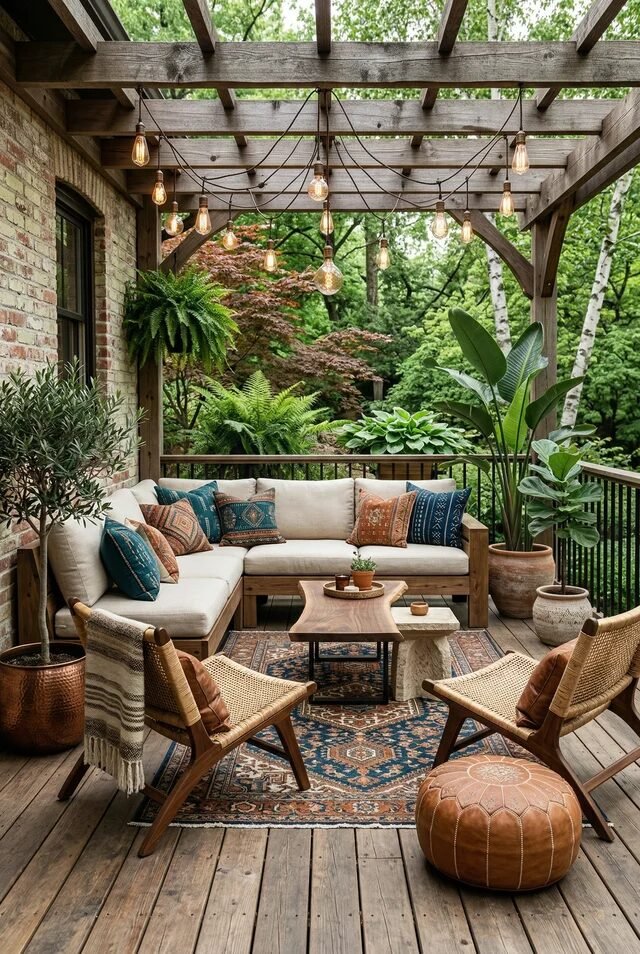
We’re going to say it gently… most decks aren’t boring, they’re just unfinished. Somewhere between “we’ll deal with it later” and “throw two chairs out there,” the space loses its potential. And honestly, it deserves better. A deck can be a bar, a lounge, a cozy fire-lit corner, or even your soft-life escape after 6 PM.
What we’re really working with here is intention. The difference between “just furniture” and a styled deck comes down to zoning, layering, and knowing where the eye should land first. Every great deck has a focal point, a flow, and a reason to exist beyond holding outdoor chairs.
As we go through these ideas, notice how each one balances structure with softness. Some lean minimal, others go full cozy. The goal isn’t perfection—it’s creating a space that feels like you, just slightly more put together.
Slim Rail Bar That Feels Effortless
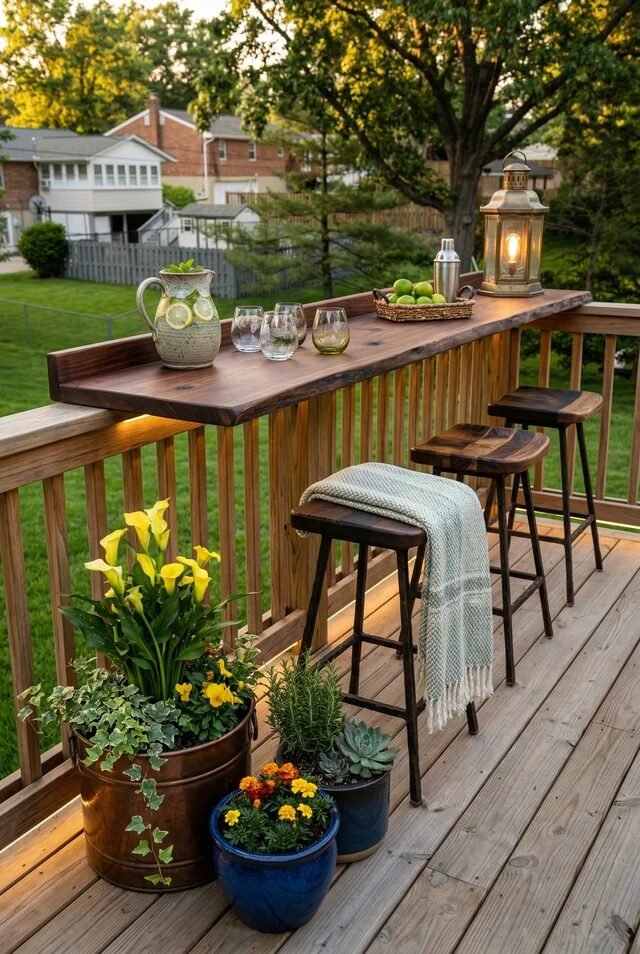
There’s something quietly elite about turning your deck railing into a bar. It’s giving “we casually host wine nights now” energy without actually building a full outdoor kitchen. The magic here is in proportion—keeping the tabletop slim so it doesn’t overwhelm the railing while still feeling intentional. Add a couple of stools, and suddenly your deck isn’t just a pass-through space anymore. It’s a vibe.
From a design perspective, this works because of linear continuity. The wood tones match the deck, creating a seamless extension instead of a bulky add-on. The styling stays light—glassware, citrus, maybe a lantern—so the eye doesn’t feel cluttered. Negative space is doing a lot of the heavy lifting here, and honestly, we love that for us.
If we’re recreating this, prioritize sturdy brackets and weather-resistant wood. Keep decor minimal but layered—think one tray moment, not five random objects. And yes, stools with backless designs? Non-negotiable. We’re not blocking that view.
Pergola Lounge That Feels Like Vacation
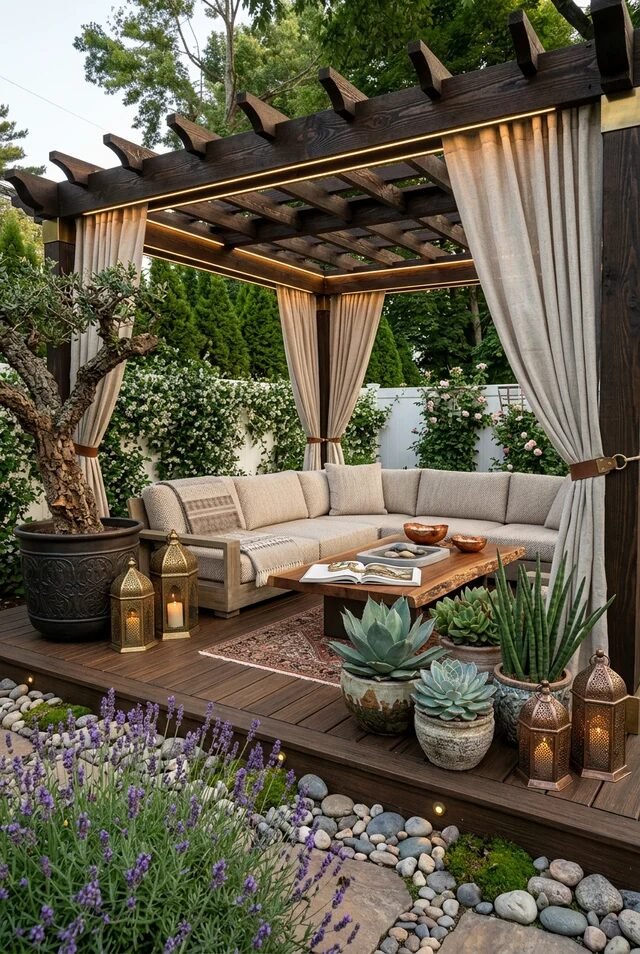
This setup is basically what happens when your deck decides to romanticize itself. A pergola with soft curtains instantly creates a defined zone, which is key for making outdoor spaces feel intentional rather than accidental. The sectional anchors everything, while the warm wood tones and soft textiles keep it grounded and cozy instead of overly polished.
What’s working here is contrast and enclosure. The dark pergola frame adds structure, while the flowing curtains soften the edges. Then you get that layered base—rug, low table, planters—which pulls everything down visually so it doesn’t feel top-heavy. It’s a perfect example of balancing hard architectural lines with soft, livable textures.
If we want this look, focus on zoning first. Even a small pergola or frame can define space. Stick to a tight color palette—creams, woods, muted greens—and layer lighting like your life depends on it. LED strips, lanterns, candles… we’re not doing overhead-only lighting in this economy.
Cozy Fire Pit Under Soft Canopy
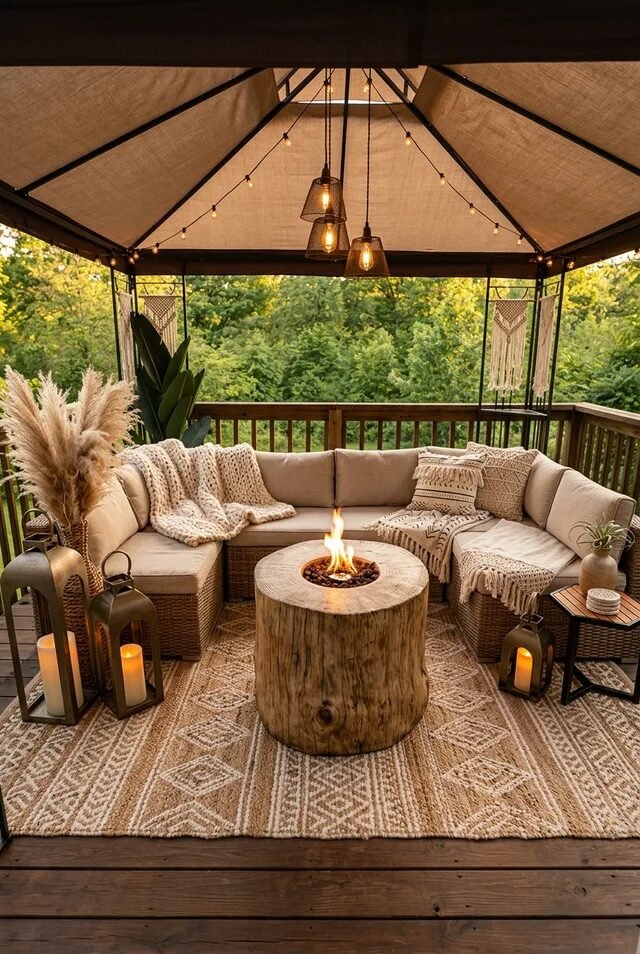
This one is dangerously cozy. Like, cancel-your-plans kind of cozy. The canopy creates a ceiling effect, which psychologically makes the space feel like an outdoor living room instead of just a deck corner. Add a central fire feature, and now everything revolves around warmth—literally and aesthetically.
Design-wise, it’s all about radial balance. The seating wraps around the fire pit, creating a natural focal point. Textures are doing overtime—woven rugs, chunky throws, soft cushions—and they all stay within a neutral palette so nothing feels chaotic. The cohesion here is what makes it feel expensive, even if it’s not.
To recreate, start with your focal point first (fire pit or even a faux one). Then build seating around it, not against the walls. Don’t skip the rug—it grounds everything. And string lights overhead? Mandatory. We’re not trying to sit in a dark void pretending it’s ambiance.
Intimate Deck Corner With Fire Glow
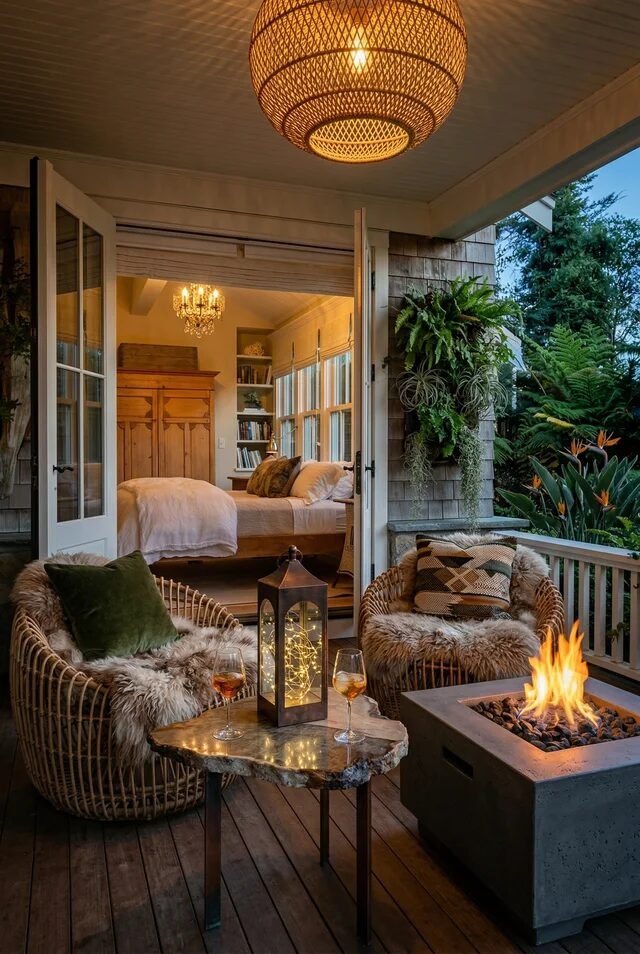
This setup is low-key seductive… in a Pinterest way, not a weird way. It’s intimate, layered, and slightly moody, which is honestly a refreshing break from overly bright outdoor spaces. The fire table acts as both function and atmosphere, while the surrounding textures make it feel like an extension of the indoors.
The design principle here leans into contrast and warmth. You’ve got darker tones, soft lighting, and reflective surfaces like glass and metal that bounce the glow around. The furniture is scaled just right—nothing oversized—so the space feels cozy, not cramped. Lighting is the real star here, quietly carrying the entire mood.
If we’re copying this, focus on layered lighting instead of one harsh source. Mix materials—rattan, wood, metal—for depth. Add soft textiles generously, but keep colors grounded. And maybe keep a throw nearby because we all act brave until the temperature drops.
Playful Gamer Deck With Personality
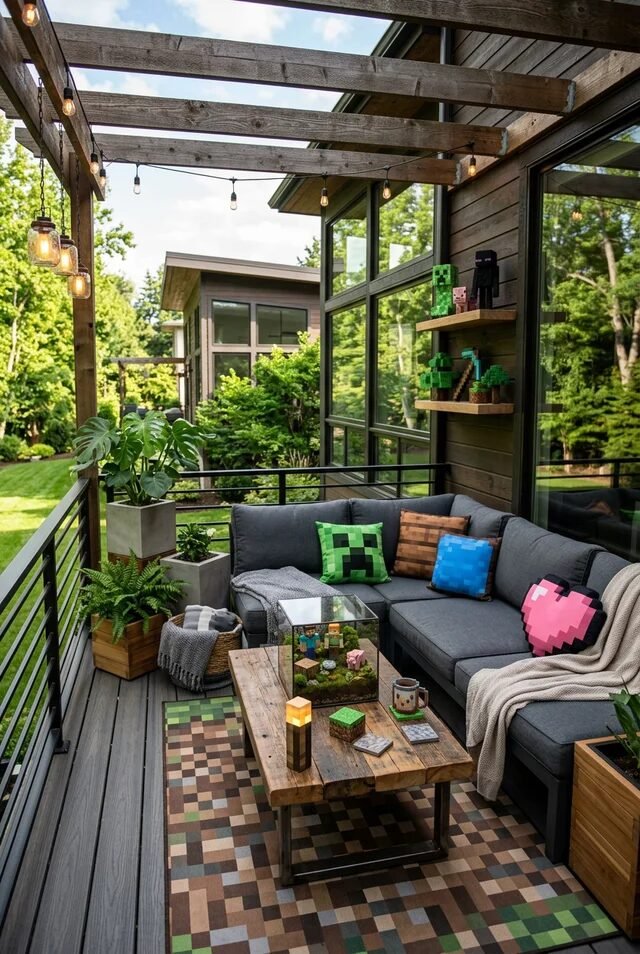
Okay, this one said “we have hobbies” and didn’t apologize for it. A deck doesn’t always have to be neutral and aesthetic in a quiet way—sometimes it can be fun, slightly chaotic, and still look put together. The key here is committing to a theme without letting it spiral into visual noise.
What makes this work is controlled contrast. The bold accents (like pixel-inspired decor) pop against a neutral base—gray seating, wood tones, greenery. The layout still respects design rules: clear seating zone, centered table, balanced decor distribution. It proves that personality doesn’t cancel out good design—it just needs structure.
If we want this vibe, start with a neutral foundation and layer in themed accents sparingly. Keep your color palette tight even if your decor is playful. And please—edit yourself. Not every cute item needs to be on display at once. Curated chaos only works when it’s, well… curated.
Breezy Boho Deck With Statement Swing
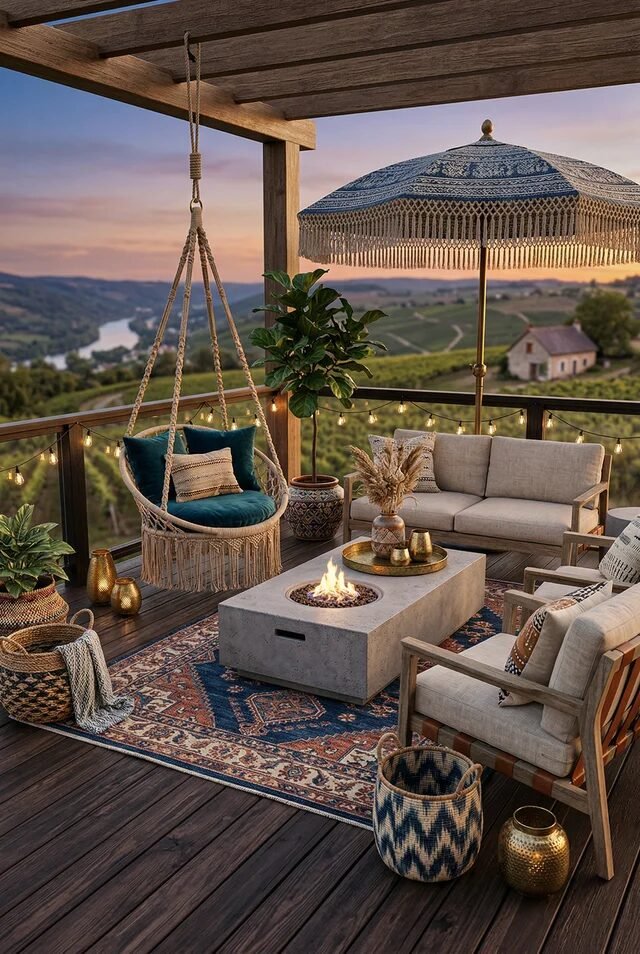
We’re not saying a hanging chair will fix your life… but it might fix your deck. This setup leans into that soft boho energy with just enough structure to keep it from feeling chaotic. The swing becomes the visual hook, while the fire table quietly grounds everything so it doesn’t float into “random Pinterest board” territory.
The design works because of layered contrast. You’ve got soft textiles, woven textures, and that patterned rug bringing warmth, while the clean-lined furniture keeps things balanced. The umbrella adds height variation, which is honestly underrated. It’s this mix of relaxed and intentional that makes the space feel styled, not staged.
If we’re recreating it, anchor your layout first—fire table in the center, seating around it. Then add one statement piece (yes, the swing). Keep your palette earthy with a few deeper tones for depth. And don’t skip string lights—they’re basically emotional support at this point.
Sunken Conversation Pit That Feels Exclusive
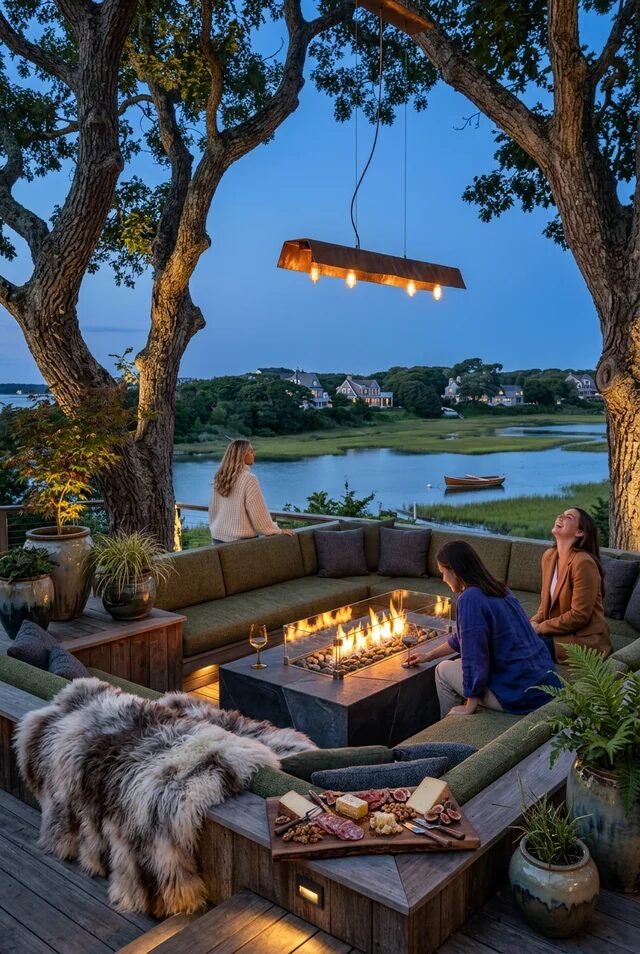
This is the kind of setup that makes people stay longer than they planned… and honestly, we love that for hosting. A built-in, slightly sunken seating area instantly creates intimacy. It’s giving “private lounge,” but outdoors, with snacks and a view.
From a design standpoint, this works because of enclosure and symmetry. The wraparound seating forms a clear boundary, while the fire feature in the center keeps everything visually anchored. The low profile makes the space feel cozy rather than bulky. It’s a masterclass in creating a focal point that people naturally gather around without overthinking it.
To recreate, focus on structure first—built-ins or modular seating that mimics that enclosed feel. Stick to one dominant color for cushions to avoid visual clutter. Then layer in texture (throws, wood, greenery) so it doesn’t feel flat. Bonus points if there’s a view… but we’ll take vibes over geography.
Cottage Garden Deck That Feels Alive
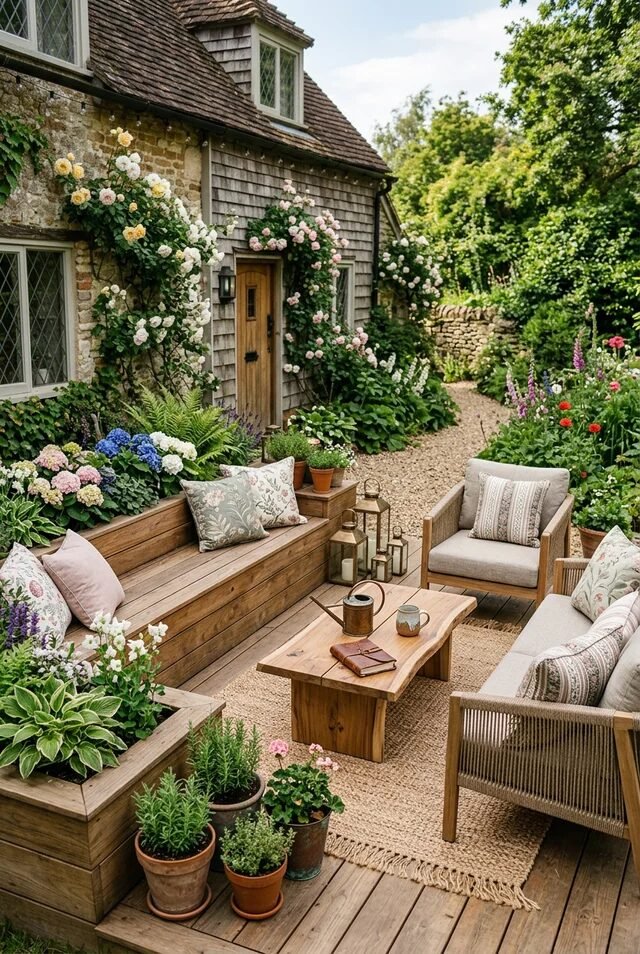
This one is soft, romantic, and slightly unbothered—in the best way. It blurs the line between deck and garden, which is exactly why it works. The florals aren’t just decor; they’re part of the architecture. And somehow, it all feels effortless… even though we know it’s not.
The magic here is organic layering. You’ve got climbing roses, potted plants, and built-in planters creating depth from every angle. The seating is simple, which is key, because the greenery is doing the talking. It’s a perfect example of letting one element dominate while everything else supports quietly.
If we want this look, start with greenery placement before furniture. Mix heights—ground pots, mid-level planters, climbing vines. Keep your furniture neutral and slightly rustic so it blends instead of competes. And yes, maintenance is real, but so is the main character energy this gives.
Layered Deck Levels With Soft Lighting
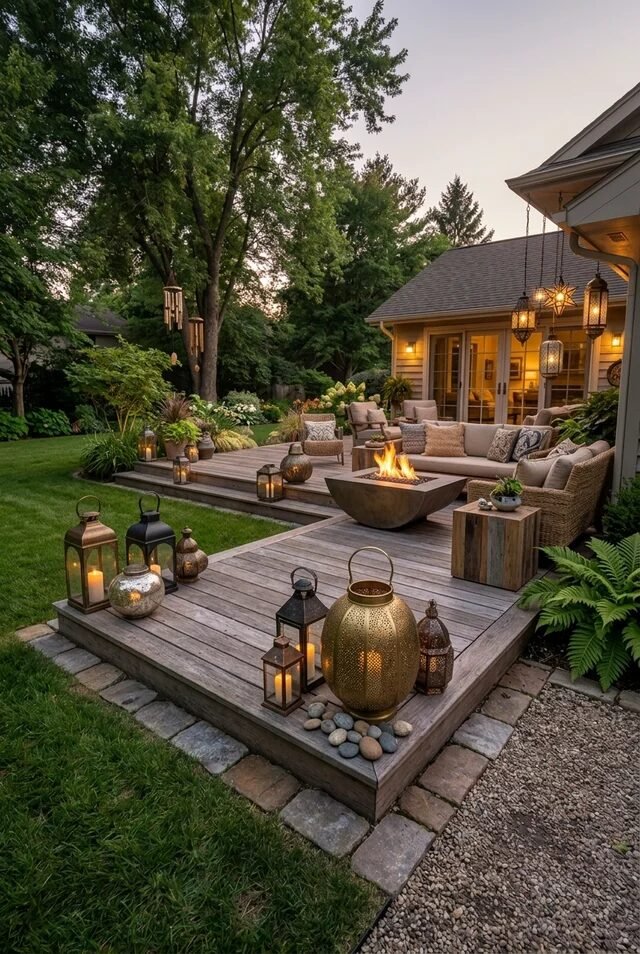
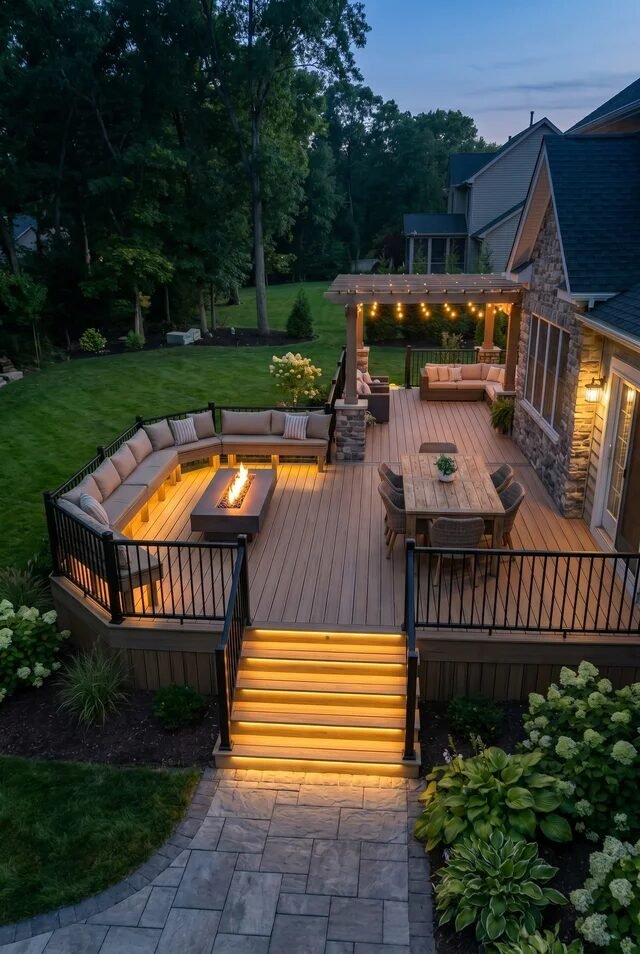
This setup is low-key genius. Instead of one flat deck, you get subtle level changes that naturally guide movement and define zones. It’s like your outdoor space suddenly learned how to multitask without being obvious about it.
What makes it work is spatial hierarchy. Each level serves a purpose—lounging, walking, styling—and the transitions feel smooth, not forced. Then you layer in lighting (lanterns, built-ins, soft glows), and suddenly everything feels intentional. The lighting here isn’t just functional—it’s quietly shaping the entire mood.
If we’re recreating this, think in layers, not just decor. Even a small step-down can change how a space feels. Use consistent materials to keep it cohesive, then add lighting at different heights—floor, table, eye level. And please, resist the urge to overfill it. Let the levels breathe.
Covered Deck With Warm Ambient Glow
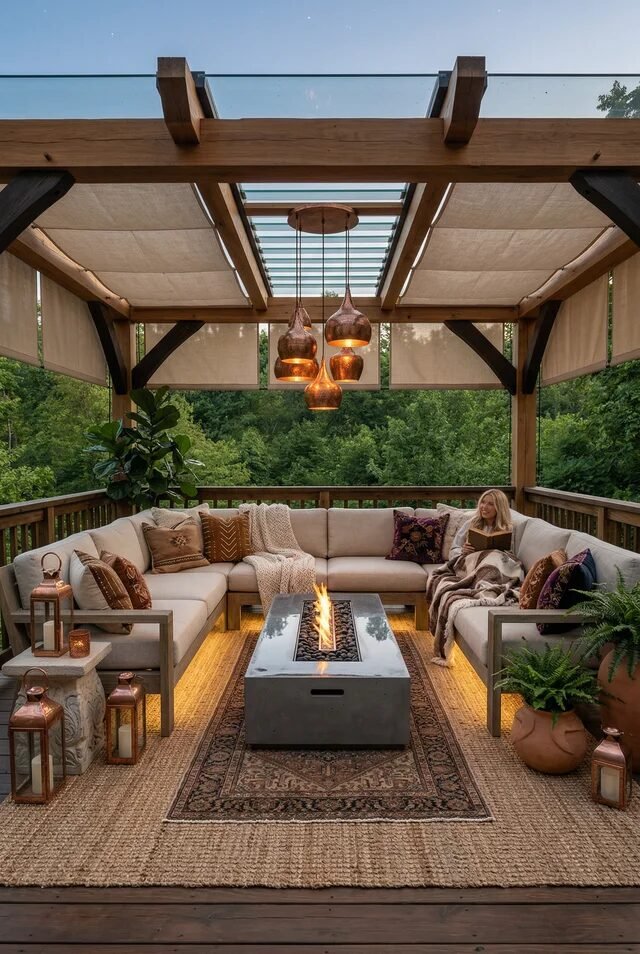
This is what happens when cozy meets a little bit of drama—in a good way. The covered structure creates a room-like feeling, while the warm lighting makes it feel like somewhere we’d actually want to stay past 9 PM. Revolutionary, honestly.
Design-wise, it’s all about symmetry and warmth. The seating faces inward, centered around the fire feature, which keeps everything grounded. Then you get those pendant lights above, adding a soft glow that feels intentional, not harsh. It’s the balance between structure and softness that makes this space feel finished.
To recreate, start with your layout—keep it symmetrical if possible. Invest in warm-toned lighting (no cool white, we’re not in a parking lot). Layer rugs and textiles to soften the structure. And if you can add a partial cover or pergola? Do it. It’s giving outdoor living room, and we’re here for it.
A Well-Styled Deck Quietly Changes Everything
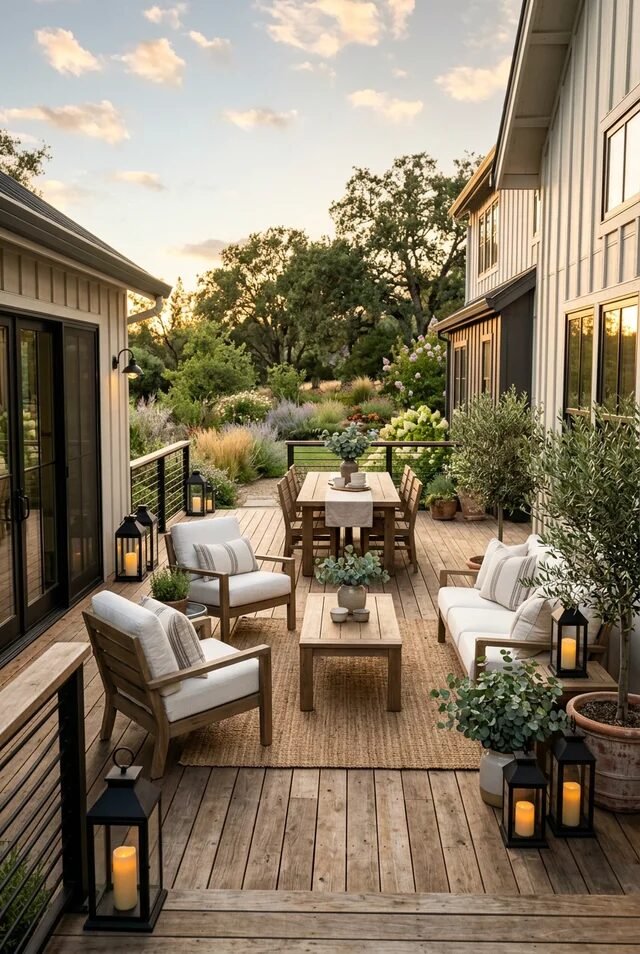
Here’s the thing no one says out loud: once your deck feels right, you start using it… a lot. Morning coffee hits different, random weeknights turn into mini hangouts, and suddenly you’re that person lighting candles outside for no reason. Slightly extra? Yes. Regret? Absolutely not.
Looking back, the strongest designs all share a few things. They create zones without overcomplicating the layout, they mix textures so the space feels layered, and they use lighting like a main character, not an afterthought. Good outdoor design isn’t louder—it’s just more intentional.
If we’re taking anything from this, let it be this: start small, but start with purpose. One cozy corner, one strong focal point, one layer at a time. Because once it clicks, your deck stops being “that space outside”… and becomes your favorite room.
 Steal Our Home Styling Secrets!