
Coral Bells Landscaping, But Make It Feel Like a Designed Garden (Not Just Planted)
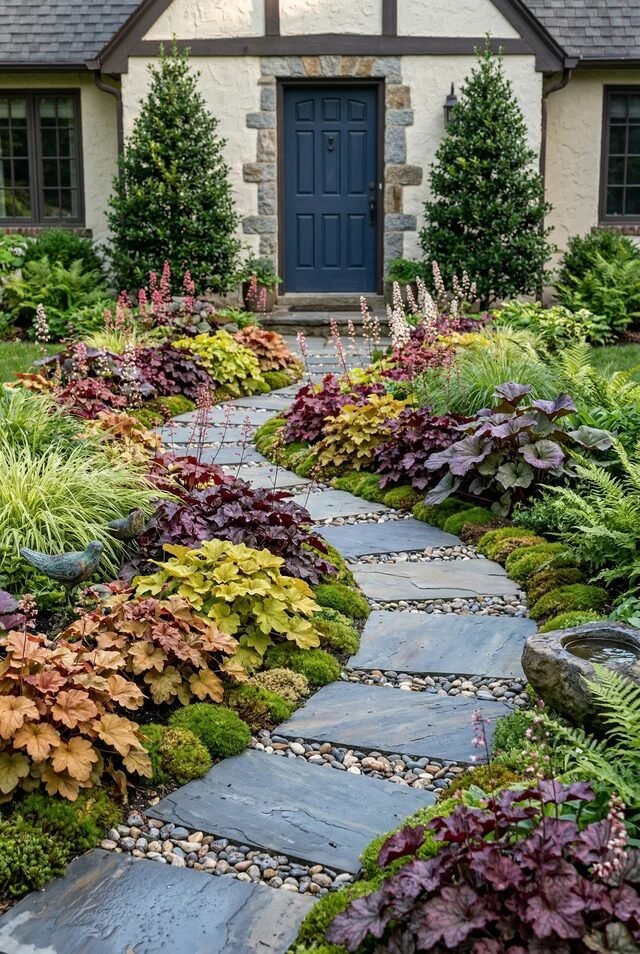
Coral bells are one of those plants that don’t scream for attention—but somehow still get it. We’re talking rich foliage, layered color, and that soft texture that makes everything feel a little more styled without trying too hard. It’s giving “effortless,” but in a very intentional way.
What we love most is how flexible they are. Whether we’re going full cottagecore with winding paths and pergolas, or leaning modern with clean lines and stone, coral bells just adapt. They’re basically the supporting actress that low-key carries the entire film. And yes, we noticed.
As we move through these ideas, think less about copying and more about translating the vibe. Notice how color repeats, how layers build depth, and how edges are softened. That’s the real magic. Not the plant itself—but how we style it.
Layered Front Bed With River Rock Edge
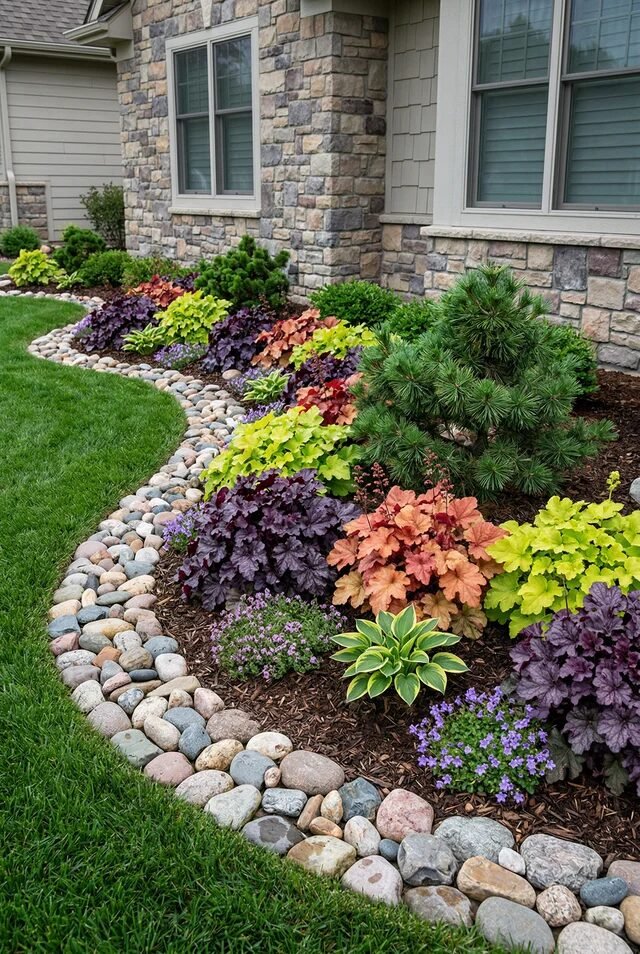
This is that “effortlessly put together” look that’s actually doing a lot behind the scenes. The layering here is chef’s kiss—low-growing ground covers, mid-height coral bells, then evergreen structure behind. It creates depth without feeling chaotic, which is honestly the dream.
Design-wise, this works because of repetition and color rhythm. The alternating tones of lime, burgundy, and peachy coral bells keep your eye moving, while the river rock border softly defines the space. That curved edge? It’s doing more emotional work than we admit. Straight lines feel stiff; curves feel expensive.
If we’re recreating this, start with 2–3 coral bells varieties max so it doesn’t turn into a color identity crisis. Anchor the back row with something evergreen for year-round structure. Then edge it with smooth stones—not too big, not too tiny. Think “quiet luxury,” not “DIY panic.”
Romantic Pergola Garden With Coral Bells
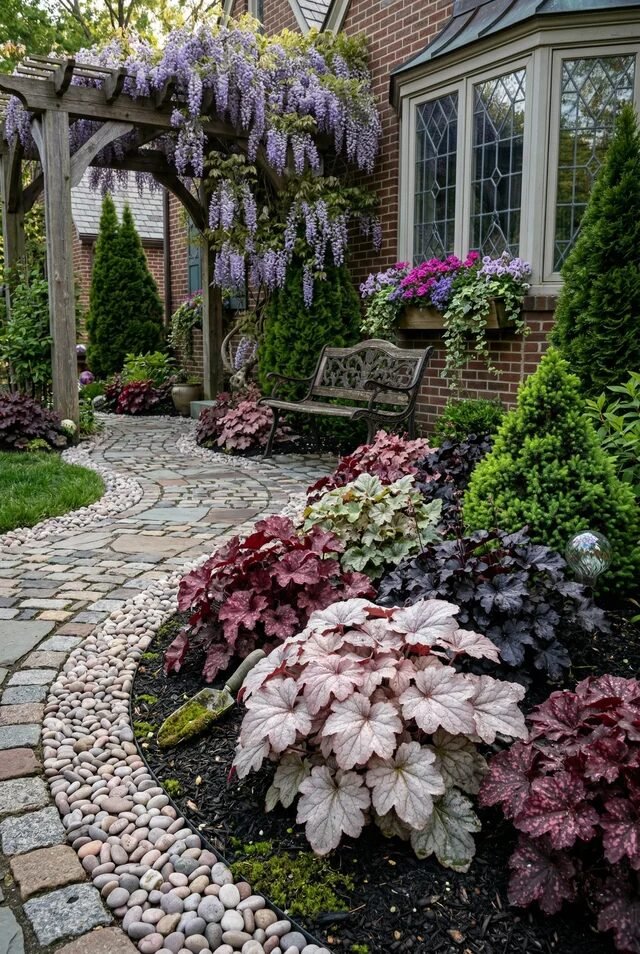
Okay but this? This is not just landscaping, this is a whole personality. The coral bells here play a supporting role under that dramatic pergola moment, and honestly… they understand the assignment.
The principle at play is contrast and softness. You’ve got strong verticals from the pergola and evergreens, then these lush, slightly dramatic coral bells grounding everything below. It’s giving structure meets romance, and we’re very into it.
If we want to recreate this vibe, we need layers that feel intentional but not try-hard. Go for deeper-toned coral bells under shaded areas—they thrive there anyway. Add a bench (because yes, we will sit and romanticize our life for five minutes). Then frame everything with a loose stone path so it feels organic, not overly planned. A little wild, but curated. Like us.
Terraced Modern Garden With Coral Bells
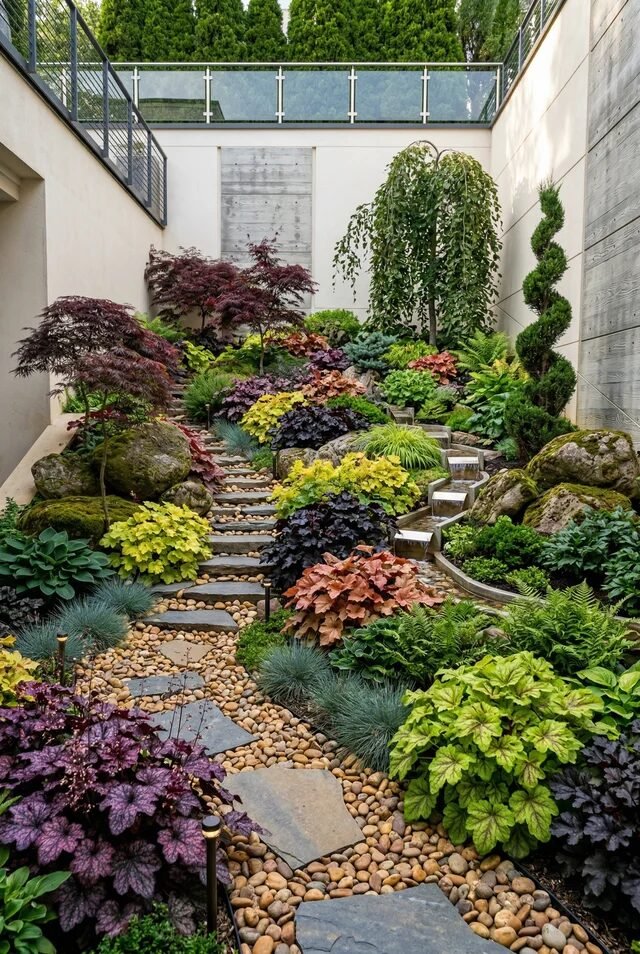
This one is for the girls who like their garden a little more “architectural digest” and a little less cottagecore. The coral bells bring color, but the structure is doing the heavy lifting.
We’re looking at elevation, repetition, and controlled chaos. The terracing creates natural zones, while coral bells soften all those hard edges. Without them, this would feel cold. With them, it feels intentional. Big difference.
If your yard has any slope at all, lean into it instead of fighting it. Use stone steps or mini retaining levels, then tuck coral bells along the edges to blur transitions. Stick to a tighter color palette here—too many shades and suddenly it’s giving botanical garden (not always in a good way). Keep it edited, clean, and slightly dramatic. Like a good outfit.
Contemporary Pathway Framed By Coral Bells
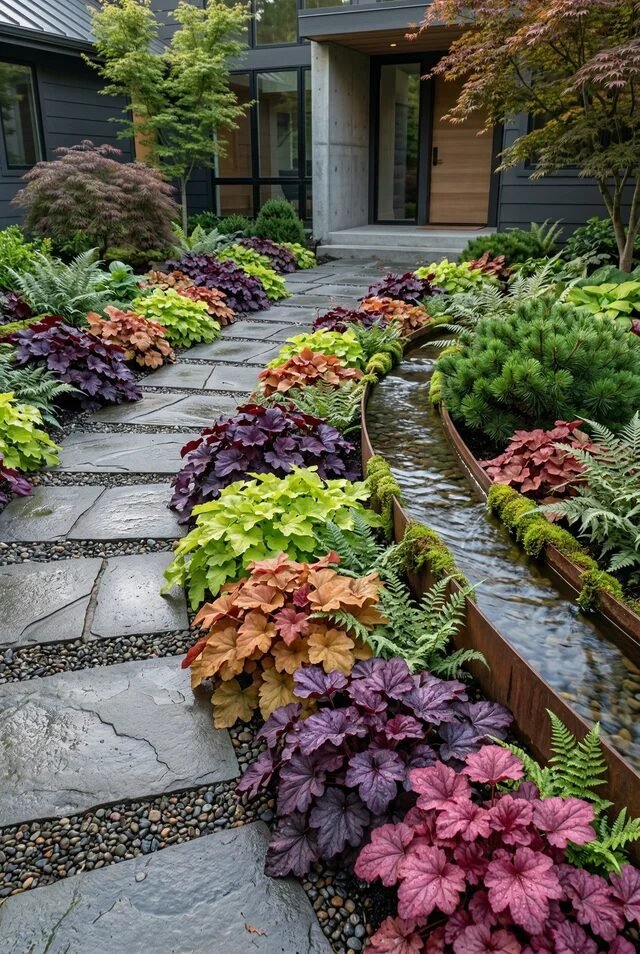
There’s something very satisfying about a pathway that feels styled, not just functional. And coral bells? They’re low-key carrying the whole aesthetic here.
The design principle is all about guiding the eye. The path gives direction, while the coral bells add movement and softness along the edges. The mix of colors keeps it playful, but the layout keeps it grounded. It’s structured, but not stiff—which is honestly the sweet spot.
If we’re copying this energy, focus on spacing first. Your stepping stones should feel natural, not like a hopscotch situation gone wrong. Then plant coral bells in slightly irregular clusters so it feels organic. Bonus points if you add a subtle water feature or gravel detail—it instantly elevates the whole scene. Not necessary, but… kinda irresistible.
Lush Pond Border With Coral Bells
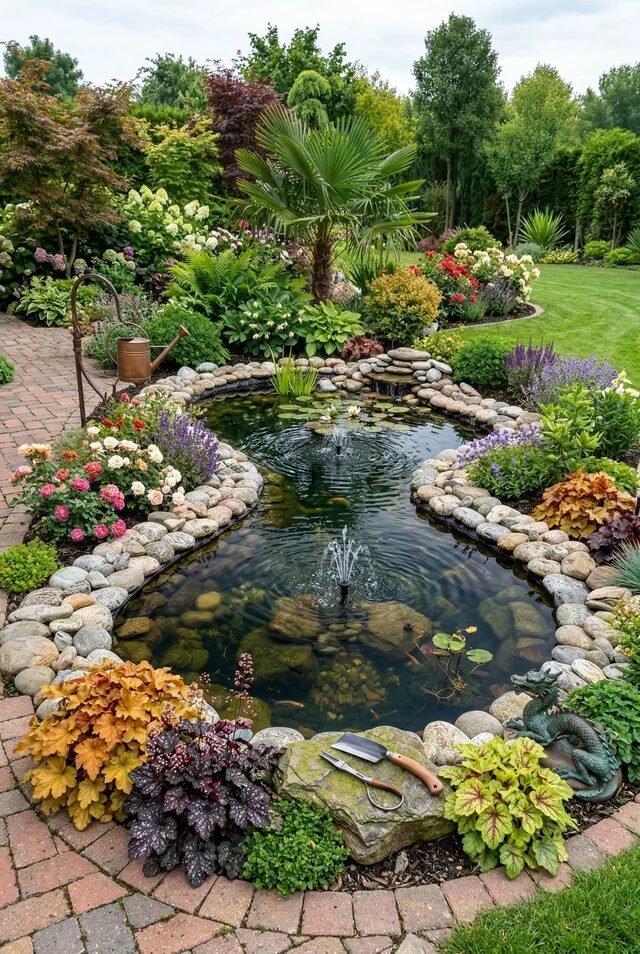
This is where coral bells really get to show off. Around a pond, their colors pop harder, the textures feel richer, and everything just looks… expensive. Even if it’s not. Love that for us.
What makes this work is contrast between water, stone, and foliage. The softness of the plants balances the hardness of the rock edge, while the reflective water doubles the visual impact. It’s basically nature doing a mirror selfie, and it works.
To recreate, don’t overcrowd the pond edge. Let each plant breathe a little so the textures actually read. Mix coral bells with a few flowering perennials for seasonal interest, but don’t overdo it. Keep the palette cohesive so it doesn’t feel chaotic. And please—clean water matters. Murky pond = instant vibe killer.
Zen-Inspired Corner With Coral Bells
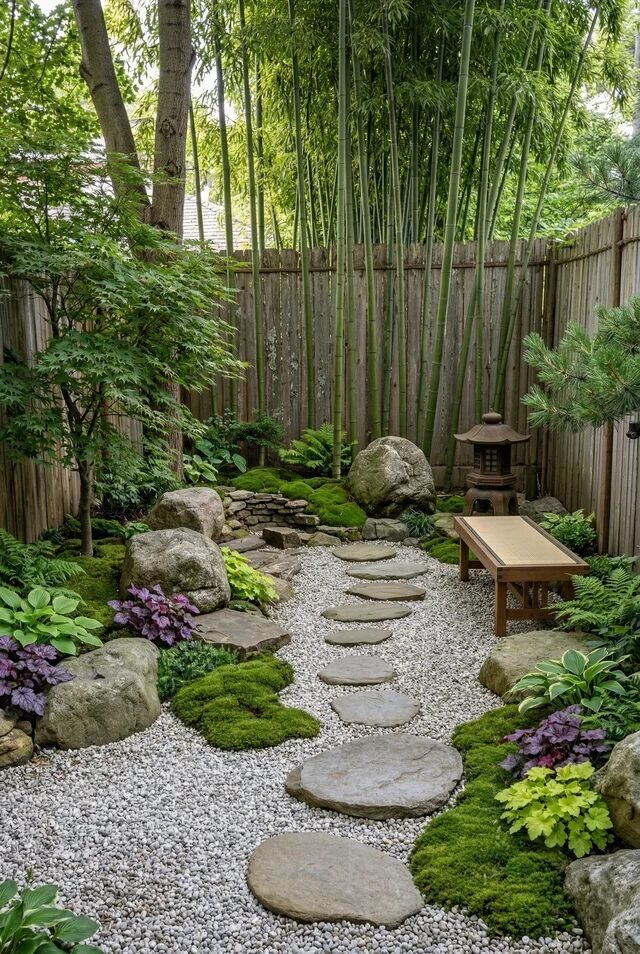
This one feels like a deep breath. Everything is calm, intentional, and just a little bit mysterious—in a “we definitely journal here” kind of way. The coral bells are used sparingly, but that’s exactly why they stand out.
The design principle here is restraint. You’ve got a limited palette—greens, soft purples, natural stone—and a strong focus on texture. Moss, gravel, bamboo, and rock all play different roles, while coral bells quietly add color without breaking the vibe. It’s minimal, but not boring. That’s the fine line.
If we’re recreating this, resist the urge to overplant. Seriously. Choose one or two coral bells varieties in deeper tones and tuck them near rocks or path edges. Let negative space exist—it’s part of the aesthetic. And keep your materials natural and slightly imperfect. This is not the place for anything glossy or overly polished. Think peaceful, not Pinterest-perfect.
Elevated Front Yard With Water Feature
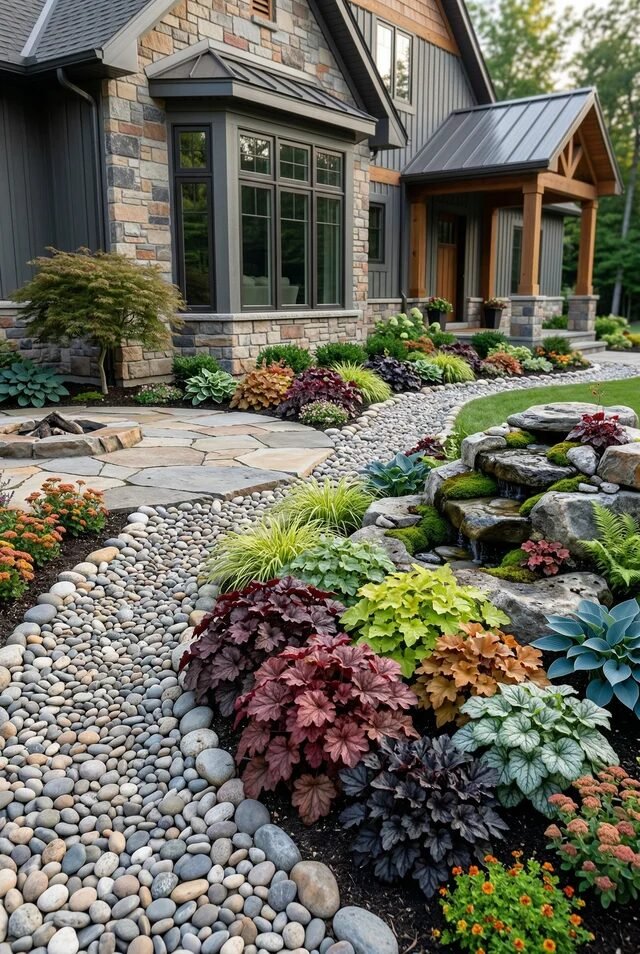
This is where curb appeal meets “okay wow, they have their life together.” The coral bells are doing a lot of visual heavy lifting, but the water feature? That’s the main character energy.
What makes this work is layering with a focal point. The eye naturally moves from the structured house lines to the soft planting, then lands on the cascading water. Coral bells bridge that transition beautifully. They soften everything without stealing the spotlight—honestly, very emotionally mature of them.
If you want to recreate this, start with your focal point first (water feature, sculpture, whatever your budget allows). Then build outward with coral bells in clusters, not lines. Mix in ornamental grasses for movement so the space doesn’t feel static. And keep your color palette cohesive—this is not the moment for a random neon plant cameo. Stay curated.
Cozy Side Yard Path With Coral Bells
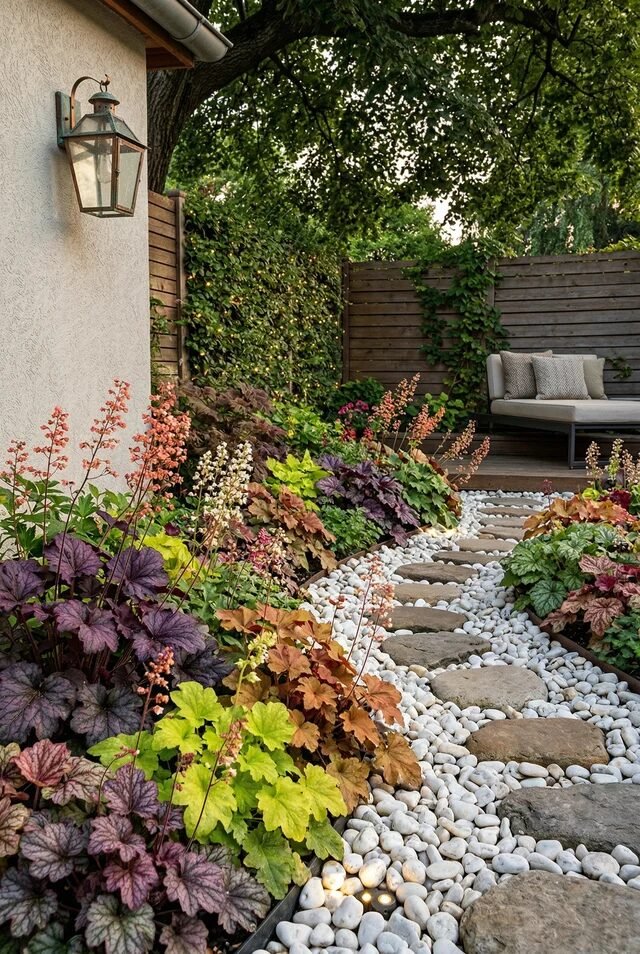
We love a side yard glow-up, because why should the main yard have all the fun? This setup turns a “walk-through space” into a “wait, should we sit here for a second?” kind of moment.
The design works because of enclosure and flow. The fence, greenery, and curved path create a sense of intimacy, while coral bells add softness and color along the edges. It feels intentional, not like leftover space—and that’s the upgrade.
If we’re doing this ourselves, focus on making the path slightly curved instead of straight. It instantly feels more relaxed. Use light-colored gravel to bounce light (especially in narrow spaces), then layer coral bells in mixed tones for depth. Add a small seating nook at the end—even if we only use it once a week, it completes the story. And yes, add soft lighting. We deserve ambiance.
Storybook Entry Path With Coral Bells
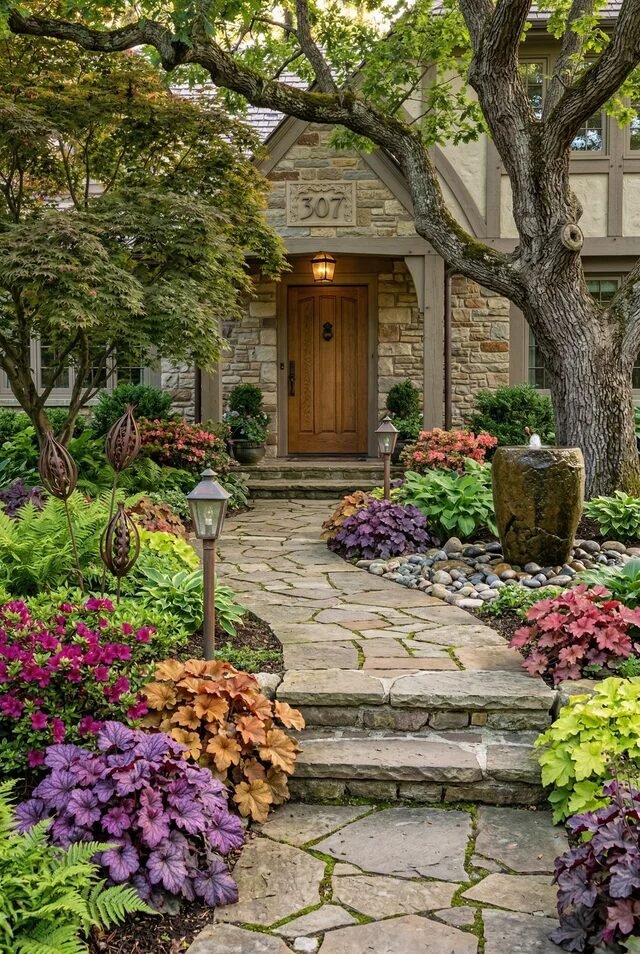
This is the kind of entry that makes people slow down… and maybe rethink their life choices just a little. The coral bells frame the path like they know they’re part of the welcome committee, and honestly, they’re doing an excellent job.
The design works because of framing and focal progression. Your eye moves from the layered plantings toward the front door, guided by the stone path and subtle lighting. Coral bells sit low but rich in color, balancing the taller shrubs and trees. It’s curated, but still feels warm—not intimidatingly perfect.
If we’re recreating this, think in layers from the path outward. Keep coral bells close to the walkway so their color pops at eye level. Add soft lighting (not stadium-bright, please) to create that cozy glow. And mix in a few flowering plants, but don’t overcrowd—this look thrives on breathing room and quiet confidence.
Curved Backyard Border With Coral Bells
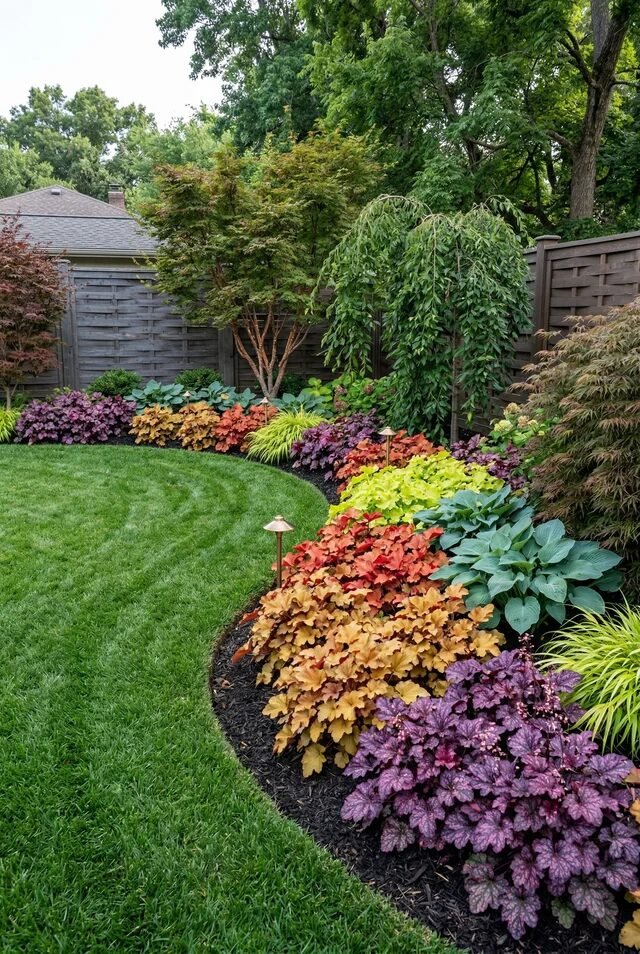
This one is giving “effortless backyard that somehow always looks good,” which we respect deeply. The coral bells are arranged in a soft wave along the lawn, and the whole thing just flows without trying too hard.
The principle here is gradient layering and color distribution. Taller trees and shrubs create a backdrop, while coral bells build a colorful mid-to-low layer that feels intentional. The curve is doing the heavy lifting—it keeps everything from feeling rigid or overly planned.
If we want this vibe, start with the curve first. Literally map it out before planting anything. Then layer coral bells in clusters, blending colors gradually instead of placing them randomly. Add a few hostas or ornamental grasses for contrast so it doesn’t feel flat. And keep that lawn edge crisp—because yes, that detail quietly carries the whole look.
Designing With Coral Bells Feels Surprisingly Effortless
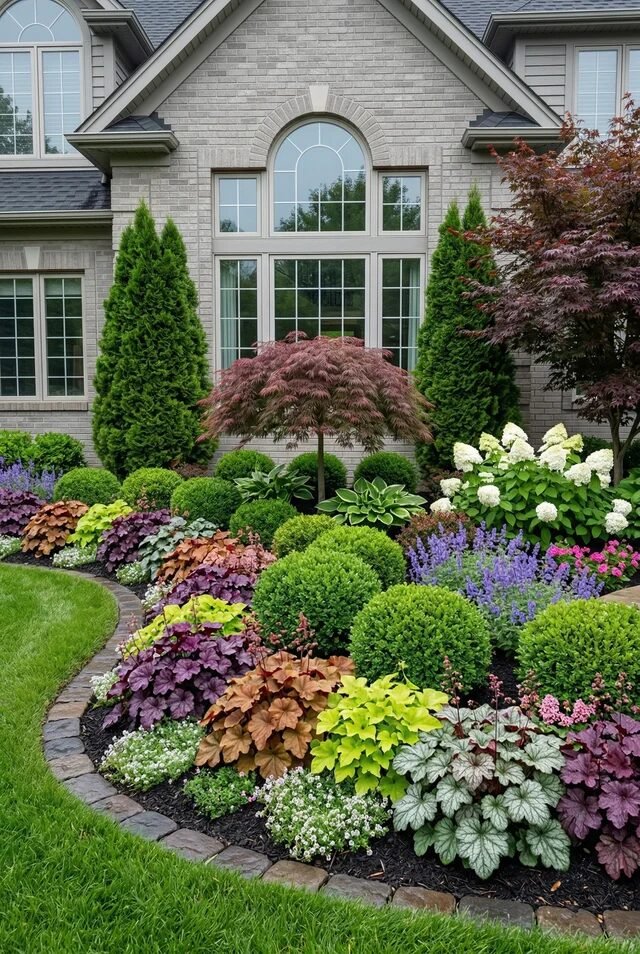
At this point, we’ve seen coral bells do a little bit of everything—frame pathways, soften stone, elevate water features, and even make a side yard feel like a destination. And somehow, they never feel overdone. That’s rare, and we should respect it.
The secret is balance. Mixing bold foliage with calming textures, structured layouts with organic curves—it’s all about contrast that still feels cohesive. When coral bells are used right, they don’t just decorate a space—they connect it. That’s the difference between a garden and a designed garden.
If we’re taking anything from this, let it be this: keep it layered, keep it intentional, and don’t overcomplicate things. A few well-placed coral bells can do more than a dozen random plants ever could. And honestly? We love a low-effort, high-impact situation.
 Steal Our Home Styling Secrets!