
When a Kitchen Starts Feeling More Like a Boho Living Space
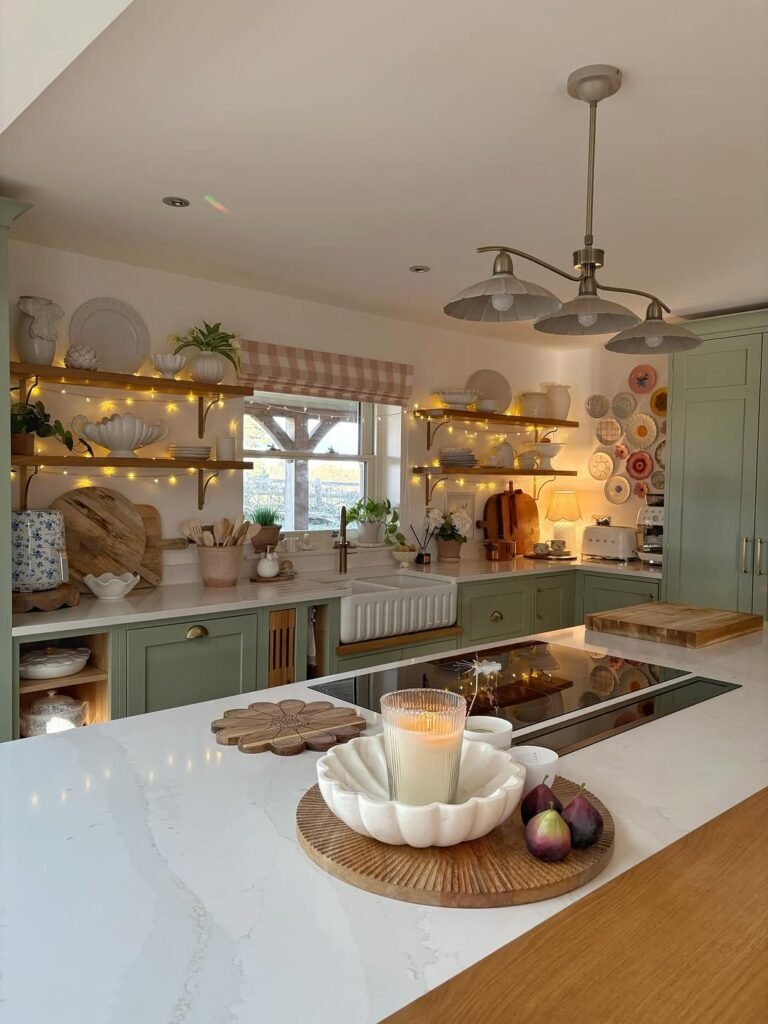
Some kitchens look beautiful but feel a little… stiff. Like they’re waiting for permission before anyone actually cooks in them. Boho kitchens are the opposite. They’re relaxed, layered, and a little bit imperfect in the best possible way. Think warm wood, woven textures, soft neutrals, plants casually living their best life, and lighting that feels more like mood than task.
What we love about boho kitchens is how they mix structure with personality. Clean cabinets, tiled backsplashes, and practical layouts keep things functional, while rattan lighting, vintage pieces, rugs, and greenery soften everything. The result is a kitchen that feels styled but never overly polished.
In the ideas ahead, we’re exploring different ways boho style shows up in real kitchens — from airy neutral corners to plant-filled spaces and cozy cottage moments. Some lean minimal, others embrace collected charm. But they all share one thing: a kitchen that actually feels like a place you want to hang out in.
Soft Neutrals and Natural Wood Boho Kitchen
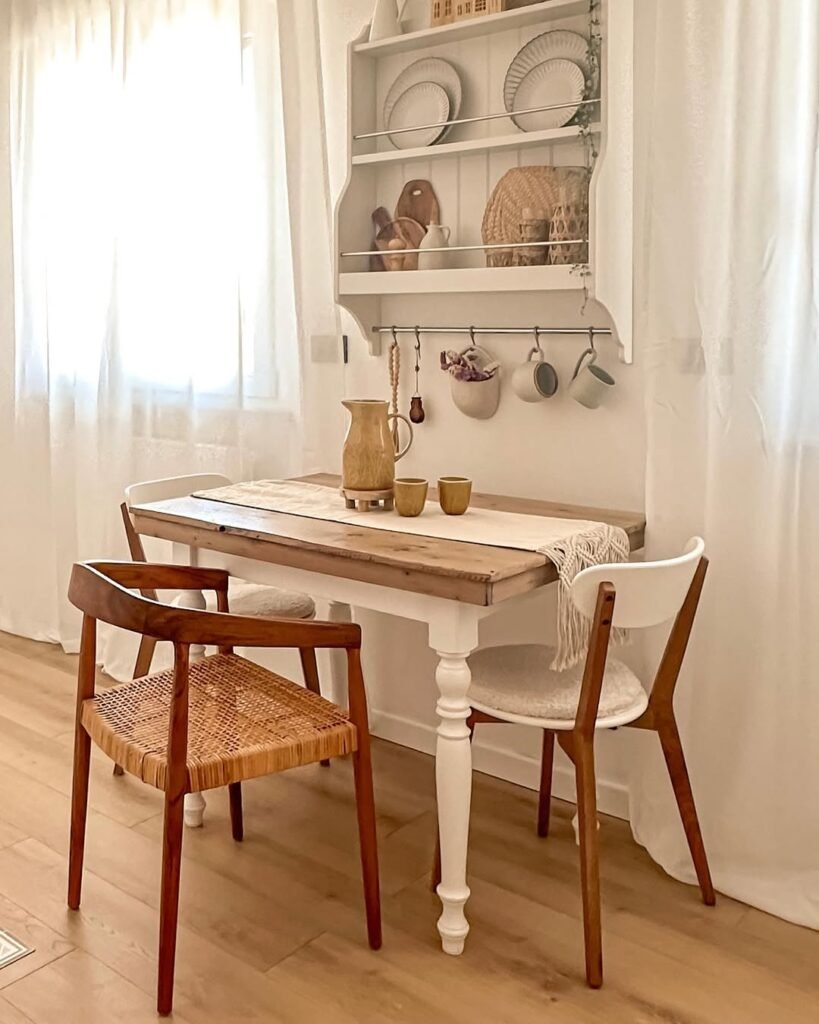
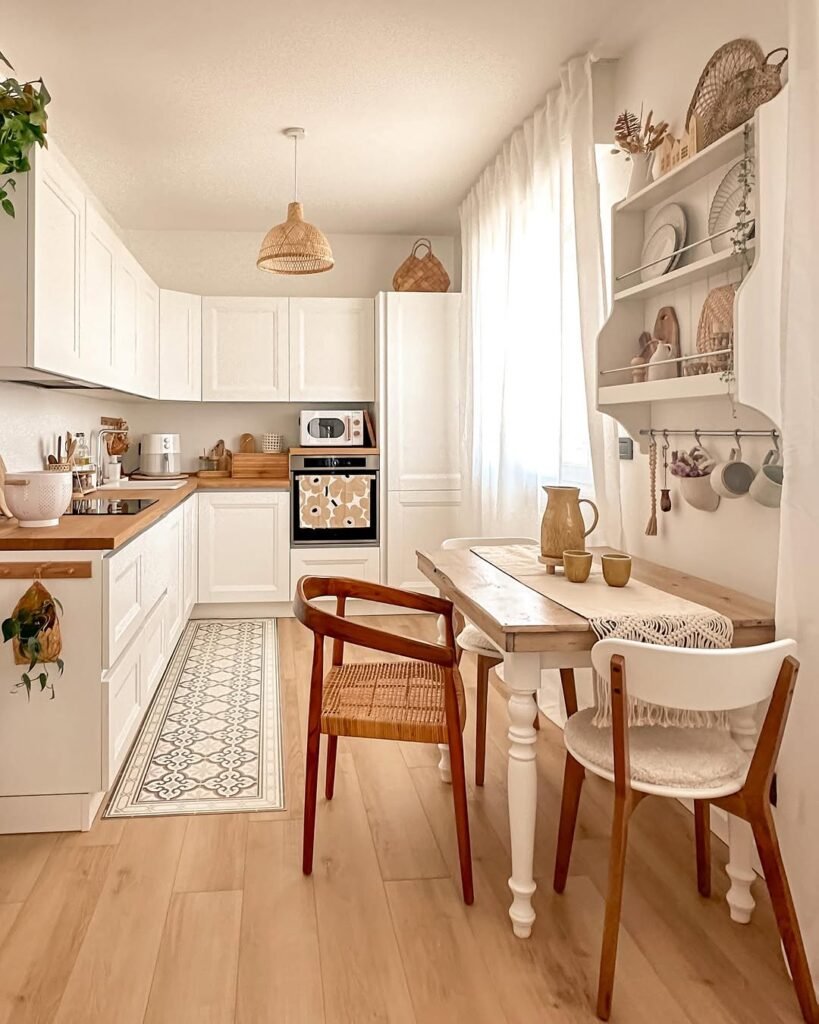
The first thing we notice here is how effortlessly calm this kitchen feels. It’s not trying too hard, which is honestly a very boho move. Soft whites, pale wood floors, woven chairs, and that delicate little wall shelf create a palette that whispers rather than shouts. The design principle doing the heavy lifting here is tonal harmony — everything lives in the same warm, creamy color family, so the space feels peaceful instead of busy. Boho kitchens don’t actually need loud colors; texture can do the talking.
Look closer and you’ll see how materials create interest. The rattan chair, ceramic plates, linen table runner, and wooden boards layer different tactile elements without crowding the room. It’s giving quiet café-in-the-morning energy, which honestly feels kind of elite for such a small setup.
If you want to recreate this vibe, start with a neutral base: off-white walls, light wood furniture, and simple ceramics. Add woven textures and natural materials gradually. And pro tip? Leave a little empty space. Boho looks relaxed, not cluttered — we’re going for breezy Pinterest moment, not “thrift store exploded in the kitchen.”
Airy Wood Island with Indoor Jungle Energy
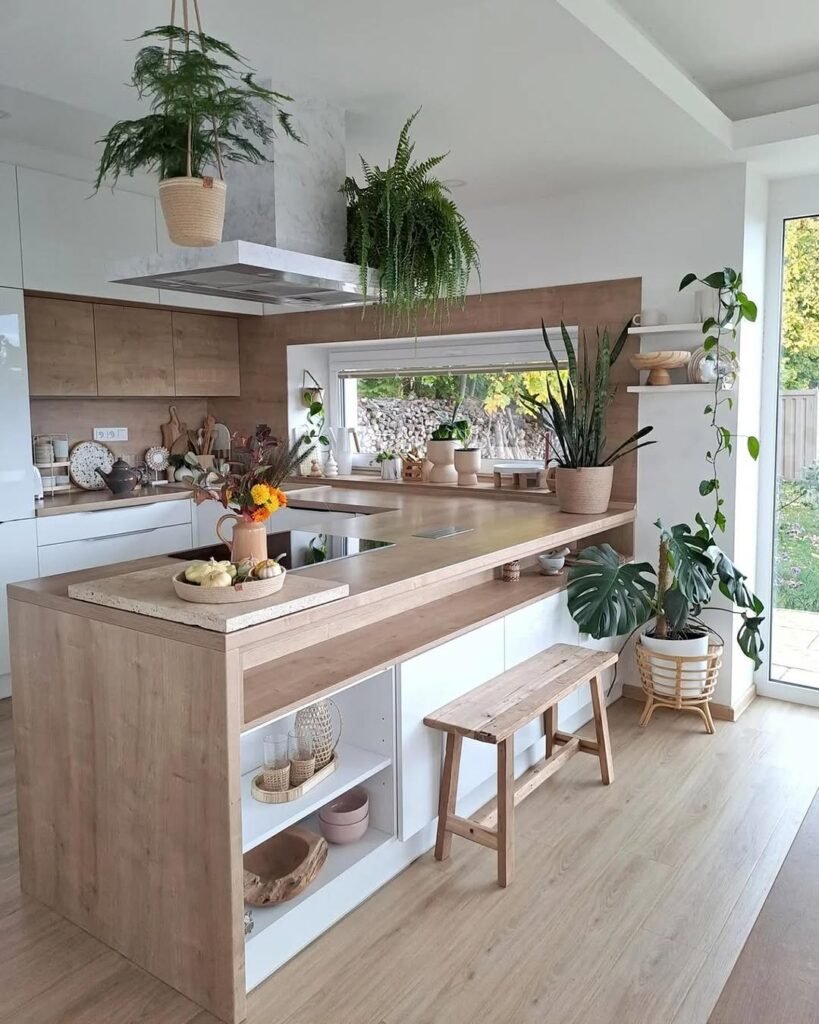
Some kitchens whisper. This one casually says, “Yeah we cook here… but we also thrive here.” The open wood island, floating shelves, and oversized window create a layout built around light and breathing room. The key design principle is visual flow: the horizontal wood surfaces connect the island, backsplash, and cabinetry so your eyes glide across the room without interruption.
And then come the plants — because apparently this kitchen decided oxygen levels should be premium. Hanging ferns, countertop plants, and trailing vines soften all that structured cabinetry. Plants are basically the boho equivalent of accessories; they turn a nice kitchen into a personality.
To recreate this look, focus on mixing clean architecture with organic elements. Choose simple cabinetry in neutral tones, then bring warmth through wood countertops or shelving. After that, go a little wild with greenery — hanging planters, trailing pothos, maybe a monstera if you’re feeling dramatic. Just remember: plants should frame the space, not block your cooking area. We’re building a jungle vibe, not an obstacle course while making pasta.
Cozy Plant-Filled Boho Galley Kitchen
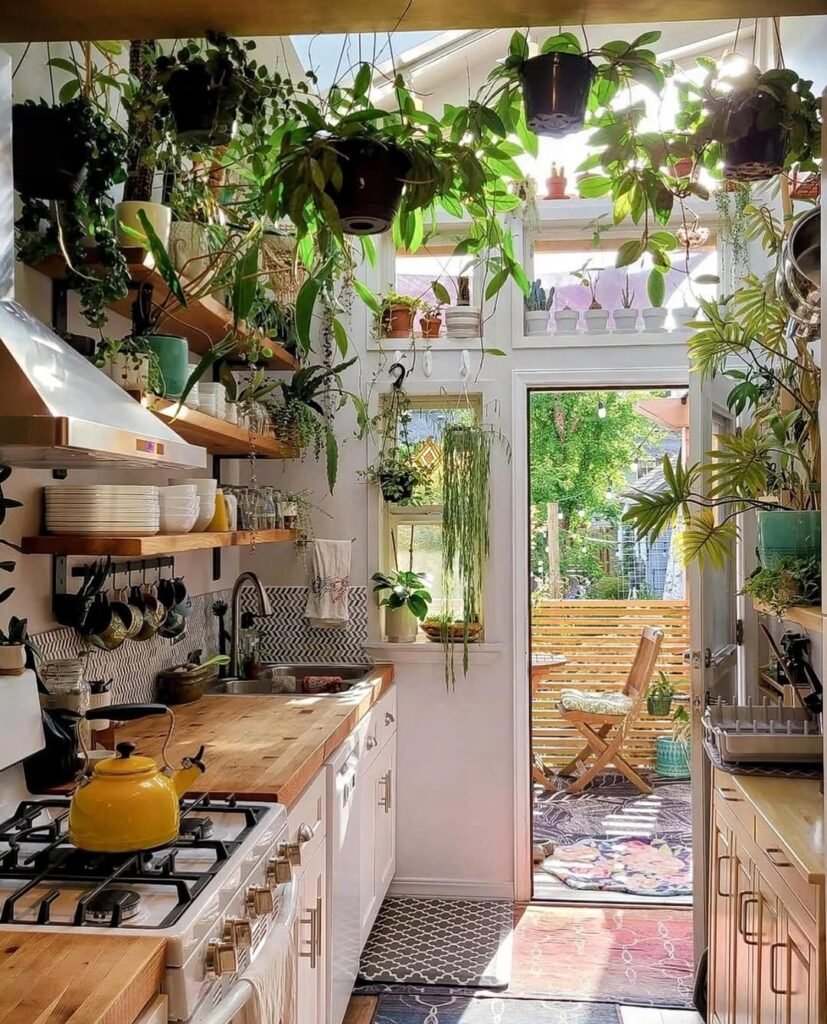
This kitchen is proof that small spaces can absolutely have main character energy. Instead of fighting the narrow layout, the design embraces vertical layering. Plants hang from the ceiling, trail along shelves, and fill the window frames, turning the entire kitchen into something that feels halfway between a greenhouse and a Sunday morning café.
The principle here is vertical styling. In a galley kitchen, horizontal space is limited, so decorating upward creates dimension without sacrificing function. Your eye travels from the wooden countertops up through the hanging greenery and into the bright windows, which makes the room feel taller and more alive.
If you want to recreate this vibe, start with open shelving and natural wood surfaces. Then add plants at different heights: hanging, shelf-level, and window-level. Variety keeps things from looking staged. And yes, watering them might feel like a second job sometimes — but honestly, the cozy jungle aesthetic is kind of worth the effort.
Warm Cottage Boho Kitchen Breakfast Corner
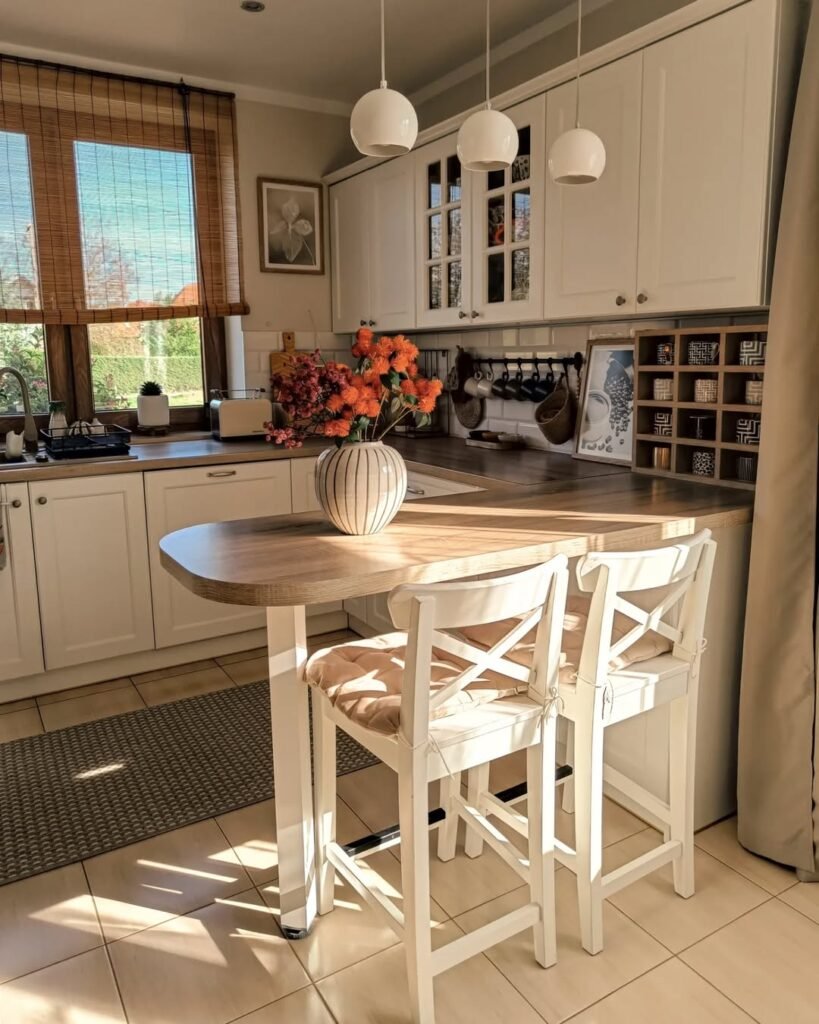
There’s something about a tiny breakfast counter that just feels like the kitchen equivalent of a warm hug. This one leans into cottage-boho charm with creamy cabinetry, soft wood counters, and a curved peninsula that subtly defines the dining zone. It’s small, but it feels intentional — which is exactly the point.
The design principle doing the magic here is spatial zoning. Even in compact kitchens, creating a dedicated eating spot adds function and personality. The bar stools, pendant lights, and centered vase visually anchor the area so it feels like its own little destination inside the kitchen.
If you’re recreating this look, focus on balance. Light cabinetry keeps the room bright, while wooden counters add warmth so it doesn’t feel sterile. Add a simple centerpiece — flowers, fruit, or even a ceramic bowl. The trick is keeping the counter styled but still usable. Because realistically, this is where coffee, toast, and half your life decisions will probably happen.
Candlelit Boho Kitchen with Nordic Warmth
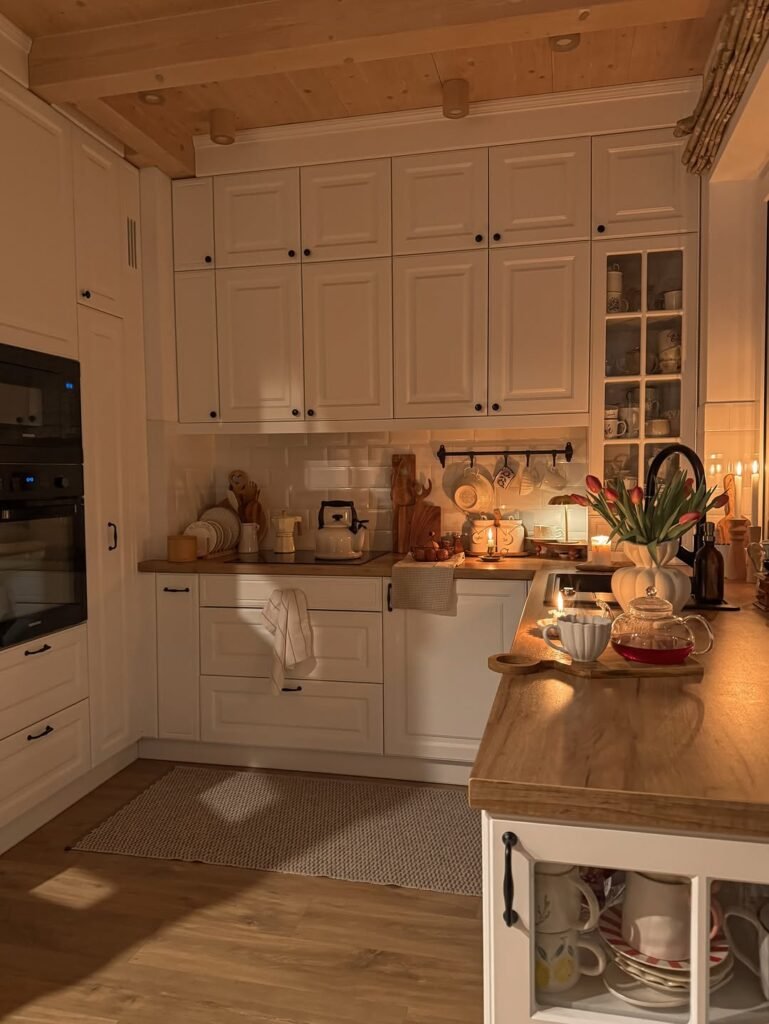
Not every boho kitchen needs sunlight pouring through giant windows. This one proves the vibe works just as beautifully at night. Warm wood countertops, creamy cabinetry, and soft candlelight create a moody, almost Scandinavian take on boho styling. It feels calm, cozy, and slightly magical — like the kitchen version of your favorite oversized sweater.
The design principle here is atmosphere through layered lighting. Instead of relying on bright overhead lights, the space uses candles and warm task lighting to create depth. Lighting can completely change the emotional tone of a kitchen, which is something people underestimate way too often.
If you want to recreate this cozy vibe, start with warm materials: wood counters, neutral cabinets, and soft textiles like rugs or tea towels. Then introduce ambient lighting — candles, warm bulbs, maybe a small lamp if your layout allows it. Suddenly the kitchen stops feeling purely functional and starts feeling like a place where you actually want to linger… preferably with tea and a slightly dramatic life conversation.
Sculptural Rattan Lighting Over Minimal Bar
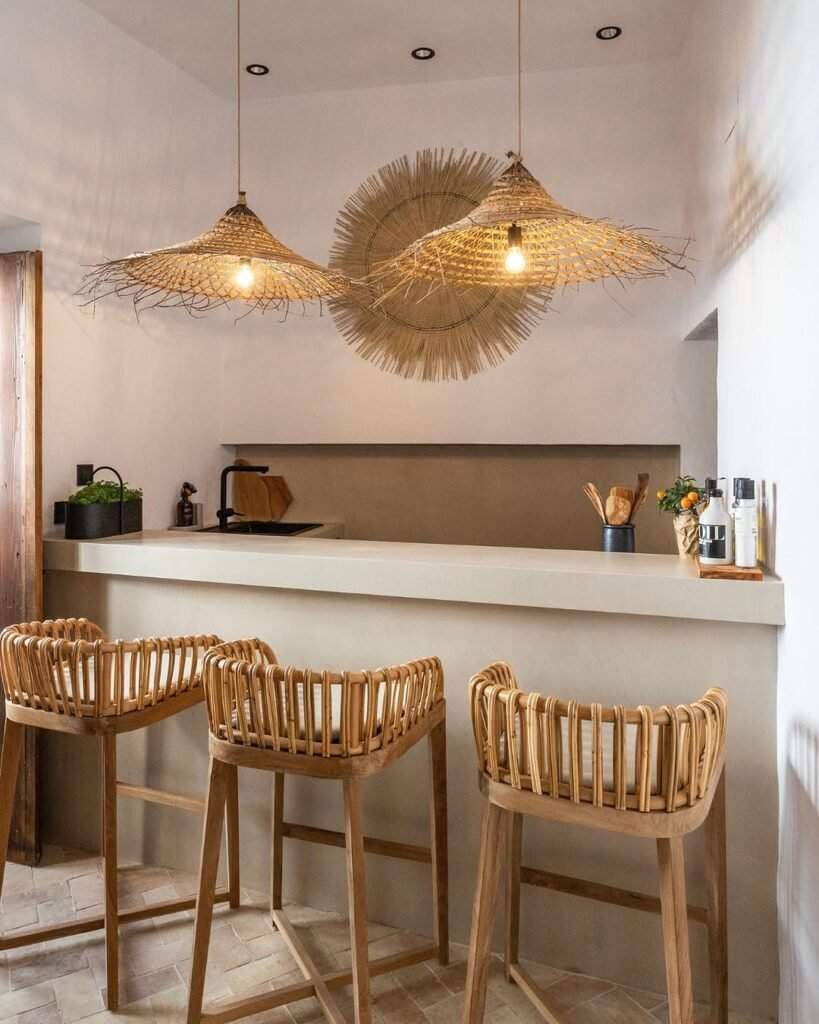
Sometimes boho design isn’t about adding more stuff — it’s about choosing the right statement pieces and letting them breathe. This kitchen does exactly that. The clean plaster bar, neutral palette, and minimal cabinetry create a calm canvas, while those dramatic woven pendant lights instantly steal the spotlight. This is a perfect example of focal point styling — one bold element anchoring the entire room.
The rattan stools echo the lighting above, which creates visual rhythm. Designers call this repetition, but we can just call it good taste. When materials repeat across the space, everything feels intentional rather than random. And honestly, those sculptural lamps look like they belong in a boutique hotel bar somewhere in Bali.
If you want to recreate this vibe, keep the base palette simple: warm neutrals, plaster textures, and light stone surfaces. Then invest in oversized woven lighting. Lighting in boho kitchens isn’t just functional — it’s basically jewelry for the room. Choose something sculptural and let it do the flirting.
Soft Cottage Boho Kitchen Reading Corner
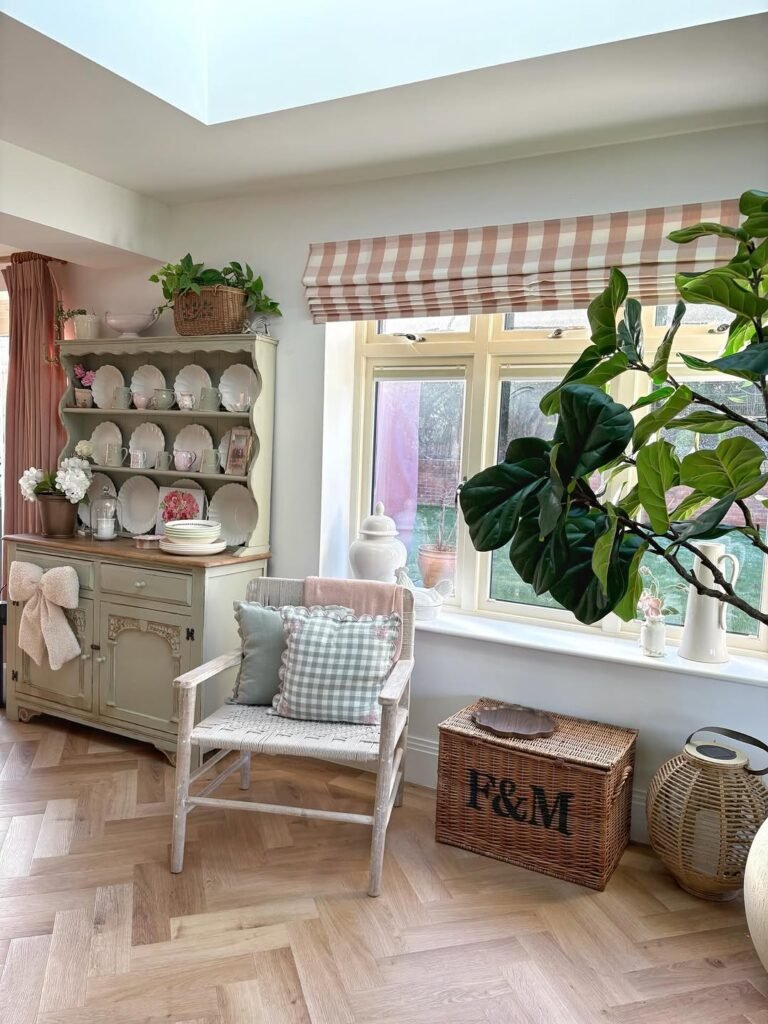
Not every kitchen moment needs to revolve around cooking. Sometimes the real magic happens in a cozy corner with sunlight and a good cup of tea. This little nook blends cottage softness with subtle boho layering — think wicker baskets, pastel textiles, and a vintage hutch filled with delicate plates.
The design principle here is emotional zoning. Instead of filling the kitchen with purely functional furniture, this layout creates a relaxation pocket inside the space. A kitchen that invites you to linger instantly feels warmer and more personal.
Notice how textures do the storytelling: woven baskets, gingham cushions, linen curtains, and wood flooring. None of it is loud, but together it creates that soft, slightly romantic boho charm.
To recreate this idea, start with a comfortable chair near a window if possible. Add layered textiles like a cushion or throw, then style the surrounding area with vintage pieces or soft pastels. Suddenly your kitchen isn’t just where meals happen — it becomes the place where slow mornings and life chats quietly unfold.
Patterned Tile Backsplash Meets Natural Wood
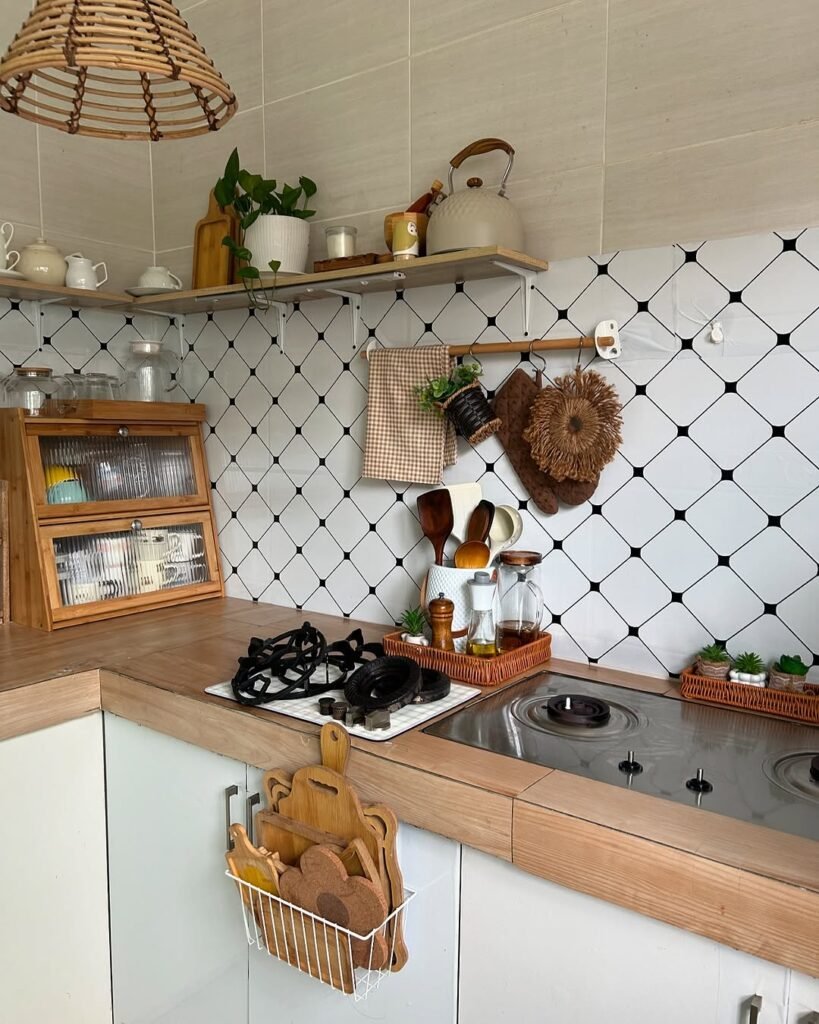
This kitchen is what happens when structure meets personality. The geometric tile backsplash brings strong visual contrast, while warm wooden countertops soften the look so it doesn’t feel too modern. Boho kitchens thrive on this kind of tension — mixing clean patterns with natural materials.
Open shelving also plays a key role here. Instead of hiding everything behind cabinets, the shelves display ceramics, plants, and everyday kitchen tools. It feels casual and lived-in, which is honestly the whole boho philosophy. Perfectly imperfect is the vibe.
Another subtle design trick happening here is scale layering. Small objects like jars and plants balance the larger surfaces like countertops and tile walls, keeping the space visually active without overwhelming it.
If you want to recreate this look, start with a bold backsplash tile — geometric or vintage-inspired works best. Pair it with wood counters or wood shelves to bring warmth back into the space. Balance is the secret sauce: pattern plus natural texture equals instant boho credibility.
Vintage Cottage Boho Kitchen Display Wall
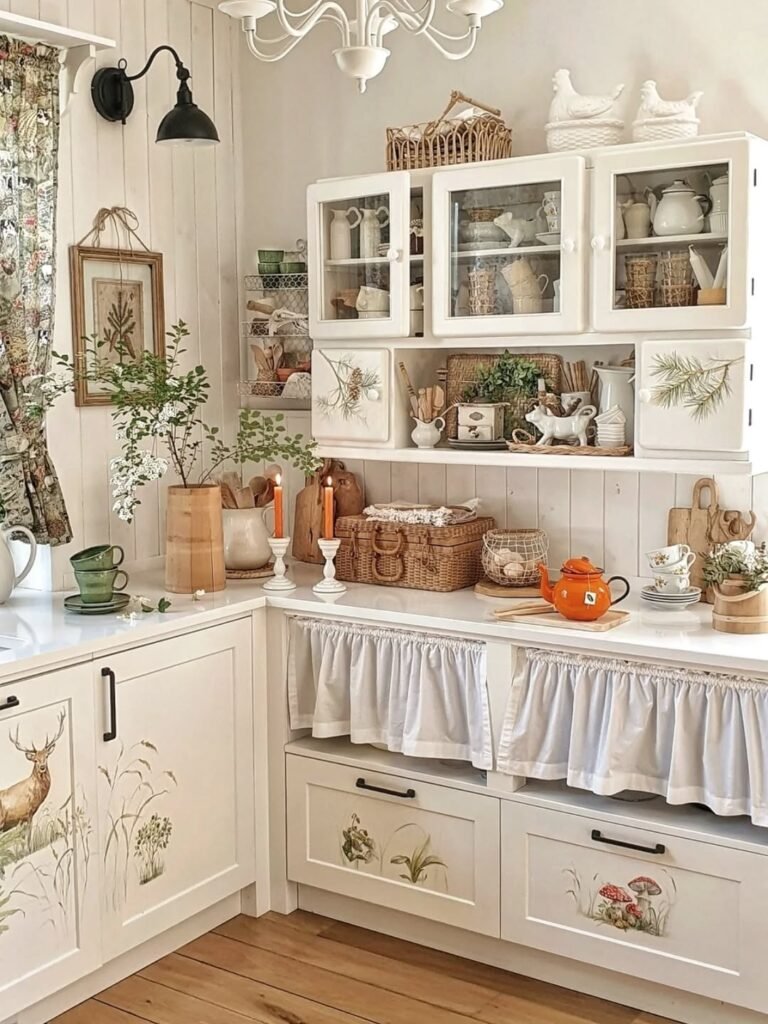
This kitchen feels like stepping into a charming countryside storybook — and honestly, we’re not mad about it. Glass-front cabinets filled with teacups, woven baskets, and botanical motifs create a space that’s equal parts nostalgic and cozy.
The key principle here is curated layering. Instead of random clutter, every object feels thoughtfully placed. Plates stack vertically, baskets soften the cabinet tops, and small greenery breaks up the cream palette. Good boho styling always looks collected over time, not purchased in one shopping spree.
Notice the curtain detail under the counter as well. That soft fabric introduces movement and softness, which balances the structured cabinetry.
If you’re recreating this style, start with a neutral cabinet base and then slowly add vintage-inspired accessories — ceramics, woven baskets, botanical artwork, maybe a quirky teapot or two. The goal isn’t perfection. It’s personality. The kind that makes guests quietly snoop around your kitchen shelves.
Earthy Boho Kitchen With Global Rug Layers
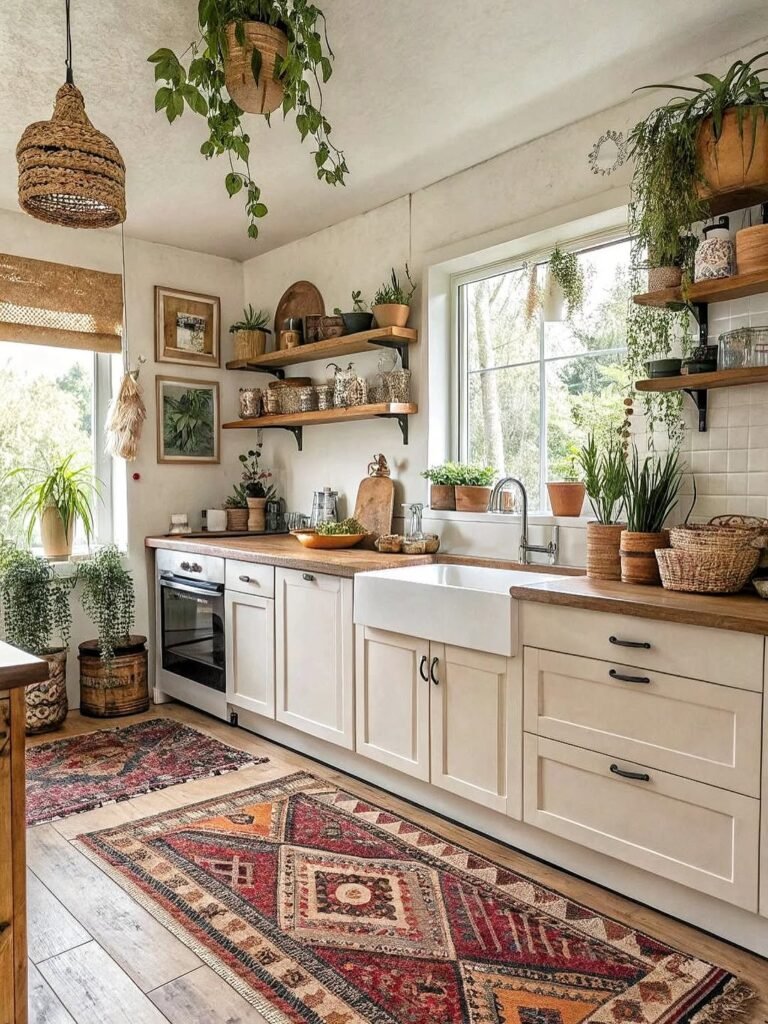
This kitchen is basically the Pinterest version of “effortlessly cool.” Cream cabinetry, butcher block counters, and floating wood shelves set the foundation, but the real personality comes from the layered textiles and greenery. Those vintage-style rugs instantly warm up the entire room.
The design principle at play here is grounding. Kitchens often feel hard and utilitarian, but rugs introduce softness and visual anchors. Textiles in a kitchen might sound slightly chaotic, but when done right, they make the space feel incredibly inviting.
Plants also play a supporting role, scattered across shelves and corners to soften the cabinetry lines. It’s relaxed, organic, and very much in the spirit of boho interiors.
To recreate this look, begin with neutral cabinets and natural wood counters. Add open shelves with plants, then layer one or two vintage-style rugs along the walkway. And yes, washable rugs are your best friend here. Because boho kitchens should feel carefree — not like you’re panicking every time someone spills coffee.
Boho Kitchens Work Best When Personality Leads Design
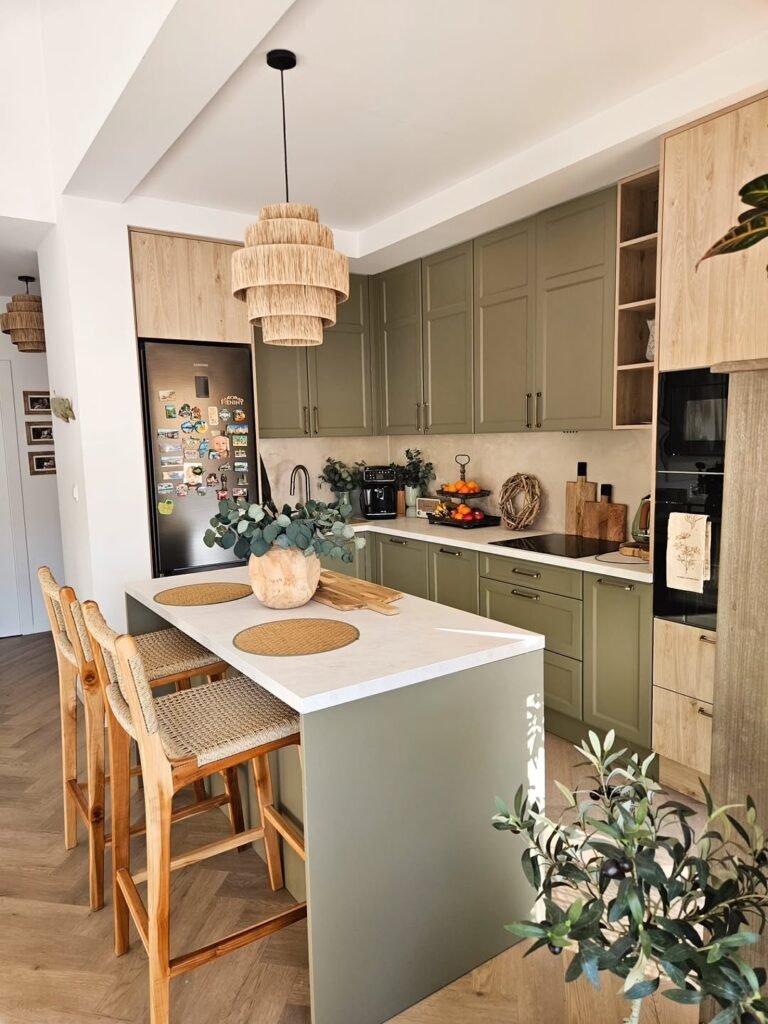
If there’s one quiet secret behind boho kitchens, it’s this: they’re not about following rules. They’re about layering things you genuinely love and letting the space evolve naturally. A woven pendant here, a vintage plate shelf there, maybe a rug that technically “shouldn’t” be in a kitchen but looks way too good to ignore.
The ideas we’ve explored show how flexible the style really is. Some kitchens lean minimal with sculptural lighting and neutral tones, while others embrace plants, open shelves, and collected cottage pieces. Boho isn’t a formula — it’s more like a vibe that grows over time.
So if you’re planning your own boho kitchen, start with natural materials, warm colors, and pieces that feel personal. Add greenery, mix textures, and don’t stress about making everything perfectly match. The charm of boho kitchens is that they look slightly effortless — even when we secretly planned every detail.
 Steal Our Home Styling Secrets!