
Boho Bedrooms That Feel Relaxed, Layered, and Slightly Addictive
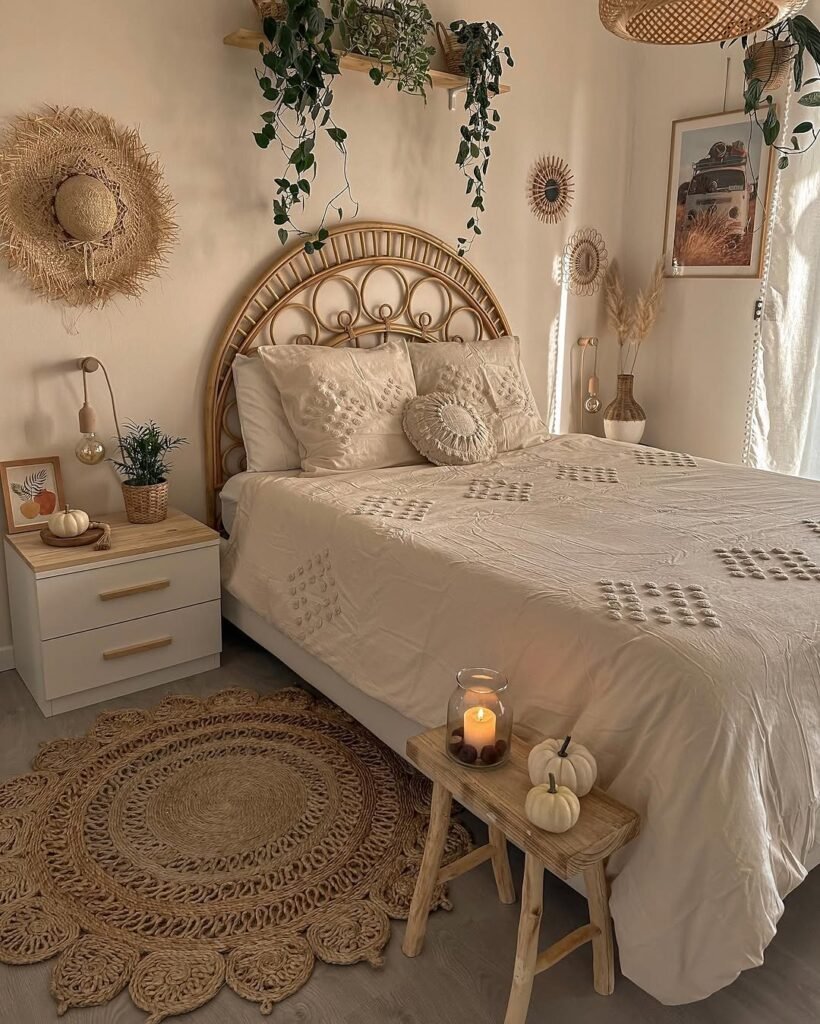
Boho bedrooms have this charming way of feeling effortlessly cool… even though we all know there’s actually some design magic happening behind the scenes. Think layered textiles, warm lighting, woven textures, and just enough personality to make the space feel lived-in rather than staged. The real charm of boho design lies in how relaxed it feels while still being visually intentional. It’s cozy, slightly eclectic, and honestly a little rebellious against overly polished interiors.
If you look closely, most beautiful boho bedrooms rely on a few quiet design principles. Natural materials like rattan, wood, linen, and jute keep the palette grounded. Plants introduce softness and movement, while layered lighting—pendants, lanterns, fairy lights, or candles—creates that warm, dreamy glow we all secretly want after a long day.
In the ideas ahead, we explore bedrooms that lean cozy, earthy, playful, and sometimes even a little moody. Because the best boho rooms aren’t perfect—they’re personal. And frankly, that’s where the magic lives.
Cozy Boho Floor Bed With Ambient Glow
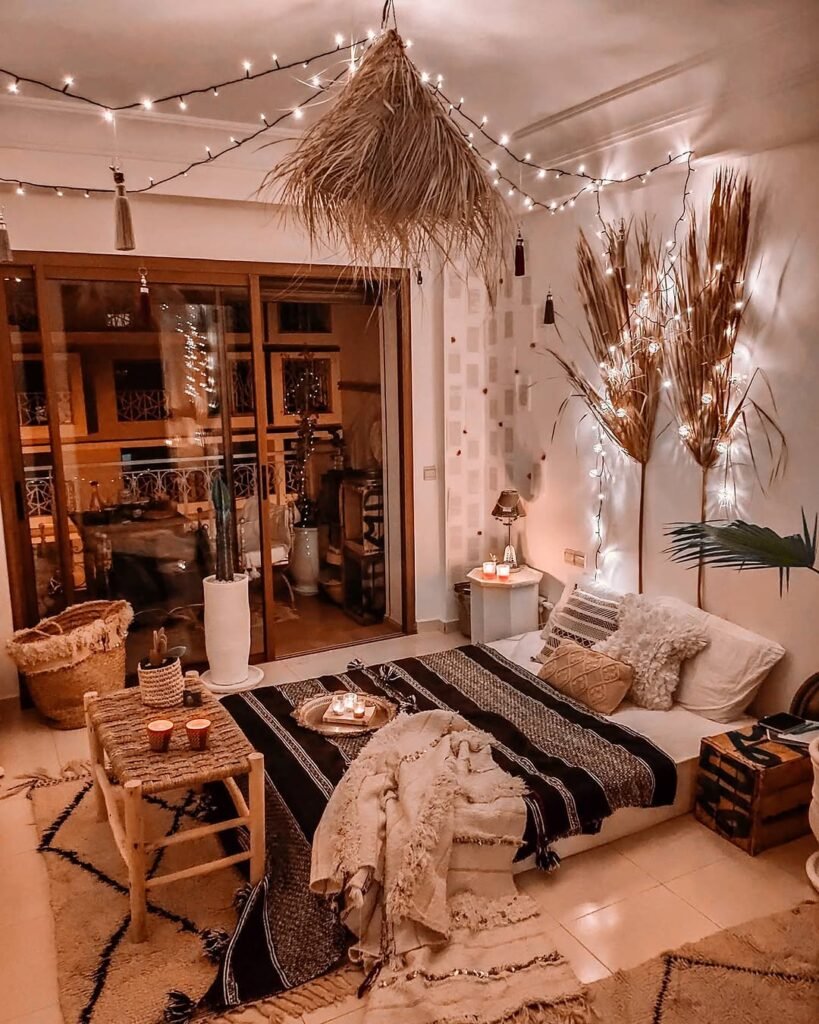
There’s something quietly magical about a low, lounge-style bed that basically whispers, “cancel your plans and stay here.” In this space, the mattress sits directly on the floor, surrounded by woven rugs, candles, and layered textiles that instantly soften the room. The design principle doing the heavy lifting here is intimacy through low visual weight. By keeping furniture low, the ceiling suddenly feels higher and the room more relaxed. Add string lights draped across the ceiling and suddenly the entire bedroom feels like a warm little boho cocoon.
Another subtle move happening here is texture stacking. Notice the woven stool, layered rugs, chunky throws, and tasseled pillows. None of them scream for attention individually, but together they create that “effortlessly cozy” vibe we all pretend just happens naturally (it does not, but we love the illusion). Natural fibers like jute, cotton, and wool keep everything grounded so the warm lighting feels intentional instead of chaotic.
If you want to recreate this look, start with a neutral rug as your base and layer smaller textured pieces on top. Then add warm fairy lights and one or two woven accents. Boho bedrooms thrive on softness and layering, not perfection. Slightly messy? Honestly… kinda the point.
Lush Plant-Filled Boho Jungle Bedroom
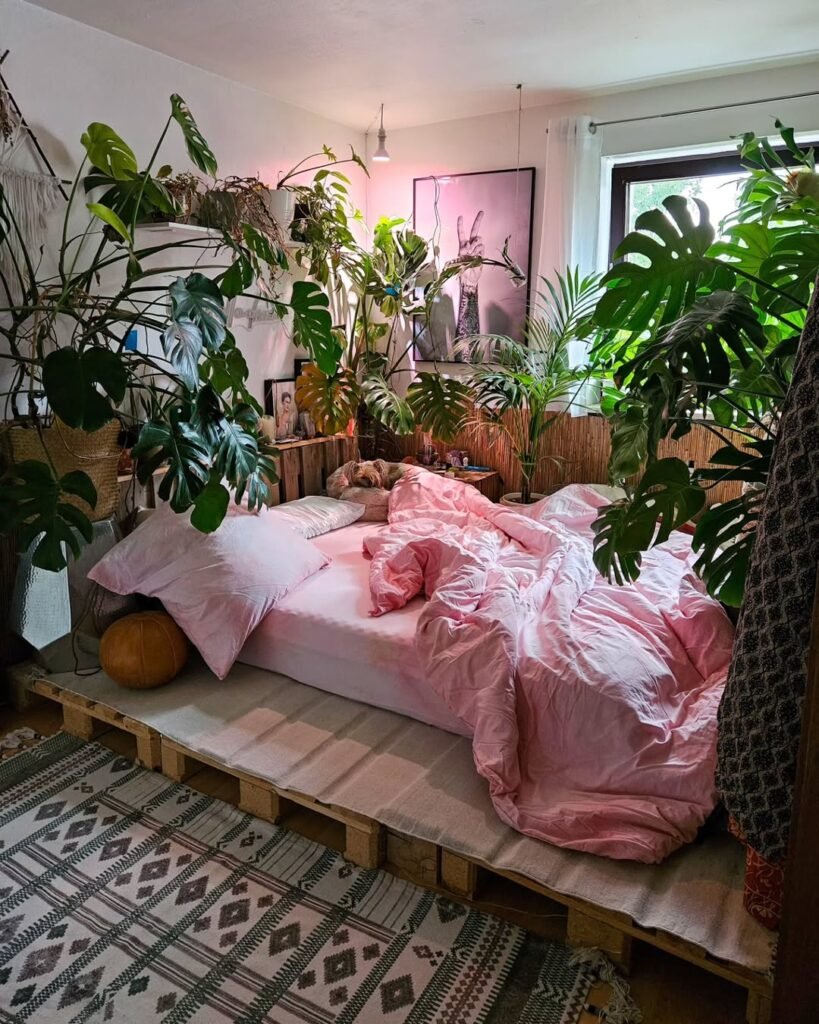
Let’s be honest: a bedroom full of plants is either a design choice or a lifestyle commitment. In this case, it’s both—and we’re not mad about it. The room leans heavily into biophilic design, meaning nature becomes part of the interior itself. Oversized monstera leaves, trailing vines, and palms create vertical layers that pull the eye upward. This is a classic boho trick: using organic shapes to break the rigidity of a room.
What keeps the space from turning into a literal greenhouse is the color balance. The soft pink bedding introduces a playful contrast against all that lush green. It’s a small design move, but it matters. Without it, the room might feel heavy or overly botanical. The wood pallet bed frame also adds a grounded, slightly DIY character that fits the relaxed bohemian aesthetic perfectly.
If we’re recreating this vibe, the key is plant scale variation. Mix one or two large statement plants with smaller shelf plants and trailing vines. Keep the furniture simple so the greenery becomes the focal point. And yes, you will eventually talk to your plants like they’re roommates. Totally normal. No judgment.
Soft Neutral Boho Bedroom With Warm Lighting
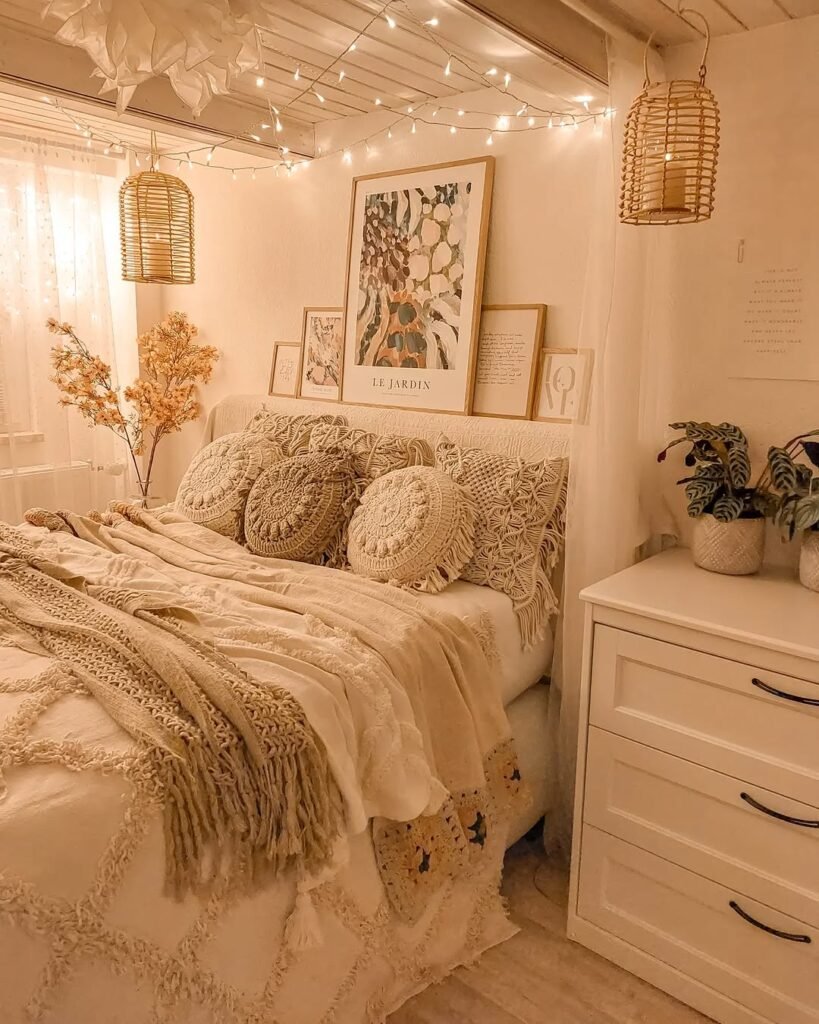
Some boho bedrooms shout with color. Others whisper in warm neutrals—and honestly, this one feels like a warm hug after a long day. The palette sticks to creamy whites, sand tones, and soft beige layers, allowing texture to become the real star of the show. Think chunky knit pillows, fringed throws, woven lampshades, and subtle wall art. When color stays quiet, texture becomes the personality of the room.
Lighting plays a surprisingly strategic role here. Instead of relying on a single ceiling light, the space uses soft string lights and warm pendant lamps to create layered illumination. This technique eliminates harsh shadows and wraps the entire room in a calm glow. It’s the visual equivalent of ambient lo-fi music… but in decor form.
For anyone trying this at home, start with a neutral bedding base and gradually introduce tactile elements like crochet pillows, linen throws, and woven lighting. Avoid overly glossy materials because they disrupt the soft mood. Boho style works best when everything feels touchable and slightly imperfect. If the room looks a little lived-in, congrats—you nailed it.
Sculptural Earth-Toned Boho Statement Bedroom
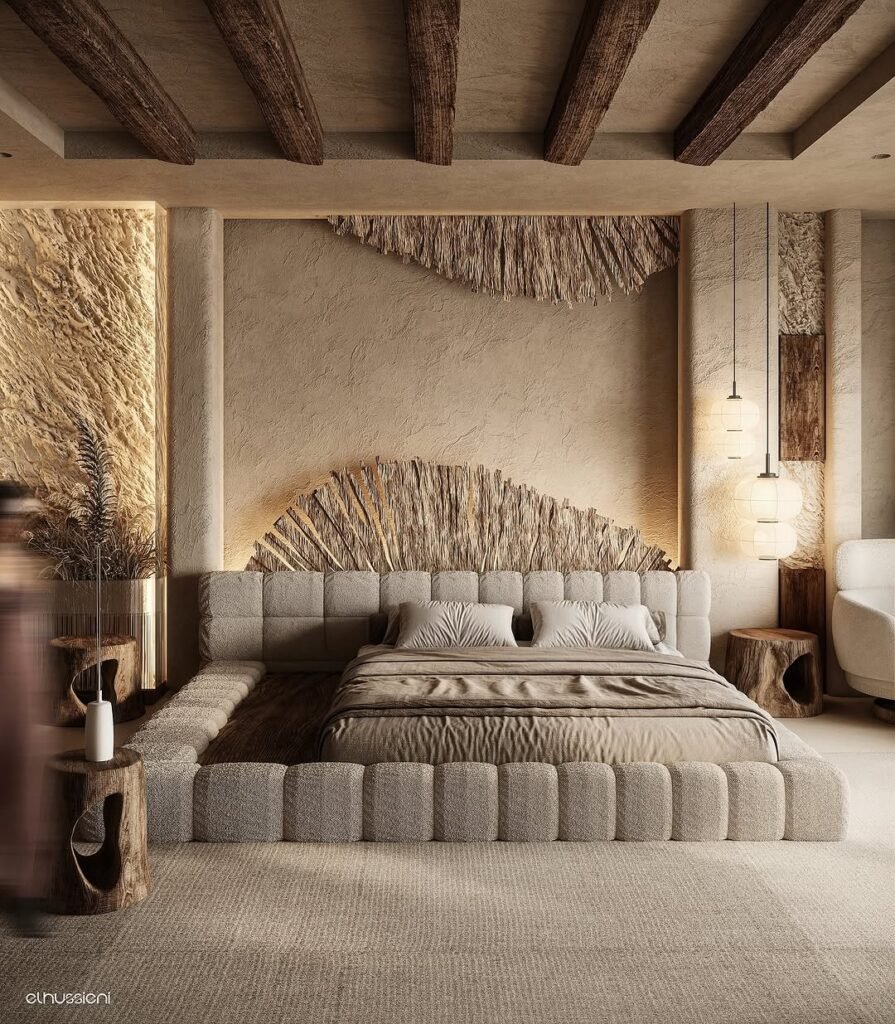
This bedroom takes boho style and quietly levels it up into something a little more architectural. Instead of relying on colorful textiles, the design leans into sculptural forms, earthy textures, and symmetry. The oversized upholstered bed frame creates a grounded focal point, while the dramatic wall installation behind it acts almost like a piece of natural artwork. This is a masterclass in creating a focal wall without using paint or wallpaper.
The ceiling beams and textured plaster walls introduce another key principle: material contrast. Smooth fabrics sit beside raw wood, rough plaster, and organic woven elements. That tension keeps the room from feeling flat or overly minimal. It’s boho, but with a refined, almost boutique-hotel energy. We might call it “grown-up boho,” which frankly sounds very chic.
To recreate the look, prioritize scale and symmetry. Choose a large bed frame or headboard that visually anchors the space, then build texture around it with natural materials like wood stools, woven wall pieces, or clay lighting. Boho design doesn’t always need color explosions—sometimes earthy restraint hits harder.
Minimal Boho Bedroom With Natural Textures
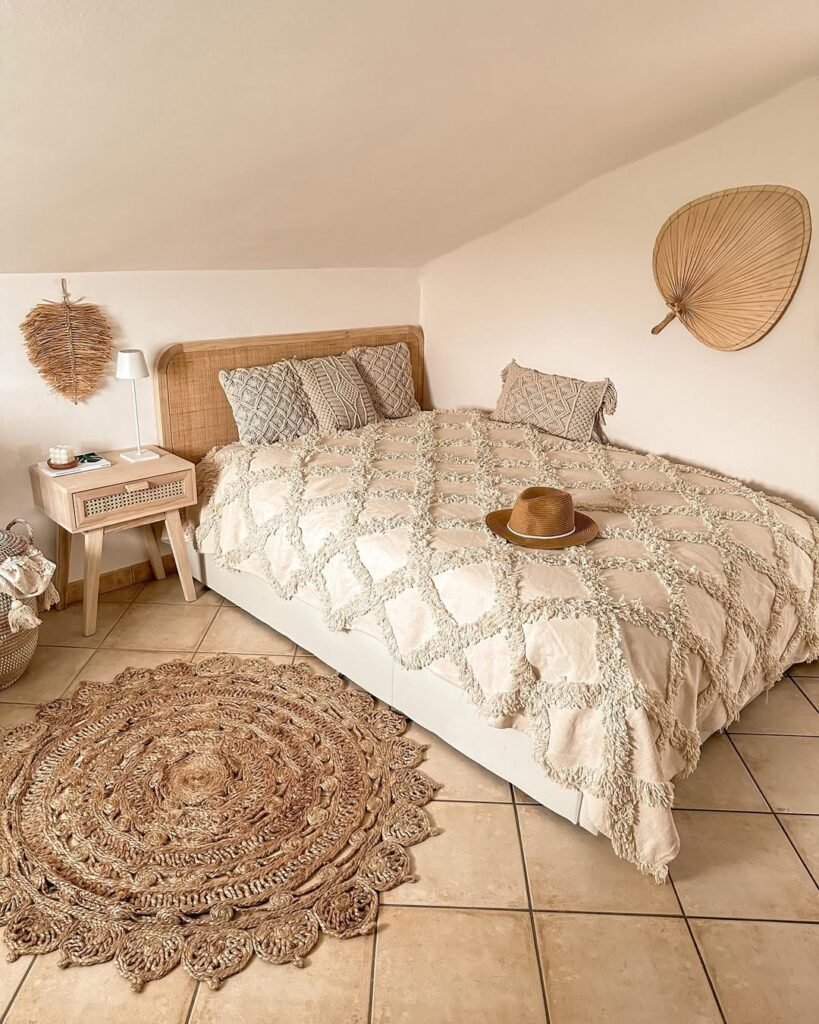
Sometimes the most relaxed boho rooms are the ones that don’t try too hard. This bedroom proves that point beautifully. The color palette stays firmly within warm beige and soft tan tones, allowing natural materials to quietly take center stage. A woven rug, rattan headboard, and textured bedding create depth without overwhelming the eye. The principle here is simplicity through material richness.
What makes this space work so well is visual breathing room. There’s negative space on the walls, limited decor pieces, and a restrained furniture layout. That restraint prevents the room from tipping into clutter, which can easily happen with boho interiors. The single woven wall accent acts as a subtle focal point while maintaining the calm, airy mood.
If we want to recreate this look, focus on three elements: neutral textiles, organic shapes, and natural fibers. Choose bedding with texture—tufted, woven, or fringed—and pair it with light wood furniture. Add one sculptural rug to ground the bed. Boho minimalism isn’t about adding more stuff—it’s about choosing pieces that quietly do the most. Honestly, our future lazy Sunday mornings would absolutely approve.
Relaxed Boho Bedroom With Music Vibes
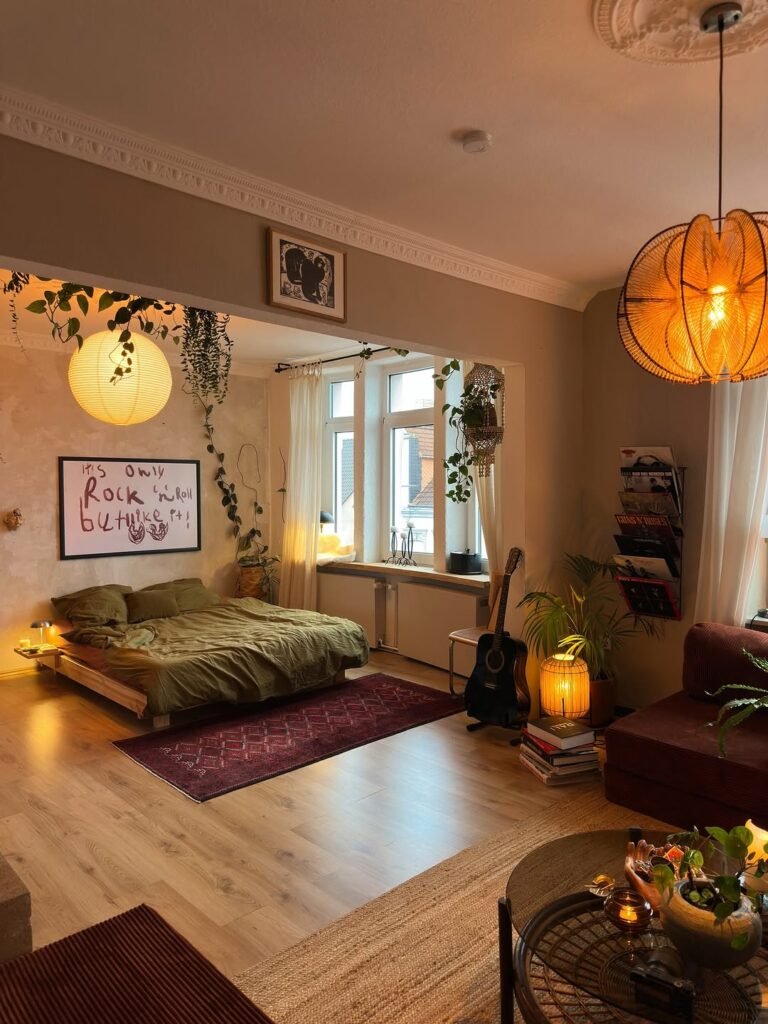
Some bedrooms feel like a place to sleep. Others feel like a lifestyle. This one clearly belongs in the second category. The low wooden platform bed keeps the room grounded while the warm lighting, plants, and layered rugs add that relaxed bohemian rhythm. The real design principle here is lifestyle storytelling—the guitar, vinyl rack, and slightly rumpled bedding quietly suggest a creative personality lives here. Boho spaces tend to work best when they feel personal rather than perfectly styled.
Another smart move is the warm color balance. Olive green bedding, amber lighting, and reddish rugs create a cozy palette that leans earthy instead of trendy. The plants soften the architecture and pull the eye upward, which visually expands the room. Meanwhile, the hanging paper lantern adds diffused lighting, preventing harsh shadows. It’s subtle, but the atmosphere shift is major.
If we want to recreate this vibe, the key is mixing functional decor with personality pieces. Start with a low bed frame, add warm lighting, then sprinkle in objects that actually represent your hobbies. Boho bedrooms should feel lived-in, not showroom perfect. A little casual chaos? Honestly… very on brand.
Minimal Earthy Boho With Rattan Accents
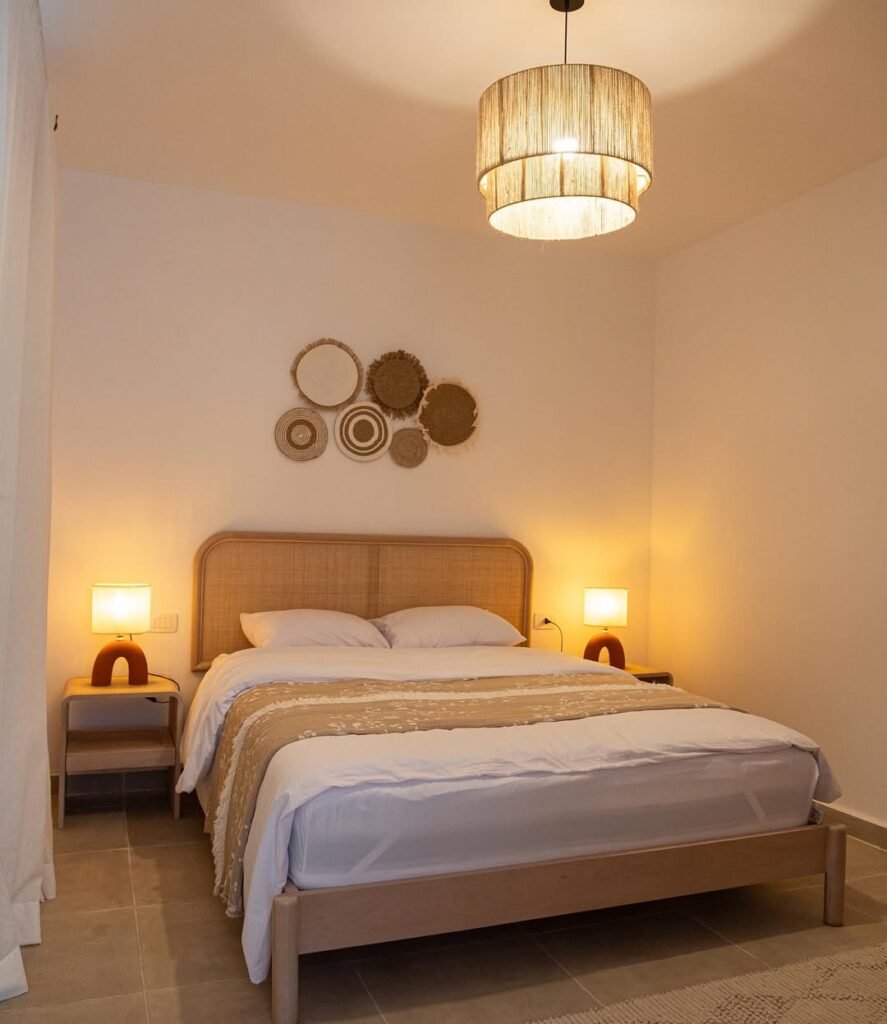
This bedroom proves something quietly controversial in boho design: sometimes less really does look better. The space leans into clean lines, warm neutral colors, and natural materials rather than layering dozens of accessories. The core principle here is balance between minimalism and texture. A rattan headboard introduces organic warmth while crisp white bedding keeps everything visually light.
Symmetry also plays a huge role. Matching bedside tables and lamps create a sense of calm structure that prevents the room from drifting into chaotic bohemian territory. The woven wall decor above the bed adds just enough visual interest without competing with the headboard. It’s simple, but very intentional.
For anyone recreating this look, keep the palette tight: beige, warm wood, and soft whites. Choose one statement material—rattan, cane, or woven fibers—and repeat it subtly across the room. Boho doesn’t always need layers of clutter to feel cozy. Sometimes a few thoughtful textures do the job better than twenty decorative pillows. Our cleaning routine would definitely appreciate that.
Bright Neutral Boho Bedroom With Airy Layers
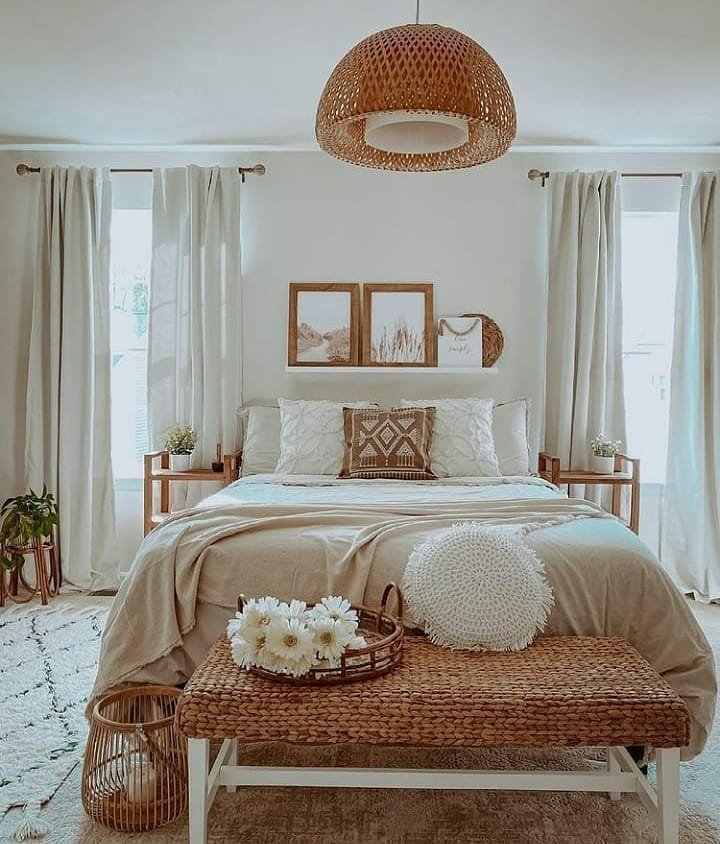
This bedroom leans into one of the most flattering boho tricks: flooding the space with light and letting natural textures do the talking. The palette stays comfortably within warm whites, sandy beiges, and soft wood tones, creating a room that feels breezy instead of heavy. The design principle at work here is tonal layering—different shades of the same neutral family build depth without introducing visual noise.
Notice how the woven bench, wicker pendant light, and subtle wall art repeat similar materials throughout the space. That repetition creates harmony, which is why the room feels calm rather than overly styled. Curtains that stretch from ceiling to floor also elongate the walls visually, making the room feel taller and more elegant.
If we’re recreating this vibe, start by prioritizing natural light. Use sheer curtains and keep furniture light in color. Then layer woven elements—maybe a rattan pendant, a wicker tray, or a textured bench. Boho interiors shine when materials feel organic and breathable. The goal is cozy… but still airy enough that the room doesn’t feel like a textile museum.
Maximalist Plant Lover’s Boho Sanctuary
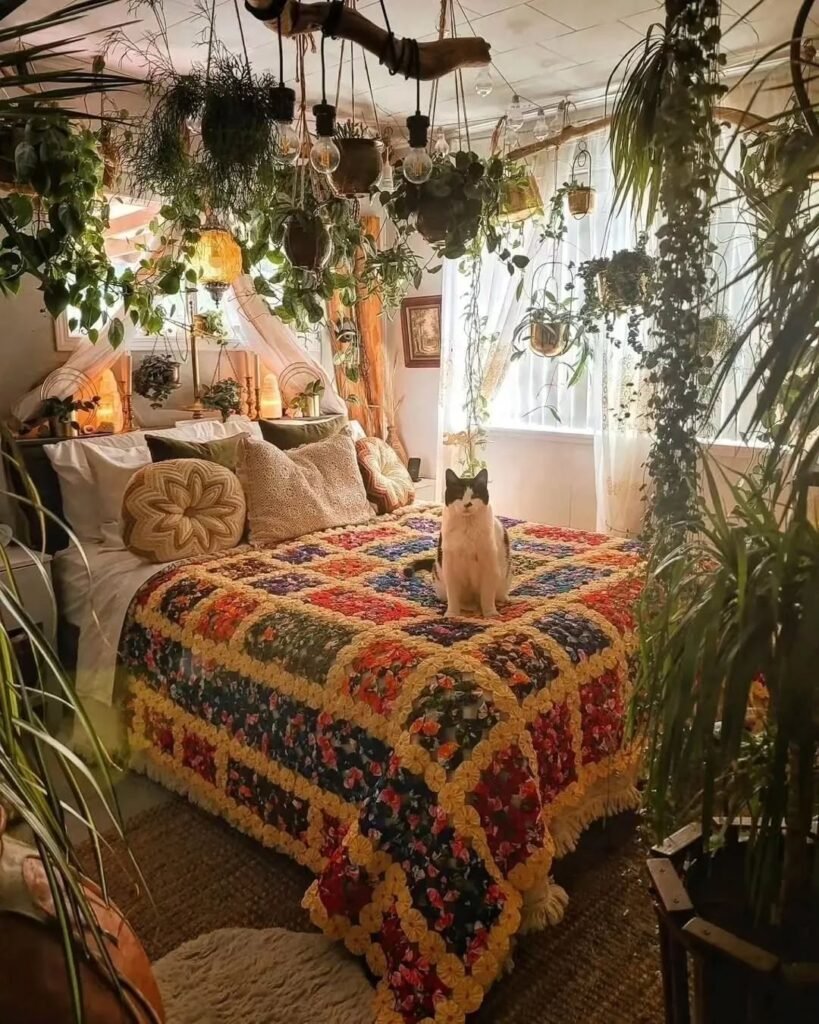
Okay, this room clearly said “more plants please” and then absolutely committed to the assignment. Hanging greenery cascades from the ceiling, surrounding the bed in a lush canopy that feels half jungle, half dreamscape. The key design principle here is vertical layering. By suspending plants overhead, the room uses the entire volume of space rather than just the floor.
Color also plays a bold supporting role. The vibrant crochet blanket becomes the focal point, balancing all the greenery with warm reds, yellows, and deep blues. Without that pop of color, the room might feel visually heavy. Instead, it feels playful and a little rebellious—which honestly fits the boho spirit perfectly.
If you want to recreate this look, start with plant height variation. Mix hanging plants, shelf plants, and floor plants so the greenery surrounds the bed. Add one colorful textile—like a crocheted blanket or patterned rug—to anchor the space. Boho maximalism works best when the chaos still has a focal point. Otherwise the room risks looking like a very stylish plant shop.
Moody Boho Bedroom With Candlelit Drama
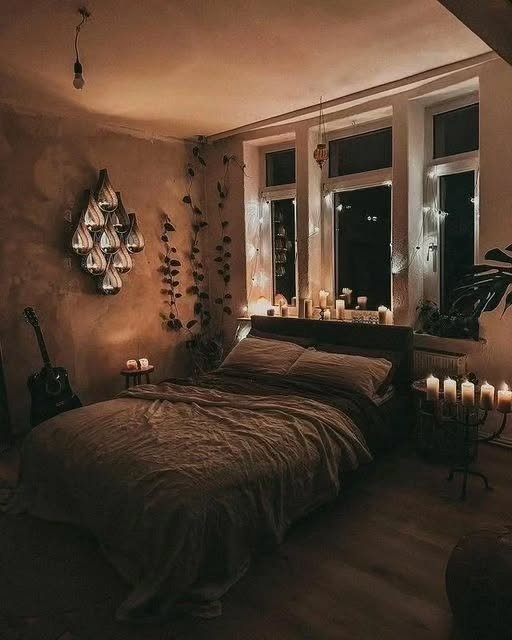
Not every boho bedroom needs to be bright and beachy. Sometimes the vibe is closer to midnight poetry and quiet jazz in the background. This room embraces a darker palette with warm brown tones, candlelight, and textured walls that create an intimate, almost cinematic mood. The design principle here is atmospheric lighting. Instead of relying on overhead lights, multiple small light sources create depth and shadow.
The arrangement of candles along the windowsill and bedside surfaces builds a layered glow that feels cozy rather than dramatic. Meanwhile, the textured wall art acts as a sculptural focal point that catches the candlelight beautifully. Even the slightly rumpled bedding adds to the relaxed, unpolished character.
If we’re recreating this moody look, focus on warm light temperatures and layered illumination. Use candles, low table lamps, and textured materials like plaster or wood. Stick with deeper neutrals—espresso brown, taupe, or charcoal. Boho style isn’t only about sunshine and rattan; sometimes it thrives in the glow of a hundred tiny candles. Just… maybe keep a lighter nearby. Safety first, obviously.
Designing A Boho Bedroom That Feels Timeless
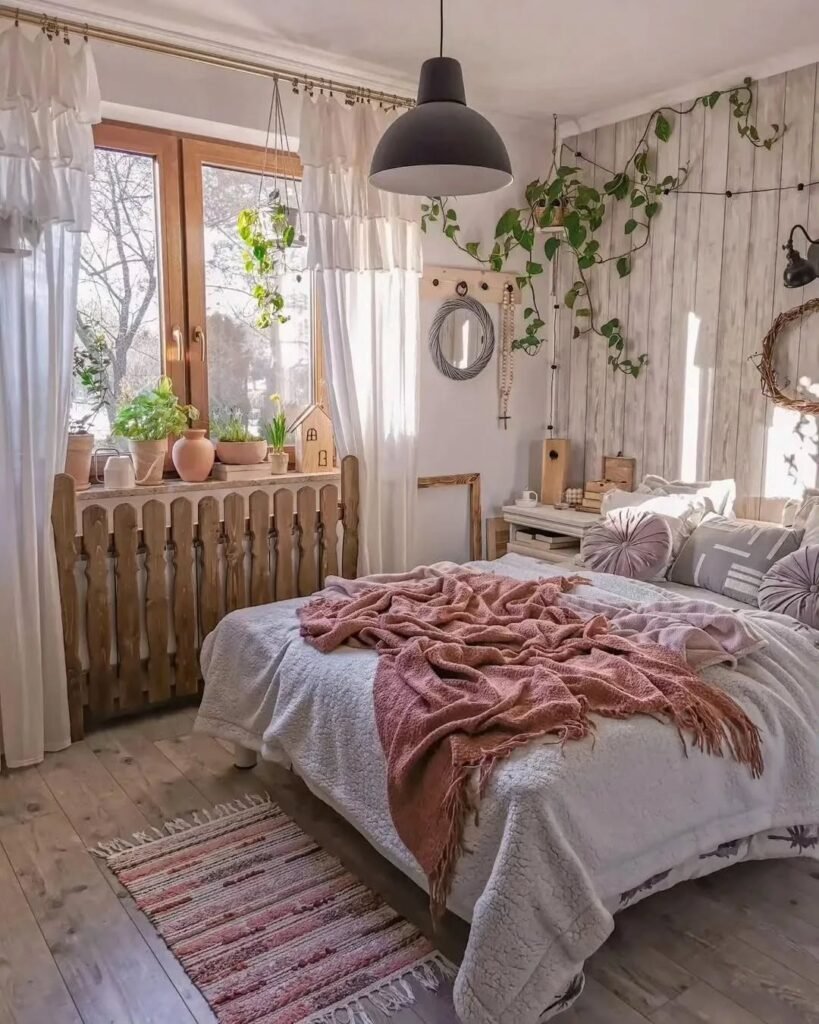
After exploring all these bedrooms, one thing becomes pretty clear: boho design isn’t really about following strict rules. It’s more about creating a space that feels layered, relaxed, and slightly personal in a way that traditional design sometimes forgets. The most inviting boho bedrooms balance texture, warmth, and a little creative freedom. That’s why they feel cozy instead of overly curated.
From low floor beds and woven lighting to lush plant corners and earthy neutral palettes, each space uses simple principles—texture layering, natural materials, and soft lighting—to create atmosphere. Even the more minimal rooms rely on those elements to keep the space from feeling flat.
If there’s one takeaway here, it’s this: start simple and build gradually. Add textures, mix natural materials, and let the room evolve a little over time. Boho bedrooms work best when they feel collected, not perfectly styled. A little personality, a little softness, and suddenly the room feels like home.
 Steal Our Home Styling Secrets!