
The Real Reason Some Small Pools Feel So Much Better Than Others
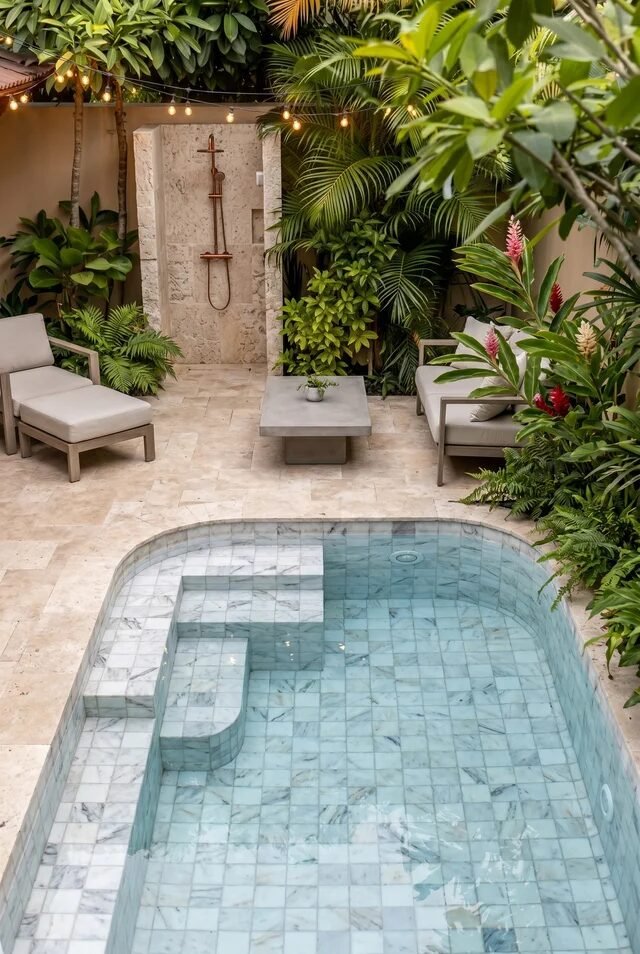
Let’s be honest—small pools used to feel like the “compromise option.” But lately? They’re giving curated, intentional, and low-key luxurious. What we’re seeing across these designs is a shift from size obsession to experience design. It’s less about how big the pool is, and more about how the entire space feels when you step into it.
From tropical courtyards wrapped in greenery to sleek glass-edge setups that double as social hubs, every idea here leans into purpose. Materials are doing the talking—stone, wood, water, light—all layered in a way that feels effortless but actually very calculated (we love a quiet overachiever).
The real glow-up is in how these spaces balance function, mood, and aesthetics without trying too hard. Small pools aren’t shrinking the dream—they’re refining it. And honestly, we’re kind of here for that energy.
Sunken Tropical Courtyard Pool Escape
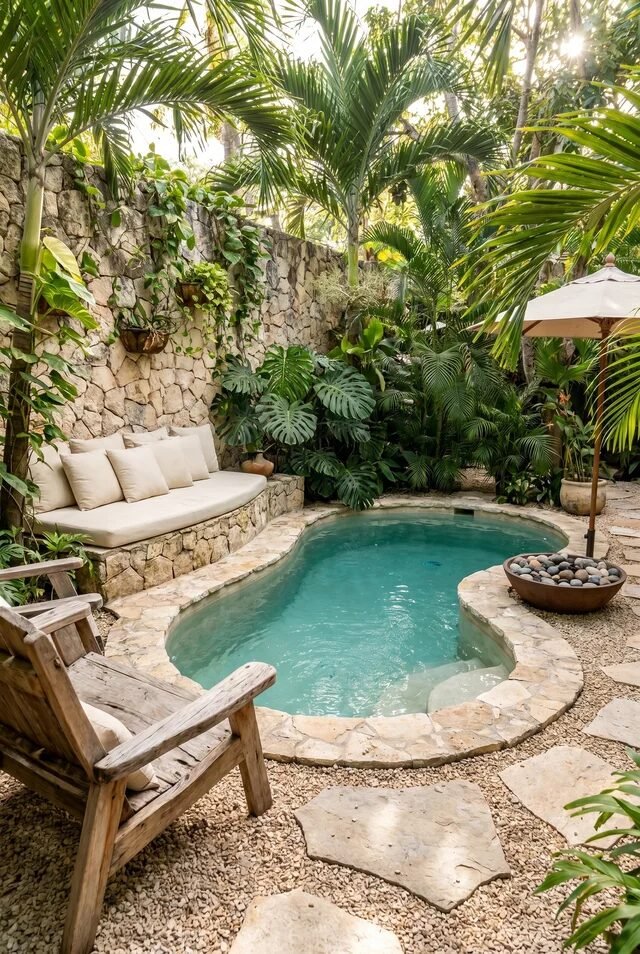
There’s something quietly luxurious about a pool that feels tucked away, like it’s minding its own business while also being the main character. The curved shape here softens everything, and paired with that textured stone wall, it gives this grounded, almost ancient vibe—but make it Pinterest. We’re basically looking at a masterclass in blending hardscape and greenery without chaos.
Design-wise, the magic is in layering. Tall palms create a canopy, mid-level plants fill the gaps, and low creeping greens soften edges. That built-in bench? Not just cute—it visually anchors the space and doubles as functional seating without cluttering the footprint.
If we’re recreating this, focus on materials first. Go for irregular stone, keep your palette warm and neutral, then overdo it slightly with plants (trust, it works). Small pools feel bigger when surrounded by lush vertical elements, so don’t hold back. Jungle energy, but curated.
Modern Fire Feature Pool Lounge
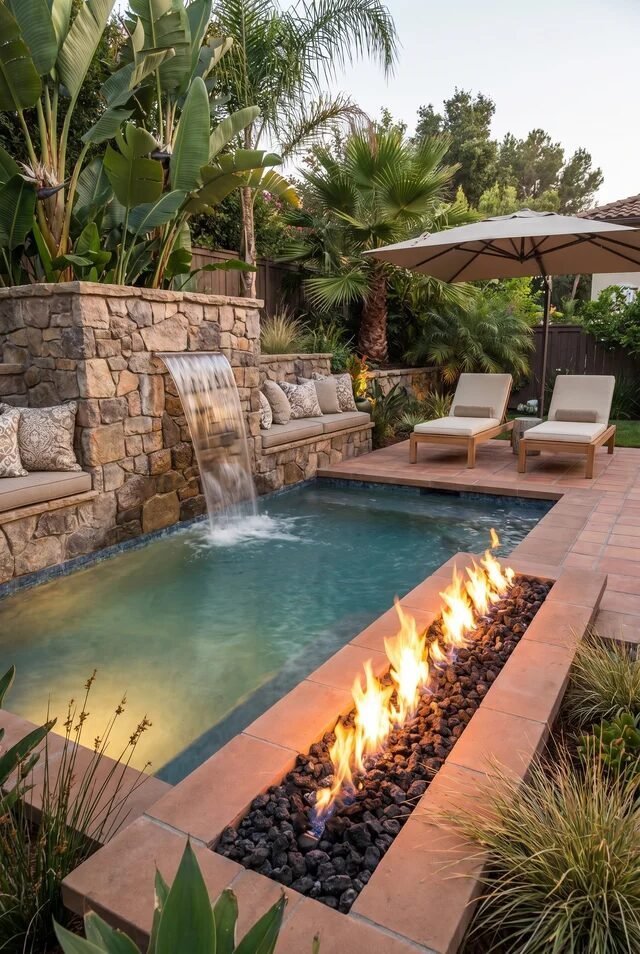
This setup is giving “we host now” energy—and honestly, we respect it. The combination of water and fire shouldn’t work this well, but here we are, emotionally attached. The linear layout keeps everything feeling intentional, not overcrowded, which is key when space is… let’s say, limited but ambitious.
The design principle doing the heavy lifting is contrast. You’ve got cool water, warm flames, smooth decking, and textured stone. It’s a sensory balance that keeps the space interesting without needing extra decor. And that waterfall? It adds movement, which low-key distracts from the pool’s smaller size.
To recreate this vibe, keep your layout clean and slightly symmetrical. Invest in one bold feature (fire strip, waterfall, or both if we’re feeling spicy). Avoid over-accessorizing—this look thrives on restraint. Neutral loungers, one umbrella, done. Let the elements flirt with each other.
Mediterranean Style Narrow Lap Pool
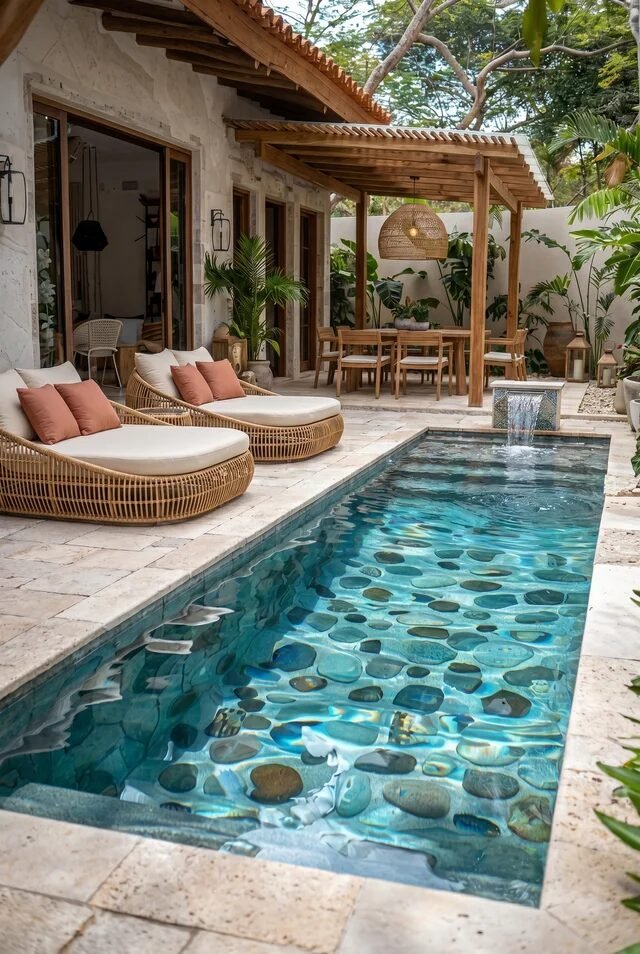
Not all small pools need to be cute and curvy—sometimes we want sleek, composed, and a little bit intimidating (in a good way). This narrow lap pool leans into clean geometry, and paired with those warm wood tones, it’s giving “effortlessly put together,” like that friend who never looks rushed.
The strength here is alignment. Everything runs parallel—the pool, the pergola, the seating—which creates visual calm. Then texture steps in to keep it from feeling sterile: woven loungers, soft cushions, natural stone flooring. It’s minimal, but not cold.
If we’re copying this, proportions matter more than anything. Keep your pool long and visually uninterrupted. Add a pergola or overhead structure to frame the space—it makes everything feel intentional. Stick to a tight material palette (wood, stone, linen) so the look stays cohesive. Understated, but quietly flexing.
Sunken Lounge Pool Social Zone
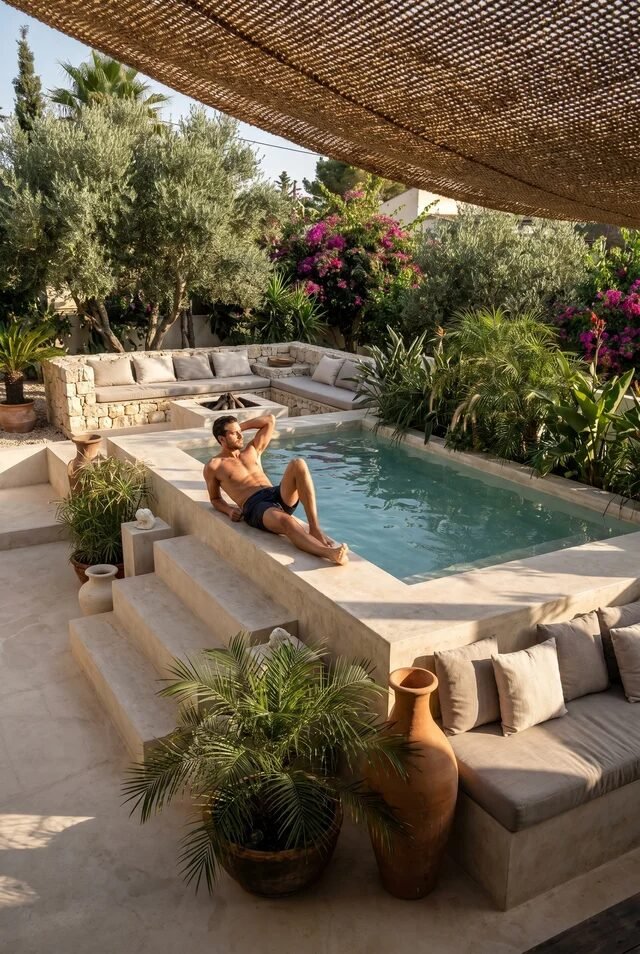
Okay but this one? It’s basically a conversation pit… with water. We’re obsessed. The sunken layout instantly makes the space feel more intimate, like it’s designed for long chats, iced drinks, and accidentally staying outside for five hours.
What’s happening design-wise is zoning. The pool isn’t just for swimming—it’s part of a larger social area. Built-in seating wraps around, steps double as casual perches, and the canopy softens the overhead light. It’s layered, but in a way that feels natural, not staged.
If you want this look, think in levels. Slight elevation changes (even just a step down) create that “sunken” illusion without major construction drama. Add built-in seating wherever possible—it saves space and looks intentional. Design your pool as part of a lifestyle zone, not a standalone feature. Very main character energy.
Compact Pool With Garden Framing
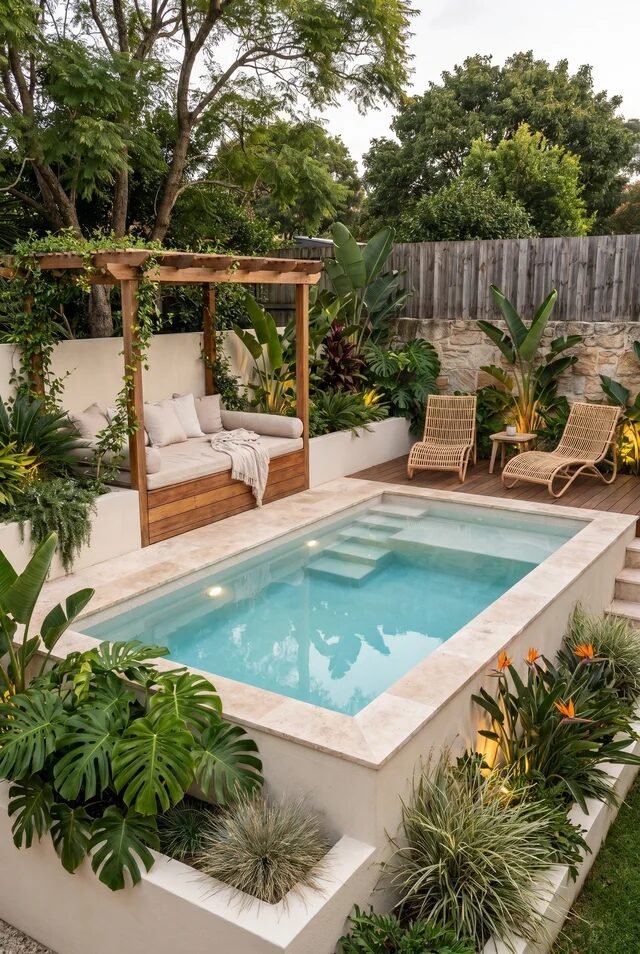
This one feels like a soft exhale. It’s structured, yes—but also cozy, approachable, and not trying too hard. The raised pool gives it presence, while the surrounding greenery keeps it from feeling boxy or harsh. It’s balanced in that “we definitely planned this but we’ll pretend we didn’t” kind of way.
The key principle here is framing. Plants aren’t random—they’re placed to outline the pool and guide your eye inward. The pergola and daybed add a vertical layer, which makes the whole space feel taller and more immersive.
To recreate this, treat your plants like decor, not afterthoughts. Use a mix of leaf sizes for depth, and keep your color palette tight so it doesn’t feel chaotic. A slightly elevated pool can make a small yard feel more designed and intentional. Effortless, but with strategy.
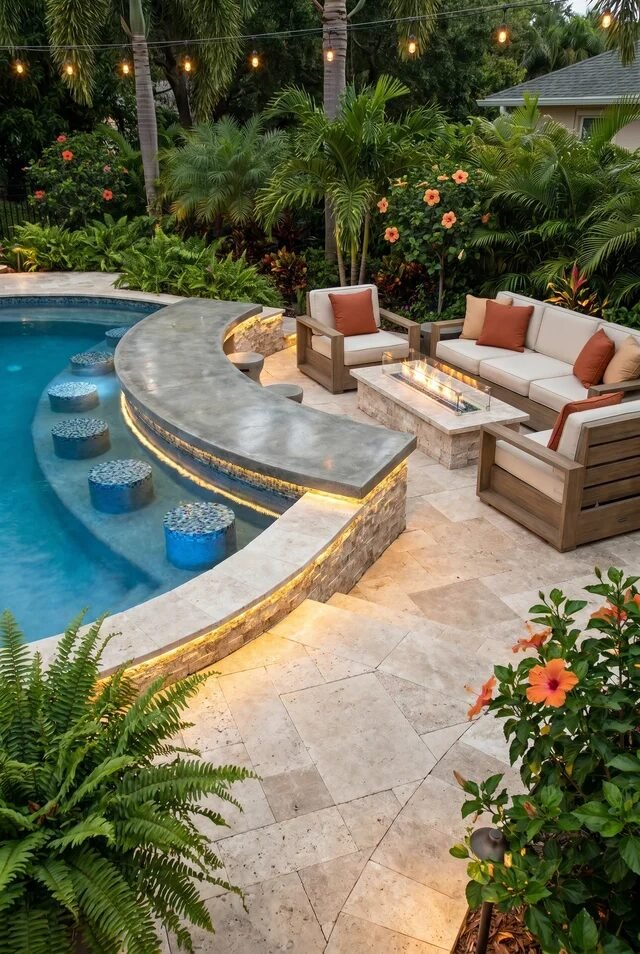
Glass Edge Pool With Social Bar
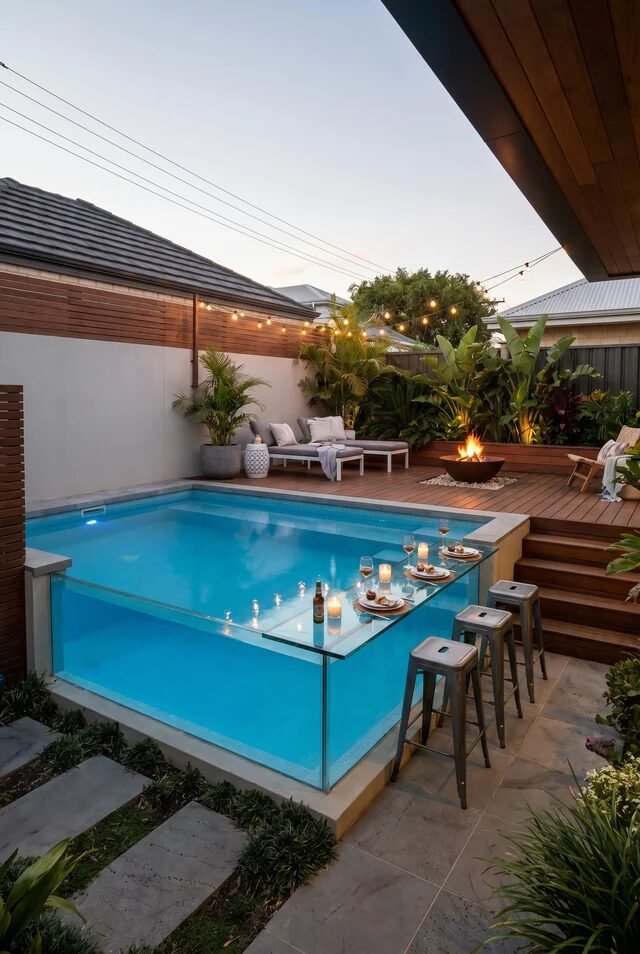
This one is dangerously close to making us believe we’re the type of people who host chic evening gatherings… even if we’d realistically just sit there with iced coffee. The glass edge instantly elevates the pool (literally and visually), while that built-in bar ledge is doing the absolute most—in the best way.
What makes this design work is transparency and flow. The glass keeps sightlines open, so the space feels bigger than it is. Then the bar creates a natural social zone without adding extra furniture clutter. It’s giving function and flex.
If we’re recreating this, prioritize one standout feature. Glass panel, swim-up ledge, or even a simple overhang bar works. Keep lighting warm—string lights, candles, soft glow only. Small spaces benefit from fewer but smarter elements, so resist the urge to overfill. Let the layout do the flirting.
Curved Courtyard Pool With Warm Woods
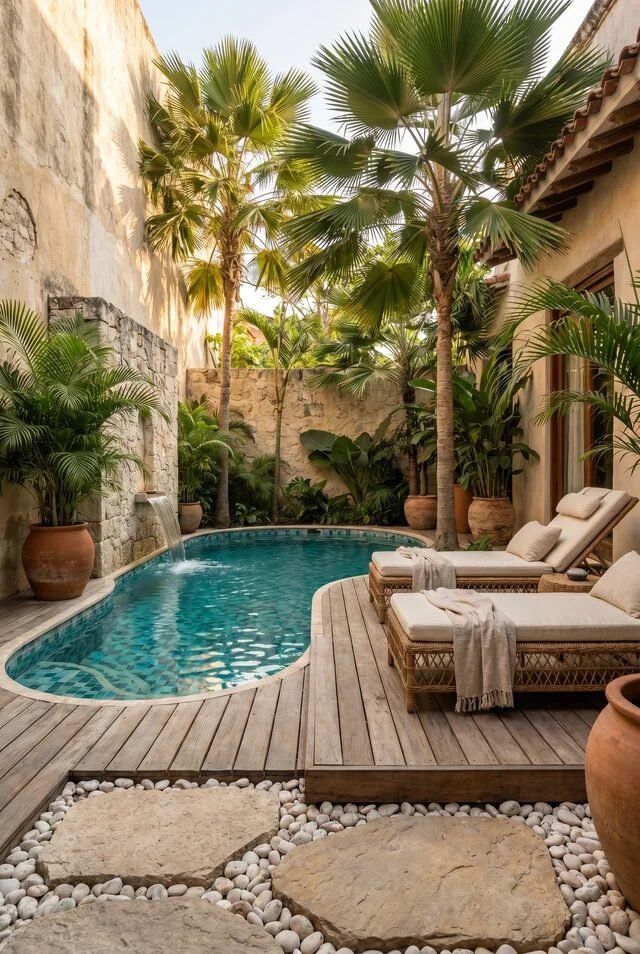
There’s a softness here that feels very “we’re not trying too hard, but somehow everything looks perfect.” The curved pool breaks away from rigid layouts, while the wood decking warms things up so it doesn’t feel too polished or cold. It’s relaxed, but still curated—our favorite kind of contradiction.
Design-wise, this is all about contrast in shapes. The organic pool edges play against the linear deck boards, creating visual interest without needing bold colors. Add in layered greenery and textured pots, and suddenly the space feels full without being crowded.
To recreate this vibe, start with shape. If you can’t change the pool, soften the surroundings—rounded furniture, curved planters, even draped textiles. Stick with warm wood tones to avoid that sterile look. Mixing organic curves with structured lines keeps a small pool visually dynamic. It’s subtle, but very effective.
Symmetrical Mediterranean Courtyard Pool Setup
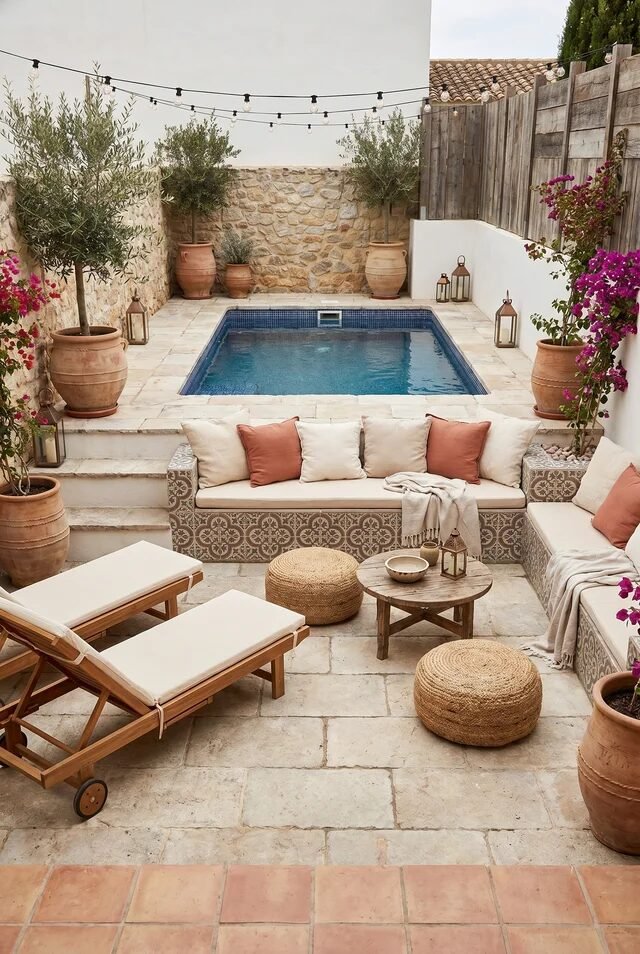
We don’t talk enough about how symmetry can low-key fix everything. This setup is proof. The pool sits centered, the planters mirror each other, and suddenly the whole space feels calm, intentional, and just… put together. Like, emotionally stable but make it design.
The principle here is balance. Repetition of shapes, colors, and materials creates visual order, which is especially important in smaller spaces. The neutral palette with terracotta accents adds warmth without overwhelming the eye.
If we’re recreating this, think in pairs. Two planters, two lanterns, two chairs—keep it consistent. Even if your space isn’t perfectly symmetrical, you can fake it visually. Symmetry makes small areas feel more organized and spacious instantly. Minimal effort, maximum “we planned this” energy.
Resort Style Pool With Relaxation Nook
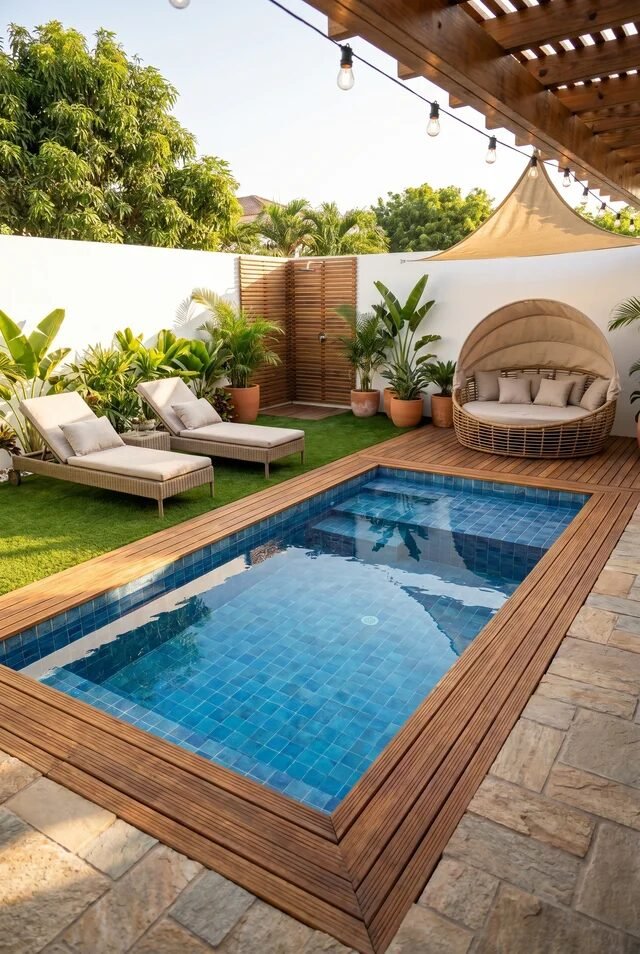
This is the kind of setup that makes you cancel plans on purpose. The pool is small, yes—but the experience? Very resort, very “do not disturb.” That rounded daybed situation is stealing the show, and honestly, we’re letting it.
The design win here is zoning through comfort. The pool is just one part of a larger relaxation area. Soft seating, shade elements, and greenery create layers that make the space feel immersive, not just functional.
If we want this vibe, focus less on the pool size and more on what surrounds it. Add one cozy statement piece—a daybed, a swing, something you’ll actually use. Layer in shade (pergola, sail, umbrella). Comfort-driven design makes even the smallest pool feel like a destination. It’s less about swimming, more about staying.
Clean Minimal Pool With Open Lawn
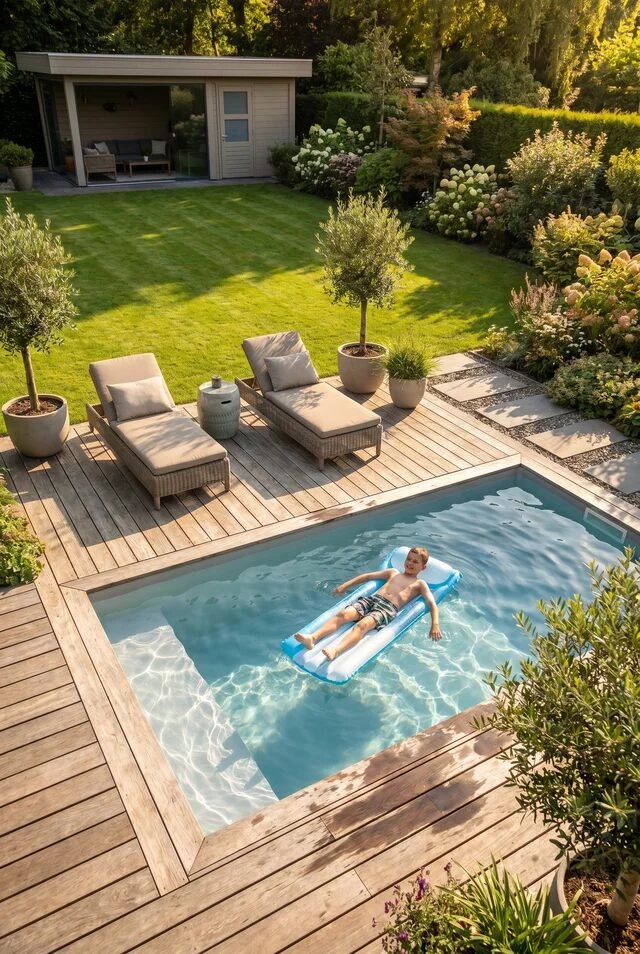
Not every small pool needs to be surrounded by everything. This one leans into restraint, and it’s kind of refreshing. Clean lines, open lawn, just enough furniture—it feels breathable, like the design equivalent of clearing your camera roll.
The principle here is negative space. By not filling every corner, the pool becomes the focal point naturally. The contrast between structured decking and soft greenery keeps it from feeling flat or boring.
If we’re recreating this, the hardest part is honestly… stopping. Choose a simple pool shape, keep landscaping minimal, and resist adding “just one more thing.” Open space is a design tool, not wasted space. It gives your eyes somewhere to rest—and your future self less to maintain. Win-win.
Designing Small Pools That Feel Like Destinations
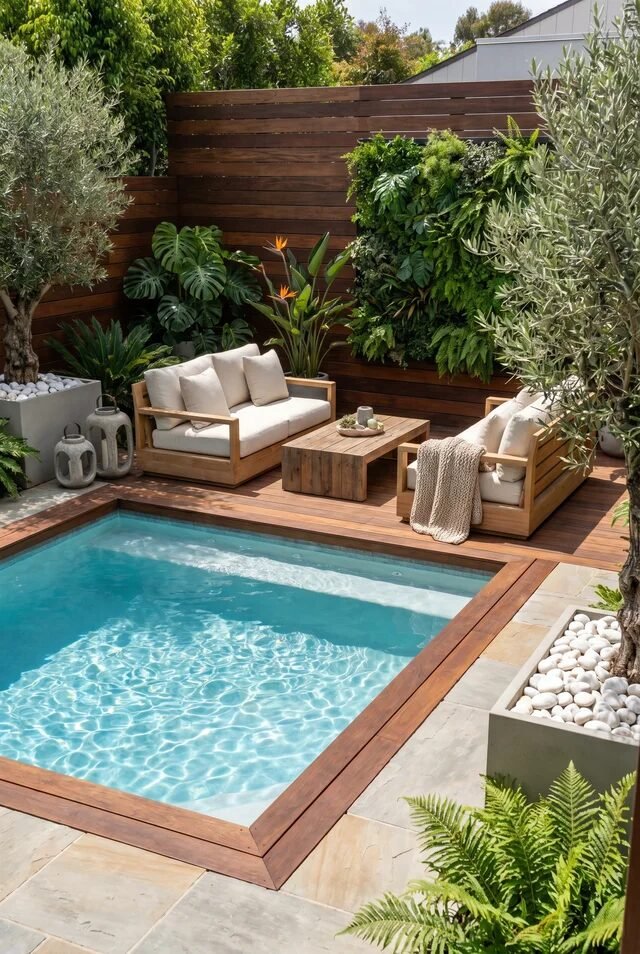
If there’s one takeaway here, it’s this: small pools work best when they stop acting like just pools. The magic happens when they become part of a lifestyle setup—lounging, hosting, unwinding, or doing absolutely nothing (arguably the best option).
We’ve seen how layering changes everything. Plants create privacy, textures add depth, and layout decisions quietly guide how the space is used. Whether it’s symmetry bringing calm, curves softening the vibe, or a fire feature adding drama, every detail pulls its weight.
The goal isn’t to fill the space—it’s to shape the experience. So when we design, we edit. We choose fewer elements, but better ones. Because at the end of the day, a small pool that feels intentional will always outshine a big one that feels… confused. And we’re not doing confused energy.
 Steal Our Home Styling Secrets!