
The Art Of Creating A Cottage Kitchen That Feels Authentically Lived In
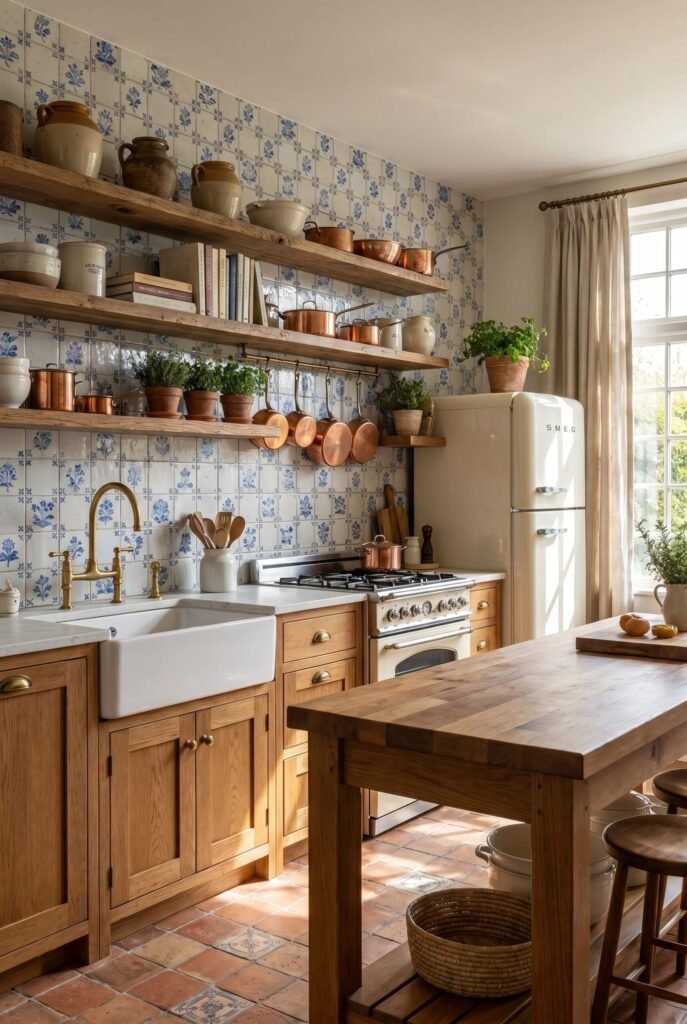
There’s a reason cottage kitchens continue to charm homeowners year after year. While trends come and go at record speed, cottage style has a way of making a kitchen feel personal, welcoming, and genuinely lived in. From open shelves lined with collected dishware to vintage-inspired details, warm woods, copper accents, and garden-inspired colors, these spaces remind us that beautiful design doesn’t have to feel complicated.
What makes cottage kitchens especially appealing is their ability to balance function with character. A hanging pot rack becomes décor. A collection of old pottery tells a story. Even a simple farmhouse sink suddenly feels special when paired with fresh herbs, floral fabrics, and softly worn finishes. The goal isn’t perfection—it’s creating a space that feels comfortable enough to actually live in.
Throughout these ideas, we’ll explore kitchens that embrace warmth, texture, personality, and timeless charm. If your dream kitchen feels less like a showroom and more like a cozy countryside retreat, you’re probably in exactly the right place.
Open Shelving That Feels Collected
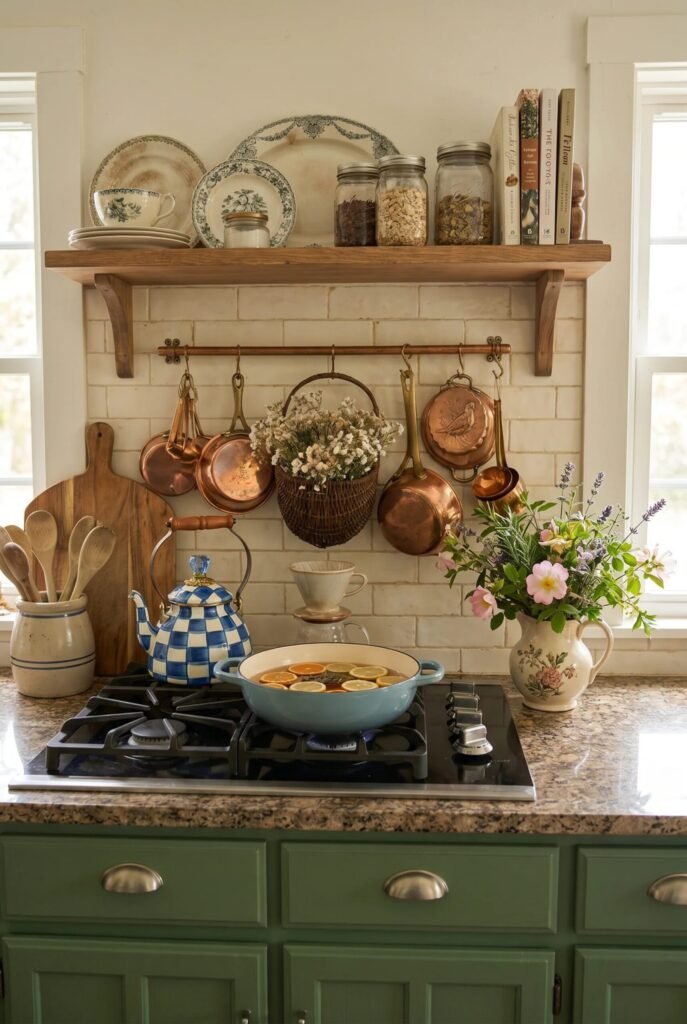
This kitchen proves that cottage style is rarely about perfection. Instead, it leans into a beautifully collected look where everyday items become part of the décor. The floating wood shelves, handmade pottery, woven trays, and soft blue tile backsplash create a layered composition that feels relaxed rather than staged. We especially love how the open shelving turns practical storage into visual storytelling. It’s giving “I casually baked sourdough this morning,” even if we absolutely ordered takeout last night.
The design principle here is balance through repetition. Notice how the natural wood tones appear in the countertops, cutting boards, baskets, and shelves. The blue ceramics echo the backsplash, creating rhythm without looking overly matched. Repeating materials and colors in small doses is what keeps cottage kitchens feeling cohesive instead of cluttered.
To recreate this look, start with a neutral cabinet color and introduce open shelves gradually. Mix dishes, jars, artwork, and textured baskets rather than filling shelves with identical pieces. A few imperfect handmade items will always feel more authentic than showroom-perfect accessories. Cottage kitchens thrive when they look lived in, not auditioning for a catalog.
Copper Accents With Garden Charm
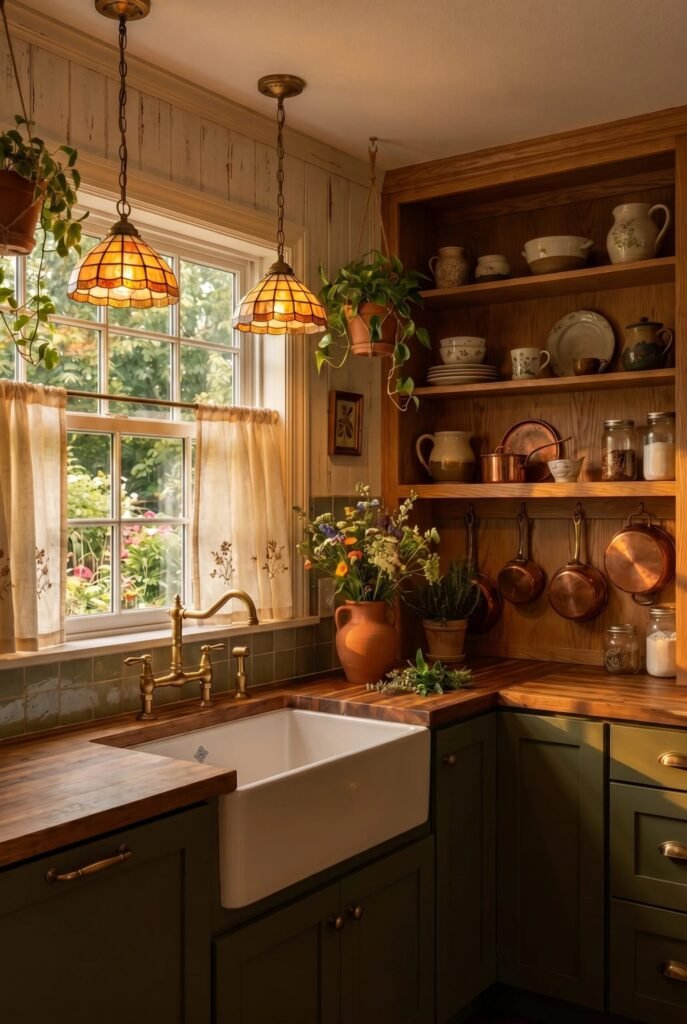
Some kitchens whisper cottage style. This one practically hums it. Between the hanging copper cookware, warm wood cabinetry, vintage-inspired lighting, and overflowing greenery, every corner feels infused with character. The atmosphere is cozy without becoming heavy, largely because natural light streams through the window and keeps everything feeling fresh.
One of the strongest design moves here is contrast. Dark cabinetry grounds the room while warm metals add brightness and reflection. The copper pots create visual movement because our eyes naturally travel across the hanging display. Meanwhile, plants soften the harder surfaces and introduce an organic element that prevents the wood from feeling too dominant. This balance between structure and softness is a hallmark of successful cottage design.
If you want a similar aesthetic, invest in a few quality statement pieces rather than dozens of decorative accessories. A vintage-style pendant, copper cookware, and a farmhouse sink can do much of the heavy lifting. Adding herbs or trailing plants near windows instantly boosts the cottage factor. Honestly, plants are basically the unpaid interns of interior design—they make everything look better while asking for surprisingly little.
Green Cabinetry With Vintage Soul
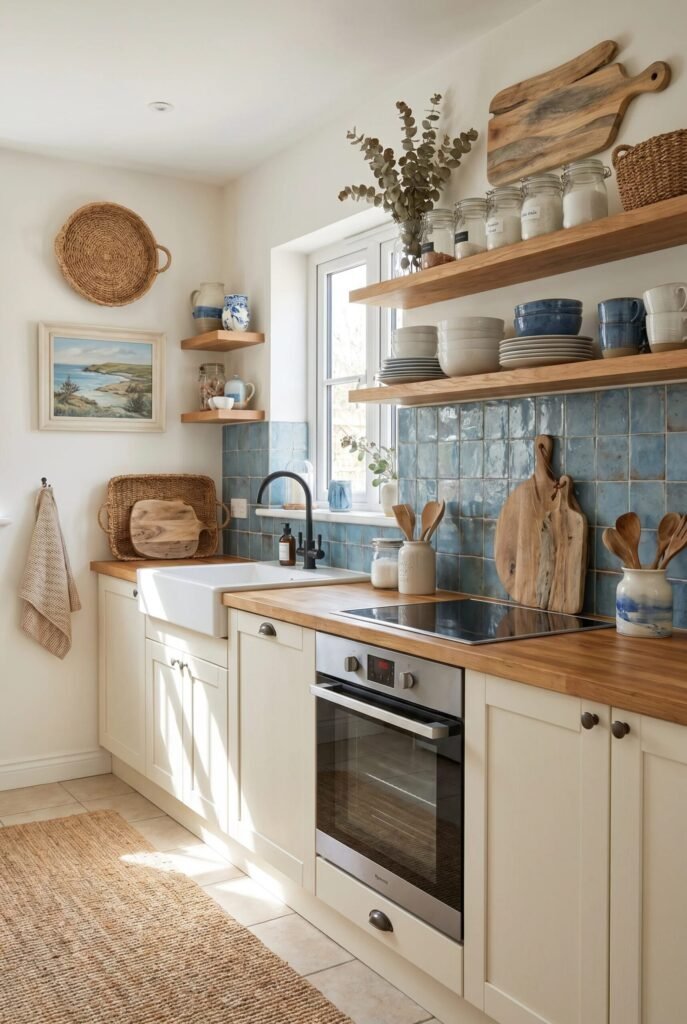
There’s something quietly charming about green cabinetry in a cottage kitchen. It feels connected to nature without screaming for attention. Paired with creamy subway tile, rustic wood shelving, vintage plates, and copper cookware, the entire space feels warm, welcoming, and delightfully unpretentious. It’s the kind of kitchen that makes us suddenly believe homemade jam might be a realistic life goal.
The color palette does most of the work here. Muted green acts as the anchor, while cream, wood, and copper provide warmth and contrast. The shelf styling also demonstrates an important cottage principle: functional décor. Everyday items such as dishes, jars, and cookware contribute to the visual appeal instead of being hidden away behind doors. When practical objects become decorative elements, a kitchen immediately feels more authentic and lived-in.
For a similar result, choose a muted green rather than a highly saturated shade. Incorporate natural wood whenever possible, whether through shelving, cutting boards, or furniture pieces. Vintage dishware displayed openly adds personality without requiring a major renovation. The goal is not perfection. A little patina and character are actually part of the charm, and honestly, cottage kitchens wear imperfections better than most of us wear linen pants.
Soft Sage Walls And Layers
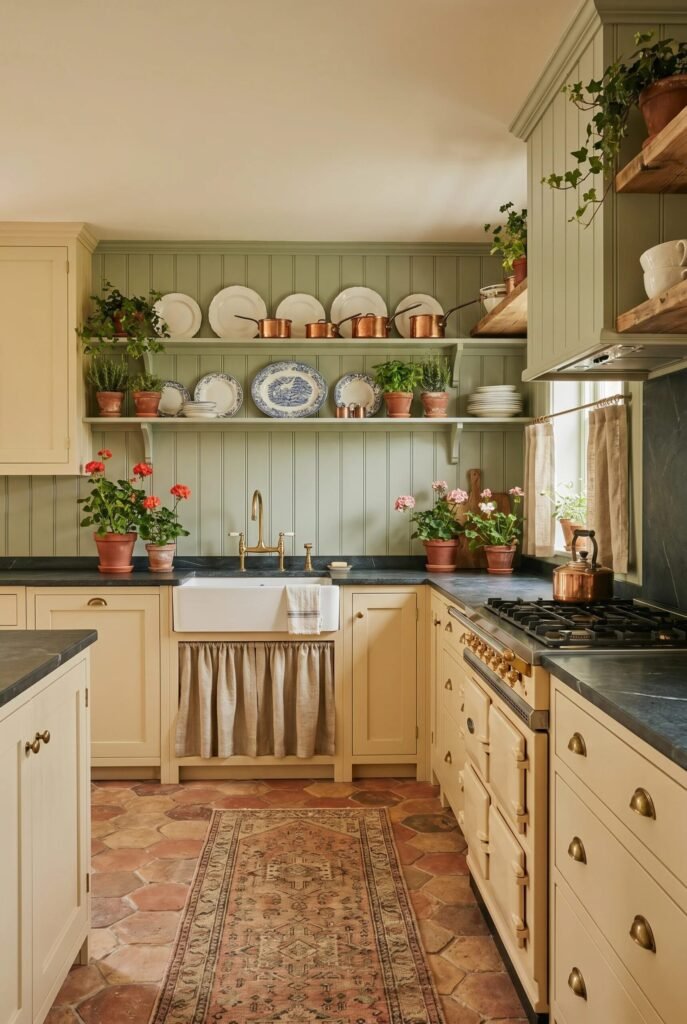
This kitchen demonstrates how cottage style can feel refined without losing its warmth. The sage-green paneled walls create a gentle backdrop for open shelving filled with dishes, plants, and copper cookware. Nothing appears overly precious, yet everything feels intentional. The layered styling gives the room depth while maintaining an easygoing atmosphere that feels genuinely welcoming.
What makes this design work is visual layering. The paneled walls add texture, the open shelves create vertical interest, and the terracotta floor introduces warmth below. There’s also a thoughtful balance between decorative and functional elements. Potted flowers, stacked plates, and cookware all contribute to the overall composition. Great cottage kitchens rarely rely on a single focal point; they create interest through multiple smaller moments.
If you’re recreating this look, consider adding texture before adding décor. Wall paneling, natural stone, aged brass hardware, or textured flooring can establish character immediately. Then layer practical items on shelves rather than purchasing décor solely for display. A few potted geraniums or herbs can also bring the space to life. Low-key, flowers in a cottage kitchen are basically the equivalent of adding jewelry to an outfit—they finish everything.
Arched Windows With Storybook Appeal
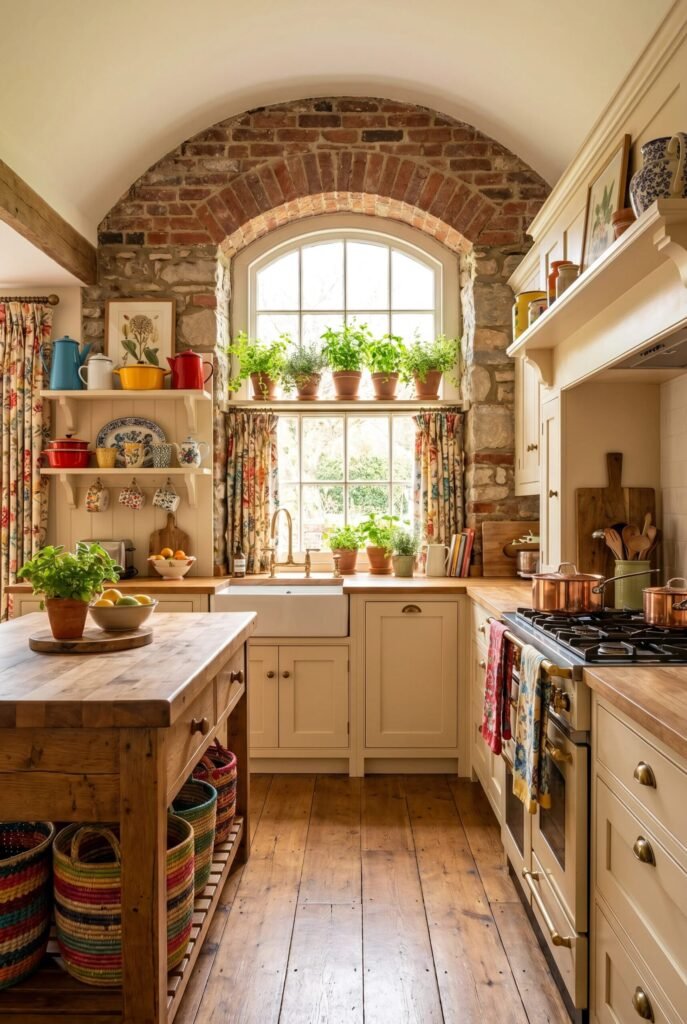
If cottage kitchens had a main-character moment, this might be it. The dramatic arched brick window instantly commands attention while flooding the room with natural light. Combined with cream cabinetry, floral curtains, rustic wood surfaces, colorful enamelware, and woven baskets, the space feels straight out of a countryside storybook—but in a way that still feels comfortable and usable.
The strongest design principle here is architectural emphasis. The window acts as a focal point, while surrounding elements support rather than compete with it. Notice how the neutral cabinetry allows the brickwork to shine. The woven baskets beneath the island introduce texture and storage simultaneously, while floral fabrics soften the harder architectural lines. Allowing one standout architectural feature to take center stage often creates a more timeless design than filling a room with multiple competing statements.
For homeowners wanting this vibe, focus on highlighting existing architectural details first. If you don’t have an arched window, emphasize another feature such as exposed beams, stone walls, or vintage cabinetry. Add woven baskets, patterned textiles, and natural wood finishes to build warmth. Cottage kitchens are never about chasing trends. They’re about creating spaces with enough character that guests casually linger long after dessert is gone.
Vintage Gallery Wall Above Worktops
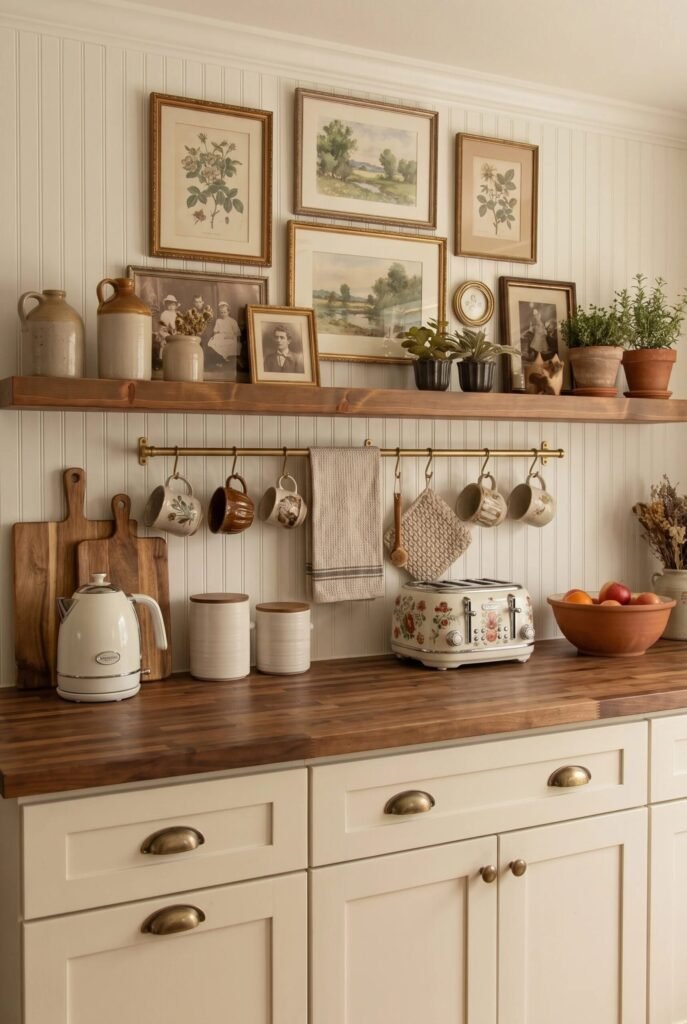
There’s something incredibly charming about a kitchen that feels like it has collected memories over decades rather than being decorated in a single weekend. This setup uses framed botanical prints, old family photographs, pottery, and warm wood shelving to create exactly that feeling. The gallery wall immediately draws attention upward, making the kitchen feel layered and personal. We also love how nothing feels overly coordinated. It’s a little imperfect, which is honestly where the magic lives.
The strongest design principle here is storytelling through layering. The beadboard wall introduces texture, while the collection of artwork adds depth and personality. Notice how the warm wood shelf visually anchors the gallery arrangement, preventing the wall from feeling busy. Cottage kitchens often succeed when decorative elements feel inherited rather than purchased as a matching set.
If you want to recreate this look, mix artwork sizes and frame finishes instead of buying identical frames. Botanical prints, vintage landscapes, and black-and-white family photos work beautifully together. Keep the color palette soft and neutral so the arrangement feels collected rather than chaotic. Think less “showroom reveal” and more “treasures discovered over time.”
Cozy Corners Lit By Lamplight
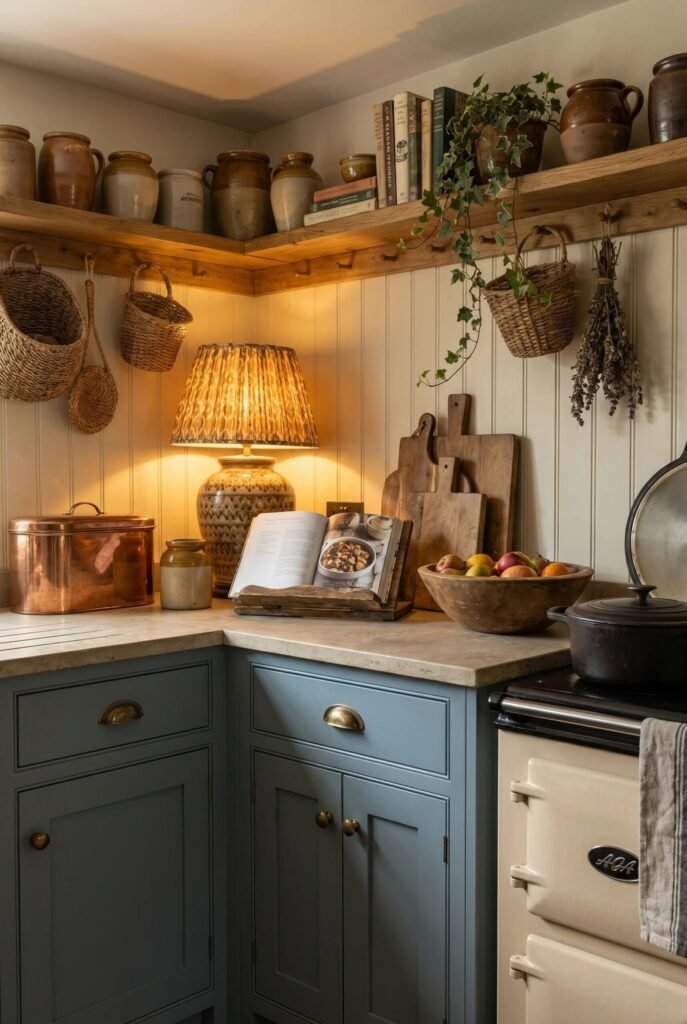
Not every cottage kitchen needs dramatic architecture to feel special. Sometimes all it takes is a glowing table lamp tucked into a quiet corner. This kitchen leans heavily into warmth through layered lighting, aged pottery, woven baskets, trailing ivy, and painted cabinetry. The result feels almost like a countryside reading nook that just happens to have a stove nearby. Honestly, it’s giving peak cozy-girl energy.
This space demonstrates the power of mood lighting. Most kitchens rely entirely on overhead fixtures, but adding a lamp introduces a softer glow that instantly changes the atmosphere. The woven baskets, pottery crocks, and natural wood further reinforce the cozy aesthetic by adding texture variation. Great cottage design is often less about adding more items and more about creating emotional warmth through lighting and materials.
For a similar look, consider placing a lamp in an unused kitchen corner or on a countertop that doesn’t receive heavy daily traffic. Pair it with natural textures like wicker, aged wood, or ceramic vessels. Bonus points for displaying cookbooks open on a stand. It quietly suggests that homemade pie might be happening, even if we’re actually reheating leftovers.
Soft Butter Yellow Cottage Layers
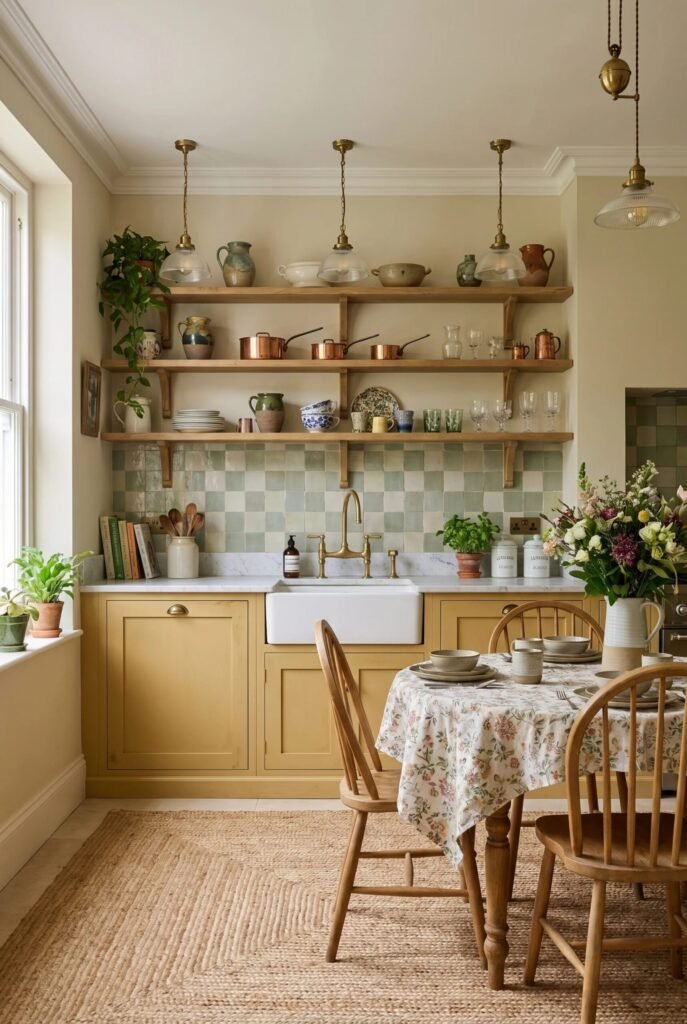
This kitchen feels like sunshine decided to settle down and buy a farmhouse. The buttery yellow cabinetry instantly creates warmth, while the checkerboard-style tile backsplash introduces subtle visual interest without overwhelming the room. Open shelving keeps everything feeling airy, and the floral tablecloth softens the space with a touch of old-fashioned charm that feels refreshingly genuine rather than trendy.
One reason this room works so well is its balance of softness and structure. The straight lines of the shelves and cabinetry are softened by flowers, rounded pottery, natural fiber rugs, and gentle color transitions. The muted yellow also reflects light beautifully, helping the room feel larger and brighter. Warm colors paired with natural materials create an inviting atmosphere that cottage kitchens are famous for.
If you’re considering yellow cabinetry, lean toward muted butter or cream-based shades instead of brighter tones. Pair them with natural woods, brass fixtures, and soft floral patterns to avoid the color feeling overly playful. We also recommend incorporating open shelving carefully. A few thoughtfully styled shelves feel charming. Fifteen crowded shelves? That’s a different storyline entirely.
Ceiling Pot Rack Statement Feature
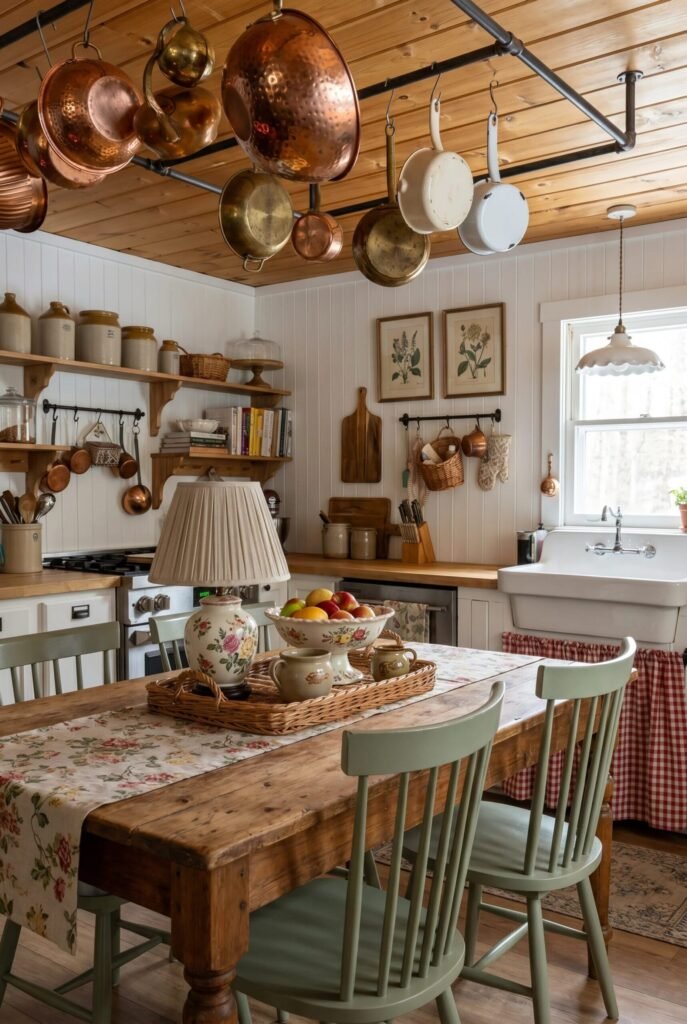
Some cottage kitchens embrace subtle charm. This one decided to make cookware the main character, and honestly, we support the decision. The ceiling-mounted pot rack immediately becomes the focal point, transforming practical cookware into architectural décor. Combined with white beadboard walls, rustic wood furniture, floral textiles, and copper accents, the kitchen feels wonderfully lived-in and full of personality.
The design principle here revolves around vertical utilization. Hanging cookware draws the eye upward, making the ceiling feel taller while freeing valuable cabinet space. Copper adds warmth and reflection, preventing the predominantly neutral palette from feeling flat. Meanwhile, floral fabrics and woven trays soften the abundance of hard surfaces. Functional storage that doubles as decoration is one of the smartest strategies in cottage design.
To recreate this idea, ensure your ceiling can properly support a hanging rack before installation. Then curate what hangs from it. A collection of copper, brass, or vintage cookware creates far more impact than mismatched modern pans. Keep nearby surfaces relatively uncluttered so the pot rack remains the star. Sometimes the best décor is literally the stuff we already use every day.
Skirted Sink With Rustic Character
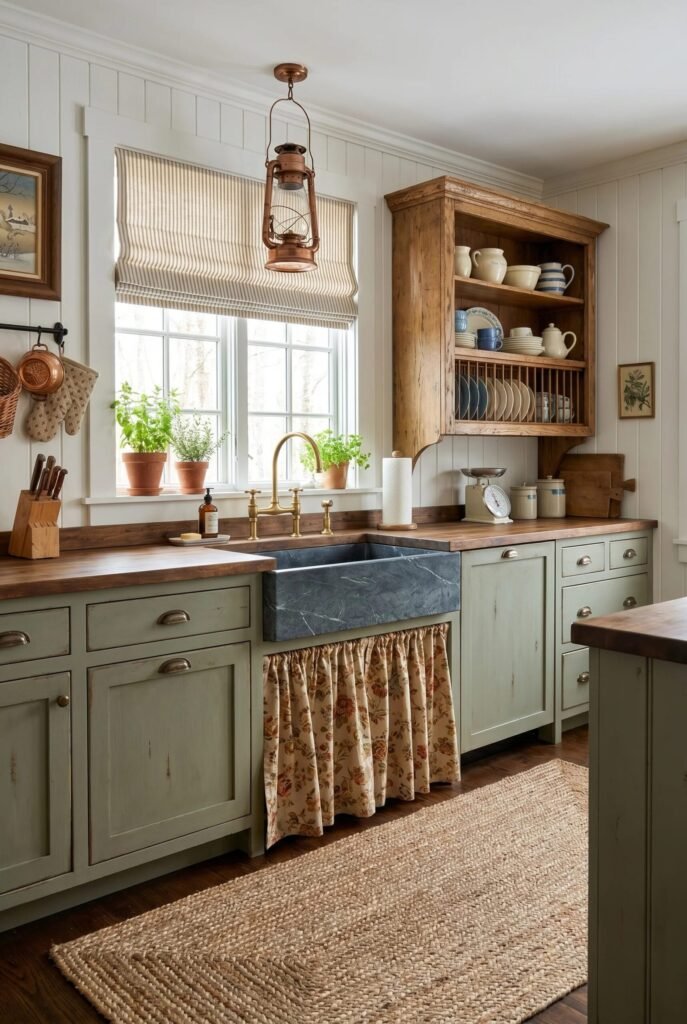
This kitchen captures the quieter side of cottage design. The muted sage cabinetry, floral sink skirt, weathered wood hutch, lantern-style pendant, and dark stone sink create a room that feels grounded and timeless. Nothing is flashy, yet every element contributes to a sense of comfort. It feels like the type of kitchen where recipes are written on index cards instead of saved in apps.
The beauty of this space comes from contrast and texture. Painted cabinetry provides softness while the stone sink introduces weight and visual depth. The floral sink skirt breaks up the cabinetry and adds movement, preventing the lower half of the kitchen from feeling too rigid. Mixing hard materials with softer textiles is one of the easiest ways to make a kitchen feel welcoming rather than purely functional.
If you want this look, consider incorporating a fabric sink skirt even if you have modern cabinetry. It’s a surprisingly affordable way to introduce cottage character. Pair it with aged brass fixtures, natural wood furniture, and a few potted herbs near the window. Cottage kitchens rarely chase perfection. They prioritize comfort, character, and that lovely feeling that someone might offer you tea the second you walk through the door.
Cottage Style Proves Character Never Goes Out Of Fashion
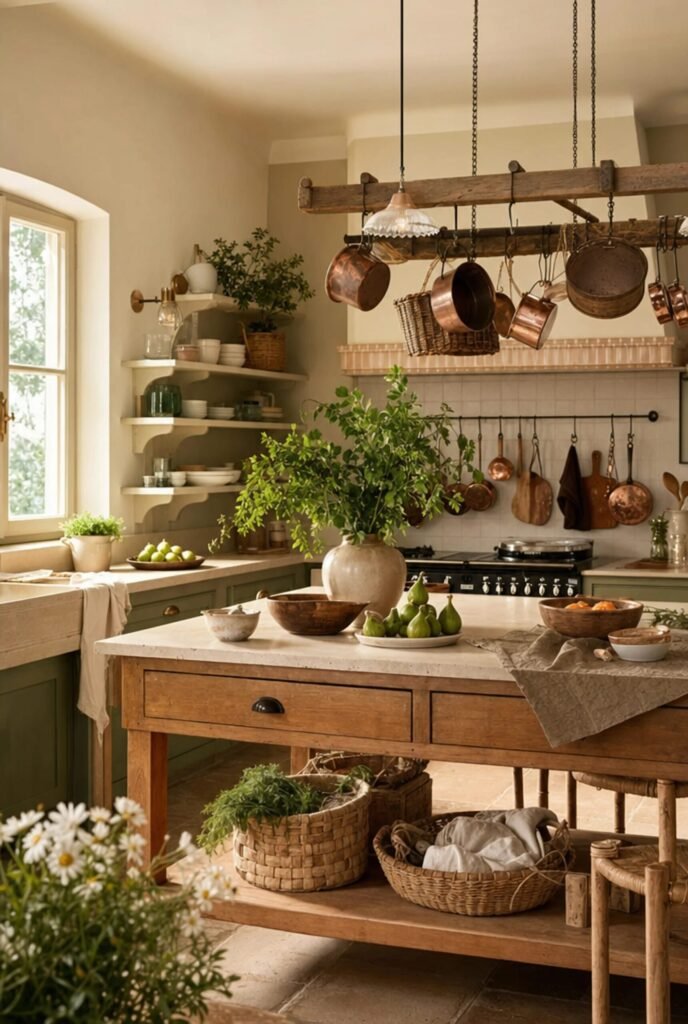
After exploring these cottage kitchen ideas, one thing becomes clear: the most memorable kitchens aren’t necessarily the largest or the most expensive. They’re the ones filled with warmth, thoughtful details, and a sense of personality. Whether it’s a gallery wall of vintage artwork, shelves stacked with collected ceramics, or a simple vase of flowers beside the sink, those small layers often make the biggest impact.
Many of these kitchens rely on similar design principles—natural materials, soft color palettes, vintage influences, and practical items displayed with intention. Yet each space feels unique because cottage style leaves room for individuality. That flexibility is exactly what helps the aesthetic feel timeless rather than trend-driven.
At the end of the day, a cottage kitchen is less about following strict decorating rules and more about creating a room that feels welcoming every time you walk into it. And honestly, if a kitchen makes us want to linger over coffee for an extra fifteen minutes, we’d call that a design success.
 Steal Our Home Styling Secrets!