
These Farmhouse Decor Ideas Continue To Work Year After Year
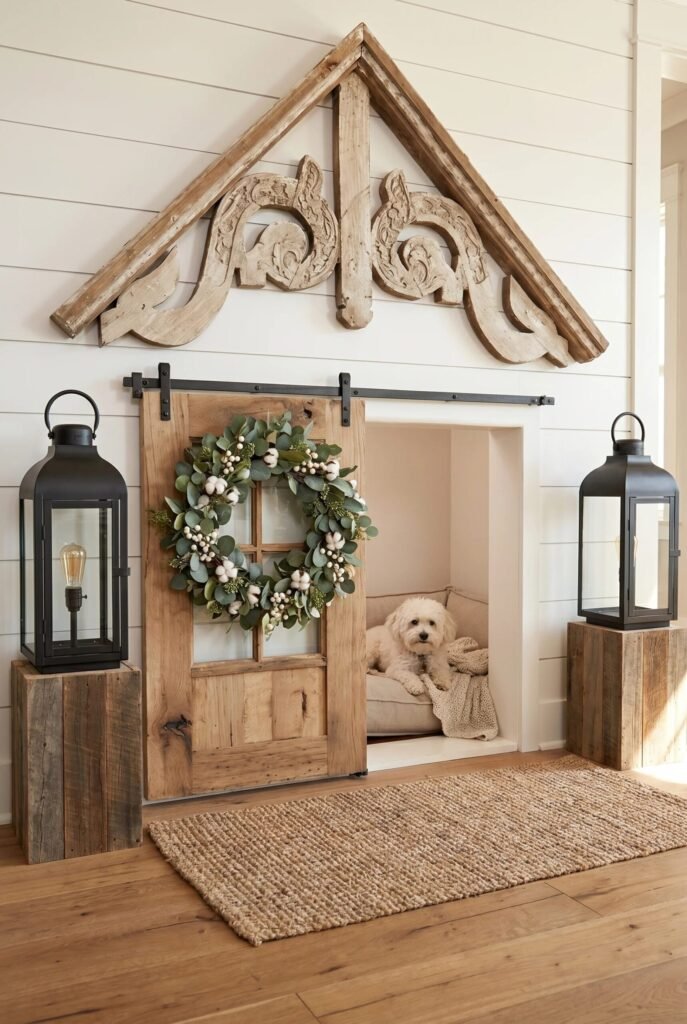
Farmhouse decor has quietly evolved over the years. What once leaned heavily on themed signs and matching accessories has shifted toward something far more inviting. Today’s farmhouse spaces feel collected, personal, and layered with pieces that tell a story. Looking through these rooms, we can see that the real magic isn’t coming from any single item. It’s created through the relationship between natural wood, woven textures, soft fabrics, vintage-inspired accents, and thoughtful styling.
One thing these spaces consistently get right is balance. Rustic wood beams are paired with clean white walls. Open shelving feels functional rather than cluttered. Decorative baskets double as storage. Even the darker farmhouse spaces maintain warmth through layered lighting and organic materials. The goal isn’t perfection—it’s creating rooms that feel comfortable enough to actually live in.
As we explore these farmhouse decor ideas, notice how every room blends beauty with practicality. That’s arguably the secret ingredient behind the style’s lasting popularity. A home should feel designed, of course, but it should also feel like it belongs to the people living inside it.
Open Shelves That Tell A Story
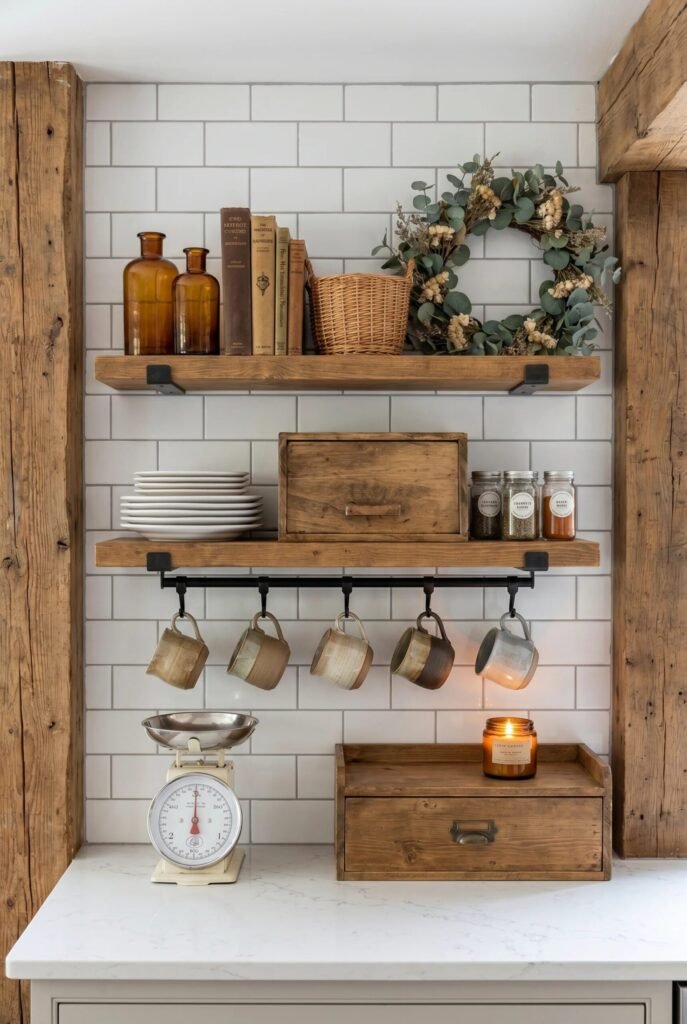
There is something about farmhouse decor that feels most convincing when it looks collected rather than purchased all at once. This little shelf nook nails that idea beautifully. The combination of warm reclaimed wood, white subway tile, amber glass bottles, vintage books, wicker baskets, and hanging mugs creates a layered display that feels useful and decorative at the same time. Nothing is fighting for attention, which is exactly why everything works together.
From a design perspective, this setup relies heavily on contrast and repetition. The crisp white tile provides a clean backdrop while the aged wood introduces warmth and texture. Repeating materials—wood, wicker, glass, and ceramic—creates visual rhythm without feeling overly styled. The secret here is balancing practical kitchen items with decorative pieces so the shelves feel lived-in instead of staged for a catalog shoot.
If we wanted to recreate this look, we would start with simple floating shelves and focus on grouping objects by material rather than color. Mix everyday dishes with a few vintage finds, add one organic element like a eucalyptus wreath, and leave breathing room between items. Farmhouse decor gets a little awkward when every inch is filled. Sometimes the empty space is doing the heavy lifting, bestie.
Farmhouse Bedroom With Collected Charm
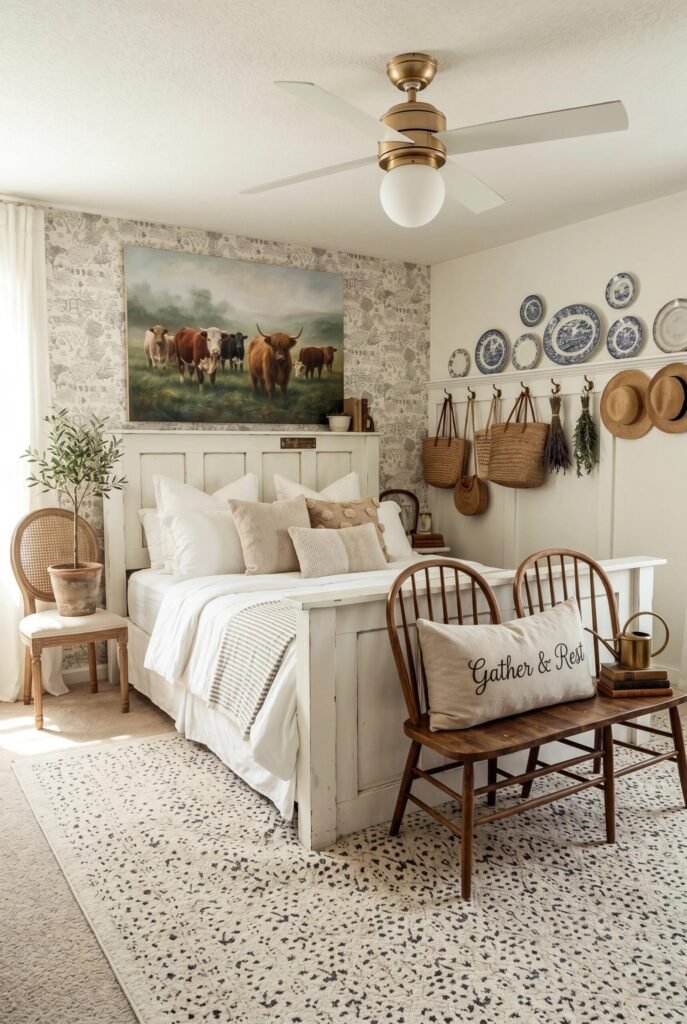
This bedroom feels like the decorating equivalent of a slow Sunday morning. Soft neutrals, vintage-inspired furniture, woven baskets, blue-and-white plates, and that oversized cow artwork create a space that feels welcoming rather than overly polished. It leans farmhouse without diving headfirst into the “live laugh love” era, which we fully support.
The design succeeds because it layers multiple focal points while maintaining a cohesive color palette. Warm wood tones, creamy whites, natural fibers, and muted blues appear throughout the room, creating continuity. The wall hooks, baskets, and decorative plates draw the eye horizontally, while the artwork anchors the bed vertically. This balance between vertical and horizontal visual weight prevents the room from feeling top-heavy or cluttered.
To recreate the look, focus on mixing functional storage with decorative accents. Hanging baskets, hats, and dried botanicals instantly add farmhouse character while serving a purpose. If large artwork isn’t in the budget, create a gallery wall with vintage prints or framed botanical sketches instead. And yes, oversized animal artwork somehow keeps winning in farmhouse spaces. The cows have excellent PR at this point.
Vintage Wall Decor With Texture
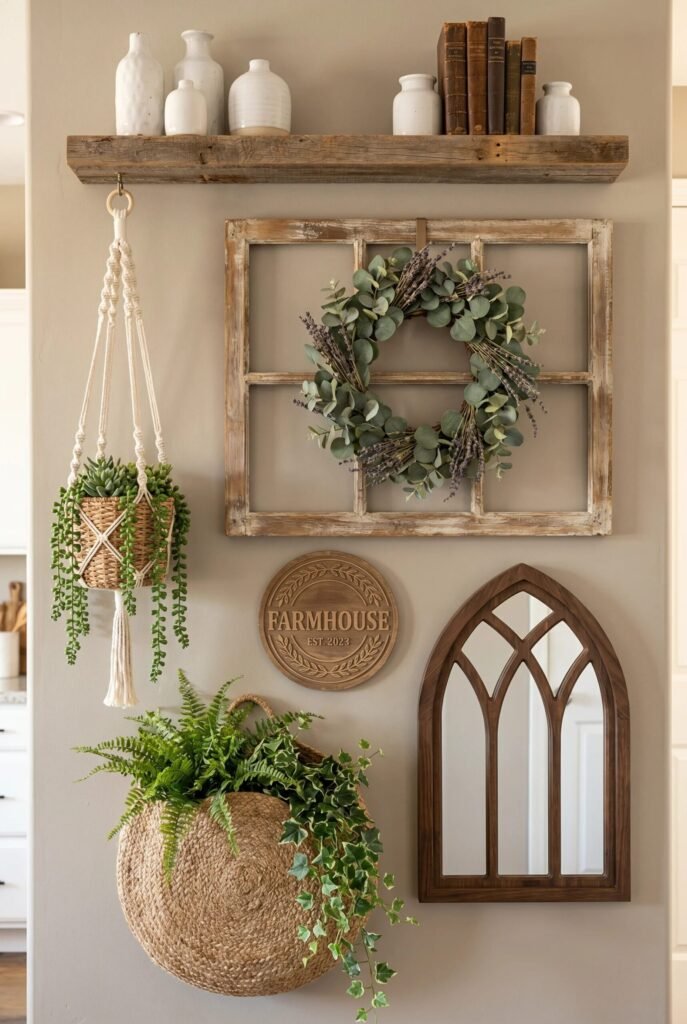
Some farmhouse walls try way too hard. This one quietly wins by focusing on texture, shape, and natural materials instead of filling every available inch with signs. The combination of an old window frame, eucalyptus wreath, macramé planter, woven basket, greenery, and an arched mirror creates a layered composition that feels curated and relaxed.
What makes this arrangement successful is the variety of silhouettes. Circular shapes from the wreath and basket soften the rigid geometry of the window frame and mirror. Meanwhile, the hanging greenery introduces movement that prevents the display from feeling static. The design principle at work here is contrast through form rather than color, which often creates a more sophisticated result.
For anyone recreating this look, think of wall decor as a collection of different shapes having a conversation with one another. Pair something round, something rectangular, and something organic. Natural materials such as rattan, wood, and greenery help establish farmhouse warmth immediately. We would also suggest resisting the urge to buy matching sets. A slightly imperfect mix feels far more authentic, and honestly, farmhouse decor thrives when it looks like it evolved over time rather than arriving in one suspiciously large online order.
Soft Neutral Farmhouse Living Room
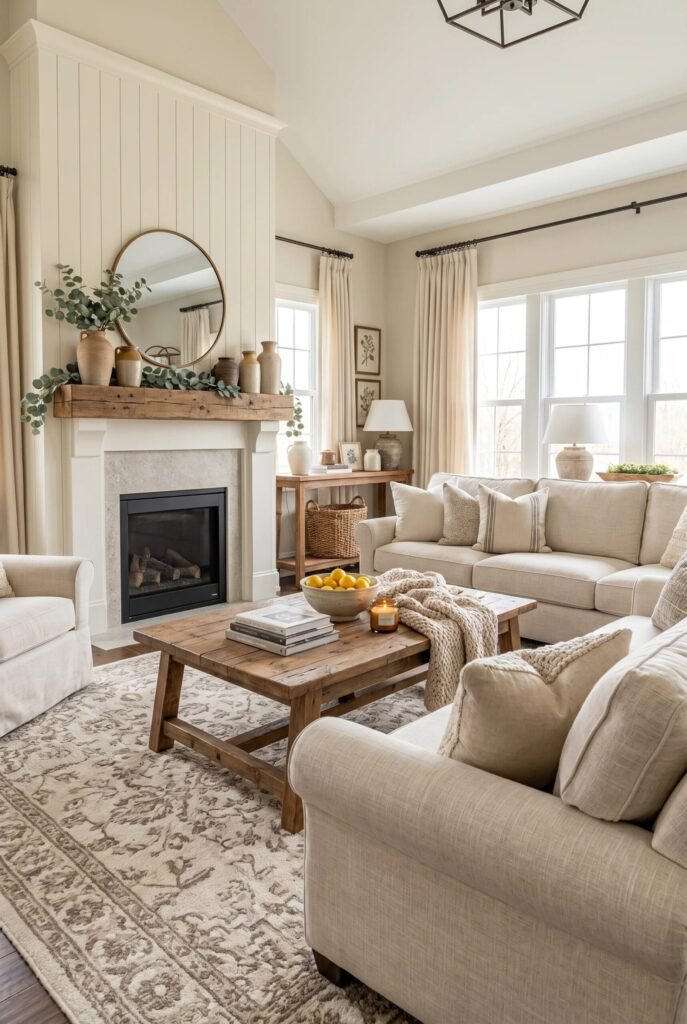
If farmhouse decor had a comfort level setting, this room would be sitting at maximum. The soft neutral palette, oversized seating, rustic wood coffee table, layered textiles, and simple fireplace styling create a space that feels calm without becoming boring. It is proof that beige can absolutely have a personality when handled correctly.
The room follows several classic design principles. Scale is particularly important here. Large furniture pieces are balanced by tall windows and a substantial fireplace wall, preventing the space from feeling empty. Texture also plays a major role. Linen upholstery, woven baskets, weathered wood, greenery, and patterned rugs create depth despite the limited color palette. Without these texture variations, the room could easily feel flat and one-dimensional.
For a similar look, start with neutral foundations and build visual interest through materials rather than adding random accent colors. Layer throws, mix pillow fabrics, incorporate natural wood furniture, and introduce greenery for freshness. A rustic coffee table often becomes the anchor of the entire room. Also, candles are practically honorary members of the farmhouse design team. They somehow make every styling moment look intentional.
Moody Farmhouse Decor Done Right
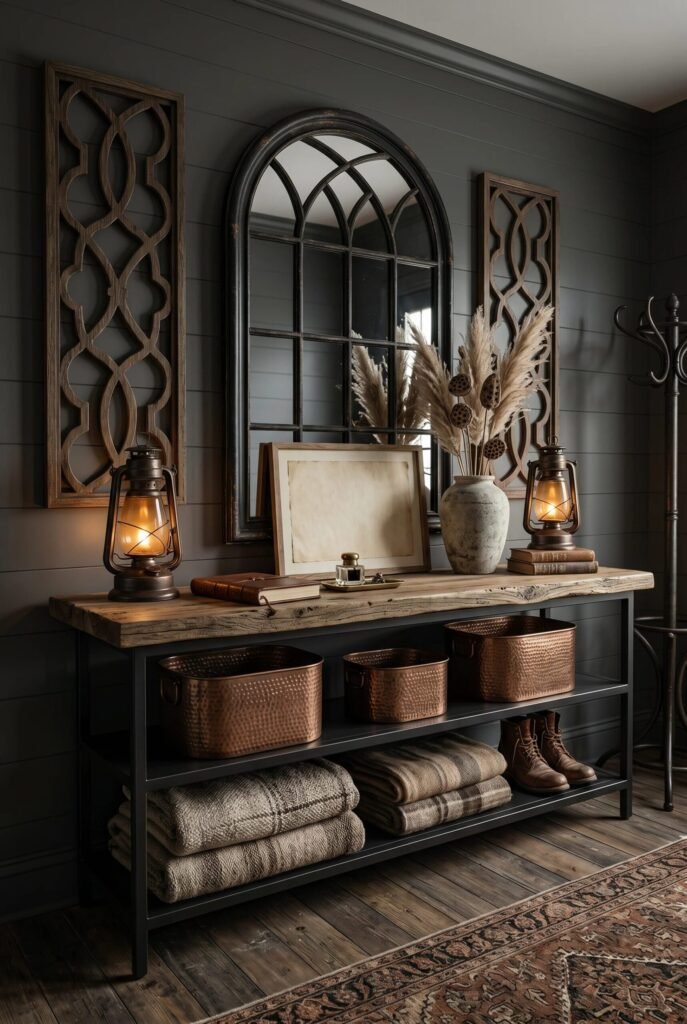
Not every farmhouse space needs white walls and sun-drenched corners. This darker interpretation feels dramatic, cozy, and surprisingly elegant. Black shiplap walls, warm wood surfaces, lantern lighting, aged mirrors, vintage-inspired accessories, and copper storage baskets create a rich atmosphere that feels grounded and sophisticated.
The strongest design principle here is contrast. Dark walls push decorative elements forward, allowing natural wood, brass, copper, and dried botanicals to stand out dramatically. The arched mirror also introduces height while reflecting available light back into the space. Using reflective surfaces becomes especially important when decorating with deep paint colors because it prevents the room from feeling visually heavy.
To recreate this aesthetic, we would commit fully to the darker backdrop instead of treating it as an accent. Pair charcoal, black, or deep brown walls with warm wood tones and layered lighting sources. Lanterns, candles, and table lamps work particularly well because they enhance the cozy atmosphere. And if anyone tells you farmhouse decor must always be bright and airy, respectfully ignore them. This room is serving cozy mystery novel energy, and frankly, we’re obsessed.
A Potting Room With Farmhouse Soul
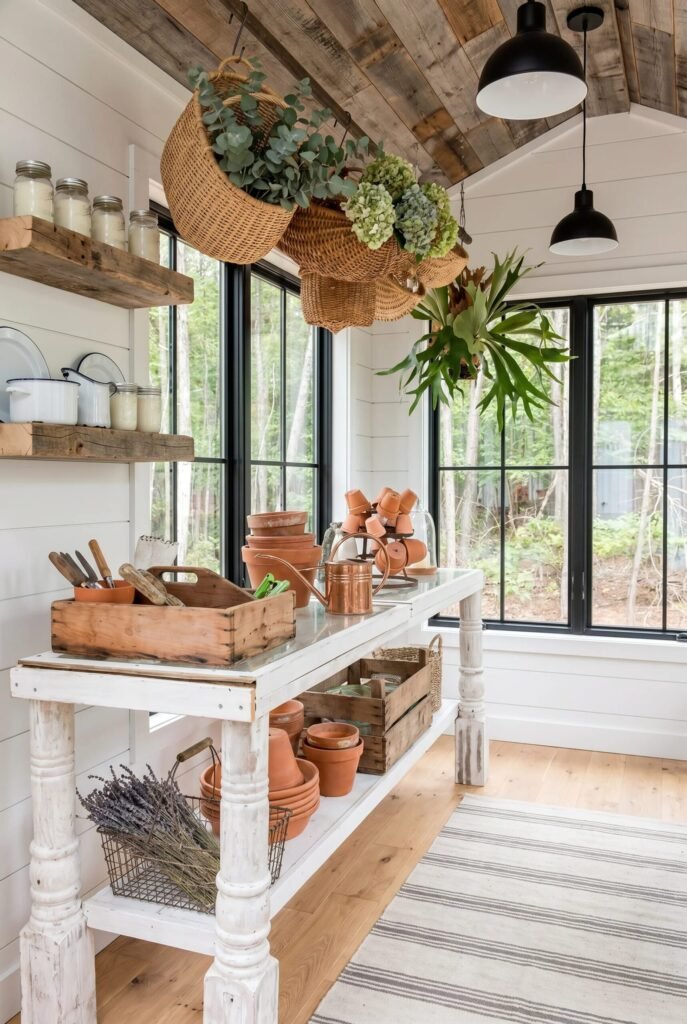
This space feels like what would happen if a farmhouse mudroom and a greenhouse had a very stylish baby. Between the hanging wicker baskets, reclaimed wood ceiling, black-framed windows, terracotta pots, and weathered worktable, the room feels functional while still being incredibly charming. It leans into the gardening lifestyle without turning every corner into a themed display, which honestly makes it feel much more authentic.
The design works because it uses vertical space brilliantly. The suspended baskets draw the eye upward, emphasizing the vaulted ceiling and making the room feel larger. Meanwhile, the warm wood ceiling balances the cool white shiplap walls, creating contrast without introducing additional colors. The repeated use of natural materials—wood, wicker, clay, and greenery—creates a unified visual story throughout the room.
If we wanted to recreate this look, we would prioritize storage that doubles as decor. Hanging baskets, wooden crates, and open shelves instantly contribute character while remaining practical. Terracotta pots are practically farmhouse royalty, so don’t be afraid to display them openly. And yes, we fully support decorating with gardening supplies because somehow a stack of clay pots always looks more expensive than it actually is.
Entryway Seating That Feels Intentional
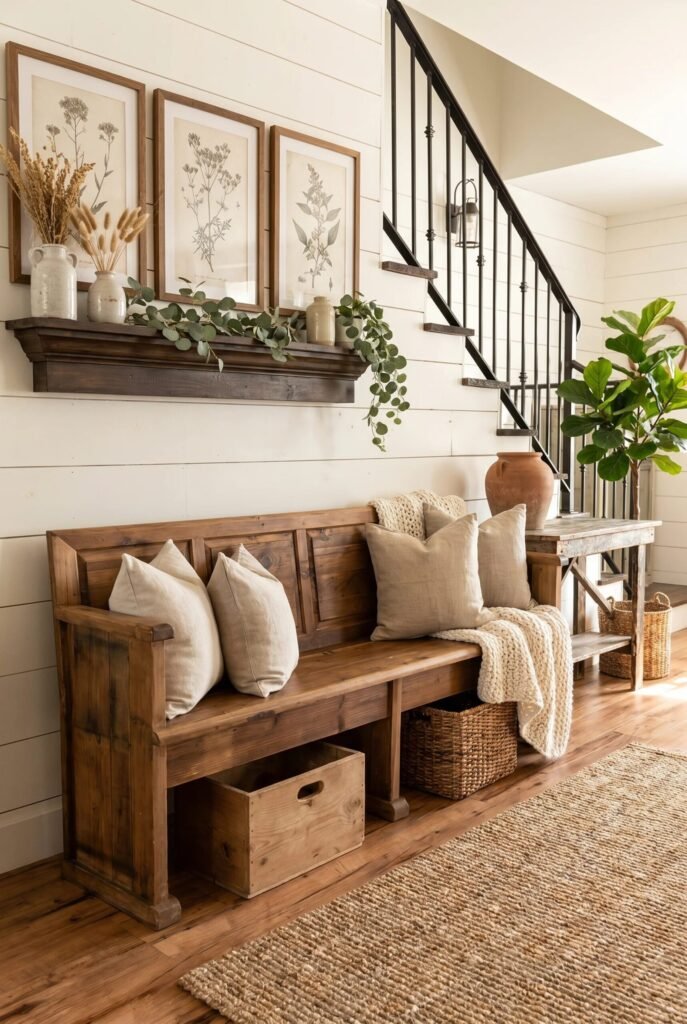
A farmhouse entryway should feel welcoming before anyone even makes it to the living room, and this setup absolutely understands the assignment. The sturdy wooden bench, neutral textiles, botanical artwork, woven baskets, and simple greenery create an entrance that feels warm, organized, and quietly elegant. Nothing is flashy, yet the entire space feels complete.
One reason this design feels so successful is its strong sense of symmetry. The artwork grouping creates visual balance above the bench, while the throw pillows and accessories help distribute visual weight evenly across the composition. The darker wood tones anchor the room against the lighter shiplap backdrop. This contrast between light walls and substantial furniture is a classic farmhouse design strategy because it creates depth without requiring bold colors.
For a similar look, start with one solid furniture piece that feels substantial enough to anchor the wall. Add soft textiles, natural baskets, and a few organic elements like eucalyptus or dried stems. We would avoid overcrowding the shelf above. Farmhouse styling tends to look best when every item has room to breathe. Think curated cottage, not storage closet that accidentally became decorative.
Small Farmhouse Bathroom Done Right
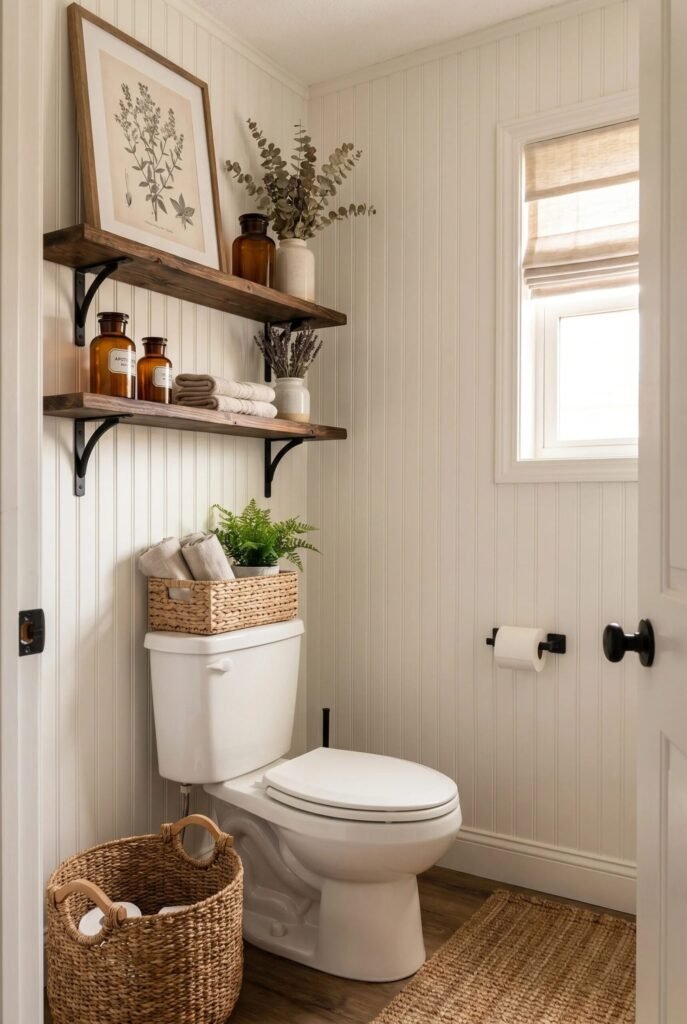
Tiny bathrooms often get treated like design afterthoughts, but this one proves that small spaces can absolutely carry major farmhouse energy. The beadboard walls, floating wood shelves, amber glass bottles, woven baskets, and neutral accessories create a room that feels cozy rather than cramped. Everything has a purpose, which is exactly what small-space decorating should aim for.
From a design perspective, vertical layering is doing most of the heavy lifting here. The shelving draws the eye upward and utilizes wall space efficiently, while the light color palette keeps the room feeling open. Natural textures from wicker, wood, linen, and greenery soften the hard surfaces typically found in bathrooms. The combination of practical storage and decorative styling ensures the room feels lived-in without looking cluttered.
To recreate this aesthetic, we would focus on open shelving with carefully edited accessories. Rolled towels, simple pottery, and amber bottles instantly create farmhouse character without requiring a major renovation. A woven basket on the floor can provide both storage and texture. Also, let’s be honest, every small bathroom benefits from pretending it’s part spa. The vibes matter.
Layered Console Styling That Feels Collected
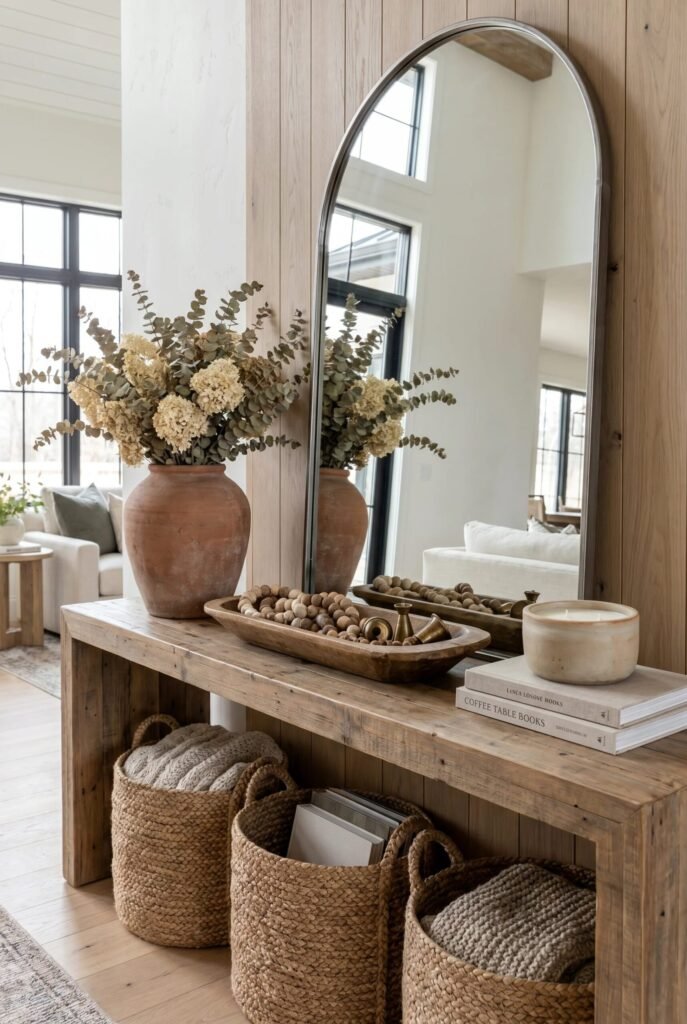
Some decorating moments are loud. This one whispers and somehow gets more attention because of it. The rustic console table, oversized arched mirror, woven baskets, ceramic vessel, wooden beads, and dried florals come together to create a display that feels timeless rather than trendy.
The design principle driving this look is layering. The large mirror establishes height and reflects natural light, while lower accessories create depth across multiple visual planes. The styling also relies heavily on varying scales. Oversized florals, medium-sized trays, and smaller decorative accents work together to keep the arrangement balanced. Without this variation in scale, the console would feel flat and visually predictable.
For anyone recreating this look, begin with one oversized statement piece, usually a mirror or artwork. From there, layer accessories in front rather than placing everything in a straight line. Natural wood, aged pottery, and woven textures are particularly effective in farmhouse spaces because they add warmth immediately. Bonus points if the arrangement looks like it was collected over years instead of added to cart during one particularly ambitious online shopping session.
Rustic Kitchen Storage That Looks Beautiful
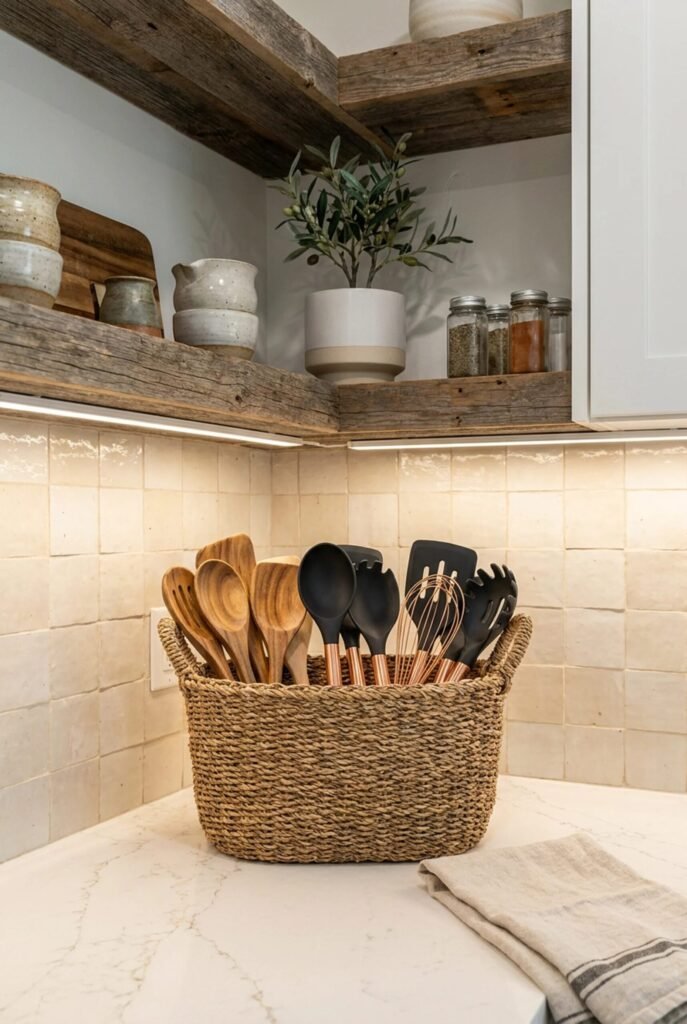
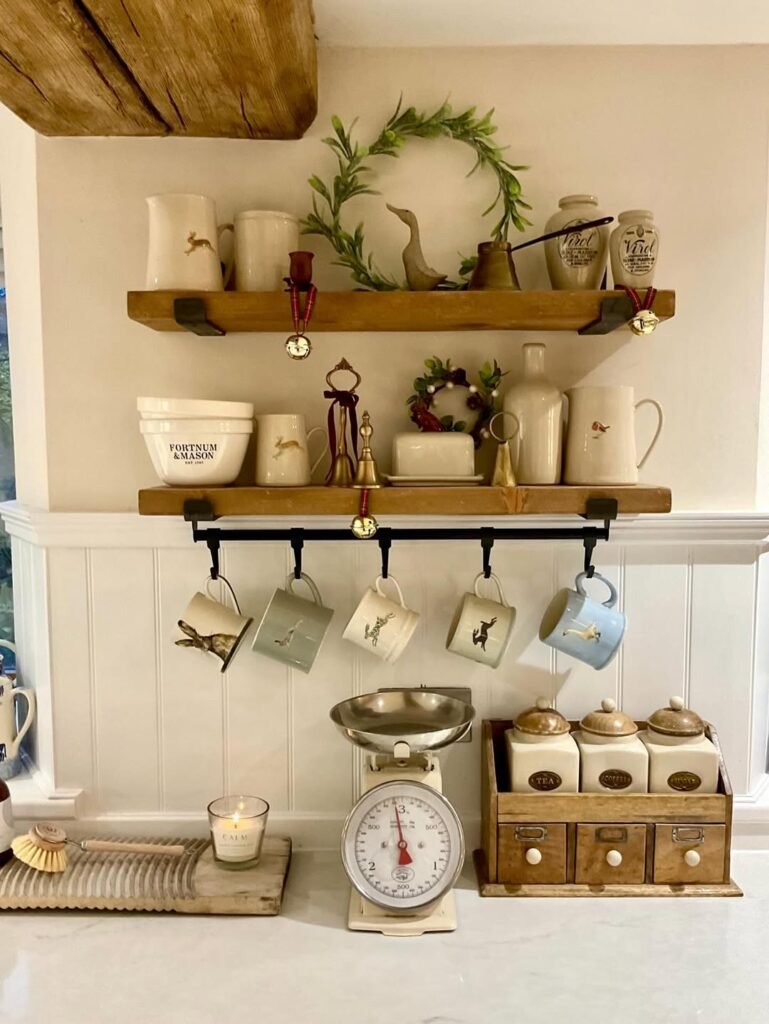
Farmhouse decor shines brightest when practical items become part of the design, and this kitchen corner demonstrates that perfectly. Open reclaimed-wood shelving, handmade pottery, spice jars, natural baskets, and everyday cooking tools create a setup that feels approachable and functional. It proves that organization does not have to be boring. Revolutionary concept, honestly.
What makes this corner successful is its strong material consistency. The weathered wood shelves echo the warmth of the baskets and wooden utensils, while soft neutral ceramics maintain a calm visual palette. Under-shelf lighting adds another layer by highlighting textures and creating depth. The design avoids visual chaos by limiting the color palette and allowing texture to become the primary source of interest.
If we wanted to bring this look into our own kitchen, we would start by displaying items we actually use daily. Wooden spoons, ceramic bowls, spice jars, and linen towels naturally fit the farmhouse aesthetic. Store them in woven baskets or handmade containers rather than hiding everything away. Farmhouse decorating is at its best when beauty and practicality become roommates instead of distant neighbors.
Creating A Home That Ages Beautifully
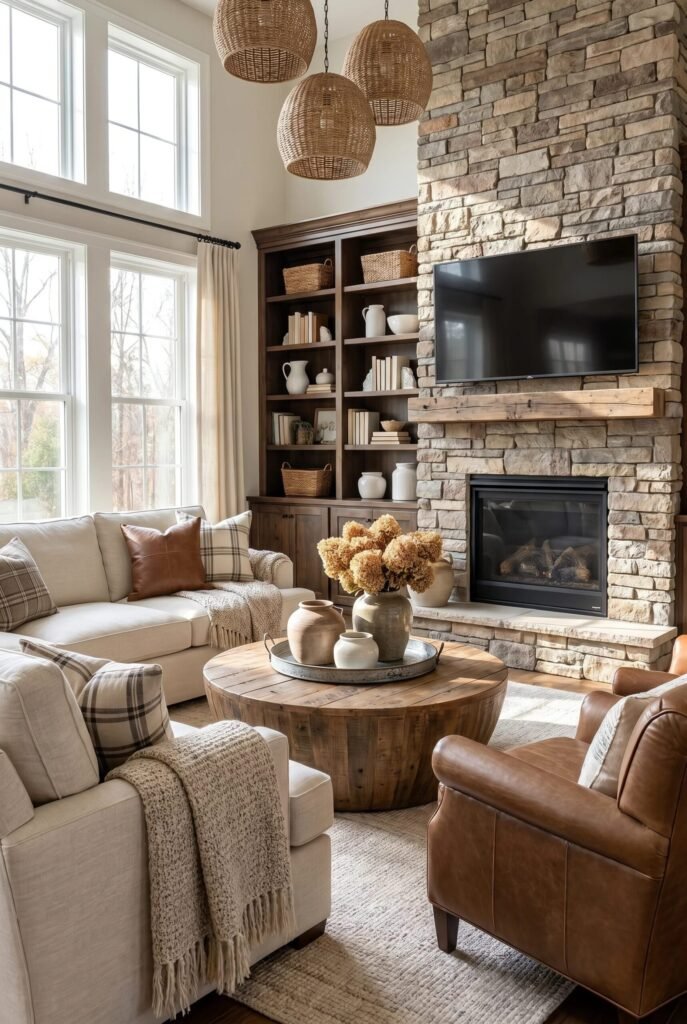
Perhaps the most refreshing thing about farmhouse decor is that it doesn’t demand perfection. Scratches on wood furniture, slightly weathered finishes, handmade pottery, woven baskets, vintage books, and natural greenery all contribute to the charm. In many ways, farmhouse design celebrates the idea that homes become more beautiful as they gather memories and character over time.
Throughout these spaces, we saw recurring principles that work in almost any home: layering textures, mixing old and new elements, embracing natural materials, and allowing functional objects to become part of the decor. Whether it was open kitchen shelving, cozy living rooms, welcoming entryways, or thoughtfully styled bathrooms, every space prioritized warmth over trends. That sense of authenticity is what keeps farmhouse decor feeling relevant year after year.
The best farmhouse interiors don’t look finished in a weekend. They evolve slowly through collected finds, meaningful objects, and everyday living. And honestly, that’s what makes the style so appealing. It gives us permission to create homes that feel beautifully imperfect—and a little more like ourselves.
 Steal Our Home Styling Secrets!