
What Gives Certain Vintage Dining Rooms Their Unmistakable Charm
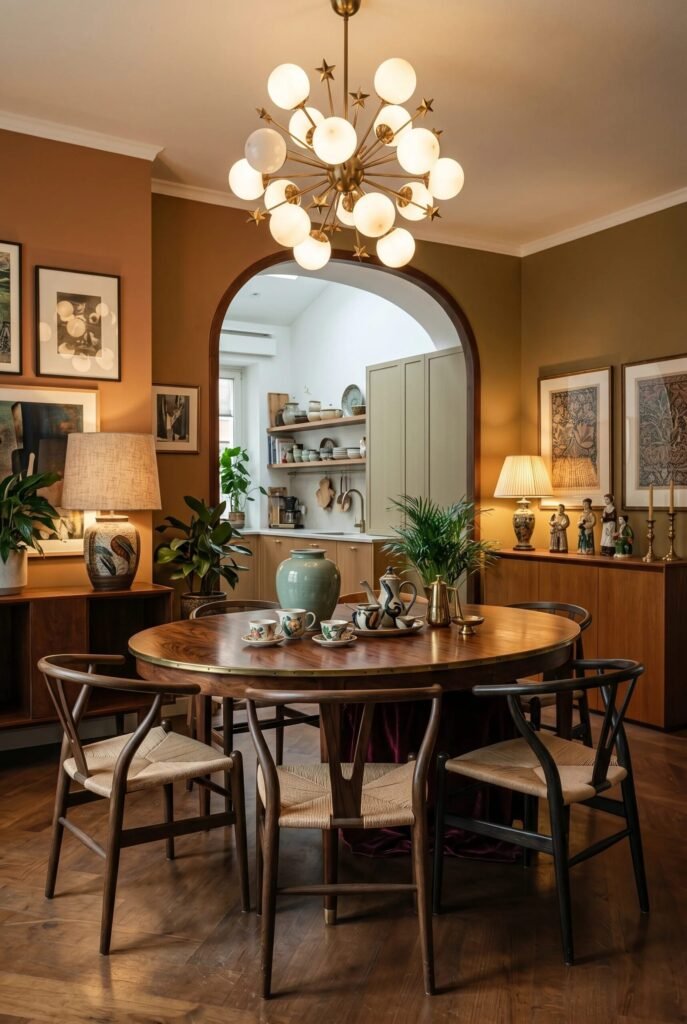
There is something special about a vintage dining room that modern spaces often struggle to replicate. It is not just about antique furniture, floral china, or beautiful chandeliers. It is about creating a room that feels layered, personal, and genuinely lived in. Looking through these dining rooms, we can see how vintage design turns ordinary meals into experiences that feel a little more memorable.
Some spaces lean toward cottage charm with lace tablecloths and garden-inspired details. Others embrace mid-century silhouettes, farmhouse warmth, English-country elegance, or even playful retro influences. Yet despite their differences, they all share one thing in common: character. The most beautiful vintage dining rooms are never perfectly matched because their charm comes from collected stories, not showroom perfection.
As trends continue racing from one aesthetic to the next, vintage dining rooms remind us that timeless design rarely shouts for attention. Instead, it quietly creates spaces where conversations last longer, candles stay lit a little later, and everyday moments feel unexpectedly meaningful.
Cottage Garden Charm Around Every Meal
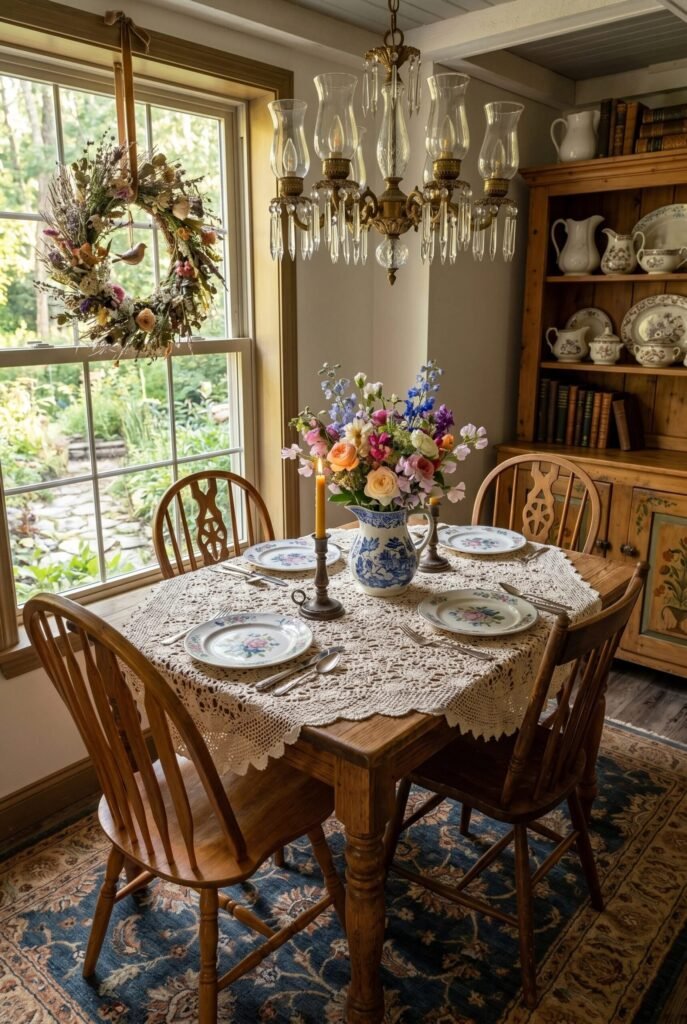
There is something undeniably sweet about a dining room that feels like it belongs beside an overgrown garden path and a stack of well-loved novels. The combination of the crystal chandelier, floral wreath, antique hutch, and delicate blue-and-white china creates a room that feels collected rather than decorated. That distinction matters. Vintage spaces tend to feel most authentic when they tell a story instead of following a formula.
One design principle working beautifully here is layering. We see texture from the crocheted tablecloth, visual softness from the flowers, sparkle from the chandelier, and warmth from the aged wood furniture. The room avoids looking cluttered because every layer belongs to the same romantic cottage-inspired palette. Nothing is competing for attention, which is honestly a rare achievement in vintage decorating.
If we wanted to recreate this look, start with one heirloom-style focal point. A vintage chandelier, antique cabinet, or floral centerpiece can anchor the room. Then build outward using soft florals, warm wood tones, and traditional table linens. And yes, the lace tablecloth might make us feel approximately eighty-two years old, but somehow it also feels impossibly chic. Vintage decor really loves keeping us humble.
Vintage Gallery Wall With Coastal Soul
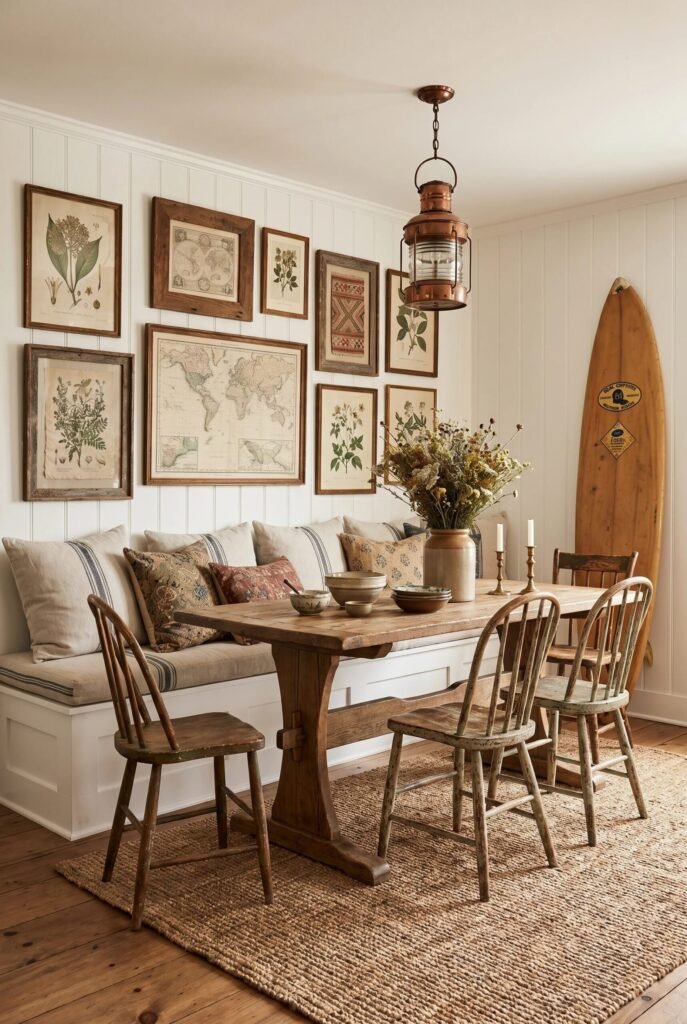
This dining space proves that vintage design does not have to mean dark wood and heavy fabrics everywhere. The room feels light, relaxed, and surprisingly fresh thanks to the crisp white wall paneling and oversized collection of framed botanical illustrations and maps. It has that “found during years of travel” energy, even if everything was sourced during a very productive weekend online.
The strongest design principle here is balance between visual weight and negative space. The large gallery wall provides personality, while the built-in bench keeps the room grounded and streamlined. Natural materials such as wood, linen, and woven jute introduce texture without adding visual noise. That restraint is exactly what keeps the room feeling timeless rather than themed.
For a similar look, focus on creating a curated wall display using mismatched vintage frames. Mix botanical prints, old maps, sketches, and antique documents rather than choosing identical artwork. Pair them with simple furniture silhouettes and neutral upholstery. We also love how the aged chairs look slightly imperfect. Vintage rooms are one of the few places where “a little wonky” actually increases the charm factor. Honestly, perfection is overrated anyway.
Moody Botanical Dining Room Magic
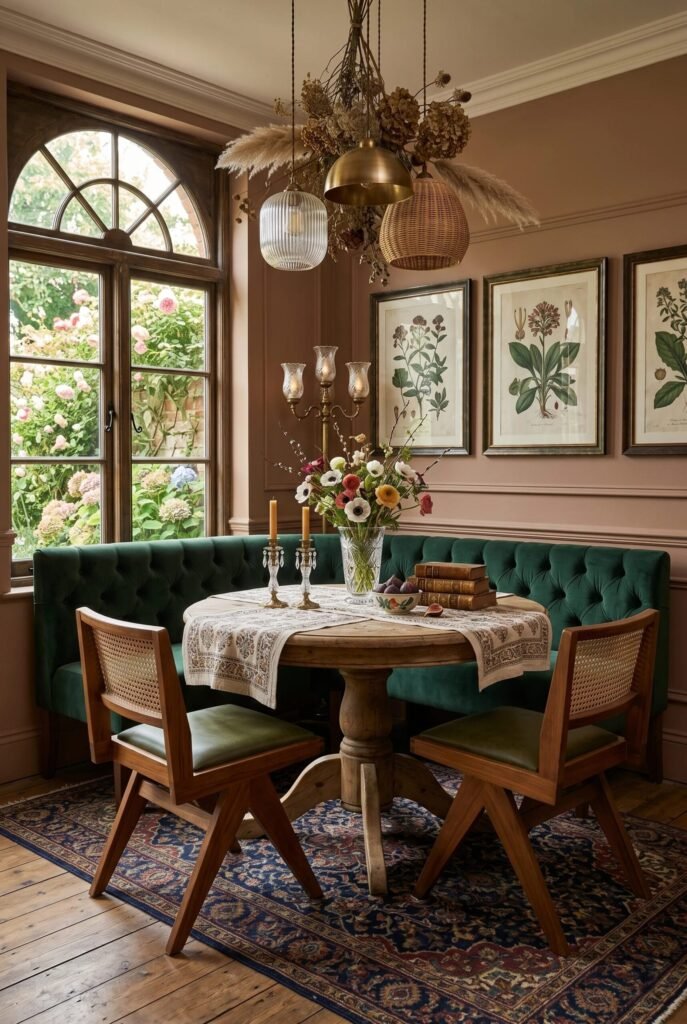
Some vintage dining rooms whisper. This one absolutely knows how to make an entrance. The rich brown walls, emerald banquette seating, layered lighting, and botanical artwork create a space that feels equal parts historic library and secret garden. It is dramatic without becoming overwhelming, which is a tricky line to walk.
The color palette does most of the heavy lifting. Warm earthy walls create intimacy while the deep green seating introduces contrast and depth. Above, the mixed pendant arrangement adds vertical movement and visual interest. Using varying heights throughout the room prevents the darker colors from feeling heavy or flat. Every element pulls our eyes around the space naturally.
Anyone recreating this aesthetic should focus on contrast rather than simply choosing dark colors. Pair rich wall shades with lighter floral arrangements, reflective metals, and natural wood tones. Botanical artwork works especially well because it softens the moodiness with organic shapes. And let’s be real—if a dining room can make takeout pizza feel vaguely aristocratic, we consider that a design win. This room definitely passes the test.
Sunlit Farmhouse Vintage Dining Retreat
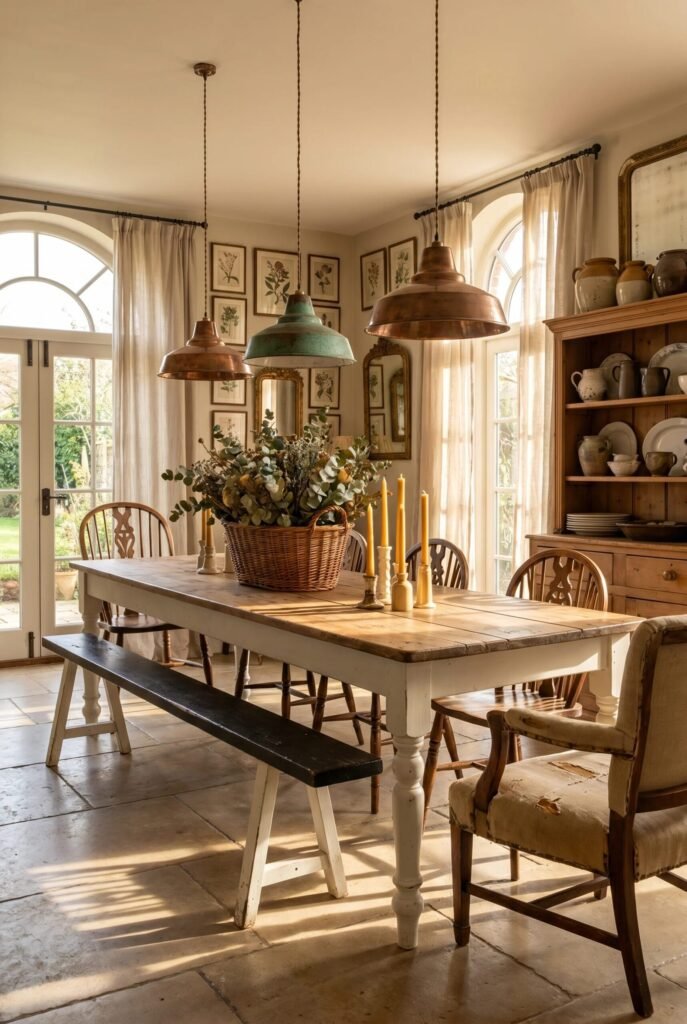
This room captures one of the most appealing aspects of vintage decorating: effortless warmth. Between the weathered farmhouse table, oversized basket centerpiece, aged copper pendant lights, and sun-drenched windows, the entire space feels welcoming from the moment we walk in. It has that slow-living aesthetic people spend hours trying to curate on Pinterest.
What makes the room successful is its use of repetition. Warm wood appears throughout the furniture, hutch, frames, and flooring. The repeated material creates cohesion even though several finishes are mixed together. Meanwhile, the oversized windows flood the room with natural light, preventing the darker vintage elements from feeling heavy. Good vintage design often relies on contrast between aged materials and fresh light.
To recreate this look, invest in one substantial farmhouse table and keep surrounding pieces slightly mismatched. Vintage spaces usually feel more believable when everything does not arrive in the same delivery truck. Add woven baskets, antique-style lighting, and collected pottery to reinforce the lived-in atmosphere. Bonus points if afternoon sunlight streams across the table dramatically enough to make ordinary coffee look like a magazine photoshoot.
Collected Antiques With Everyday Comfort
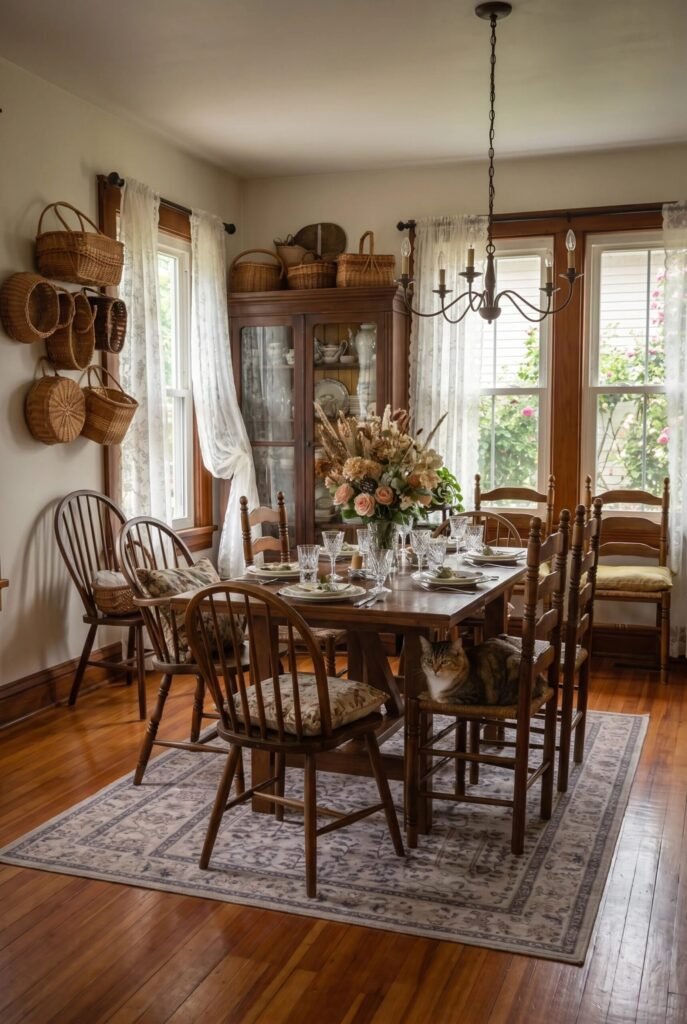
Some vintage dining rooms prioritize beauty. Others prioritize comfort. This one somehow manages both. The mix of spindle-back chairs, woven baskets, lace curtains, antique cabinet, and layered textiles creates a space that feels genuinely lived in. It looks less like a showroom and more like a home where people actually gather, linger, and ask for second helpings.
A major design principle here is visual storytelling. Every object contributes to a broader narrative of craftsmanship and tradition. The hanging basket collection adds texture and personality, while the glass-front cabinet provides vertical balance. Even the patterned rug helps define the dining zone within the room. The success of the space comes from thoughtful curation rather than expensive furnishings.
For anyone recreating this style, start collecting pieces gradually instead of decorating all at once. Vintage rooms often feel richer when objects are accumulated over time. Mix woods, introduce handmade elements, and leave room for small imperfections. Those imperfections create authenticity. Also, we have to acknowledge the cat casually claiming ownership of the dining chair. Frankly, every truly cozy vintage room seems to attract at least one furry design critic.
Mid-Century Lines Meet Vintage Warmth
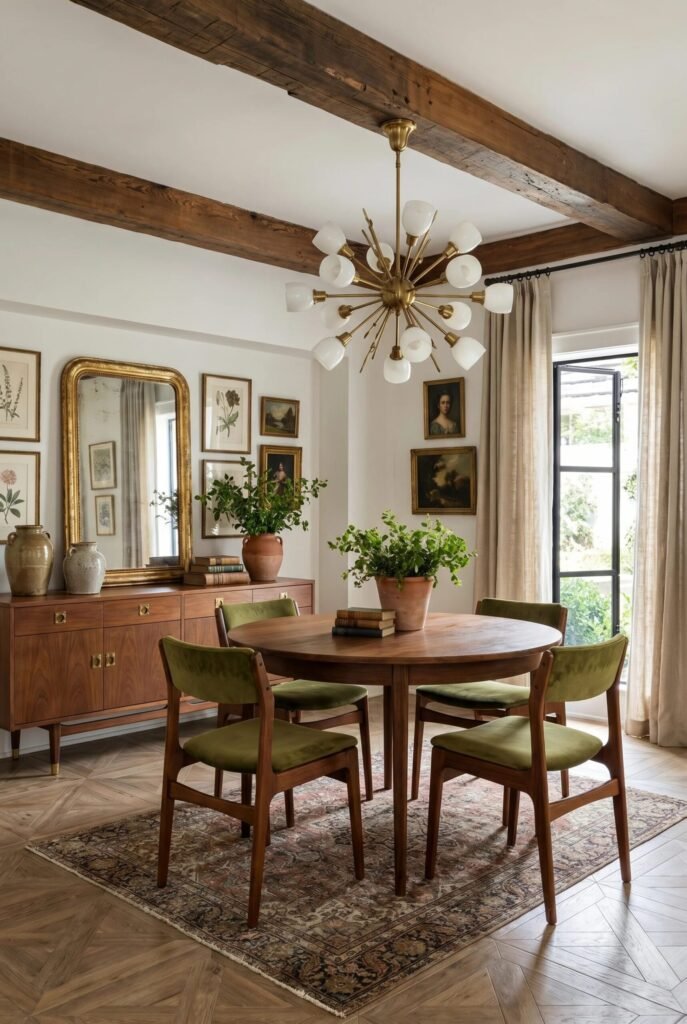
This dining room is what happens when mid-century modern furniture decides it wants a softer, more collected personality. The round walnut table, olive velvet chairs, brass starburst chandelier, and vintage artwork create a look that feels polished without becoming overly serious. It has that “grown-up but still fun” energy that so many dining rooms try to achieve and somehow miss by a mile.
The strongest design principle here is contrast. Clean-lined furniture sits comfortably beside traditional elements like the ornate gold mirror and antique-inspired artwork. The exposed ceiling beams add rustic character, while the brass lighting introduces a touch of glamour. Balancing sleek silhouettes with vintage accessories prevents the room from feeling too modern or too old-fashioned. The result lands perfectly in the middle.
To recreate this aesthetic, begin with a simple mid-century dining set and layer in vintage accents afterward. A gilded mirror, framed portraits, and aged rugs instantly soften the look. We would also stick to earthy greens, warm walnut tones, and brass finishes. It’s giving “collected over decades” instead of “ordered at 2 a.m. after scrolling design influencers for three hours.”
English Cottage Dining Room Elegance
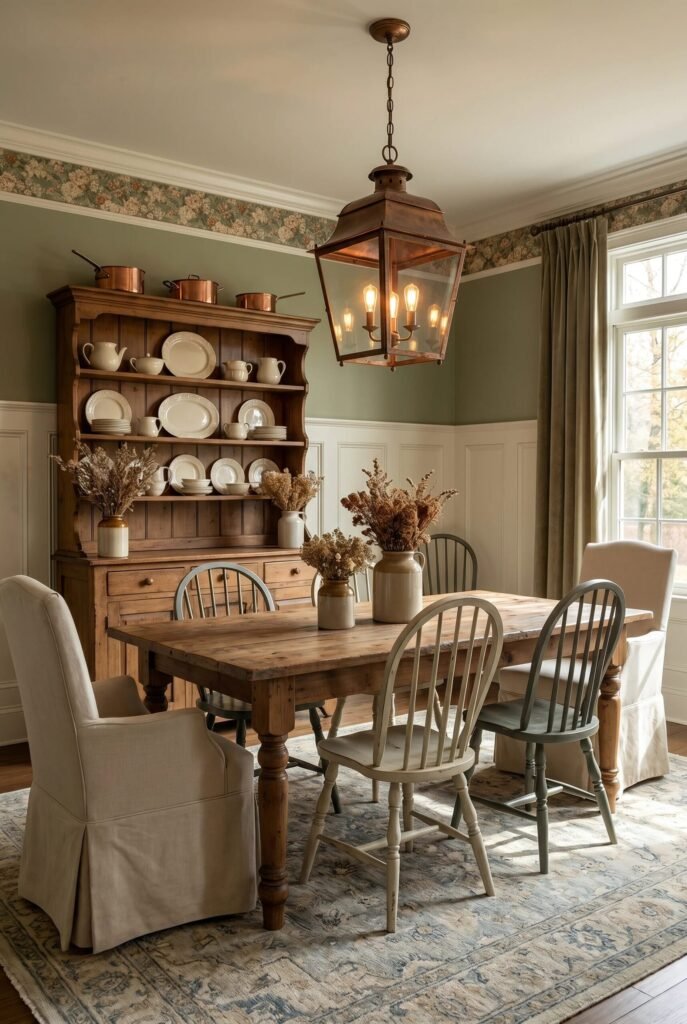
There is something incredibly comforting about a dining room that feels like it belongs inside a countryside novel. Between the sage-green walls, antique hutch, weathered farmhouse table, and oversized lantern pendant, this room embraces traditional charm without feeling stuffy. It feels welcoming in the best possible way, like someone always has fresh tea and a homemade pie nearby.
What makes the design work is color harmony. The muted greens, creamy whites, and warm wood tones all sit within a similar visual temperature. Nothing feels jarring or out of place. The hutch acts as a focal point while the mixed seating introduces personality and prevents the room from looking overly formal. The space feels balanced because every element supports the same relaxed cottage narrative.
For a similar look, choose one heritage-inspired color such as sage, olive, or dusty blue and repeat it throughout the room. Incorporate natural wood furniture and display everyday dishware openly instead of hiding everything away. Vintage decorating works best when beautiful objects are actually used. And honestly, if a room makes us want to bake bread despite having zero baking skills, that’s probably a sign the design is doing something right.
Romantic Vintage Dining Room Glow
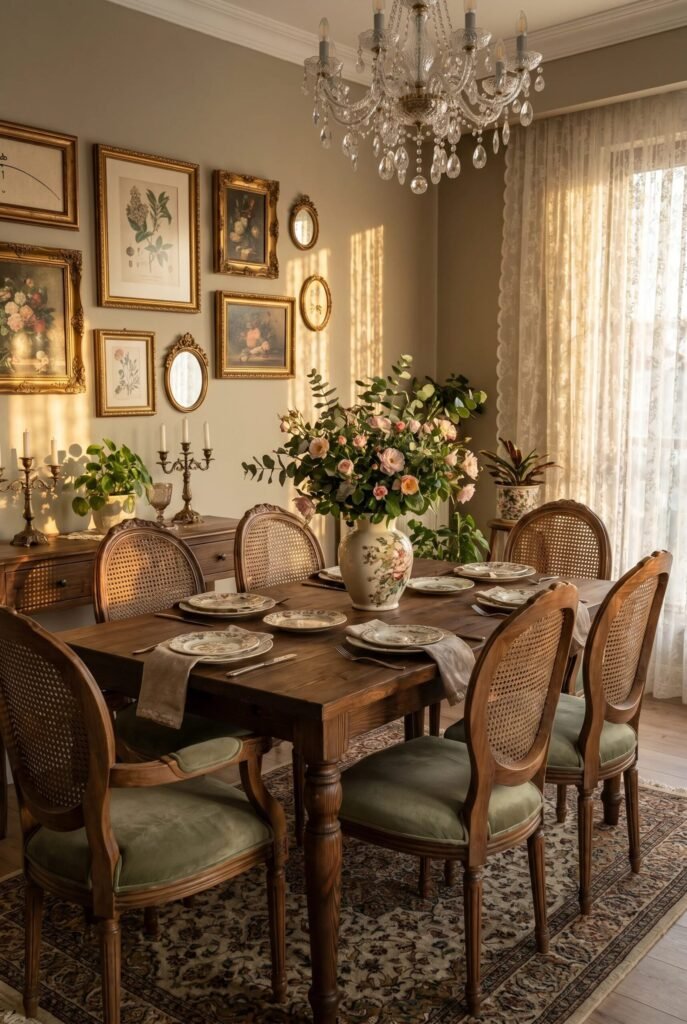
Some dining rooms are designed for eating. This one feels designed for lingering. The crystal chandelier, floral arrangement, cane-back dining chairs, and gallery wall create an atmosphere that feels soft, romantic, and just a little bit dreamy. The late-afternoon sunlight filtering through the lace curtains practically deserves its own supporting role.
Layering is the hero of this room. We see texture from the woven chair backs, sparkle from the chandelier crystals, softness from the flowers, and visual depth from the collected artwork. The room succeeds because it combines multiple delicate details without allowing any single feature to dominate. Everything feels intentional and balanced.
If we were recreating this look, we would focus heavily on lighting and textiles. Sheer curtains, vintage-inspired rugs, and elegant chandeliers instantly establish the mood. Then add floral arrangements with slightly loose, organic shapes rather than stiff formal bouquets. The goal is effortless beauty, not perfection. Besides, the slightly imperfect flower arrangement usually looks far more expensive. Vintage decor has mastered the art of looking accidentally fabulous.
Soft Florals And Heirloom Details
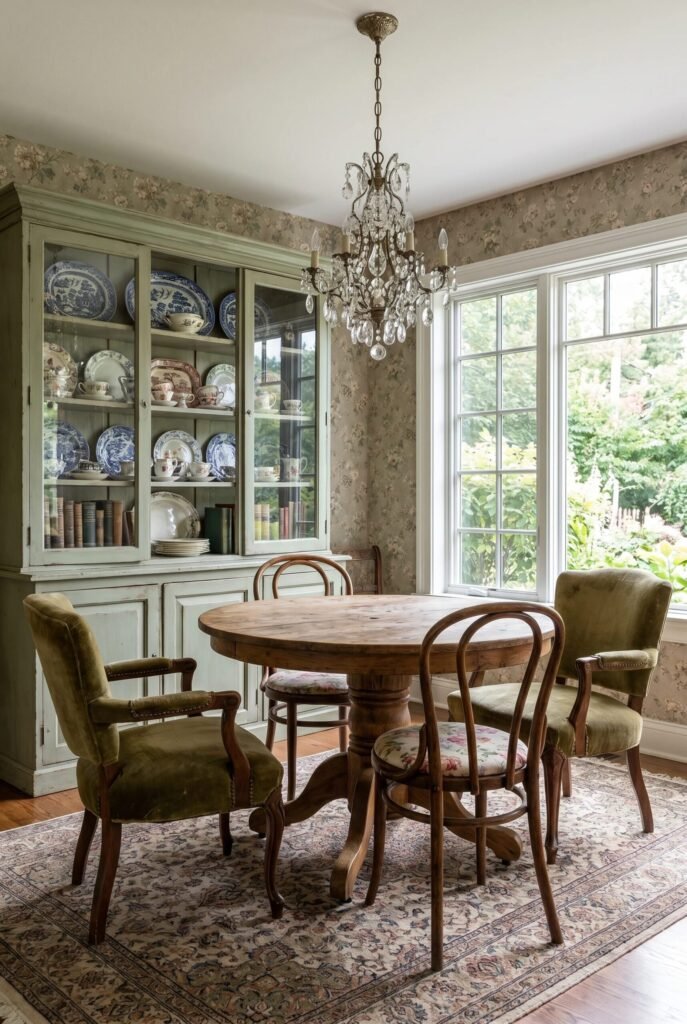
This dining room leans fully into vintage romance, and honestly, we’re not mad about it. The floral wallpaper, painted china cabinet, crystal chandelier, and mix of antique seating create a space that feels collected across generations. It has that timeless quality where it’s difficult to tell whether the room was designed yesterday or fifty years ago.
A key principle here is repetition of delicate patterns. The floral wallpaper echoes the decorative china, while curved furniture shapes reinforce the softness throughout the room. The large windows prevent the abundance of vintage details from feeling visually heavy. Natural light is often the secret ingredient that keeps traditional interiors feeling fresh rather than dated.
To achieve a similar atmosphere, pair floral patterns with simple furniture forms so the room does not become visually overwhelming. A painted hutch filled with collected dishware instantly introduces vintage character. We would also mix chair styles rather than matching every seat perfectly. Vintage spaces rarely look their best when everything coordinates too much. A little unpredictability is part of the charm, bestie.
Retro Dining Room With Studio Energy
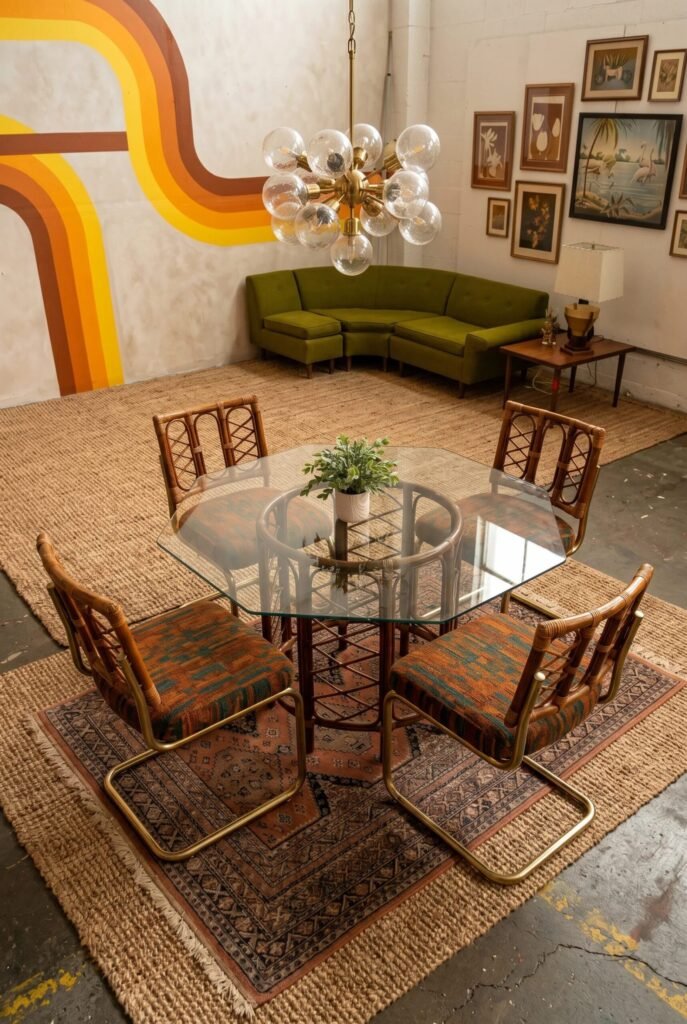
This final dining room takes vintage design in a completely different direction, and that is exactly why it works. The glass-top table, chrome-framed chairs, bubble chandelier, retro mural, and olive-green sectional bring serious 1970s personality into the space. It feels creative, playful, and refreshingly unconcerned with current trends.
The room relies heavily on bold shapes and geometric repetition. Circular forms appear in the chandelier, table base, and lighting globes, creating visual consistency despite the eclectic furnishings. Warm oranges, browns, and olive greens reinforce the retro aesthetic while the oversized mural acts as a statement backdrop. Strong vintage interiors often commit fully to their era instead of borrowing only a few surface-level details.
If recreating this style, embrace retro color palettes unapologetically. Look for curved furniture, chrome accents, smoked glass, and graphic artwork. Vintage-inspired rugs help anchor the space and prevent it from feeling too showroom-like. And yes, there is always a small risk that guests will start discussing vinyl records and disco playlists. That’s simply part of the package.
Timeless Details That Never Stop Feeling Beautiful
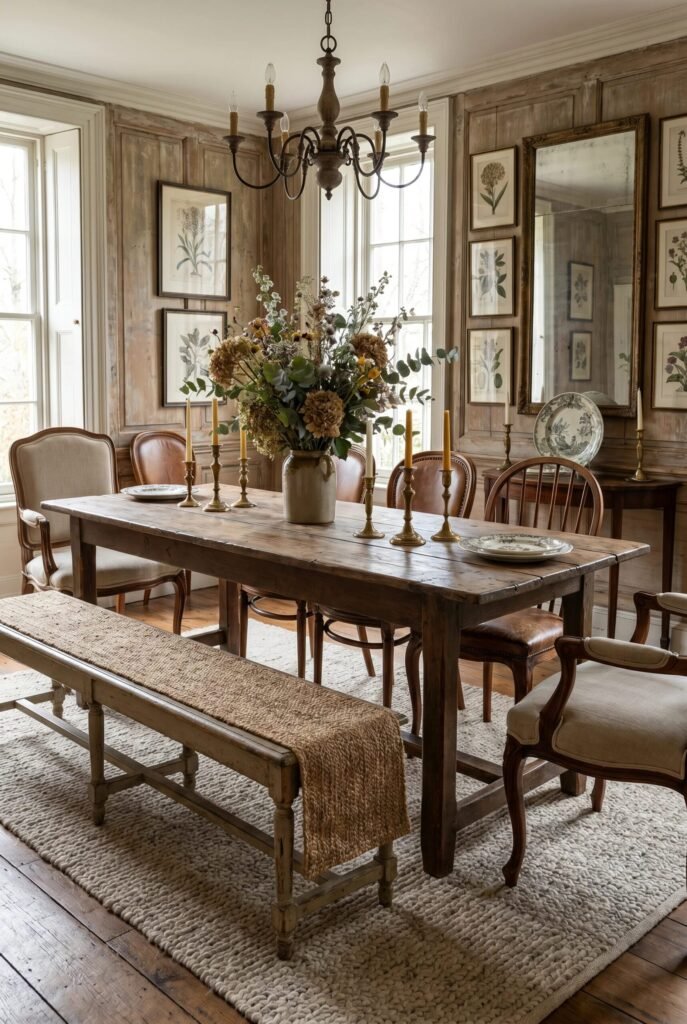
After exploring these vintage dining room ideas, one thing becomes clear: successful vintage decorating is less about following rules and more about creating atmosphere. Whether it is an antique hutch filled with treasured dishware, a crystal chandelier catching afternoon sunlight, or a weathered farmhouse table surrounded by mismatched chairs, every detail contributes to a feeling rather than simply filling a space.
The strongest rooms balance old and new with confidence. We saw layered textures, collected artwork, botanical influences, warm wood finishes, romantic lighting, and thoughtful color palettes working together to create dining spaces that feel welcoming instead of overly curated. Vintage design thrives when authenticity leads the way and perfection takes a back seat.
So if we take anything from these rooms, let it be this: choose pieces you genuinely love, mix styles without overthinking every combination, and allow your dining room to evolve naturally over time. The best vintage interiors never look finished—and honestly, that is part of the magic.
 Steal Our Home Styling Secrets!