
Vintage Kitchens That Make Everyday Cooking Feel Surprisingly Romantic
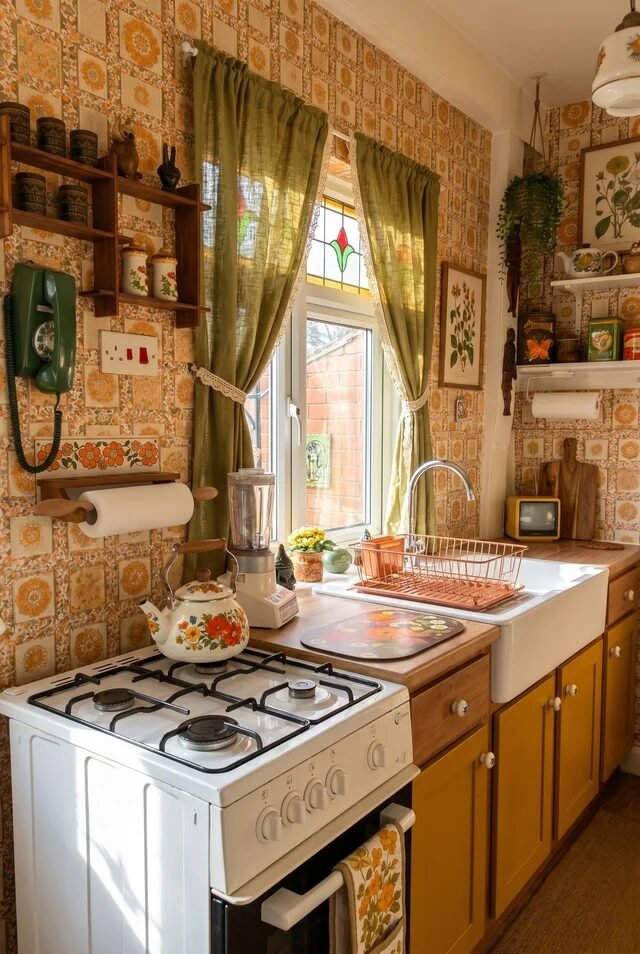
Somewhere between ultra-minimal kitchens and aggressively modern renovations, we accidentally removed too much personality from our homes. That’s probably why vintage kitchens feel so comforting right now. They bring back warmth, softness, texture, and little imperfections that make spaces feel genuinely lived in.
Looking through these kitchens, there’s a clear pattern: layered lighting, aged wood, collected decor, earthy colors, and details that prioritize atmosphere over perfection. Honestly, the vibe is less “showroom” and more “people actually laugh in here,” which we deeply support.
What makes vintage kitchens special is how emotionally grounded they feel. A slightly worn dining table, hanging copper pans, floral curtains, open shelving, or even a crooked stack of ceramic bowls somehow adds more charm than expensive modern finishes ever could. These spaces understand that good design is supposed to feel personal, not intimidating.
And maybe that’s why vintage kitchens keep surviving trend cycles. They aren’t chasing perfection. They’re creating comfort, softness, and stories instead. Lowkey iconic behavior from a kitchen, if we’re being honest.
Warm Lighting That Feels Cinematic
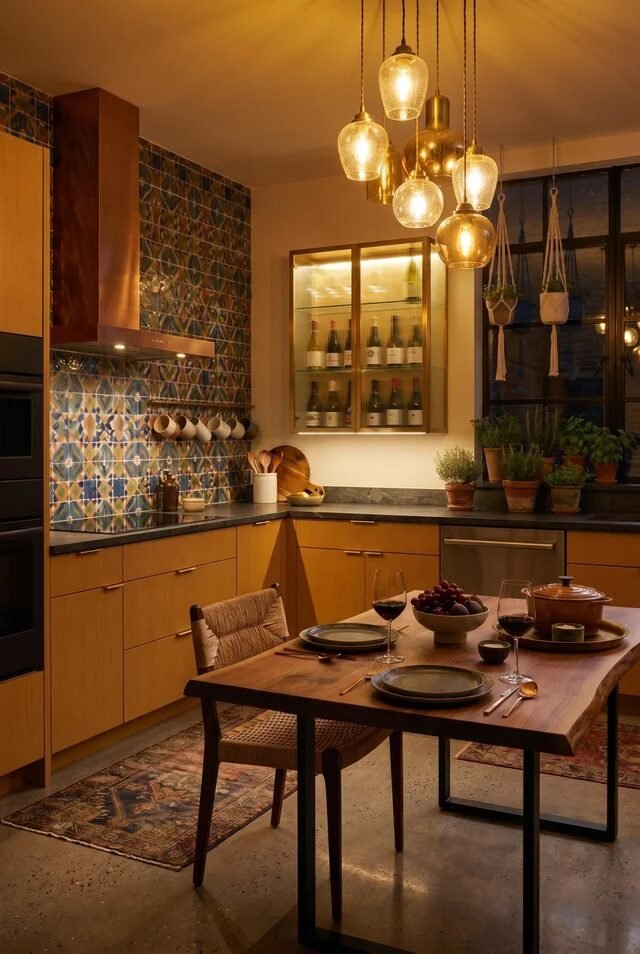
There’s something slightly dangerous about a vintage kitchen with moody lighting because suddenly we’re convinced we can cook like someone in a Nancy Meyers movie. The layered pendant lights here completely carry the atmosphere. Instead of relying on one harsh overhead fixture that makes everyone look like they’re being interrogated by the FBI, this kitchen uses warm pools of light to create intimacy. That glow against the patterned backsplash is doing emotional labor honestly.
The design works because the materials stay grounded. Matte wood cabinets, dark countertops, textured rugs, and handmade-looking tiles all balance the shine from the brass pendants. Nothing feels too polished, which is exactly why it feels expensive. Vintage spaces usually flop when everything matches too perfectly. We need a little visual chaos. Just a tiny bit. Very “cool aunt who owns ceramic mugs from local markets” energy.
If we wanted to recreate this look, we’d focus on layered lighting first before buying decor. Mix glass pendants with warm bulbs around 2700K, then pair them with earthy materials like walnut wood, aged brass, and artisan tile. And please leave some countertops visible. Not every corner needs a sourdough starter moment, babe.
Earthy Green Kitchens Feel Alive
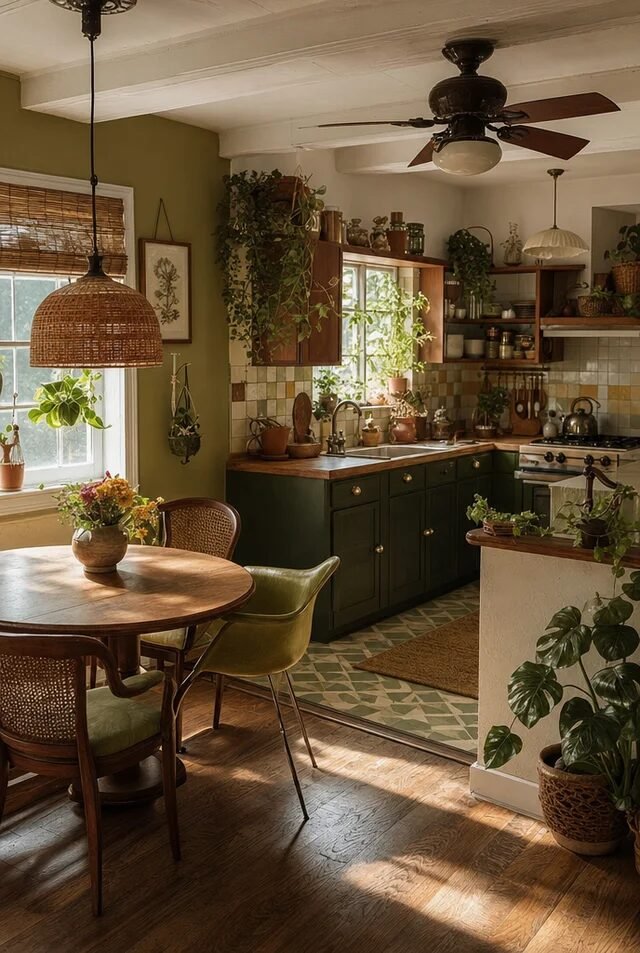
This kitchen feels like somebody romanticized gardening and accidentally created the coziest room imaginable. The olive green cabinetry immediately softens the entire space while the wood tones keep it grounded instead of trendy. Honestly, green kitchens have survived every Pinterest cycle for a reason. They feel calm without becoming boring, which is rare these days considering half the internet is aggressively beige.
What makes this design work is the layering of organic textures. The woven pendant light, cane dining chairs, trailing plants, and warm wood flooring all pull the eye around the room naturally. There’s also a subtle balance happening between rustic and refined. The cabinets are structured and clean-lined, while the styling stays intentionally imperfect. That tension is exactly what gives vintage interiors personality instead of making them feel staged.
For anyone recreating this vibe, prioritize muted earthy greens over saturated emerald shades. Then bring in texture through natural fibers like rattan, linen, and unfinished wood. Also, let your plants look slightly wild. A perfectly trimmed plant in a vintage kitchen feels emotionally incorrect somehow. We said what we said.
Open Shelving With Collected Charm
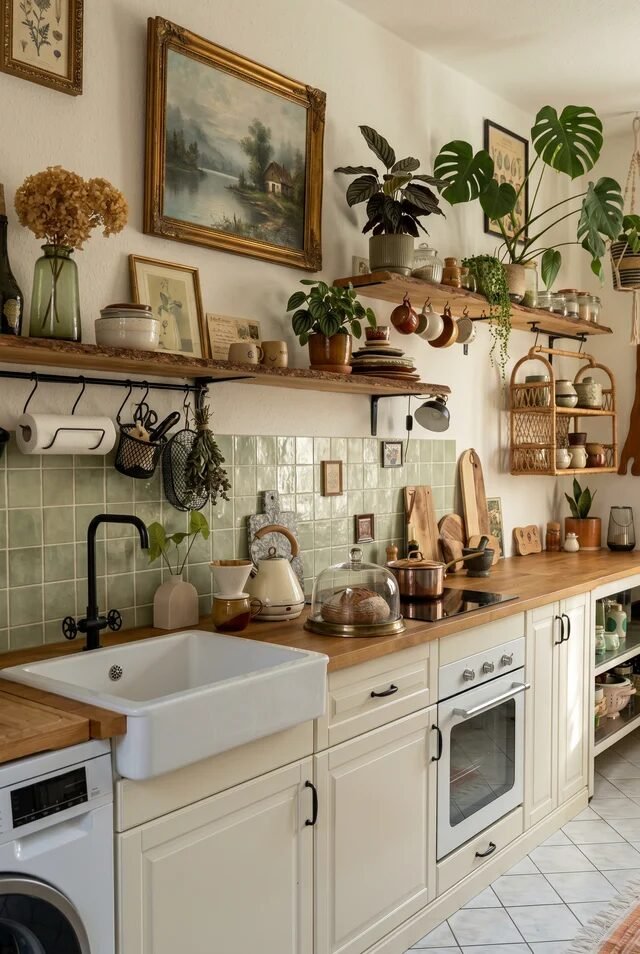
Some kitchens look decorated. This one looks lived in, loved, and mildly obsessed with antique markets in the best possible way. The open shelving creates that layered vintage feeling where every object tells a little story. Between the framed artwork, ceramic pieces, hanging mugs, and tiny plants, the room feels deeply personal without tipping into clutter territory. That balance is harder to achieve than TikTok makes it seem, by the way.
The soft cream cabinetry paired with pale green tile keeps everything airy enough so the decor can shine. Meanwhile, the wood countertops add warmth and stop the palette from feeling sterile. We also love how the black hardware quietly anchors the entire space. Vintage kitchens need contrast somewhere or they start blending together visually like oatmeal.
If we were recreating this kitchen, we’d avoid buying everything brand new at once. The charm comes from gradual layering. Mix thrifted frames with modern ceramics, stack cutting boards casually, and use practical items as decor instead of hiding them. Copper cookware, textured bowls, and linen towels genuinely do the heavy lifting here. Also, slightly uneven styling somehow makes a space feel richer. Weird but true.
Rustic Arches And Handmade Texture
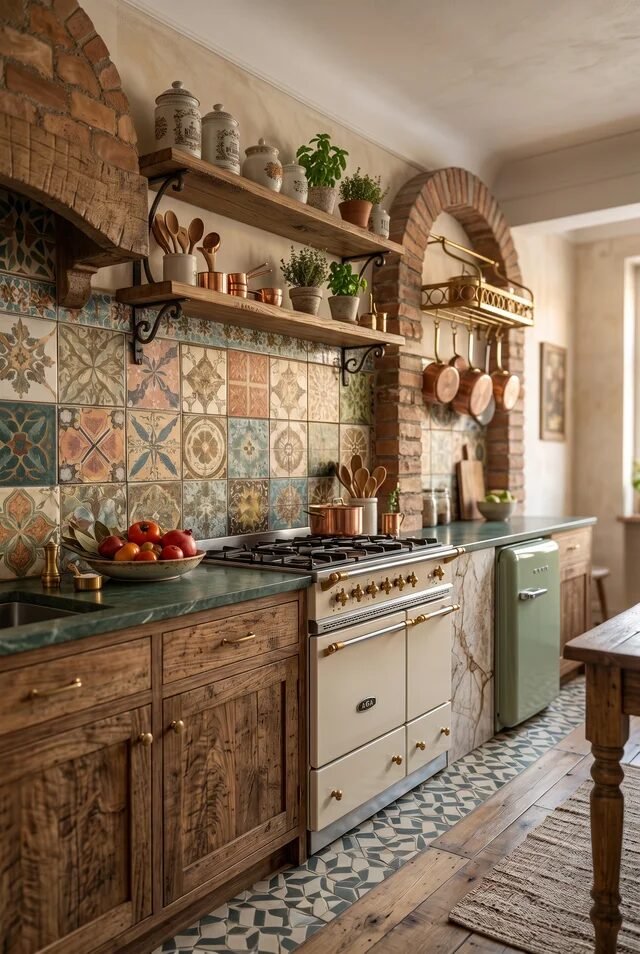
This kitchen has the kind of warmth that makes people suddenly want to bake bread from scratch despite having zero patience for yeast. The exposed brick arches instantly create architectural depth, while the handcrafted tile backsplash adds movement and color variation that feels beautifully imperfect. Nothing here is trying too hard, which ironically makes the entire kitchen look incredibly curated.
The real secret is the material palette. Reclaimed wood cabinetry, aged brass accents, stone surfaces, and patterned tile all carry different textures, but they stay within the same earthy tone family. That consistency keeps the room visually calm even though there’s a lot happening. Vintage kitchens thrive on layered texture more than bold color palettes honestly. It’s why this space feels timeless instead of trendy.
To recreate this aesthetic, we’d focus less on matching finishes and more on creating depth through materials. Try mixing rustic wood grains with old-world tiles and slightly aged metals. Architectural details matter too. Even adding one arched niche or rustic shelf can shift the mood dramatically. And yes, displaying copper pans like they’re jewelry is absolutely acceptable behavior here.
Garden Views Make Kitchens Softer
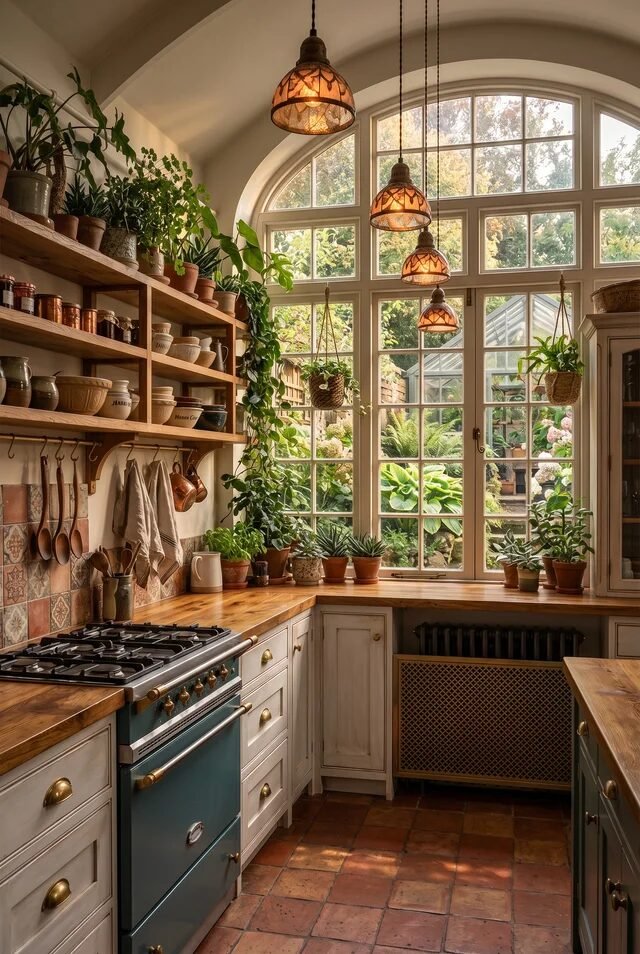
There’s a reason vintage-inspired kitchens often feel emotionally comforting, and honestly, natural light is carrying half the assignment. This kitchen uses oversized arched windows to blur the line between indoors and outdoors, which immediately softens all the cabinetry and structure. Add hanging plants and terracotta flooring into the mix, and suddenly the room feels like a cozy countryside escape instead of somewhere we aggressively air fry snacks.
Design-wise, the balance here is incredibly smart. The cabinetry stays classic and understated while the greenery becomes the visual focal point. Warm wood counters prevent the white cabinets from feeling cold, and the vintage-inspired stove adds just enough charm without screaming “themed kitchen.” Because let’s be honest, overly themed vintage spaces can start looking like restaurant sets very fast.
For recreating this look, prioritize natural light wherever possible. If large windows aren’t an option, lean into reflective surfaces and warm paint colors instead. Then layer plants at different heights to create softness around the room. Vintage kitchens almost always feel better when they include something alive and slightly untamed. It gives the space soul. Also, bonus points if your herbs survive longer than two weeks.
Cottage Corners That Feel Intimate
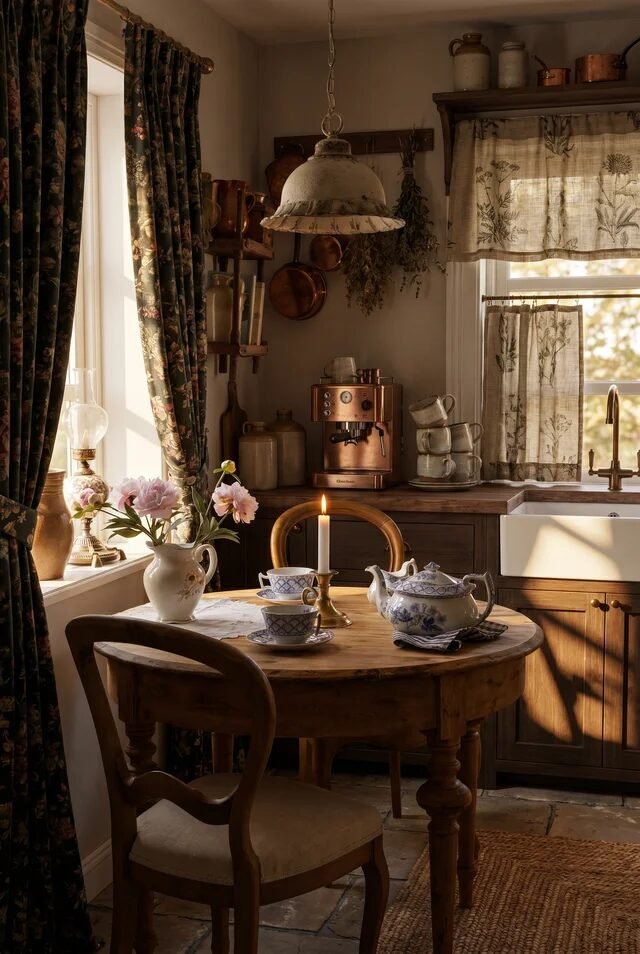
This kitchen feels like the kind of place where mornings accidentally turn into two-hour conversations and nobody’s mad about it. The tiny round table, floral curtains, candlelight, and warm wood tones create a softness that modern kitchens sometimes forget to prioritize. Everything here whispers comfort instead of screaming for attention. Honestly, the entire room feels like a warm cup of tea in design form, which sounds dramatic but also… look at it.
The magic comes from scale and layering. Smaller furniture pieces make the kitchen feel personal rather than oversized and showroom-like. Then the vintage-inspired fabrics add depth through pattern without overwhelming the space. We also love how the copper cookware subtly reflects light around the room. Vintage kitchens almost always feel richer when materials age naturally over time instead of looking factory perfect.
If we wanted to recreate this aesthetic, we’d start with textiles first. Floral drapes, woven rugs, linen cafe curtains, and slightly aged wood instantly build that cottage mood. Keep lighting warm and low rather than bright white. And yes, adding a tiny breakfast table even in a small kitchen is worth it. Emotional support furniture is real, babe.
Mustard Cabinets With Retro Warmth
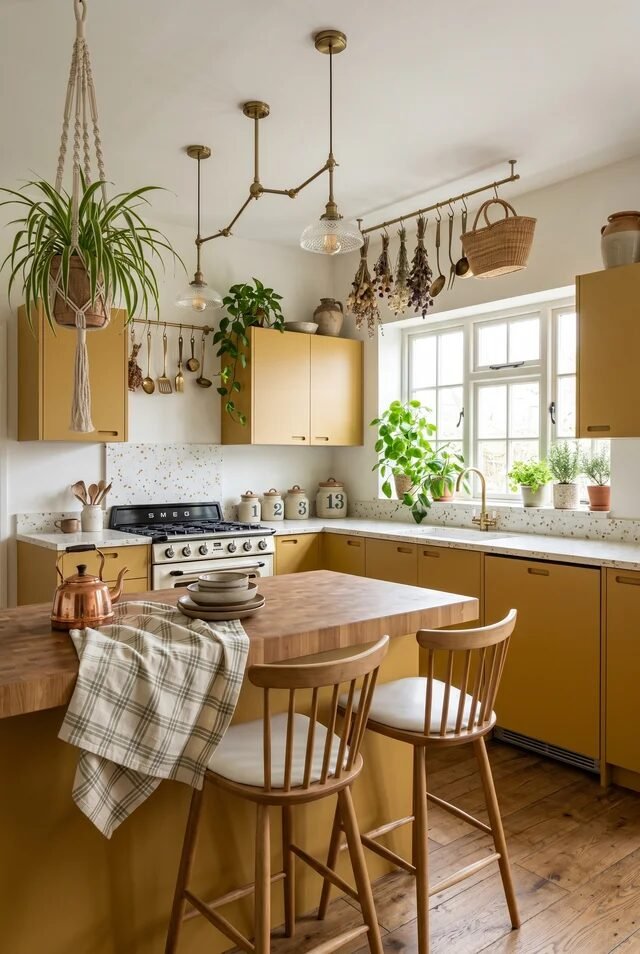
We need to collectively stop being scared of warm color palettes because this kitchen absolutely eats. The mustard-yellow cabinetry feels playful and vintage without crossing into “grandma’s refrigerator from 1974” territory. Paired with natural wood and creamy white walls, the color suddenly feels fresh again instead of overly nostalgic. It’s giving retro in the chic way, not the dusty way.
Design-wise, this kitchen succeeds because the layout stays visually clean while the styling adds personality. Floating utensils, hanging herbs, woven baskets, and soft greenery create movement across the room so the cabinets never dominate too heavily. There’s also a really smart contrast happening between structured cabinetry and organic decor. That balance keeps colorful vintage kitchens from feeling cartoonish.
For recreating this look, we’d recommend muted mustard or ochre tones rather than super-saturated yellow. Then pair them with pale woods and brushed brass hardware to soften everything visually. Open shelving or hanging storage also helps break up solid cabinetry colors. And honestly, dried herbs hanging from brass rails? Tiny detail. Massive vibe.
Moody Blue Kitchens Feel Collected
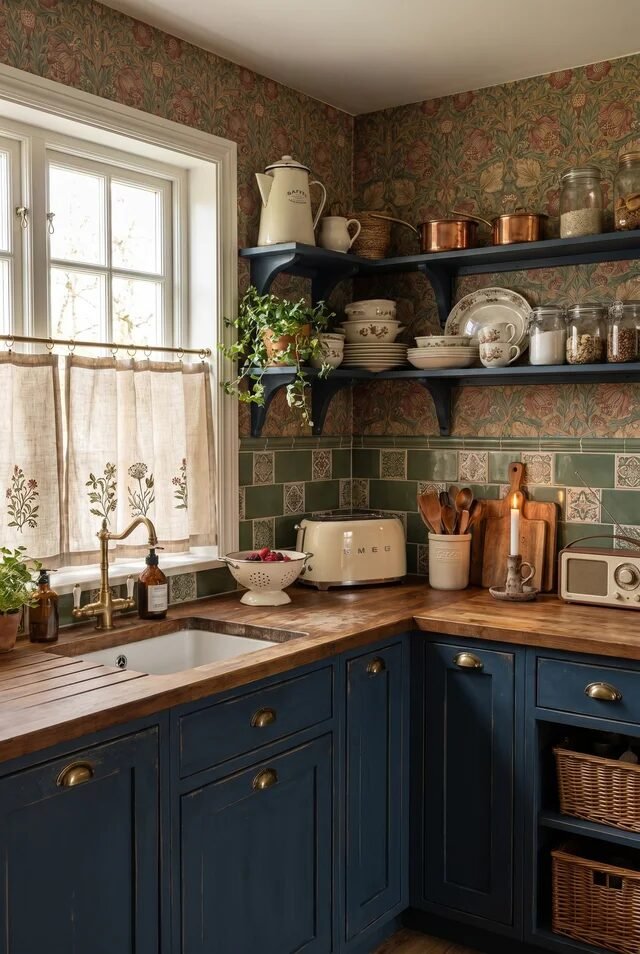
This kitchen feels like somebody inherited beautiful ceramics, spent years collecting antique cookware, and somehow developed impeccable taste along the way. The deep blue cabinetry instantly creates depth while the botanical wallpaper wraps the entire room in warmth. It’s cozy, slightly academic, and quietly dramatic without trying too hard. Very “main character reads cookbooks for fun” energy.
The strongest design principle here is contrast. Dark lower cabinets ground the room visually while lighter countertops, vintage cream appliances, and soft linen curtains prevent the space from becoming heavy. Open shelving also matters a lot here because it creates breathing room above the cabinetry. Vintage kitchens need visual variation in height and texture or they start feeling flat surprisingly fast.
If we were recreating this aesthetic, we’d focus heavily on layered earthy colors rather than matching tones exactly. Navy, moss green, walnut wood, brass, and muted cream all work beautifully together because they share warmth underneath. Also, don’t over-style every shelf. Leaving a little negative space between objects makes collections feel intentional instead of chaotic. Learned that one the hard way honestly.
Soft Cream Kitchens Never Fail
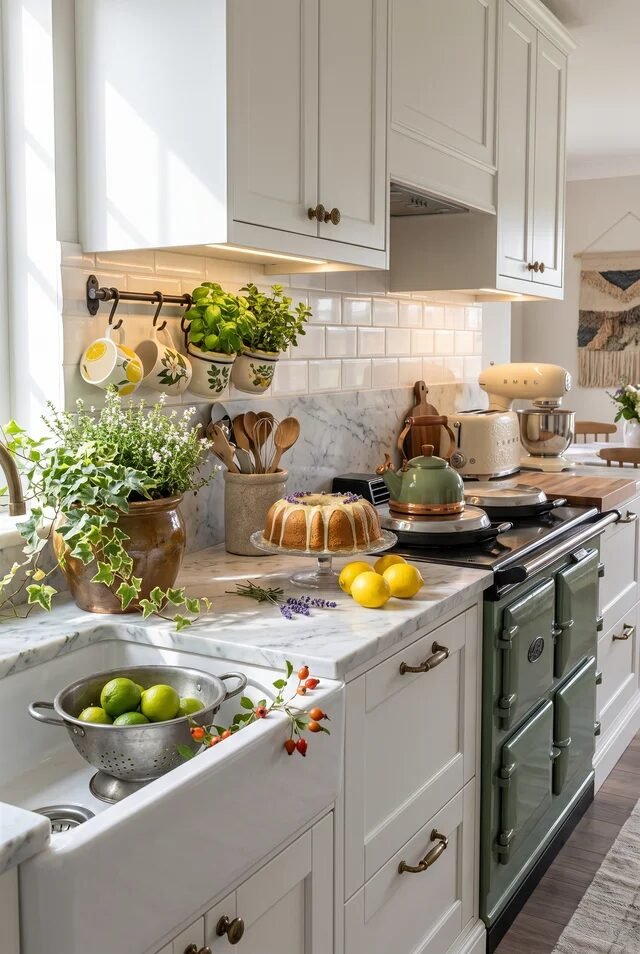
There’s a reason creamy vintage kitchens continue surviving every trend cycle while ultra-modern gray kitchens quietly disappear from Pinterest boards. Spaces like this feel timeless because they prioritize warmth over perfection. Between the marble countertops, farmhouse sink, brass hardware, and soft sage range cooker, the room feels elegant but still approachable. Like yes, somebody here definitely bakes lemon cake casually on Sundays.
The design works because the palette stays restrained while textures do the storytelling. Smooth marble, glossy subway tile, painted cabinetry, ceramic decor, fresh greenery, and brushed metals all layer together without competing. We also love how natural light floods the counters because it softens the entire composition. Good vintage kitchens almost always feel slightly sun-kissed rather than ultra sharp and contrast-heavy.
For anyone recreating this look, choose warm whites instead of icy whites. That distinction matters more than people realize. Then add personality through vintage-inspired appliances, natural wood accessories, and collected kitchenware. Fresh herbs or fruit bowls also stop neutral kitchens from feeling sterile. And yes, displaying a cake permanently for aesthetics is acceptable. We support harmless delusion here.
Dusty Blue Cabinets Feel Timeless
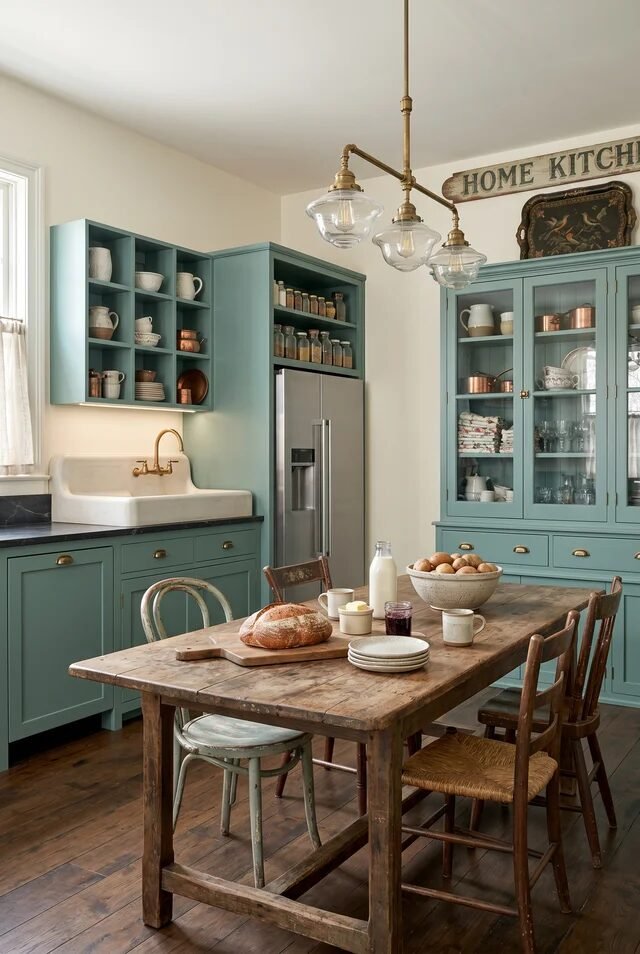
This kitchen proves muted colors quietly outperform trendy ones almost every single time. The dusty blue cabinetry feels vintage, relaxed, and sophisticated without demanding attention every five seconds. Paired with the rustic wood dining table and mixed antique-style chairs, the room creates that slightly imperfect charm people spend months trying to replicate on social media. Sometimes less really does carry harder.
One reason the design feels balanced is because the upper cabinetry mixes closed storage with open shelving and glass-front cabinets. That variation keeps the room visually lighter despite the large amount of cabinetry. The rustic table also softens the cleaner cabinet lines beautifully. Vintage kitchens usually work best when at least one element feels worn-in and emotionally familiar.
To recreate this aesthetic, we’d stick with desaturated paint colors rather than bright blues. Think dusty teal, faded sage, or smoky blue-gray tones. Pair them with antique brass, reclaimed wood, and simple pendant lighting for that understated vintage look. Also, mismatched dining chairs genuinely help a space feel more authentic. Perfection is overrated anyway.
The Best Vintage Kitchens Never Feel Overstyled
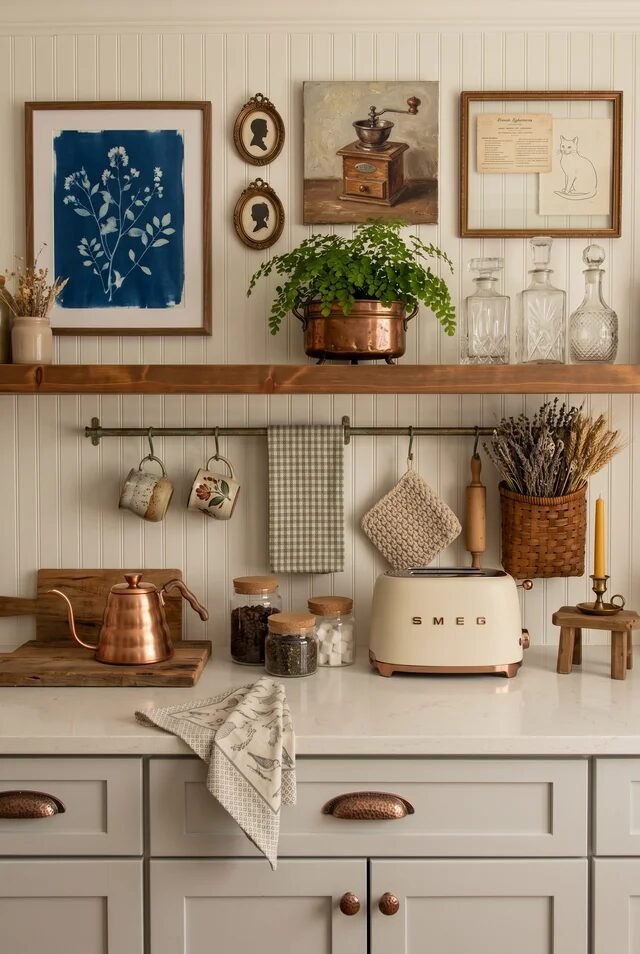
After looking through all these kitchens, one thing becomes very obvious: the most beautiful vintage spaces are usually the ones that feel slightly imperfect. Not messy exactly, but relaxed. The layered rugs, faded paint colors, handmade tiles, antique-inspired lighting, open shelving, botanical details, and worn wood finishes all work because they create depth without feeling overly curated. Nothing looks too “done,” and that’s honestly the entire magic.
We also noticed how many of these kitchens rely on balance rather than trends. Dark cabinets get softened with natural light. Rustic textures sit beside elegant brass hardware. Floral patterns mix with simple cabinetry. Vintage design works best when contrast exists quietly instead of dramatically. That’s why these kitchens feel timeless rather than temporary Pinterest experiments we regret six months later.
If there’s one takeaway from all these ideas, it’s this: homes become more memorable when they reflect personality instead of perfection. Add the collected decor. Use the warm lighting. Keep the slightly mismatched chairs. Your kitchen does not need to look brand new to look beautiful, babe.
 Steal Our Home Styling Secrets!