
These Vintage Decor Details Making Modern Homes Feel Colder
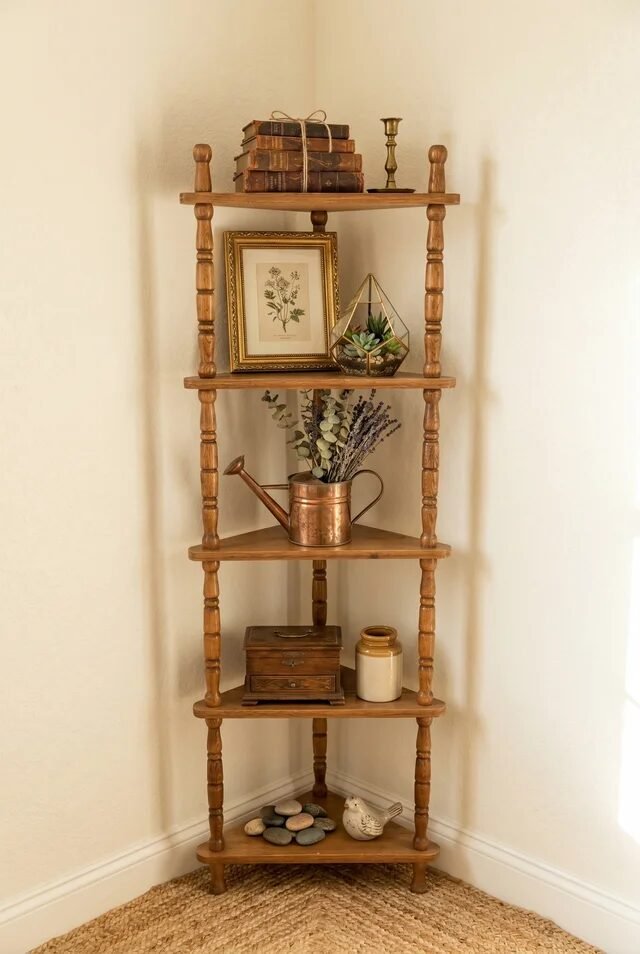
There’s a reason vintage decor keeps pulling people back in while ultra-modern trends start feeling tired after six months. Vintage spaces have warmth. They feel layered, personal, and a little imperfect in the best possible way. Looking through these rooms, we notice how aged woods, antique frames, botanical art, warm lighting, and collected textures create homes that actually feel lived in instead of staged for social media validation. Honestly, the soul is doing a lot of heavy lifting here.
What makes these vintage interiors work so beautifully is the balance between elegance and comfort. Nothing feels overly precious. The shelves hold real books, the kitchens display actual cookware, and the cozy reading corners invite people to sit down instead of just “admire the aesthetic.” Vintage decor becomes timeless when function and atmosphere exist together naturally. That’s the detail trend-focused rooms often miss completely.
And maybe that’s why these spaces feel comforting right now. They remind us that homes do not need to look flawless to feel beautiful. A little patina, soft lighting, worn textures, and collected charm will always win quietly.
Gallery Walls That Feel Collected
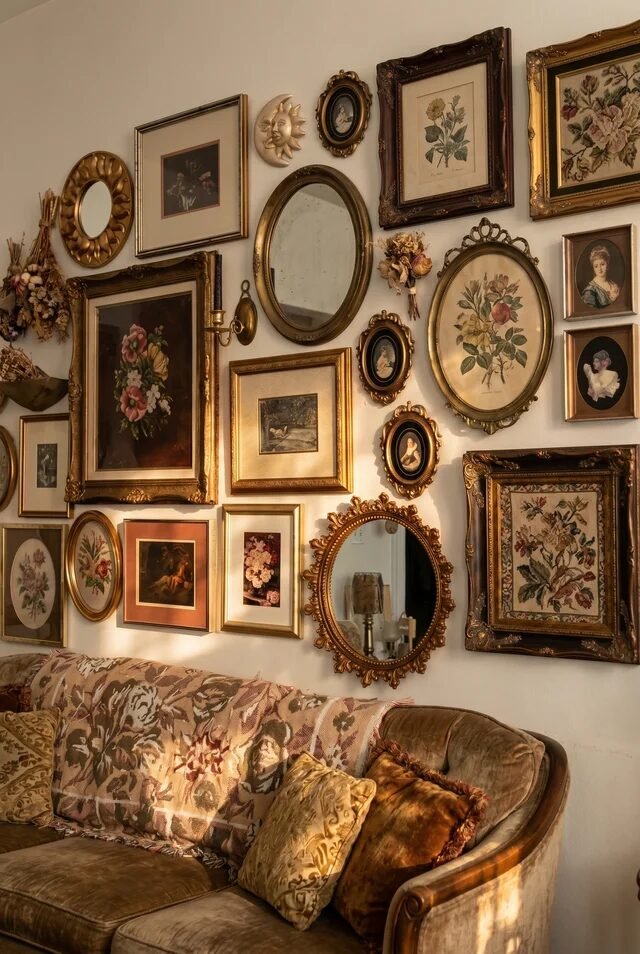
A vintage gallery wall like this works because it feels layered instead of “perfectly curated.” That’s the magic. The mix of gold frames, tiny portraits, florals, and mirrors creates visual rhythm without looking overly staged. We’re basically letting the wall tell a slightly dramatic story, and honestly? We support the theatrics. The warm antique tones also soften the room so the entire setup feels cozy instead of museum-stiff.
What really makes this idea hit is the balance between large anchor pieces and smaller fillers. The oversized floral art grounds the arrangement while the mini oval frames keep the eye moving naturally across the wall. Vintage decor always looks richer when scale variation is involved. If every frame is identical, the vibe immediately shifts from “collected over time” to “online cart at 2 a.m.” and we do not want that energy here.
If we wanted to recreate this affordably, thrift stores and flea markets are genuinely the move. Mixing brass, wood, and slightly tarnished finishes adds authenticity fast. Don’t over-measure the spacing either. Slight imperfection is what gives vintage interiors their soul, lowkey.
Tiny Cottage Details Still Matter
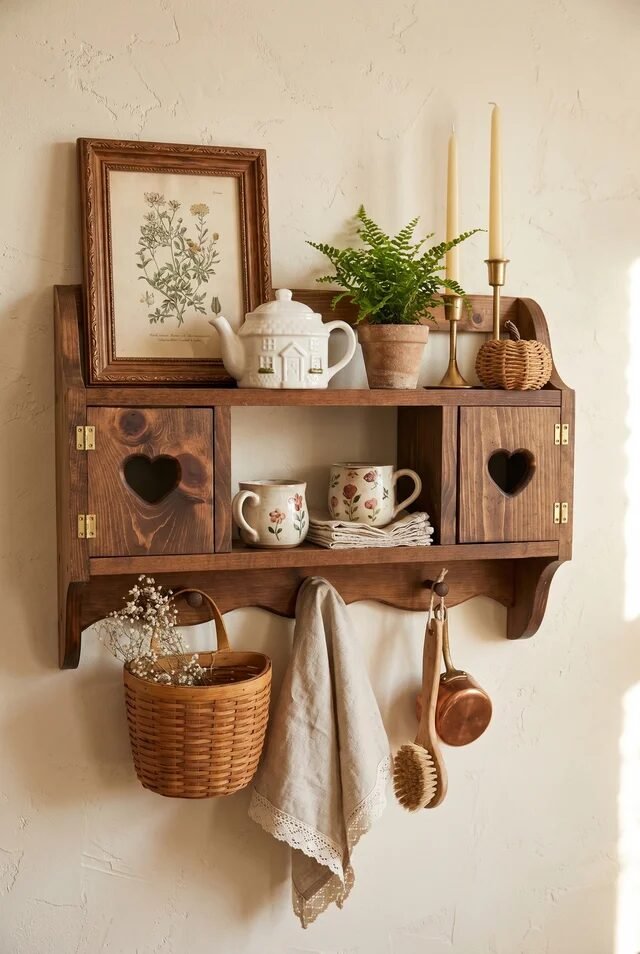
This little wooden shelf situation is proof that small decor moments can completely change a room. The heart cutouts, warm wood tones, woven basket, and delicate floral mugs create that soft cottage-inspired vintage look without trying too hard. It feels personal. Like someone here definitely bakes pie from scratch while listening to old jazz records. Whether that’s true or not is irrelevant to the aesthetic.
The decor principle carrying this setup is warmth through texture repetition. We see wood, wicker, linen, ceramic, and aged brass all layered together in similar earthy tones, which keeps everything cohesive. Vintage spaces almost always rely more on texture than bold color palettes. That’s why this corner feels calming instead of cluttered even with several small objects involved.
For recreating this idea, focus on functional decor instead of random filler pieces. Hang a basket you’ll actually use. Display mugs you genuinely love. Add herbs or ferns for freshness because vintage rooms can feel heavy without a little life mixed in. Also, slightly imperfect handmade furniture? Extremely charming. The algorithm could never compete with real character.
Moody Vintage Corners Feel Expensive
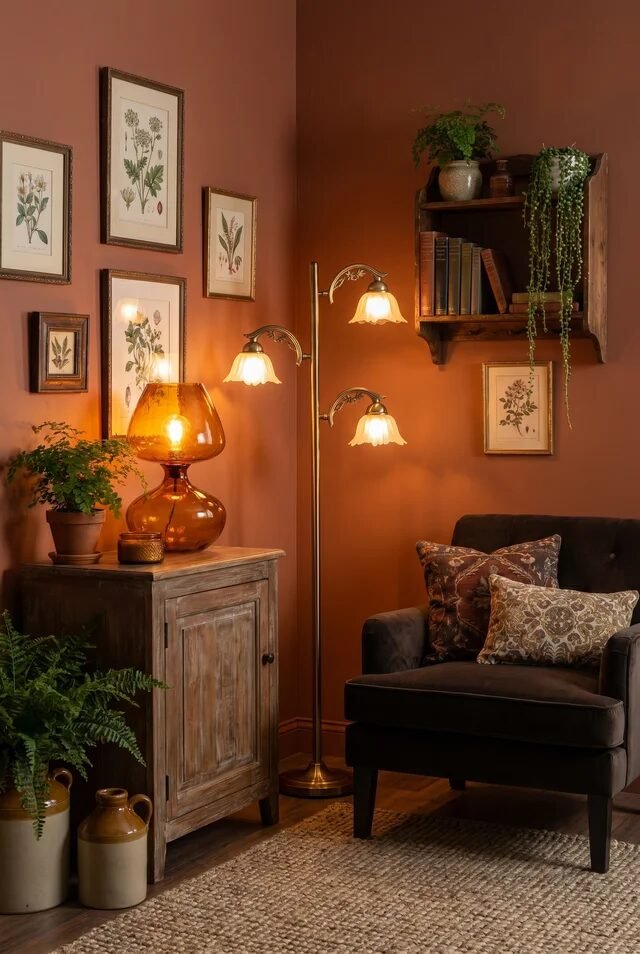
There’s something about deep terracotta walls mixed with amber lighting that instantly makes a room feel richer. This setup leans vintage without becoming dusty-looking, which honestly is the sweet spot. The layered lighting, botanical prints, aged wood cabinet, and soft textiles create a space that feels intimate in the best way. Like the type of corner where we suddenly start journaling for no reason.
The strongest design principle here is tonal warmth. Nearly every element falls within the same earthy spectrum: rust, walnut, brass, amber, and muted greens. That consistency creates visual depth and makes the room feel intentionally styled. The lighting also matters a lot. Vintage interiors rarely shine under harsh white ceiling lights. Warm lamps are basically non-negotiable if we want that cozy cinematic vibe.
To recreate this look, start with paint first because wall color does most of the heavy lifting here. Then layer in mixed-height lighting instead of relying on one lamp source. Vintage-inspired botanical art and trailing greenery help soften darker walls beautifully. And yes, warm moody rooms photograph insanely well on Pinterest. We all noticed.
Romantic Bedside Styling Never Fails
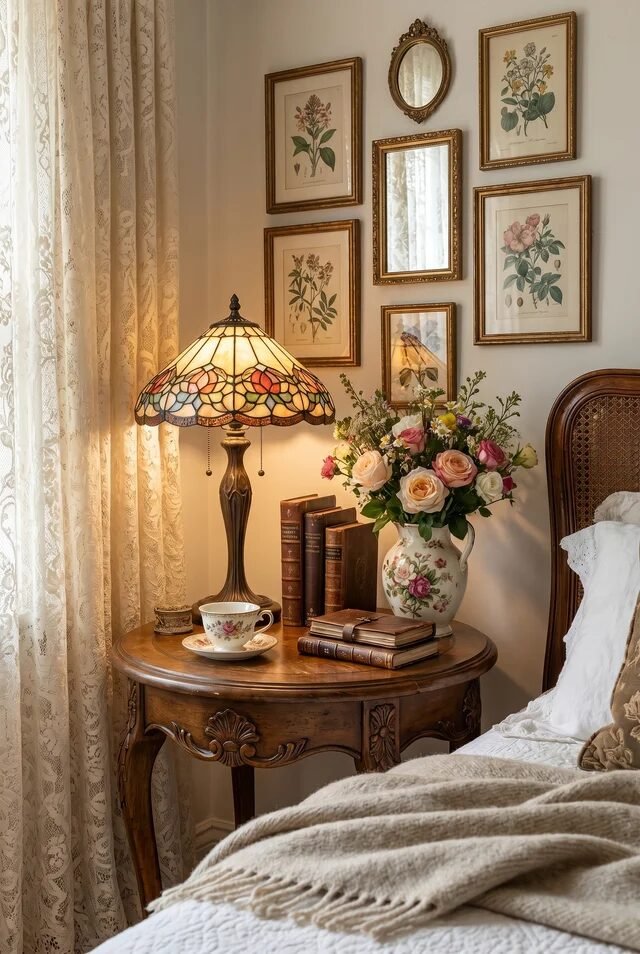
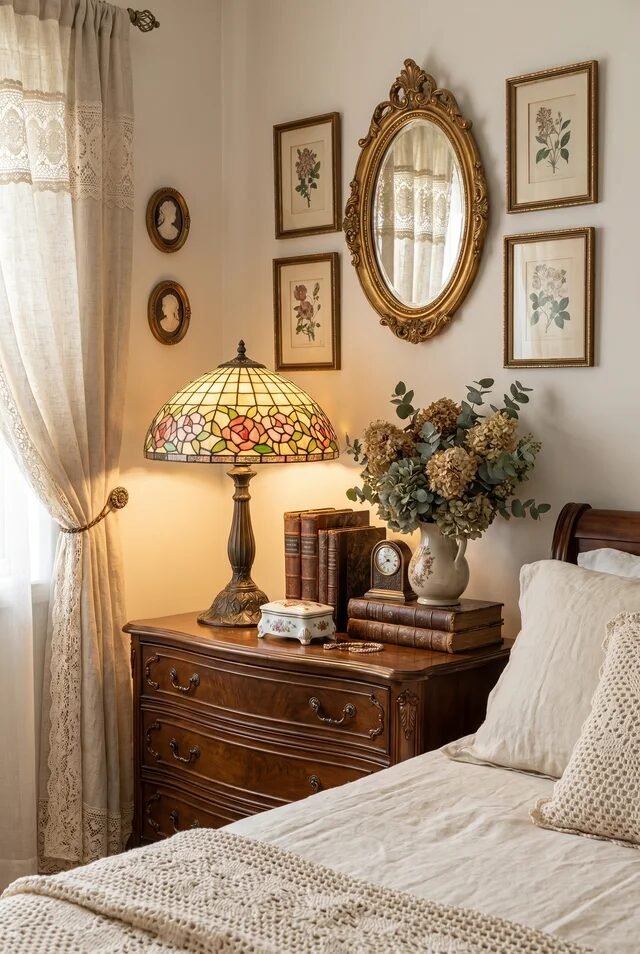
This bedside corner feels like a period drama character definitely owns this room, and honestly? We’re obsessed. The floral arrangement, carved wood table, lace curtains, vintage books, and stained-glass lamp all work together to create softness without looking overly sweet. It’s elegant, but still approachable. Like someone with excellent taste who also burns cinnamon candles year-round.
One reason this setup works so well is because every piece supports the same romantic visual language. Curved furniture edges, delicate florals, antique brass, and warm cream textiles create harmony throughout the corner. Vintage decor feels most luxurious when shapes stay soft and cohesive. Even the lighting here avoids sharpness, which helps the room feel calm and layered instead of visually noisy.
If we wanted this aesthetic at home, focus on swapping modern accessories first. Replace basic lamps with vintage-inspired stained glass or pleated shades. Stack old books, use real florals whenever possible, and embrace slightly ornate details. Also, lace curtains filtering sunlight? Criminally underrated. The glow alone deserves its own fan club.
Kitchen Decor Can Feel Nostalgic
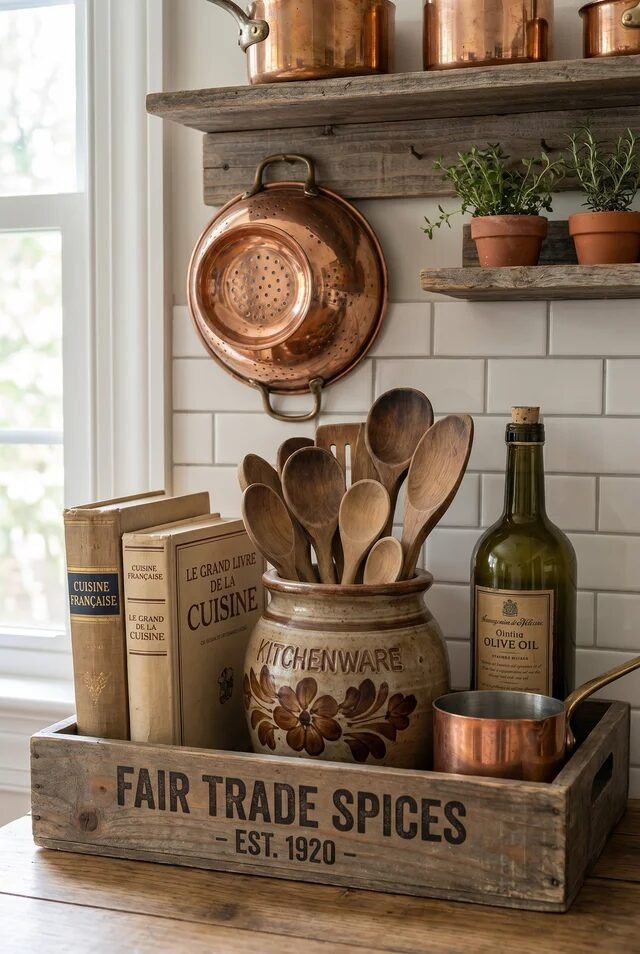
Vintage kitchens always feel more inviting when everyday items become part of the decor. That’s exactly why this setup works. The copper cookware, aged wooden shelves, ceramic utensil holder, antique-style books, and rustic crate styling create a kitchen that feels lived-in instead of showroom sterile. We’re very pro kitchens that look like actual humans cook there occasionally. Revolutionary concept, apparently.
The design principle here revolves around organic aging and material contrast. Copper adds warmth and shine while weathered wood keeps everything grounded. Then the ceramic and glass elements soften the harder textures. Good vintage styling usually mixes reflective surfaces with matte natural materials for balance. Without that contrast, rustic spaces can start feeling visually flat pretty quickly.
To recreate this idea, display functional items intentionally rather than hiding everything away. Wooden spoons, old cutting boards, olive oil bottles, and copper cookware instantly add character. Open shelving works best when the color palette stays restrained, so stick with warm neutrals and earthy finishes. And if the wood looks slightly imperfect or worn? Even better. Vintage decor loves a little history showing through.
Dining Rooms That Feel Organic
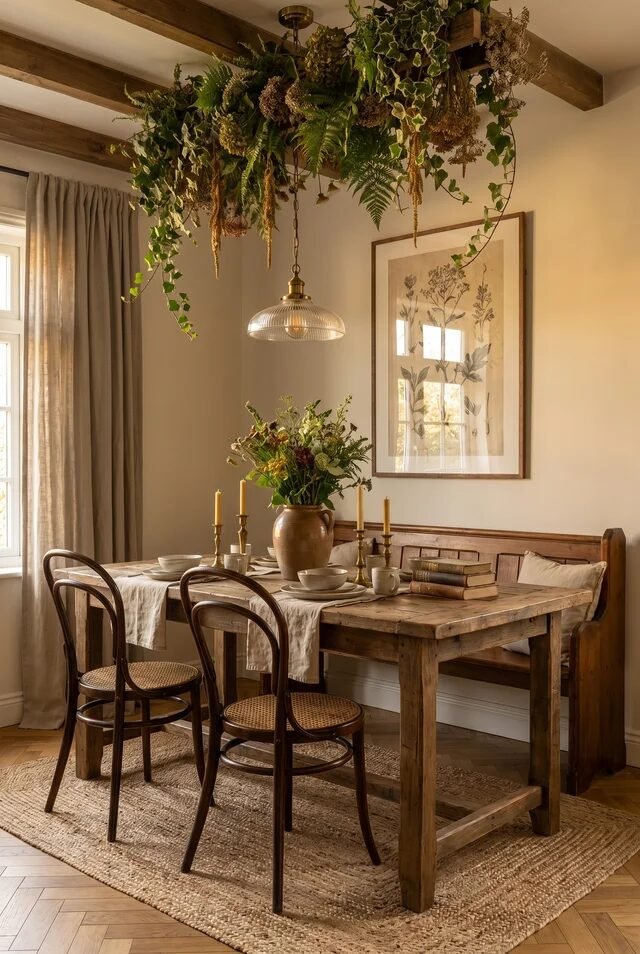
This dining space understands something modern homes sometimes forget: a room can feel elegant without looking overly polished. The reclaimed wood table, woven chairs, hanging greenery, and soft neutral palette create a vintage atmosphere that feels grounded and calm instead of staged for a furniture catalog. Honestly, the suspended botanical installation completely steals the show here. It’s giving slightly enchanted cottage in the best possible way.
The design principle making this work is vertical layering. Most people decorate horizontally only, then wonder why the room feels flat. Here, the eye travels upward through ceiling beams, hanging vines, pendant lighting, and tall artwork, which makes the room feel immersive. Vintage interiors almost always benefit from height variation and natural texture combinations. The woven rug, linen curtains, aged wood, and greenery all soften one another beautifully.
If we wanted to recreate this look, we’d start with one strong organic focal point first. Maybe hanging greenery, maybe oversized branches above the table. Then keep furniture shapes simple so the textures can shine naturally. Also, warm imperfect wood instantly adds more soul than ultra-glossy furniture ever could. Just saying.
Small Shelves With Quiet Charm
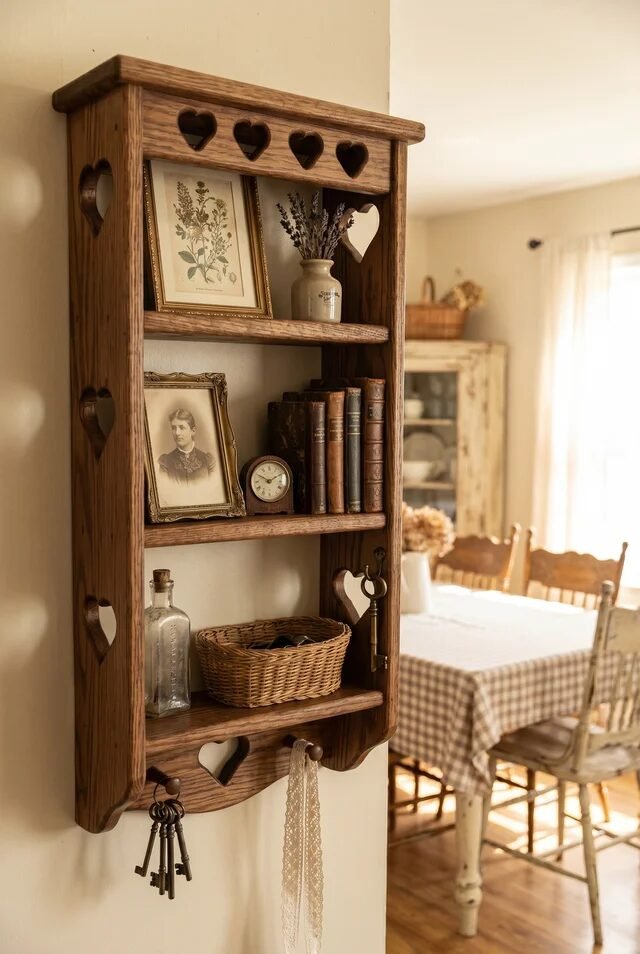
This tiny wall shelf proves vintage styling does not need an entire mansion budget to look beautiful. The carved heart details, aged wood, framed portrait, antique books, and woven basket create that cozy collected-over-time feeling people keep trying to fake with mass-produced decor. And yes, we can absolutely tell the difference. Respectfully.
What makes this setup feel authentic is the balance between decorative and practical objects. Nothing here screams “display shelf only.” The hanging keys, tiny clock, old bottles, and usable basket make the styling feel believable. Vintage spaces usually feel strongest when decor looks inherited rather than freshly purchased together. That subtle realism matters more than people think.
For recreating this idea, mix sentimental-looking items with textures that already carry age naturally. Old books, thrifted frames, tiny ceramic vessels, and woven storage work especially well. Leave a little empty space too because overcrowding every shelf can accidentally shift the aesthetic from charming to “grandma’s attic after three espresso shots.” Balance is the whole game here.
Moody Vintage Spaces Feel Cinematic
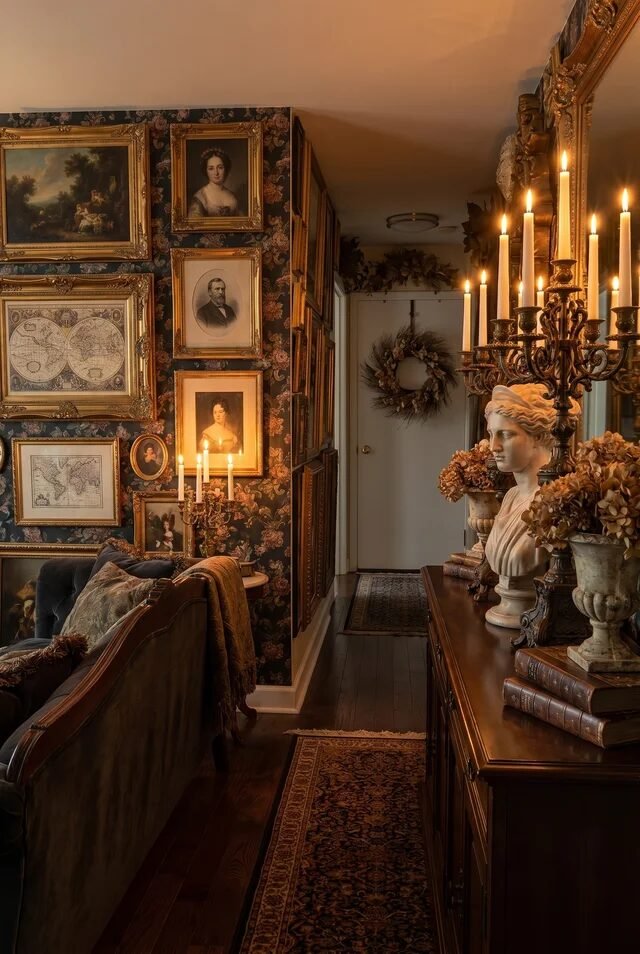
There’s dramatic, and then there’s this kind of dramatic where the room feels like it belongs in a mysterious old novel. The layered candlelight, dark floral wallpaper, antique frames, ornate mirror, and classical bust sculpture create a deeply atmospheric vintage space that somehow feels luxurious instead of chaotic. Lowkey, this room deserves its own soundtrack.
The strongest principle here is controlled visual density. There are many objects happening at once, but the consistent palette of dark woods, warm brass, muted florals, and candlelight keeps everything cohesive. Maximalist vintage interiors only work when color repetition creates visual discipline underneath the chaos. Otherwise the room starts feeling stressful instead of romantic and immersive.
If we wanted this aesthetic without overwhelming the house, starting small is smarter. A hallway, reading nook, or dining corner can handle dramatic wallpaper much more easily than an entire open floor plan. Add layered warm lighting instead of relying on overhead fixtures too. Candlesticks, antique mirrors, and gilded frames instantly shift the mood from basic to “historical main character energy.”
Antique Shelving Makes Rooms Richer
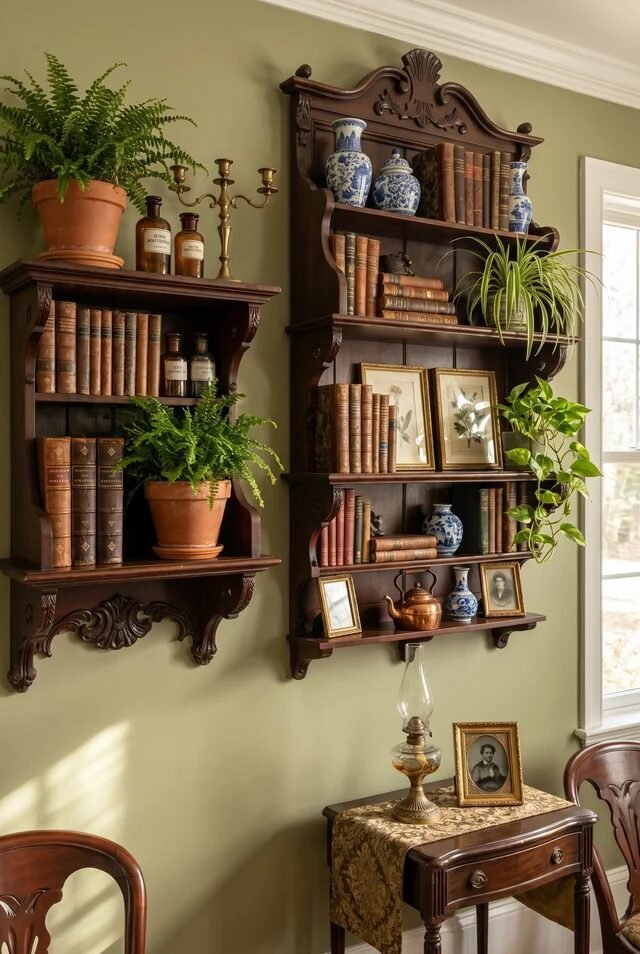
Vintage shelving like this instantly makes a home feel thoughtful because it blends storage with storytelling. The dark carved wood, stacked antique books, blue-and-white ceramics, framed portraits, and trailing plants create a collected look that feels personal rather than trend-chasing. We love a room that looks like someone actually lives there and reads books occasionally. Revolutionary.
The design principle carrying this setup is balanced repetition. Notice how books repeat across both shelves while greenery softens the heavier wood tones. The blue ceramics also echo throughout the arrangement, helping the eye move naturally without confusion. Repeating two or three colors consistently is one of the easiest ways to make vintage decor feel intentional. Tiny detail, huge difference.
For recreating this look, avoid filling every inch immediately. Vintage shelving looks better when collections build slowly over time. Mix books vertically and horizontally for movement, then add plants to prevent the wood from feeling visually heavy. Also, ornate shelving works best against muted wall colors because the contrast allows all those carved details to actually breathe.
Cozy Reading Corners Always Win
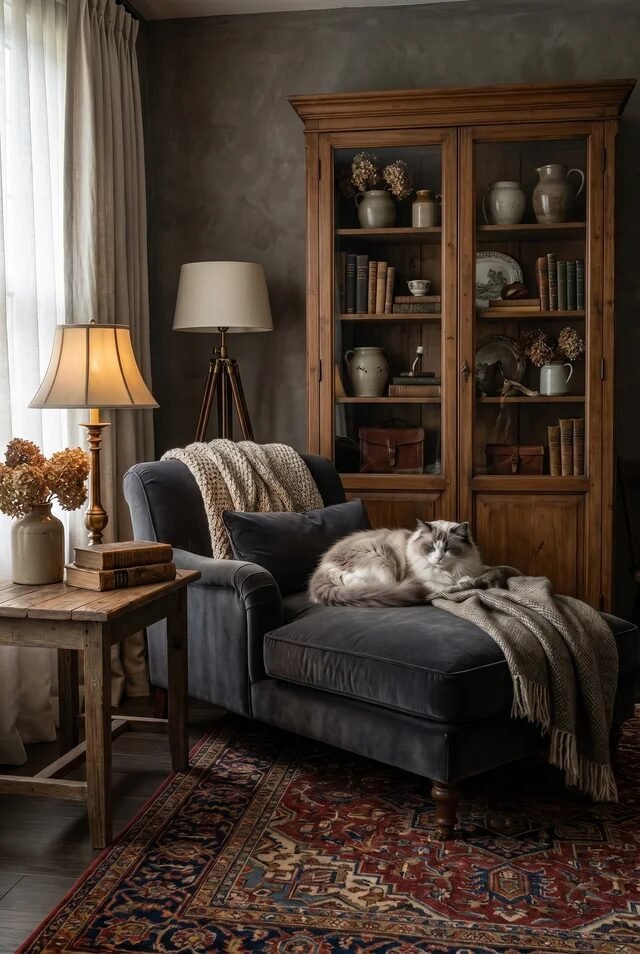
Something about a vintage reading corner instantly makes a home feel emotionally warmer. Maybe it’s the layered textiles, soft lamp glow, old books, or slightly moody wood tones. Either way, this space feels deeply relaxing without trying too hard. The oversized chair paired with the antique cabinet creates that perfect balance between comfort and elegance. Also, the cat fully understands the assignment here.
The reason this room feels so inviting comes down to softness versus structure. Heavy wooden furniture gives the room stability while plush fabrics, warm lighting, and worn rugs prevent it from feeling rigid. Great vintage interiors almost always balance strong architectural pieces with cozy tactile elements. Without softness, antique furniture can start feeling intimidating instead of welcoming.
To recreate this vibe, focus on layered comfort first. Chunky knit throws, dim warm lamps, vintage rugs, and oversized seating do most of the emotional heavy lifting. Keep the palette earthy and muted so the room feels calm instead of overly busy. And honestly, adding one sleepy pet somewhere in the room might increase the coziness by at least 40 percent. Scientifically unverified, emotionally accurate.
Cozy Vintage Details Quietly Make Homes Unforgettable
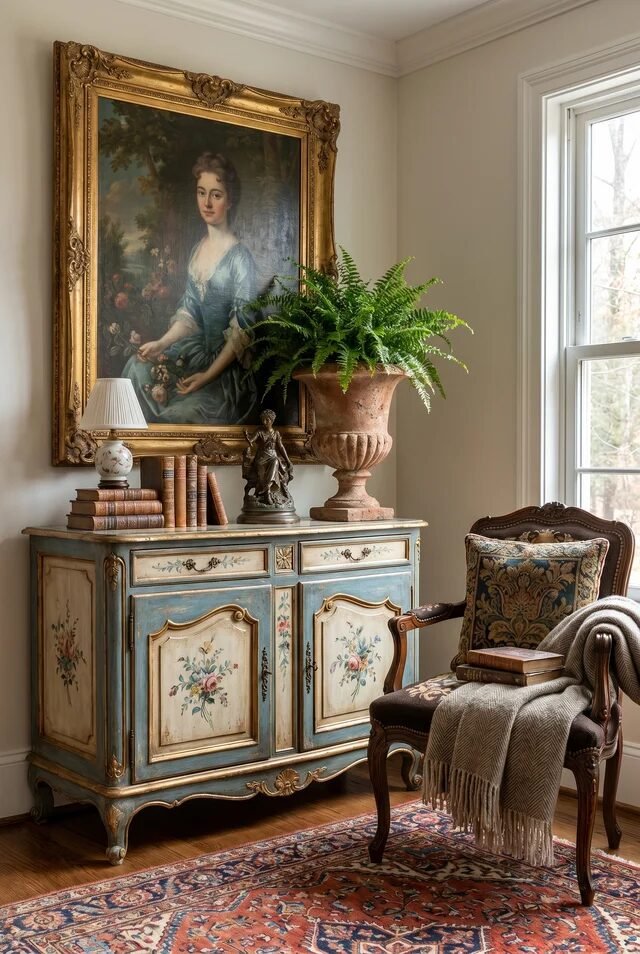
After seeing all these spaces together, one thing becomes very obvious: vintage decor is less about following strict design rules and more about creating emotional atmosphere. The layered gallery walls, moody candlelit corners, romantic bedside tables, antique shelving, and rustic kitchen styling all tell stories through texture, warmth, and intentional imperfection. It’s not trying too hard, which ironically is exactly why it looks so good.
The most beautiful vintage homes also understand restraint. Every room here uses repetition, softness, warm tonal palettes, and natural aging to create cohesion without feeling overly decorated. Good vintage styling never depends on expensive perfection because character itself becomes the luxury. Slightly worn wood, faded books, tarnished brass, and collected decor pieces often create more visual depth than brand-new designer furniture ever could.
So if we take anything from these ideas, let it be this: decorating slowly is actually kind of elite. Mix old with meaningful, leave room for personality, and trust the charm of pieces that already carry a little history with them.
 Steal Our Home Styling Secrets!