
The New Vintage Bathroom Mood We’re Quietly Obsessed With
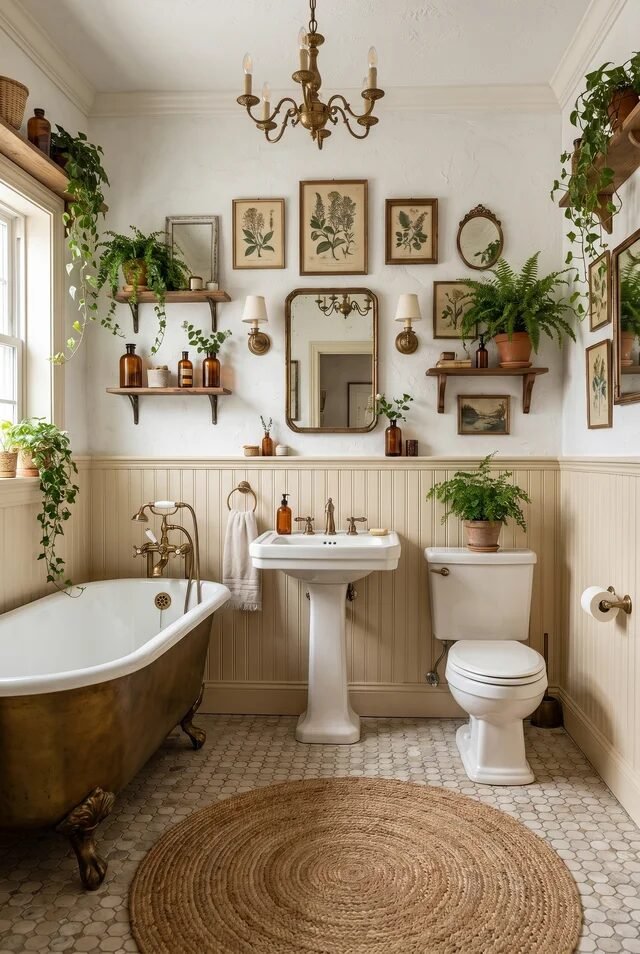
Vintage bathrooms are quietly becoming the design world’s favorite rebellion against cold, ultra-modern interiors that somehow manage to feel expensive and emotionally unavailable at the same time. We’re seeing people lean back into warmth, layered textures, antique-inspired fixtures, moody lighting, and spaces that actually feel personal again. Honestly, it makes sense. After years of bathrooms looking like futuristic hotel spas with zero personality, people want charm back. We support the collective exhaustion with sterile gray aesthetics.
What makes vintage bathrooms so appealing is how flexible the style can be. Some spaces feel dark and dramatic with rich wood tones and candle-style sconces, while others lean soft and romantic through floral wallpaper, brass details, and faded pastel palettes. The common thread is always atmosphere. Every vintage bathroom in this collection feels intentionally lived-in instead of perfectly staged for a showroom nobody touches.
The best part? Vintage styling doesn’t require living inside a hundred-year-old mansion with suspiciously beautiful original tilework. Small details can completely shift the mood. A furniture-style vanity, checkerboard flooring, layered textiles, botanical art, or warmer lighting can instantly make a bathroom feel richer, softer, and way more memorable. Tiny upgrades. Massive aura.
Mustard Tiles And Botanical Vintage Chaos
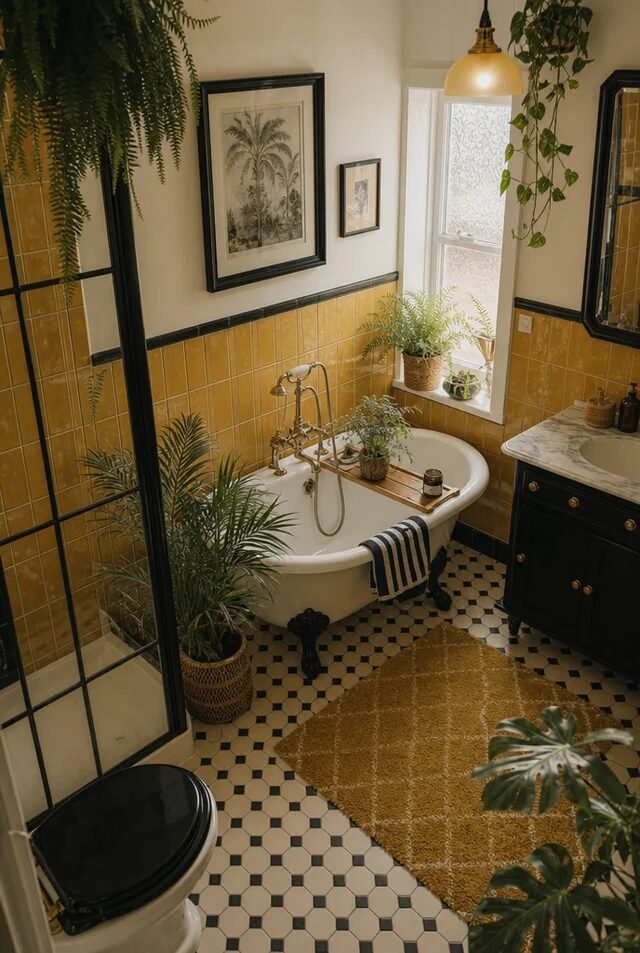
There’s something wildly charming about a bathroom that looks like it belongs to an artsy aunt who drinks herbal tea, owns too many plants, and somehow always smells expensive. This space absolutely leans into that energy. The mustard wall tiles paired with black trim create a grounded vintage palette, while the clawfoot tub softens everything with that romantic old-house feeling.
The reason this works so well is because the contrast feels intentional instead of chaotic. Warm tones dominate, but the black framing keeps the room visually structured. Honestly, black accents are the unpaid interns of good vintage design. They do all the heavy lifting.
What makes the room feel alive is the layering of organic elements. Ferns hanging from the ceiling, leafy plants around the tub, woven textures, even the slightly imperfect handmade vibe of the rug — it all pushes the bathroom away from “museum vintage” into something warmer and more personal. We’re very pro bathrooms that feel collected over time instead of ordered in one panic-fueled online shopping spree at 2 a.m. Very that.
If you want to recreate this look, start with color before decor. Vintage spaces usually fail when people add antique pieces into a room with cold modern undertones. Stick to creamy whites, muted mustard, olive green, and dark espresso accents. Subway or square tiles with visible grout instantly help. Then layer plants aggressively but strategically. The goal is “curated jungle spa,” not “forgotten greenhouse behind grandma’s shed.”
Moody Parisian Bathroom With Personality
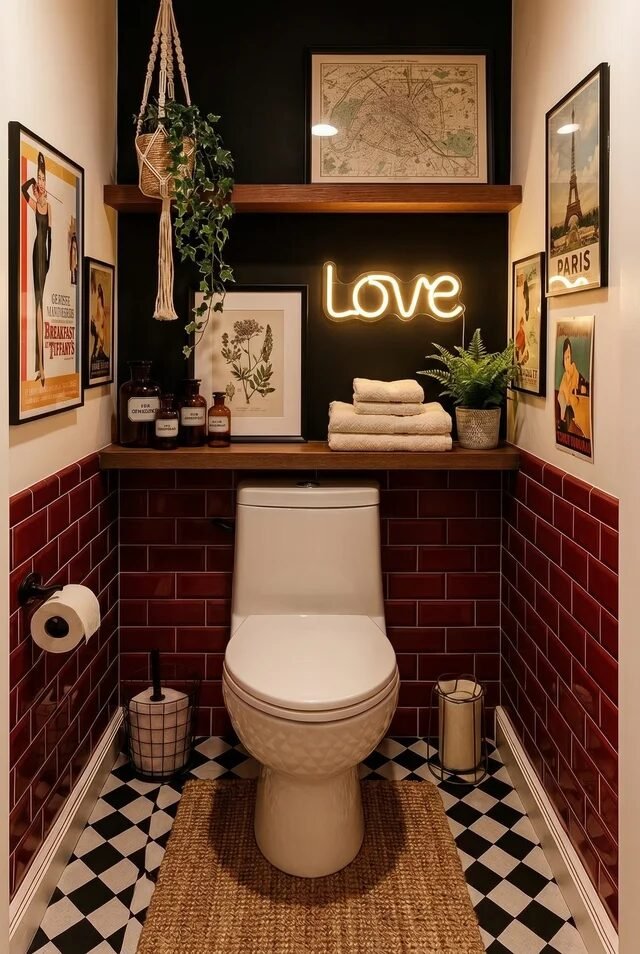
Tiny bathroom? Fine. But boring bathroom? We simply do not claim that energy. This narrow vintage setup proves that dramatic styling can completely distract from limited square footage. The deep burgundy subway tiles immediately pull the eye horizontally, making the room feel richer and more immersive. Pairing them with black walls and warm wood shelving creates that moody European café aesthetic that Pinterest girls collectively lose their minds over every autumn. And honestly… understandable.
The styling here is what really sells the personality. Vintage posters, amber apothecary bottles, woven textures, hanging ivy, even the glowing neon sign — it feels playful without crossing into themed restaurant territory. That balance matters more than people think. Vintage bathrooms work best when they mix sophistication with at least one slightly unserious element. Otherwise the room starts feeling like a history exhibit where we’re afraid to touch the towels.
For a similar vibe, focus heavily on lighting temperature and wall treatment. Warm bulbs are non-negotiable because cool white lighting destroys cozy vintage mood in approximately three seconds. Half-wall tiling is also genius for small bathrooms because it creates visual depth without overwhelming the room. Then add layered art in mixed frame finishes so things feel casually collected. And yes, we support adding one weird little decor piece purely for lore purposes. Every good vintage bathroom deserves a tiny bit of main-character chaos.
Blue Floral Wallpaper Done Surprisingly Right
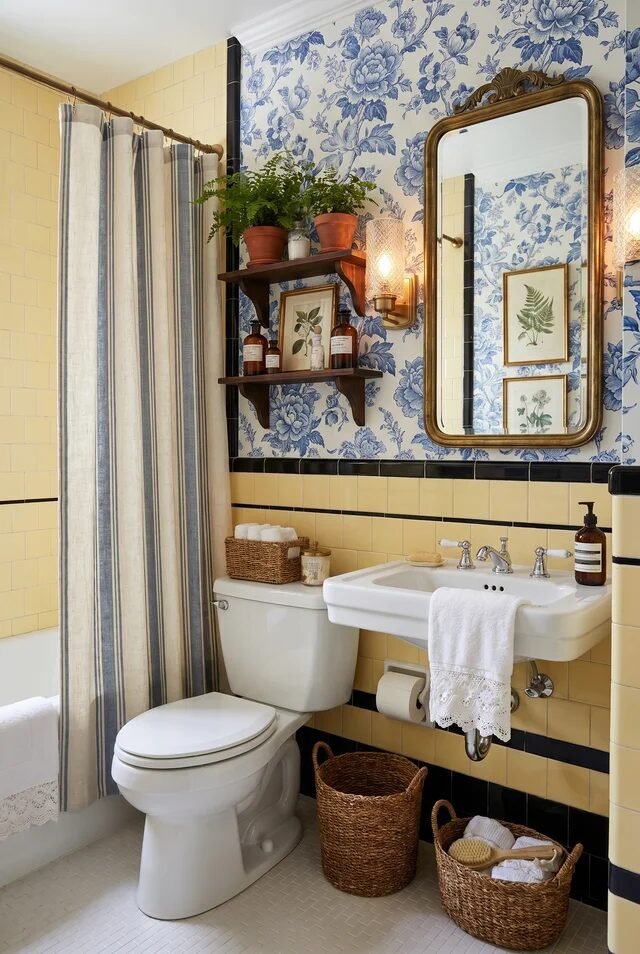
Floral wallpaper in bathrooms can either look incredibly charming or deeply terrifying. There is almost no middle ground. Luckily, this space absolutely understands restraint. The blue-and-white botanical wallpaper feels soft and classic because the surrounding materials stay simple. Pale yellow tiles, black trim lines, woven baskets, and warm wood shelving create breathing room so the floral pattern never turns visually exhausting. This is a perfect example of balance carrying an entire design.
Another reason the room feels timeless is the repetition of natural textures. The wicker baskets, linen shower curtain, terracotta planters, and botanical artwork all quietly echo one another without screaming for attention. Vintage interiors usually feel best when the materials communicate with each other subtly. It’s less about matching and more about rhythm. Very “she’s elegant without trying too hard,” which honestly is the dream.
If you’re recreating this aesthetic, avoid ultra-bright wallpaper colors because vintage spaces rely heavily on softness and slightly faded tones. Look for patterns that feel heritage-inspired instead of trendy. Then keep your fixtures classic and unfussy. Chrome or aged brass works beautifully here. Open shelving also helps because it creates room for styled clutter — and vintage bathrooms low-key thrive on styled clutter. A perfectly empty vintage bathroom feels emotionally suspicious. Add rolled towels, amber bottles, tiny framed prints, and maybe one plant that’s fighting for its life but still contributing aesthetically.
Dark Cottage Bathroom With Old-World Drama
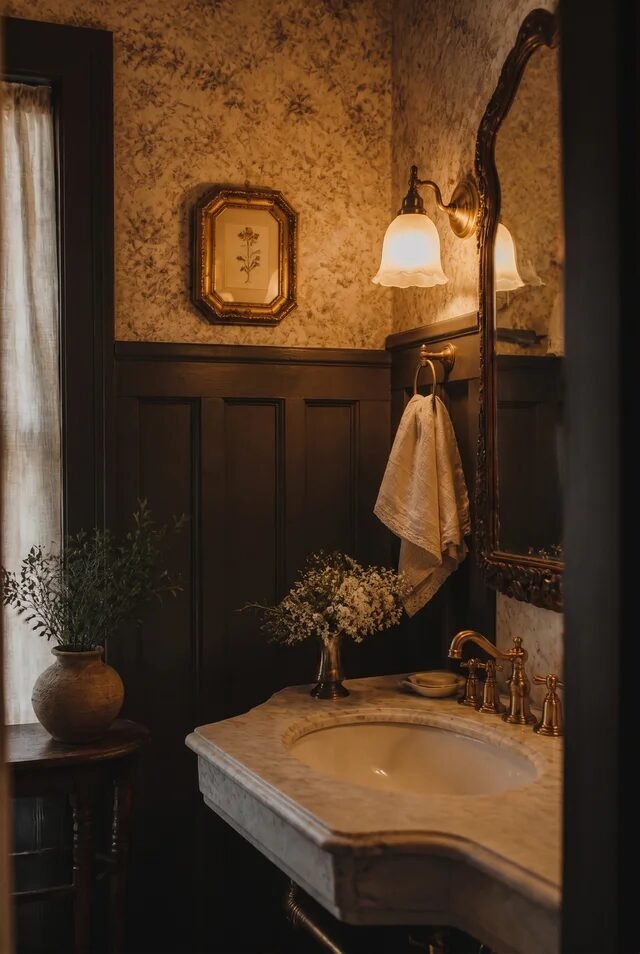
This bathroom looks like someone in the 1800s wrote poetry in here during thunderstorms, and honestly? We’re obsessed. The dark wood paneling immediately creates intimacy, while the floral wallpaper softens the heaviness just enough to keep the room from feeling cave-like. The layered brown tones, antique mirror, marble sink, and brass fixtures all sit within the same warm tonal family, which is exactly why the space feels rich instead of cluttered. Good vintage design is usually more about tonal consistency than perfect matching.
Lighting plays a massive role here too. The dim golden sconces create shadow and depth, making every texture feel more dramatic. Vintage bathrooms almost always benefit from warm directional lighting because it highlights materials like wood grain, aged brass, and textured wallpaper beautifully. Overhead white lighting would absolutely ruin the entire emotional support atmosphere of this room. Harsh bathroom lighting in a vintage space is genuinely criminal behavior. We said what we said.
To recreate this mood, prioritize wall treatments first. Dark panel molding instantly adds age and architecture even in newer homes. Then layer vintage-inspired details gradually instead of buying matching sets. Antique mirrors, unlacquered brass, tiny framed botanicals, and warm stone surfaces work beautifully together because they age gracefully. Also, lean into imperfect textures. Vintage spaces become more convincing when things feel slightly worn-in rather than suspiciously untouched like a furniture showroom nobody sits in.
Soft Pink Vintage Bathroom That Works
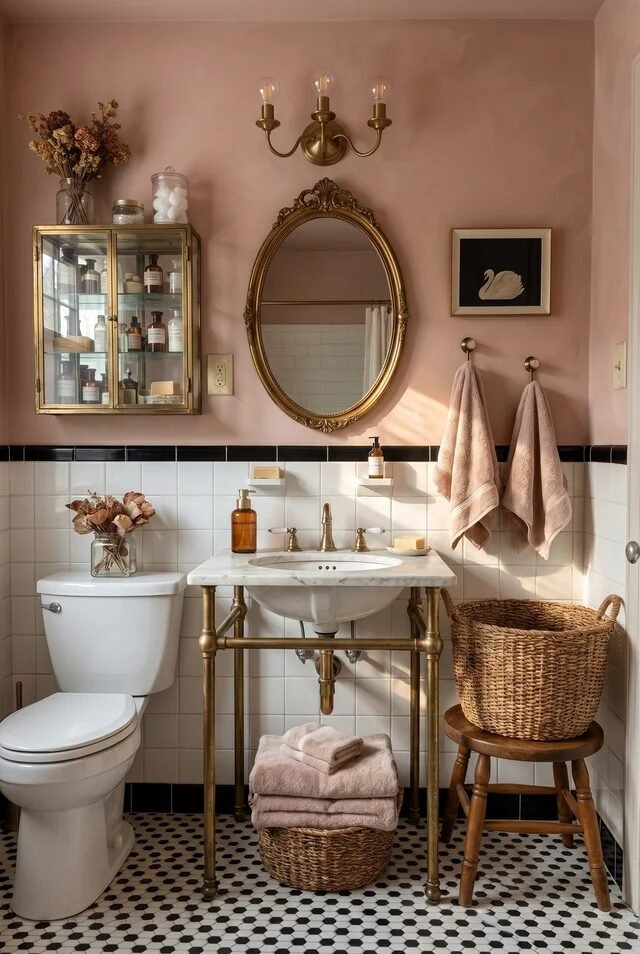
Pink bathrooms are officially back, but this version feels elevated instead of bubblegum retro diner energy. The muted blush walls paired with black tile trim and warm brass fixtures create a softer vintage palette that still feels grown-up. What keeps the room sophisticated is the contrast. The darker floor tiles and aged metallic finishes ground all the sweetness so the bathroom never drifts into overly precious territory. This is exactly how pastel colors should be handled in adult spaces.
There’s also a really smart mix of shapes happening here. The curved mirror, rounded baskets, delicate towels, and softer decor pieces balance out the grid-like tilework and structured sink lines. Vintage interiors usually feel more welcoming when they combine hard geometry with softer organic forms. It’s subtle psychology, but it works. Also, can we collectively appreciate how baskets continue carrying the entire home decor industry on their backs? Absolute legends.
If you want this aesthetic, stick to dusty pinks instead of candy pink tones. Then pair them with black accents or aged brass so the room feels layered rather than sugary. Open-leg console sinks are especially effective in vintage bathrooms because they visually lighten smaller rooms while showing off pretty hardware underneath. And don’t skip decorative lighting. A vintage-inspired sconce instantly changes the mood from “basic renovated bathroom” to “wealthy woman in a Nancy Meyers movie who owns expensive hand soap.”
Dark Academia Bathroom With Real Drama
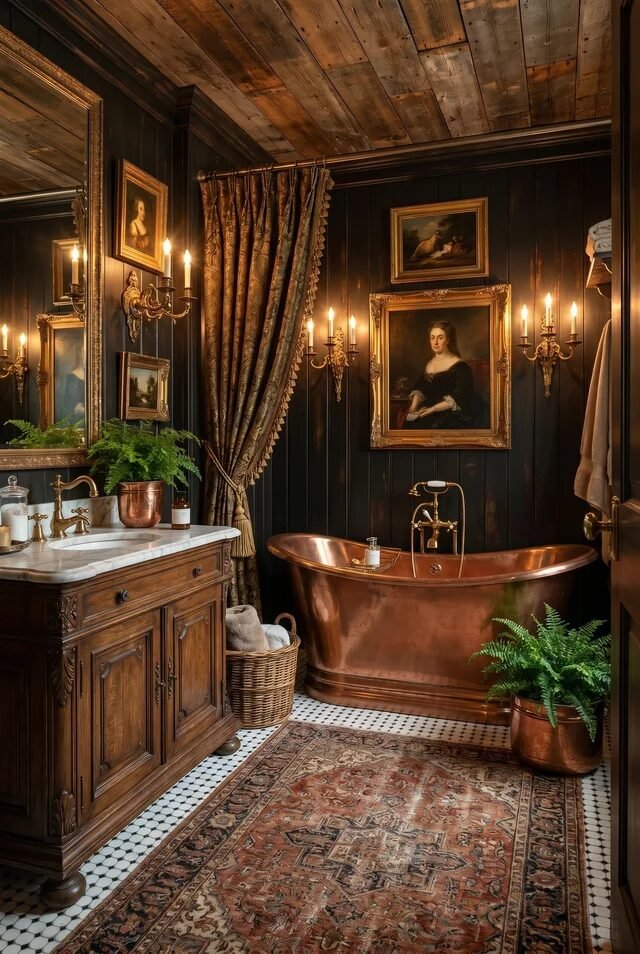
This bathroom feels like somebody rich in the 1800s definitely wrote emotional letters in here by candlelight, and honestly the commitment to the aesthetic is kind of iconic. The dark wood walls, copper tub, antique paintings, and ornate sconces all lean heavily into old-world layering without feeling gimmicky. What makes the space successful is the tonal consistency. Everything sits within warm espresso, bronze, copper, and amber shades, so despite all the visual detail, the room still feels cohesive instead of visually screaming at us.
The ceiling deserves its own moment too because wood planks overhead make the bathroom feel immersive rather than decorated. That’s the difference between a themed room and a genuinely atmospheric one. The vintage rug softens the hard surfaces while the plants stop the darker palette from becoming too heavy. We’re very into bathrooms that feel luxurious but still slightly haunted in an elegant way. Respectfully.
If you want this look, avoid mixing cool silver finishes into the space because it instantly breaks the old-world mood. Stick with aged brass, copper, oil-rubbed bronze, and walnut wood tones. Layer framed art salon-style for that collected-over-decades feeling. And please use warm lighting only. Cool LED lighting in a bathroom like this would feel emotionally illegal.
Vintage Vanity Styling That Feels Fresh
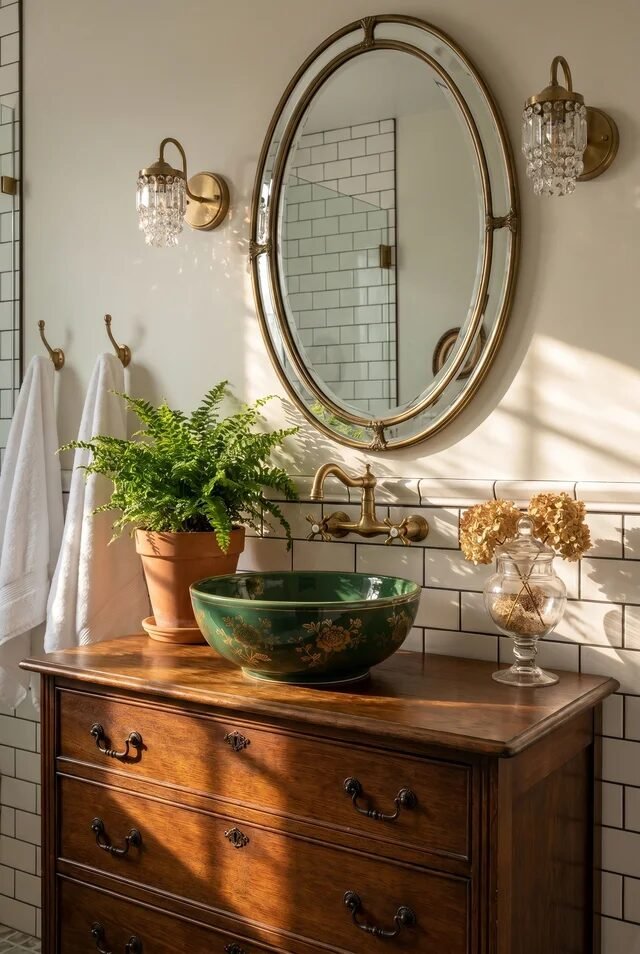
Sometimes vintage bathrooms don’t need dramatic wallpaper or clawfoot tubs to work. Sometimes all it takes is one ridiculously gorgeous vanity moment. This setup proves it. The antique-style wooden dresser paired with the green vessel sink creates immediate contrast, while the brass fixtures and crystal sconces add softness and sparkle. The balance between rustic wood and polished metallic finishes is exactly why this feels elevated instead of overly farmhouse-y. Which, respectfully, is a fine line these days.
The natural sunlight also does a lot of heavy lifting here. Vintage spaces almost always benefit from layered reflective surfaces because they bounce warm light around the room beautifully. The oval mirror softens the sharper drawer lines below it, while the subway tile backdrop keeps the entire setup feeling clean and timeless. Honestly, we support any bathroom design that looks expensive without trying too hard. Quiet luxury girls would absolutely repost this with dramatic music.
For recreating the look, focus on mixing materials intentionally. Pair warm woods with ceramic, glass, aged brass, and greenery so the room feels collected rather than flat. Furniture-style vanities instantly add vintage personality, especially if the wood has visible grain and slightly imperfect detailing. Then add one statement sink color instead of making every element compete for attention. The green bowl sink here is basically the main character, and she earned it.
Checkerboard Tiles With Vintage Energy
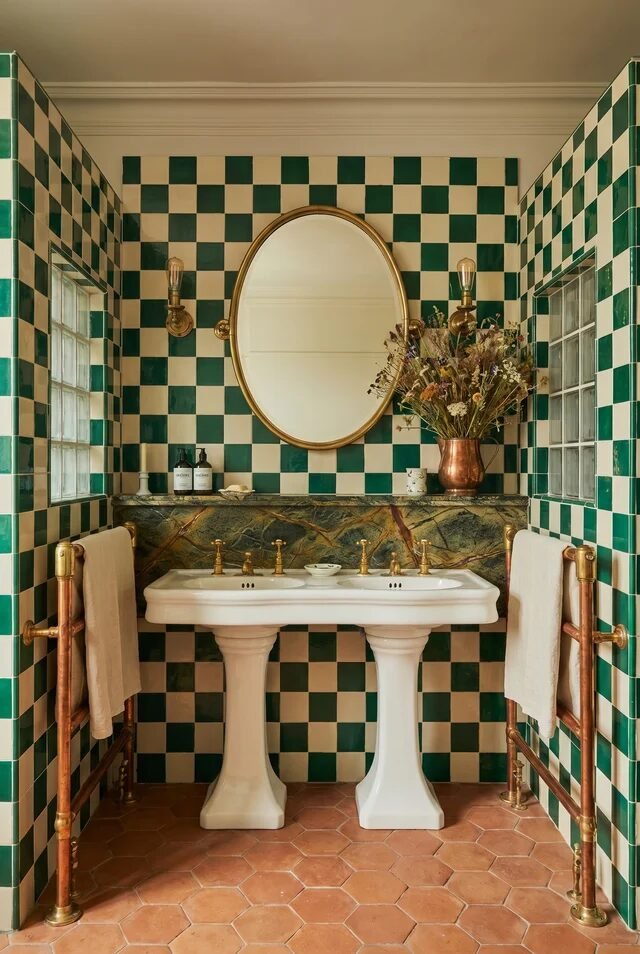
This bathroom is proof that bold tile choices can look timeless when the proportions are right. The glossy green-and-cream checkerboard walls create strong geometry, but because the palette stays earthy and slightly muted, the room still feels sophisticated instead of chaotic diner-core.
The symmetry helps massively too. Double pedestal sinks, centered mirror placement, and matching sconces keep the visual weight evenly distributed, which makes the busy tile pattern feel intentional rather than overwhelming. Symmetry is secretly one of the easiest ways to make maximalist vintage spaces feel calmer.
What keeps the bathroom from looking cold is the warmth layered underneath. The terracotta floor tiles, brass fixtures, marble countertop, and copper towel rails all soften the sharper graphic pattern above. That contrast between structured shapes and earthy materials gives the room personality. Also, let’s normalize bathrooms having actual personality again instead of looking like minimalist tech startups with hand soap.
If you want to recreate this style, pick no more than two dominant colors for patterned tilework. Vintage bathrooms thrive on restraint underneath the drama. Then bring in warmth through metals, stone, wood, or dried florals so the room feels layered and lived-in. Glossy tiles are especially helpful because they reflect light beautifully and add depth naturally. And yes, checkerboard patterns absolutely count as timeless when the color palette doesn’t look like a pack of highlighters exploded.
Moody Green Bathroom With Character
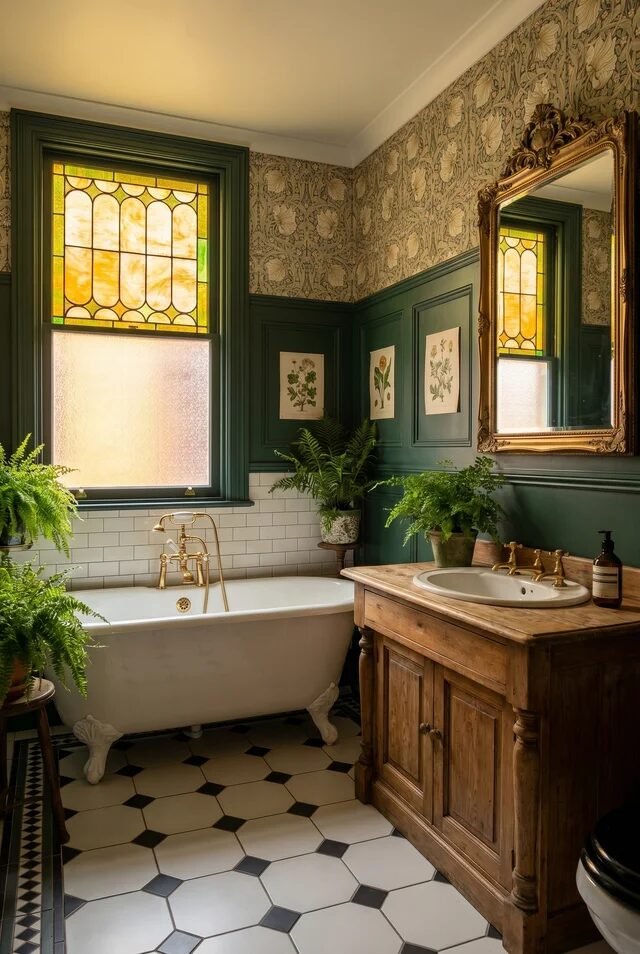
This bathroom feels like a hidden guest suite inside a historic countryside manor, and honestly we would not emotionally recover from staying here for one weekend. The deep forest-green panel molding instantly grounds the room, while the patterned wallpaper above keeps the space from feeling visually flat. That high-low wall contrast is one of the smartest vintage design tricks because it creates depth without needing excessive decor.
The stained glass windows completely change the mood too. Instead of relying only on artificial lighting, the colored glass casts warm filtered light across the room, making every brass fixture and wood texture glow softly. Vintage spaces almost always look better when lighting feels layered and imperfect rather than ultra-bright and clinical. The clawfoot tub, ornate gold mirror, and antique-style vanity all reinforce the classic European mood without making the bathroom feel frozen in time.
For a similar aesthetic, start with one dramatic color and build around it slowly. Forest green works beautifully because it feels historical and earthy at the same time. Add molding or paneling first before piling on decor because architectural detail creates the vintage foundation naturally. Then layer warm brass, botanical art, old-style mirrors, and soft textiles for warmth. Also, plants help immensely in darker bathrooms because they break up heavy tones and stop the room from feeling too serious. Emotional support ferns stay winning.
Soft English Cottage Bathroom Layers
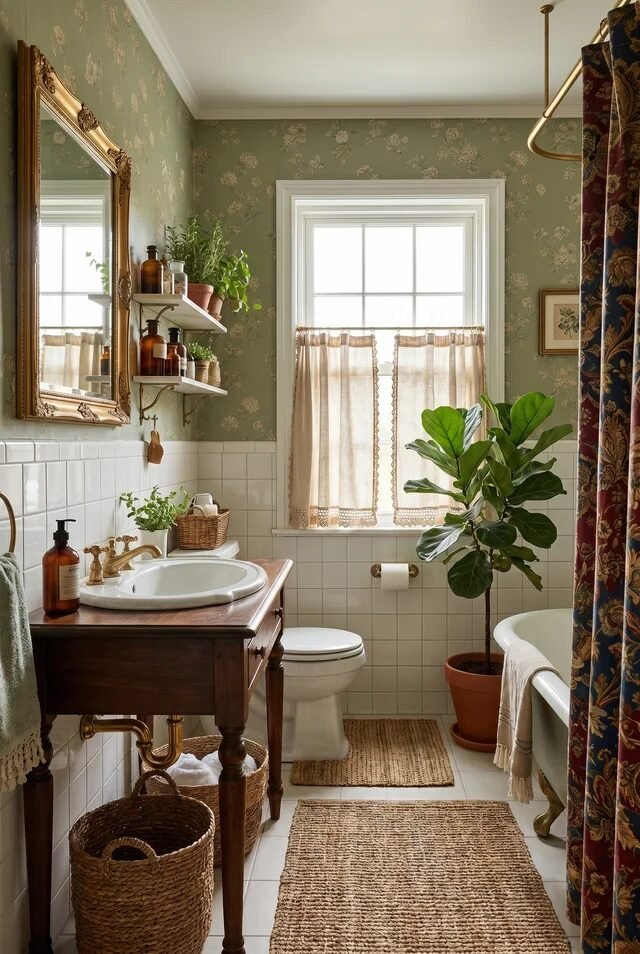
This bathroom feels like somebody’s stylish grandmother baked fresh scones nearby and honestly that’s the exact emotional comfort level many modern homes are missing. The sage floral wallpaper, warm wood vanity, woven textures, and brass fixtures all create a relaxed English cottage atmosphere without looking overly precious. What makes the room especially successful is the softness of the palette. Nothing feels harsh or overly contrasted, so the entire bathroom reads calm, welcoming, and lived-in. Vintage design usually feels strongest when the room prioritizes comfort over perfection.
The layered textiles quietly carry the space too. The woven rugs, lace-trim curtains, patterned shower drape, and baskets make the room feel deeply cozy without overcrowding it. Vintage bathrooms often become more convincing through texture instead of expensive finishes. We’re very pro “slightly imperfect but deeply charming” interiors because they feel human. Also, the little shelf styling with amber bottles and tiny plants? Extremely Pinterest auntie in the best possible way.
If you want this aesthetic, stick with muted earthy tones like sage, cream, walnut, oatmeal, and soft brass. Floral wallpaper works best when the pattern feels faded and delicate rather than overly saturated. Then layer natural materials everywhere you can — wicker, linen, cotton, wood, and ceramic instantly soften bathrooms visually. And don’t over-renovate the space. Sometimes vintage charm disappears the second everything becomes too polished and suspiciously symmetrical.
The Best Vintage Bathrooms Feel Collected Naturally
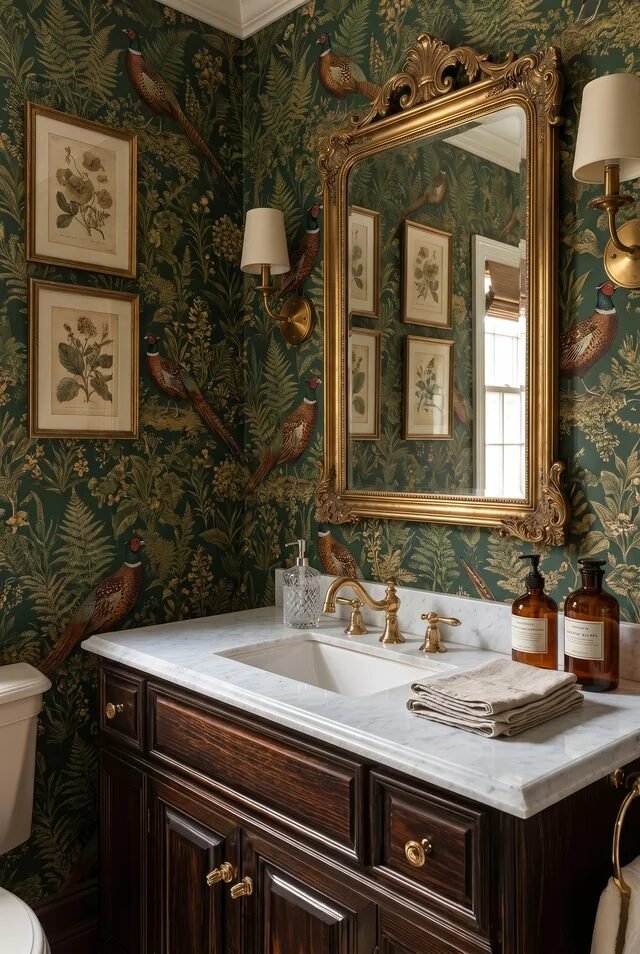
The most beautiful vintage bathrooms are rarely the ones trying the hardest. They feel layered slowly, filled with character, warmth, and little details that make the space feel genuinely human instead of algorithmically perfect. Across all these bathrooms, there’s a clear pattern: warm metals, aged wood, moody color palettes, botanical touches, patterned tiles, soft lighting, and textures that make the room feel comforting rather than overly polished. That balance between elegance and imperfection is exactly what gives vintage spaces their charm.
What’s especially interesting is how each bathroom creates a completely different mood while still staying rooted in vintage principles. Some feel dramatic and cinematic with dark paneling and copper tubs, while others feel airy and nostalgic through faded florals, soft pink walls, or cozy cottage styling. The versatility is honestly part of the obsession. Vintage design allows rooms to feel expressive without chasing trends that disappear emotionally after six business days.
At the end of the day, vintage bathrooms work because they prioritize feeling over perfection. They invite warmth, personality, and storytelling back into everyday spaces. And frankly, if a bathroom can make us want to romanticize folding towels and buying fancy hand soap we absolutely didn’t budget for… that’s powerful design.
 Steal Our Home Styling Secrets!