
Modern Vintage Living Rooms For People Tired Of Cold Minimalism
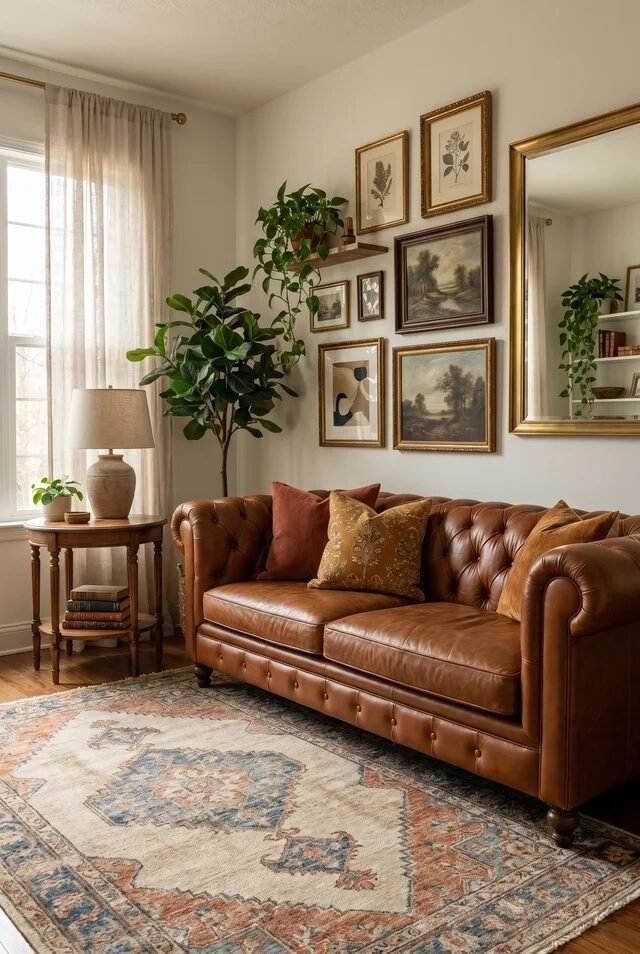
Some living rooms look impressive for five minutes on social media and then somehow feel outdated by next Tuesday. Modern vintage interiors tend to do the opposite. They feel layered, personal, warm, and slightly imperfect in the best possible way. That’s probably why people keep gravitating toward them lately. We’re all a little tired of spaces that look too showroom-perfect and emotionally unavailable.
What makes modern vintage living rooms work so well is the balance between old and new. Clean-lined sofas, contemporary lighting, and fresh layouts keep the rooms functional, while vintage rugs, aged wood tones, antique-inspired art, and collected decor add soul. That tension between polished and lived-in is exactly what creates the charm. The rooms feel elevated without trying too hard about it.
Across all these spaces, there’s also a consistent focus on warmth — earthy palettes, textured fabrics, moody greens, caramel leather, soft lighting, and natural materials everywhere. Honestly, the vibe feels less “design trend” and more “main character finally figured her life out a little.” Which, emotionally, we support.
Arched Windows And Moody Velvet Energy
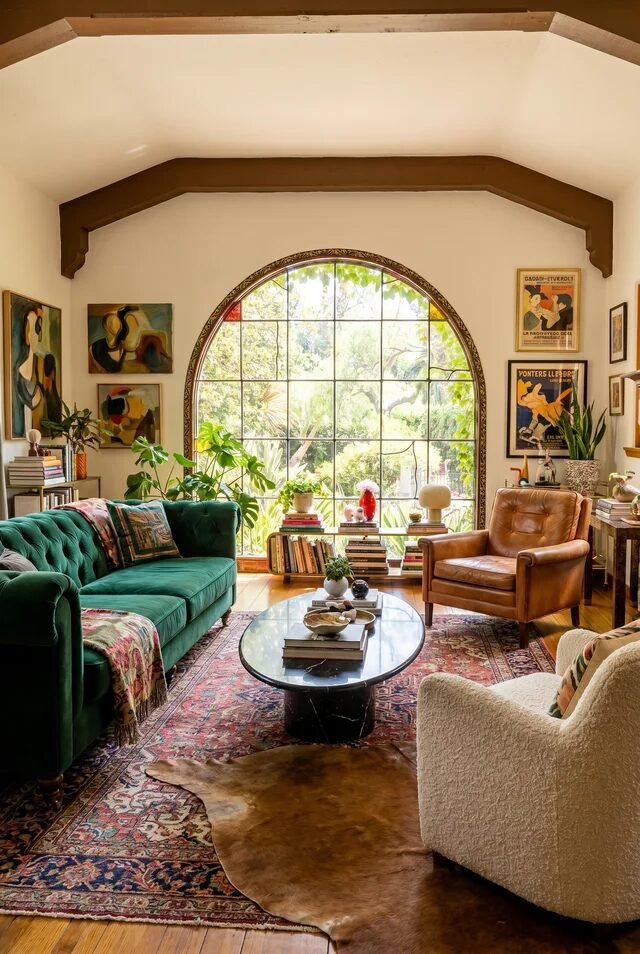
There’s something wildly charming about a living room that feels collected instead of perfectly “done,” and this space absolutely gets that assignment. The giant arched window instantly becomes the architectural main character, while the deep emerald velvet sofa keeps the room grounded with a little dramatic flair. Honestly, this is the kind of living room that makes people suddenly want to become “book people” for aesthetic reasons alone. We support the delusion.
What makes the design work so well is the contrast between softness and structure. The curved window, rounded coffee table, layered vintage rugs, and relaxed textiles soften the heavier wood trim and angular ceiling lines. That balance is exactly why the room feels soulful instead of overwhelming. Even the leather chair adds warmth without fighting the green sofa for attention because both pieces share earthy undertones.
If we wanted to recreate this look, we’d start with one statement piece first — preferably a velvet sofa or oversized vintage rug — then slowly layer around it. Don’t overmatch the furniture because modern vintage spaces look better when they feel slightly accidental. Add framed art with imperfect spacing, stack books everywhere, and let the room feel a tiny bit undone. Weirdly enough, that’s the magic.
Rustic Farmhouse But Make It Softer
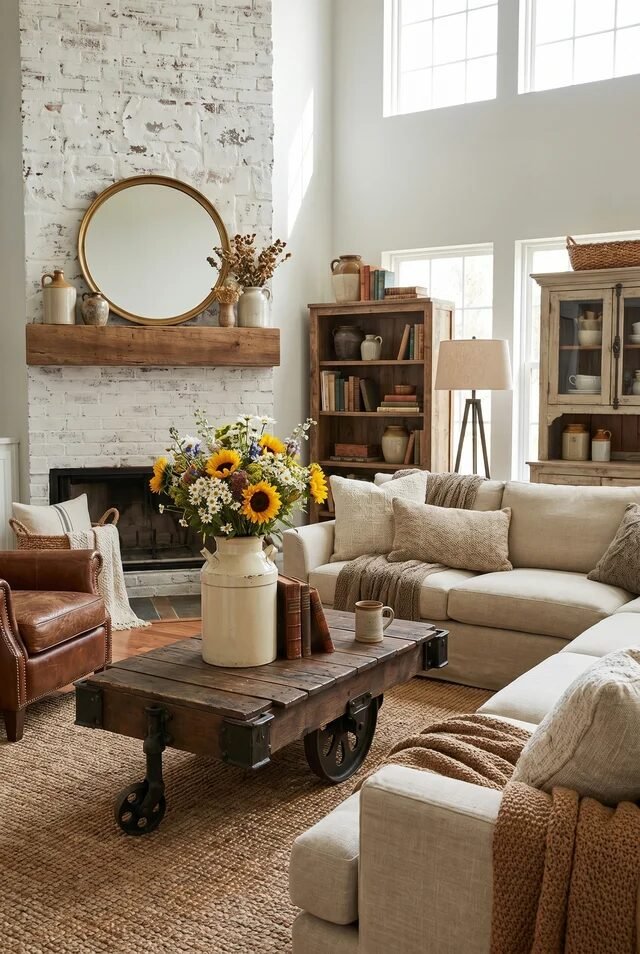
This living room feels like someone combined farmhouse style with quiet luxury and then told everyone to calm down a little. The creamy sectional, textured jute rug, weathered wood furniture, and soft sunlight create that relaxed atmosphere people keep trying to imitate on Pinterest but somehow end up making too sterile. This one actually feels lived in, which is the flex.
The strongest design choice here is the layering of textures instead of colors. Nearly everything stays within a warm neutral palette, yet the room never looks flat because there’s contrast happening everywhere else — chunky woven fabrics, distressed wood, brick texture, soft upholstery, and aged metals. That’s the secret modern vintage rooms understand: texture carries the entire mood. The sunflower arrangement also prevents the palette from becoming sleepy by adding one cheerful focal point right in the center.
For anyone recreating this style, resist the urge to buy matching farmhouse sets. That’s usually where things start looking like a furniture showroom from 2014. Instead, mix older-looking wood pieces with cleaner modern seating silhouettes. Keep the palette warm and creamy, then add character through small imperfections like antique books, handmade pottery, or slightly weathered finishes. The room should feel curated, not aggressively themed. There’s a difference, babe.
Vintage Colors Inside Modern Architecture
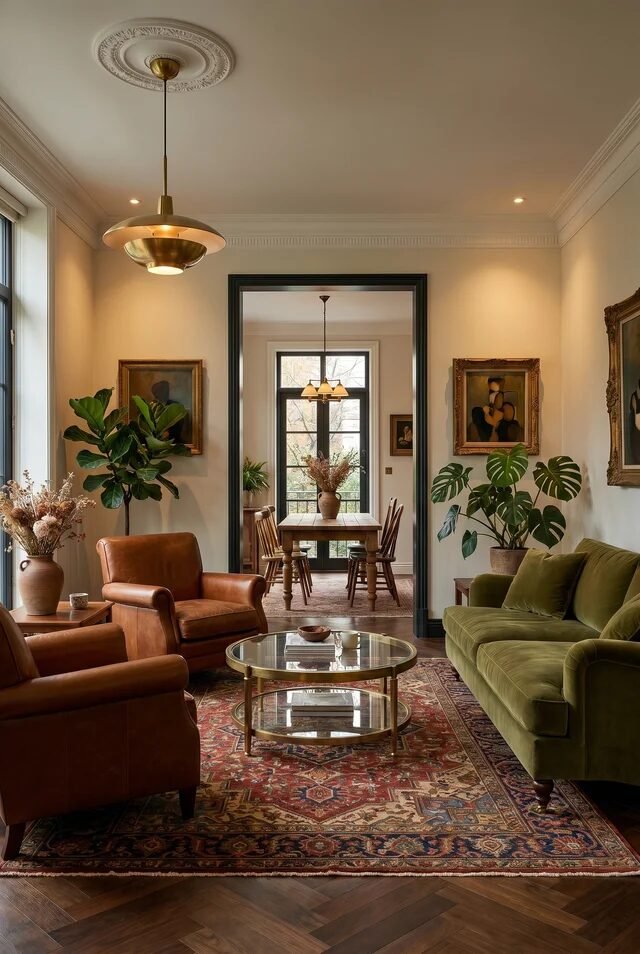
Some modern homes accidentally feel emotionally unavailable, but this living room fixes that problem immediately. The architecture is clean and structured, yet the olive sofa, Persian rug, warm leather chairs, and vintage artwork bring enough personality to stop the space from feeling cold. It’s giving “grown woman with excellent playlists and expensive olive oil.” Very specific vibe. Very chic.
What really elevates this room is the color distribution. The green sofa visually anchors one side while the cognac leather chairs balance the opposite side without creating symmetry that feels too rigid. Meanwhile, the darker doorway trim frames the dining area almost like a painting, which subtly adds depth. This is a really smart example of visual weight being distributed evenly throughout a room. Nothing screams for attention, but everything contributes.
If we were recreating this look, we’d focus heavily on mixing eras. Pair streamlined modern lighting with traditional rugs, or combine minimalist architecture with older furniture silhouettes. The trick is keeping the palette cohesive so the room still feels intentional. Also, never underestimate plants in modern vintage interiors. Large greenery softens sharp architecture instantly and makes the room feel alive instead of staged for a realtor photo shoot. Tiny but important distinction.
Cozy European Corners That Feel Effortless
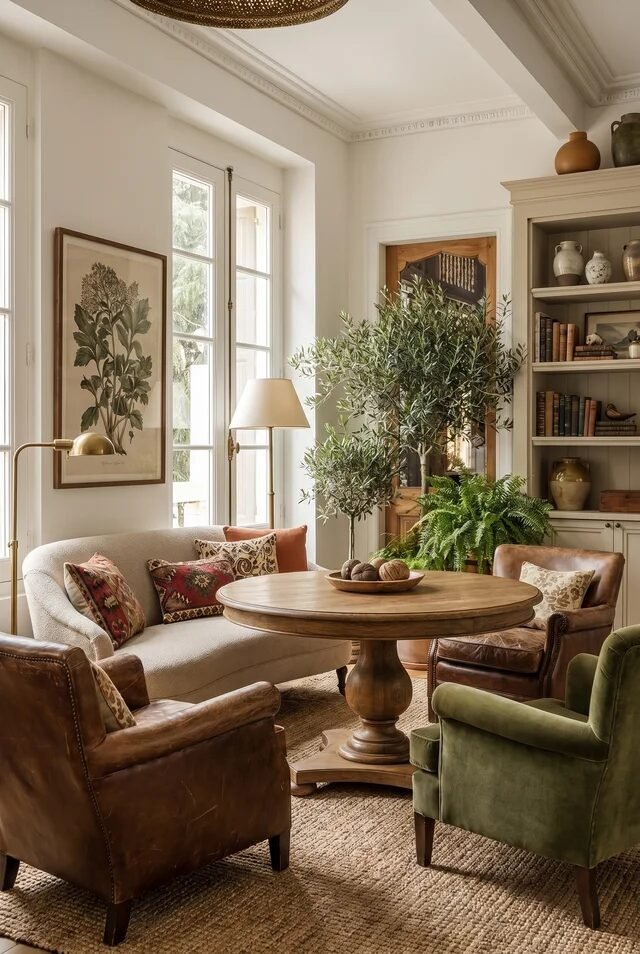
This room feels like the kind of place where someone casually serves tea in actual ceramic cups instead of handing us an iced coffee in plastic. The atmosphere is soft, layered, and slightly European without trying too hard about it. Between the linen seating, aged wood tones, botanical art, and oversized olive tree, the whole room leans quietly elegant rather than trend-obsessed. Honestly, refreshing.
One reason this space feels so calming is because the furniture layout encourages conversation instead of centering everything around a television. The rounded table creates natural flow, while the mix of curved and structured seating prevents the room from becoming visually stiff. There’s also a strong relationship between natural materials here — woven rugs, wood grains, linen fabrics, and greenery all work together to create organic warmth. That consistency in material palette makes the room feel cohesive even with multiple furniture styles involved.
To recreate this look, prioritize pieces with soft edges and warm undertones. We’d avoid anything overly glossy or ultra contemporary because it would interrupt the relaxed vintage mood immediately. Vintage-inspired pillows, antique brass lighting, and oversized plants will do a lot of heavy lifting here. Also, don’t overcrowd the shelves. Leaving a little breathing room is what makes spaces like this feel elevated instead of chaotic aunt energy.
Classic Elegance Without Feeling Too Precious
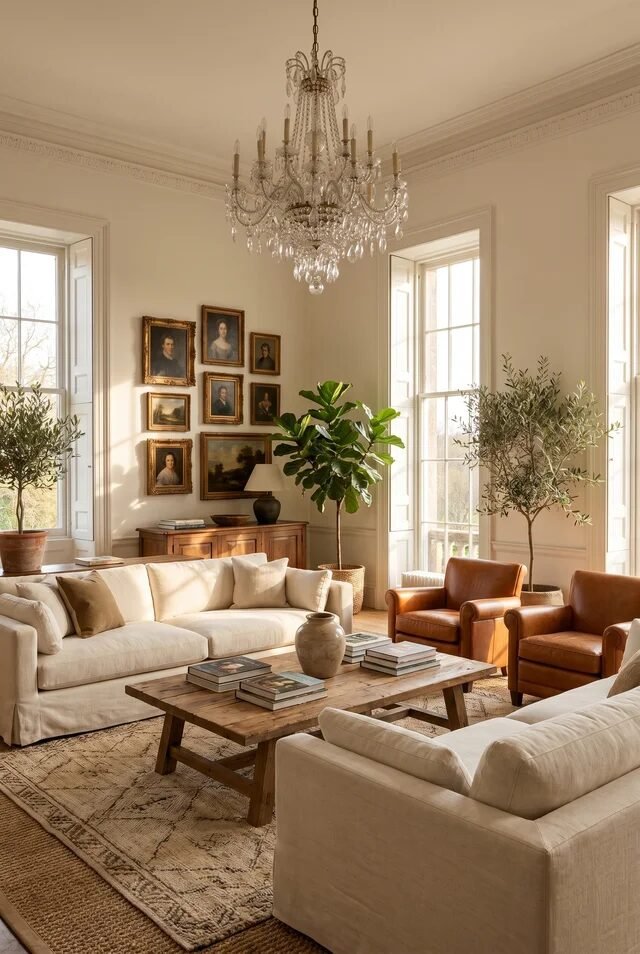
There’s always a risk that vintage-inspired formal living rooms can start feeling museum-ish real fast, but this one avoids that beautifully. The crystal chandelier, framed portraits, and classic architecture definitely lean traditional, yet the relaxed linen sofas and earthy wood furniture keep everything approachable. It feels elegant without making guests scared to touch anything. We love a non-intimidating queen.
The design succeeds because the room blends refinement with softness. Tall windows flood the space with natural light, which prevents the darker vintage frames and antique-inspired decor from feeling heavy. The symmetrical furniture arrangement also creates visual calm, while the oversized plants break up the formality just enough. This balance between structure and ease is what keeps classic interiors feeling current instead of dated.
If we wanted this aesthetic at home, we’d invest in timeless foundational pieces first — neutral sofas, wood coffee tables, vintage-style rugs — then layer in the ornate details slowly. One chandelier or gallery wall is enough to establish the vintage character without turning the room into a period drama set. And honestly, cream upholstery works best here because it reflects light beautifully and softens all the antique accents. It’s classy without trying to scream “old money” every five seconds.
Soft Minimalism With Vintage Warmth
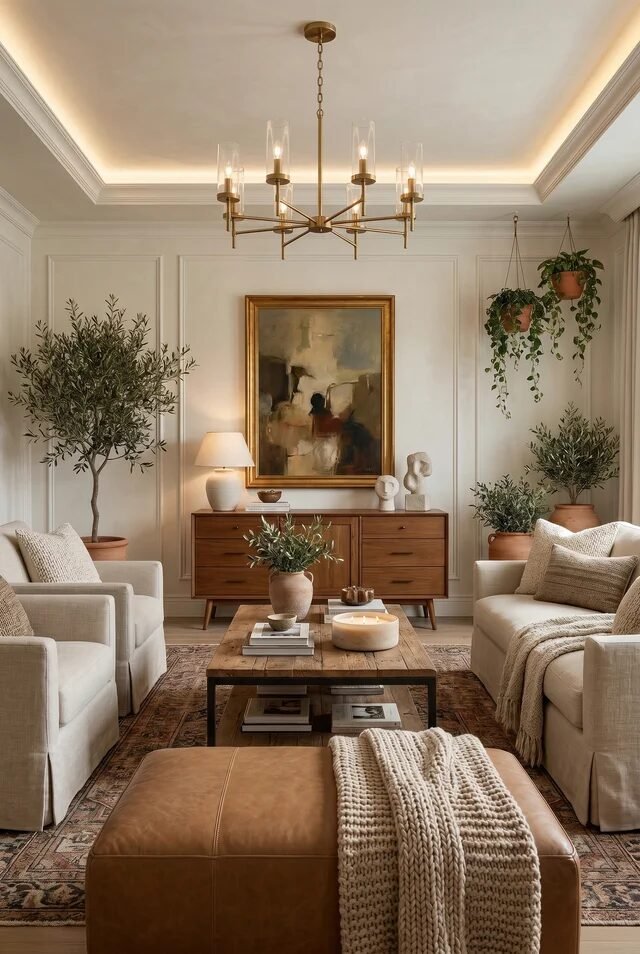
This living room is proof that neutral spaces do not have to feel boring, despite what the internet’s obsession with hyper-colorful interiors sometimes says. The creamy seating, warm wood tones, antique-inspired rug, and tailored wall molding create a room that feels calm but still layered. It’s polished without becoming emotionally cold. Honestly, the room feels like it drinks oat milk but in an elegant way.
The strongest design principle here is symmetry. The matching armchairs, centered artwork, balanced greenery, and linear furniture layout create visual order, which naturally makes the space feel more relaxing. But what keeps it from looking too formal is texture. The chunky knit throw, aged wood coffee table, woven rug, and leather ottoman introduce softness and depth. That combination of structure and texture is what makes modern vintage interiors feel elevated instead of flat.
If we wanted to recreate this style, we’d keep the color palette intentionally restrained and focus on tonal layering instead. Use warm ivories, camel tones, soft browns, and muted olive accents. Also, oversized greenery matters more than people think here. Olive trees instantly add that relaxed European energy everyone secretly wants on Pinterest right now. Tiny apartment? We pretend not to notice.
Moody Olive Walls With Character
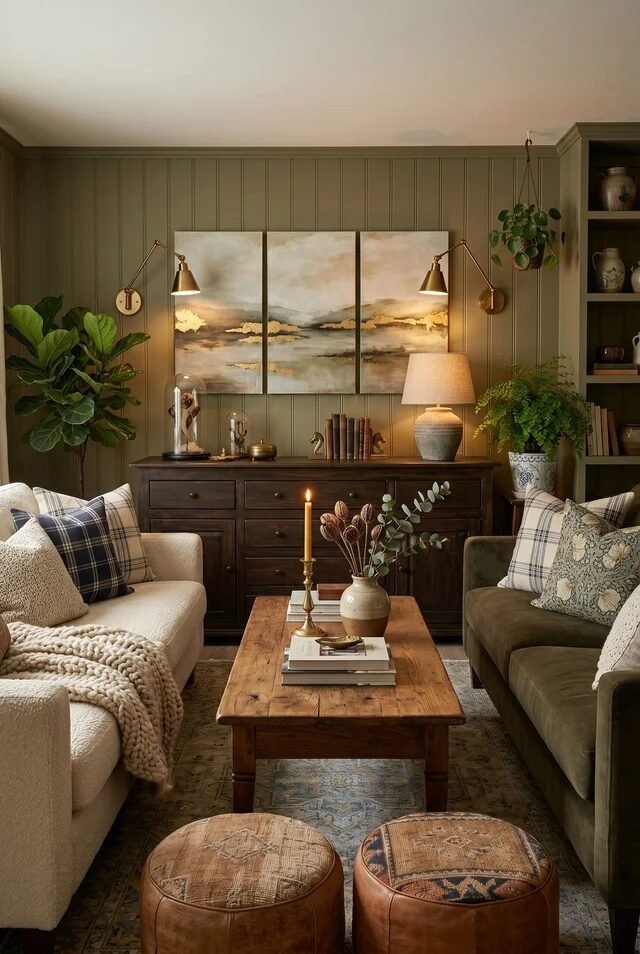
There’s something deeply comforting about this room. Maybe it’s the olive paneled walls, maybe it’s the candlelight styling, or maybe it’s the fact that the entire space feels like the visual version of a rainy Sunday playlist. Either way, this room absolutely understands atmosphere. We’re obsessed, respectfully.
The olive wall color works because it creates depth without making the room feel dark or cave-like. Meanwhile, the vintage wood furniture and soft cream seating keep the palette balanced so everything doesn’t blur together visually. One detail this room nails especially well is repetition. Olive tones appear across the walls, sofa, plants, and accessories, while warm wood finishes repeat throughout the coffee table and sideboard. Repeating tones and materials is what quietly makes rooms feel cohesive without screaming “designed.”
For recreating this look, we’d absolutely recommend choosing one moody anchor color first and carrying it subtly throughout the room. Don’t stop at paint alone. Bring the shade into textiles, greenery, or artwork too. Also, vintage-inspired lighting is doing serious heavy lifting here. Warm sconces and table lamps make darker rooms feel cozy instead of gloomy. Big difference. Nobody wants their living room feeling like an abandoned library basement, babe.
Retro Earth Tones That Feel Fresh
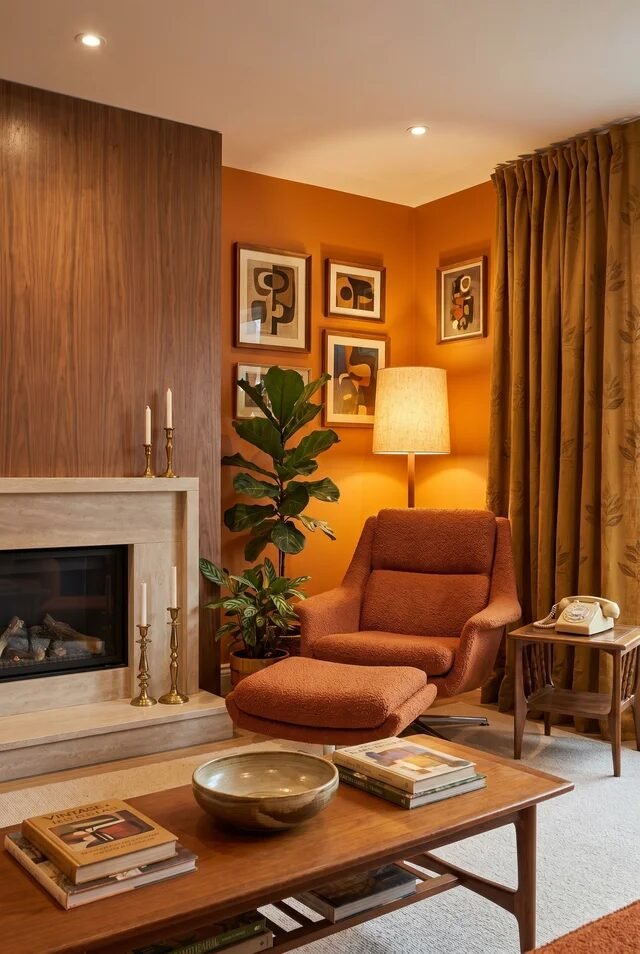
This room feels like the stylish cousin of every 1970s interior we’ve seen online lately. The burnt orange walls, walnut wood, sculptural chair, and vintage-inspired artwork could’ve easily gone full retro theme park, but thankfully the styling stays restrained enough to feel current. It’s nostalgic without looking costume-y. Very difficult balance. Very well done.
What makes the room successful is the color psychology happening underneath everything. Warm rust tones instantly create intimacy, while the layered browns and caramel shades reinforce that cozy feeling without becoming visually chaotic. The clean-lined fireplace and minimal furniture silhouettes also modernize the space beautifully. That contrast between retro colors and simplified forms is what keeps the room from feeling dated.
If we were recreating this aesthetic, we’d focus heavily on lighting because warm-toned rooms can shift fast from cozy to oddly aggressive if the lighting is wrong. Stick with soft ambient lighting and avoid harsh cool bulbs completely. Also, vintage-inspired doesn’t mean cluttered. Keep the decor curated and intentional. One sculptural chair or statement wall color already says enough. We do not need every corner screaming “mid-century revival” like it’s auditioning for a Netflix set design competition.
Vintage Rugs Meet Modern Seating
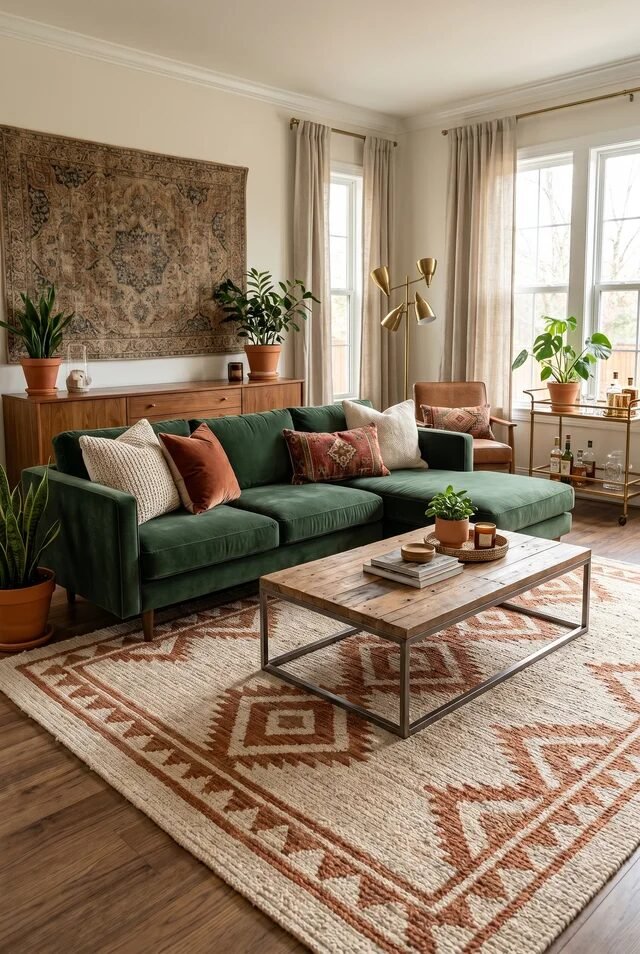
This space quietly masters something a lot of living rooms struggle with: mixing casual comfort with visual sophistication. The green velvet sectional immediately adds richness, while the patterned rug and vintage wall textile bring in age and texture. Yet somehow the room still feels airy and approachable instead of heavy. Honestly, she’s balanced. Emotionally stable queen energy.
The room works because the furniture silhouettes stay relatively modern and clean while the decorative elements lean vintage. That contrast prevents the layered textiles from overwhelming the room visually. There’s also excellent color harmony happening here. Earthy terracotta tones from the rug and pillows subtly warm up the cooler green sofa, creating balance across the entire palette. When warm and cool tones are distributed evenly, rooms naturally feel more intentional and visually comfortable.
For anyone recreating this style, start with one grounding vintage piece first — usually a rug or textile. Then pair it with simpler modern furniture so the room doesn’t feel chaotic. We’d also recommend mixing plant sizes because the varied greenery softens the geometry of the furniture layout beautifully. And yes, velvet sofas are still worth it. Slightly high-maintenance? Sure. But aesthetically? They simply understand the assignment.
Collected Vintage Style With Cozy Layers
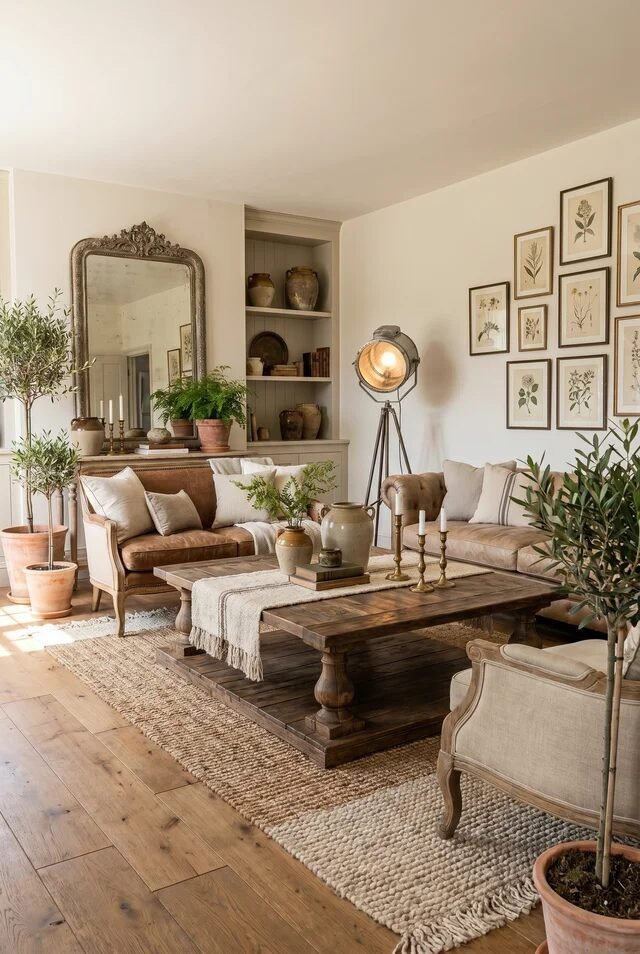
This room feels less like a showroom and more like a home someone genuinely enjoys living in, which honestly feels rare lately. Between the antique mirror, oversized wood coffee table, layered rugs, botanical gallery wall, and soft linen seating, the entire space feels collected over time instead of ordered in one slightly dangerous late-night shopping spree. Growth.
One reason the room feels so warm is because nearly every material here has visible texture or patina. The aged wood, woven rugs, vintage pottery, linen upholstery, and distressed mirror all add dimension without relying on bold color. There’s also a really thoughtful mix of scale happening. Oversized furniture grounds the room, while smaller framed artwork keeps the walls from feeling visually heavy. Balancing large and delicate elements together is one of the easiest ways to make vintage-inspired spaces feel layered and natural.
If we wanted to recreate this look, we’d focus on sourcing pieces slowly instead of rushing to fill every empty corner. Vintage-inspired rooms look better when they evolve naturally over time. Incorporate soft neutral upholstery first, then layer in older-looking woods, textured rugs, and collected decor pieces gradually. Also, warm lighting is mandatory here. This style completely falls apart under bright white LED lighting. Respectfully, absolutely not.
Cozy Collected Spaces That Never Feel Too Precious
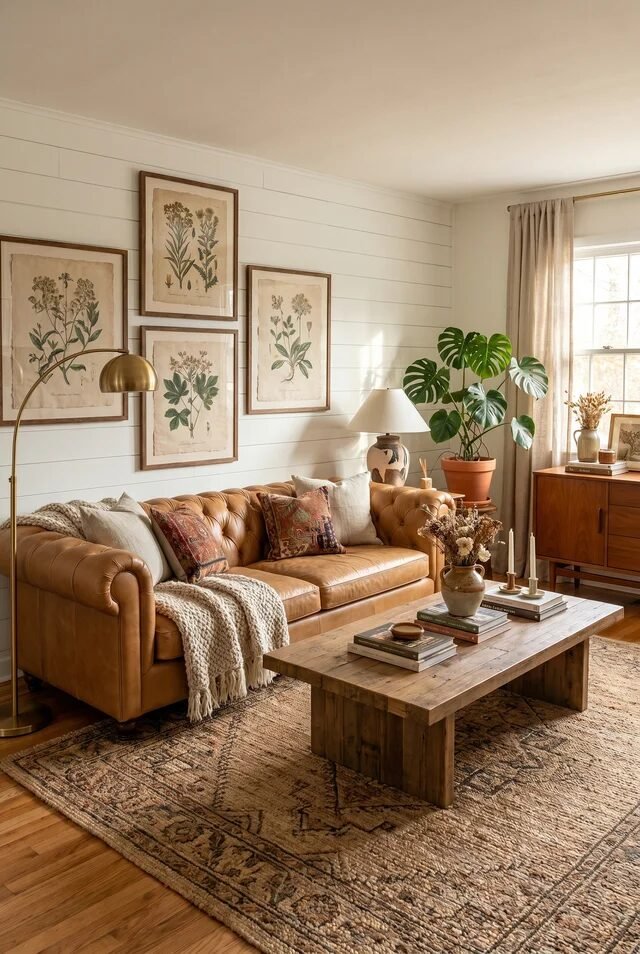
The best thing about modern vintage living rooms is that they invite people to actually live in them. Nothing feels overly staged or too delicate to touch. Even the more elegant spaces with chandeliers, ornate mirrors, or tailored wall molding still feel soft and welcoming instead of intimidating. That balance is what keeps the aesthetic timeless instead of performative.
A lot of these rooms also prove that character matters more than perfection. Slightly worn woods, layered rugs, mismatched decor, vintage-inspired textiles, and collected artwork create spaces that feel personal rather than copied straight from a catalog. Modern vintage design works best when a room feels like it evolved naturally over time. Ironically, that “not trying too hard” feeling usually takes the most intention.
If there’s one takeaway from all these spaces, it’s probably this: warmth always wins. Warm lighting, warm woods, warm neutrals, warm memories attached to older-looking pieces — it all creates rooms people genuinely want to stay in longer. And honestly? In a world full of cold minimalist interiors, that feels a little iconic right now.
 Steal Our Home Styling Secrets!