
Where Scandinavian Kitchens Stop Being So Minimal
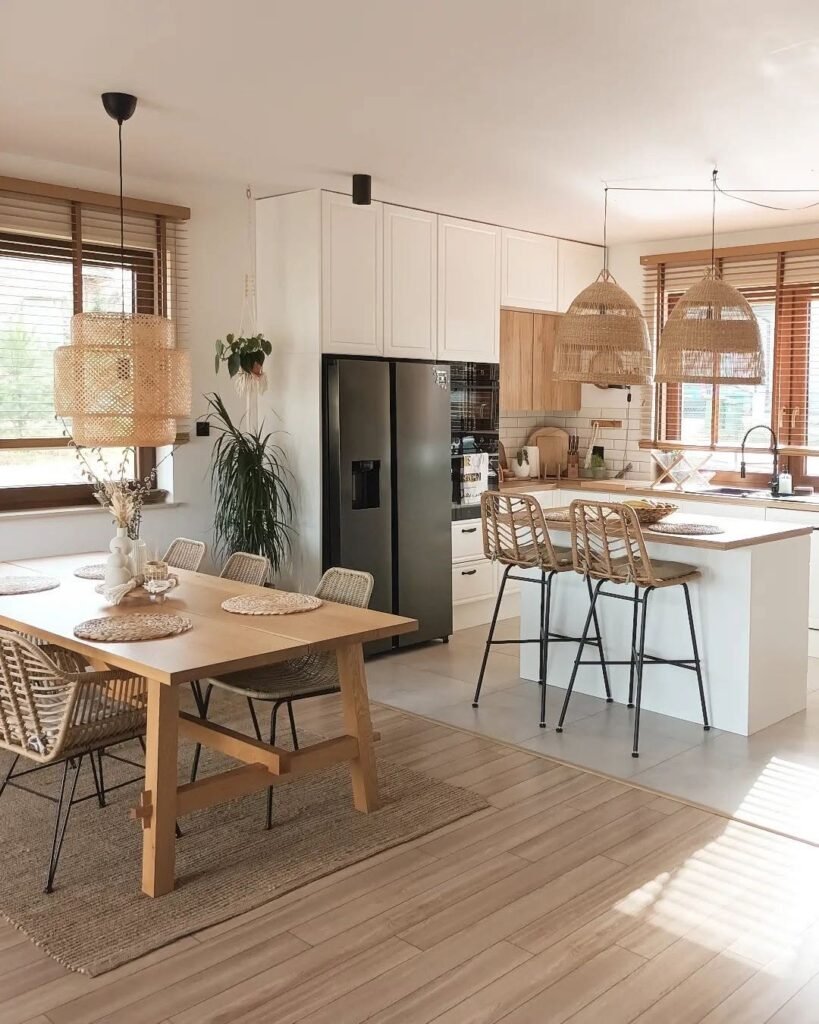
There’s a reason Scandinavian kitchens keep showing up on our feeds—and no, it’s not just the lighting (although, let’s be honest, the lighting is doing a lot). It’s that balance between clean and cozy, minimal but still very much alive. Nothing feels forced, nothing feels overdone… and somehow, everything just works.
Across these spaces, we’re seeing a consistent rhythm: soft neutral palettes, warm wood tones, and textures that quietly carry the design. It’s less about filling the room and more about editing it well. Even the most styled corners still feel usable, like someone actually cooks here—and not just for aesthetic content (shocking, we know).
What we love most is how flexible this style is. Whether it leans rustic, modern, or slightly cottage-core, the foundation stays grounded. It’s calm, it’s functional, and it doesn’t try too hard—which, ironically, is exactly why it looks so good.
Rustic Hearth Meets Scandinavian Calm
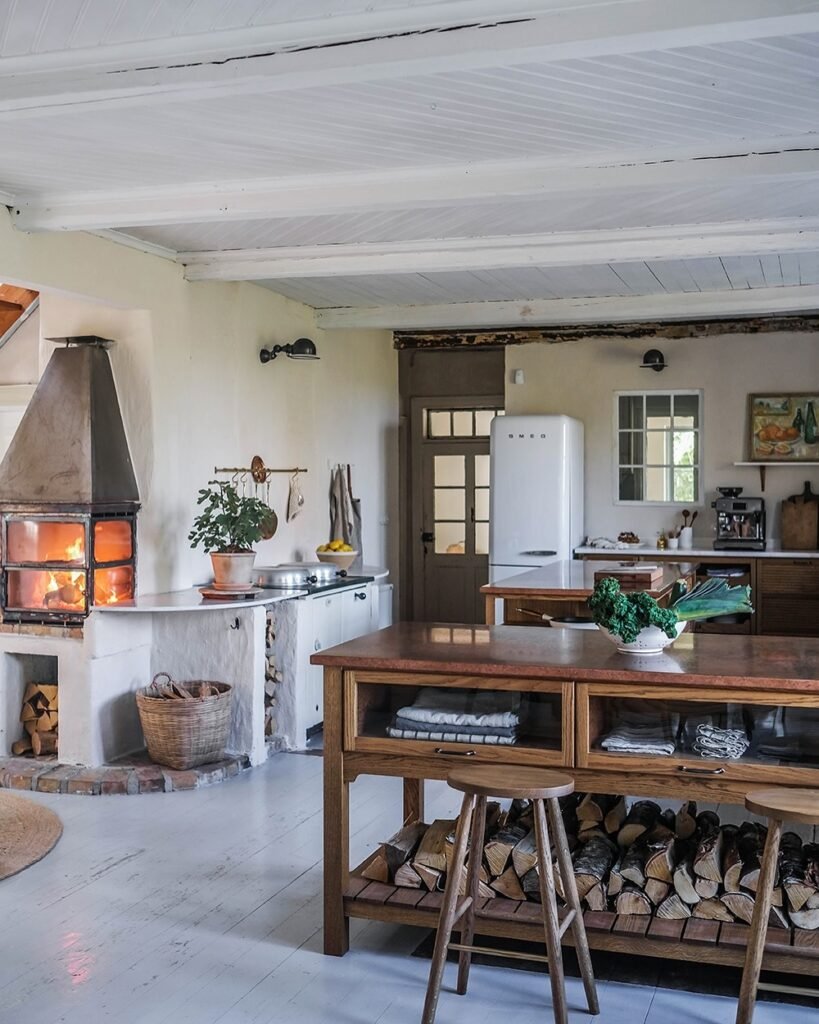
There’s something borderline unfair about pairing a rustic fireplace with Scandinavian restraint… because it just works too well. The exposed beam ceiling, soft whitewashed floors, and that slightly imperfect plaster finish create a vibe that feels both grounded and effortlessly curated. It’s giving “we bake sourdough for fun,” even if we absolutely don’t.
Design-wise, this space leans heavily on contrast through texture rather than color. The palette stays quiet—creamy whites, muted woods—but the visual interest comes from layering rough (fireplace, beams) with smooth (cabinet fronts, countertops). That balance is what keeps it from feeling too farmhouse or too minimal.
If we’re recreating this, don’t over-style it. Let one hero element—like a hearth or wood storage—do the talking. Add open shelving, a slightly aged finish, and keep decor functional. If it looks a little imperfect? Good. That’s the whole point.
Soft Minimal Kitchen With Warm Light
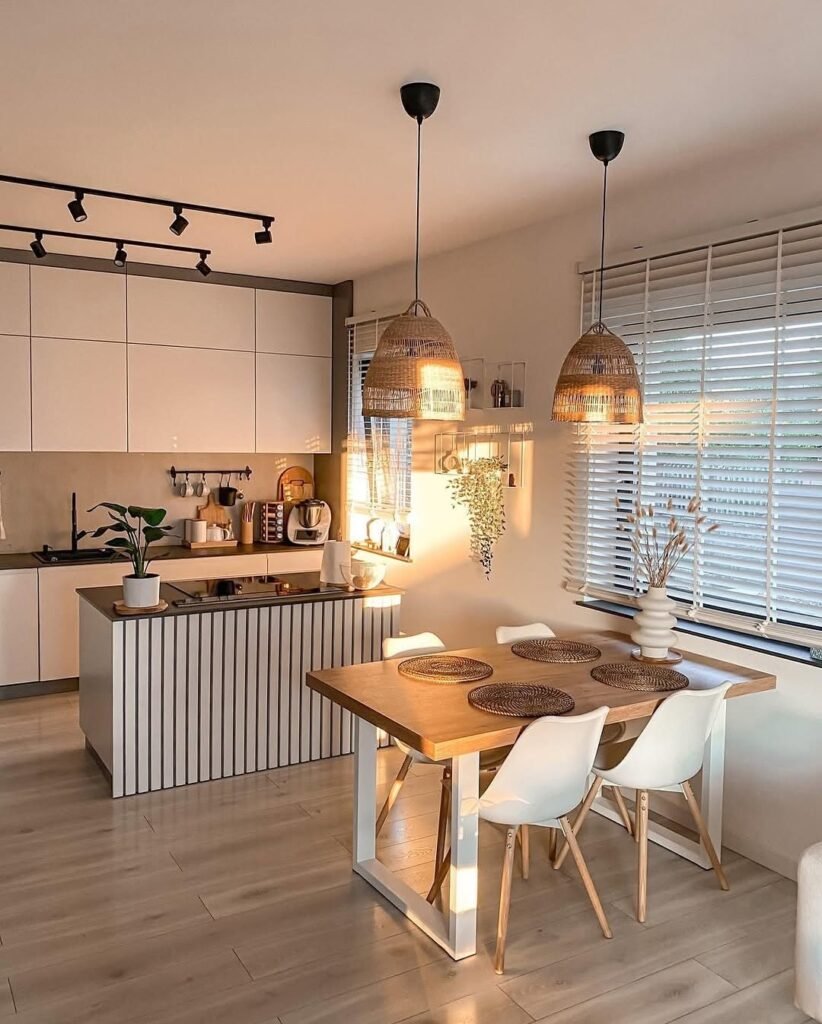
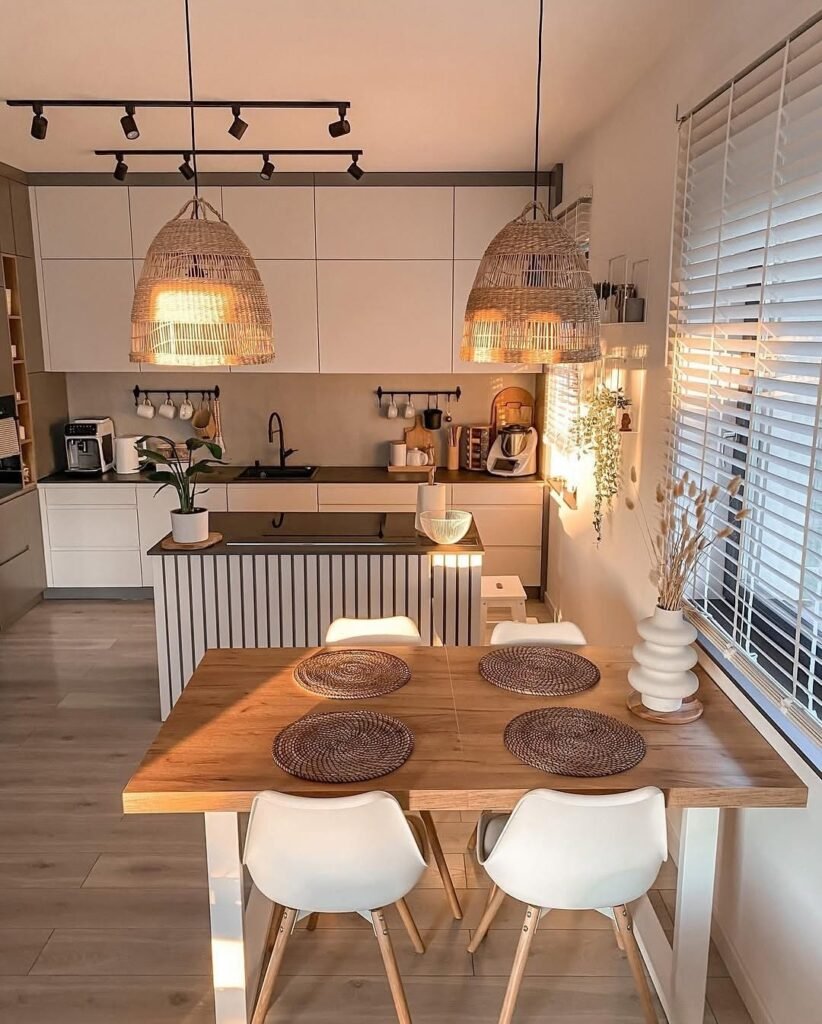
This one is basically proof that minimal doesn’t have to feel cold. The clean cabinetry and handle-less surfaces keep things sleek, but then—plot twist—the warm sunlight and woven pendants come in and soften everything like a filter we didn’t know we needed.
The secret here is contrast through temperature. You’ve got cool neutrals (white cabinets, light flooring) balanced by warm-toned accents like rattan lighting, wood dining surfaces, and golden hour lighting. It’s subtle, but it shifts the entire mood from “sterile showroom” to “we actually live here.”
To recreate this, focus on lighting before decor. Seriously. Swap harsh overheads for warm bulbs and layered sources. Then bring in texture—woven, linen, matte finishes. Keep clutter low, but not zero. A plant, a tray, a coffee setup… we’re minimal, not robots.
Clean Lines With Natural Wood Warmth
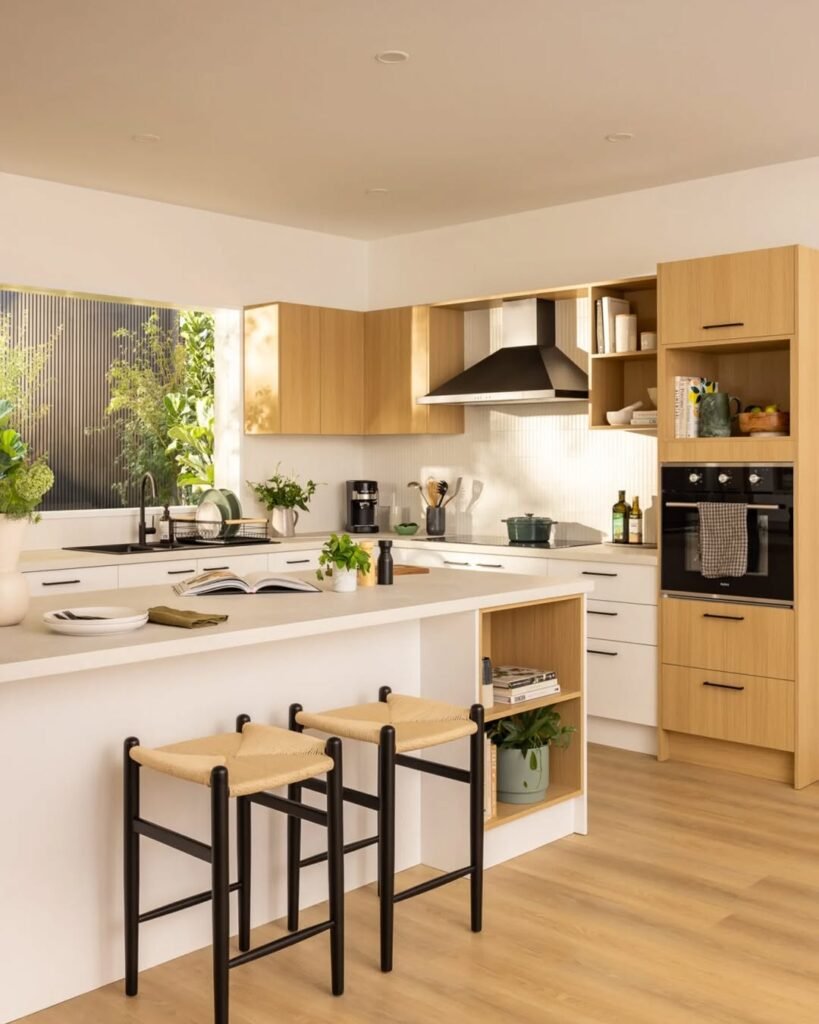
Okay, this is where Scandinavian design goes full “effortlessly put together” energy. Flat-panel cabinetry, integrated storage, and clean geometry—but then softened with warm wood tones that make it feel human again.
What’s happening here is a masterclass in balance. The structure is very modern—sharp lines, built-in appliances—but the warmth comes from consistent wood tones and organic elements like plants and soft lighting. Nothing feels random. Everything feels… intentional, but chill about it.
If we’re trying this at home, consistency is key. Pick one or two wood tones and commit. Don’t mix five different finishes unless you enjoy chaos (respectfully). Add greenery to break up the cabinetry, and keep countertops styled but not crowded. Think “edited,” not empty.
Layered Textures In Neutral Palette Kitchen
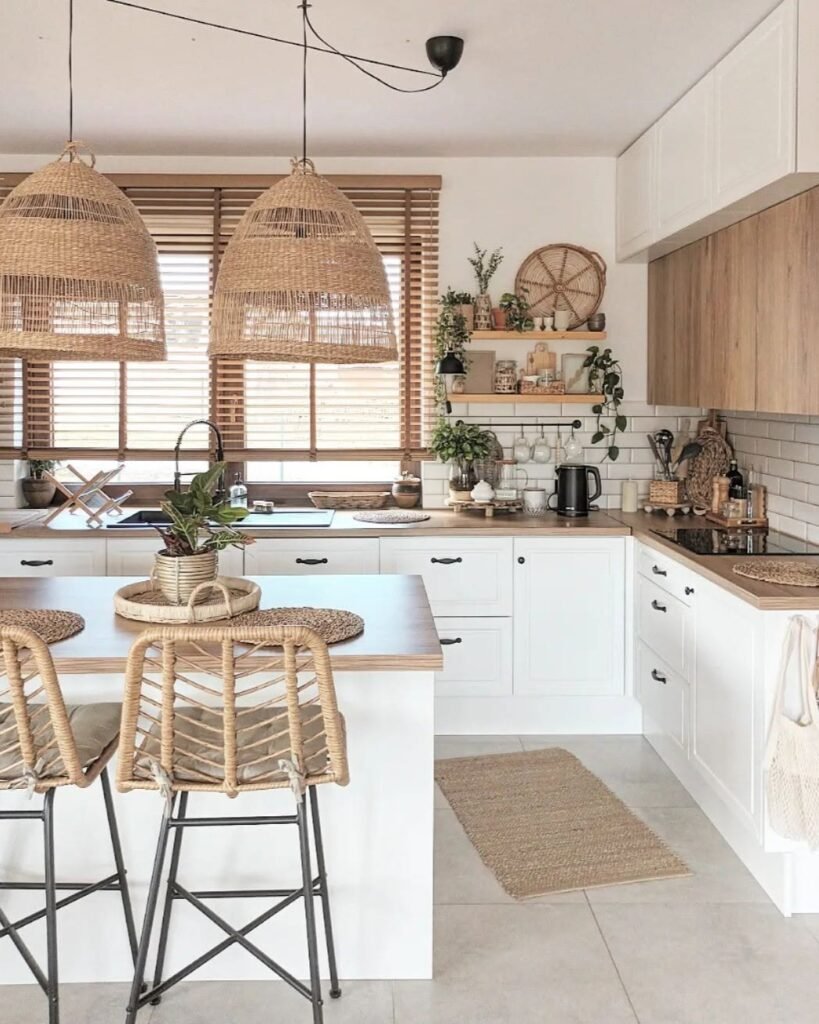
This kitchen is basically a Pinterest board that came to life, and honestly, we’re not mad about it. The white cabinetry sets the stage, but it’s the layers—woven stools, wood counters, soft textiles—that make it feel cozy instead of clinical.
The design principle doing the heavy lifting here is layering within a neutral palette. No bold colors, no dramatic contrasts—just different materials playing together: rattan, wood, ceramic, linen. It creates depth without overwhelming the eye, which is very Scandinavian-core.
To recreate this, don’t rush it. Collect pieces slowly—woven lighting, textured runners, small ceramics. And please, vary your textures. If everything is smooth, it falls flat. If everything is rough, it feels chaotic. We’re aiming for that sweet spot where it looks styled but still livable.
Cozy Cottage Details With Nordic Simplicity
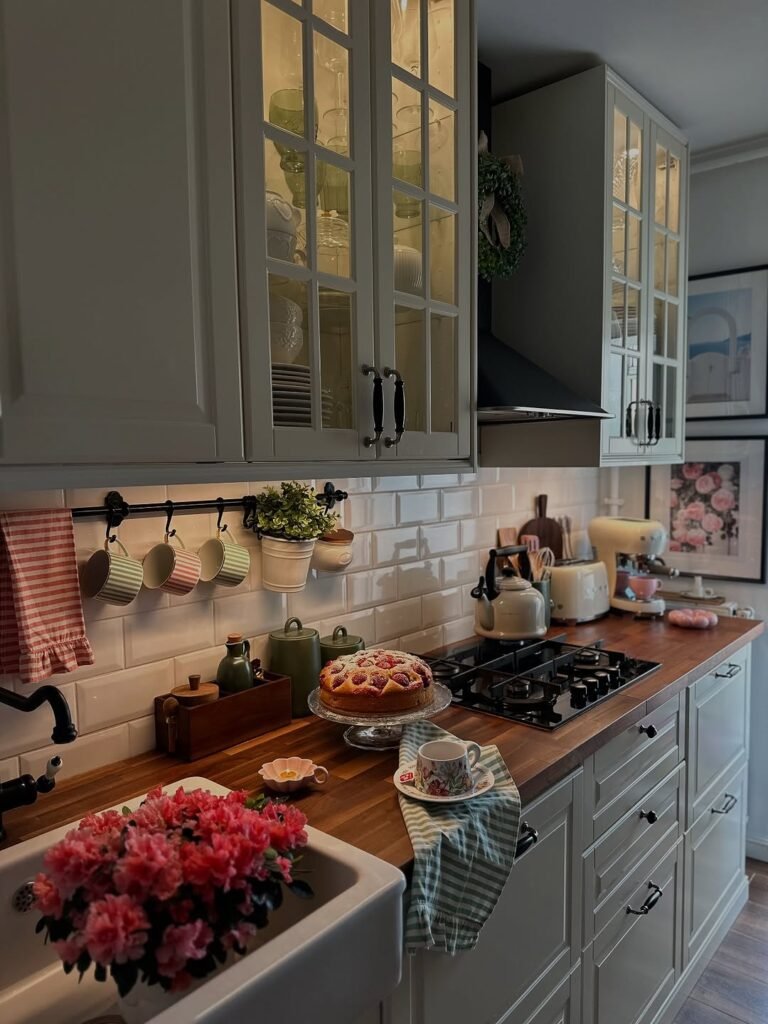
This one feels like a warm hug, but make it aesthetic. The glass-front cabinets, soft lighting, and slightly vintage touches lean into cottage charm—but the clean lines and restrained palette keep it from going full grandma (no offense to grandmas, they have taste).
What makes this work is the blend of nostalgia and simplicity. The decorative elements—mugs on hooks, soft florals, warm wood counters—add personality, while the structured cabinetry and neutral base keep everything grounded. It’s cozy, but not cluttered.
If we’re recreating this vibe, focus on small details. Swap solid cabinet doors for glass panels, add a rail for hanging mugs, and style with purpose. Keep your color palette tight—creams, soft greens, warm woods. And maybe bake a cake for the full effect. Purely for ambiance, obviously.
Smart Storage Hidden In Plain Sight
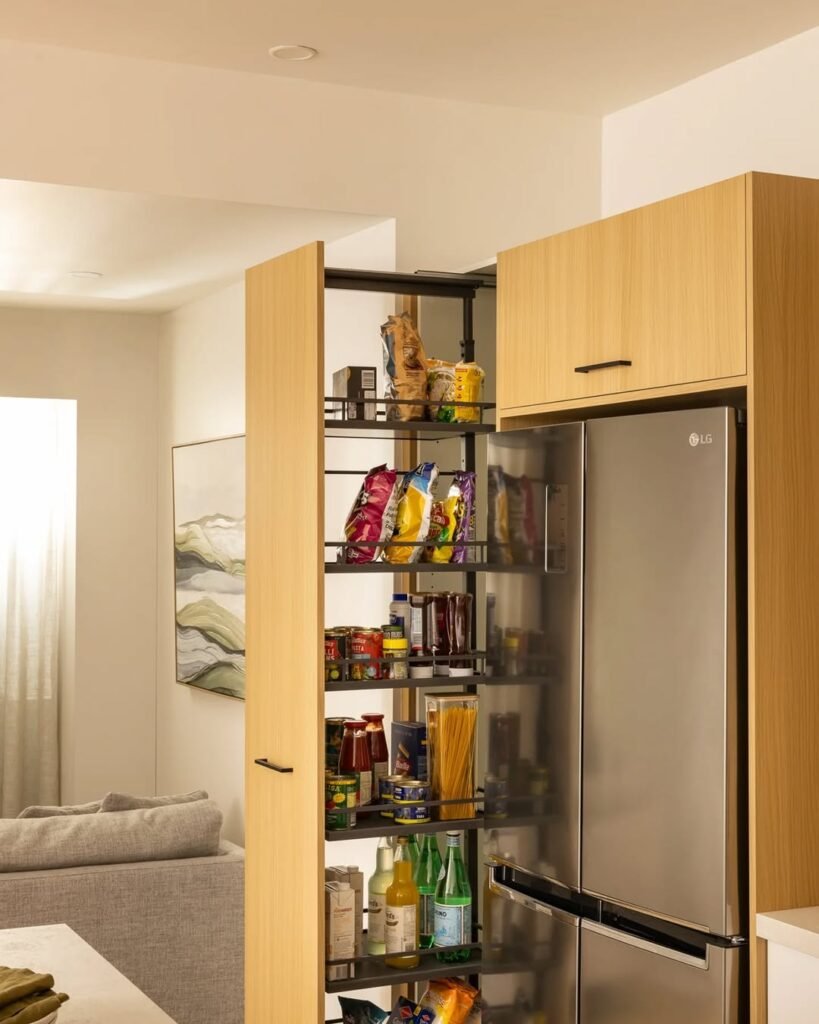
We love a kitchen that looks calm but secretly works overtime behind the scenes. This pull-out pantry situation? Low-key genius. At first glance, it blends seamlessly with the cabinetry, but then—surprise—it reveals a fully functional storage system that makes snack chaos look… organized.
The design principle here is integration. Everything is built to feel cohesive, with storage concealed within vertical lines and consistent materials, so nothing visually interrupts the flow. That’s very Scandinavian: practical, but make it aesthetic.
If we’re recreating this, prioritize function first. Think pull-outs, hidden racks, or slim pantry units if space allows. And here’s the thing—organization matters. If it’s messy, the magic is gone. Use clear containers or group items by category so when it slides open, it’s giving “effortless,” not “we tried.”
Indoor Outdoor Kitchen With Natural Flow
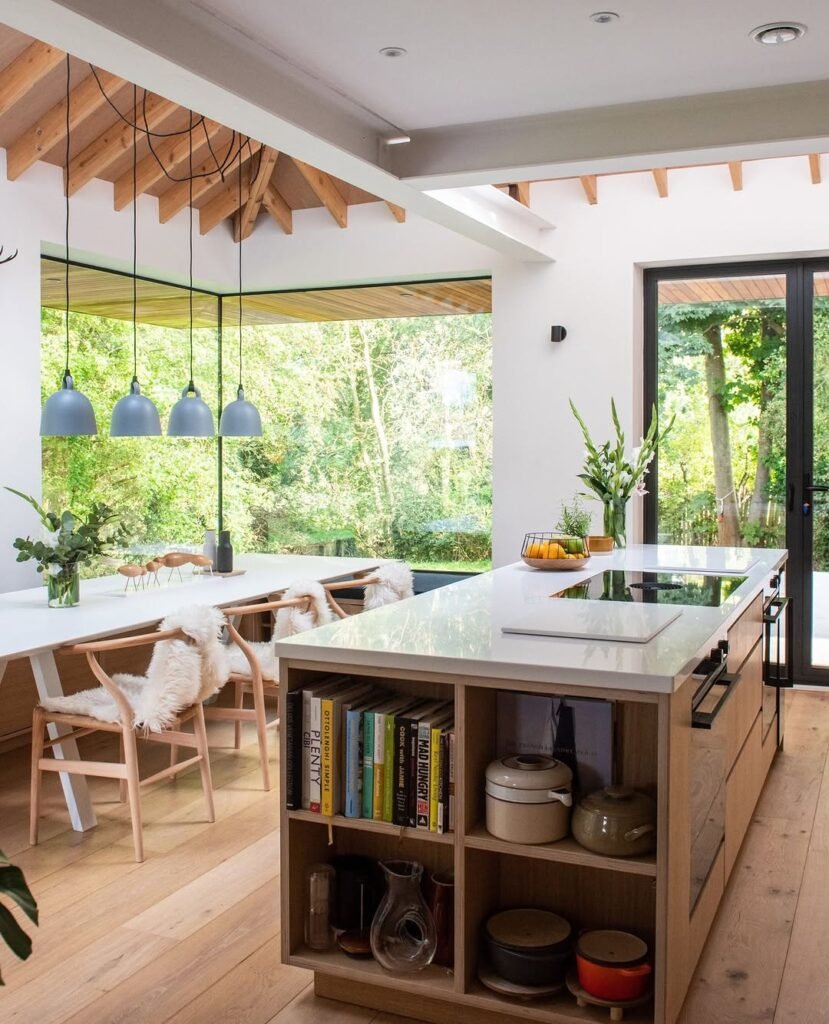
This is the kind of kitchen that makes us question our life choices a little. The massive windows, the greenery, the light—it’s basically nature flirting with your interior design, and honestly, we’re here for it.
What makes this work is the seamless transition between indoors and outdoors. The continuity of materials—light wood floors, neutral tones, and minimal visual barriers—creates flow, so your eye just keeps going. Nothing feels boxed in.
If you can’t knock down walls (same), fake the vibe. Use large windows, light curtains, or even mirrors to reflect outdoor views. Keep your palette nature-inspired—soft woods, whites, greens—and avoid heavy visual clutter. The goal is openness. If it feels like your kitchen can breathe, you did it right.
Fluted Wood Cabinets With Soft Contrast
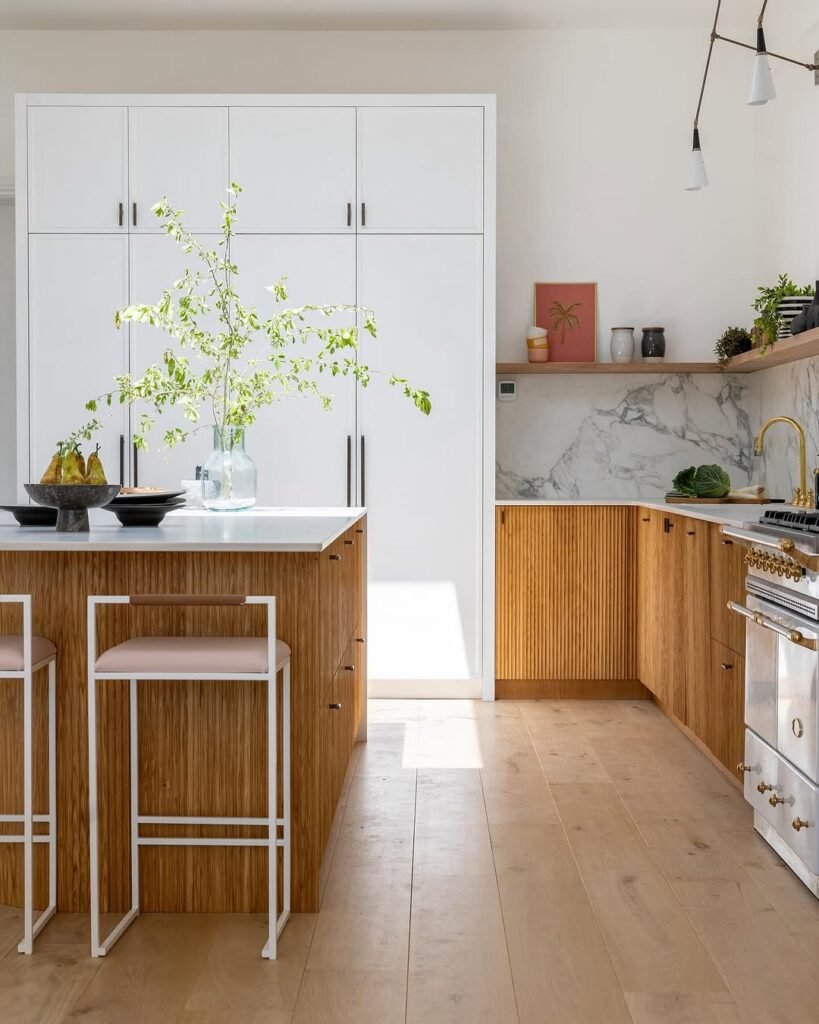
Fluted wood is having a moment, and honestly… we’re not mad about it. There’s something about those vertical grooves that instantly elevate a space without screaming for attention. It’s subtle, but she knows she’s that girl.
The magic here is texture meeting restraint. The cabinetry adds movement, while the crisp white surfaces and marble backsplash keep everything balanced and fresh. It’s a perfect push-and-pull between detail and simplicity.
If we want to recreate this, commit to one statement texture—like fluted panels—and let everything else chill. Pair it with clean countertops, minimal hardware, and soft lighting. And please don’t overdo decorative items here. The cabinets are already doing the most (in a good way). Let them have their moment.
Minimal Warm Kitchen With Architectural Details
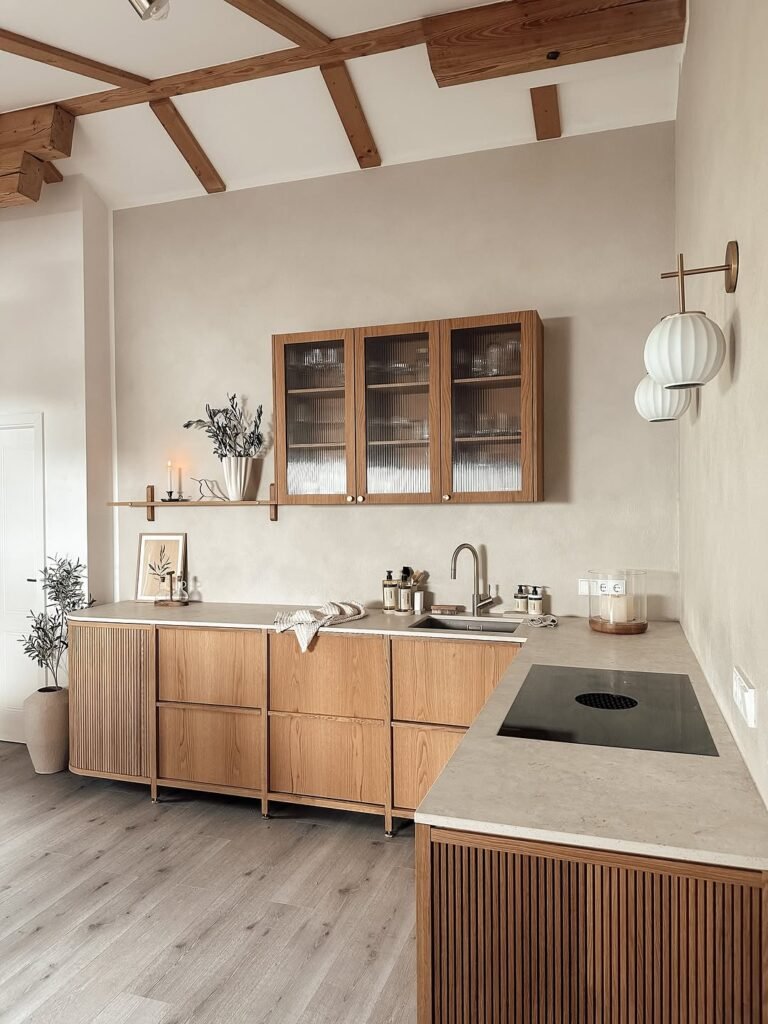
At first glance, this kitchen feels simple. But then you notice the ceiling beams, the soft curves, the glass-front cabinets… and suddenly it’s giving quiet luxury without trying too hard.
This space leans into architectural interest rather than decor overload. The structure itself—beams, cabinet framing, proportions—creates depth, so you don’t need a million accessories to make it feel complete. It’s very “we don’t chase trends, we just exist beautifully.”
If you’re recreating this, focus on the bones. Add subtle details like framed cabinet doors, glass panels, or even ceiling treatments if possible. Keep your styling minimal and intentional. One vase, one tray, done. It’s less about adding more, and more about choosing better.
Compact Scandinavian Kitchen With Soft Layers
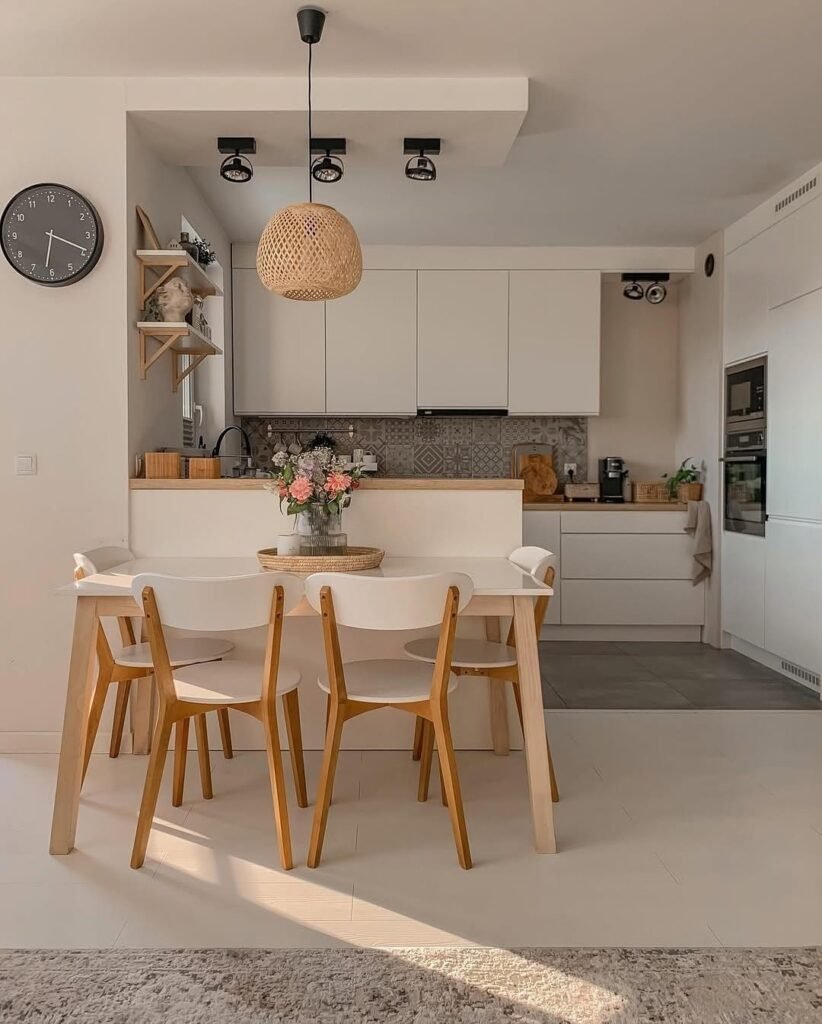
Small kitchen? No problem. This one proves you don’t need a huge space to get that clean, cozy Scandinavian vibe. It’s compact, yes—but it’s styled so thoughtfully that it feels intentional, not limited.
The key principle here is layering without clutter. You’ve got a neutral base, warm wood accents, soft lighting, and just enough decor to add personality without overcrowding. Everything has a purpose, and nothing feels random.
If we’re working with a smaller kitchen, editing is everything. Choose multi-functional pieces, keep your color palette tight, and use vertical space wisely. Add one or two cozy elements—like a woven pendant or a soft centerpiece—and call it a day. We’re going for curated, not cramped.
Designing A Kitchen That Looks Good Living Real Life
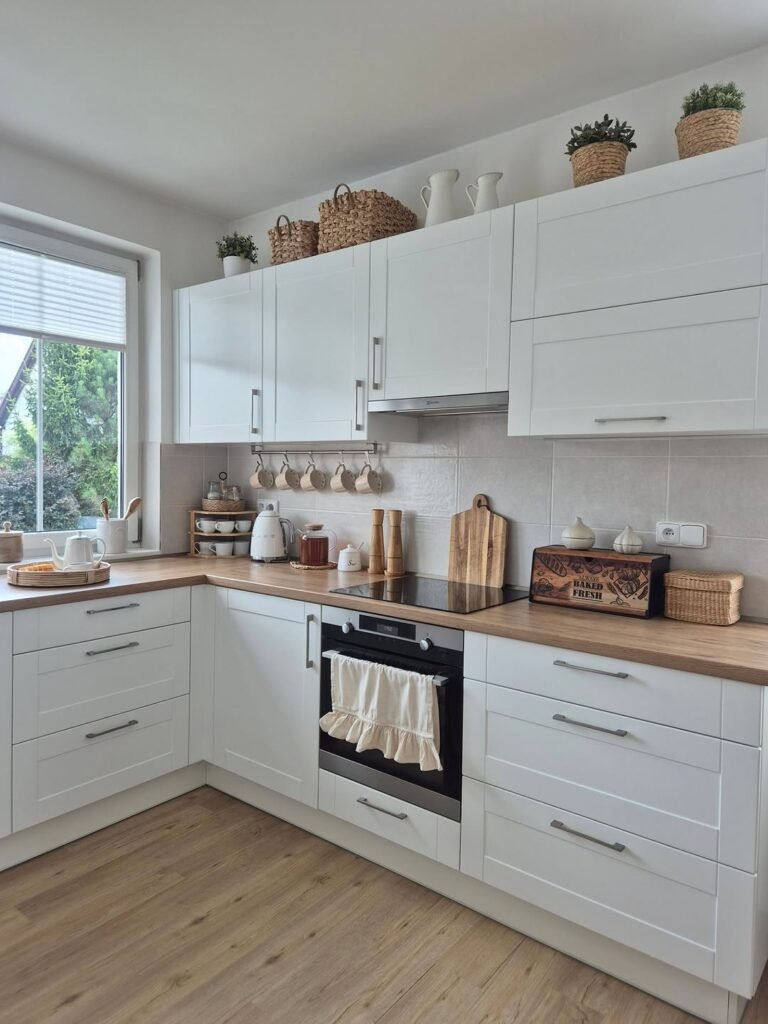
If there’s one takeaway from all these kitchens, it’s this: beauty means nothing if the space doesn’t work. Scandinavian design gets that. It’s not just about clean lines and pretty materials—it’s about how the kitchen supports your daily life without making it complicated.
We’re talking smart storage that hides the chaos, layouts that flow naturally, and materials that age gracefully. Function leads, and aesthetics follow right behind—never the other way around. That’s why these kitchens feel so effortless. They’re designed to be used, not just admired from a distance.
So when recreating this look, don’t chase perfection. Focus on balance, keep your palette intentional, and layer in textures that feel warm and real. And if it ends up looking a little lived-in? Even better. That’s the whole Scandinavian thing—calm, practical, and just a little bit undone in the best way.
 Steal Our Home Styling Secrets!