
Where Boho Style Actually Works in a Mudroom
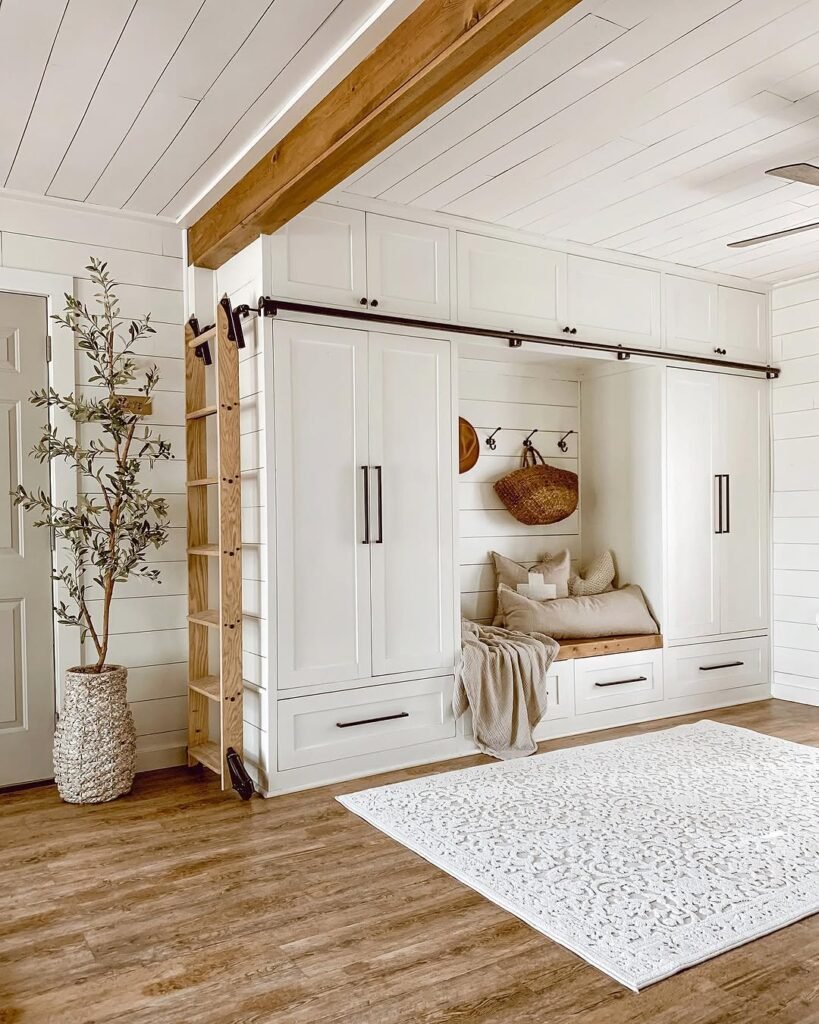
Let’s be honest—mudrooms are usually treated like the “drop everything and deal with it later” zone. Shoes get kicked off, bags pile up, and suddenly the first thing we see when we walk in is chaos. But what if this space actually worked for us… and looked good doing it?
Across these ideas, we’re seeing a shift. It’s not just about storage anymore—it’s about creating a soft, intentional transition between outside life and home life. Think warm woods, woven textures, layered textiles, and just enough structure to keep things from spiraling.
The real takeaway? We don’t need a massive space to make it happen. A bench, a few hooks, and thoughtful styling can completely change the vibe. It’s less about perfection and more about creating a space that quietly supports your daily routine—without looking like a mess.
Soft Layered Boho Corner That Feels Intentional
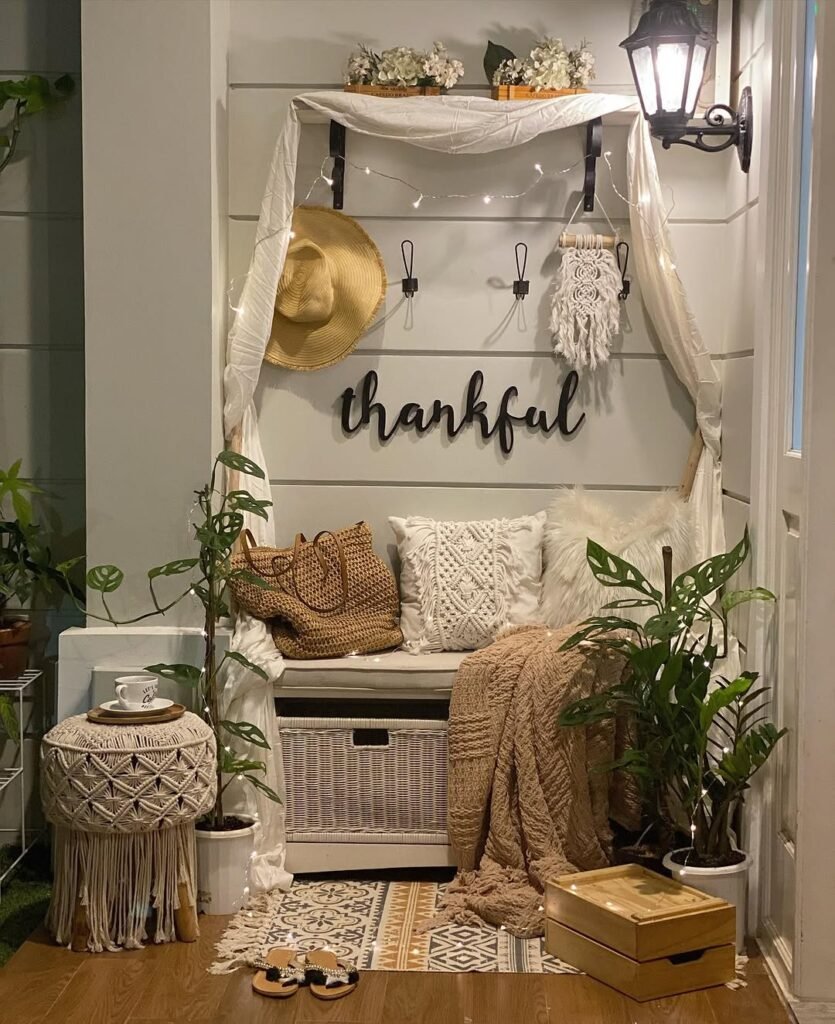
This little nook is basically the introvert dream of mudrooms. It’s quiet, cozy, and somehow still says “yes, we absolutely have our life together.” The magic here is in the vertical layering—hooks, shelf, draped fabric, then seating. Nothing is floating awkwardly; everything feels stacked with purpose. And let’s be honest, that soft draping? Slightly dramatic, but we’re into it.
From a design standpoint, this works because of controlled softness against structure. The shiplap wall keeps things grounded, while textiles (pillows, throw, macramé) soften the entire scene. The color palette stays in warm neutrals, which makes the space feel calm instead of cluttered.
If we’re recreating this, don’t overcomplicate it. Start with a simple bench, add hooks at eye level, then layer textiles like you’re styling an outfit. One statement fabric drape is enough—this is not a curtain showroom, babe. Finish with plants and warm lighting to seal the vibe.
Clean Paneling Meets Casual Boho Styling
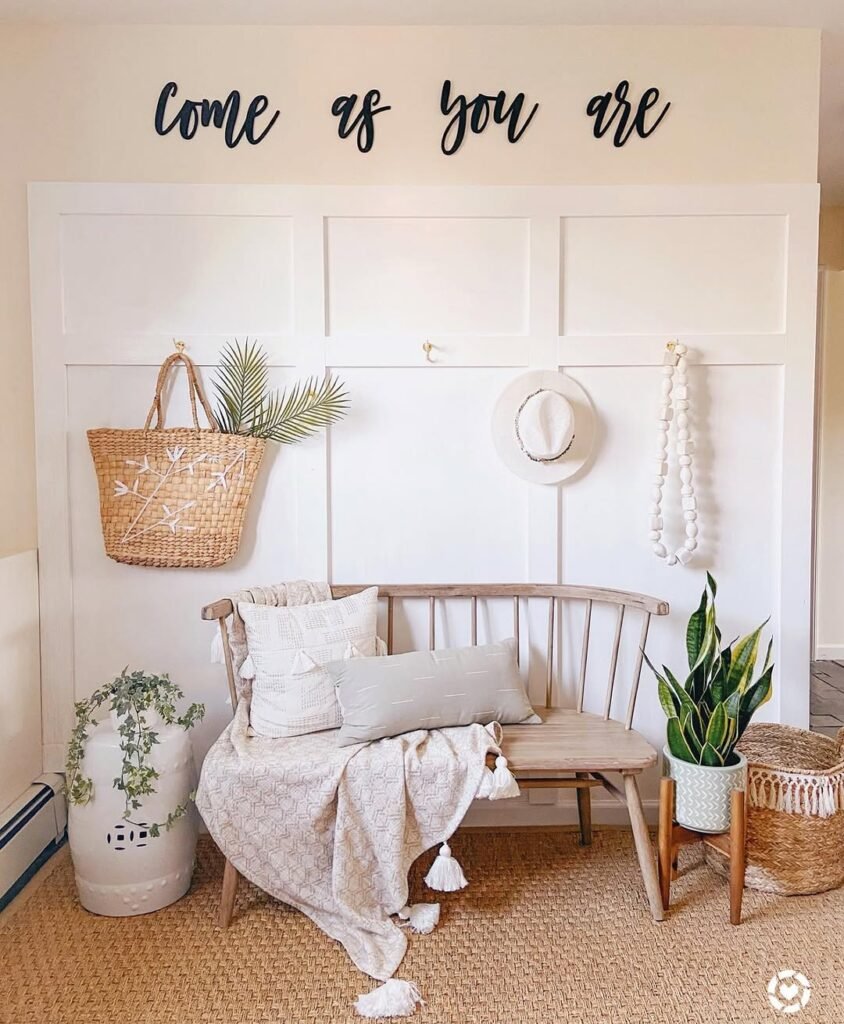
This one feels like the “I drink lemon water every morning” version of a mudroom. It’s clean, minimal, but still has personality. The wall paneling creates built-in structure, which is honestly doing most of the heavy lifting here. Then the decor just casually leans boho without trying too hard.
What makes this work is balance between symmetry and organic elements. The hooks are evenly spaced, but the styling (bag, hat, beads) feels relaxed and slightly imperfect. That contrast is key—it keeps the space from looking too staged or, worse, boring.
If you’re trying this at home, prioritize your backdrop first. Paneling, even faux, instantly elevates everything. Then keep your palette tight—creams, soft woods, maybe a hint of green. Resist the urge to overdecorate; negative space is doing a lot of quiet work here. Add one woven piece, one plant, and one textile. Done. We’re not building a museum.
Modern Mudroom With Subtle Boho Edge
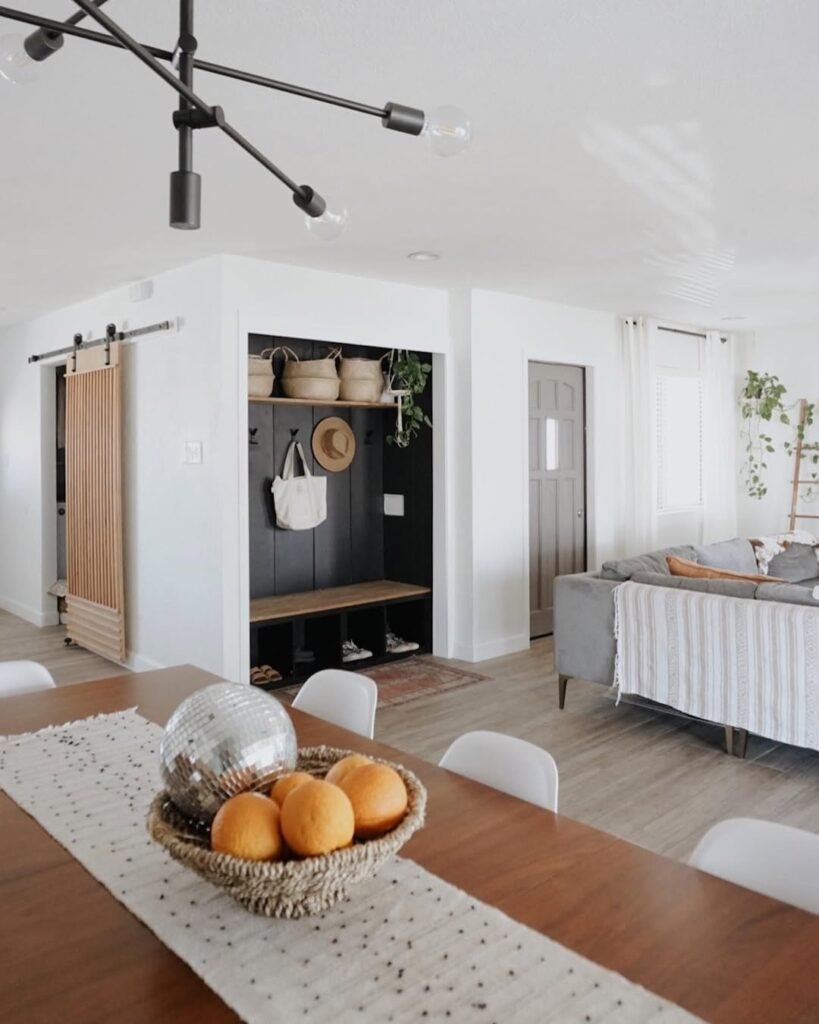
Okay, this one is for the girls who say “I like boho” but also love clean lines and a little bit of order. It’s giving modern farmhouse with a soft boho accent, and honestly… we support the duality.
The design principle here is contrast through zoning. The mudroom area is visually defined with darker paneling, which separates it from the bright open space. That contrast creates depth, while the woven baskets and hats bring in that relaxed, earthy vibe.
If we’re recreating this, think in zones. Even in a small space, you can fake a mudroom by using a darker wall or a wood panel section. Add a bench with storage underneath (because chaos is not aesthetic), then layer in a few boho elements. Keep it edited—this look thrives on restraint, not maximalism. And yes, those baskets? Functional and cute. We love a multitasking queen.
Vintage Bench Moment With Earthy Layers
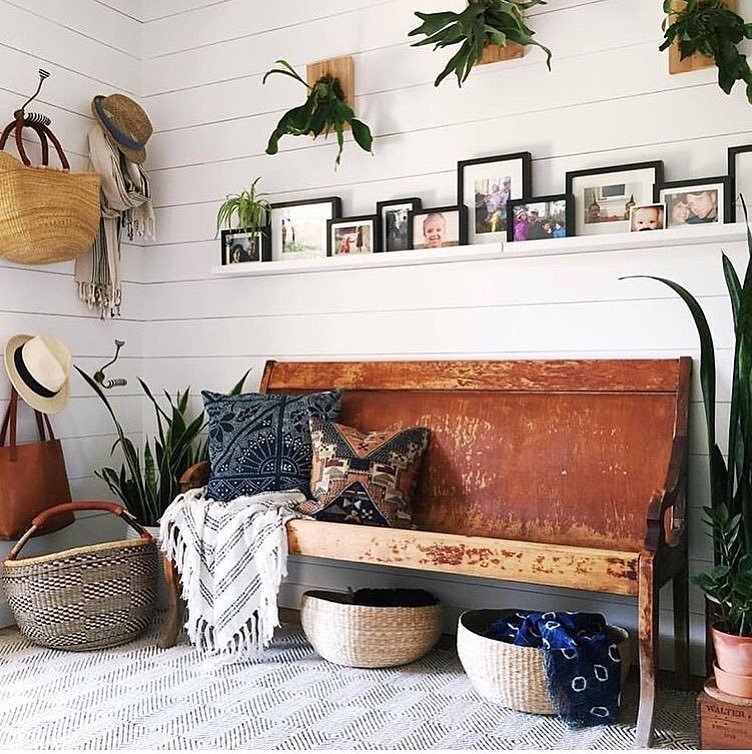
This setup feels like it belongs in a Pinterest board titled “slow mornings and good coffee,” and honestly, we’re not mad about it. The vintage bench is the star here, and everything else just supports her quietly.
The key principle is anchoring with a strong focal piece. That bench has weight, texture, and history (or at least looks like it does), which grounds the entire space. Then you layer softer elements—pillows, throws, plants—to balance it out.
If you want to recreate this, start with one statement piece. It could be a bench, a console, or even a chunky stool. Then build around it with lighter textures. Mix old and new intentionally—too much vintage and it starts looking like a thrift store aisle. Add greenery for life, and keep your color palette earthy with a few darker accents to avoid everything blending into beige oblivion.
Structured Storage With Elevated Boho Touches
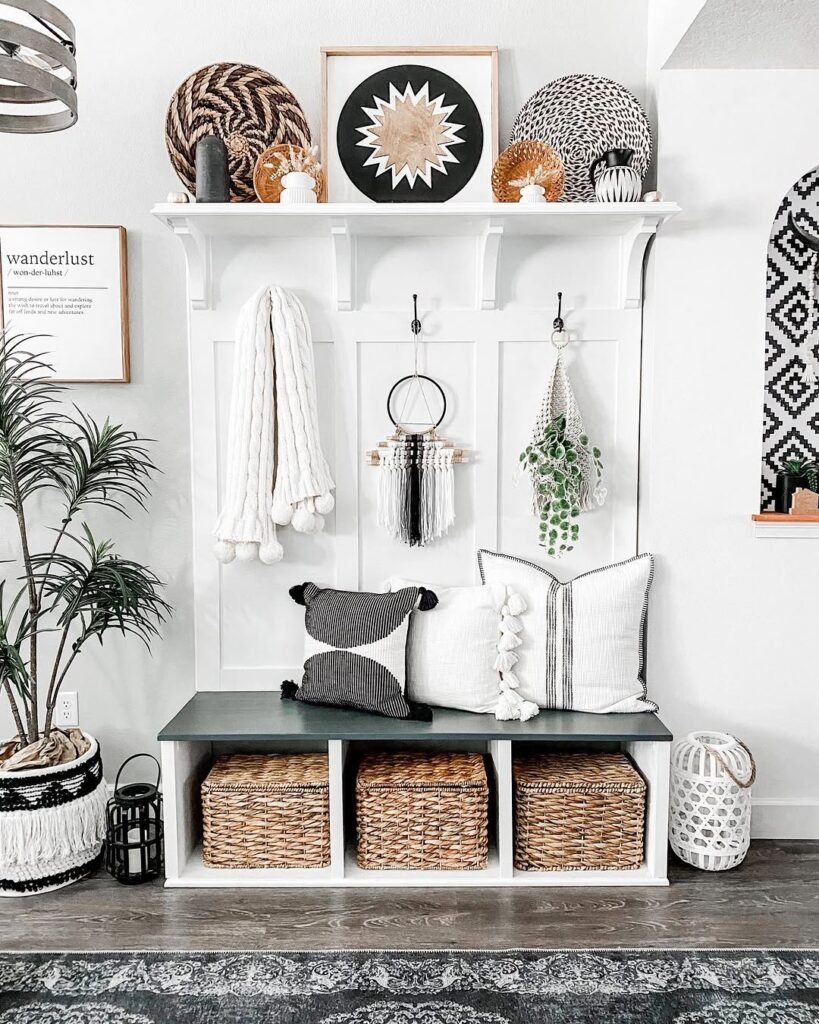
This one is for anyone who wants their mudroom to look good and function like a well-oiled machine. Because yes, we can have both. The cubby storage keeps everything organized, while the styling keeps it from feeling… aggressively practical.
The design works because of clear structure paired with textural layering. The grid of the cubbies creates order, while the woven baskets, textiles, and wall decor soften that rigidity. It’s basically Type A meets boho energy, and they surprisingly get along.
To recreate this, focus on storage first. A cubby bench or modular unit is ideal. Then layer in texture—woven baskets, fringe pillows, maybe a small hanging plant. Consistency in materials is key; stick to 2–3 textures max so it doesn’t feel chaotic. And please, label or assign each cubby. Not for aesthetics—for sanity.
Family-Friendly Mudroom That Still Looks Chic
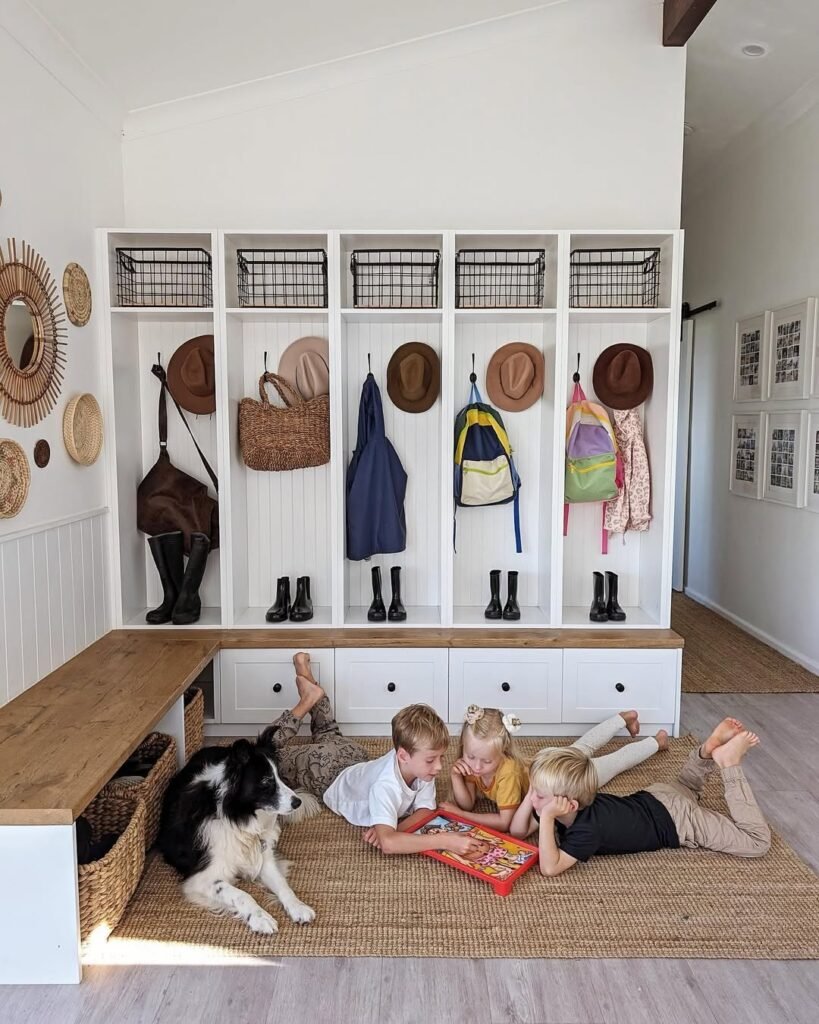
This is the mudroom equivalent of “we have kids, but we’re still stylish, thank you.” It’s functional, yes—but also weirdly satisfying to look at. The cubby system creates instant order, and the repetition of hats, baskets, and hooks? Chef’s kiss. It’s giving organized chaos, but make it aesthetic.
The design principle doing the heavy lifting here is rhythm through repetition. Each section mirrors the next, which makes the space feel calm even when real life (aka backpacks and muddy boots) hits. The warm wood bench breaks up the white, adding contrast so everything doesn’t feel too sterile.
If we’re recreating this, think in zones per person. One cubby = one human. No sharing, no drama. Add baskets up top for hidden storage and hooks at kid-friendly heights. Consistency is what makes this look expensive, not the materials. And yes, label things if needed—we’re not above a little passive-aggressive organization.
Cozy Cottage Boho With Soft Warm Layers
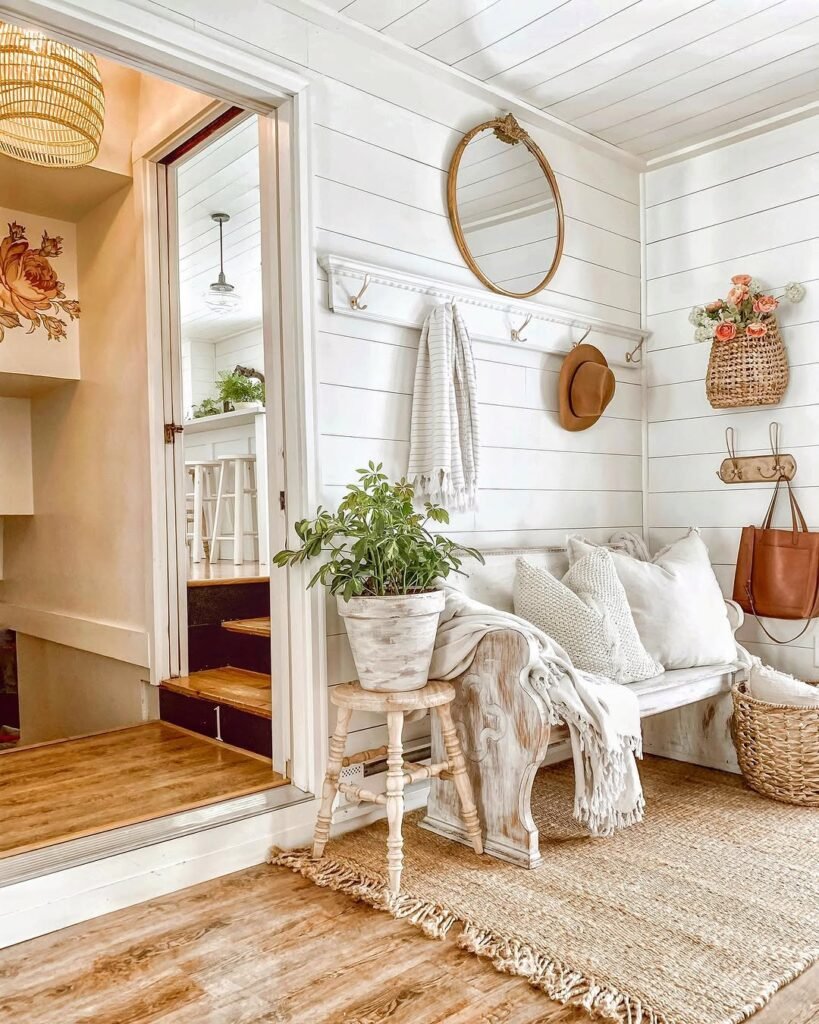
This one feels like a hug. Like, physically. The kind of space where you sit down “just for a second” and suddenly you’re scrolling your phone for 20 minutes. It leans more cottage than traditional boho, but honestly, the overlap is kind of the point.
What makes this work is layered softness with subtle structure. The shiplap walls create a clean backdrop, while the bench, pillows, and woven rug add warmth. Nothing is sharp or harsh—everything feels slightly worn, slightly imperfect, in the best way.
To recreate this, focus on comfort first. Choose a bench that looks like it has stories (or fake it with distressing, we won’t judge). Add textiles in similar tones—creams, beiges, soft whites. Keep contrast low but texture high, that’s the secret sauce here. And don’t skip the plant moment—it adds life, literally and visually.
Functional Hooks Styled Like Aesthetic Display
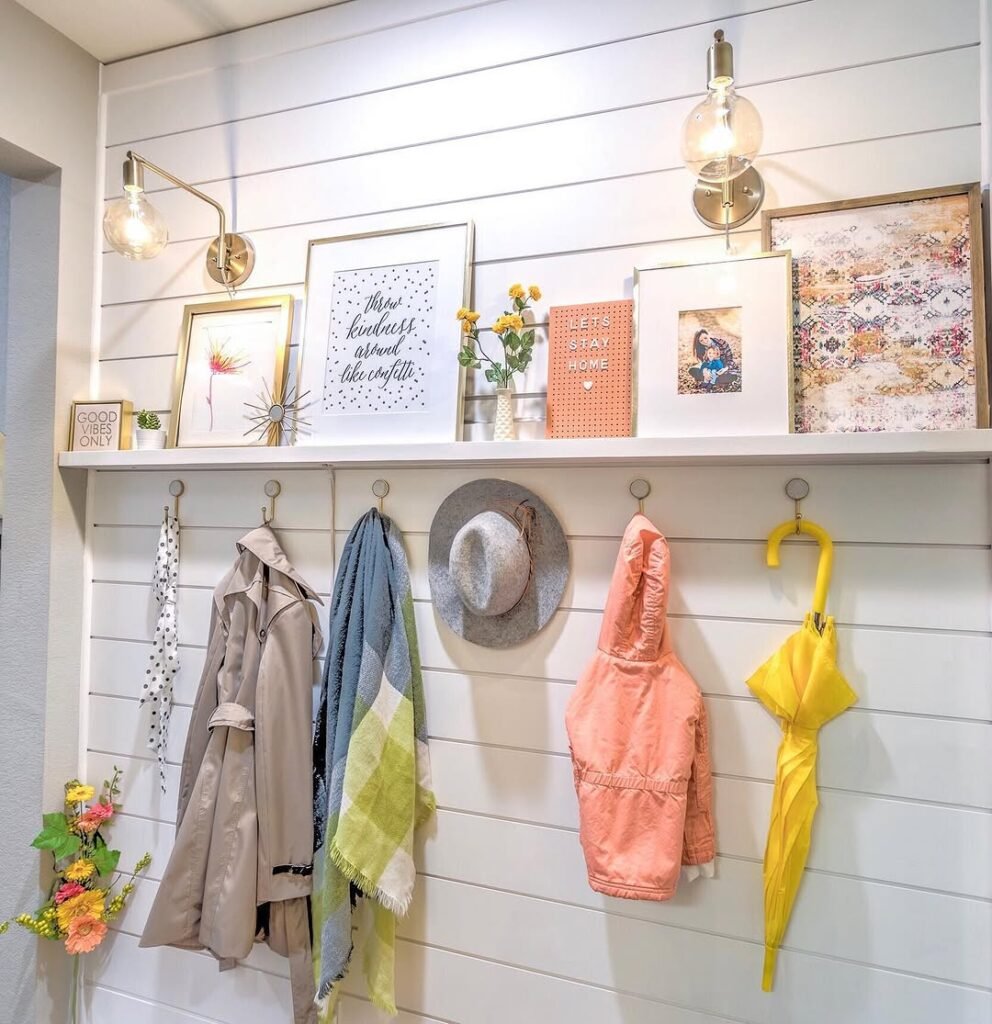
Okay, this is proof that practical spaces don’t have to look… practical. It’s literally just hooks and a shelf, yet somehow it feels curated. The styling is casual but intentional, like “oh this? I just threw it together,” but we know better.
The key principle here is elevating utility through styling. The hooks are evenly spaced (structure), while the items hanging feel varied (movement). Then the shelf above adds a visual layer, pulling the eye upward and making the wall feel complete.
If you want to copy this, start with evenly spaced hooks—seriously, measure it. Then mix what you hang: coats, a hat, maybe a bag. Add a shelf above for art or small decor. Think of it like styling an outfit—too matchy is boring, too random is chaos. And please, one statement umbrella is enough. We’re not running a lost-and-found.
Mudroom That Doubles As Command Center
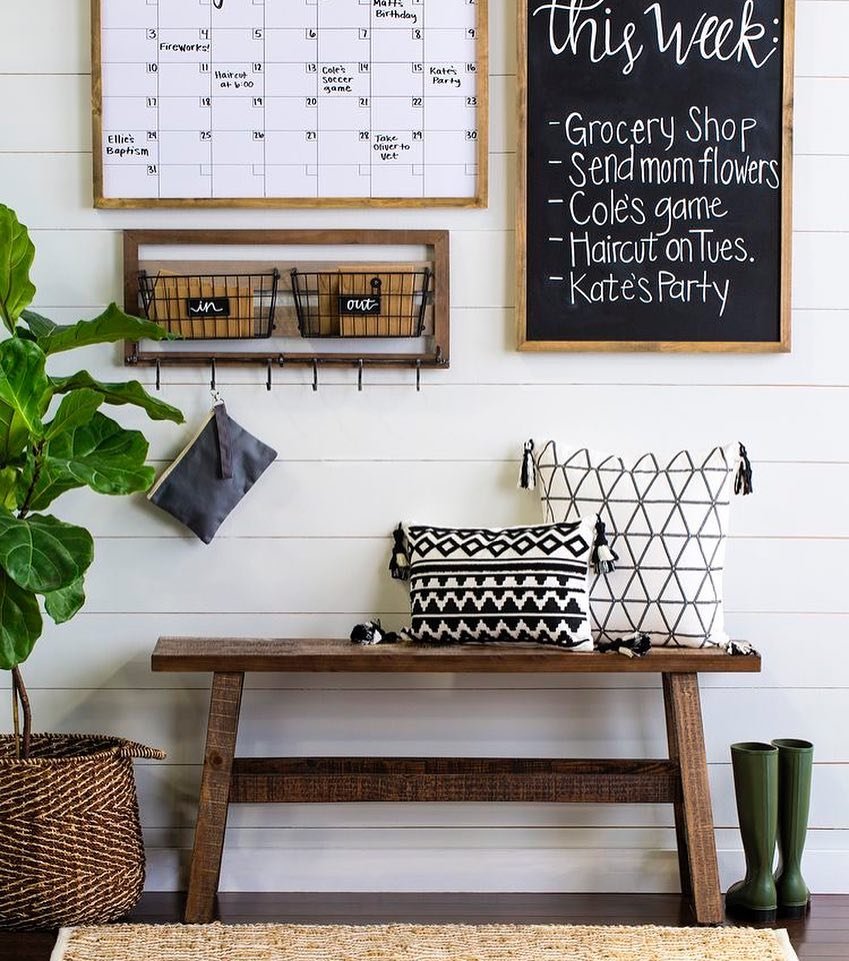
This one said “organization, but make it cute.” And honestly? We needed that. It’s not just a mudroom—it’s where life gets managed. Calendars, notes, keys… everything has a place, and somehow it still looks good.
The design works because of functional layering with visual hierarchy. The bench anchors the space, the wall organizers sit at eye level, and the decor softens everything. Even the black-and-white pillows add contrast so it doesn’t feel too beige-on-beige.
If we’re recreating this, start with what you actually need. Calendar? Mail sorter? Key hooks? Build around your habits, not Pinterest fantasies. Then soften it with textiles and a plant. The goal is balance—half “I have my life together,” half “I’m still fun, relax.” And yes, update the chalkboard weekly… or at least pretend to.
Minimal Boho Bench With Graphic Contrast
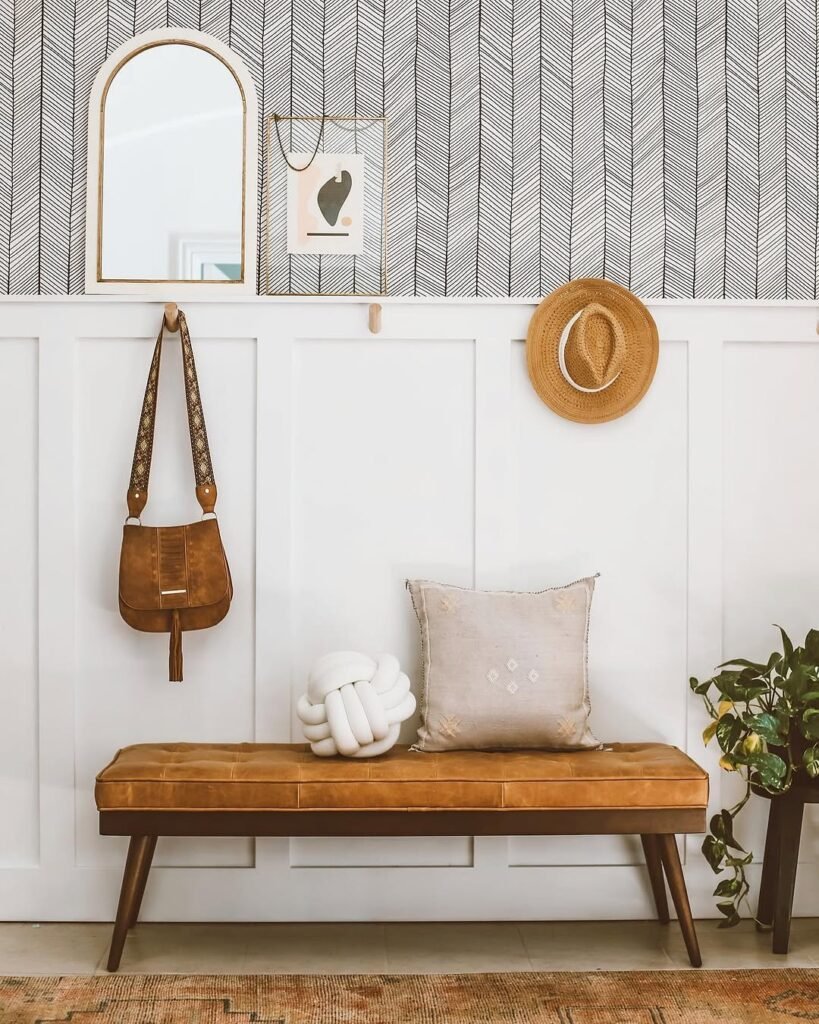
This one is for the girls who love boho but also crave a little structure and edge. It’s clean, it’s minimal, but it’s not boring. The graphic wallpaper moment? Subtle flex.
The design principle here is contrast between soft forms and structured lines. The bench is sleek and tailored, while the pillow and decor add softness. Then the wallpaper introduces pattern without overwhelming the space, which is honestly harder than it looks.
If you want this vibe, keep your base simple—neutral wall paneling, streamlined bench. Then add one bold element, like patterned wallpaper or a statement mirror. Less really is more here, but only if what you choose actually hits. Finish with one or two decor pieces max. We’re editing, not hoarding.
Where Function Meets Style Without Trying Too Hard
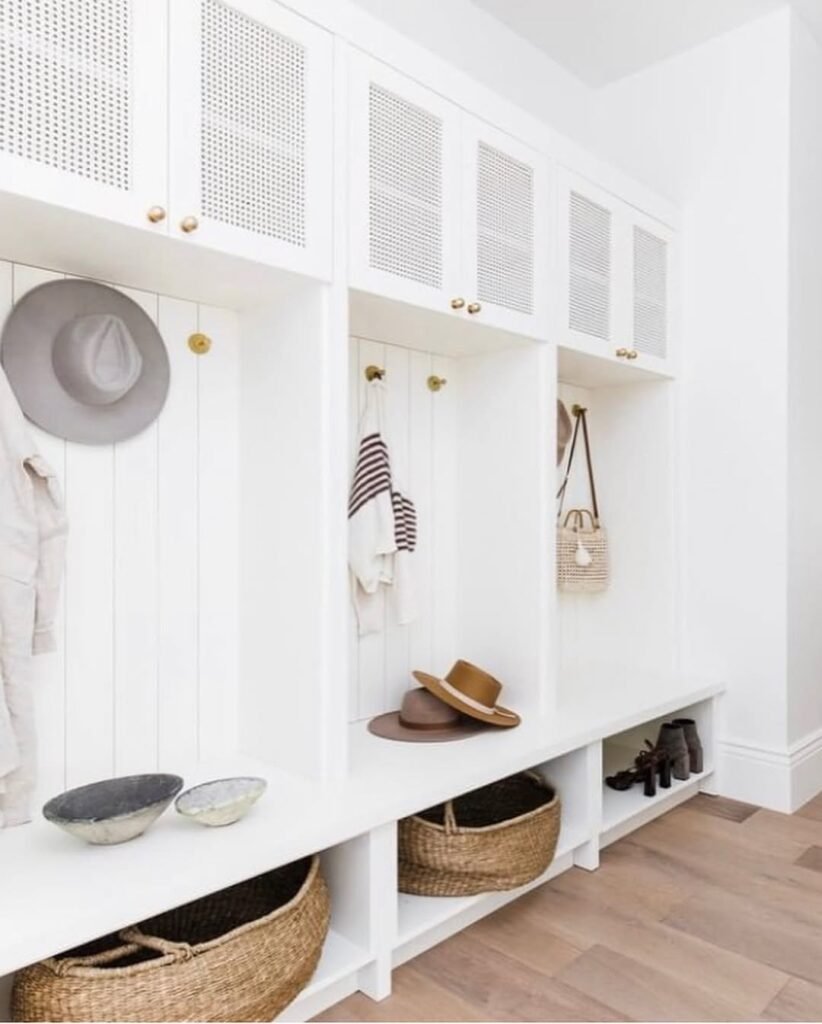
After looking at all these spaces, one thing is clear: the best mudrooms don’t scream for attention—they just work. Effortlessly. They hold the chaos, soften the edges of daily life, and somehow still look like they belong on Pinterest. Slightly unfair, but also inspiring.
What ties everything together is that sweet spot between structure and ease. Clean lines, defined zones, and smart storage meet relaxed styling, natural textures, and a little personality. It’s that balance that makes a mudroom feel lived-in, not staged.
So when we’re designing our own, the goal isn’t to copy everything perfectly. It’s to take the principles—layering, contrast, zoning—and make them ours. And maybe, just maybe, we’ll finally stop throwing our bags on the nearest chair. No promises though.
 Steal Our Home Styling Secrets!