
How to Build a Modern Farmhouse Exterior With Architectural Integrity
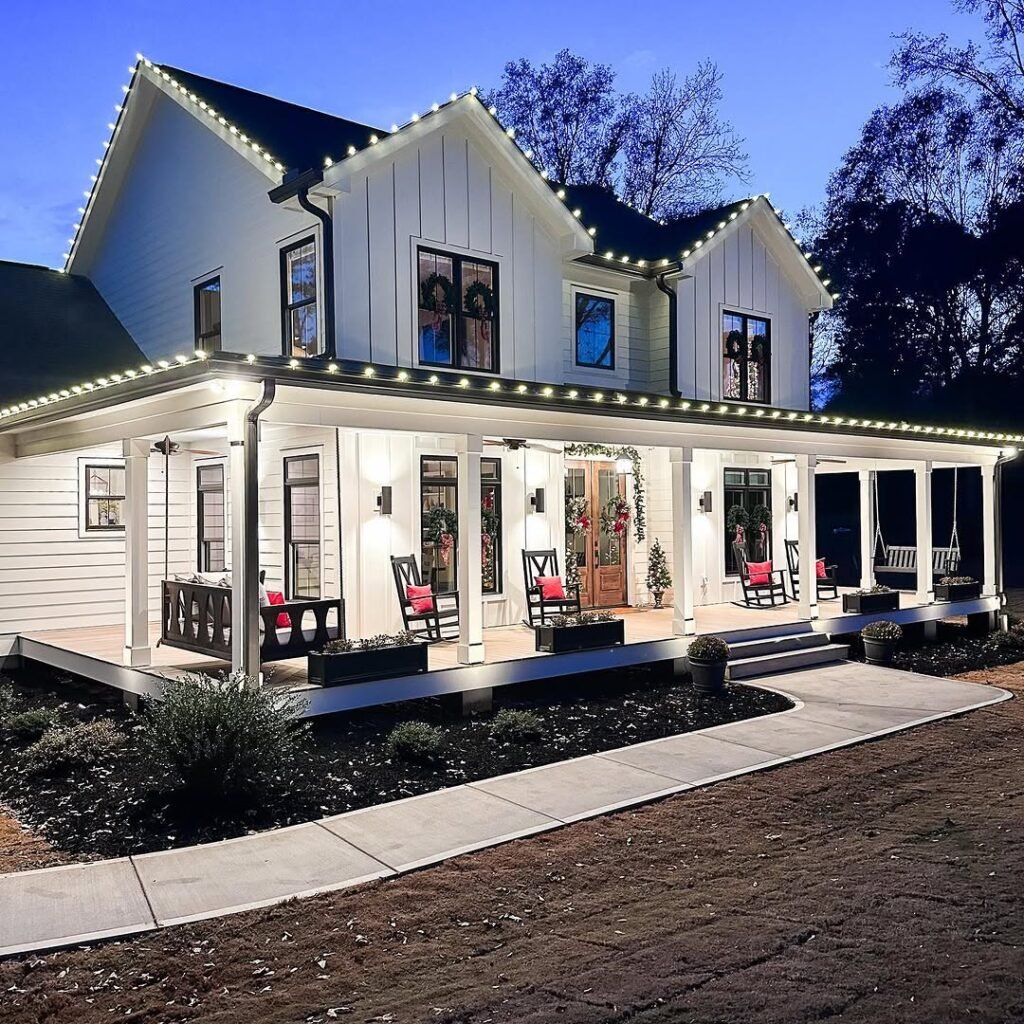
Modern farmhouse exteriors are everywhere, but not all of them hit the same. Some feel elevated and timeless, while others… feel like a Pinterest board from 2017 that never logged out. What makes the difference isn’t just white siding or black windows. It’s proportion, material balance, and knowing when to stop. Yes, restraint is a design skill.
Across these homes, we see recurring themes: controlled color palettes, strong rooflines, layered textures like stone and brick, and warm wood accents that soften the crispness. The magic isn’t in piling on rustic details. It’s in balancing contrast, scale, and repetition so the exterior feels cohesive, not chaotic.
Whether it’s a moody charcoal facade or a symmetrical white farmhouse with a deep porch, the goal stays the same: create presence without noise. We’re not decorating a gingerbread house. We’re designing architecture with intention.
Moody Charcoal With Warm Timber
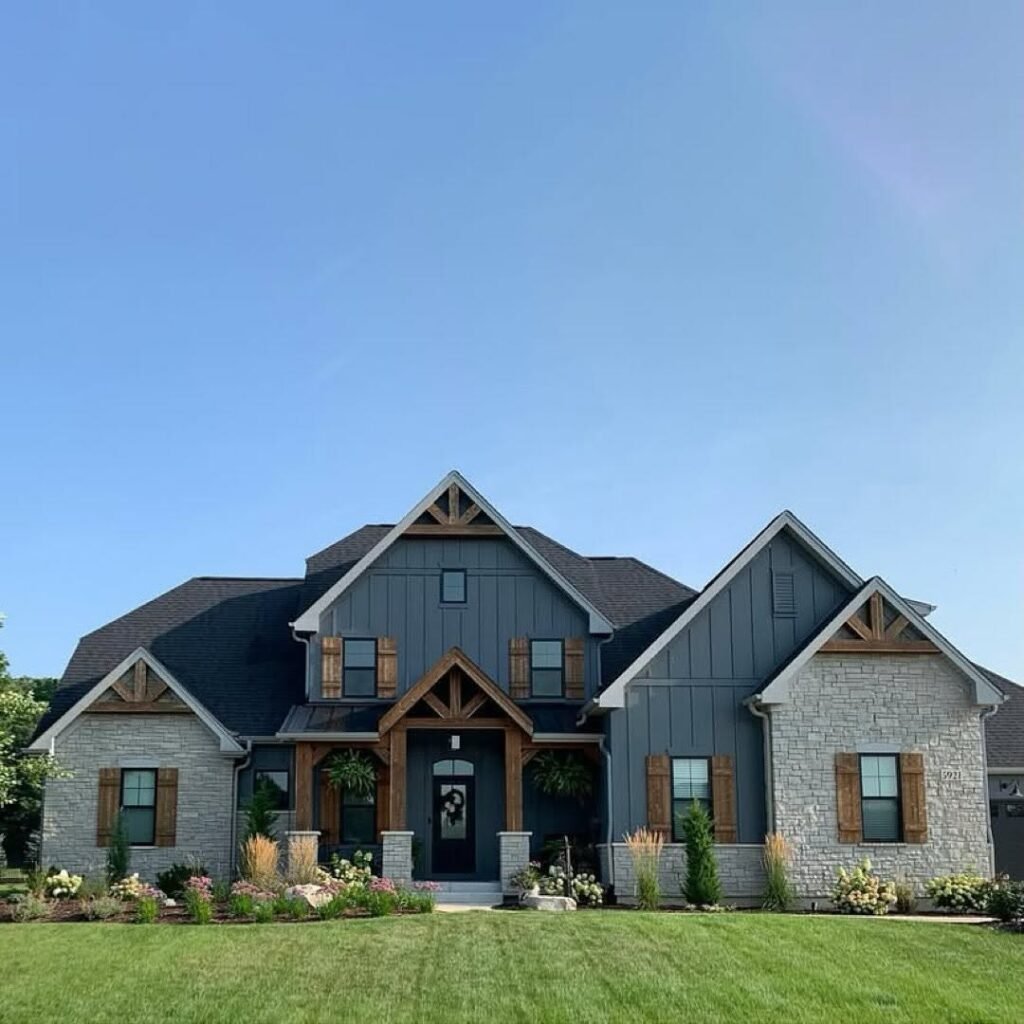
We’re starting strong with that deep charcoal facade paired with creamy stone and honey-toned timber trusses. It’s giving “farmhouse grew up and got a skincare routine.” The dark board and batten instantly grounds the house, while the stone wings soften the weight so it doesn’t feel like a suburban fortress. That contrast? Chef’s kiss. It’s all about balance between heavy and warm, matte and textured.
Design-wise, this works because the palette is controlled. Charcoal, warm wood, light stone. That’s it. No chaotic color story. The wood brackets and shutters repeat the same tone, creating rhythm across the elevation. Repetition is what makes this look intentional, not accidental.
If we’re recreating this, commit to one dominant dark tone and one warm accent. Don’t randomly mix three wood stains. Keep landscaping soft and layered with grasses and low florals so the facade stays the main character. Moody, but make it welcoming.
Classic Gray With Wraparound Porch
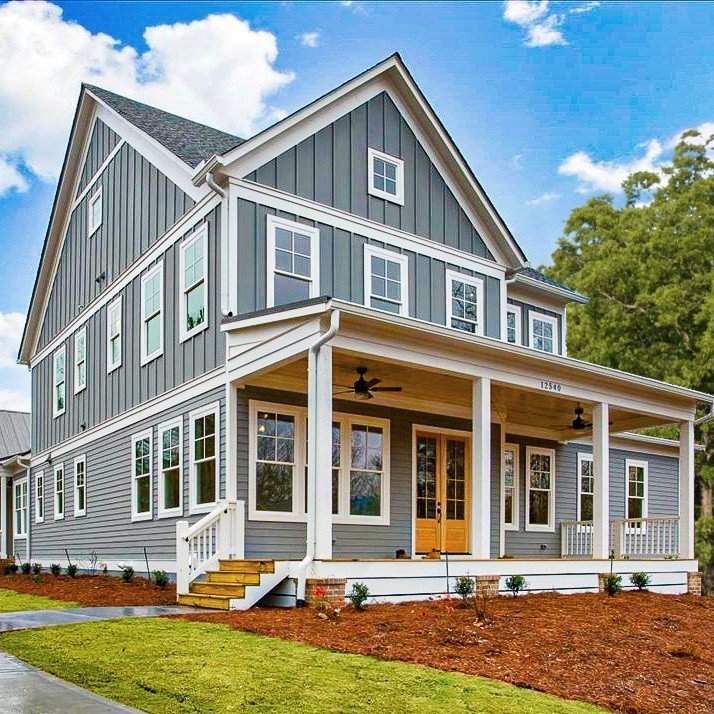
Okay but this one? Soft gray siding, crisp white trim, warm wood doors, and that wraparound porch that basically whispers “sweet tea at 5.” It’s lighter, friendlier, and feels a little more coastal-farmhouse hybrid. We love a house that doesn’t try too hard.
The principle here is horizontal layering. Lap siding, white trim bands, porch railings, and stair lines all stack visually in a calm way. The porch roof lowers the scale, making a two-story home feel approachable. Human scale is the secret sauce here. It’s why it feels inviting instead of intimidating.
If you want this vibe, focus on proportion first. Keep your trim crisp and consistent. Add warm wood in one or two strategic spots—like double doors or porch steps—so it doesn’t drift into builder-basic territory. Bonus points for matte black ceiling fans on the porch. Subtle drama, zero chaos.
Symmetrical White Farmhouse Serenity
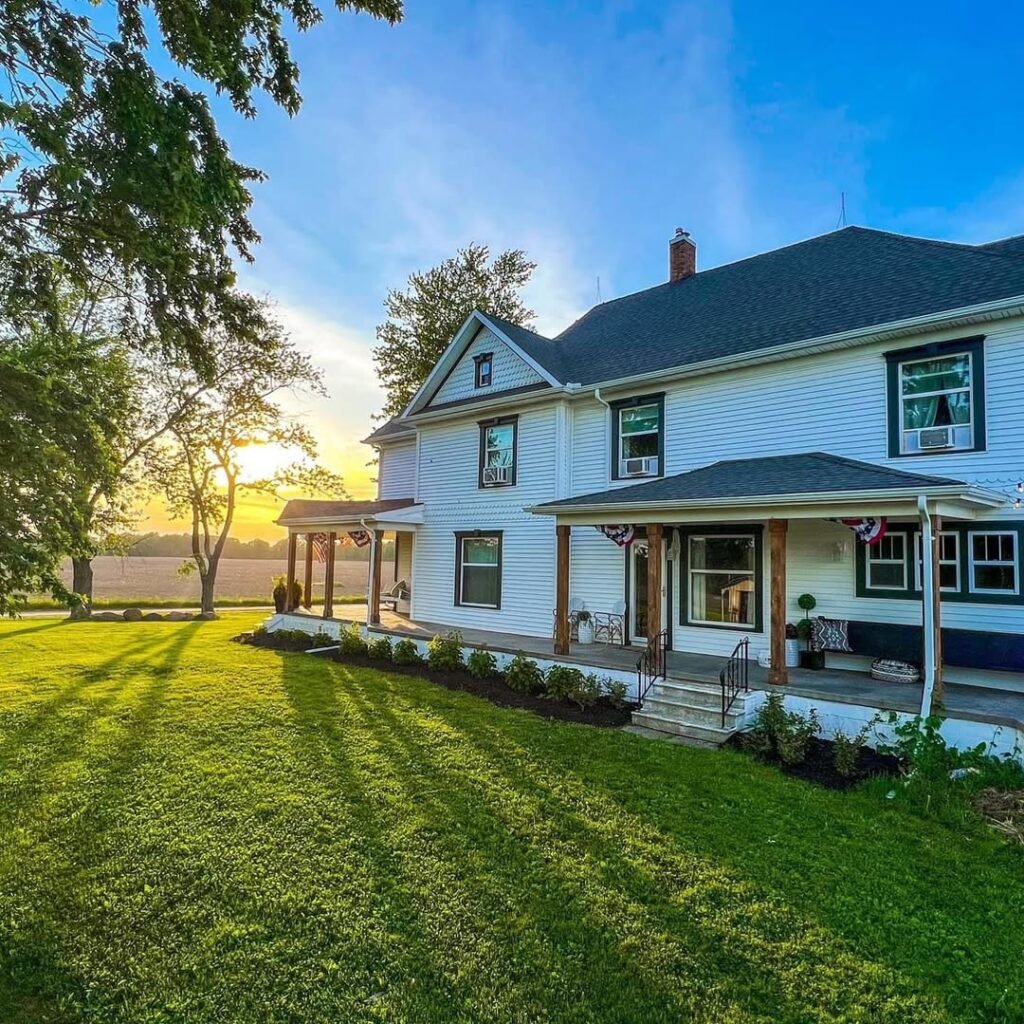
This one is the Pinterest dream but elevated. White siding, dark roof, centered dormer, and that long porch stretching across like it has nothing to prove. It’s symmetrical, calm, and quietly confident. Not flashy. Just… correct.
Symmetry is doing the heavy lifting here. Windows align vertically and horizontally, creating visual order that our brains instantly love. The porch columns evenly spaced? That’s architectural rhythm. Symmetry makes a home feel timeless, not trendy. And that’s why this style ages so well.
To recreate it, start with alignment. Even if your home isn’t perfectly symmetrical, fake it with matching planters, balanced lighting, and centered pathways. Keep your palette tight: white, black, natural wood, and greenery. Resist adding trendy colored shutters. We know it’s tempting. Stay strong. Let the structure speak.
Crisp White With Stone Accents
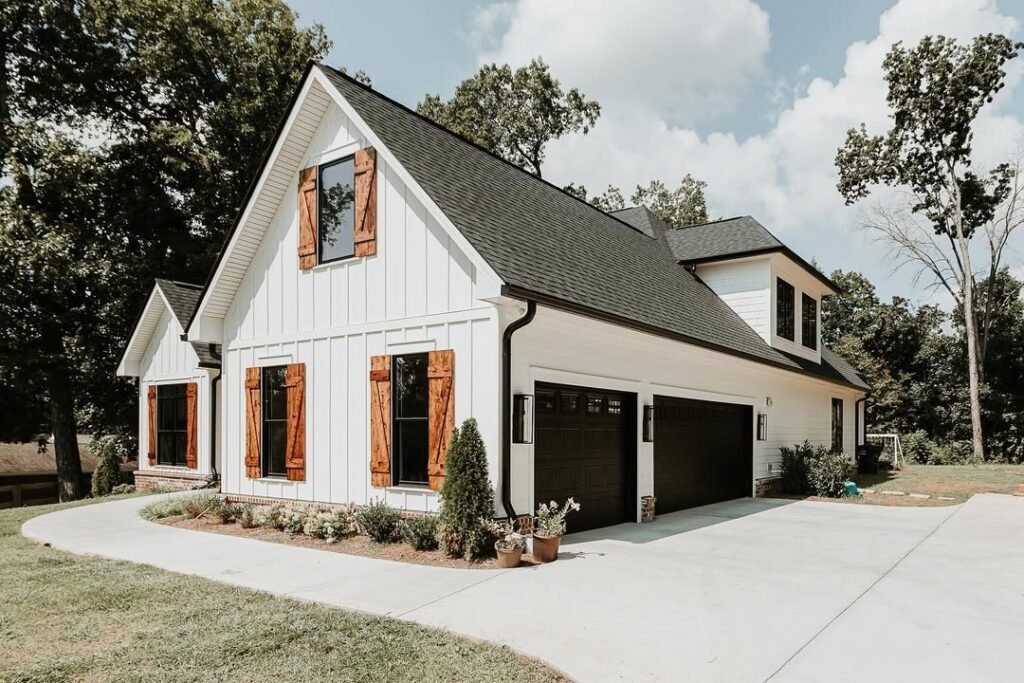
Now this is modern farmhouse with a little extra polish. White vertical siding, light stone base, black-framed windows, and warm timber beams under that sharp gable. It’s clean but layered. Minimal but textured. Basically the cool girl who “doesn’t try” but absolutely does.
This design thrives on contrast and material mixing. Vertical board and batten elongates the facade, while the stone foundation visually anchors it to the ground. The black window grids add definition without overpowering. Contrast creates clarity, and clarity creates impact.
If you’re recreating this, choose materials that feel authentic. Real wood beams if possible, or at least high-quality faux that doesn’t scream plastic. Keep landscaping structured: defined beds, natural stone edging, and varied plant heights. The goal is curated, not chaotic cottage-core overload.
Gabled Charm With Autumn Framing
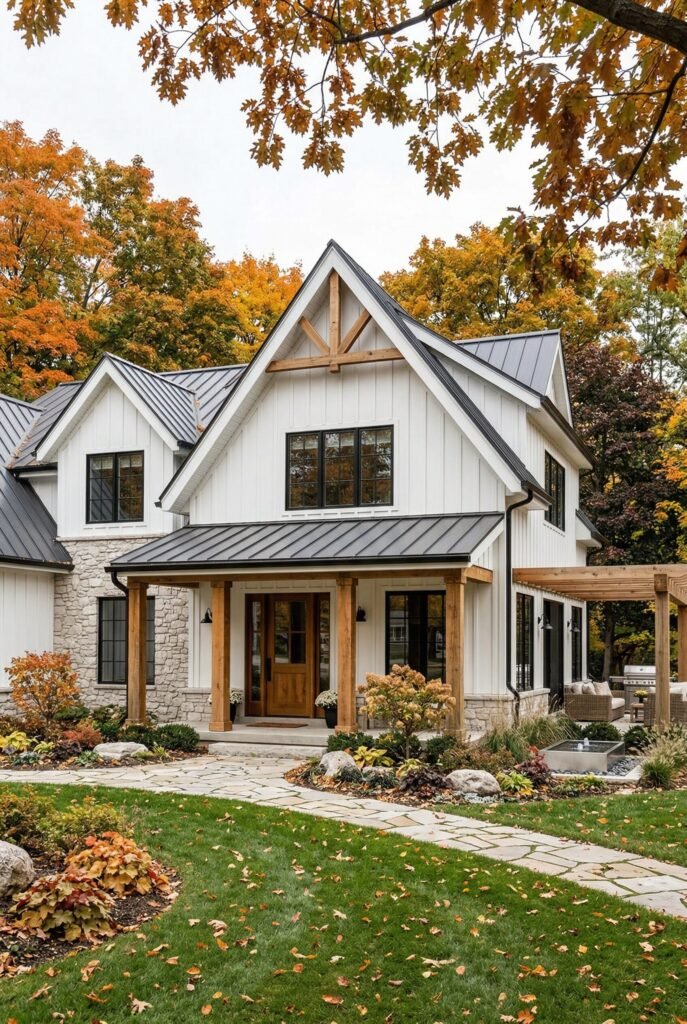
We had to talk about this autumn moment because wow. The white facade, dark metal roof, exposed timber truss, and those golden leaves framing the house? It’s cinematic. This style leans slightly Nordic-farmhouse, and we’re kind of obsessed.
The standout principle here is framing. The strong central gable becomes the focal point, and everything radiates outward from it. Clean window grids reinforce the geometry. Meanwhile, the natural wood posts warm up the crisp white so it never feels sterile. A clear focal point keeps the exterior from feeling busy.
To channel this look, emphasize your strongest architectural feature. Maybe it’s a gable, maybe it’s the front door. Highlight it with subtle lighting and symmetrical landscaping. And if you can’t control the trees turning golden? Fake it with warm-toned shrubs. We support strategic delusion for aesthetic purposes.
Expansive White With Soft Glow
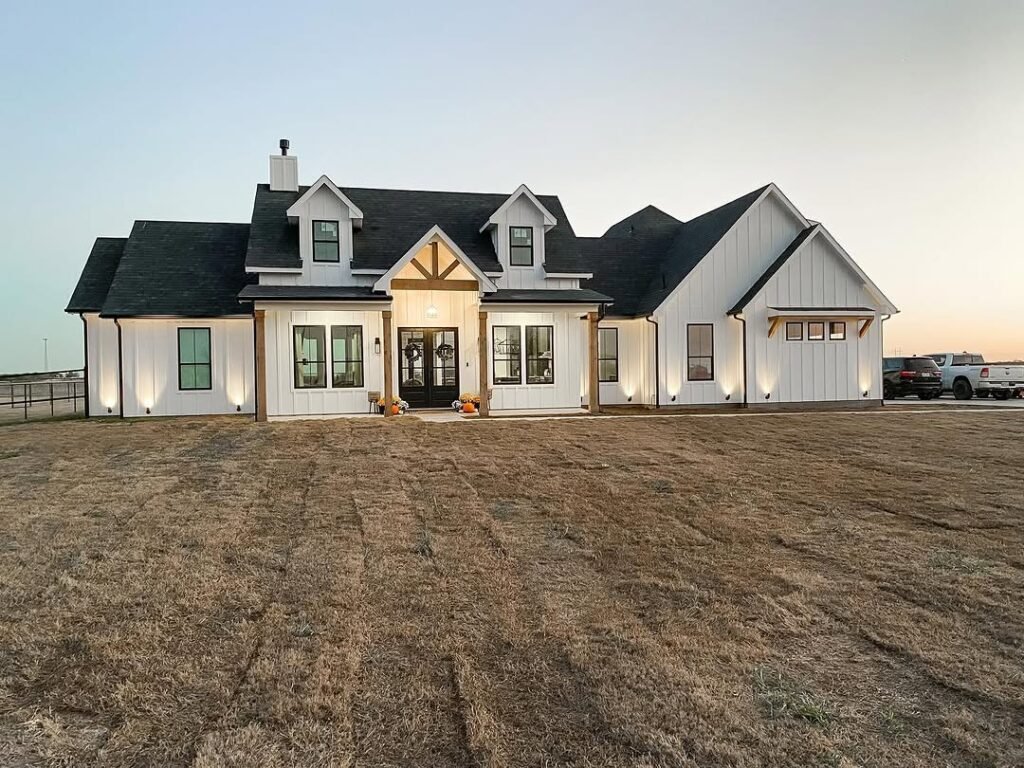
This one is giving “new build but make it cinematic.” Clean white board and batten, black roof, warm wood truss over the entry, and those subtle uplights washing the facade at dusk? We love a house that understands lighting is part of the outfit.
The strength here is horizontal spread. The home stretches wide, so the low rooflines and evenly spaced windows keep it from feeling chaotic. The warm timber accent draws the eye to the center, quietly telling you where to look. Exterior lighting is not an afterthought here—it’s a design layer.
If we’re recreating this, prioritize symmetry around the entry and invest in warm (not icy) uplighting. Keep the palette tight: white, black, one wood tone. And please, give the landscaping some love. A big house on a flat lawn without layered shrubs? That’s unfinished energy. We’re not doing that.
Deep Porch Living Energy
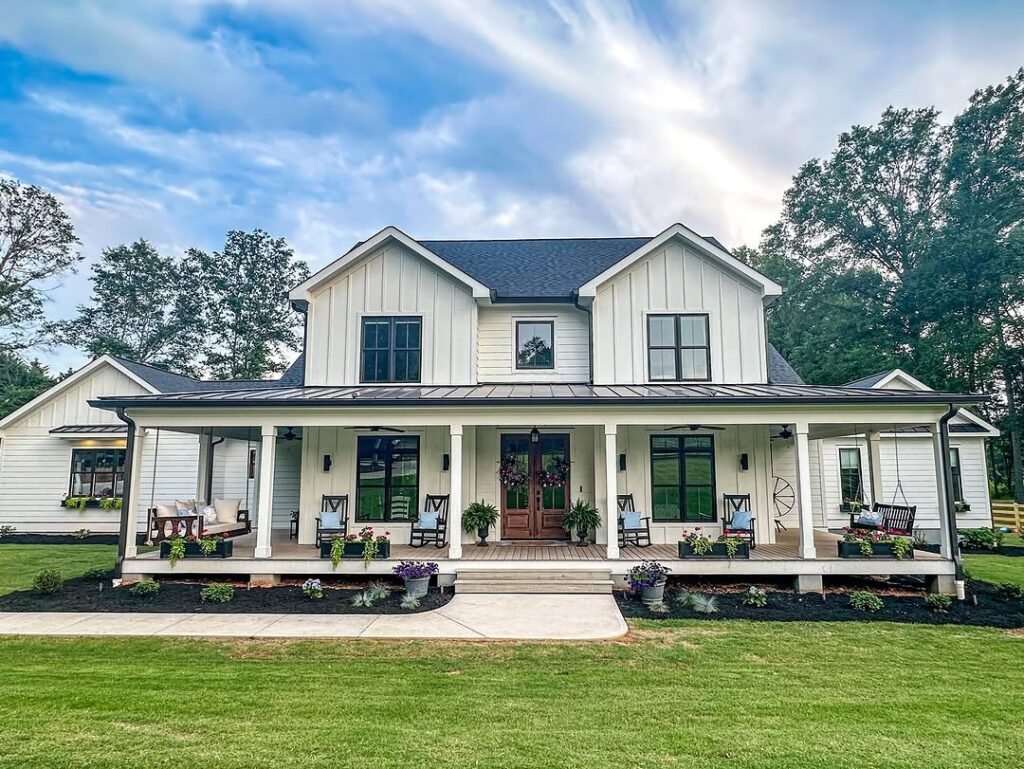
Okay but this wraparound porch situation? It’s the kind of home that says “yes, we host.” Creamy siding, dark window frames, warm wood double doors, and a porch deep enough for actual furniture. Not decorative chairs. Real chairs.
Design-wise, depth is the flex. The extended roofline lowers the visual height and creates that welcoming, human-scale vibe. Repeated columns add rhythm, while the darker windows ground the softness of the white facade. A porch should feel like a room, not a ledge.
If you want this look, measure your porch depth before anything else. Minimum eight feet if possible so it functions. Layer with planters in varied heights, but keep the color palette cohesive. Black window frames plus warm wood doors is a combo that rarely disappoints. It’s giving elevated farmhouse without trying to cosplay 2016.
Storybook Gables In All White
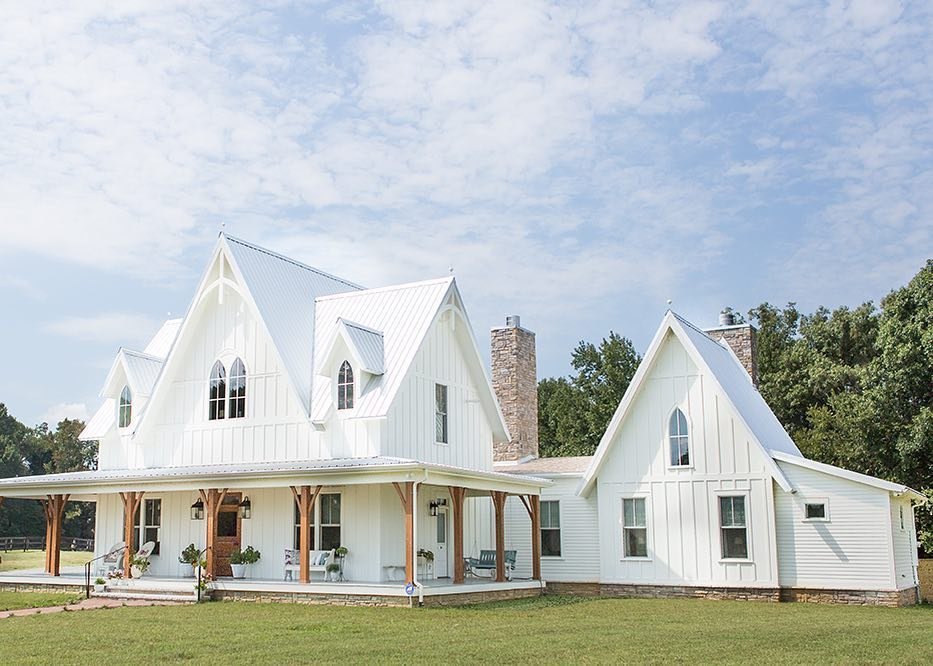
We need to talk about these dramatic gables because… wow. Tall peaks, white metal roof, arched windows, and that long covered porch supported by slim timber posts. It feels slightly European, slightly countryside chapel, and very main-character.
The magic is in vertical emphasis. Those steep rooflines pull the eye upward, while the consistent white keeps everything serene instead of busy. The stone chimney adds texture so the facade doesn’t feel flat. When you go bold with shape, simplify the color.
Recreating this means committing to clean lines. Avoid mixing too many materials. Let the roof shape be the statement. Choose slim columns instead of chunky ones to maintain that airy look. And keep landscaping understated—soft greenery, not overly manicured hedges. This style thrives on quiet drama, not loud extras.
Modern Gray With Brick Chimney
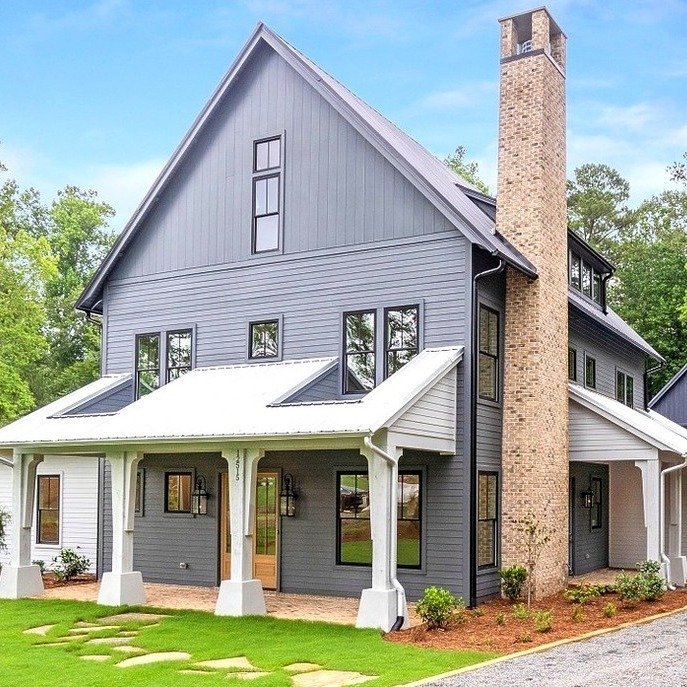
This one leans slightly moodier. Soft gray siding, white porch roof, black windows, and that tall brick chimney slicing vertically through the facade. It’s farmhouse with a hint of industrial edge, and honestly, we’re into it.
The brick chimney acts as a vertical anchor, balancing the horizontal porch roof. That contrast between cool gray siding and warm brick creates depth without adding more colors. Material contrast is doing the storytelling here. The stepping-stone path also subtly guides the eye toward the entry, which is a smart spatial move.
If you’re recreating this, choose a gray that has warmth—not blue undertones. Pair it with creamy white trim instead of stark white for softness. And don’t underestimate the power of one strong vertical element, whether that’s a chimney, tall window stack, or statement light fixture. It adds structure without clutter.
Simple White With Brick Base
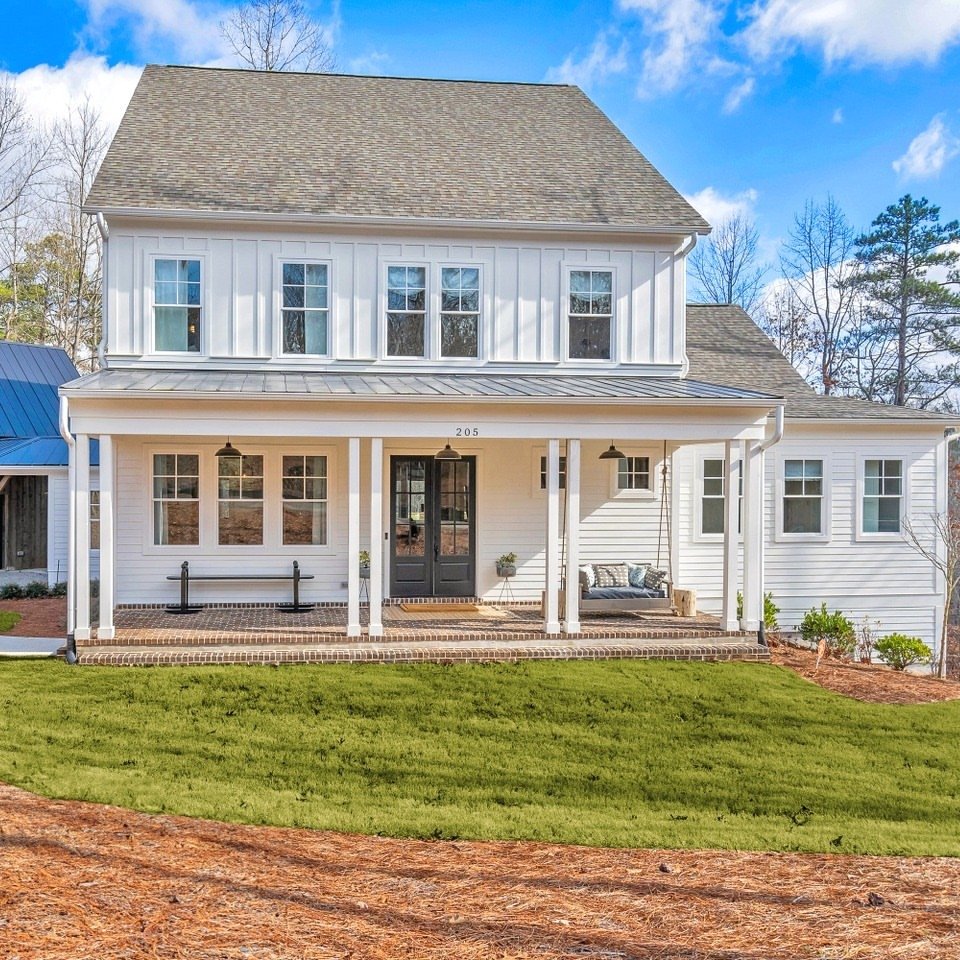
We’re ending with a quieter look, but don’t mistake simple for boring. Clean white siding, brick porch base, black lanterns, and a classic covered entry. It’s understated, but that’s kind of the point.
The proportions are what make this work. The brick base visually grounds the house, preventing the white facade from feeling like it’s floating. Evenly spaced windows create order, while the darker front door adds just enough contrast. Good proportions will always outlast trends.
If you want this vibe, focus on scale. Keep your porch columns appropriately sized—not too skinny, not chunky farmhouse cosplay. Choose warm brick instead of orange-heavy tones. Add black or bronze lanterns for contrast, but keep hardware finishes consistent. It’s timeless, low-drama, and honestly? That’s the real power move.
Timeless Curb Appeal Starts With Smart Choices
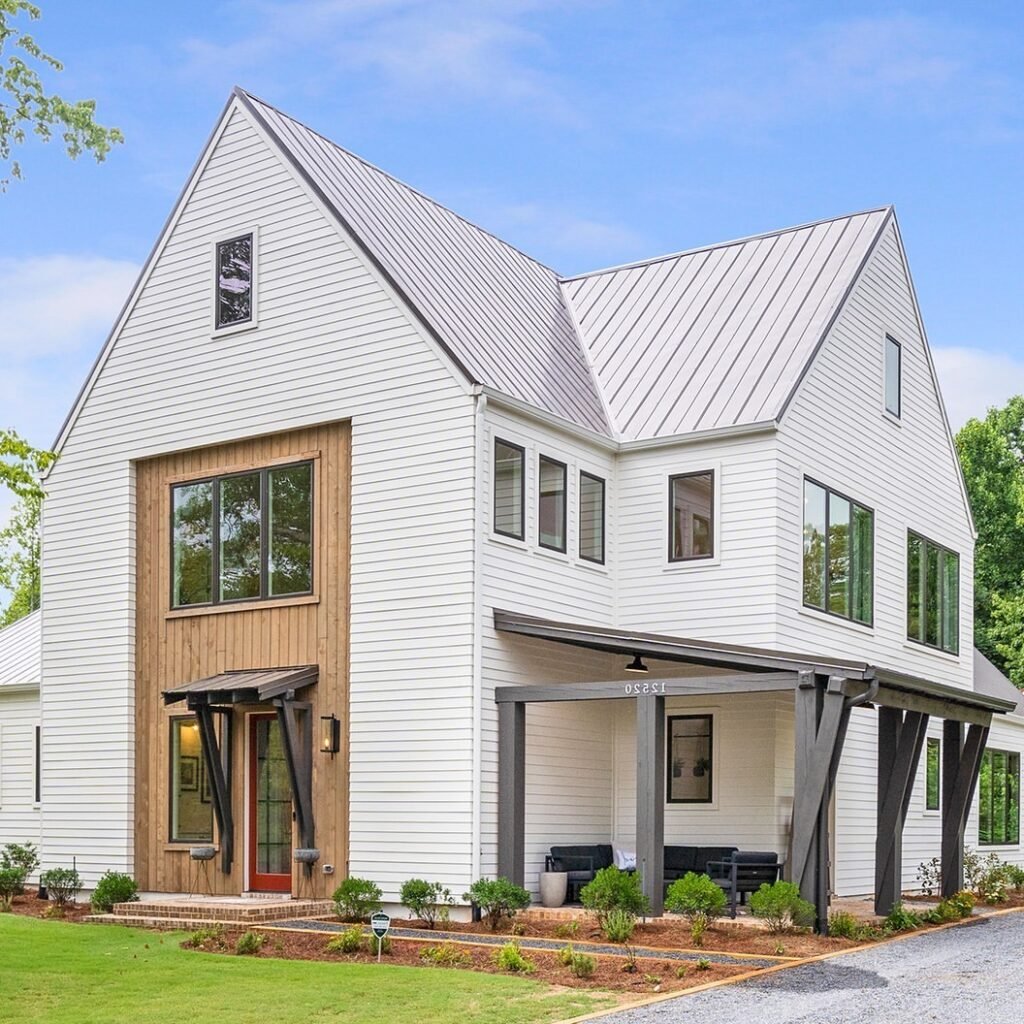
If there’s one takeaway from these ten exteriors, it’s this: trends fade, but good proportions don’t. Steep gables, wraparound porches, brick bases, strong chimneys, and clean board and batten siding all work because they respect structure first and style second. That’s the quiet flex.
The most successful designs repeat materials strategically, keep palettes tight, and highlight one focal point—whether that’s a timber-framed entry, a dramatic roofline, or a perfectly centered front door. Curb appeal is built on clarity, not excess. Even landscaping plays a role, framing the architecture instead of competing with it.
So when we plan our own exterior, let’s choose materials that age well, lighting that enhances at night, and details that feel authentic. Modern farmhouse isn’t about copying a look. It’s about building something that still feels right five, ten, fifteen years from now.
 Steal Our Home Styling Secrets!